
HUMAN SYSTEMS SETTLEMENT PATTERNS WHAT ARE SETTLEMENT PATTERNS
- Slides: 27
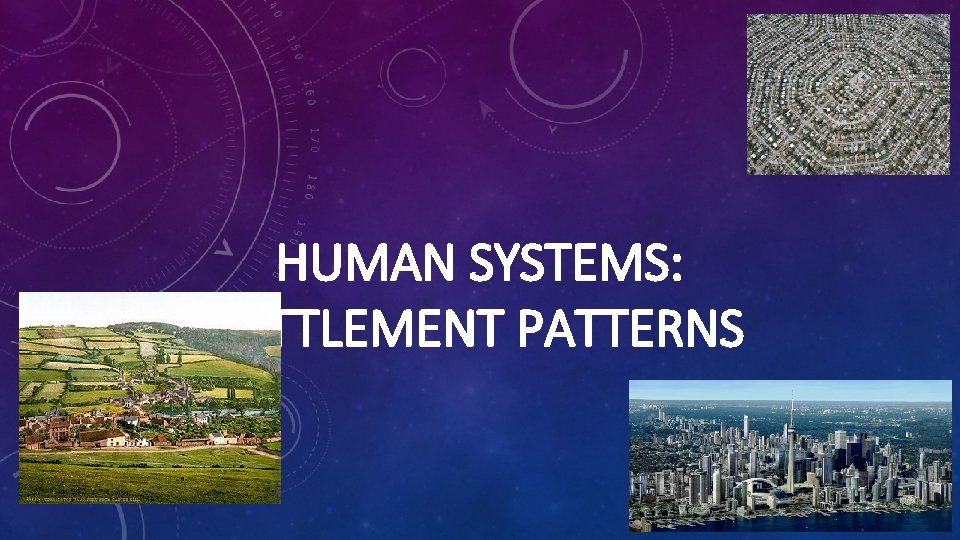
HUMAN SYSTEMS: SETTLEMENT PATTERNS
WHAT ARE SETTLEMENT PATTERNS? The arrangement of where people live on earth or in a country and the factors that influence this arrangement
CANADA’S SETTLEMENT PATTERNS Settlement patterns in Canada vary enormously-from large cities, to farming areas, to vast areas where very few people live
WHAT IS POPULATION DISTRIBUTION? It is a pattern showing where people live in an area
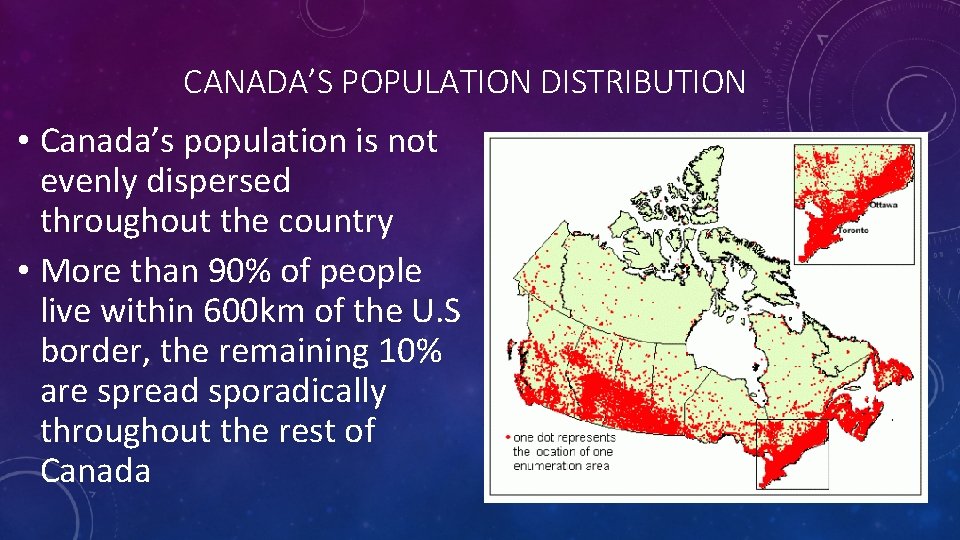
CANADA’S POPULATION DISTRIBUTION • Canada’s population is not evenly dispersed throughout the country • More than 90% of people live within 600 km of the U. S border, the remaining 10% are spread sporadically throughout the rest of Canada
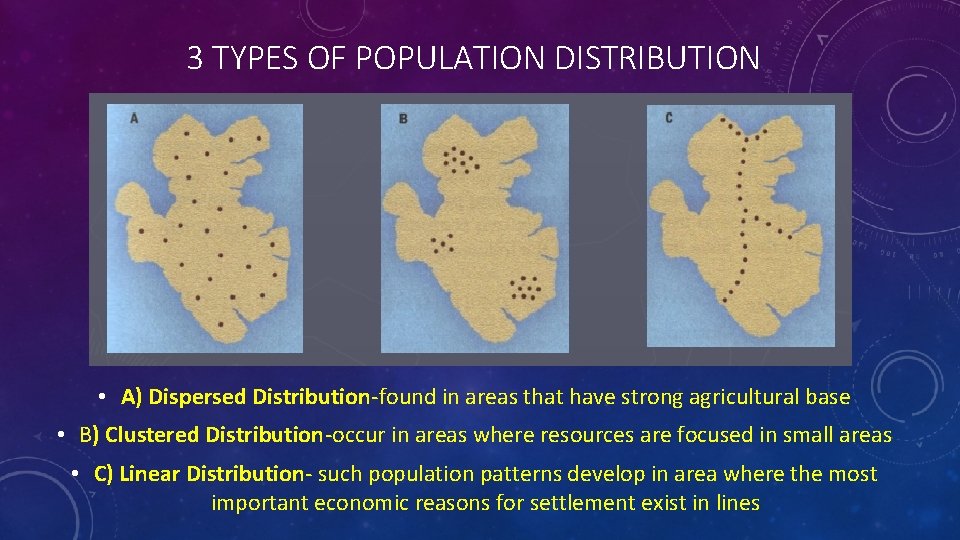
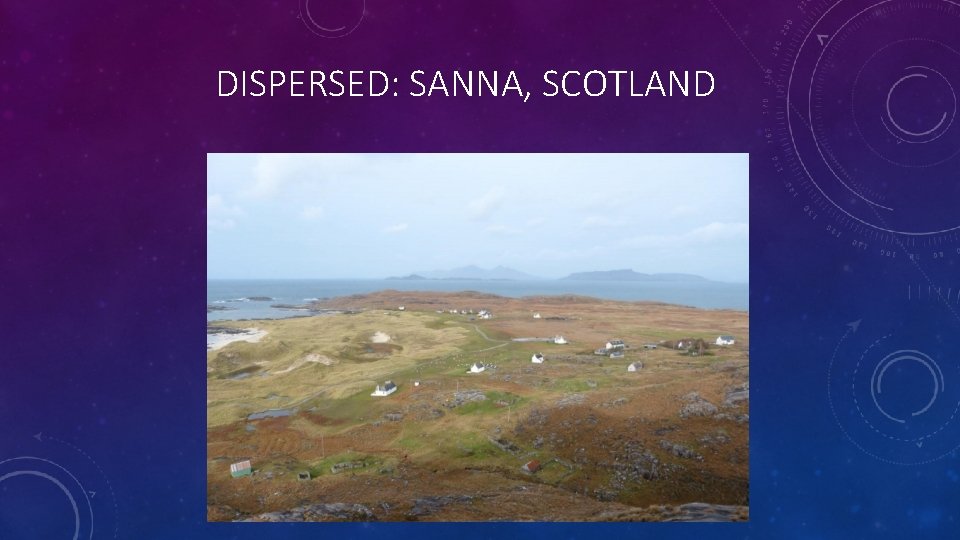
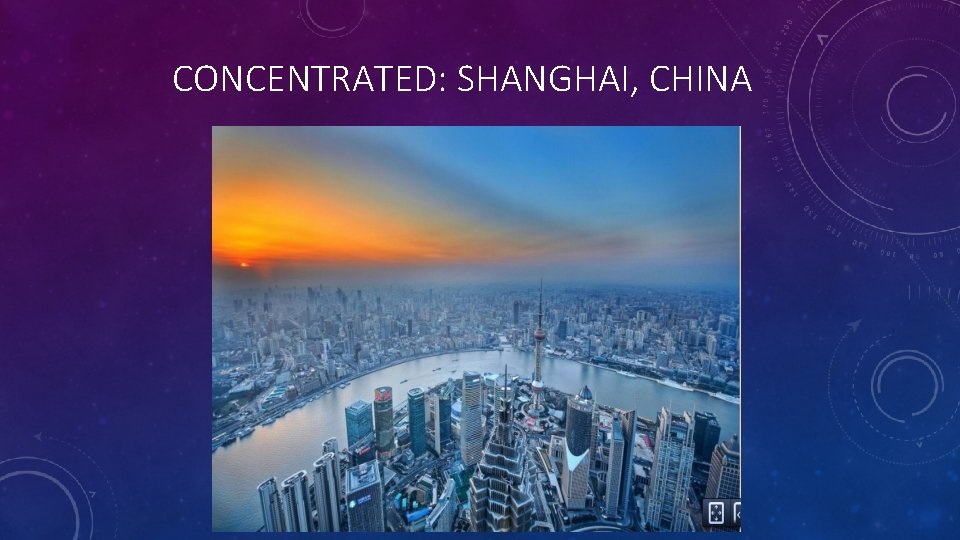
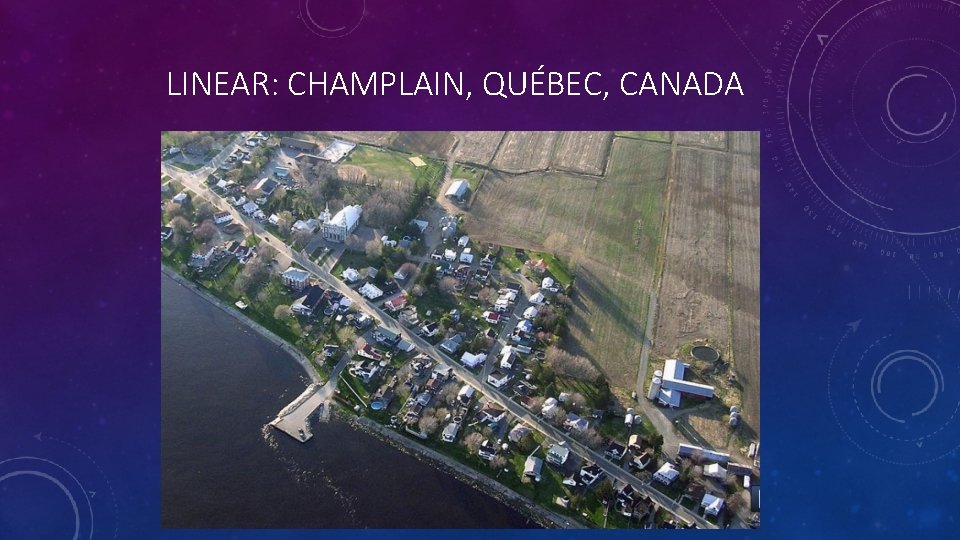
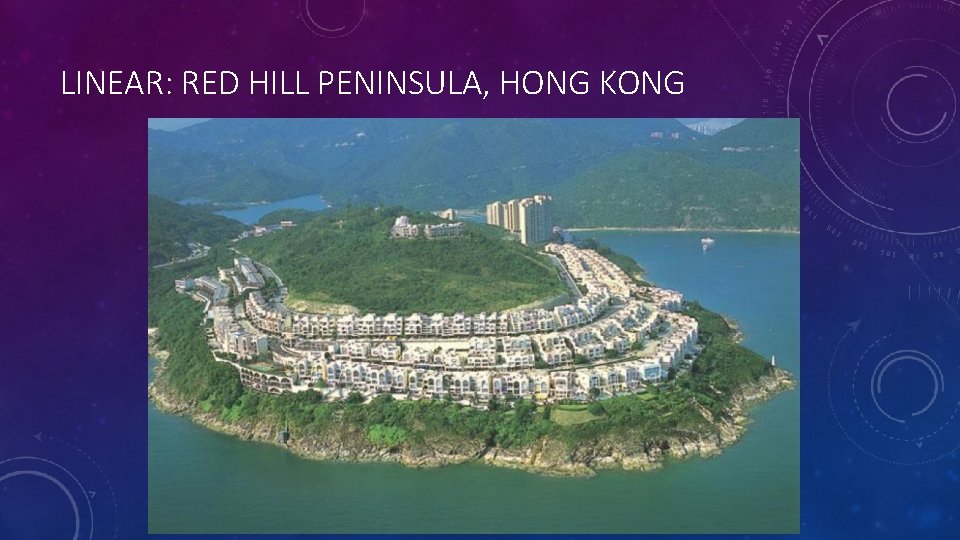
3 TYPES OF POPULATION DISTRIBUTION • A) Dispersed Distribution-found in areas that have strong agricultural base • B) Clustered Distribution-occur in areas where resources are focused in small areas • C) Linear Distribution- such population patterns develop in area where the most important economic reasons for settlement exist in lines
DISPERSED: SANNA, SCOTLAND
CONCENTRATED: SHANGHAI, CHINA
LINEAR: CHAMPLAIN, QUÉBEC, CANADA
LINEAR: RED HILL PENINSULA, HONG KONG
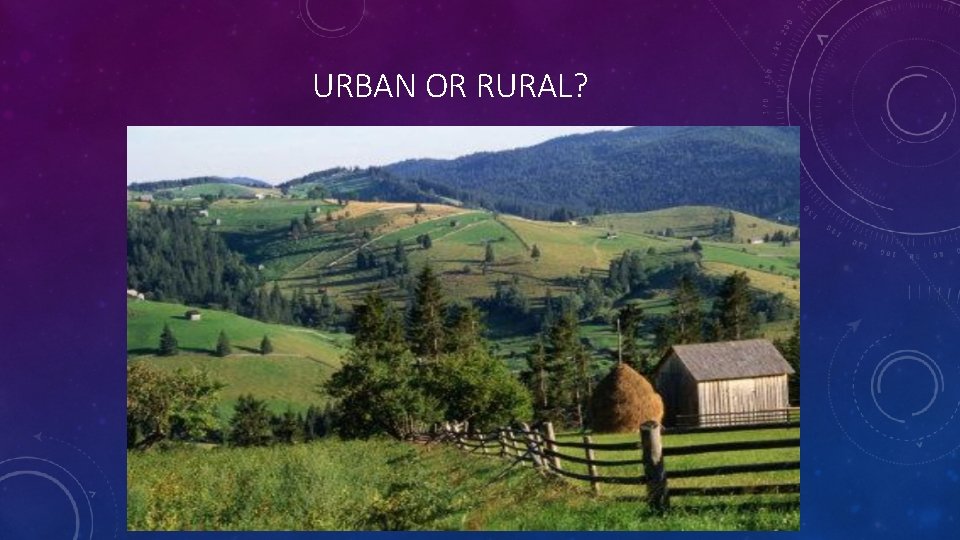
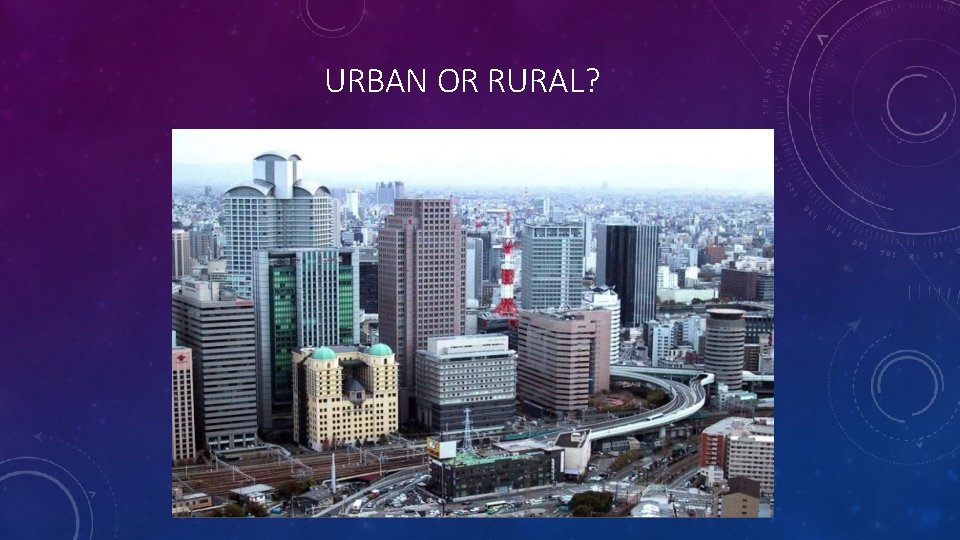
CANADA’S SETTLEMENT PATTERNS: RURAL + URBAN Settlement in Canada can be divided into two major categories: 1) Rural Settlement: Outside of towns and cities where population density is low and the settlement pattern is dispersed 2) Urban Settlement: Within Towns and Cities where population density is high and the settlement pattern is concentrated
URBAN OR RURAL?
URBAN OR RURAL?
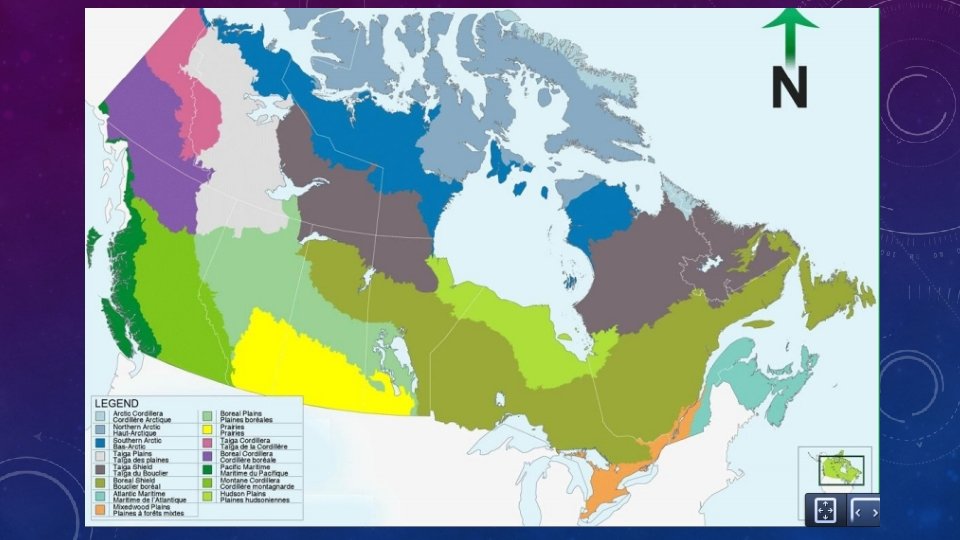
RURAL SETTLEMENT PATTERNS Rural Settlements are characterized by: -Low Population Density -Dispersed Population Distribution Most of Canada’s Rural Residents live in only two ecozones: 1) Mixedwood Plain 2) Prairie
PATTERNS OF RURAL SETTLEMENT Patterns of Rural Settlement are affected by 3 key factors: 1. Kind of resources found in the area 2. Transportation methods available at time of settlement 3. Role played by governmental policy
GOVERNMENTAL POLICY • In some areas, settlement occurred with little to no government input • In others, the government carefully planned how, where, and when settlement would occur
SURVEY SYSTEM Survey System: Set of rules controlling how, where, and when settlement would occur. Government controlled things such as: 1) The land that would be settled 2) The size and shape of farms 3) The patterns of roads that would be built 4) The location of town sites, schools and churches
THE COMBINATION OF THESE THREE FACTORS HAVE LED TO THREE DISTINCT SETTLEMENT PATTERNS IN CANADA 1)The long lots of southern Quebec 2)The concession system of southern Ontario 3)The section system of the Prairies
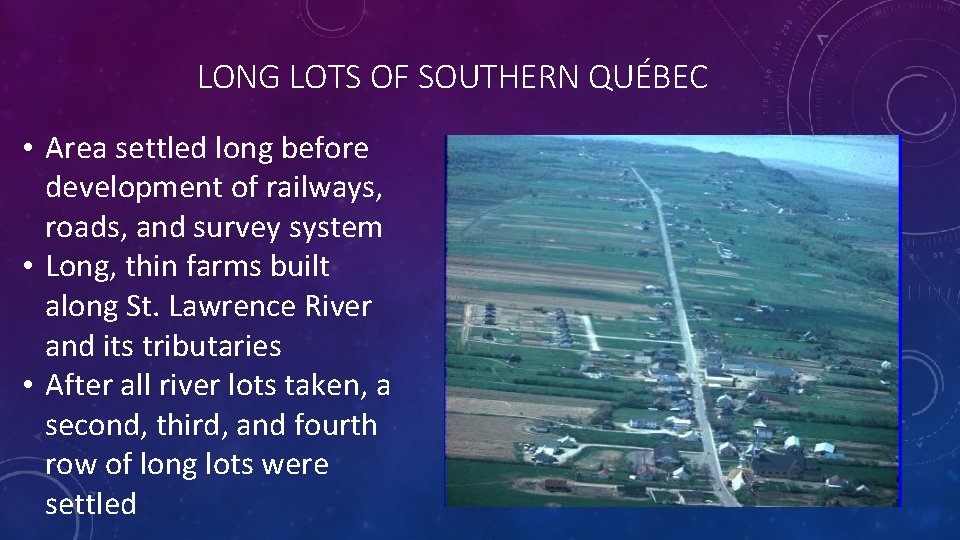
LONG LOTS OF SOUTHERN QUÉBEC • Area settled long before development of railways, roads, and survey system • Long, thin farms built along St. Lawrence River and its tributaries • After all river lots taken, a second, third, and fourth row of long lots were settled
DID YOU KNOW? In early Quebec, taxes were based on the amount of river frontage, so it was desirable to have as narrow a lot as possible Can you think of any disadvantages to this?
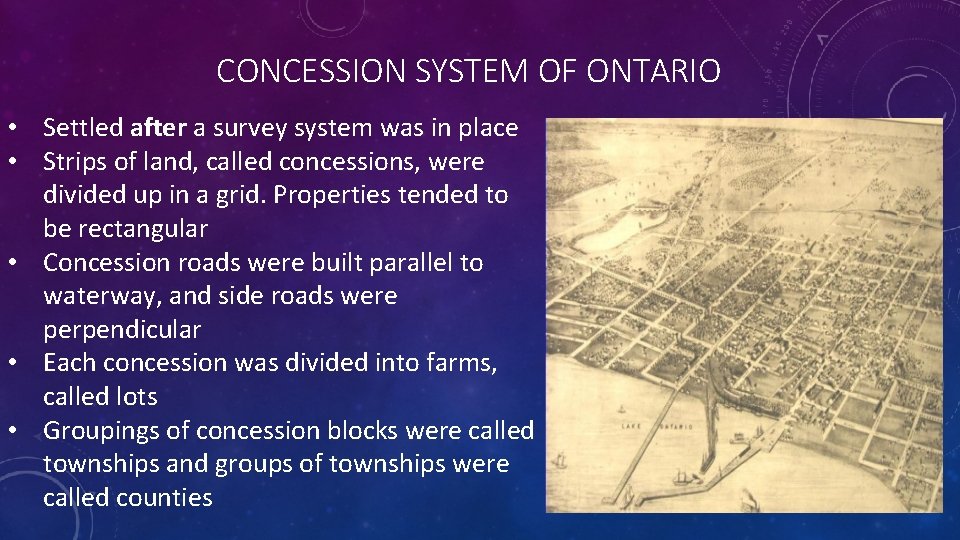
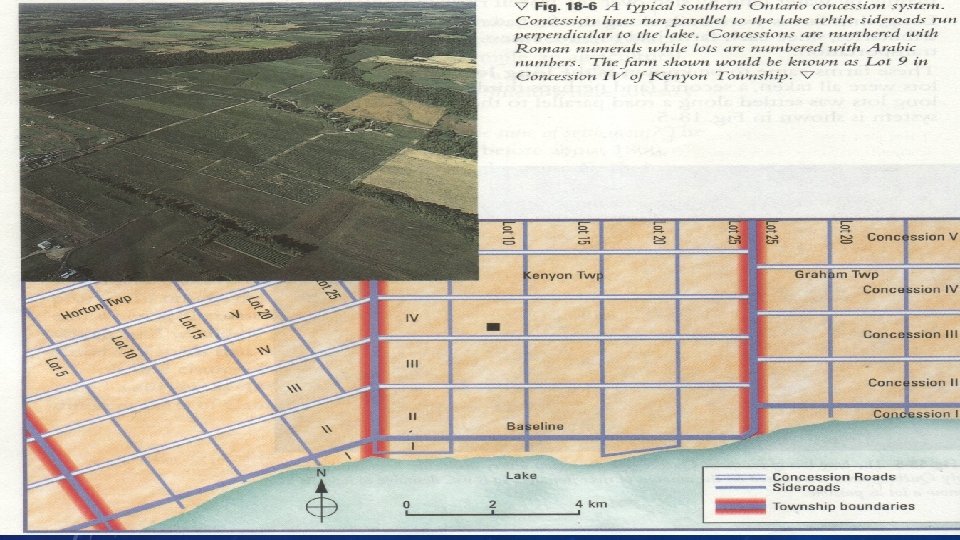
CONCESSION SYSTEM OF ONTARIO • Settled after a survey system was in place • Strips of land, called concessions, were divided up in a grid. Properties tended to be rectangular • Concession roads were built parallel to waterway, and side roads were perpendicular • Each concession was divided into farms, called lots • Groupings of concession blocks were called townships and groups of townships were called counties
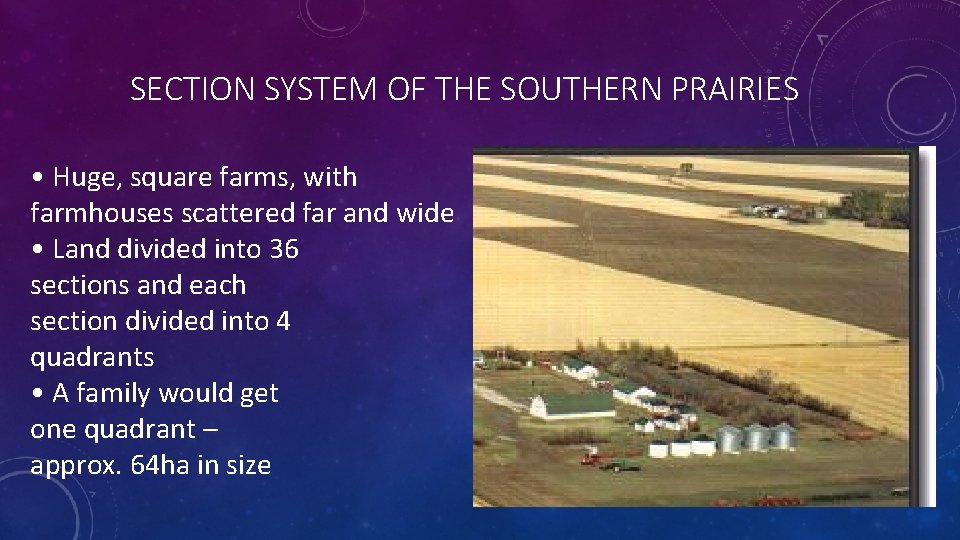
SECTION SYSTEM OF THE SOUTHERN PRAIRIES • Huge, square farms, with farmhouses scattered far and wide • Land divided into 36 sections and each section divided into 4 quadrants • A family would get one quadrant – approx. 64 ha in size
SCATTERED SETTLEMENTS 1. Resource based settlements 2. Service based settlements
RESOURCE BASED SETTLEMENTS • Settlement created as a result of a resource • Includes: forestry, agriculture, commercial fishing, mining/energy production, and recreation • Very important in the following ecozones: Atlantic Maritime, Boreal Shield, Boreal Plains, Montane Cordillera, and Pacific Maritime
SERVICE BASED SETTLEMENTS • Some people settled in isolated areas because they can earn a living by providing services to residents and to travelers passing through. • Often these settlements would be scattered along major roads. • Often based on transportation ex. people who live along the Trans-Canada Highway in Northern Ontario • Can include gas stations, motels, post office and restaurants