
Human Subjects in f MRI Research Credits Robert
Human Subjects in f. MRI Research Credits: Robert Savoy, Ph. D. Franz Schmitt, Ph. D.
Outline ¥ f. MRI Risks to Human Subjects ¥ Static B 0 fields ¥ RF B 1 fields- tissue heating ¥ Switched gradient fields- peripheral nerve stimulation ¥ Acoustic Noise ¥ Practicing Safe Imaging- minimize risks ¥ Minimizing Distress in the MR Environment ¥ Ethical Conduct of f. MRI Research involving Human Subjects
Static B 0 Fields No established adverse health effects ¥ Projectile accidents ¥ Metallic object screening ¥ Magnetohydrodynamic effects ¥

Static B 0 fields- Projectile Accidents
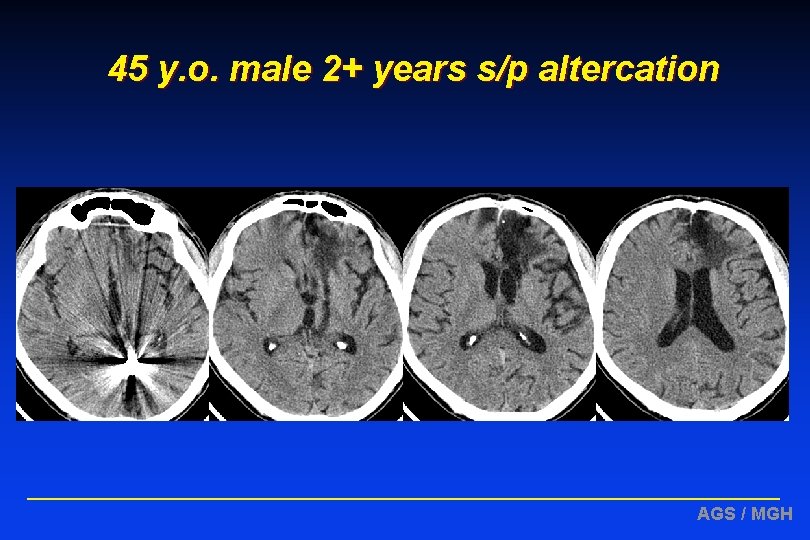
45 y. o. male 2+ years s/p altercation AGS / MGH

AGS / MGH
RF B 1 Fields- Tissue Heating ¥ Ohmic heating of patient tissue is due to resistive losses from induced electric fields Greatest effect at periphery or surface Described in terms of Specific Absorption Rate (SAR) Scanner determinants: RF frequency, type of RF pulse, TR and type of RF coil Body determinants: thermoregulatory function ¥ Electrical Burns ¥ ¥
Switched Gradient Fields Peripheral Nerve Stimulation ¥ Metallic Taste ¥ Magnetophosphenes ¥ Skeletal Muscle Contractions ¥ ¥ By Faraday’s Law of Induction exposure of conductive tissue to time-varying magnetic fields will induce an electric field.
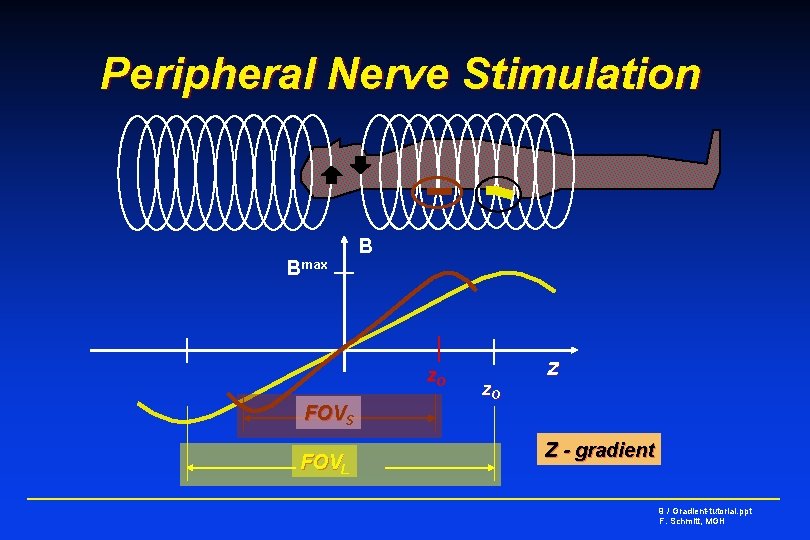
Peripheral Nerve Stimulation Bmax B z. O FOVS FOVL z. O z Z - gradient 9 / Gradient-tutorial. ppt F. Schmitt, MGH
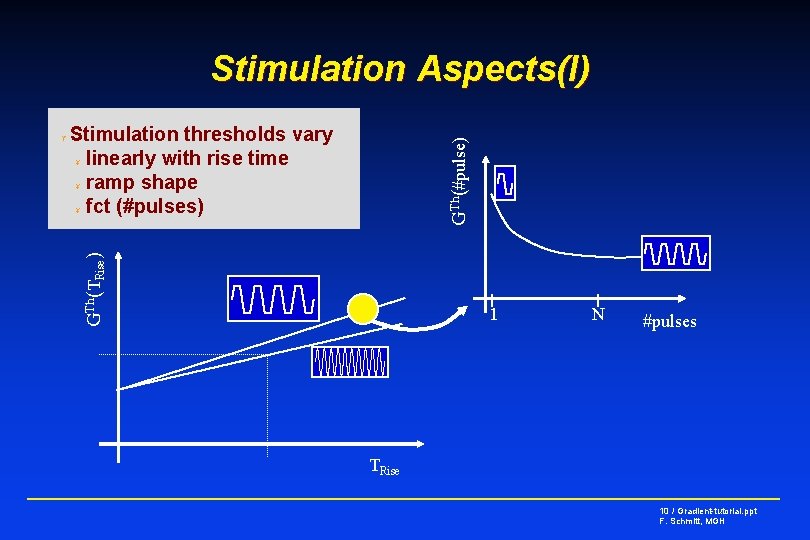
Stimulation Aspects(I) GTh(#pulse) Stimulation thresholds vary ¥ linearly with rise time ¥ ramp shape ¥ fct (#pulses) GTh(TRise) ¥ 1 N #pulses TRise 10 / Gradient-tutorial. ppt F. Schmitt, MGH
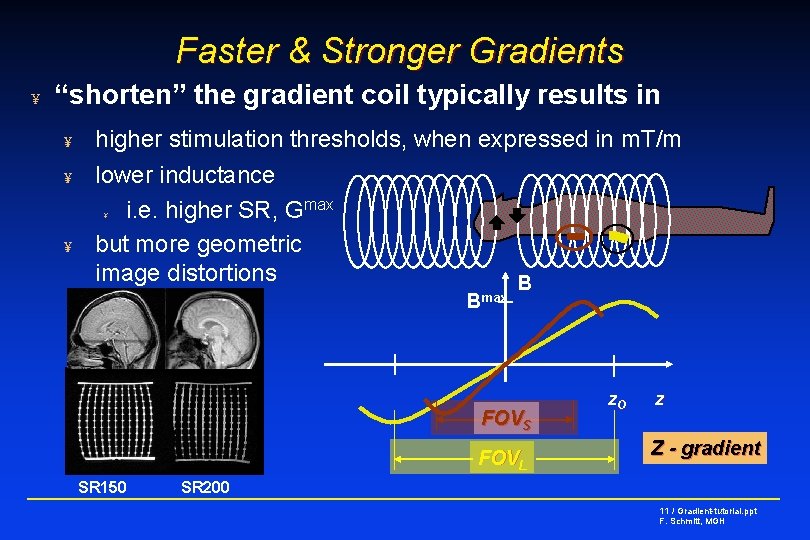
Faster & Stronger Gradients ¥ “shorten” the gradient coil typically results in ¥ higher stimulation thresholds, when expressed in m. T/m ¥ lower inductance max ¥ i. e. higher SR, G ¥ but more geometric image distortions B Bmax FOVS FOVL SR 150 z. O z Z - gradient SR 200 11 / Gradient-tutorial. ppt F. Schmitt, MGH
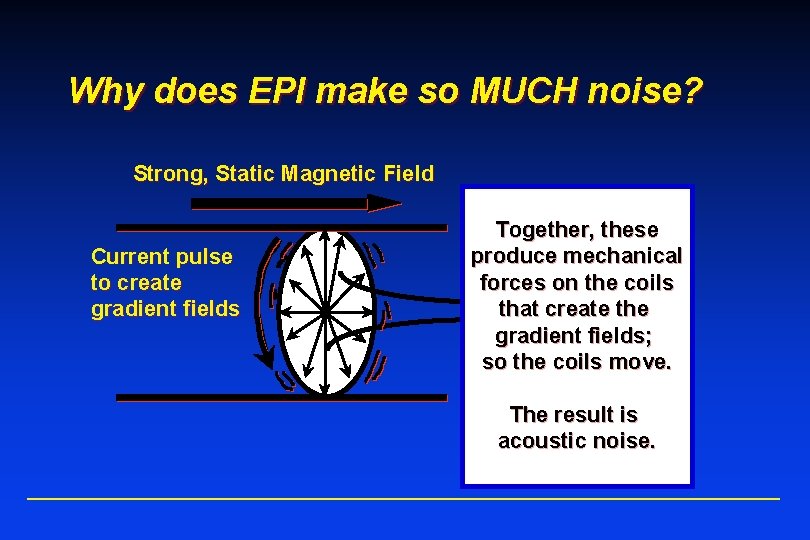
Why does EPI make so MUCH noise? Strong, Static Magnetic Field Current pulse to create gradient fields Together, these produce mechanical forces on the coils that create the gradient fields; so the coils move. The result is acoustic noise.
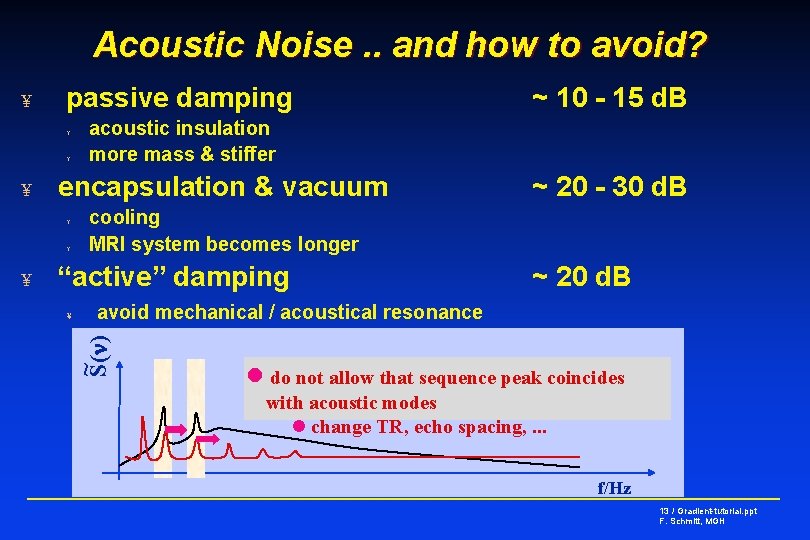
Acoustic Noise. . and how to avoid? ¥ passive damping ~ 10 - 15 d. B acoustic insulation more mass & stiffer ¥ ¥ ¥ encapsulation & vacuum ~ 20 - 30 d. B cooling MRI system becomes longer ¥ ¥ ¥ “active” damping avoid mechanical / acoustical resonance ~ S(n) ¥ ~ 20 d. B l do not allow that sequence peak coincides with acoustic modes l change TR, echo spacing, . . . f/Hz 13 / Gradient-tutorial. ppt F. Schmitt, MGH
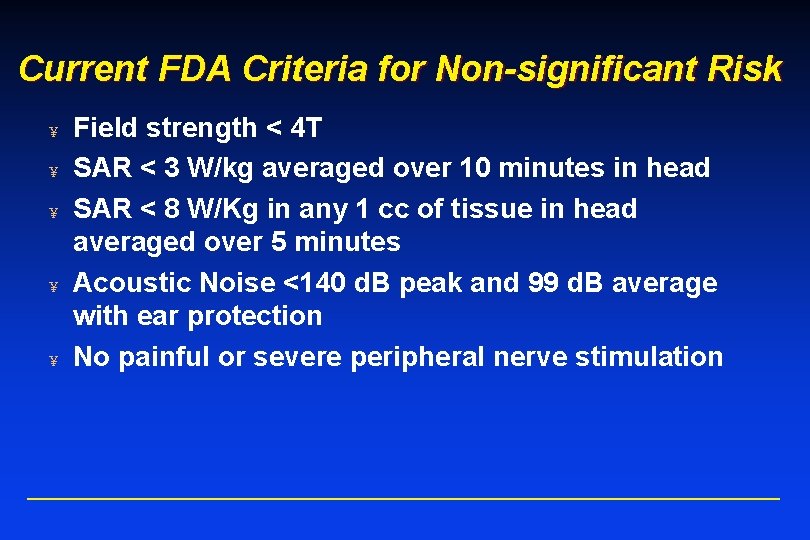
Current FDA Criteria for Non-significant Risk ¥ ¥ ¥ Field strength < 4 T SAR < 3 W/kg averaged over 10 minutes in head SAR < 8 W/Kg in any 1 cc of tissue in head averaged over 5 minutes Acoustic Noise <140 d. B peak and 99 d. B average with ear protection No painful or severe peripheral nerve stimulation
Subjective Distress in the MRI Environment Incidence of distress among clinical MRI is high ¥ Distress can be caused by may factors including: confined space, noise, restriction of movement ¥ Distress can range from mild anxiety to full blown panic attack ¥ Distress can result in subject motion and disrupt image quality ¥
Minimizing Subjective Distress ¥ ¥ ¥ Careful screening Complete explanations Make them comfortable in the scanner Maintain verbal contact Give them the panic button
Safety is Your Responsibility ¥ Become familiar with the material posted on your institution’s Human Subjects web site ¥ Read ¥ ¥ ¥ Belmont Report Title 45 Code of Federal Regulations Part 46 Protection of Human Subject Review NIH presentation from the Office of Human Research Protection
Human Subject Considerations ¥ Informed Consent ¥ Risk/Benefit Considerations
- Slides: 19