
Human Spatial Behavior Mobility General term that applies
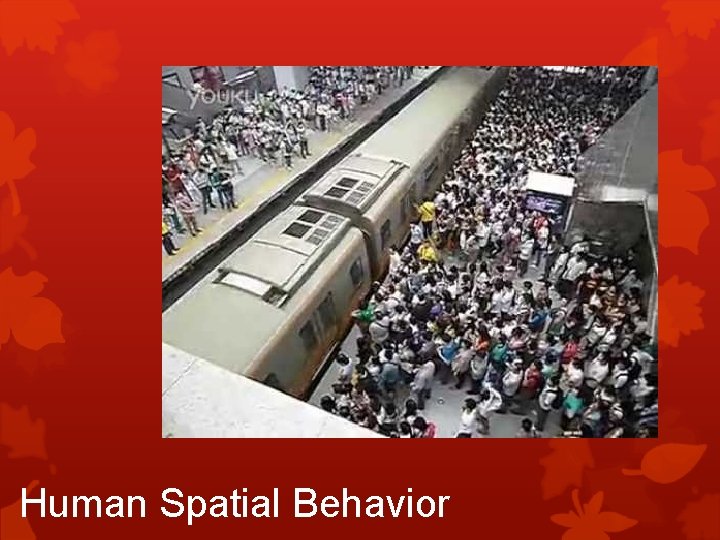
Human Spatial Behavior
Mobility General term that applies to all types of human territorial movement. circulation: daily & temporary uses of space Travel to work/school, vacation, going off to college migration: longer-term commitment, permanently leaving the home territory
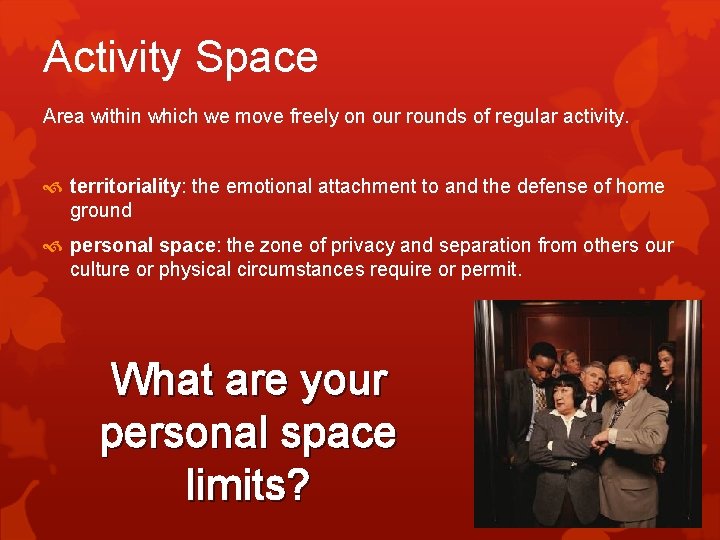
Activity Space Area within which we move freely on our rounds of regular activity. territoriality: the emotional attachment to and the defense of home ground personal space: the zone of privacy and separation from others our culture or physical circumstances require or permit. What are your personal space limits?
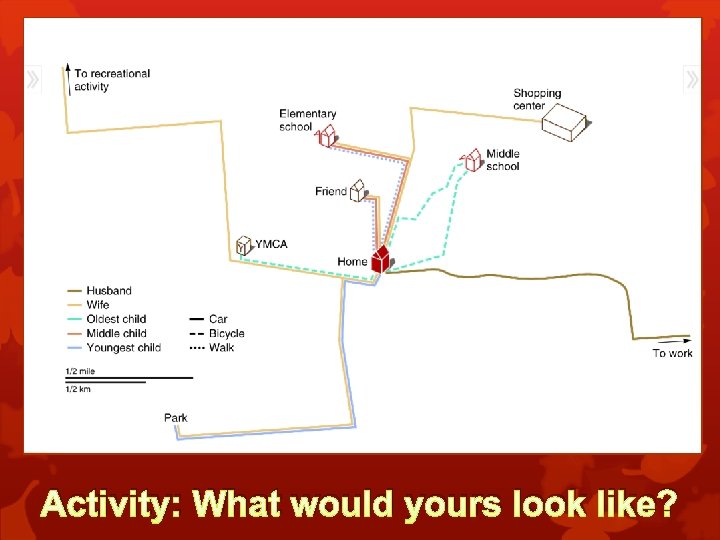
Activity: What would yours look like?
What affects our activity spaces? Stage in life (age) Younger = shorter travel distances Adults (wage-earners in particular) = longer distances Elderly = usually less extensive activity spaces Mobility Ability to travel Cost and effort required Opportunities The existence of possible activities Awareness space: knowledge of opportunity locations beyond normal activity space

Cross. Cultural Activity Spaces
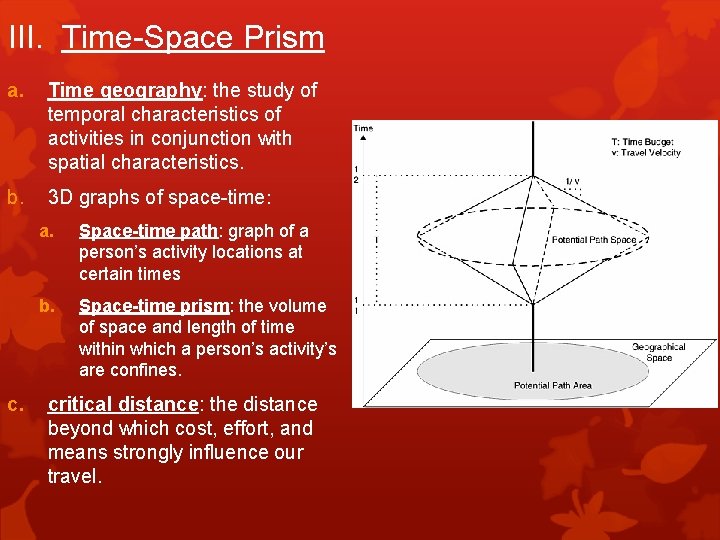
III. Time-Space Prism a. Time geography: the study of temporal characteristics of activities in conjunction with spatial characteristics. b. 3 D graphs of space-time: c. a. Space-time path: graph of a person’s activity locations at certain times b. Space-time prism: the volume of space and length of time within which a person’s activity’s are confines. critical distance: the distance beyond which cost, effort, and means strongly influence our travel.
IV. Information Flows a. Individual/personal communication field: an activity space—but the informational version. b. mass communication: the formal, structured transmission of information in a one-way flow between single points of origin and broad areas of reception. - c. How does social media complicate things?
V. Information & Perception a. place perception: our beliefs, impressions, and feelings (rational or irrational, consciously realized or not) about the natural and cultural characteristics of an area and about its opportunity structure. a. directional bias: tendency to have greater knowledge of places in some directions than in others. c. a. US information flows: east-west b. What places are good/bad? What areas are safe/unsafe? natural hazards: elements, processes, or events in the environment that can cause harm to humans c. Why might people live in high-risk places (San Andreas fault, Andean valleys, etc. )?
- Slides: 9