
Human RightsBased Approach in the Programming Process Session
Human Rights-Based Approach in the Programming Process
Session objectives ü Understand what a human rights-based approach to programming is ü Understand the importance and added value of HRBA to development programming ü Understand the main questions the 3 -step analysis helps to answer
What are human rights? Universal legal guarantees Civil, cultural, economic, political and social Protect human values (freedom, equality, dignity) Inherent to individuals and, to some extent, groups • Grounded in international norms and standards • Legally binding on States • •
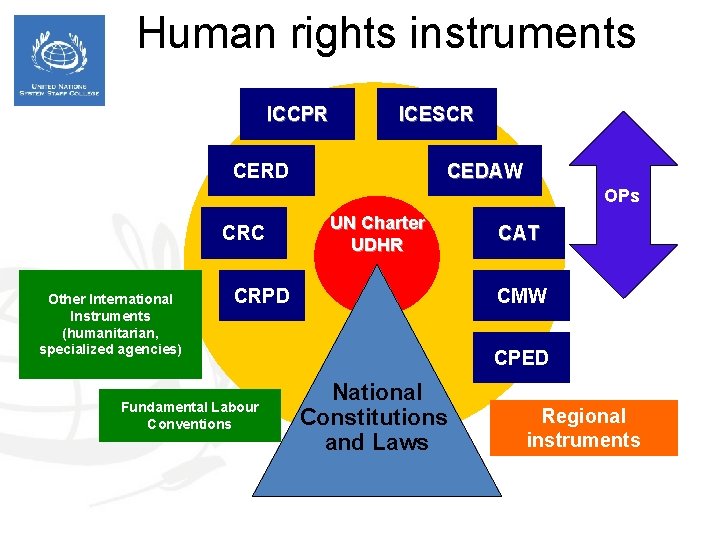
Human rights instruments ICCPR ICESCR CERD CEDAW OPs CRC Other International Instruments (humanitarian, specialized agencies) UN Charter UDHR CRPD Fundamental Labour Conventions CAT CMW CPED National Constitutions and Laws Regional instruments
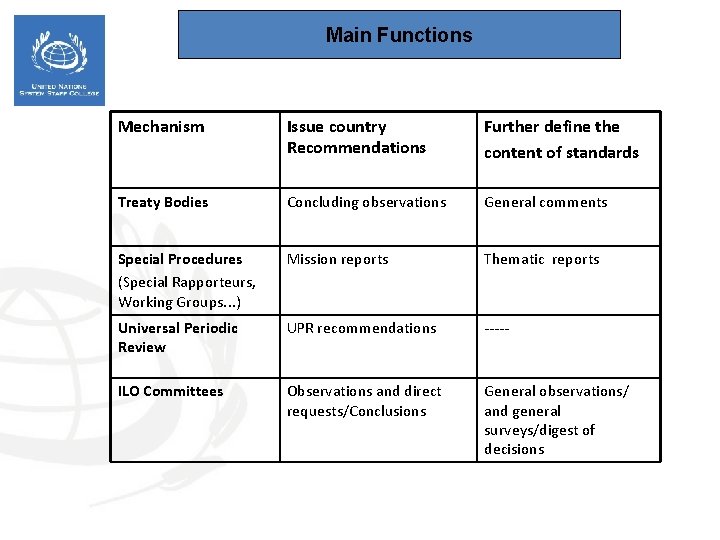
Main Functions Mechanism Issue country Recommendations Further define the content of standards Treaty Bodies Concluding observations General comments Special Procedures (Special Rapporteurs, Working Groups. . . ) Mission reports Thematic reports Universal Periodic Review UPR recommendations ----- ILO Committees Observations and direct requests/Conclusions General observations/ and general surveys/digest of decisions
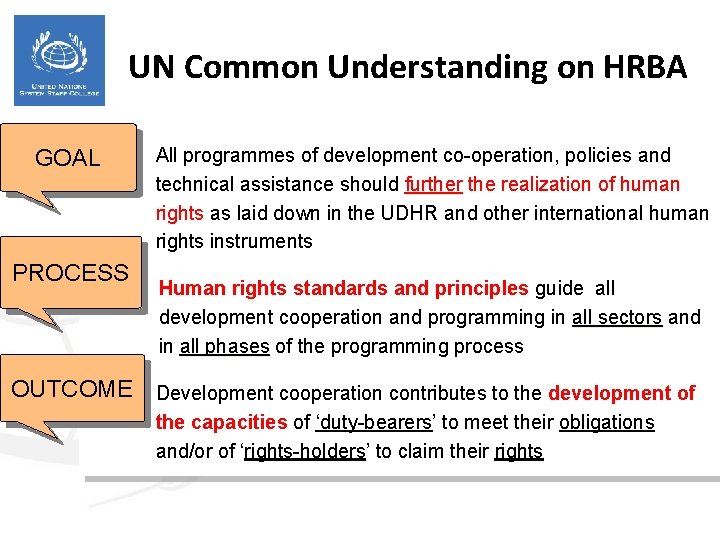
UN Common Understanding on HRBA GOAL 1. PROCESS All programmes of development co-operation, policies and technical assistance should further the realization of human rights as laid down in the UDHR and other international human rights instruments Human rights standards and principles guide all development cooperation and programming in all sectors and in all phases of the programming process OUTCOME 1. Development cooperation contributes to the development of the capacities of ‘duty-bearers’ to meet their obligations and/or of ‘rights-holders’ to claim their rights
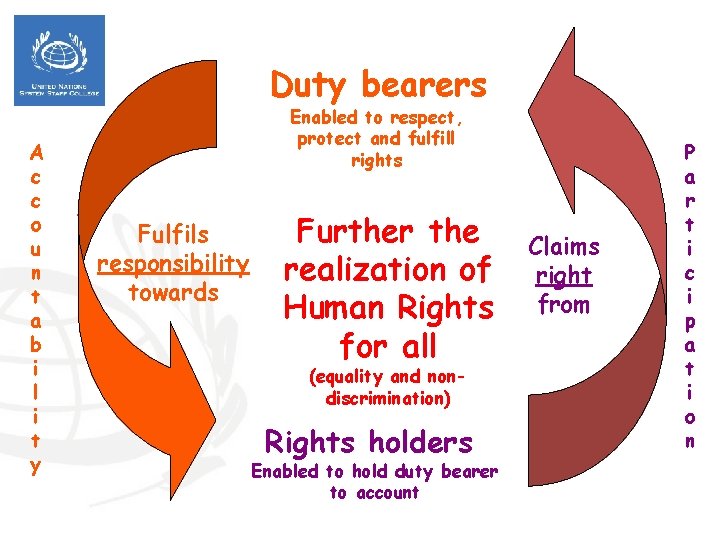
Duty bearers A c c o u n t a b i l i t y Enabled to respect, protect and fulfill rights Fulfils responsibility towards Further the realization of Human Rights for all (equality and nondiscrimination) Rights holders Enabled to hold duty bearer to account Claims right from P a r t i c i p a t i o n
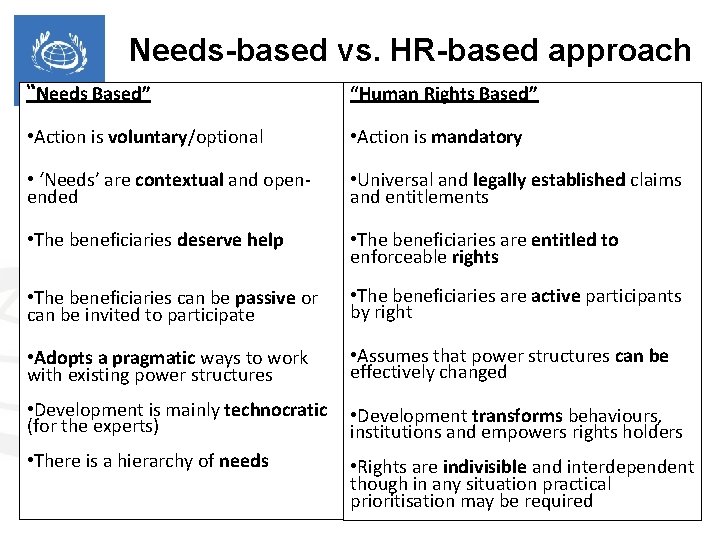
Needs-based vs. HR-based approach “Needs Based” “Human Rights Based” • Action is voluntary/optional • Action is mandatory • ‘Needs’ are contextual and openended • Universal and legally established claims and entitlements • The beneficiaries deserve help • The beneficiaries are entitled to enforceable rights • The beneficiaries can be passive or can be invited to participate • The beneficiaries are active participants by right • Adopts a pragmatic ways to work with existing power structures • Assumes that power structures can be effectively changed • Development is mainly technocratic (for the experts) • Development transforms behaviours, institutions and empowers rights holders • There is a hierarchy of needs • Rights are indivisible and interdependent though in any situation practical prioritisation may be required
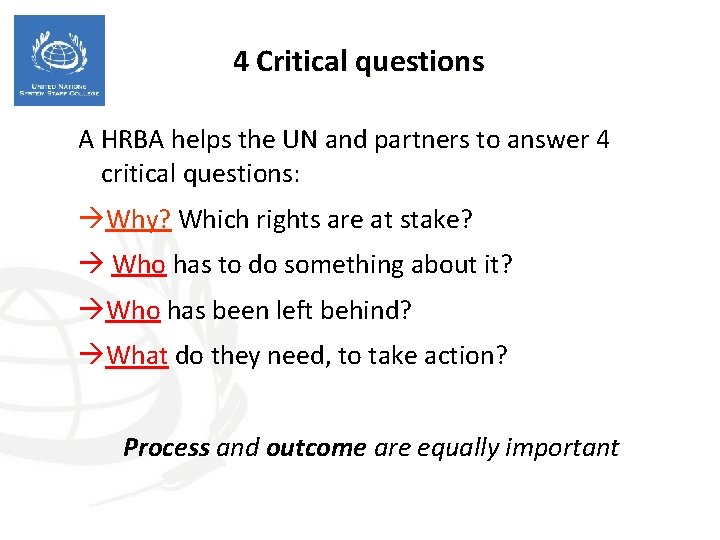
4 Critical questions A HRBA helps the UN and partners to answer 4 critical questions: Why? Which rights are at stake? Who has to do something about it? Who has been left behind? What do they need, to take action? Process and outcome are equally important
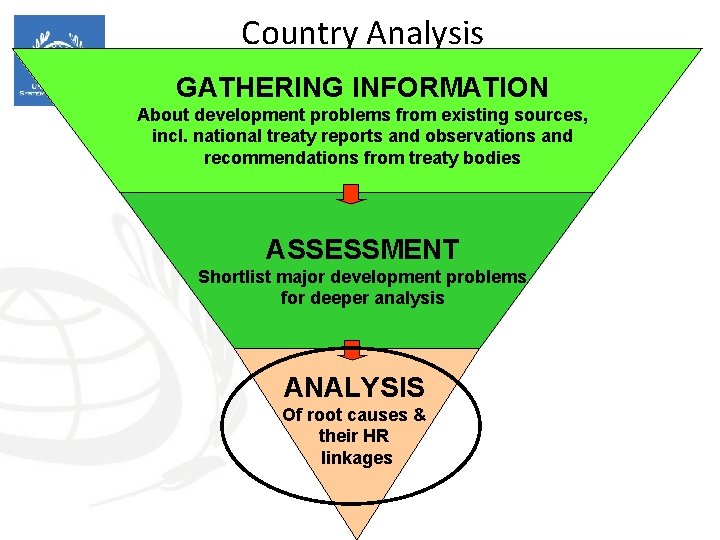
Country Analysis GATHERING INFORMATION About development problems from existing sources, incl. national treaty reports and observations and recommendations from treaty bodies ASSESSMENT Shortlist major development problems for deeper analysis ANALYSIS Of root causes & their HR linkages
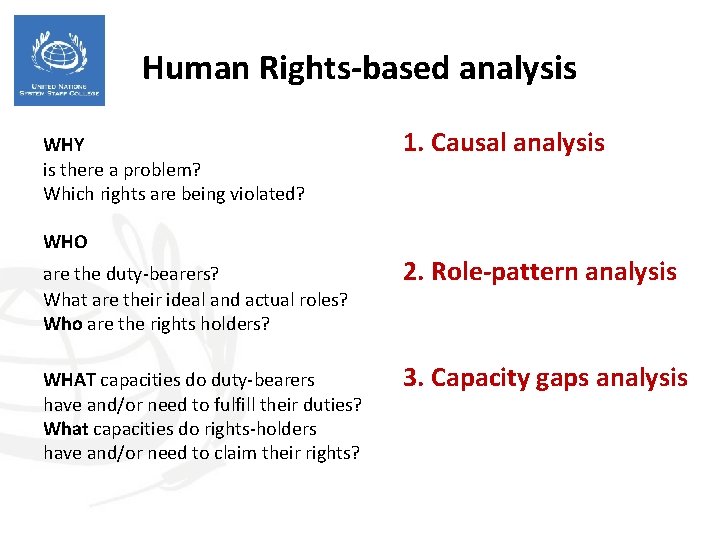
Human Rights-based analysis WHY is there a problem? Which rights are being violated? WHO 1. Causal analysis are the duty-bearers? What are their ideal and actual roles? Who are the rights holders? 2. Role-pattern analysis WHAT capacities do duty-bearers have and/or need to fulfill their duties? What capacities do rights-holders have and/or need to claim their rights? 3. Capacity gaps analysis
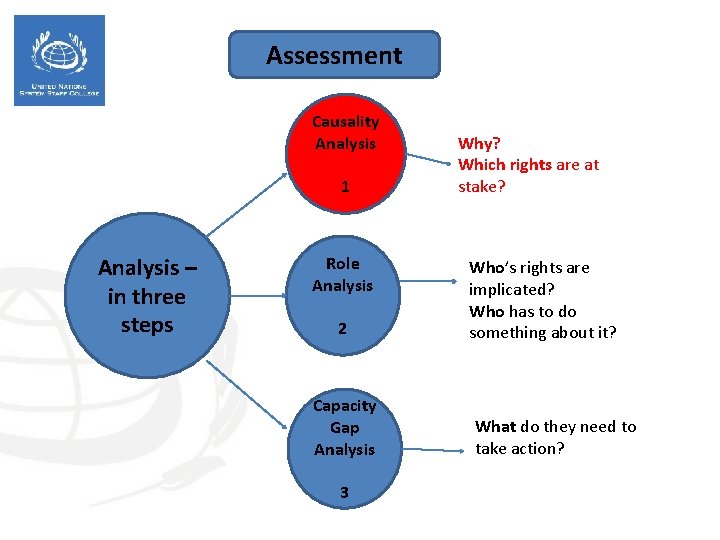
Assessment Causality Analysis 1 Analysis – in three steps Role Analysis 2 Capacity Gap Analysis 3 Why? Which rights are at stake? Who’s rights are implicated? Who has to do something about it? What do they need to take action?
Step 1: Causality Analysis What is it? • The essential first step for HRBA and RBM • A technique for identifying causes of a problem which can then be used to formulate appropriate responses • We can map the problem and its causes in the form of a problem tree
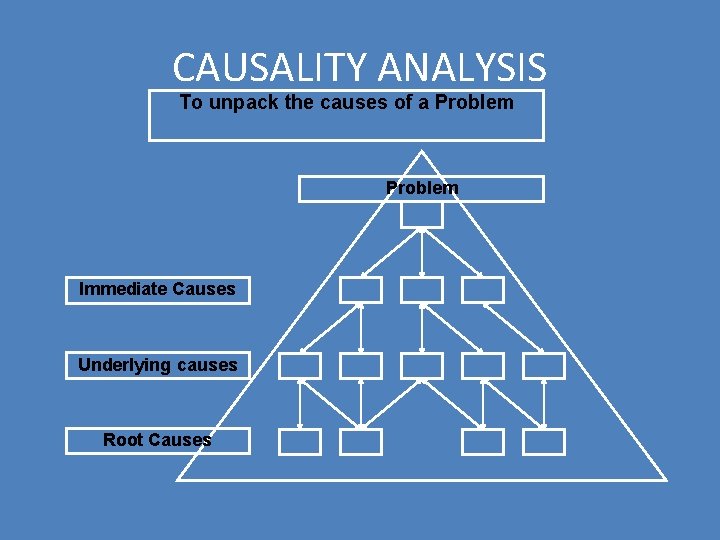
CAUSALITY ANALYSIS To unpack the causes of a Problem Immediate Causes Underlying causes Root Causes
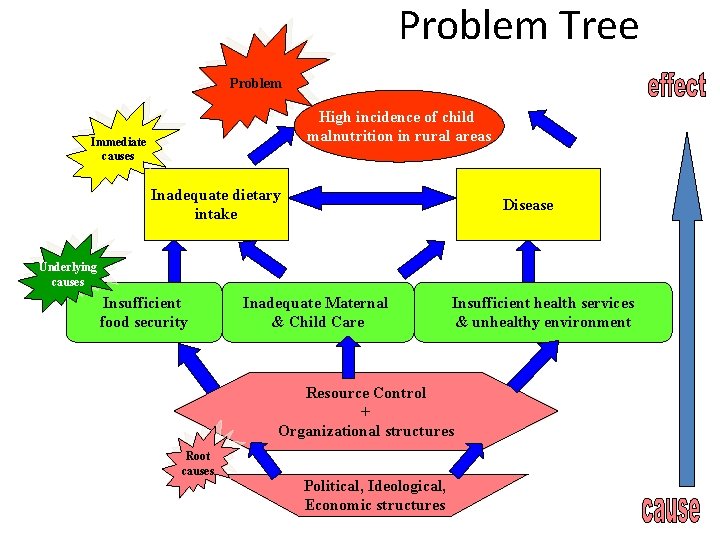
Problem Tree Problem High incidence of child malnutrition in rural areas Immediate causes Inadequate dietary intake Disease Underlying causes Insufficient food security Inadequate Maternal & Child Care Insufficient health services & unhealthy environment Resource Control + Organizational structures Root causes Political, Ideological, Economic structures
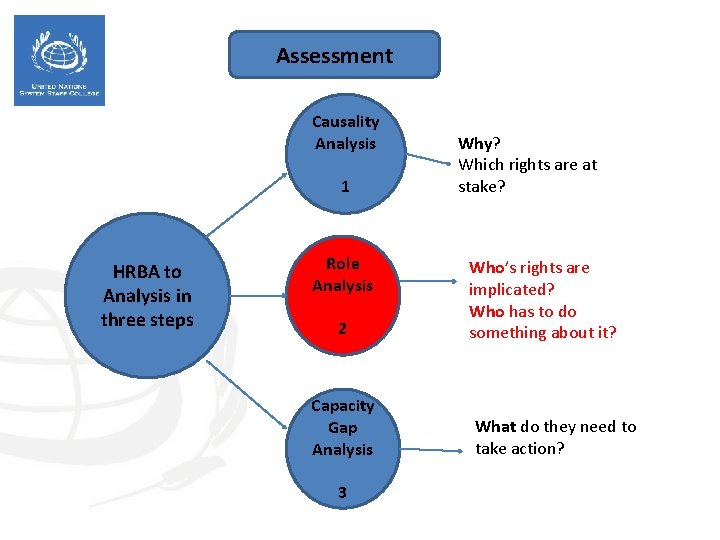
Assessment Causality Analysis 1 HRBA to Analysis in three steps Role Analysis 2 Capacity Gap Analysis 3 Why? Which rights are at stake? Who’s rights are implicated? Who has to do something about it? What do they need to take action?
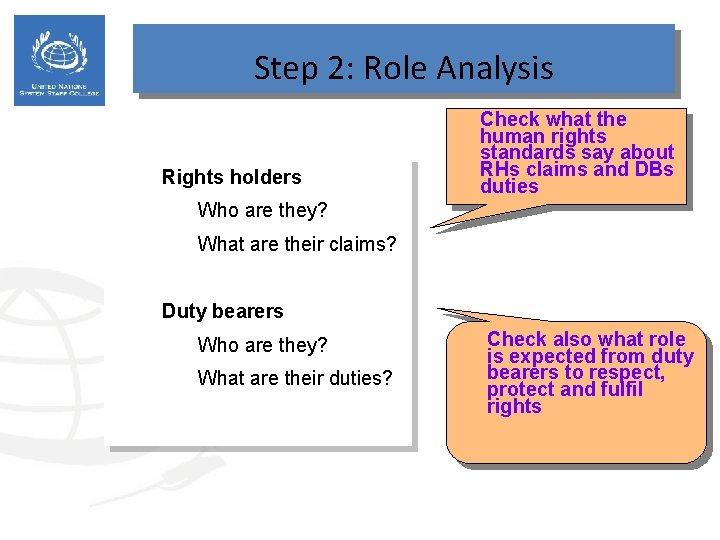
Step 2: Role Analysis § § Rights holders q Who are they? q What are their claims? Check what the human rights standards say about RHs claims and DBs duties Duty bearers q Who are they? q What are their duties? Check also what role is expected from duty bearers to respect, protect and fulfil rights
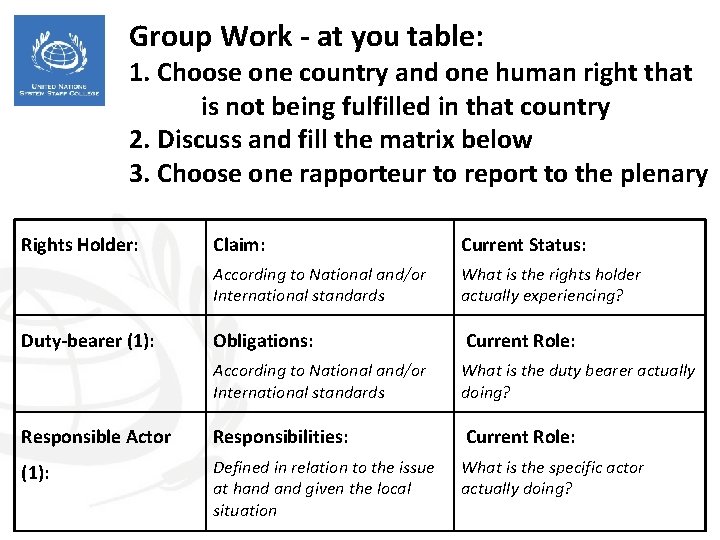
Group Work - at you table: 1. Choose one country and one human right that is not being fulfilled in that country 2. Discuss and fill the matrix below 3. Choose one rapporteur to report to the plenary Rights Holder: Claim: Current Status: According to National and/or International standards What is the rights holder actually experiencing? Obligations: Current Role: According to National and/or International standards What is the duty bearer actually doing? Responsible Actor Responsibilities: Current Role: (1): Defined in relation to the issue at hand given the local situation What is the specific actor actually doing? Duty-bearer (1):
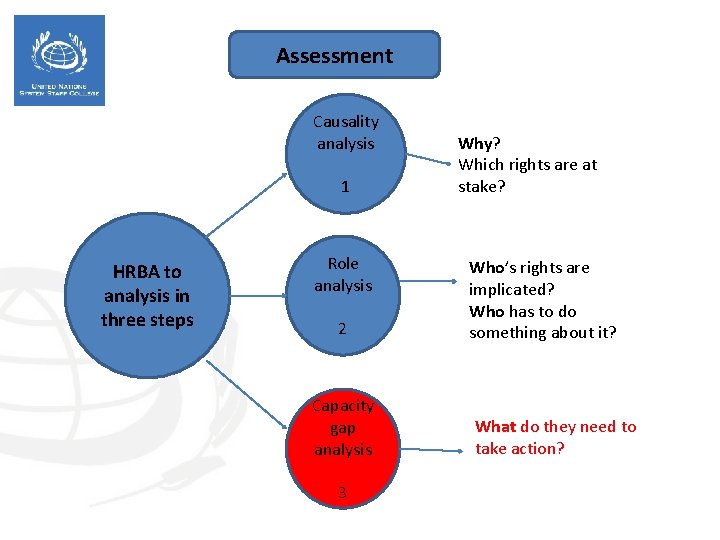
Assessment Causality analysis 1 HRBA to analysis in three steps Role analysis 2 Capacity gap analysis 3 Why? Which rights are at stake? Who’s rights are implicated? Who has to do something about it? What do they need to take action?
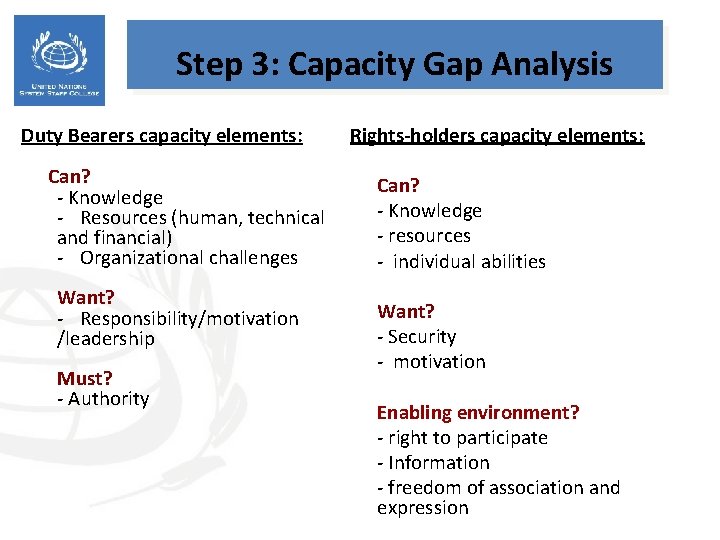
Step 3: Capacity Gap Analysis Duty Bearers capacity elements: Can? - Knowledge - Resources (human, technical and financial) - Organizational challenges Want? - Responsibility/motivation /leadership Must? - Authority Rights-holders capacity elements: Can? - Knowledge - resources - individual abilities Want? - Security - motivation Enabling environment? - right to participate - Information - freedom of association and expression
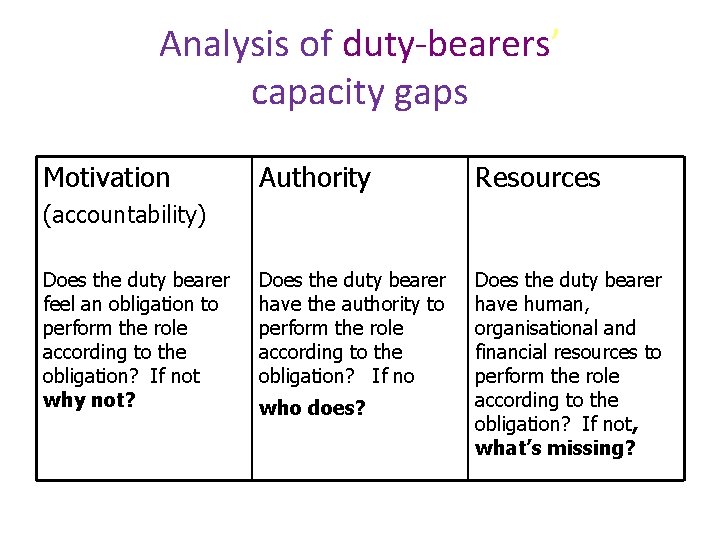
Analysis of duty-bearers’ capacity gaps Motivation Authority Resources Does the duty bearer have the authority to perform the role according to the obligation? If no Does the duty bearer have human, organisational and financial resources to perform the role according to the obligation? If not, what’s missing? (accountability) Does the duty bearer feel an obligation to perform the role according to the obligation? If not why not? who does?
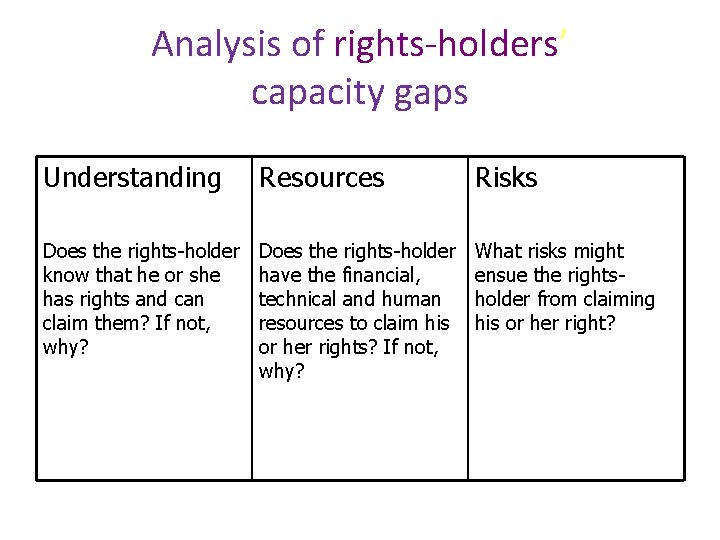
Analysis of rights-holders’ capacity gaps Understanding Resources Risks Does the rights-holder know that he or she has rights and can claim them? If not, why? Does the rights-holder have the financial, technical and human resources to claim his or her rights? If not, why? What risks might ensue the rightsholder from claiming his or her right?
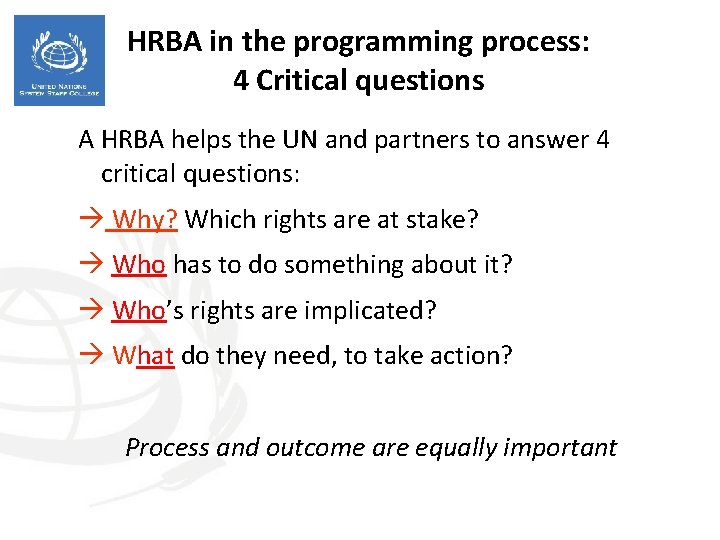
HRBA in the programming process: 4 Critical questions A HRBA helps the UN and partners to answer 4 critical questions: Why? Which rights are at stake? Who has to do something about it? Who’s rights are implicated? What do they need, to take action? Process and outcome are equally important
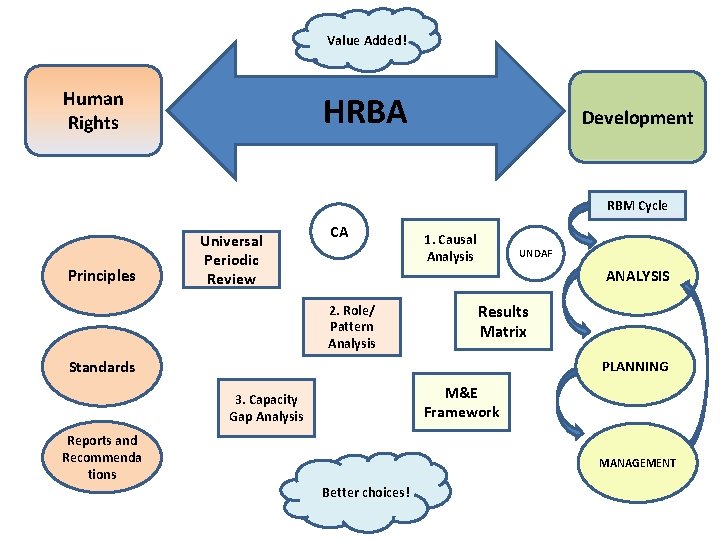
Value Added! Human Rights HRBA Development RBM Cycle Principles Universal Periodic Review CA 1. Causal Analysis UNDAF ANALYSIS 2. Role/ Pattern Analysis Results Matrix Standards PLANNING M&E Framework 3. Capacity Gap Analysis Reports and Recommenda tions MANAGEMENT Better choices!

Thank you!!
- Slides: 25