
Human Rights and Citizenship A Global Perspective on
Human Rights and Citizenship: A Global Perspective on the French Revolution Assistant Professor Sandrine Bertaux HUM 102, Spring 2018
Bicentenary commemoration of the French revolution, Paris, Champs Elysées 14 July 1989 • Jessye Norman singing the National anthem La Marseillaise • http: //www. ina. fr/video/CAB 89029382/ledefile-la-marseillaise-de-jean-paul-goudevideo. html • https: //www. ina. fr/video/CAB 89029382
Global vs. Eurocentric Perspective on the French Revolution • Eurocentric perspective: a revolution in Europe by Europeans that bequeathed the rest of the world with the modern political concepts of citizenship, human rights and the nation. vs. • Global perspective: a revolution rooted in European imperial rivalries that must account for the connections between the American, French and Haitian revolutions and the universalization of rights by slaves in Saint-Domingue (Haiti).
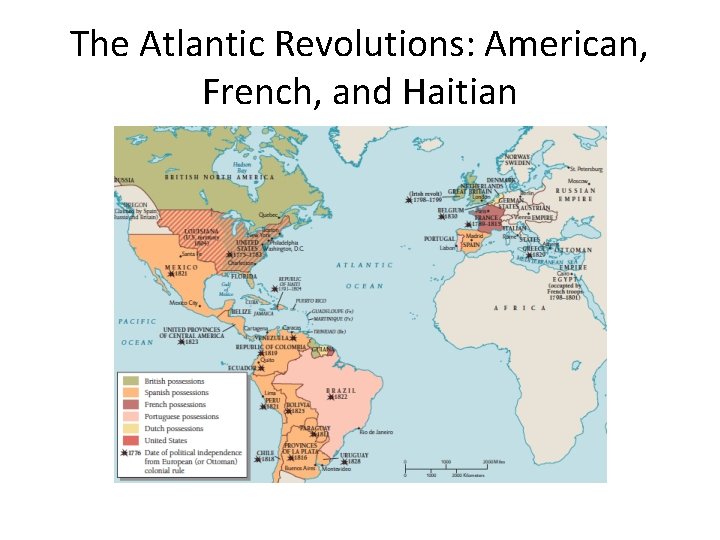
The Atlantic Revolutions: American, French, and Haitian

The triangular trade, c. 1740
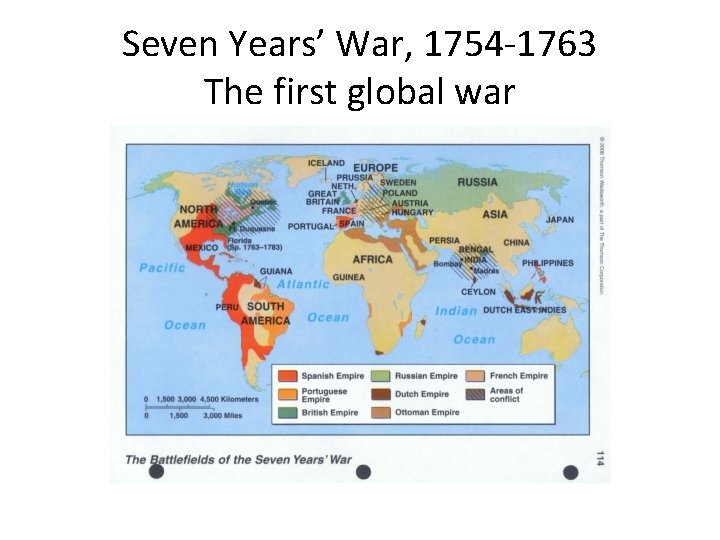
Seven Years’ War, 1754 -1763 The first global war
4 th of July 1776: Independence of the United States of America No taxation without representation • Violation of their rights as English subjects • 4 July 1776 Declaration of Independence and war. 1783, Treaty of Paris • France gets nothing + huge debt French Revolution
A revolution? • The colonists became the rulers of the new sovereign state; the institution of slavery is consolidated in the South and first US presidents are slave owners.
‘International’ • In 1780 Jeremy Bentham coins the term ‘international’ for mutual transaction between sovereigns • A sense that the world needs to be thought ‘globally’ and ‘internationally’
1780 s: The French monarchy in financial crisis The monarchy is on the verge of bankruptcy and needs to raise taxes— interest of the debt is 50% of the budget. Seven Years’ War and support for the American independence were costly.
The Ideology of the Old Regime Absolutist monarchy: Legitimacy: divine right Privilege of the nobility and the clergy: private law (vs. Sieyes common law) Privileges defined by the will of the king King= public will The Enlightenment • Natural rights (rights inherent by virtue of being human and not according to social status, hence universal) and reason.
The Estates-General Louis XVI summons the Estates-General that for May 1789 because the first two estates reject to be taxed: ‘no taxation without representation’. This was an institution that had fell in desuetude and was not summoned since 1614. Estates General: corporate body of the three orders (it undermines the claim to absolutism)
The Estates General • The Estates General are composed of three orders: The Clergy (first), the Nobles(second), and the Commoners (third) • An Estate defines a status and what is attached to it: tax, labor and so on. The Nobility and clergy are exempted of taxes. Only the Third Estate pays taxes and one tax is for the clergy (10%). • The third estate is composed by the peasants and the rising bourgeoisie which has no access to political power. • The peasants are forced to maintain public roads while they have no access to fishing and hunting, a privilege of the nobles.
The convocation of the Estates General • The Estates General can consent to new tax but also make demands by establishing a list of grievances the king should address and redress. • With the forthcoming of the Estates General, local assemblies are formed to establish a list of grievances and set up the election to the third estate. Abbé Sieyes belongs to the first estate but is elected in the third.
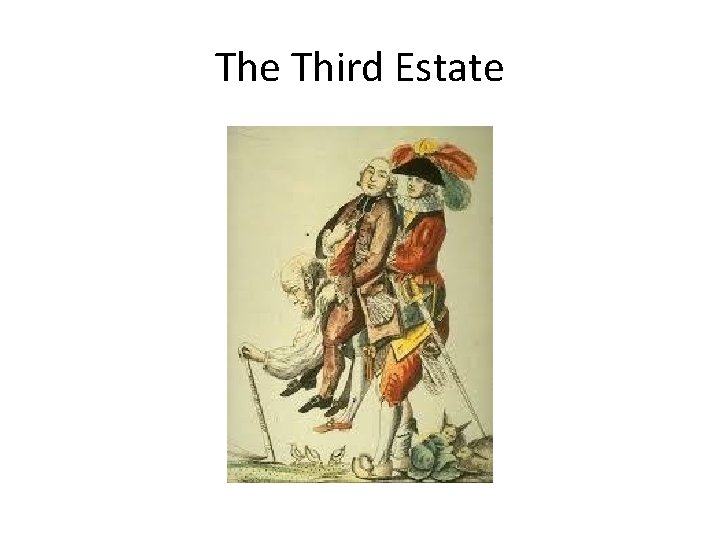
The Third Estate
5 May 1789 Meeting of the Estates General • the reviving of the EG triggered an unprecedented ideological debate about composition and procedure (no memory… 1614!). • 5 May Meeting of the Estates General in Versailles • The first problem is the vote: Two possibilities: Vote by Estate (or Order) Vote by head The number of third estate representatives was doubled by December 1788 up to 578 men (represent 95% of the whole population) : it becomes a majority (303 for the clergy and 282 for the nobility); Third Estate wants a vote by head not by order.
Emmanuel-Joseph Sieyès What is the Third Estate? January 1789 • a complete nation, productive citizens • What is citizenship: common law and common representation (legislature) • But third estate is nothing because of privileges • He wants to become something! • Demands to vote by head
The Tennis Court Oath, 20 June 1789 • The Third Estate proclaims itself National Assembly and wants to give a constitution to France
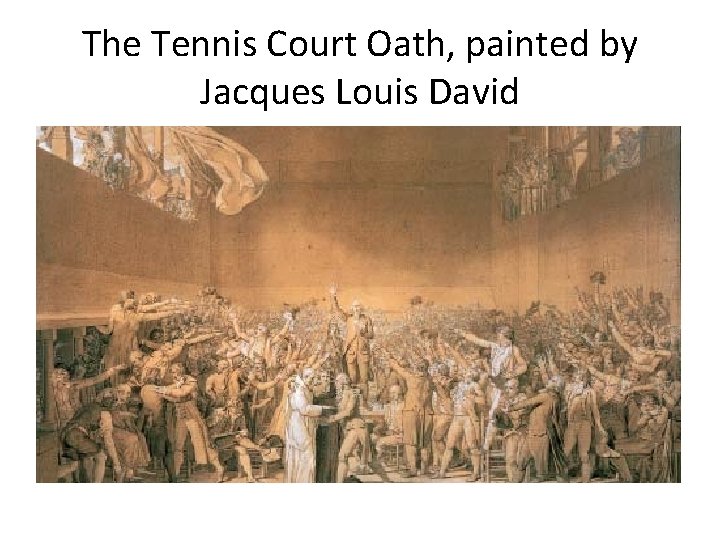
The Tennis Court Oath, painted by Jacques Louis David
The end of absolutism and feudalism • 5 May Meeting of the Estates General • 20 June 1789 Tennis-Court Oath • 14 July 1789, crowd seizes the royal prison Bastille–. Peasants’ revolts in provinces. • 4 August abolition of feudalism • 26 August 1789 The Declaration of the Rights of Man and of the Citizen • September 1791 Constitution • January 1793 Execution Louis XVI • Sept 1793 -July 1994 The Terror • 1799 (18 th Brumaire) Coup by Napoleon
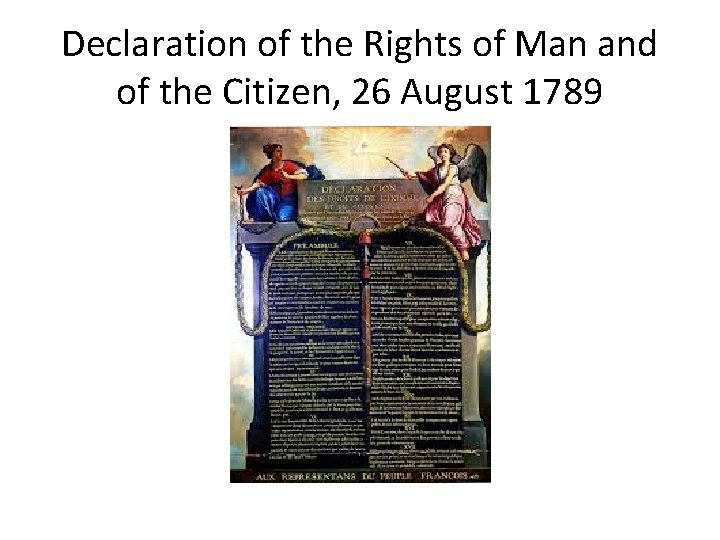
Declaration of the Rights of Man and of the Citizen, 26 August 1789
Active and Passive citizenship • The Declaration becomes the Preamble for the French constitution of 1791. • The Constitution distinguished between ‘active’ and ‘passive’ citizen Sieyès who wrote the preliminary provided the rationale for this distinction: • Natural and civil rights: passive rights, everyone enjoys it • Political rights: public authority: only nationals, men with property
Declaration of the Rights of Man and Citizen, August 26, 1789 (preamble of the Constitution september 1791) • ‘Natural, imprescriptible, and inalienable rights’ ‘sacred rights’ Not to be discriminated beyond ‘public utility’ (i. e. social status): ‘Men are born and always continue free and equal in respect of their rights’ (II) liberty, property, security, and resistance to oppression Source of sovereignty (III): the nation (vs. king/ divine right) (IV)Law is the will of the community (VII) Fair justice X-XI freedom of opinions and thought
The Haitian Revolution: universalization of Rights Saint-Domingue: source of wealth for France. Slaves are property
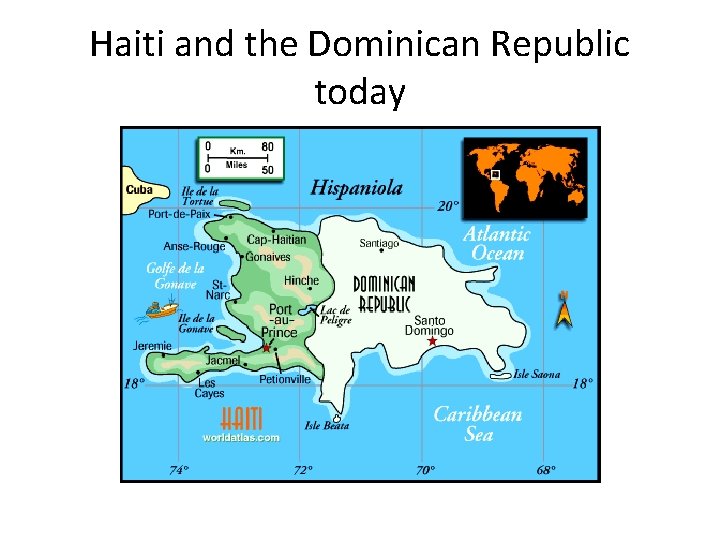
Haiti and the Dominican Republic today
The Haitian Revolution • Sugarcane plantation colony: high number of slaves. St. Domingue French part of the island, the Spanish part Dominican republic • On the eve of French revolution (estimates) • 40, 000 Whites • 30, 000 free peoples of color • 500, 000 slaves, most recently enslaved from Western Africa • Caribbeancolony coveted by Spanish and British
Haitian uprising • 1790 free men of color send a delegation to Paris to be represented arguing that they have property and are of European descent. National Assembly refuses, their rebellion is severely repressed. • August 1791, slave rebellion; invasion by Spanish and British. • 1793 French authorities declare that any slave who joins French forces would be freed • 1794 slavery is abolished in all French possessions ( it was de facto abolished by the slaves)
Toussaint L’Ouvertue • Toussaint L’Ouverture, a former slave, joins the Spanish, then with the abolition of slavery the French. He and his army defeat the British in 1798 and the Spanish in 1801. • 1801 he promulgates a constitution: • Allegiance to France but self-governing territory • Slavery abolished, reform of the military, declares Christianity state religion and he as a governor for life
Napoléon Bonaparte • 1799 NB seizes power in France. He takes the title of ‘Emperor’ • 1802 French troops sent to St- Domingue , Toussaint L’Ouverture is captured (dies in 1803 in France) • NB reestablishes slavery in the colonies –revolt, by dec. 1803 French army had collapsed. • Dessalines, a former slave, declares ‘Haiti’ independent in 1804 and promulgates a new constitution. • Haiti helps Simon Bolivar in Latin America in exchange of promise of abolition of slavery
1804 Independence of Haiti • • Haiti has to pay reparations to French settlers 1825 France recognizes Haiti 1862 US recognizes Haiti 1865 US abolishes slavery ( Civil War)
The Legacy of human rights • The United Nations in 1948 (We read week 13): Universal Declaration of Human Rights • Article 1: ‘all human beings are born free and equal in dignity and rights’ Oppositions to the idea of human rights: • Jeremy Bentham– natural right is simply nonsense; • A western notion unsuited to non-Western cultures and societies
- Slides: 31