
HUMAN RESPIRATORY SYSTEM What is Breathing The mechanical

HUMAN RESPIRATORY SYSTEM What is Breathing? The mechanical movement of air in and out of your lungs

FUNCTIONS To provide a constant supply of oxygen to keep your body cells functioning To remove carbon dioxide from the body cells
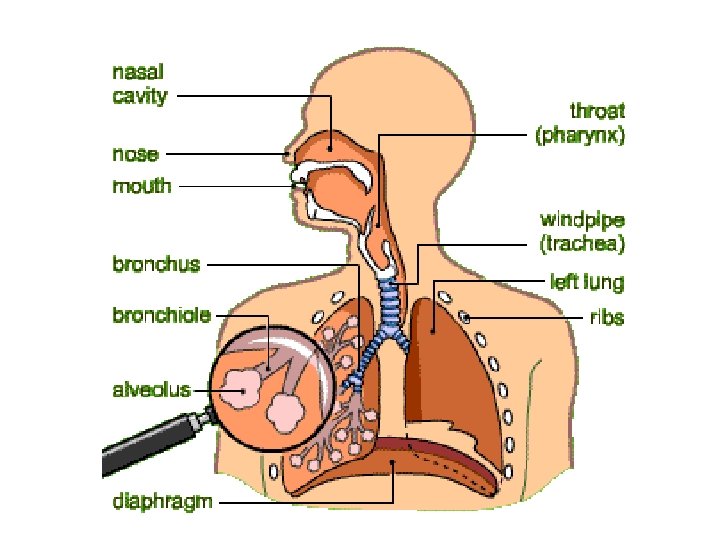
Organs of the Respiratory System Brings air into the body This is the first line of defense for the body
Warms & moistens air Glands that produce sticky mucus line the nasal cavity Lined with Cilia traps dust sweep mucus and trapped material to the back of the throat where it can be swallowed
At the lower end of the pharynx is a flap of tissue called the epiglottis covers the trachea during swallowing so that food does not enter the lungs
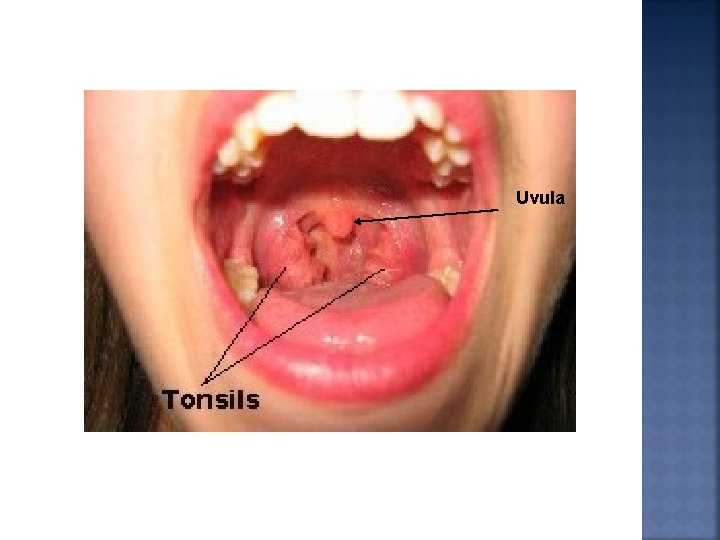
Uvula
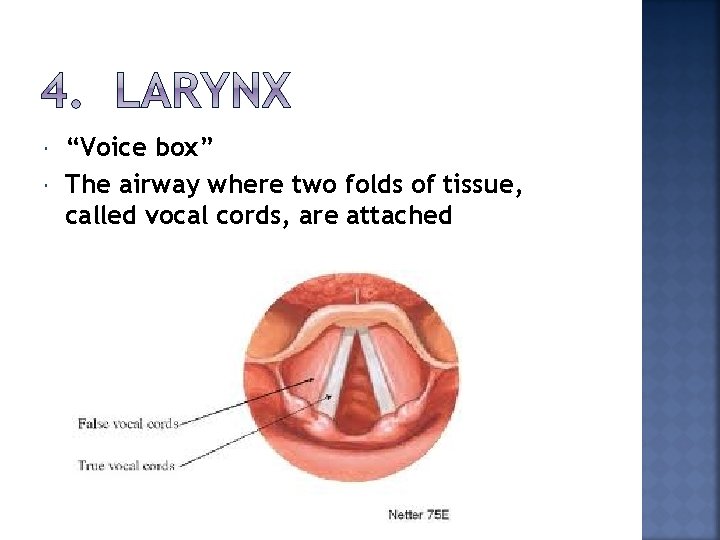
“Voice box” The airway where two folds of tissue, called vocal cords, are attached
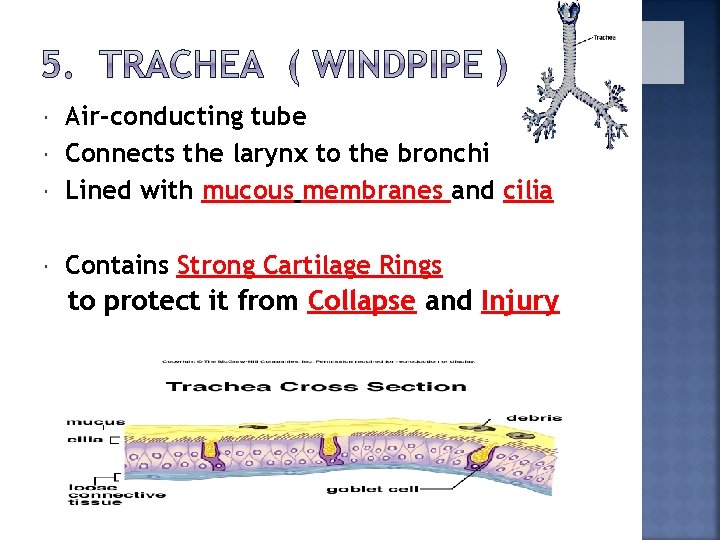
Air-conducting tube Connects the larynx to the bronchi Lined with mucous membranes and cilia Contains Strong Cartilage Rings to protect it from Collapse and Injury
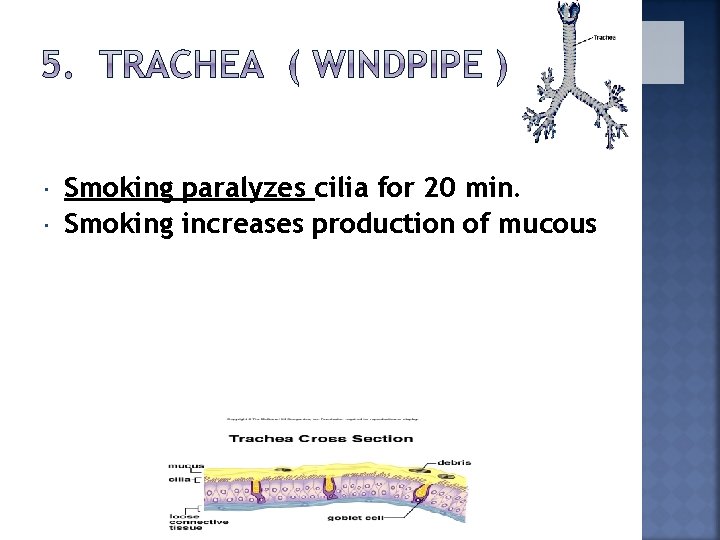
Smoking paralyzes cilia for 20 min. Smoking increases production of mucous
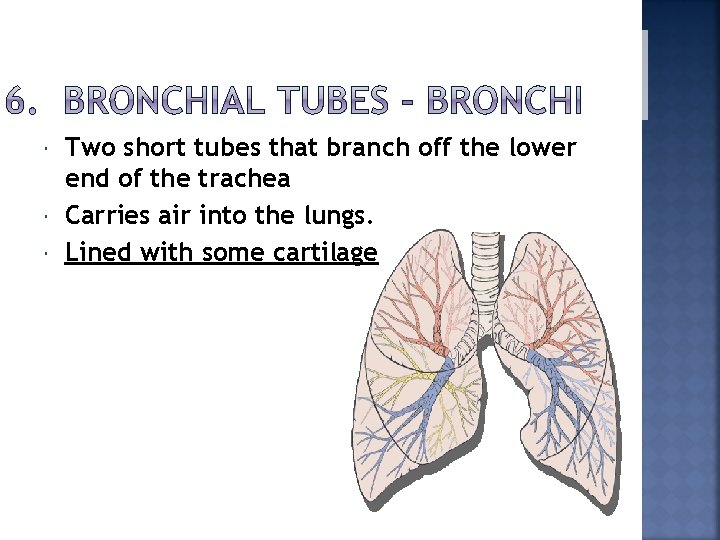
Two short tubes that branch off the lower end of the trachea Carries air into the lungs. Lined with some cartilage
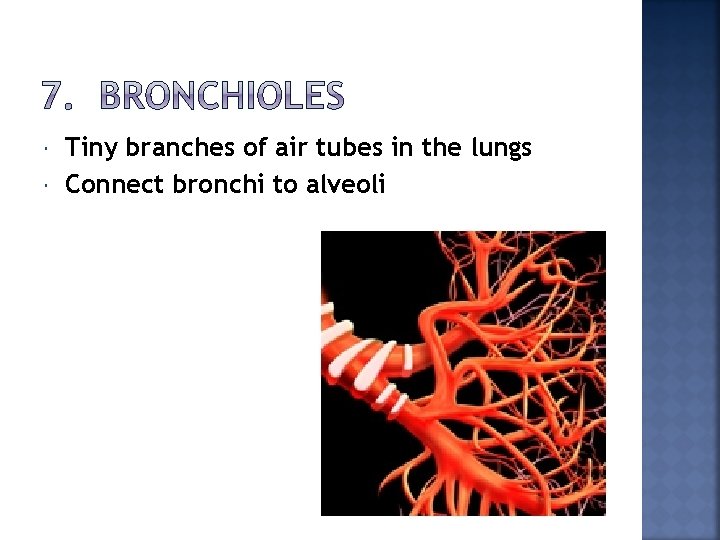
Tiny branches of air tubes in the lungs Connect bronchi to alveoli
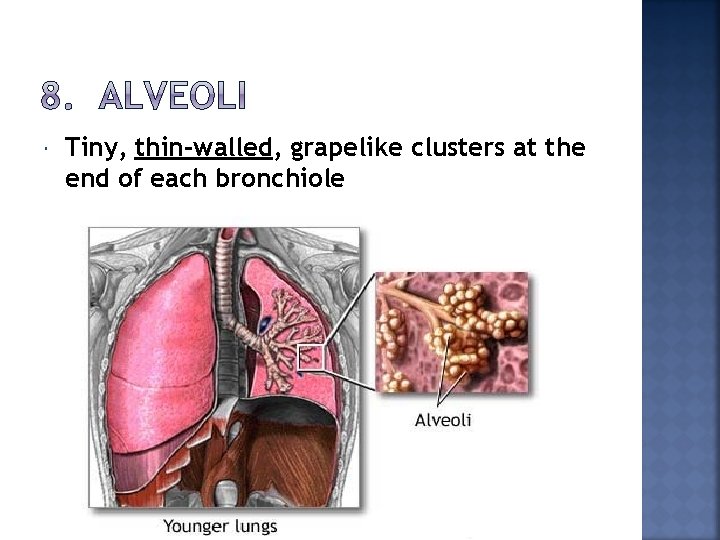
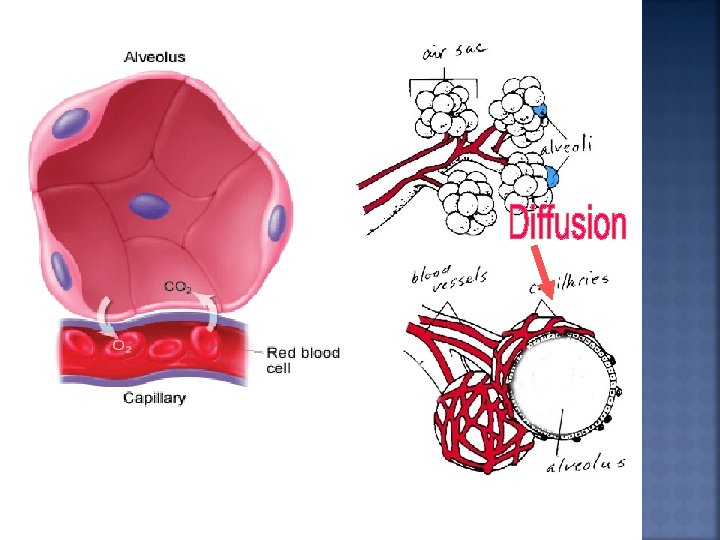
Tiny, thin-walled, grapelike clusters at the end of each bronchiole
Lined with thin moist membranes Surrounded by capillaries (small blood vessels) Where carbon dioxide and oxygen exchange take place
Respiratory Surface About 30 million Alveoli in Lung Each Alveolus has as many as 1, 800 blood capillary contacts. MAJOR SURFACE OF GAS EXCHANGE
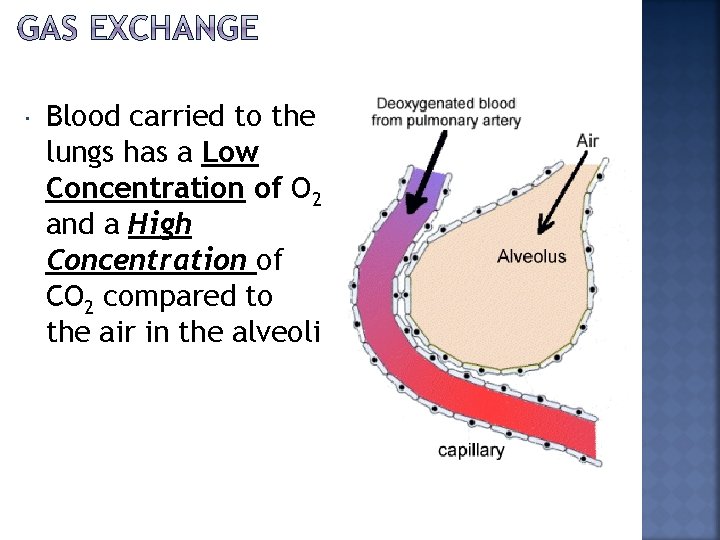
Blood carried to the lungs has a Low Concentration of O 2 and a High Concentration of CO 2 compared to the air in the alveoli
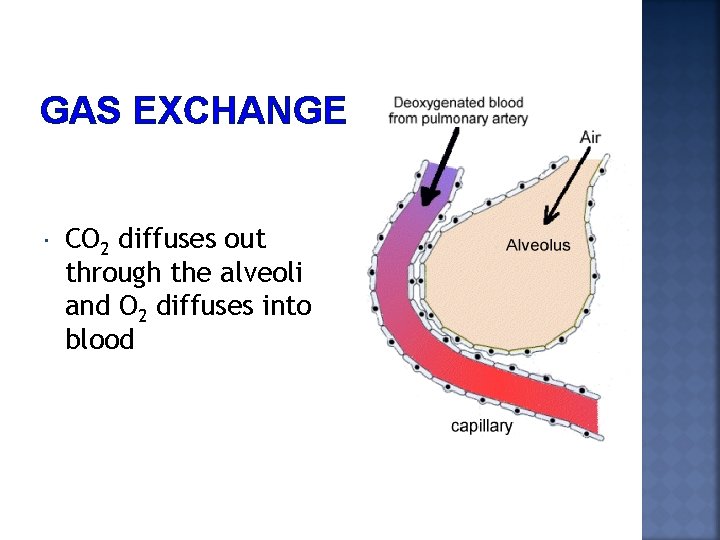
GAS EXCHANGE CO 2 diffuses out through the alveoli and O 2 diffuses into blood
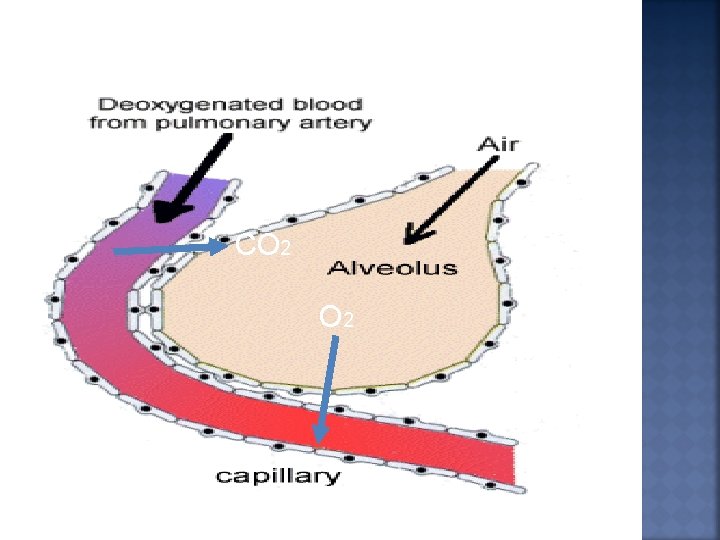
CO 2
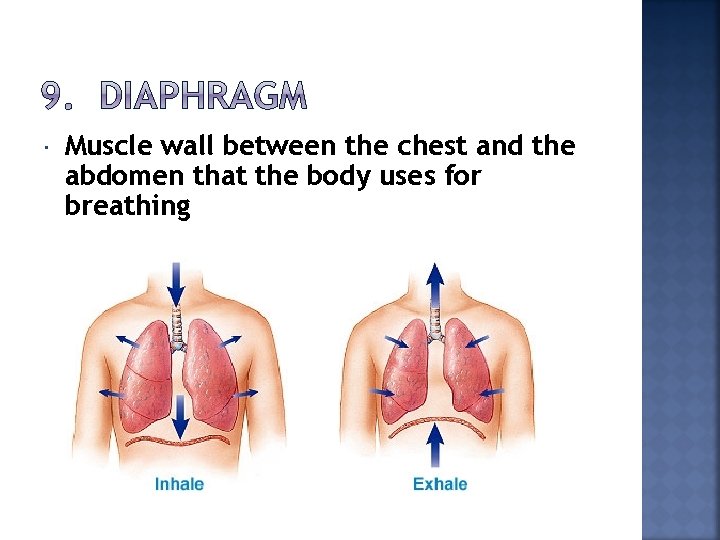
Muscle wall between the chest and the abdomen that the body uses for breathing
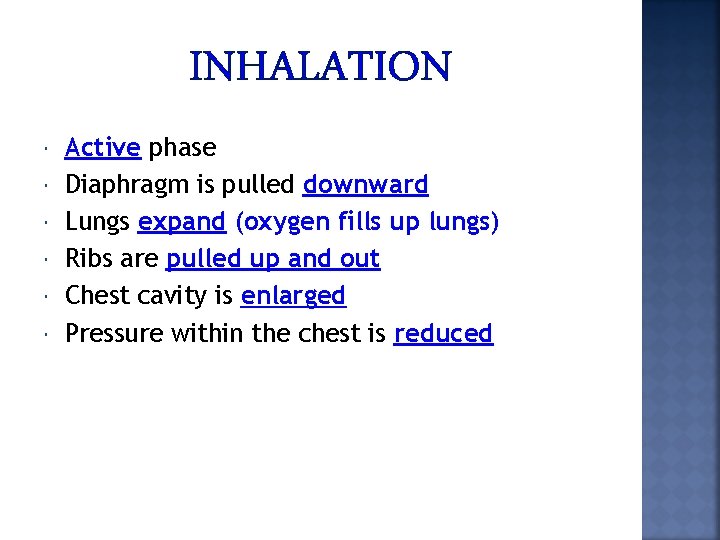
INHALATION Active phase Diaphragm is pulled downward Lungs expand (oxygen fills up lungs) Ribs are pulled up and out Chest cavity is enlarged Pressure within the chest is reduced
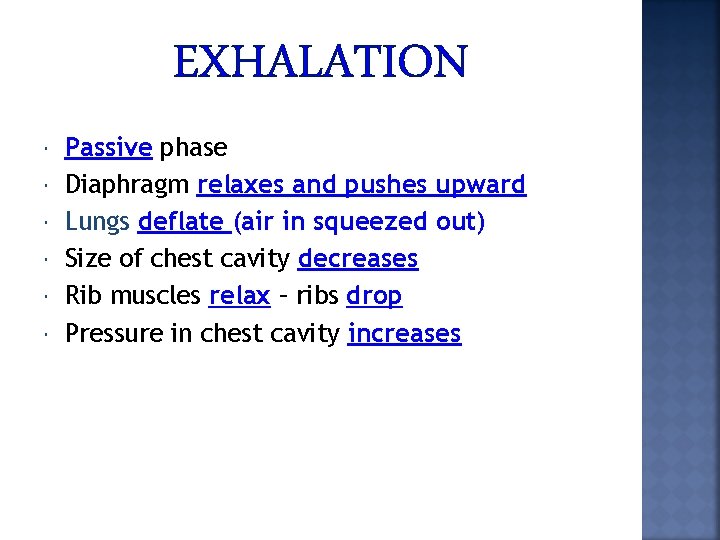
EXHALATION Passive phase Diaphragm relaxes and pushes upward Lungs deflate (air in squeezed out) Size of chest cavity decreases Rib muscles relax – ribs drop Pressure in chest cavity increases
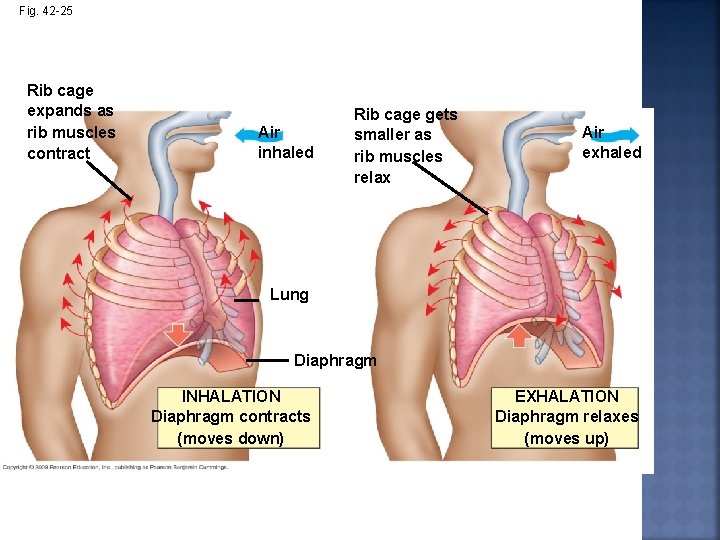
Fig. 42 -25 Rib cage expands as rib muscles contract Air inhaled Rib cage gets smaller as rib muscles relax Air exhaled Lung Diaphragm INHALATION Diaphragm contracts (moves down) EXHALATION Diaphragm relaxes (moves up)
Mainly an involuntary process controlled by the medulla of the brain The medulla monitors the amount of CO 2 in the blood When CO 2 increases - nerve impulses are sent to the diaphragm and chest muscles to increase the rate of breathing
Sensors in the aorta and carotid arteries monitor CO 2 concentrations in the blood These sensors exert control over breathing
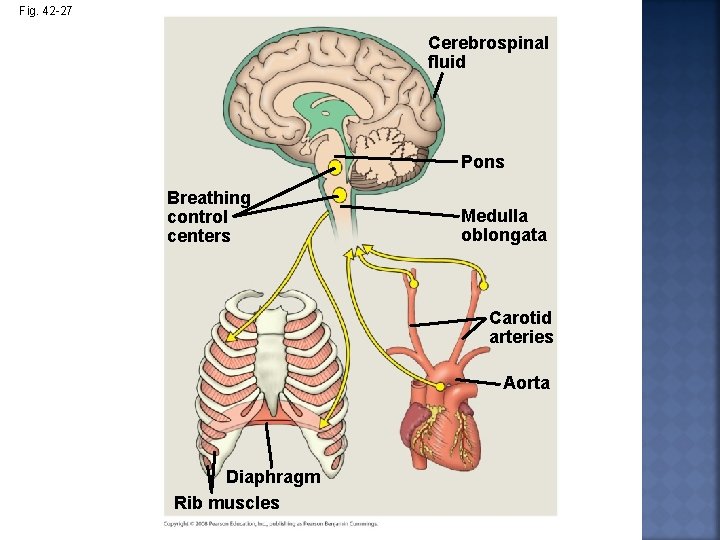
Fig. 42 -27 Cerebrospinal fluid Pons Breathing control centers Medulla oblongata Carotid arteries Aorta Diaphragm Rib muscles
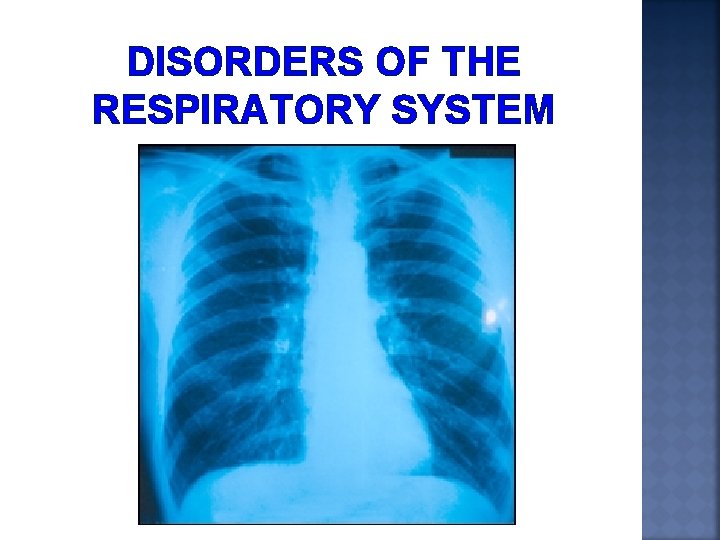
DISORDERS OF THE RESPIRATORY SYSTEM
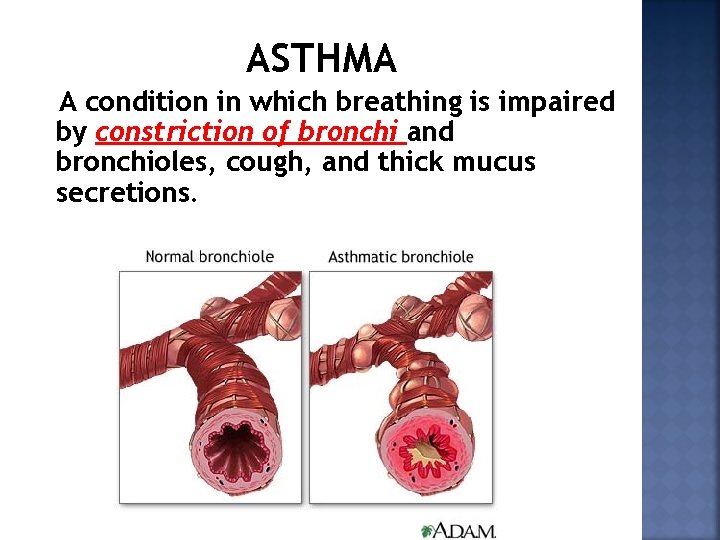
ASTHMA A condition in which breathing is impaired by constriction of bronchi and bronchioles, cough, and thick mucus secretions.
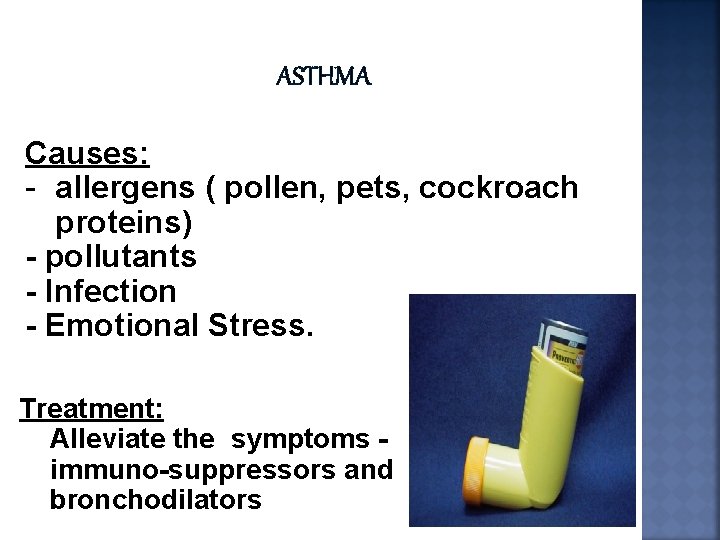
ASTHMA Causes: - allergens ( pollen, pets, cockroach proteins) - pollutants - Infection - Emotional Stress. Treatment: Alleviate the symptoms immuno-suppressors and bronchodilators
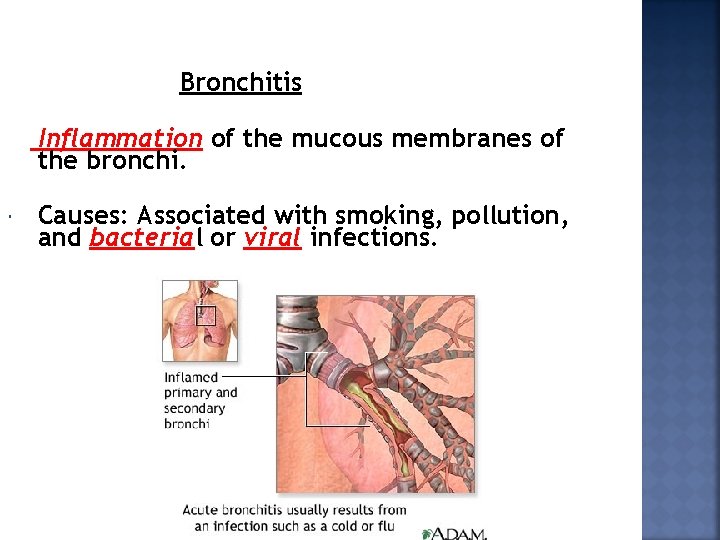
Bronchitis Inflammation of the mucous membranes of the bronchi. Causes: Associated with smoking, pollution, and bacterial or viral infections.
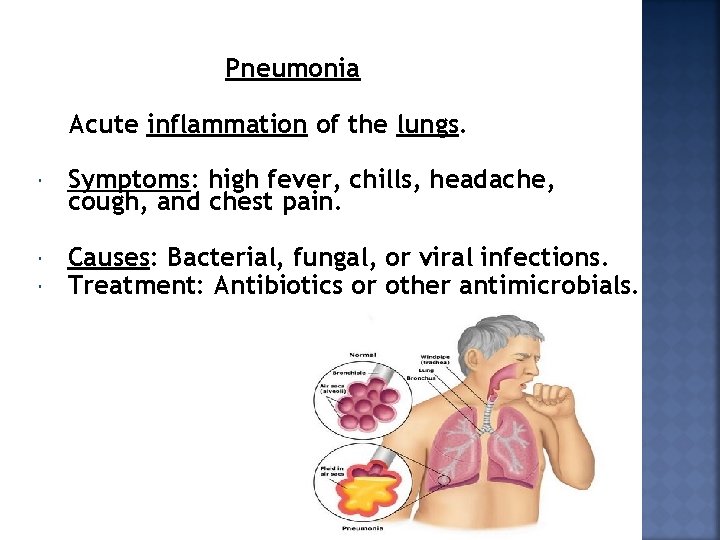
Pneumonia Acute inflammation of the lungs. Symptoms: high fever, chills, headache, cough, and chest pain. Causes: Bacterial, fungal, or viral infections. Treatment: Antibiotics or other antimicrobials.
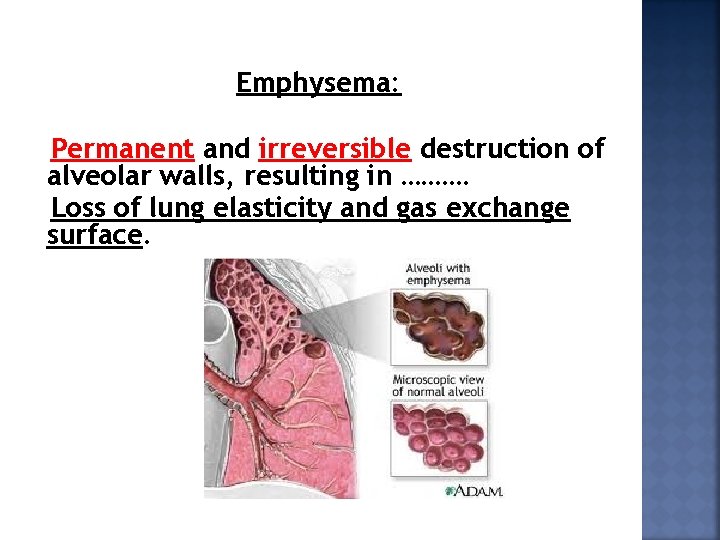
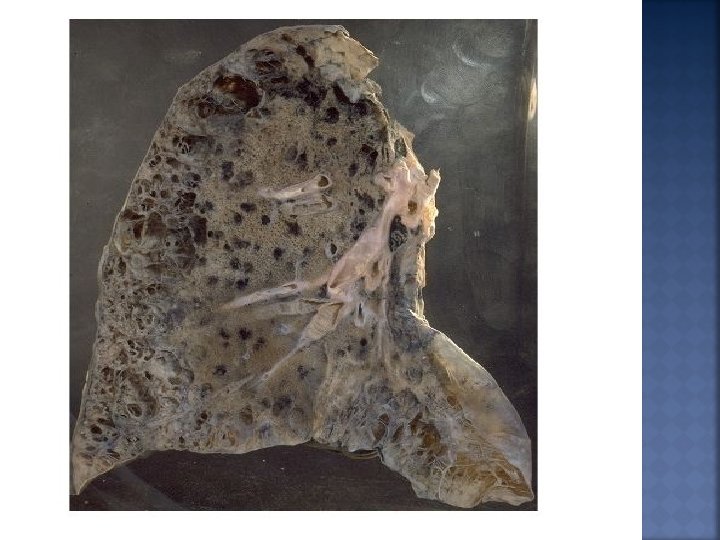
Emphysema: Permanent and irreversible destruction of alveolar walls, resulting in ………. Loss of lung elasticity and gas exchange surface.
Emphysema: Symptoms: shortness of breath, difficulty breathing, cough, weakness, anxiety, confusion, heart failure and respiratory failure. Causes: Smoking, pollution, old age, and infections. Treatment: Oxygen to help breathing. No cure.
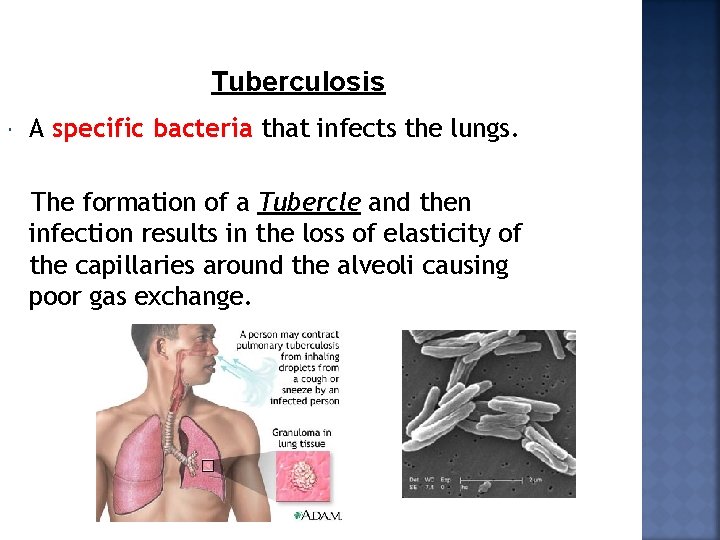
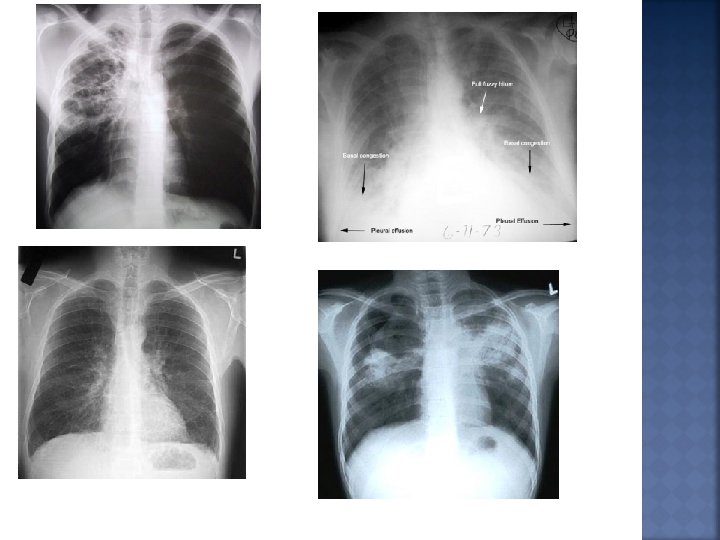
Tuberculosis A specific bacteria that infects the lungs. The formation of a Tubercle and then infection results in the loss of elasticity of the capillaries around the alveoli causing poor gas exchange.
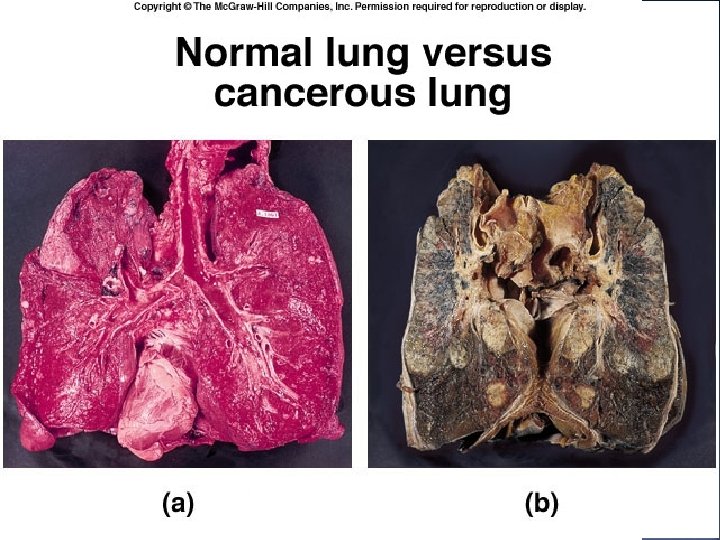
Lung Cancerous tumors grow and destroy the lung tissue. Symptoms: bloody sputum, persistent cough, difficulty breathing, chest pain Causes: Smoking (50% of all cases) and pollution (radon, asbestos). Treatment: Surgery is most effective, but only 50% of all lung cancers are operable by time of detection. Other treatments include radiation and chemotherapy.
- Slides: 39