
Human Resources Training and Individual Development Motivation Theories







- Slides: 21
Human Resources Training and Individual Development Motivation Theories February 4, 2004
Class Overview • Expectancy Theory • Goal Setting Theory • Social Cognitive Theory
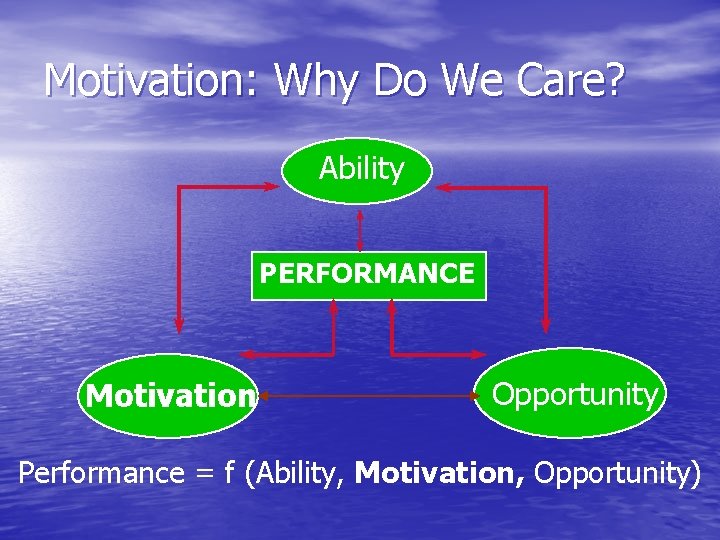
Motivation: Why Do We Care? Ability PERFORMANCE Motivation Opportunity Performance = f (Ability, Motivation, Opportunity)
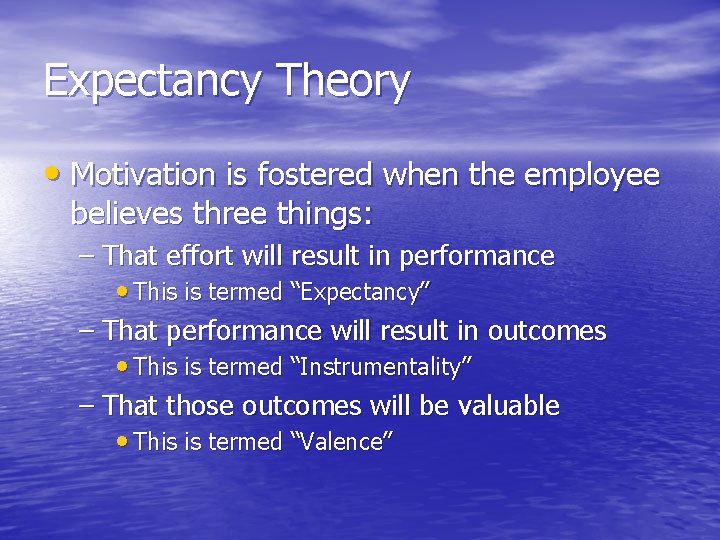
Expectancy Theory • Motivation is fostered when the employee believes three things: – That effort will result in performance • This is termed “Expectancy” – That performance will result in outcomes • This is termed “Instrumentality” – That those outcomes will be valuable • This is termed “Valence”
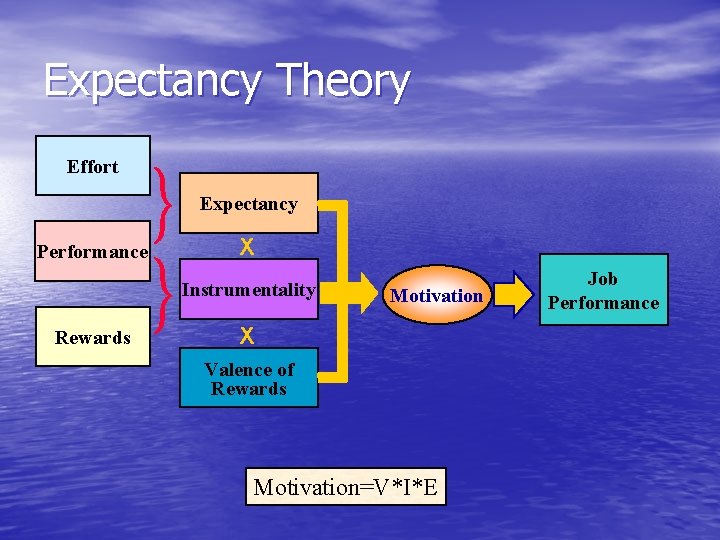
Expectancy Theory Effort Expectancy Performance X Instrumentality Rewards Motivation X Valence of Rewards Motivation=V*I*E Job Performance
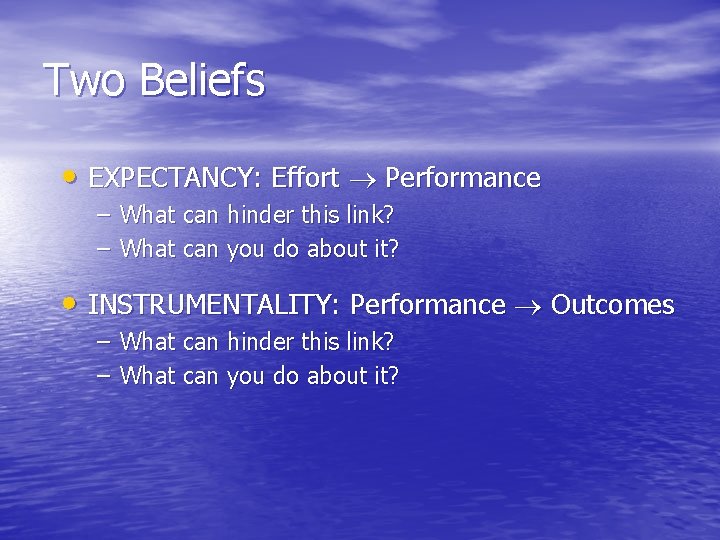
Two Beliefs • EXPECTANCY: Effort Performance – What can hinder this link? – What can you do about it? • INSTRUMENTALITY: Performance Outcomes – What can hinder this link? – What can you do about it?
Valence • Anticipated value of outcomes. Includes: – Extrinsic outcomes: • • • – Intrinsic outcomes: • • •
Expectancy Theory Exercise
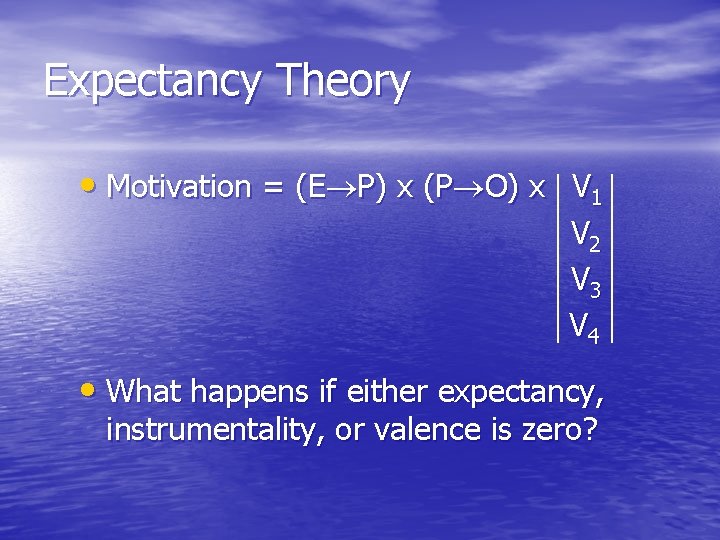
Expectancy Theory • Motivation = (E P) x (P O) x V 1 V 2 V 3 V 4 • What happens if either expectancy, instrumentality, or valence is zero?
VIDEO CASE
Expectancy: Empirical Status • Expectancy theory generally has been supported by the literature, with a few caveats: – The components appear to be additive as opposed to multiplicative – Within subjects analyses show better results than between subjects – Although generally supported, people are not always “hedonic rationalists” as predicted by theory
Goal Setting Theory • Motivation is fostered when employees are given challenging and specific goals (rather than easy goals, abstract goals, or no goals)
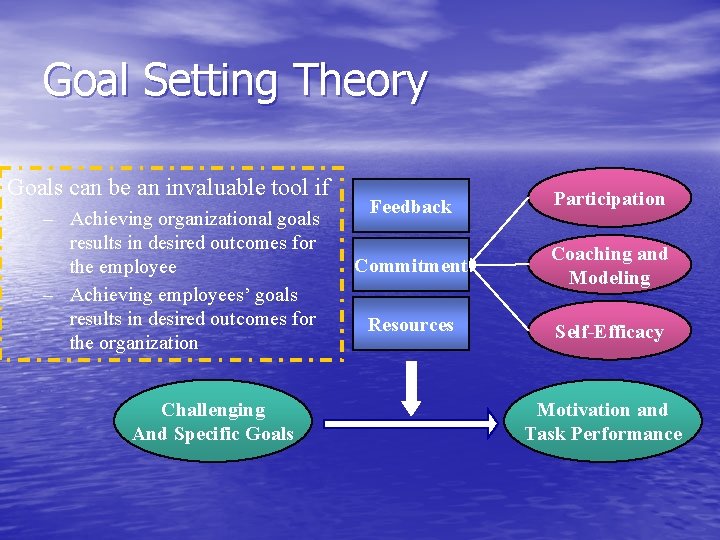
Goal Setting Theory Goals can be an invaluable tool if – Achieving organizational goals results in desired outcomes for the employee – Achieving employees’ goals results in desired outcomes for the organization Challenging And Specific Goals Feedback Participation Commitment Coaching and Modeling Resources Self-Efficacy Motivation and Task Performance
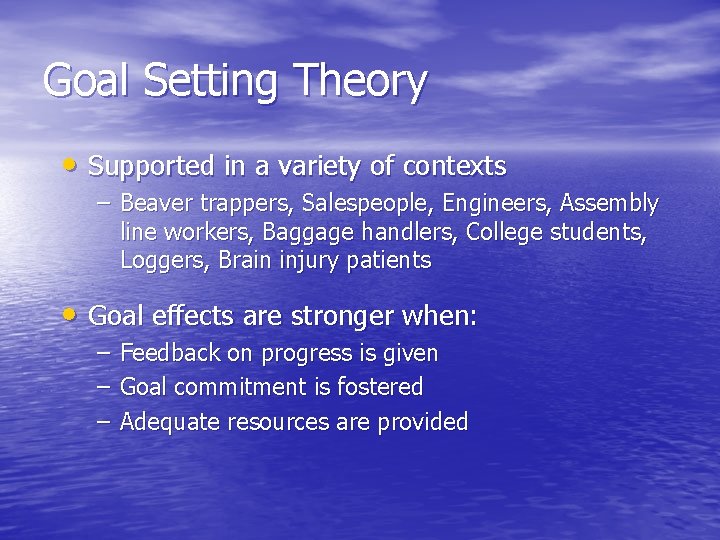
Goal Setting Theory • Supported in a variety of contexts – Beaver trappers, Salespeople, Engineers, Assembly line workers, Baggage handlers, College students, Loggers, Brain injury patients • Goal effects are stronger when: – – – Feedback on progress is given Goal commitment is fostered Adequate resources are provided
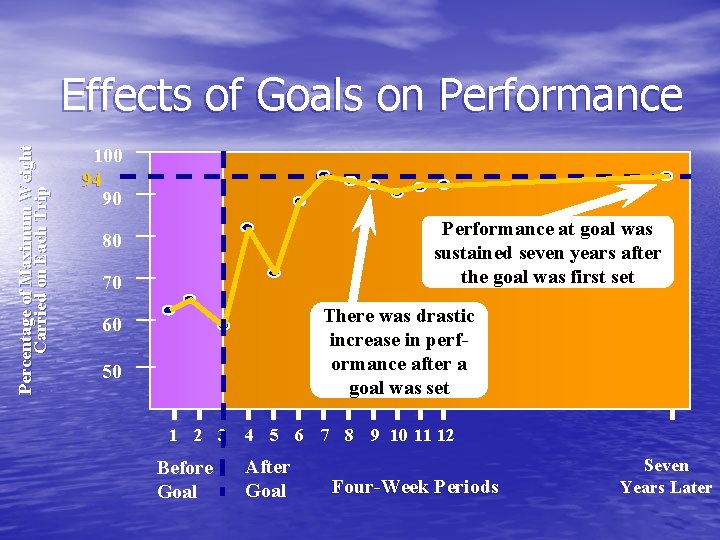
Percentage of Maximum Weight Carried on Each Trip Effects of Goals on Performance 100 94 90 Performance at goal was sustained seven years after the goal was first set 80 70 There was drastic increase in performance after a goal was set 60 50 1 2 3 Before Goal 4 5 6 7 8 9 10 11 12 After Goal Four-Week Periods Seven Years Later
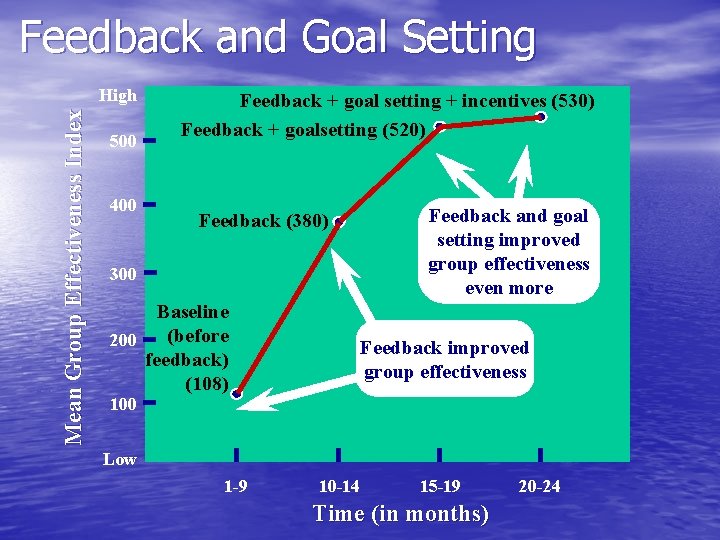
Feedback and Goal Setting Mean Group Effectiveness Index High 500 400 Feedback + goal setting + incentives (530) Feedback + goalsetting (520) Feedback and goal setting improved group effectiveness even more Feedback (380) 300 Baseline (before 200 feedback) (108) Feedback improved group effectiveness 100 Low 1 -9 10 -14 15 -19 Time (in months) 20 -24
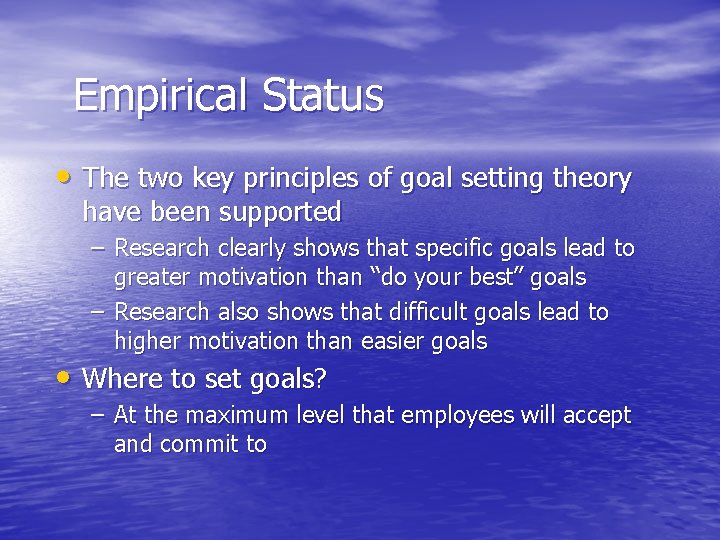
Empirical Status • The two key principles of goal setting theory have been supported – Research clearly shows that specific goals lead to greater motivation than “do your best” goals – Research also shows that difficult goals lead to higher motivation than easier goals • Where to set goals? – At the maximum level that employees will accept and commit to
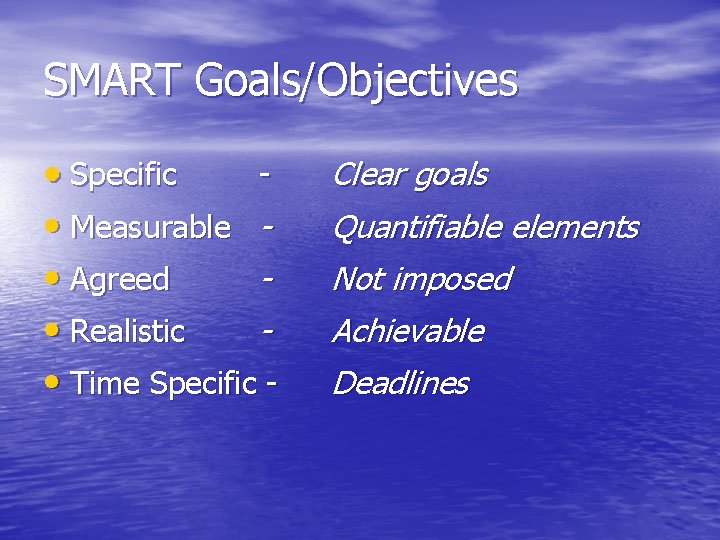
SMART Goals/Objectives · Specific • Measurable • Agreed • Realistic • Time Specific - Clear goals Quantifiable elements Not imposed Achievable Deadlines
Motivation Video Clip
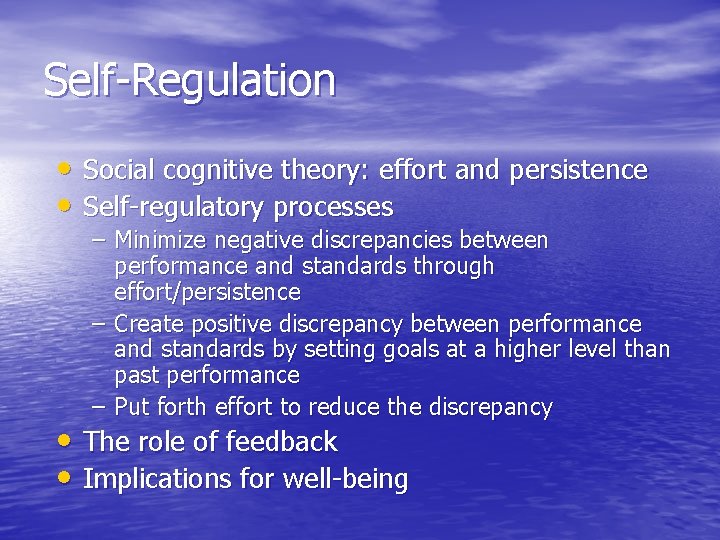
Self-Regulation • Social cognitive theory: effort and persistence • Self-regulatory processes – Minimize negative discrepancies between performance and standards through effort/persistence – Create positive discrepancy between performance and standards by setting goals at a higher level than past performance – Put forth effort to reduce the discrepancy • The role of feedback • Implications for well-being
Monday • Transfer of training • Read Chapter 5 from the textbook