
Human Resource Training and Individual Development Employee Development
- Slides: 18
Human Resource Training and Individual Development Employee Development March 1, 2004
Overview • Employee development – Education – Assessment – Job experiences – Performance appraisal and management – Mentorship programs
Definition § Development refers to formal education, job experiences, relationships, and assessments of personalities and abilities that help employees prepare for the future.
Employee Development • Training vs. development – Focus – Work experiences – Goals – Participation • Why development?
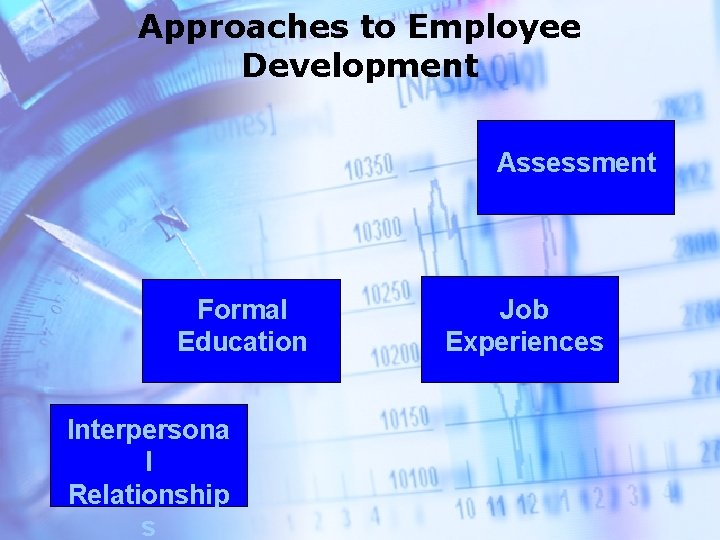
Approaches to Employee Development Assessment Formal Education Interpersona l Relationship s Job Experiences
Formal Education • Off and on-site • Short courses • Executive education
Assessment • Involves collecting information and providing feedback to employees about their behavior, communication style, or skills.
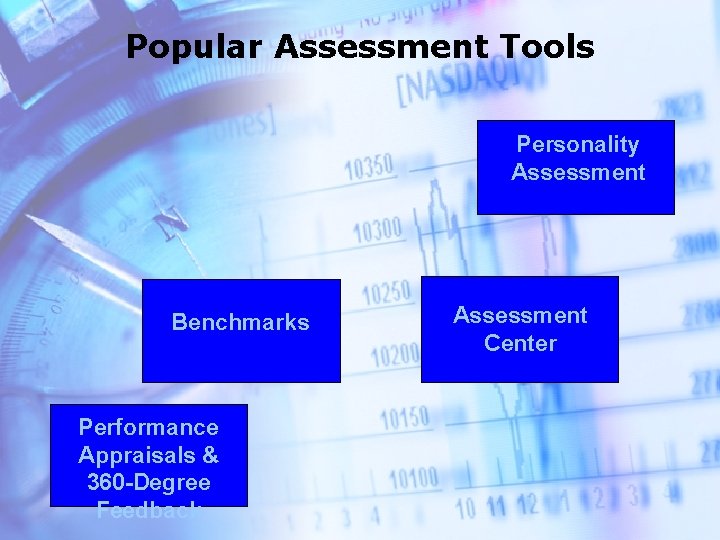
Popular Assessment Tools Personality Assessment Benchmarks Performance Appraisals & 360 -Degree Feedback Assessment Center
Personality Assessment • Personality assessment frameworks: – Myers-Briggs Inventory (MBTI) – The “Big Five” personality factors • Why assess personality?
Performance Appraisals • Performance appraisal is the process of measuring employees’ performance. • Measuring performance: – Ranking employees – Rating work behaviors – Rating the extent to which employees have desirable traits believed to be necessary for job success – Directly measuring the results of work performance. • Problems
360 -Degree Feedback Systems • • • Who rates the focal employee? Why 360 -degrees? Link to development Effective systems When are these systems used?
Job Experiences • Relationships, problems, demands, tasks, etc. • Most employee development occurs through job experiences. • How and when does development occur?
Enlarging Job Experiences • Methods – Promotion – Lateral move – Transfer – Downward move – Job rotation
Interpersonal Relationships • How do interpersonal relationships stimulate development? • Types of formal relationships – Mentoring – Coaching
Successful Mentoring Programs • Voluntary • Informal relationships • Choosing mentors • Purpose • Length • Level of contact • Evaluation • Rewards
The Development Planning Process • Elements – Identifying development needs – Choosing a development goal – Identifying the actions that need to be taken by the employee and the company to achieve the goal – Determining how progress toward goal attainment will be measured – Establishing a timetable for development • Responsibilities
Company Strategies • Individualization • Learning control • Ongoing support
Next Time • Assessment: Personality • Read: – Mc. Crae & Costa (1997) – Wright (2003).