
Human Resource Management MBA BBA Orientation Training Lectures
Human Resource Management MBA & BBA Orientation & Training Lectures 19, 20, 21 Course Lecturer: Farhan Mir
Learning Objectives 1. Introduction to Orientation and it’s Methodology 2. Discuss how to link training programs to organizational needs. 3. Explain how to assess the need for training. 4. Explain how to assess employees’ readiness for training. 5. Describe how to plan an effective training program.
Learning Objectives 5. Compare widely used training methods. 6. Summarize how to implement a successful training program. 7. Evaluate the success of a training program.
Training Linked to Organizational Needs • Training ØAn organization’s planned efforts to help employees acquire job-related knowledge, skills, abilities, and behaviors, with the goal of applying these on the job. • Instructional Design ØA process of systematically developing training to meet specified needs

Applications of Short Term Training • Two categories of training that have become widespread among U. S. companies are: Ø Orientation: training designed to prepare employees to perform their job effectively, learn about the organization, and establish work relationships. Ø Diversity training: training designed to change employee attitudes about diversity and/or develop skills needed to work with a diverse workforce.
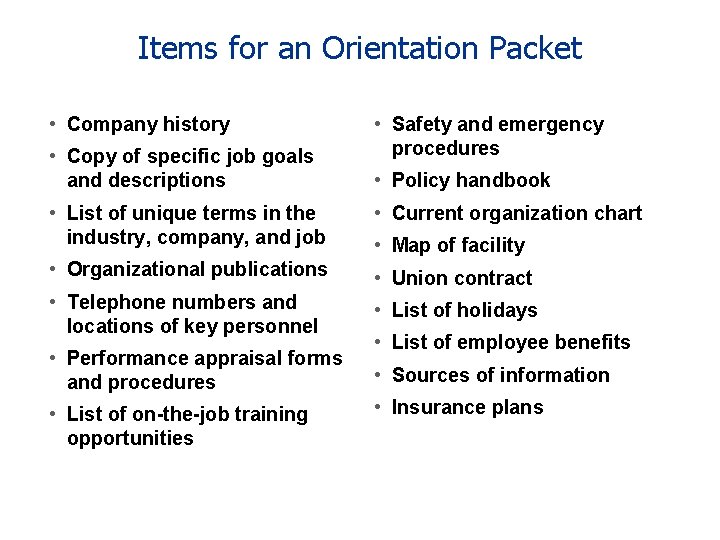
Items for an Orientation Packet • Company history • Copy of specific job goals and descriptions • Safety and emergency procedures • Policy handbook • List of unique terms in the industry, company, and job • Current organization chart • Organizational publications • Union contract • Telephone numbers and locations of key personnel • List of holidays • Performance appraisal forms and procedures • Sources of information • List of on-the-job training opportunities • Map of facility • List of employee benefits • Insurance plans
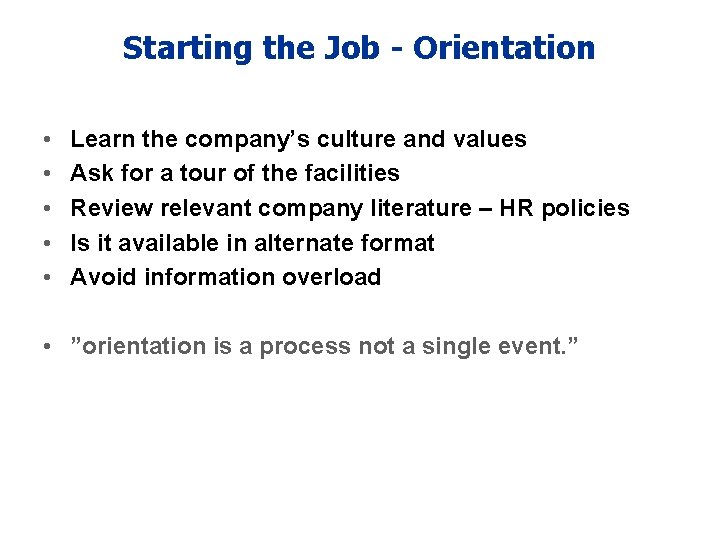
Starting the Job - Orientation • • • Learn the company’s culture and values Ask for a tour of the facilities Review relevant company literature – HR policies Is it available in alternate format Avoid information overload • ”orientation is a process not a single event. ”
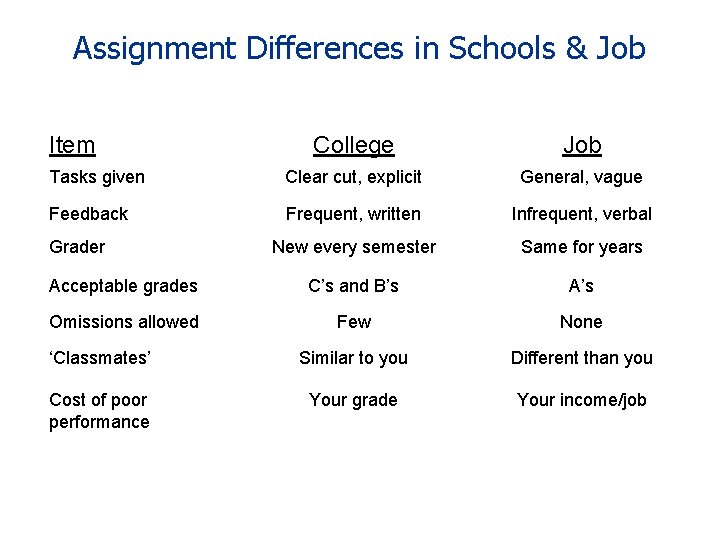
Assignment Differences in Schools & Job Item College Job Tasks given Clear cut, explicit General, vague Feedback Frequent, written Infrequent, verbal New every semester Same for years Acceptable grades C’s and B’s A’s Omissions allowed Few None ‘Classmates’ Similar to you Different than you Cost of poor performance Your grade Your income/job Grader
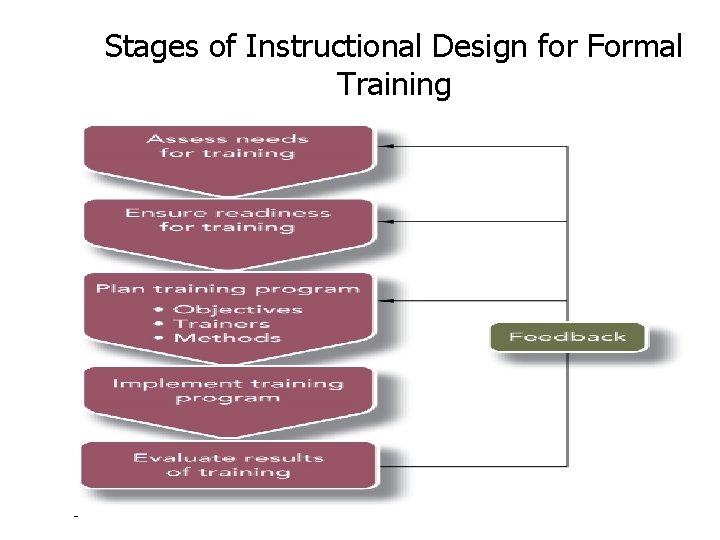
Stages of Instructional Design for Formal Training Figure 7. 1
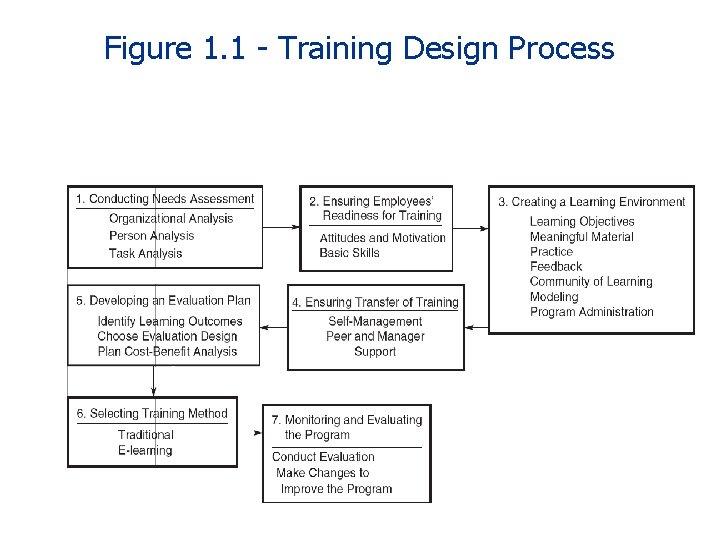
Figure 1. 1 - Training Design Process
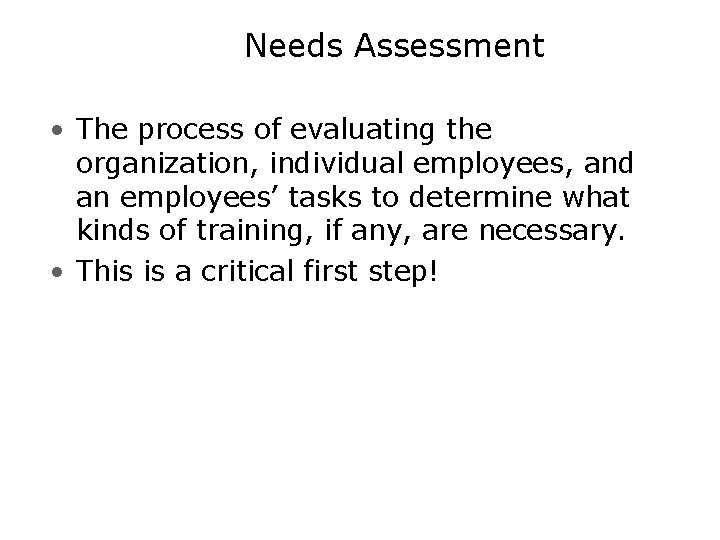
Needs Assessment • The process of evaluating the organization, individual employees, and an employees’ tasks to determine what kinds of training, if any, are necessary. • This is a critical first step!

Needs Assessment
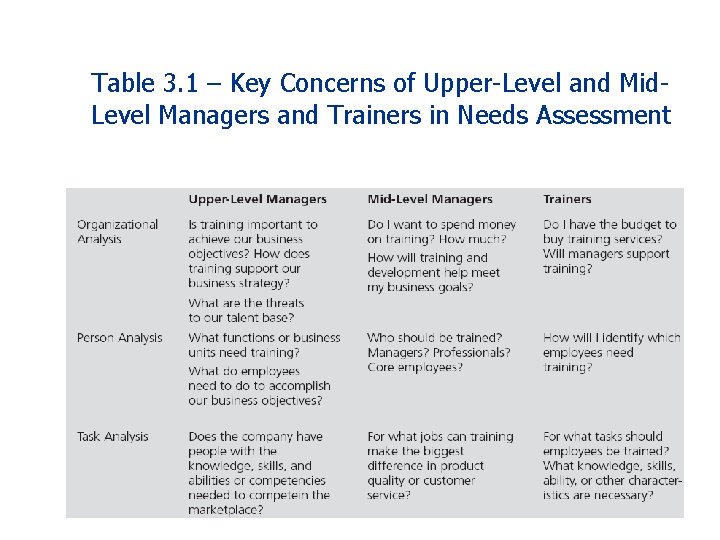
Table 3. 1 – Key Concerns of Upper-Level and Mid. Level Managers and Trainers in Needs Assessment
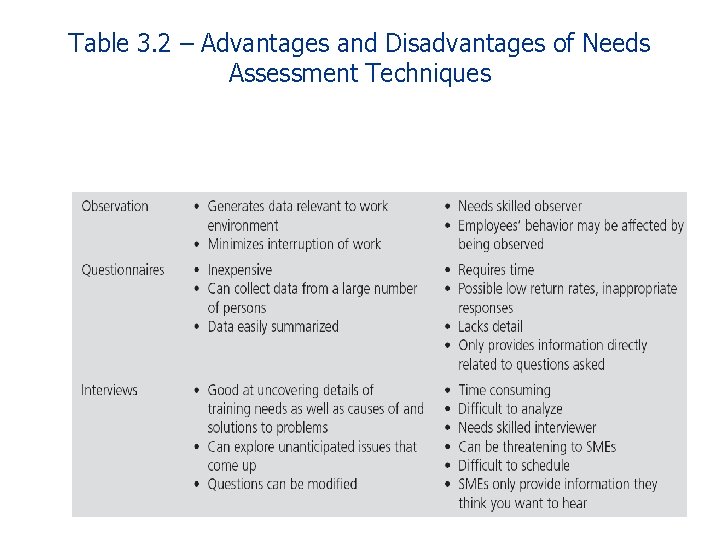
Table 3. 2 – Advantages and Disadvantages of Needs Assessment Techniques
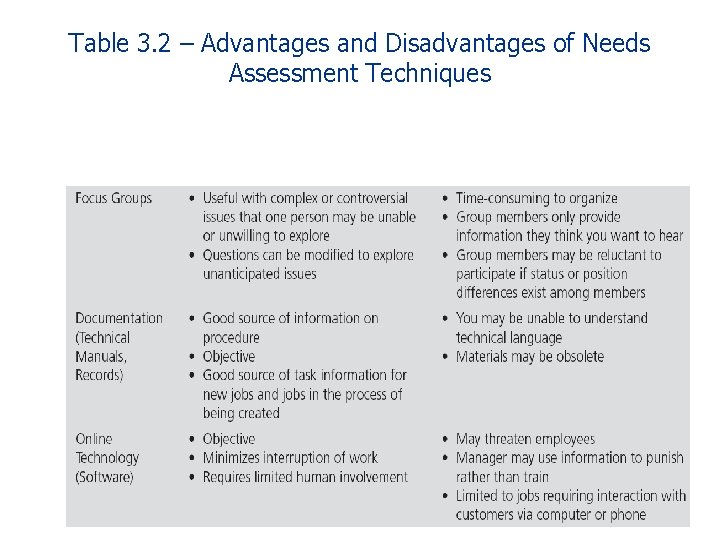
Table 3. 2 – Advantages and Disadvantages of Needs Assessment Techniques
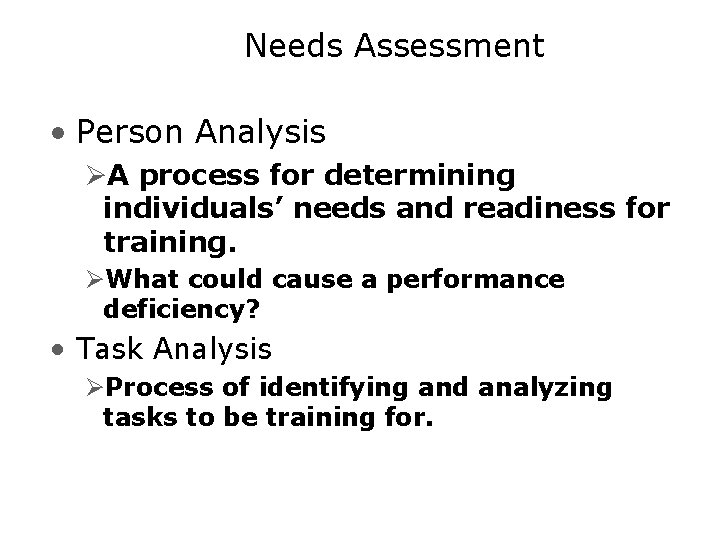
Needs Assessment • Person Analysis ØA process for determining individuals’ needs and readiness for training. ØWhat could cause a performance deficiency? • Task Analysis ØProcess of identifying and analyzing tasks to be training for.
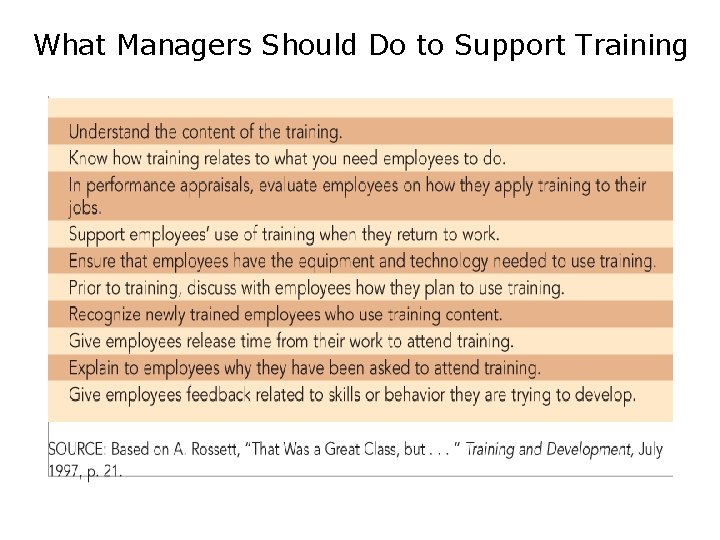
What Managers Should Do to Support Training
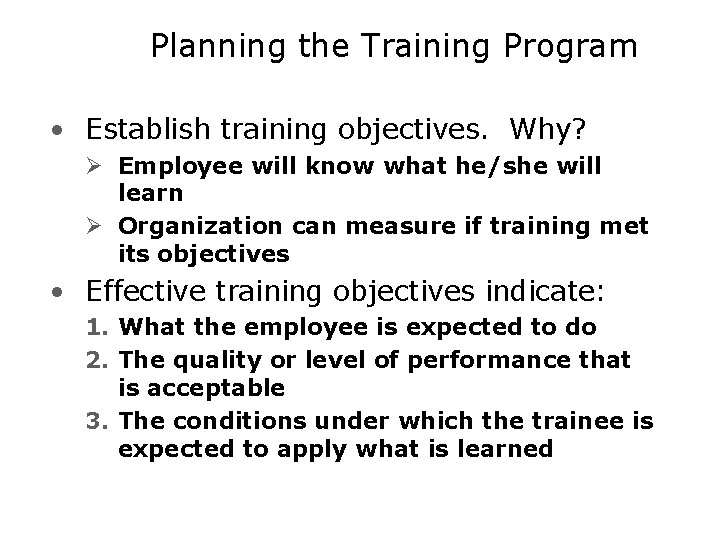
Planning the Training Program • Establish training objectives. Why? Ø Employee will know what he/she will learn Ø Organization can measure if training met its objectives • Effective training objectives indicate: 1. What the employee is expected to do 2. The quality or level of performance that is acceptable 3. The conditions under which the trainee is expected to apply what is learned
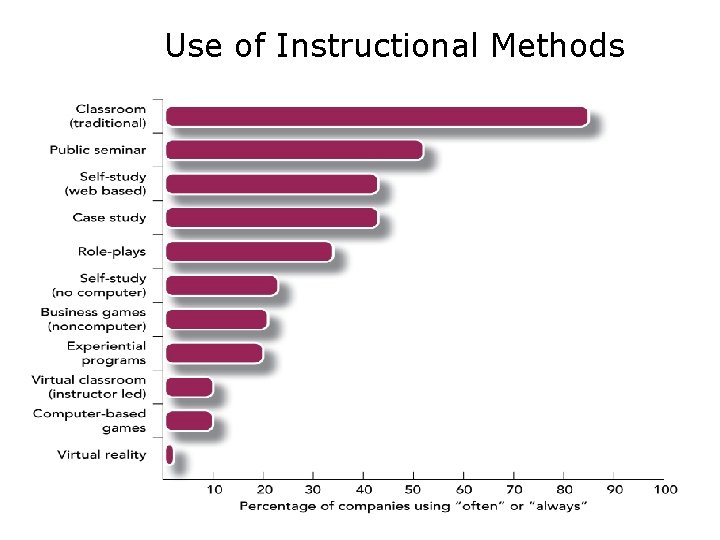
Use of Instructional Methods
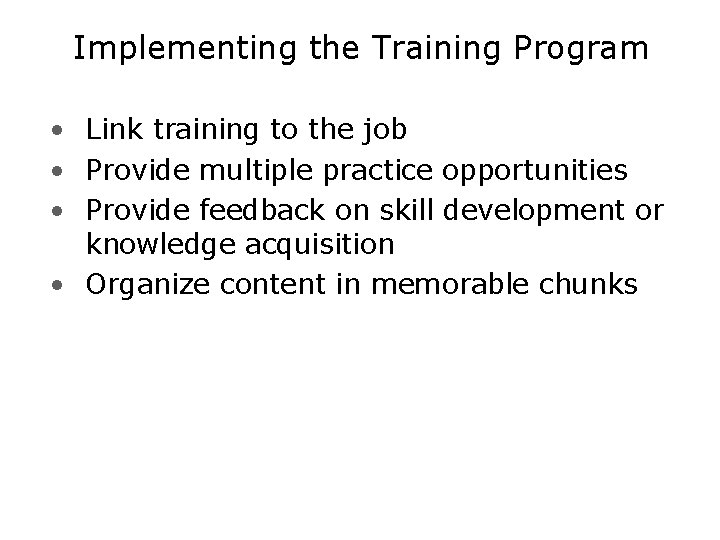
Implementing the Training Program • Link training to the job • Provide multiple practice opportunities • Provide feedback on skill development or knowledge acquisition • Organize content in memorable chunks
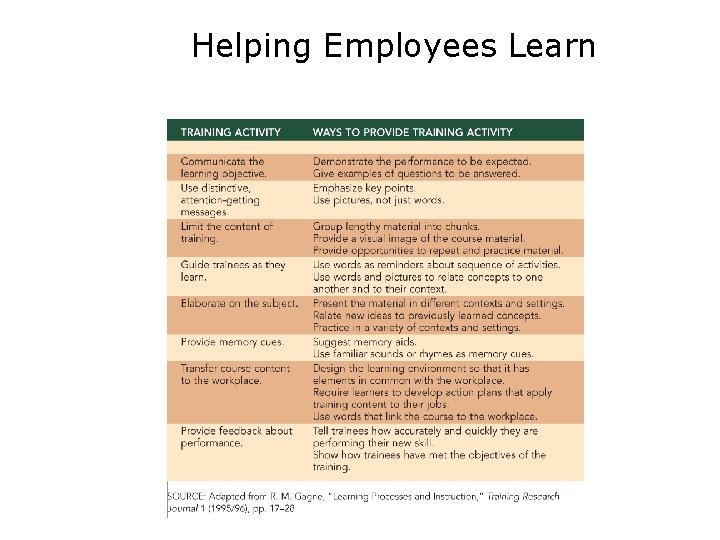
Helping Employees Learn
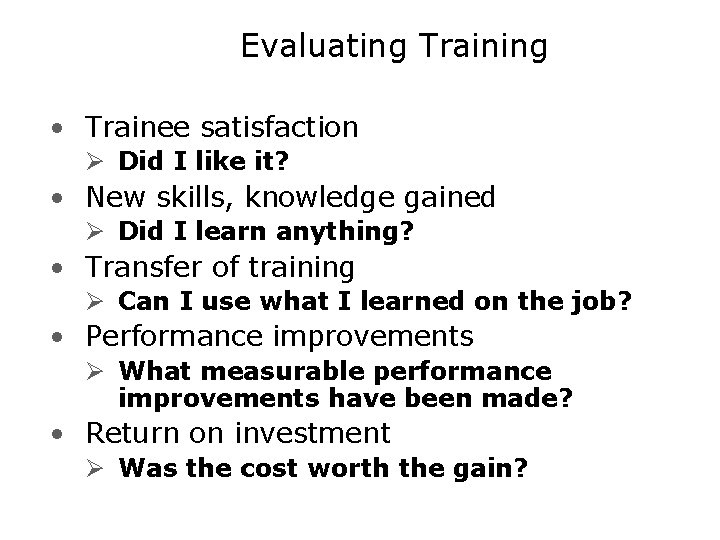
Evaluating Training • Trainee satisfaction Ø Did I like it? • New skills, knowledge gained Ø Did I learn anything? • Transfer of training Ø Can I use what I learned on the job? • Performance improvements Ø What measurable performance improvements have been made? • Return on investment Ø Was the cost worth the gain?
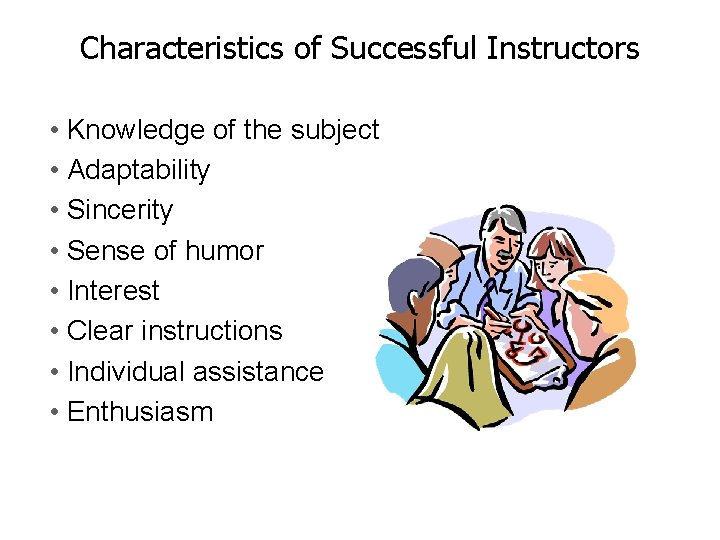
Characteristics of Successful Instructors • Knowledge of the subject • Adaptability • Sincerity • Sense of humor • Interest • Clear instructions • Individual assistance • Enthusiasm

Case Study LG • LG Electronics: Brief Introduction Ø LG Electronics is one of the largest consumer electronics companies in the world. It develops technological advances in electronics, mobile communications and home appliances, currently employing more than 84, 000 people. Headquartered in Seoul, South Korea, it is one of the largest electronics conglomerates in the world; the company has 75 subsidiaries worldwide.
Case Study LG • LG Spain, one of these subsidiaries, has become one of the first companies to implement innovative training actions to increase the 'engagement' of its employees. Thanks to the video game, the electronics company has managed to move its innovative nature within a corporate learning program
Case Study LG • LG increases the ‘engagement’ (+13%) and productivity (+19%) of its workforce • Program for the increase of the engagement of employees through innovation: the video game
Case Study LG • Challenges Ø To improve the ‘engagement’ and commitment of the workforce in LG through innovation in training. Ø To develop a program to take care of the real needs of employees. Ø To design a training with a real impact on the organization.
Case Study LG • Solution: Game-based learning platform • Results Ø 90 % Completion ratio Ø Trained employees: 90 Ø Improvement in ‘engagement’ level: 19 % Ø 13% Increase in workforce productivity
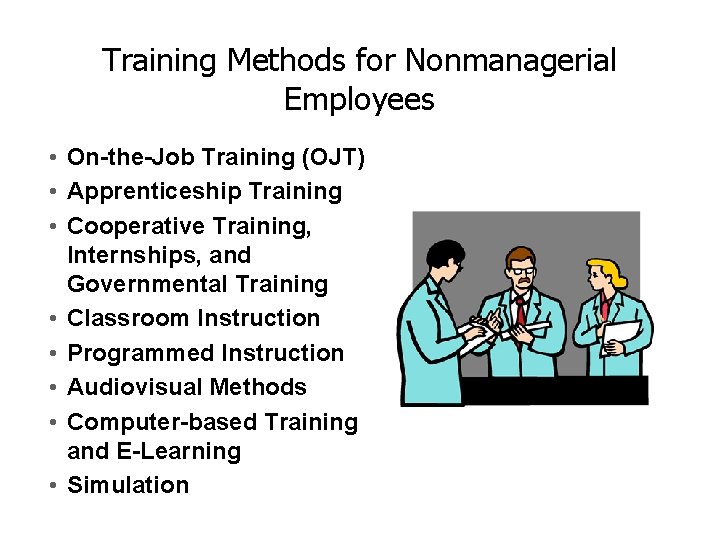
Training Methods for Nonmanagerial Employees • On-the-Job Training (OJT) • Apprenticeship Training • Cooperative Training, Internships, and Governmental Training • Classroom Instruction • Programmed Instruction • Audiovisual Methods • Computer-based Training and E-Learning • Simulation
Training Methods for Nonmanagerial Employees (cont’d) • On-the-job training (OJT) Ø Method by which employees are given hands-on experience with instructions from their supervisor or other trainer. • Apprenticeship training Ø System of training in which a worker entering the skilled trades is given thorough instruction and experience, both on and off the job, in the practical and theoretical aspects of the work.
Training Methods for Nonmanagerial Employees (cont’d) • Cooperative Training Ø Training program that combines practical on-thejob experience with formal educational classes. • Internship Programs Ø Programs jointly sponsored by colleges, universities, and other organizations that offer students the opportunity to gain real-life experience while allowing them to find out how they will perform in work organizations.
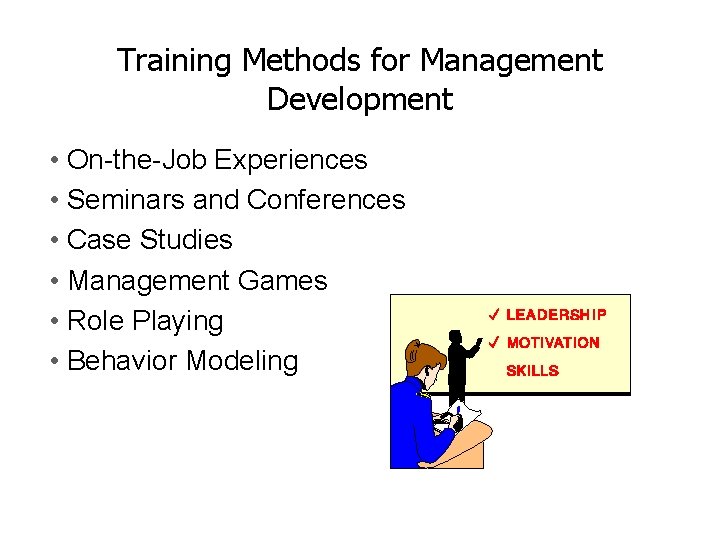
Training Methods for Management Development • On-the-Job Experiences • Seminars and Conferences • Case Studies • Management Games • Role Playing • Behavior Modeling
On-the-Job Experiences • Coaching • Understudy Assignment • Job Rotation • Lateral Transfer • Special Projects • Action Learning • Staff Meetings • Planned Career Progressions
Human Resource Management Supplementary Cases (Orientation & Training) Lectures 19, 20, 21 Course Lecturer: Farhan Mir
Du. Pont’s Internet Classroom Training Reinvented
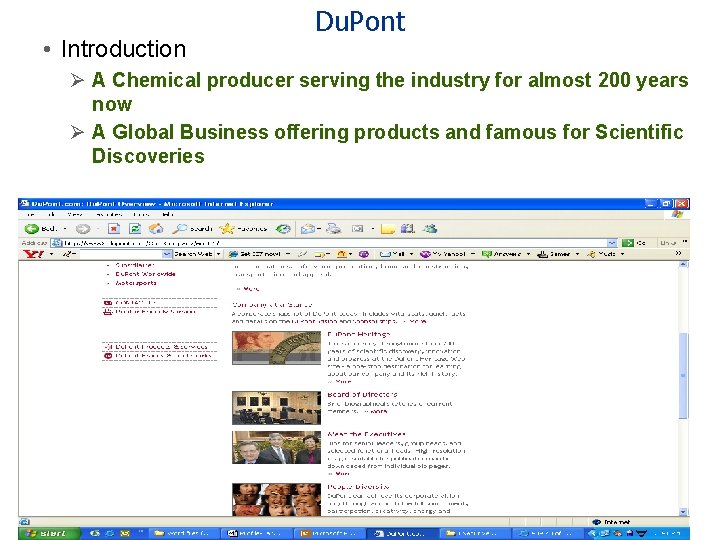
• Introduction Du. Pont Ø A Chemical producer serving the industry for almost 200 years now Ø A Global Business offering products and famous for Scientific Discoveries
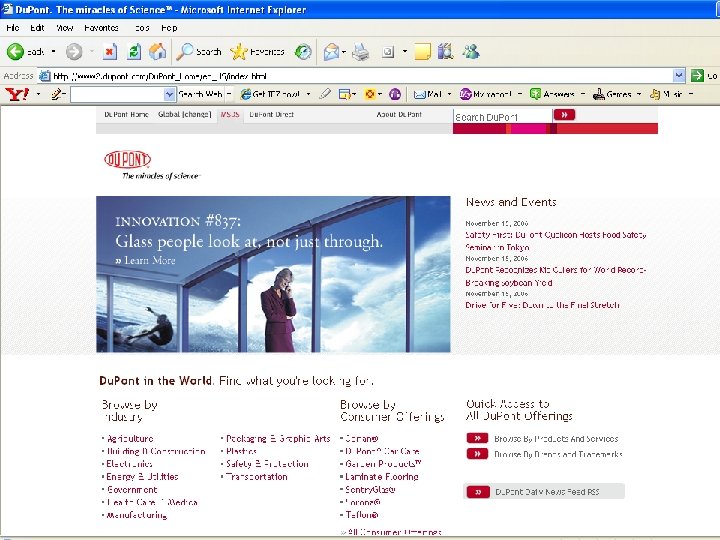
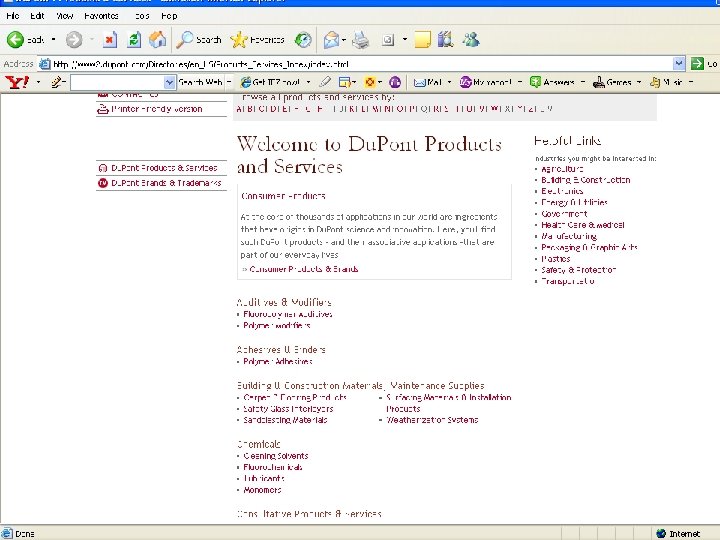
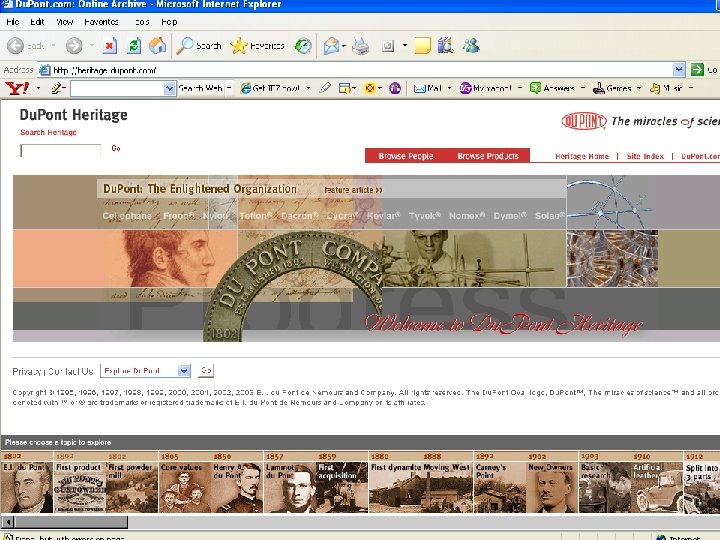
Du. Pont: Training Goes Online • How it Started Ø Du. Pont’s strong employee feedback system revealed that there is a need for new training method as compared to a more traditional approach Ø Employees were asking for quick access to the Experts and Instructors on frequent basis Ø Resulted in Du. Pont Virtual Workshop
Du. Pont: Training Goes Online • Du. Pont Virtual Workshop Ø Created in 1998 Ø Basically a Distance Learning Program Ø Started with live and online presentations of training topics for plant and maintenance professionals Ø It provided enriched information to its recipients Ø The Presentation were focusing on v v Business Skills Plant operations Engineering Facility Management Ø Users could log on and view the presentation going on and could listen to audio through phone
Du. Pont: Training Goes Online • Du. Pont Virtual Workshop Ø This methods was immediately popular as it also incorporated live chat and discussion with expertise Ø Advantages v v v Learn about best practices and training needs and becomes basis for training The advantages were so obvious that Du. Pont invited other parties to join for free with this virtual workshop Almost 850 companies joined the workshop because of the convenience, ease and enriched contents
- Slides: 42