
Human Resource Management Lecture13 Summary of Lecture12 Human





- Slides: 71
Human Resource Management Lecture-13
Summary of Lecture-12
Human Resources Planning (HRP)
The systematic review of human resource requirements.
The Human Resource Planning Process
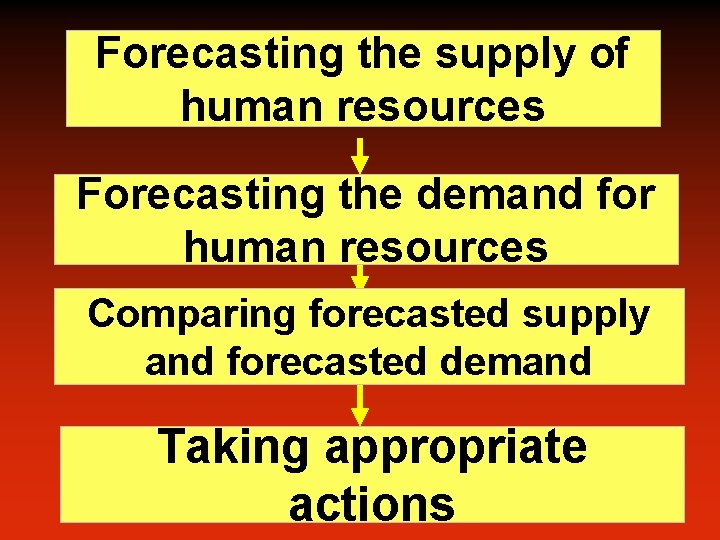
Forecasting the supply of human resources Forecasting the demand for human resources Comparing forecasted supply and forecasted demand Taking appropriate actions
Outcomes of Human Resource Planning
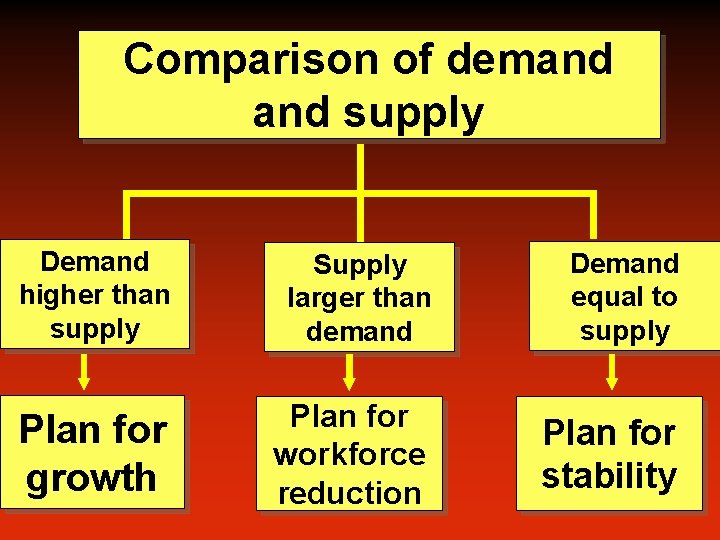
Comparison of demand supply Demand higher than supply Supply larger than demand Demand equal to supply Plan for growth Plan for workforce reduction Plan for stability
Today’s Topics
FStrategic Planning FHuman Resource Information Systems (HRIS) FRelationship of HRIS with overall MIS
Strategic Planning
C Determine the organizational mission. C Scan the organizational environment. C Set strategic goals. C Formulate a strategic plan.
1. Determine the Organizational Mission
Mission statement Corganization’s overall purpose Cbasic business scope and operations
Answer questions CWhy does our organization exist? CWhat unique contributions can it make?
2: Scan the Organizational Environment
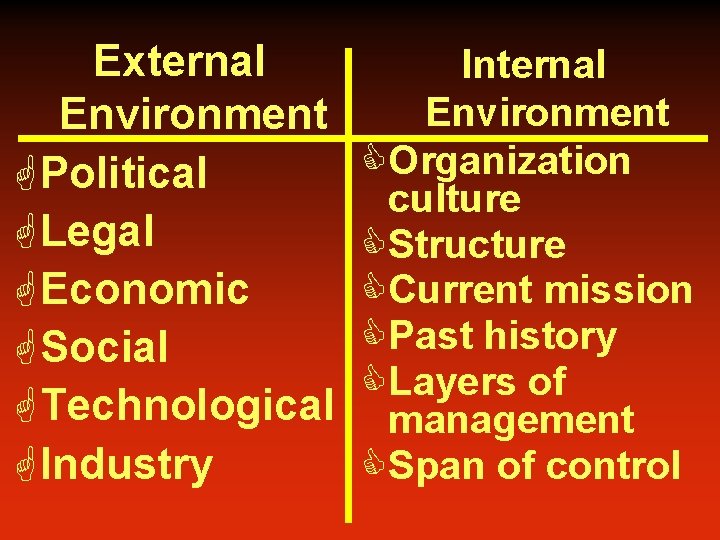
External Environment G Political G Legal G Economic G Social G Technological G Industry Internal Environment COrganization culture CStructure CCurrent mission CPast history CLayers of management CSpan of control
SWOT CInternal Strengths CInternal Weaknesses CExternal Opportunities CExternal Threats
3: Set Strategic Goals
Desired outcomes to accomplish mission CSpecific CChallenging CMeasurable
4. Formulate a Strategic Plan
CCourses of action to meet strategic goals CSpecifies functional or departmental goals
The Strategic Direction-HRM Linkage
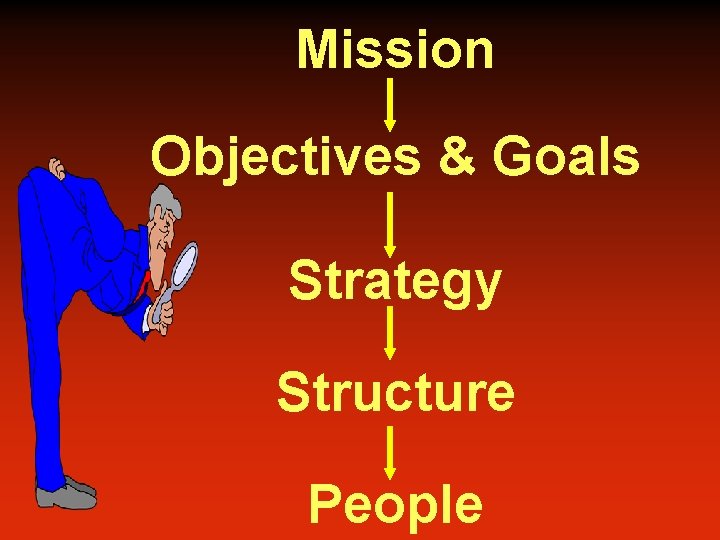
Mission Objectives & Goals Strategy Structure People
What is Strategic Management?
Canalyze competitive situation Cdevelop strategic goals Cdevise plan of action Callocate resources Cimplement plan Cevaluate results
Strategic Human Resource Management
The pattern of planned human resource deployments and activities intended to enable an organization to achieve its goals.
‘Help, I need information!’
What is an Information System?
A set of interrelated components that collect (or retrieve), process, store, and distribute information to support decision making and control in an organization
Components of Information Systems
CAn information system is not a computer alone. CInformation systems consist of… CTechnology COrganizations CPeople
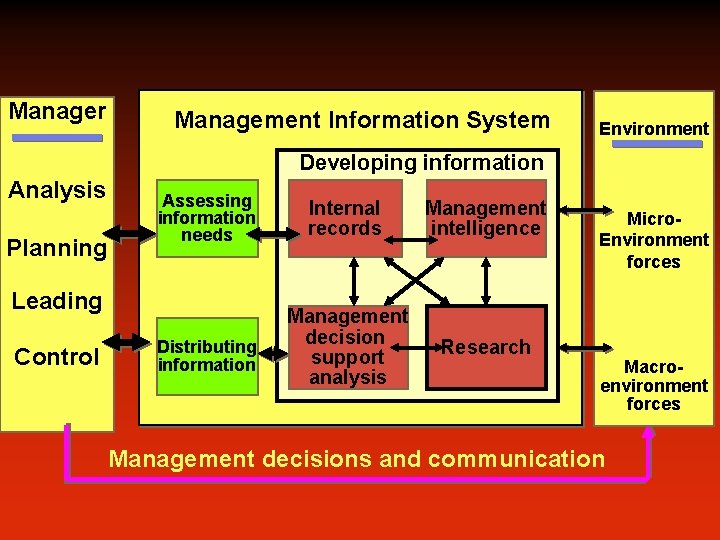
The Management Information System
Manager Management Information System Environment Developing information Analysis Planning Assessing information needs Leading Control Distributing information Internal records Management intelligence Management decision support analysis Research Micro. Environment forces Macroenvironment forces Management decisions and communication
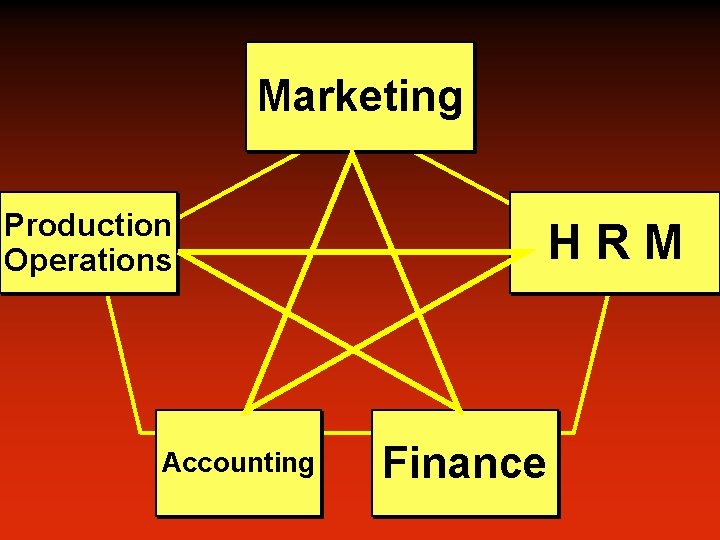
Business Information Systems
Marketing Production Operations Accounting HRM Finance
HR Information Systems
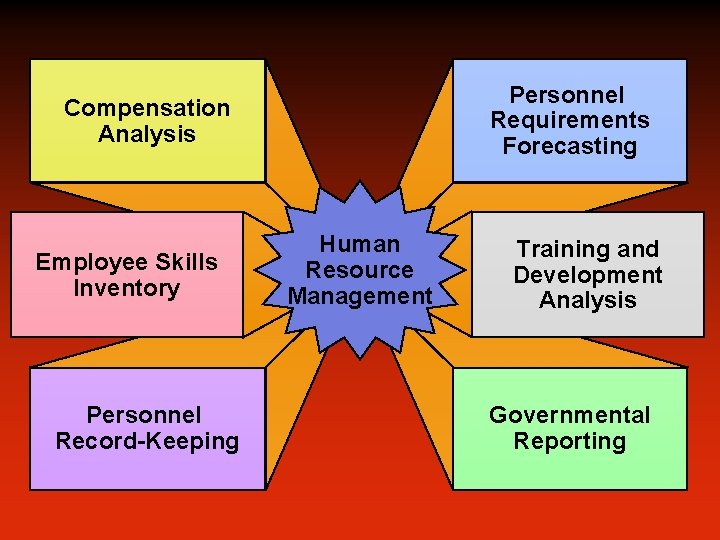
Personnel Requirements Forecasting Compensation Analysis Employee Skills Inventory Personnel Record-Keeping Human Resource Management Training and Development Analysis Governmental Reporting
HR Information System
The system used to acquire, store, manipulate, analyze, retrieve, and distribute pertinent information regarding an organization’s HR.
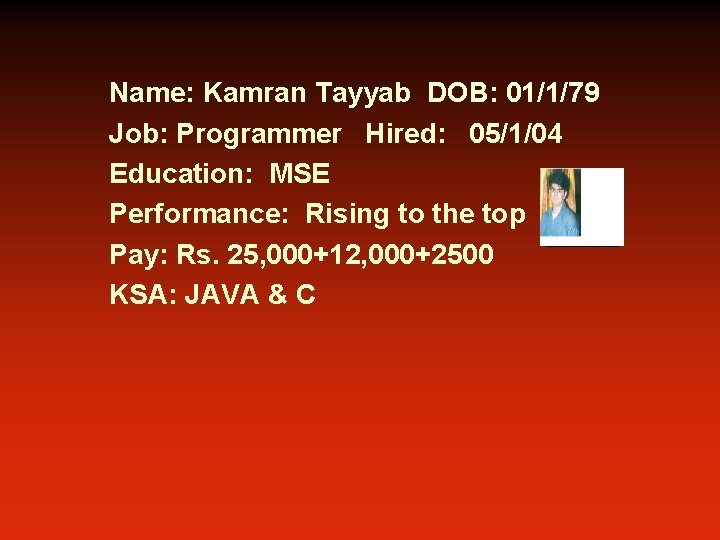
Name: Kamran Tayyab DOB: 01/1/79 Job: Programmer Hired: 05/1/04 Education: MSE Performance: Rising to the top Pay: Rs. 25, 000+12, 000+2500 KSA: JAVA & C
Determining Information Needs
Types of information CGeneral work activities CHow the job relates to other jobs CProcedures used on the job
Cbehaviors required on the job Cphysical movements and demands Cmachines, tools, equipment, and work aids
Cphysical environment of the job Corganizational and social context of the job Cwork schedule and incentive compensation
Cpersonal requirements (i. e. , skills, education, training, experience, physical demands)
Human resource information systems are designed to support
CPlanning to meet the personnel needs of the business. CDevelopment of employees to their full potential. CControl of all personnel policies and programs.
Common HRIS Functions
CJob analysis information can be placed in the HRIS. CThe program can write job descriptions and job specifications. CConstant monitoring of compliance with EEO legislation.
w. Maintain records of rejected applicants. w. Saves money and time in compiling reports. w. Ensure that women and minorities or not be adversely affected.
CTrack minority hiring, recruitment, and advancement. CForecast supply and demand of labor from both the internal and external labor markets.
CUseful for internal recruiting. CCan post job opening for employees to access. CCan search for match between job specifications and applicant qualification.
CApplicant tracking system. CAdministering and scoring ability tests. CScanning resumes submitted online (web based or e-mail) or in person (or mail).
CStructured interviews. CMatching qualifications with open positions (finding a good fit). CAlso, consider budgetary concerns.
CHelp with registration, tracking training, monitor training costs, and schedule training. CUsed to deliver training. CCareer and managerial succession planning.
CUsed to provide assessment tests to help employee’s plan their own career. CPredict career paths. CProvide PA instruments and results.
CComparisons between employees, groups, or supervisors ratings. CMonitor attendance. CMonitor compliance with Labor Standards.
CIndividual sale data can be accessed (tracking commissions). CBenefits can be managed and administered by computers. CPlanned raises and wage histories.
CProvides reports for Occupational Safety and Health Administration (OSHA). CTrack hazardous materials. CTrack accidents and costs of accidents.
CRecord employee safety training. CRecord employee exposure to various conditions and chemicals. CTrack disciplinary actions and grievances.
CLabor contract data. CWorker seniority list. CEtc. .
p o t s s ’ e t r e e L it h
Summary
FStrategic Planning FHuman Resource Information Systems (HRIS) FRelationship of HRIS with overall MIS
Next….
Job Analysis
Human Resource Management Lecture-13