
Human Resource Management in the Service Sector Review


- Slides: 30
Human Resource Management in the Service Sector Review of the course
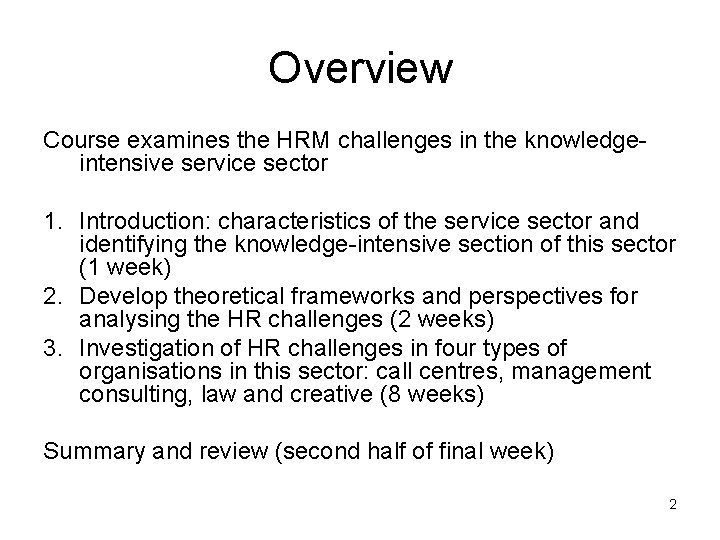
Overview Course examines the HRM challenges in the knowledgeintensive service sector 1. Introduction: characteristics of the service sector and identifying the knowledge-intensive section of this sector (1 week) 2. Develop theoretical frameworks and perspectives for analysing the HR challenges (2 weeks) 3. Investigation of HR challenges in four types of organisations in this sector: call centres, management consulting, law and creative (8 weeks) Summary and review (second half of final week) 2
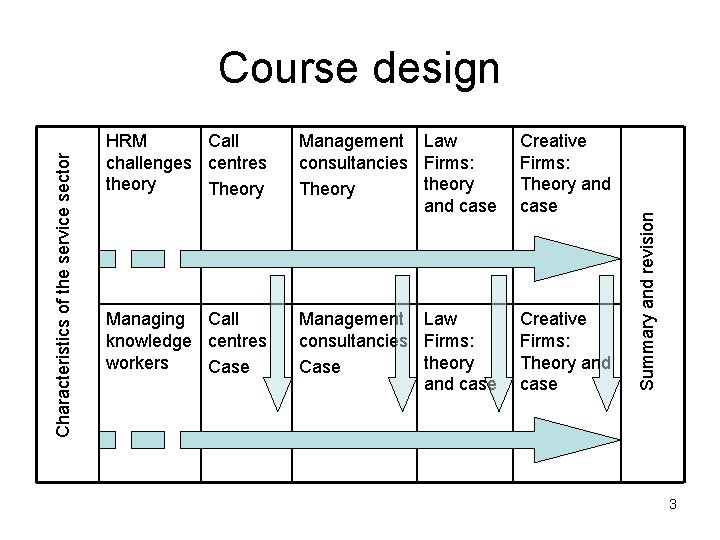
HRM Call challenges centres theory Theory Management Law consultancies Firms: theory Theory and case Creative Firms: Theory and case Managing Call knowledge centres workers Case Management Law consultancies Firms: theory Case and case Creative Firms: Theory and case Summary and revision Characteristics of the service sector Course design 3
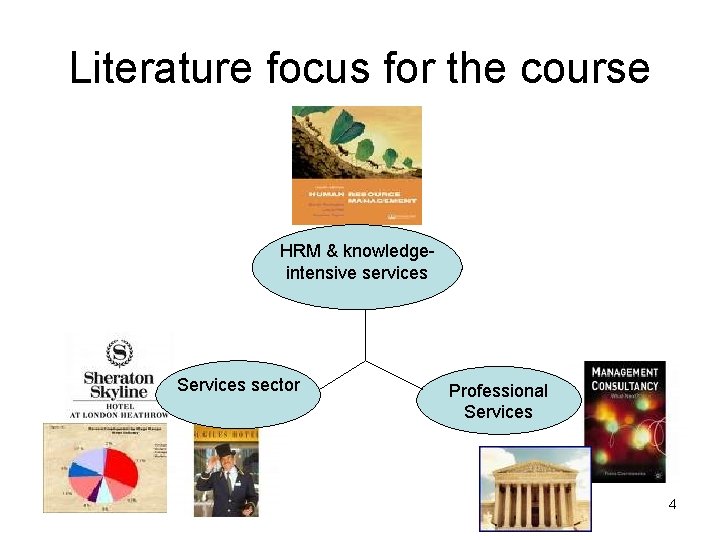
Literature focus for the course HRM & knowledgeintensive services Services sector Professional Services 4
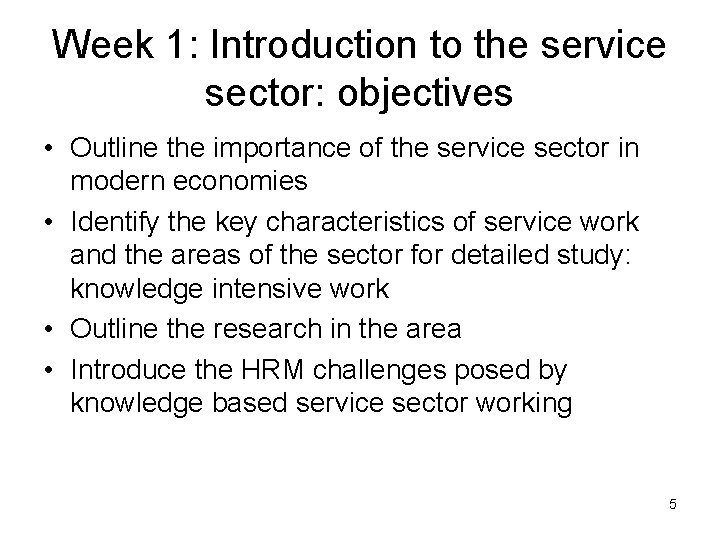
Week 1: Introduction to the service sector: objectives • Outline the importance of the service sector in modern economies • Identify the key characteristics of service work and the areas of the sector for detailed study: knowledge intensive work • Outline the research in the area • Introduce the HRM challenges posed by knowledge based service sector working 5
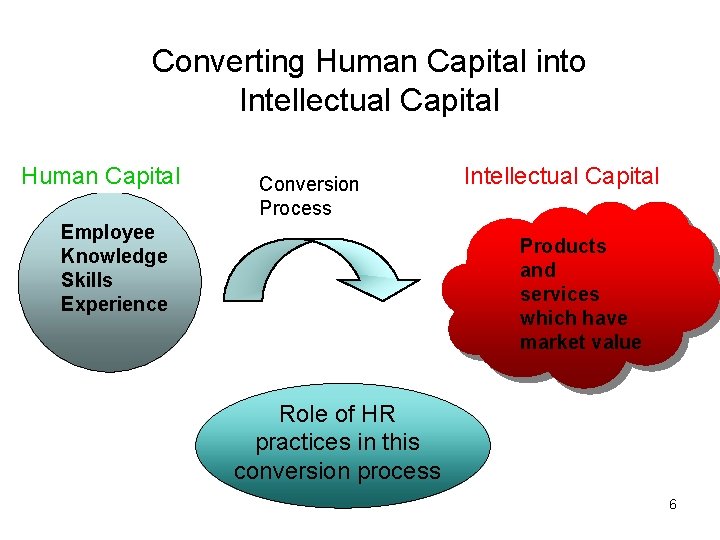
Converting Human Capital into Intellectual Capital Human. Capital Conversion Process Employee Knowledge Skills Experience Intellectual Capital Products and services which have market value Role of HR practices in this conversion process 6
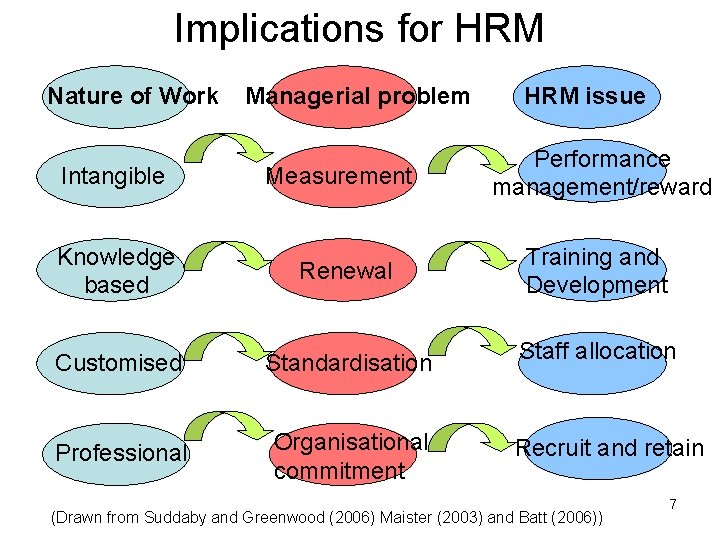
Implications for HRM Nature of Work Intangible Managerial problem Measurement HRM issue Performance management/reward Knowledge based Renewal Training and Development Customised Standardisation Staff allocation Professional Organisational commitment Recruit and retain (Drawn from Suddaby and Greenwood (2006) Maister (2003) and Batt (2006)) 7
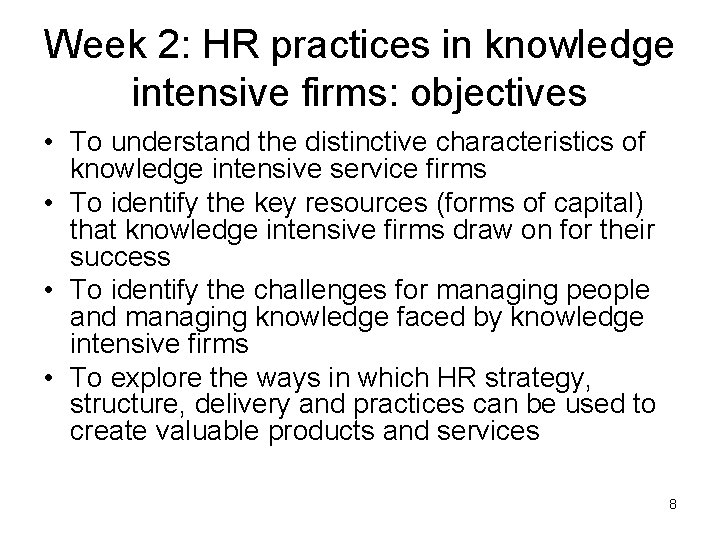
Week 2: HR practices in knowledge intensive firms: objectives • To understand the distinctive characteristics of knowledge intensive service firms • To identify the key resources (forms of capital) that knowledge intensive firms draw on for their success • To identify the challenges for managing people and managing knowledge faced by knowledge intensive firms • To explore the ways in which HR strategy, structure, delivery and practices can be used to create valuable products and services 8
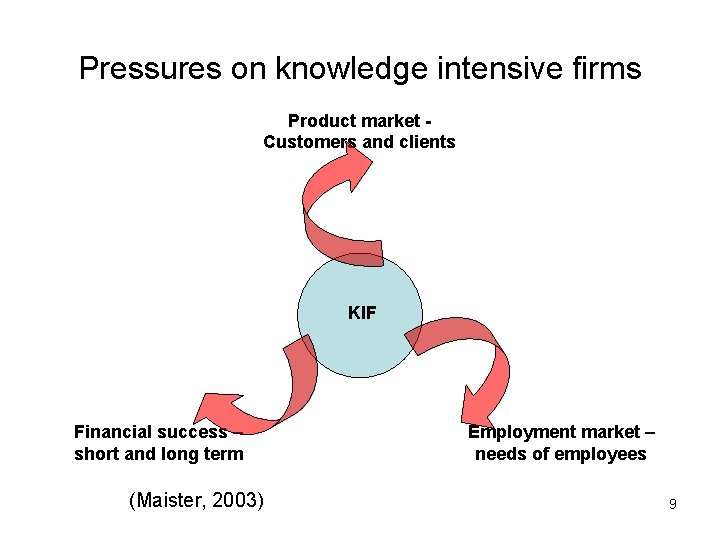
Pressures on knowledge intensive firms Product market Customers and clients KIF Financial success – short and long term (Maister, 2003) Employment market – needs of employees 9
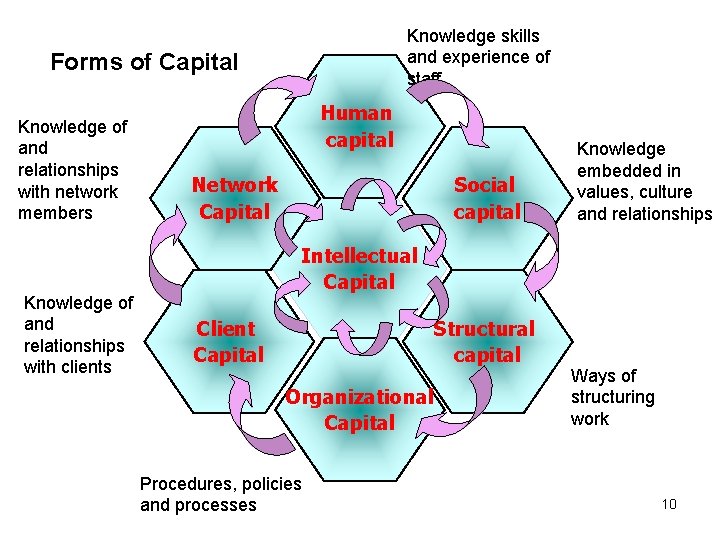
Knowledge skills and experience of staff Forms of Capital Knowledge of and relationships with network members Knowledge of and relationships with clients Human capital Social capital Network Capital Knowledge embedded in values, culture and relationships Intellectual Capital Client Capital Structural capital Organizational Capital Procedures, policies and processes Ways of structuring work 10
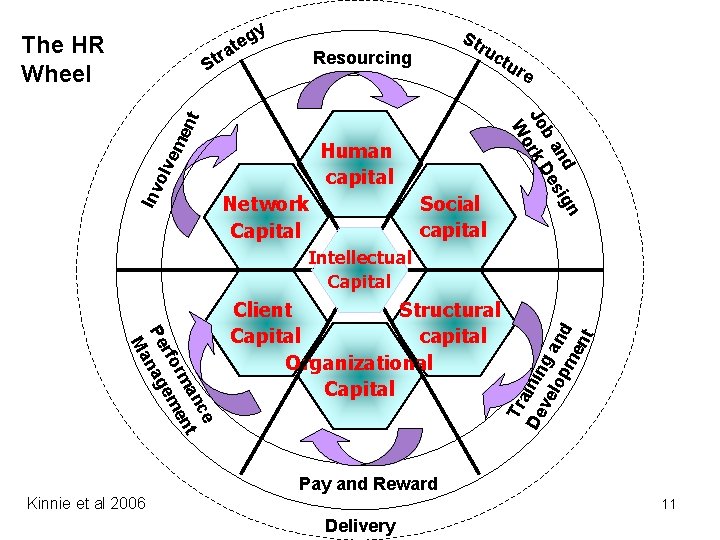
The HR Wheel r St ru Resourcing ctu re n nd sig b a De Jo ork W em en t St y g e at Inv olv Human capital Social capital Network Capital Intellectual Capital Tr a De inin ve g a lop n me d nt ce an t rm en rfo em Pe nag Ma Client Structural Capital capital Organizational Capital Pay and Reward Kinnie et al 2006 11 Delivery
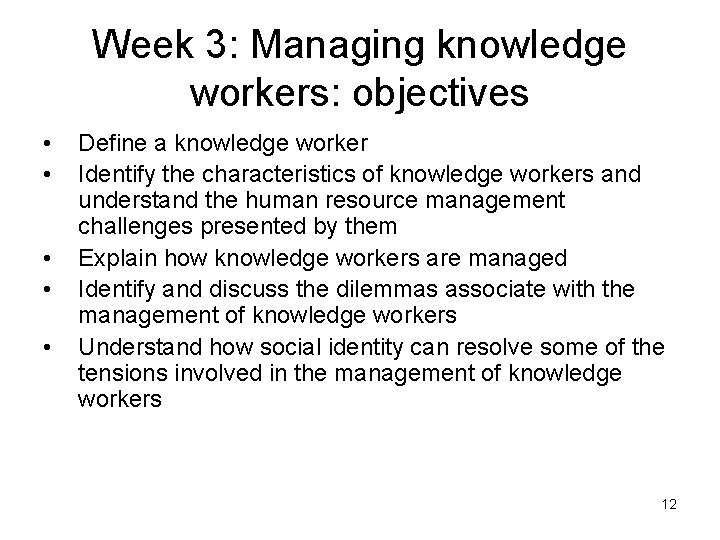
Week 3: Managing knowledge workers: objectives • • • Define a knowledge worker Identify the characteristics of knowledge workers and understand the human resource management challenges presented by them Explain how knowledge workers are managed Identify and discuss the dilemmas associate with the management of knowledge workers Understand how social identity can resolve some of the tensions involved in the management of knowledge workers 12
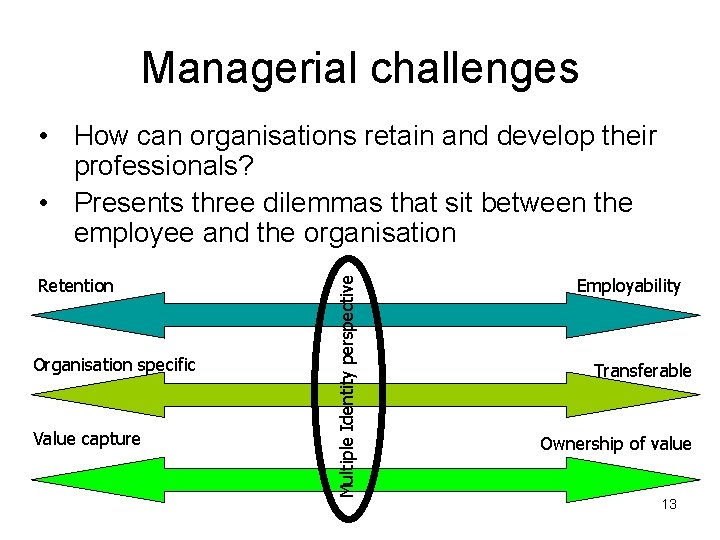
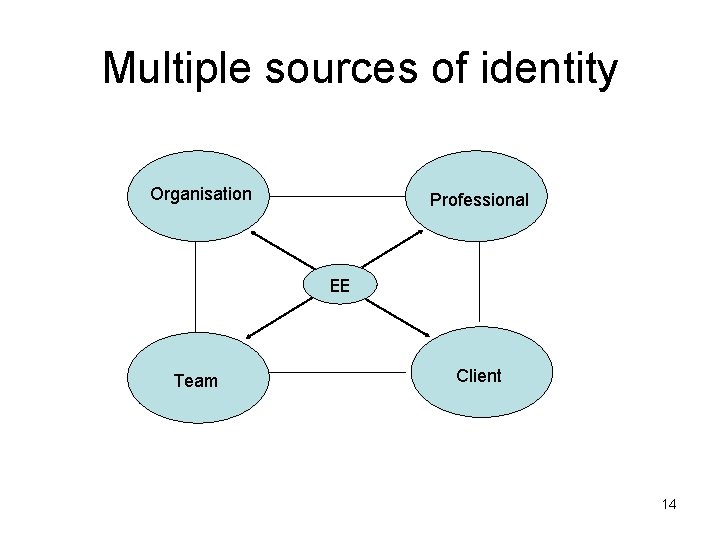
Managerial challenges Retention Organisation specific Value capture Multiple Identity perspective • How can organisations retain and develop their professionals? • Presents three dilemmas that sit between the employee and the organisation Employability Transferable Ownership of value 13
Multiple sources of identity Organisation Professional EE Team Client 14
Weeks 4 and 5: Call Centres: objectives • Define call centres and understand the reasons for their growth • Identify the key characteristics of the nature and management of call centres • Analyse their forms of human capital and consider the implications for HR especially recruitment, selection and retention • Examine recent changes in call centres especially the moves towards outsourcing and off-shoring • Apply the 4 ID model to gain insights into the nature of work in call centres – with reference to the Norwich Union case (Refs: Deery and Kinnie, 2004; Korczynski, 2002, Frenkel et al, 1999, Homan, 2004) 15
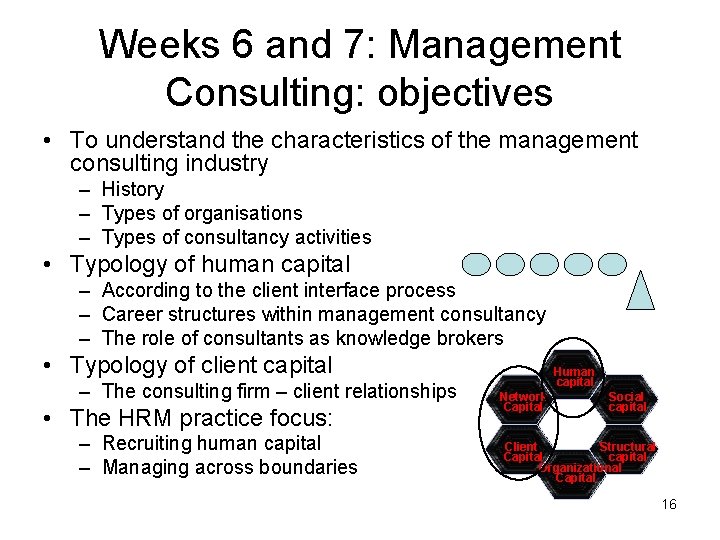
Weeks 6 and 7: Management Consulting: objectives • To understand the characteristics of the management consulting industry – History – Types of organisations – Types of consultancy activities • Typology of human capital – According to the client interface process – Career structures within management consultancy – The role of consultants as knowledge brokers • Typology of client capital – The consulting firm – client relationships • The HRM practice focus: – Recruiting human capital – Managing across boundaries Human capital Network Capital Social capital Client Structural Capital capital Organizational Capital 16
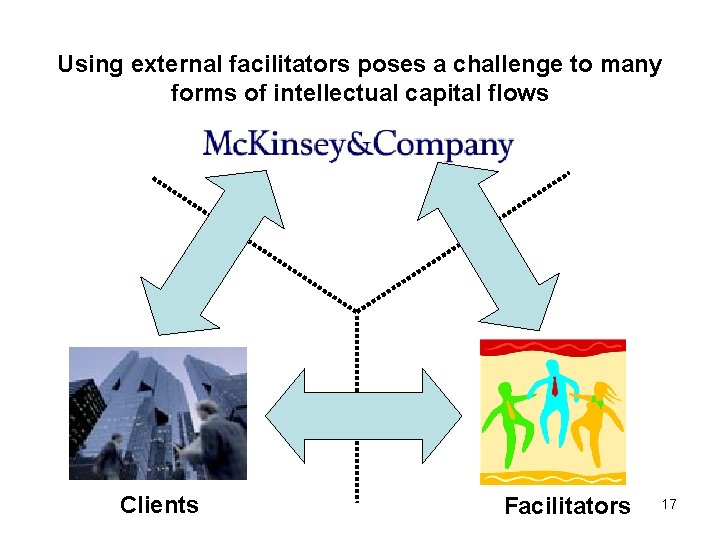
Using external facilitators poses a challenge to many forms of intellectual capital flows Clients Facilitators 17
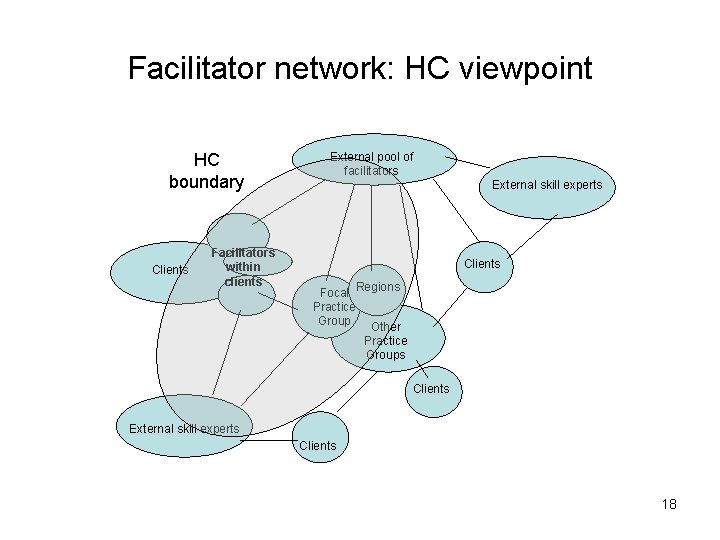
Facilitator network: HC viewpoint HC boundary Clients Facilitators within clients External pool of facilitators Externalskillexperts Clients Focal Regions Practice Group Other Practice Groups Clients External skill experts Clients 18
Weeks 8 and 9: Law Firms: objectives • Understand the basic characteristics of the sector • Identify the traditional model of organising and management of HR • Consider some of the key changes in the sector and the responses of law firms • Identify the challenges this presents for HRM and for knowledge management • Focus on the key issue of remuneration and reward, especially variable reward • Analyse a practical case drawing on our knowledge of theory 19
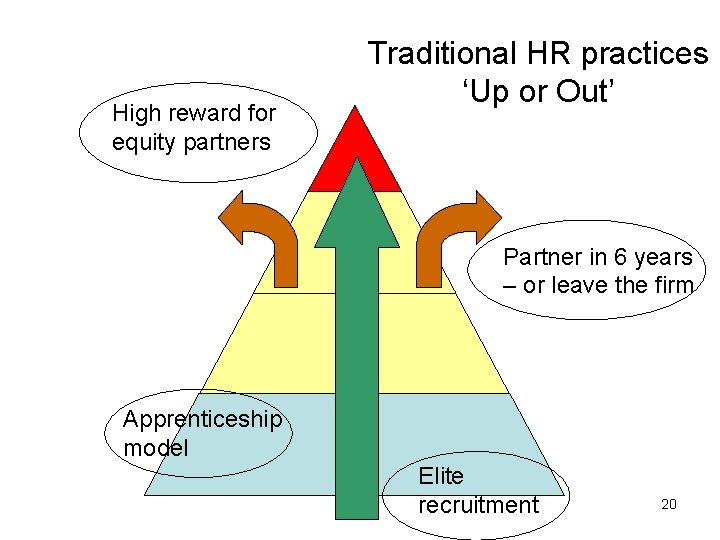
High reward for equity partners Traditional HR practices ‘Up or Out’ Partner in 6 years – or leave the firm Apprenticeship model Elite recruitment 20
‘High Trust’ • Local law firm - medium sized and growing fast • Strong emphasis on culture and values inclusive and mutual respect – building social capital – sharing work and knowledge • Issue of how to reward their staff who contribute to the success of the firm while reinforcing their values 21
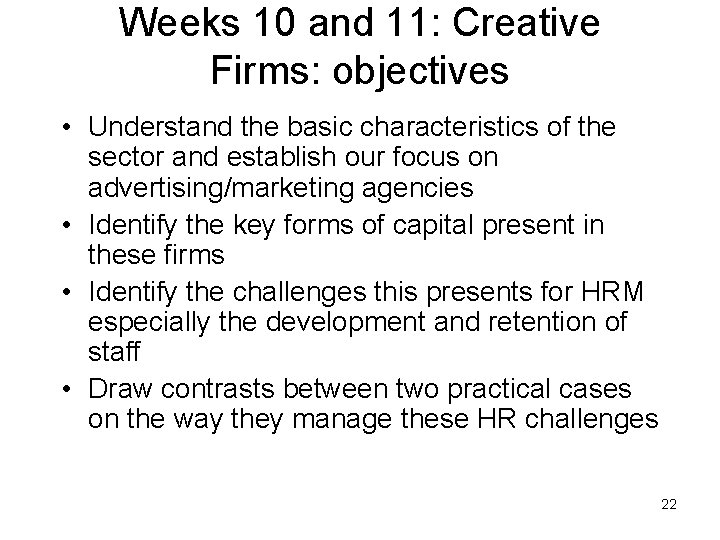
Weeks 10 and 11: Creative Firms: objectives • Understand the basic characteristics of the sector and establish our focus on advertising/marketing agencies • Identify the key forms of capital present in these firms • Identify the challenges this presents for HRM especially the development and retention of staff • Draw contrasts between two practical cases on the way they manage these HR challenges 22
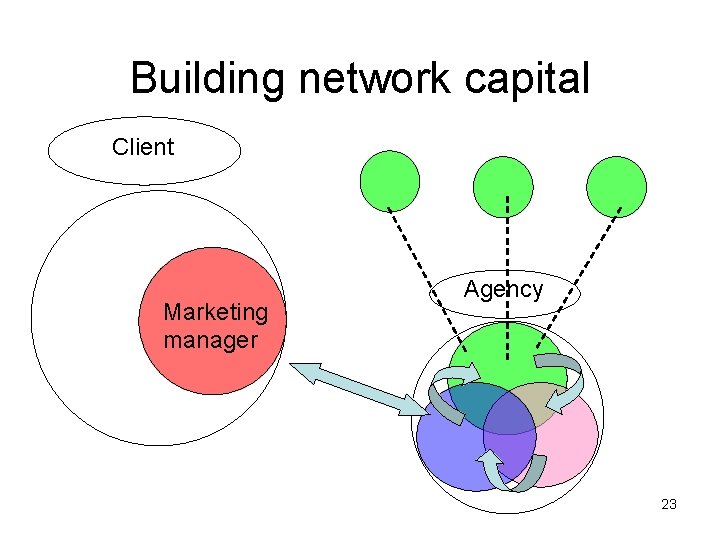
Building network capital Client Marketing manager Agency 23
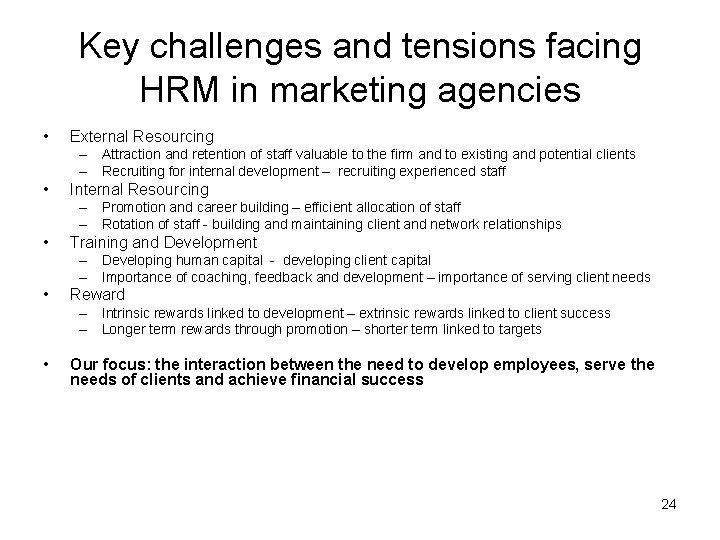
Key challenges and tensions facing HRM in marketing agencies • External Resourcing – Attraction and retention of staff valuable to the firm and to existing and potential clients – Recruiting for internal development – recruiting experienced staff • Internal Resourcing – Promotion and career building – efficient allocation of staff – Rotation of staff - building and maintaining client and network relationships • Training and Development – Developing human capital - developing client capital – Importance of coaching, feedback and development – importance of serving client needs • Reward – Intrinsic rewards linked to development – extrinsic rewards linked to client success – Longer term rewards through promotion – shorter term linked to targets • Our focus: the interaction between the need to develop employees, serve the needs of clients and achieve financial success 24
Revision • Essential to understand the basic theoretical frameworks underlying the course (weeks 2 and 3 especially) • Need to be able to apply these to the four sectors studied (eg how does the reactor model apply to creative firms) • Facility to move between theory and practice (to understand theory in practice and the practice in theory) 25
Revision continued • Cases studied in class are important along with other cases and your own experience • Key is to build up your understanding of the issues – at a sector level and at a macro/cross sector level • Use the frameworks and models to guide your analysis – to help you understand the issues/problems/cases 26
Examination structure and rubric • Unseen paper in 2 hours no additional materials • 6 questions – one from each sector studied plus two others • Answer three questions 27
Sample questions • What are the most important external pressures on the managers of knowledge intensive firms? How might HR strategy and practice help to manage these pressures? • How might the concept of multiple identities help managers of HR contribute to the creation of organisational value in professional service firms? • With reference to the ‘High Trust’ case study discuss the problems associated with designing a variable reward system in law firms. How might these problems be resolved? 28
Expectations • Demonstrate your learning and your understanding of theory and the practice • Answers which directly focus on the question (basic descriptive answers will get a low pass) • Explicit references to previous research (you will get credit for this) • Good use of practical examples to illustrate points (credited) • Highlight conflicts and tensions where they exist • Develop an argument which is supported by theory and evidence (illustrates higher level understanding) 29
Advice • All the basics apply: plan your answer/focus on the question/refer to relevant theory and examples/pull it together • Thorough revision – understanding not rote learning – test yourself out – use the models to analyse cases; use the cases to ask: what is this an example of? • See links between the models and sectors • Use contemporary examples if you can – shows engagement with the material 30