
HUMAN RESOURCE MANAGEMENT Global Edition 12 e Chapter
HUMAN RESOURCE MANAGEMENT Global Edition 12 e Chapter 3 The Manager’s Role in Strategic Human Resource Management Part 1 Introduction Copyright © 2011 Pearson Education GARY DESSLER Power. Point Presentation by Charlie Cook The University of West Alabama
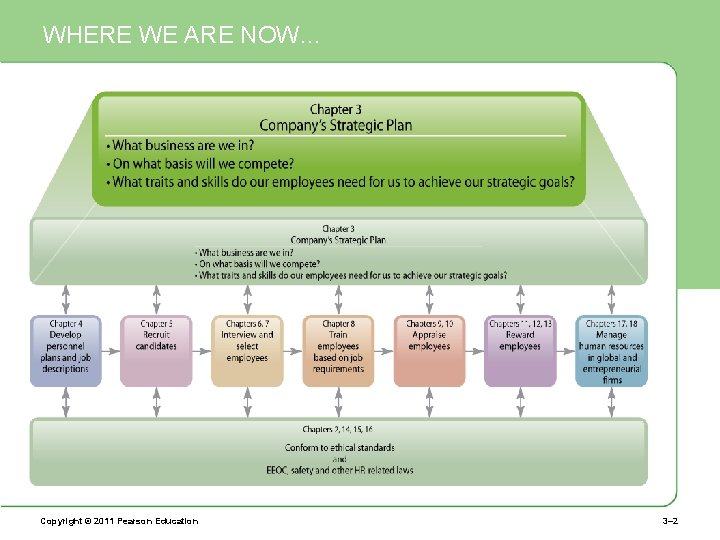
WHERE WE ARE NOW… Copyright © 2011 Pearson Education 3– 2
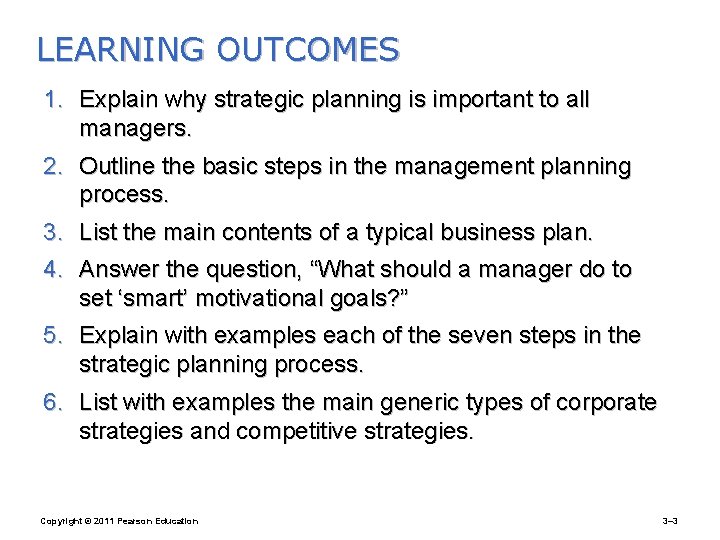
LEARNING OUTCOMES 1. Explain why strategic planning is important to all managers. 2. Outline the basic steps in the management planning process. 3. List the main contents of a typical business plan. 4. Answer the question, “What should a manager do to set ‘smart’ motivational goals? ” 5. Explain with examples each of the seven steps in the strategic planning process. 6. List with examples the main generic types of corporate strategies and competitive strategies. Copyright © 2011 Pearson Education 3– 3
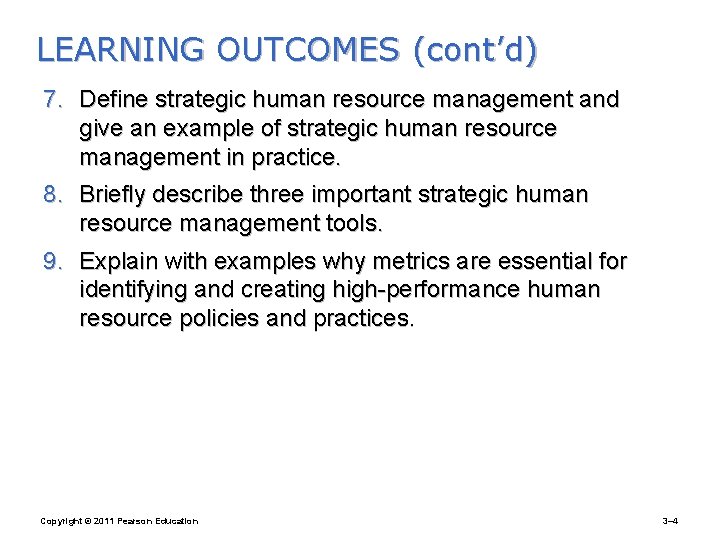
LEARNING OUTCOMES (cont’d) 7. Define strategic human resource management and give an example of strategic human resource management in practice. 8. Briefly describe three important strategic human resource management tools. 9. Explain with examples why metrics are essential for identifying and creating high-performance human resource policies and practices. Copyright © 2011 Pearson Education 3– 4
Why Strategic Planning Is Important To All Managers • The firm’s strategic plan guides much of what is done by all to accomplish organizational goals. • Decisions made by managers depend on the goals set at each organizational level in support of higher level goals. Copyright © 2011 Pearson Education 3– 5
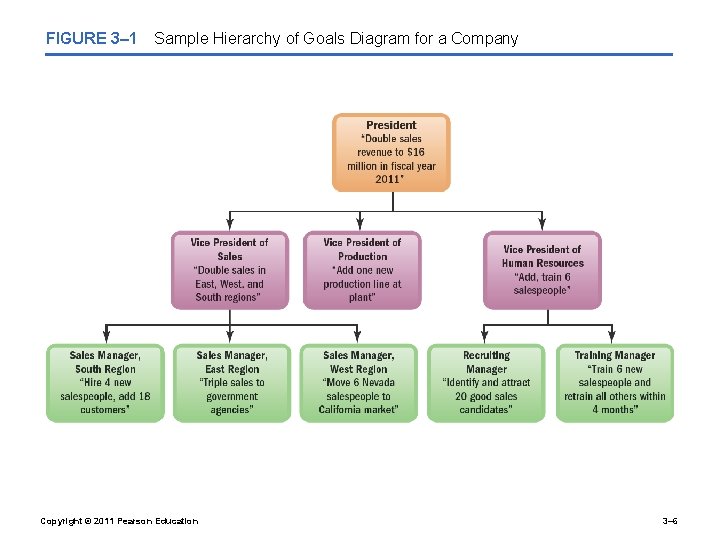
FIGURE 3– 1 Sample Hierarchy of Goals Diagram for a Company Copyright © 2011 Pearson Education 3– 6
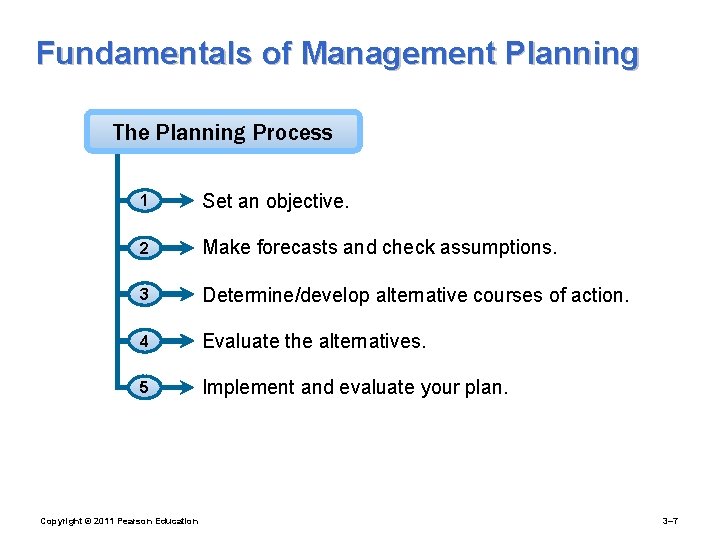
Fundamentals of Management Planning The Planning Process 1 Set an objective. 2 Make forecasts and check assumptions. 3 Determine/develop alternative courses of action. 4 Evaluate the alternatives. 5 Implement and evaluate your plan. Copyright © 2011 Pearson Education 3– 7
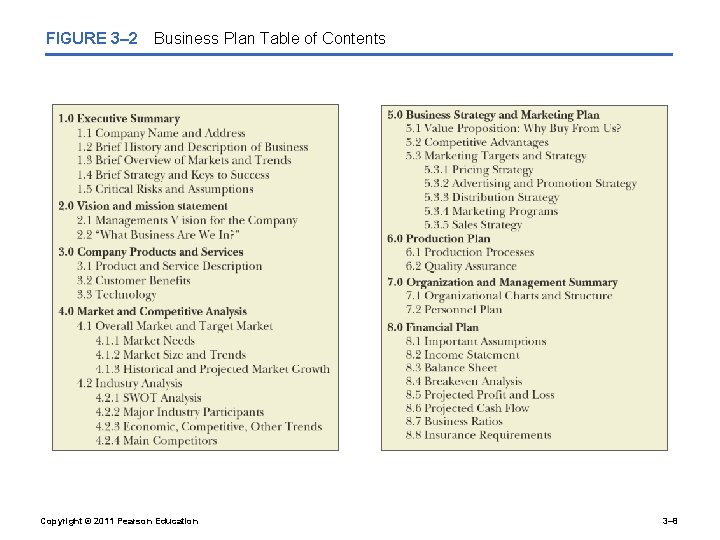
FIGURE 3– 2 Business Plan Table of Contents Copyright © 2011 Pearson Education 3– 8
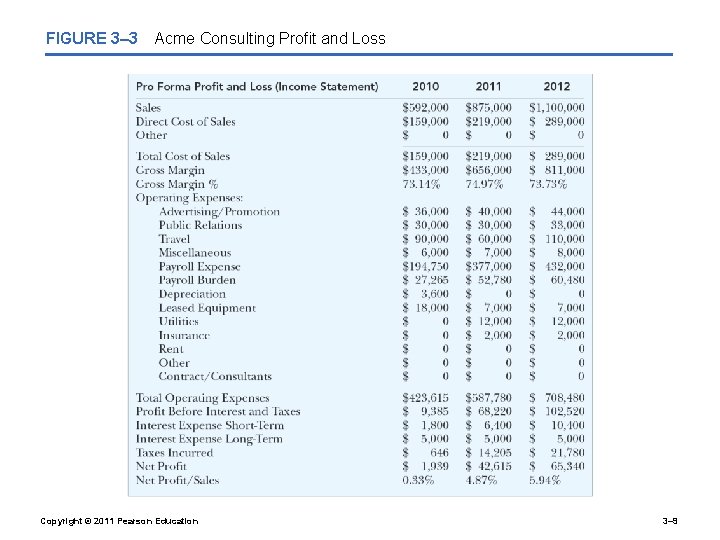
FIGURE 3– 3 Acme Consulting Profit and Loss Copyright © 2011 Pearson Education 3– 9
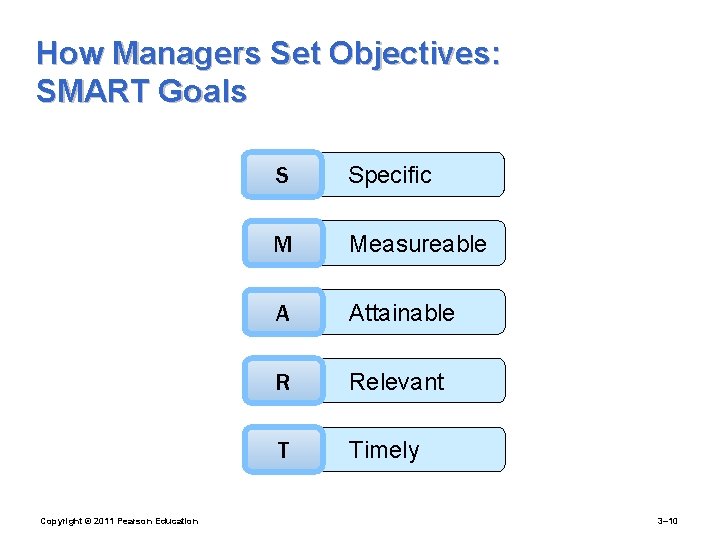
How Managers Set Objectives: SMART Goals Copyright © 2011 Pearson Education S Specific M Measureable A Attainable R Relevant T Timely 3– 10
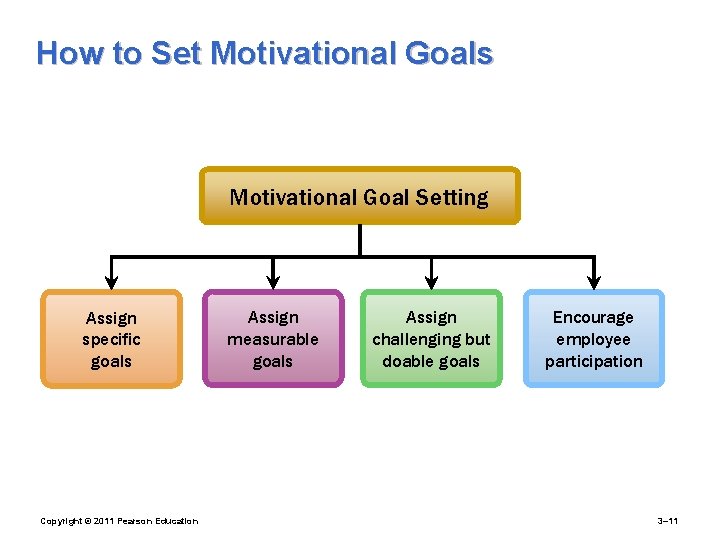
How to Set Motivational Goals Motivational Goal Setting Assign specific goals Copyright © 2011 Pearson Education Assign measurable goals Assign challenging but doable goals Encourage employee participation 3– 11
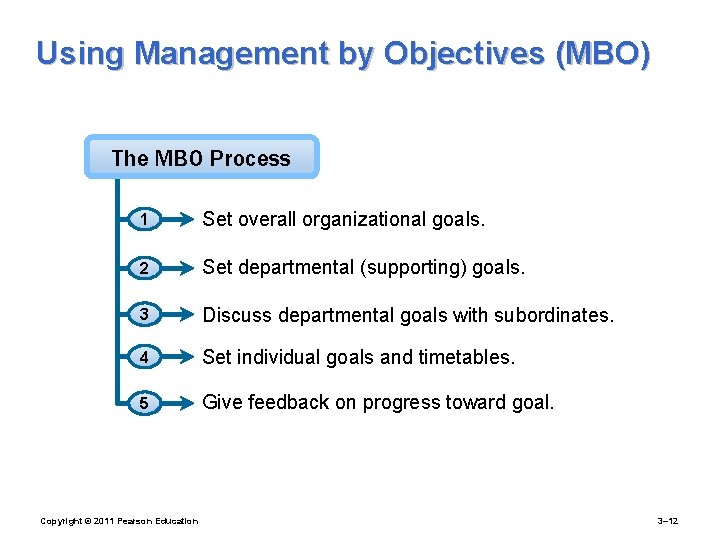
Using Management by Objectives (MBO) The MBO Process 1 Set overall organizational goals. 2 Set departmental (supporting) goals. 3 Discuss departmental goals with subordinates. 4 Set individual goals and timetables. 5 Give feedback on progress toward goal. Copyright © 2011 Pearson Education 3– 12
The Strategic Management Process • Strategy Ø A course of action the organization intends to pursue to achieve its strategic aims. • Strategic Plan Ø How an organization intends to match its internal strengths and weaknesses with its external opportunities and threats to maintain a competitive advantage over the long term. • Strategic Management Ø The process of identifying and executing the organization’s mission by matching its capabilities with the demands of its environment. • Leveraging Ø Capitalizing on a firm’s unique competitive strength while underplaying its weaknesses. Copyright © 2011 Pearson Education 3– 13
Business Vision and Mission • Vision Ø A general statement of an organization’s intended direction that evokes emotional feelings in organization members. • Mission Ø Spells out who the firm is, what it does, and where it’s headed. Copyright © 2011 Pearson Education 3– 14
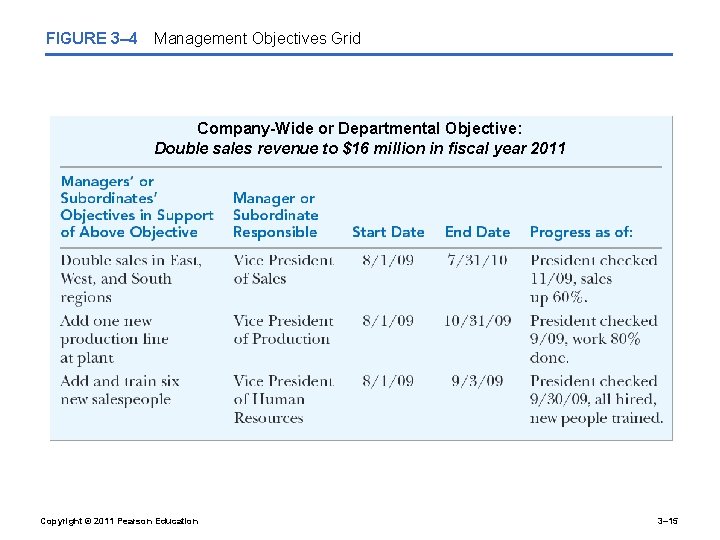
FIGURE 3– 4 Management Objectives Grid Company-Wide or Departmental Objective: Double sales revenue to $16 million in fiscal year 2011 Copyright © 2011 Pearson Education 3– 15
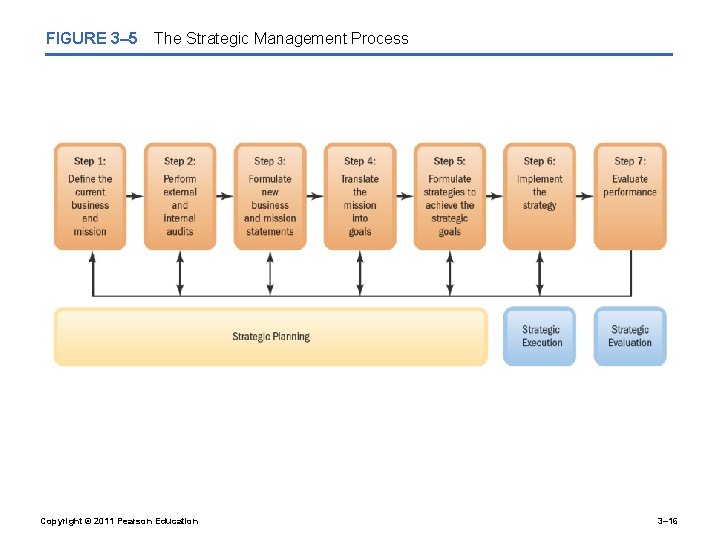
FIGURE 3– 5 The Strategic Management Process Copyright © 2011 Pearson Education 3– 16
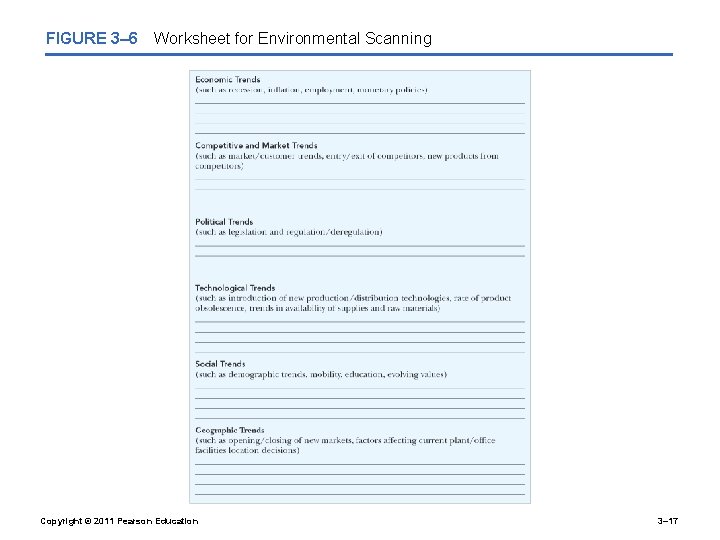
FIGURE 3– 6 Worksheet for Environmental Scanning Copyright © 2011 Pearson Education 3– 17
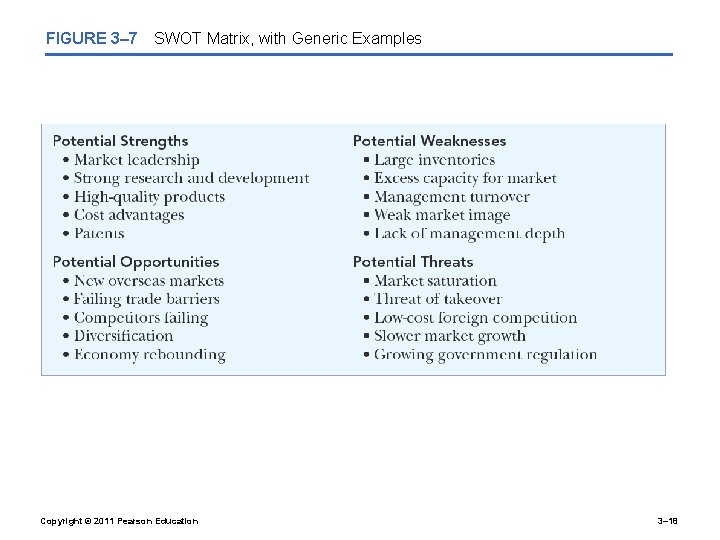
FIGURE 3– 7 SWOT Matrix, with Generic Examples Copyright © 2011 Pearson Education 3– 18
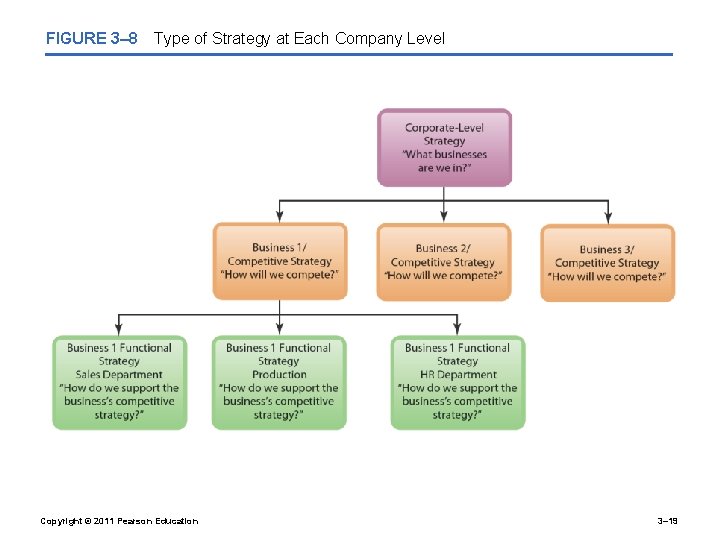
FIGURE 3– 8 Type of Strategy at Each Company Level Copyright © 2011 Pearson Education 3– 19
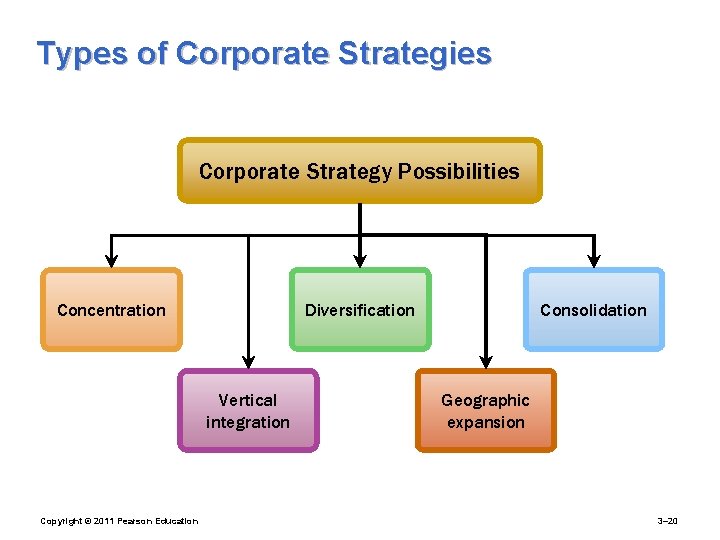
Types of Corporate Strategies Corporate Strategy Possibilities Diversification Concentration Vertical integration Copyright © 2011 Pearson Education Consolidation Geographic expansion 3– 20
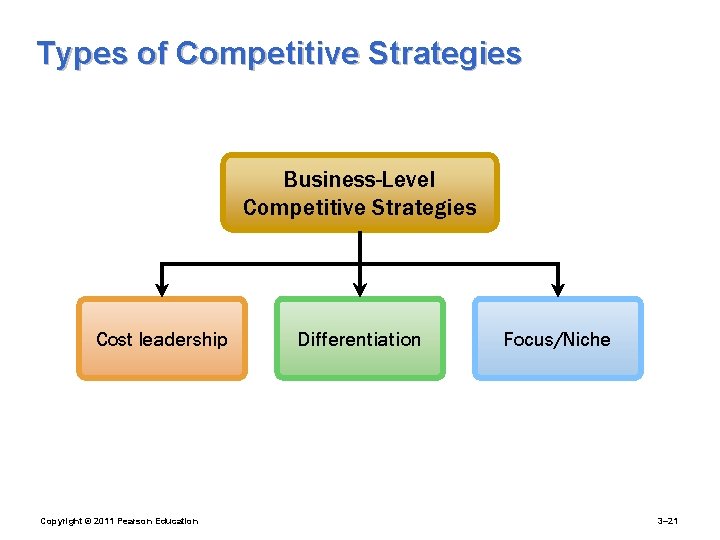
Types of Competitive Strategies Business-Level Competitive Strategies Cost leadership Copyright © 2011 Pearson Education Differentiation Focus/Niche 3– 21
Achieving Strategic Fit • The “Fit” Point of View (Porter) Ø All of the firm’s activities must be tailored to or fit the chosen strategy such that the firm’s functional strategies support its corporate and competitive strategies. • Leveraging (Hamel and Prahalad) Ø “Stretch” in leveraging resources—supplementing what you have and doing more with what you have—can be more important than just fitting the strategic plan to current resources. Copyright © 2011 Pearson Education 3– 22
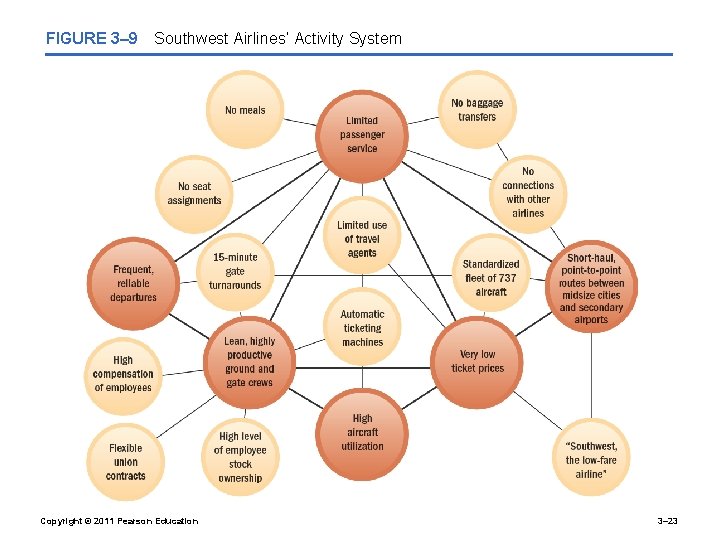
FIGURE 3– 9 Southwest Airlines’ Activity System Copyright © 2011 Pearson Education 3– 23
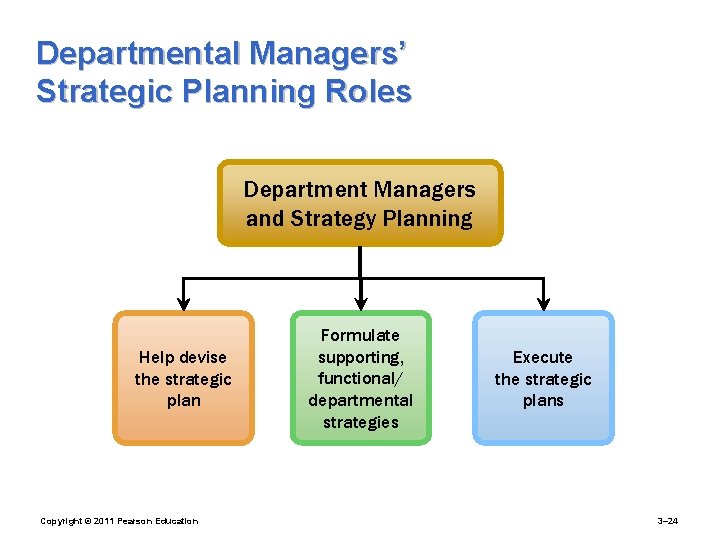
Departmental Managers’ Strategic Planning Roles Department Managers and Strategy Planning Help devise the strategic plan Copyright © 2011 Pearson Education Formulate supporting, functional/ departmental strategies Execute the strategic plans 3– 24
Strategic Human Resource Management • Strategic Human Resource Management Ø The linking of HRM with strategic goals and objectives in order to improve business performance and develop organizational cultures that foster innovation and flexibility. Ø Involves formulating and executing HR systems—HR policies and activities—that produce the employee competencies and behaviors that the company needs to achieve its strategic aims. Copyright © 2011 Pearson Education 3– 25
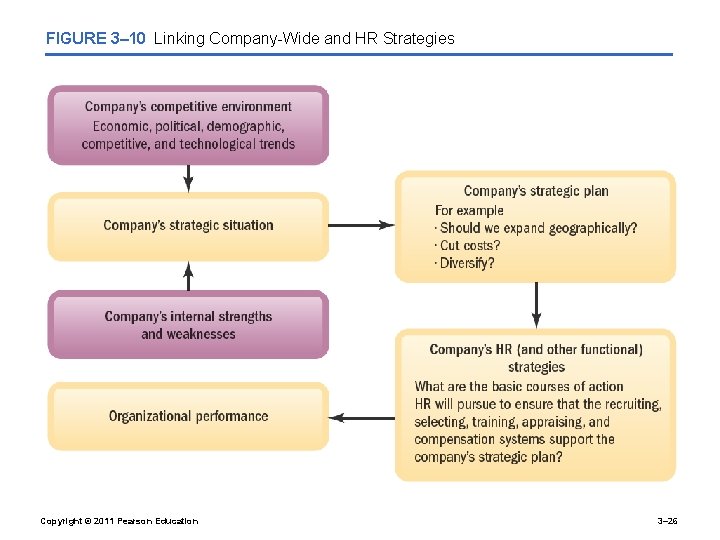
FIGURE 3– 10 Linking Company-Wide and HR Strategies Copyright © 2011 Pearson Education 3– 26
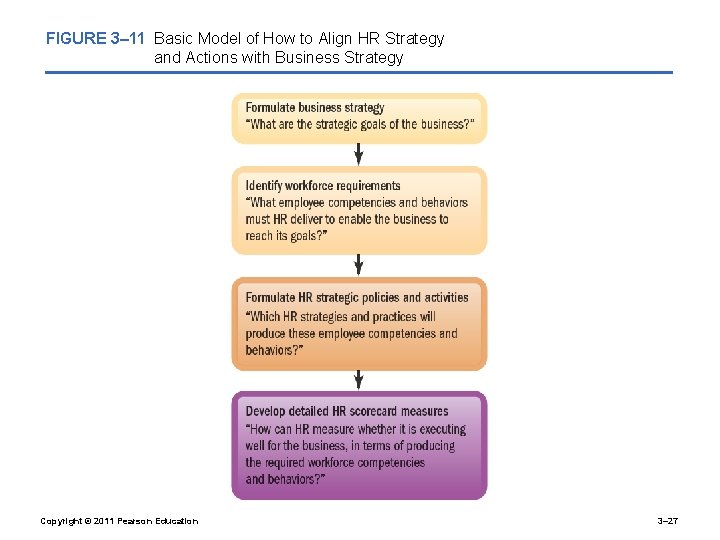
FIGURE 3– 11 Basic Model of How to Align HR Strategy and Actions with Business Strategy Copyright © 2011 Pearson Education 3– 27
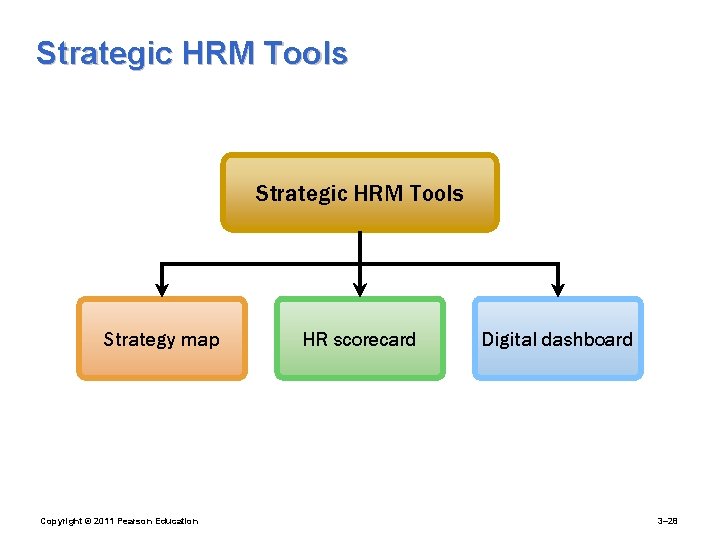
Strategic HRM Tools Strategy map Copyright © 2011 Pearson Education HR scorecard Digital dashboard 3– 28
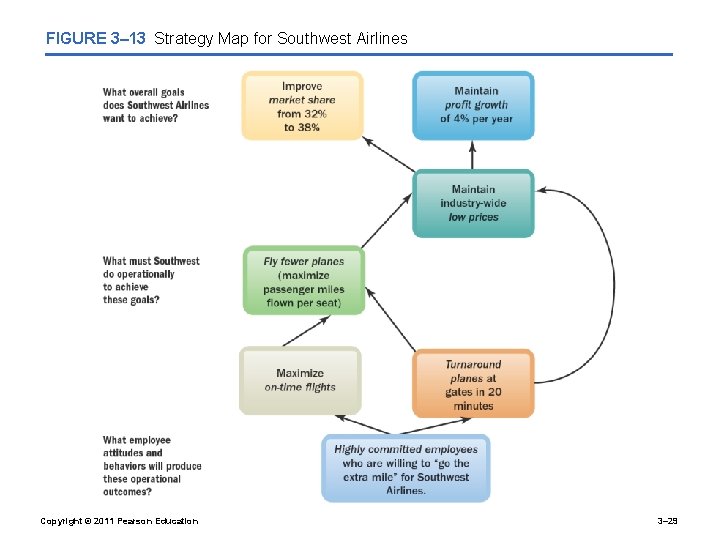
FIGURE 3– 13 Strategy Map for Southwest Airlines Copyright © 2011 Pearson Education 3– 29
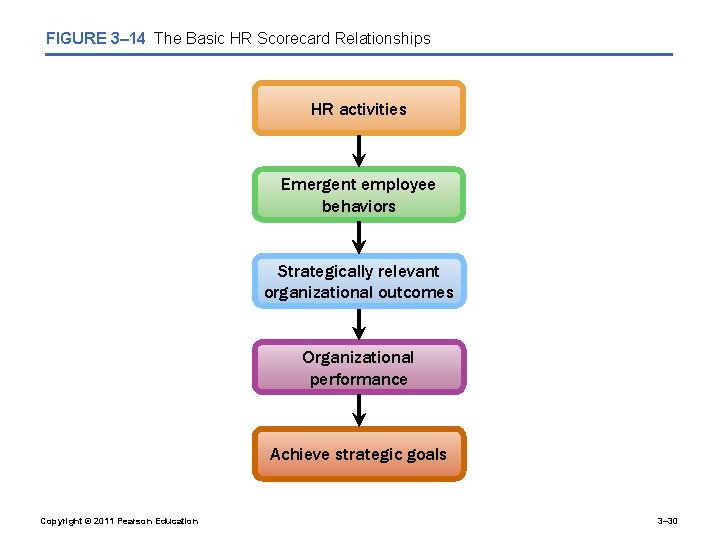
FIGURE 3– 14 The Basic HR Scorecard Relationships HR activities Emergent employee behaviors Strategically relevant organizational outcomes Organizational performance Achieve strategic goals Copyright © 2011 Pearson Education 3– 30
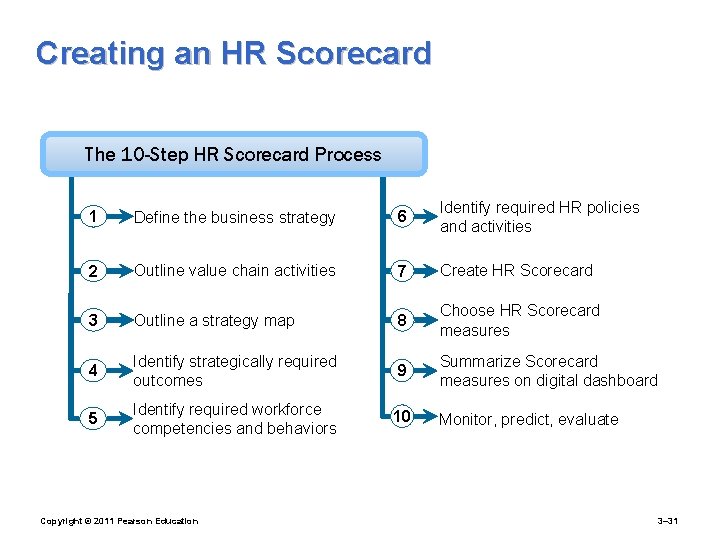
Creating an HR Scorecard The 10 -Step HR Scorecard Process 1 Define the business strategy 6 Identify required HR policies and activities 2 Outline value chain activities 7 Create HR Scorecard 3 Outline a strategy map 8 Choose HR Scorecard measures 4 Identify strategically required outcomes 9 Summarize Scorecard measures on digital dashboard 5 Identify required workforce competencies and behaviors 10 Monitor, predict, evaluate Copyright © 2011 Pearson Education 3– 31
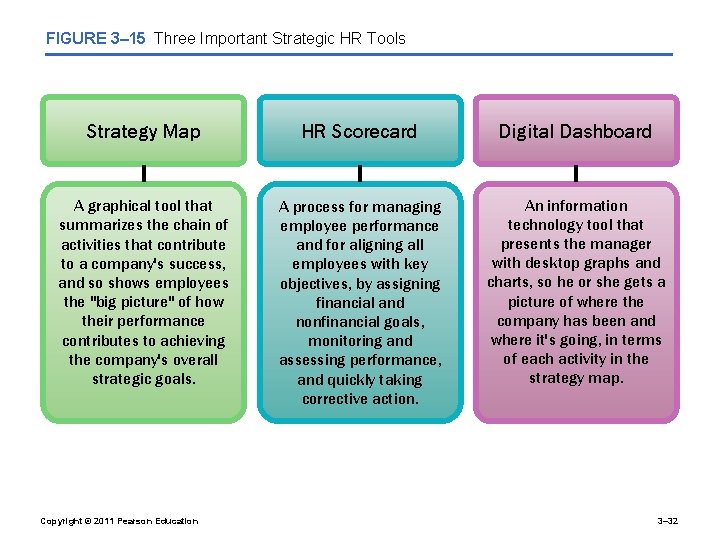
FIGURE 3– 15 Three Important Strategic HR Tools Strategy Map HR Scorecard Digital Dashboard A graphical tool that summarizes the chain of activities that contribute to a company's success, and so shows employees the "big picture" of how their performance contributes to achieving the company's overall strategic goals. A process for managing employee performance and for aligning all employees with key objectives, by assigning financial and nonfinancial goals, monitoring and assessing performance, and quickly taking corrective action. An information technology tool that presents the manager with desktop graphs and charts, so he or she gets a picture of where the company has been and where it's going, in terms of each activity in the strategy map. Copyright © 2011 Pearson Education 3– 32
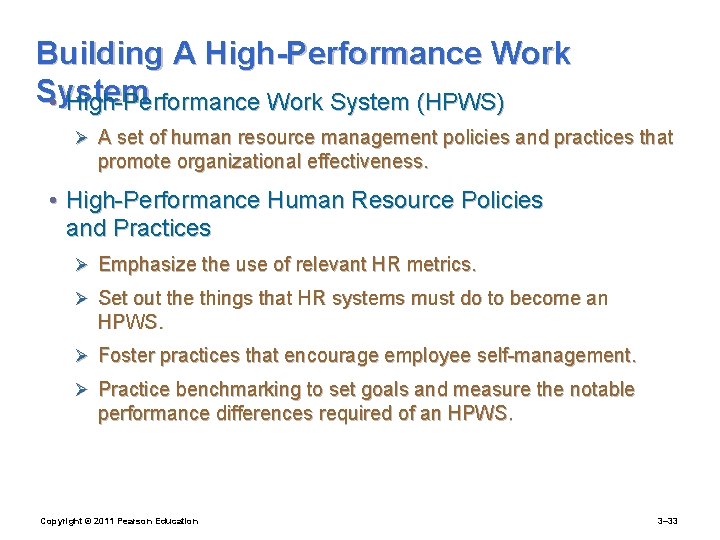
Building A High-Performance Work System • High-Performance Work System (HPWS) Ø A set of human resource management policies and practices that promote organizational effectiveness. • High-Performance Human Resource Policies and Practices Ø Emphasize the use of relevant HR metrics. Ø Set out the things that HR systems must do to become an HPWS. Ø Foster practices that encourage employee self-management. Ø Practice benchmarking to set goals and measure the notable performance differences required of an HPWS. Copyright © 2011 Pearson Education 3– 33
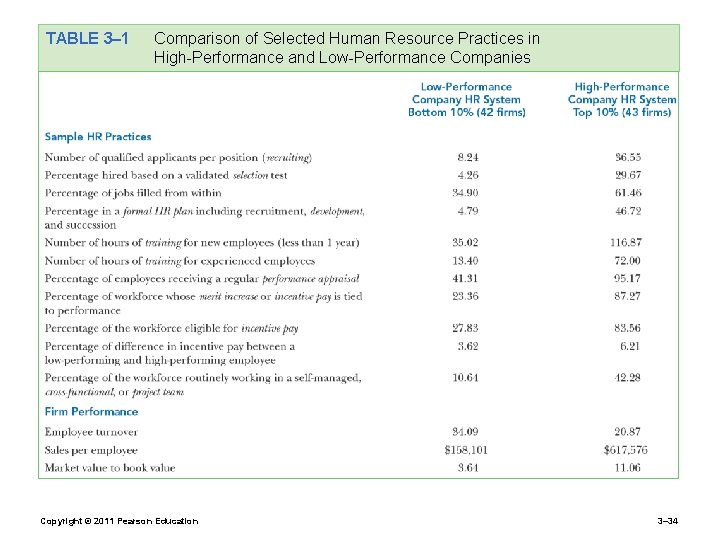
TABLE 3– 1 Comparison of Selected Human Resource Practices in High-Performance and Low-Performance Companies Copyright © 2011 Pearson Education 3– 34
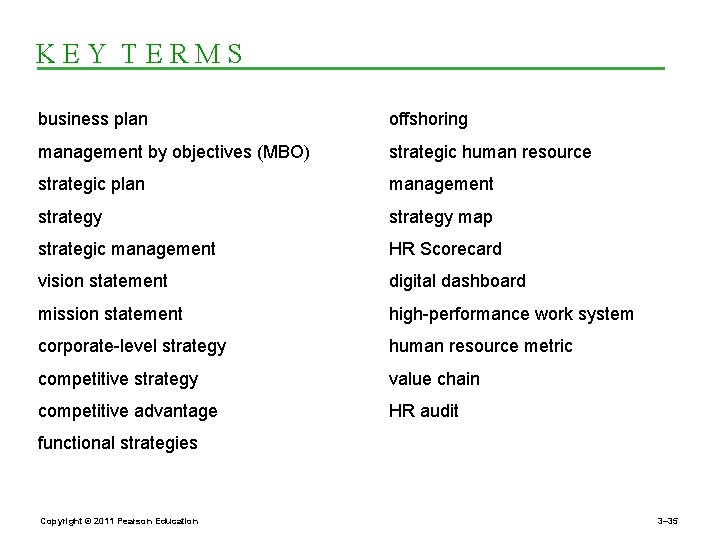
KEY TERMS business plan offshoring management by objectives (MBO) strategic human resource strategic plan management strategy map strategic management HR Scorecard vision statement digital dashboard mission statement high-performance work system corporate-level strategy human resource metric competitive strategy value chain competitive advantage HR audit functional strategies Copyright © 2011 Pearson Education 3– 35
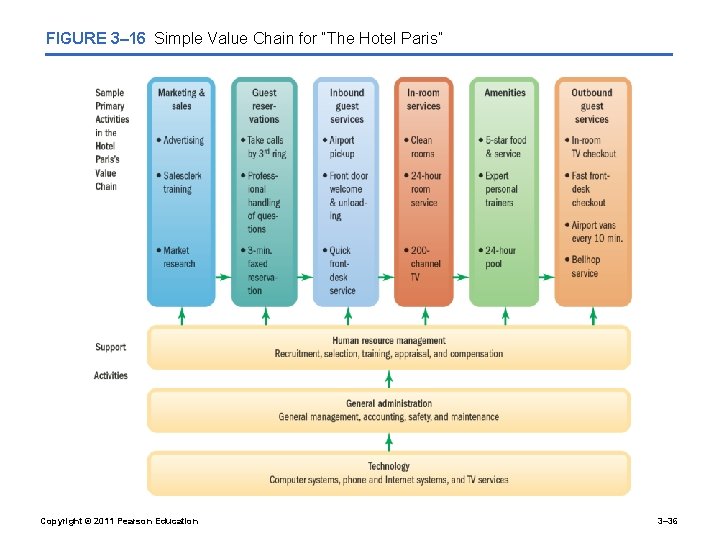
FIGURE 3– 16 Simple Value Chain for “The Hotel Paris” Copyright © 2011 Pearson Education 3– 36
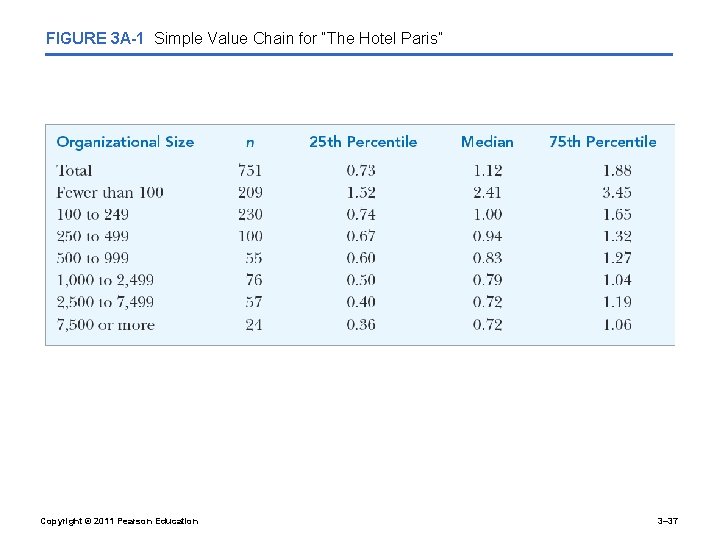
FIGURE 3 A-1 Simple Value Chain for “The Hotel Paris” Copyright © 2011 Pearson Education 3– 37
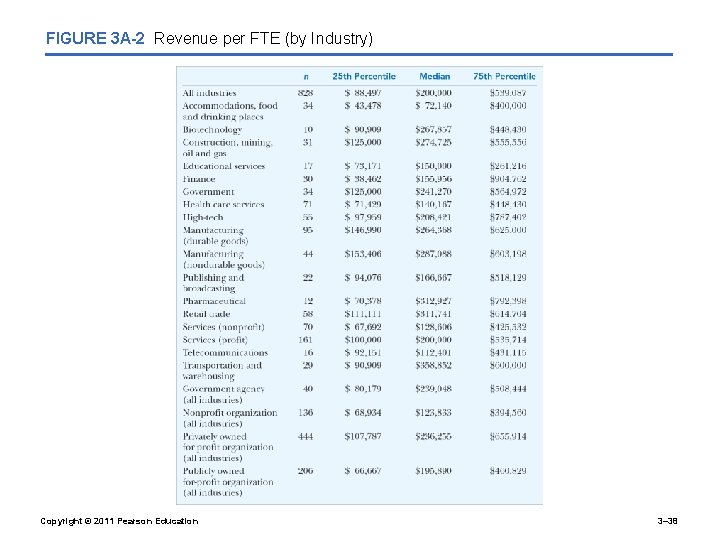
FIGURE 3 A-2 Revenue per FTE (by Industry) Copyright © 2011 Pearson Education 3– 38
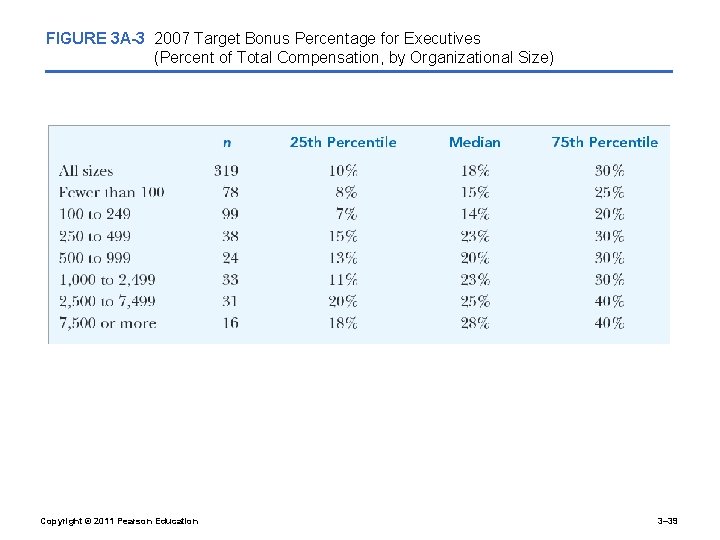
FIGURE 3 A-3 2007 Target Bonus Percentage for Executives (Percent of Total Compensation, by Organizational Size) Copyright © 2011 Pearson Education 3– 39
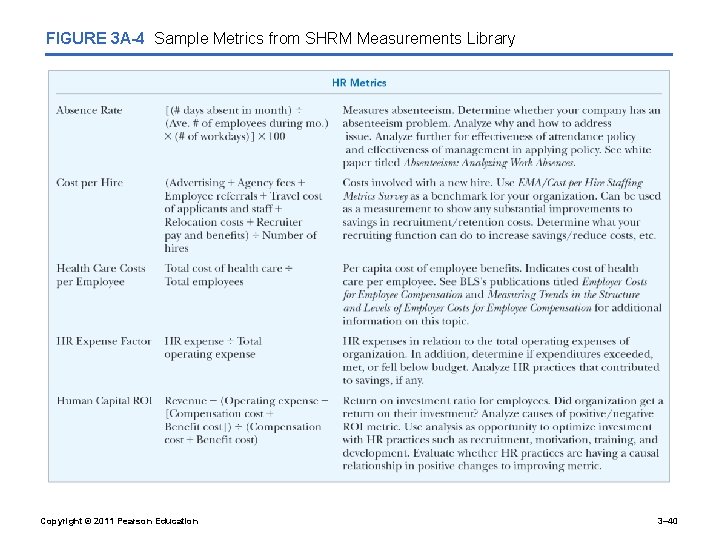
FIGURE 3 A-4 Sample Metrics from SHRM Measurements Library Copyright © 2011 Pearson Education 3– 40
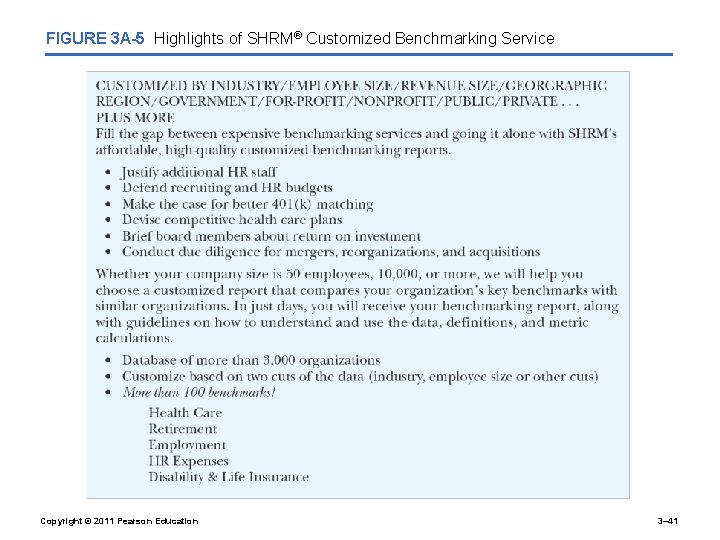
FIGURE 3 A-5 Highlights of SHRM® Customized Benchmarking Service Copyright © 2011 Pearson Education 3– 41
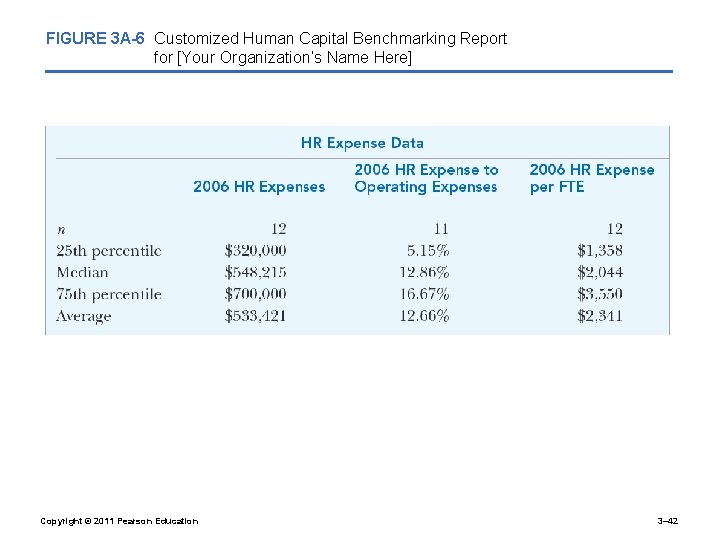
FIGURE 3 A-6 Customized Human Capital Benchmarking Report for [Your Organization’s Name Here] Copyright © 2011 Pearson Education 3– 42
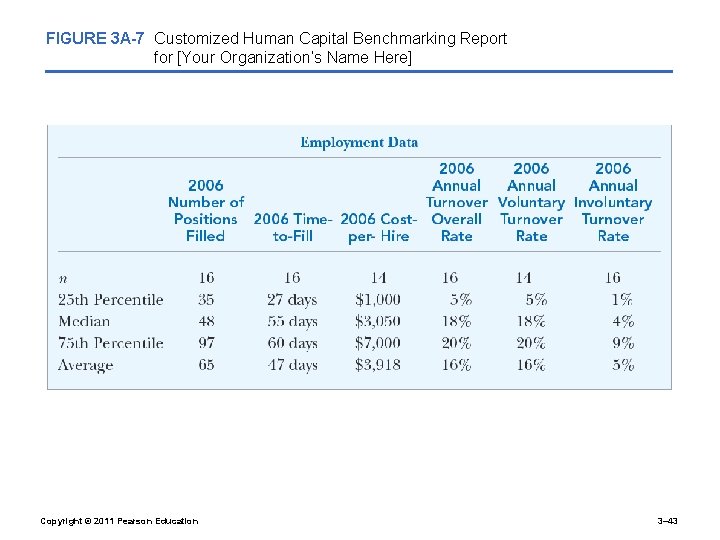
FIGURE 3 A-7 Customized Human Capital Benchmarking Report for [Your Organization’s Name Here] Copyright © 2011 Pearson Education 3– 43
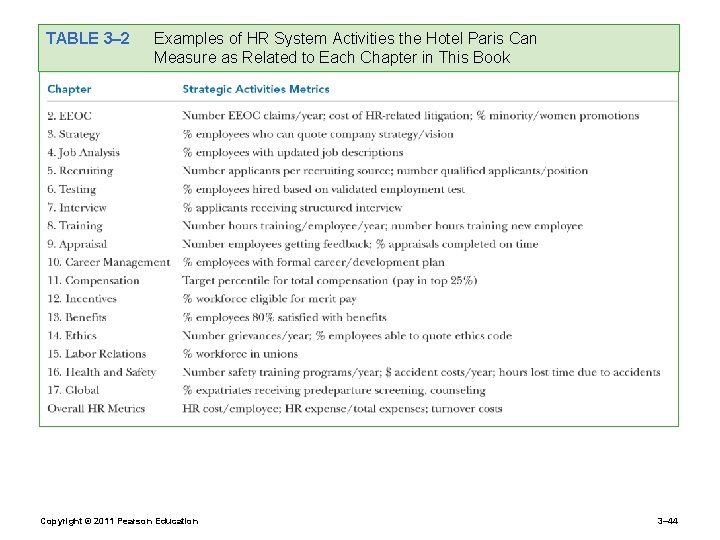
TABLE 3– 2 Examples of HR System Activities the Hotel Paris Can Measure as Related to Each Chapter in This Book Copyright © 2011 Pearson Education 3– 44
All rights reserved. No part of this publication may be reproduced, stored in a retrieval system, or transmitted, in any form or by any means, electronic, mechanical, photocopying, recording, or otherwise, without the prior written permission of the publisher. Printed in the United States of America. Copyright © 2011 Pearson Education 3– 45
- Slides: 45