
Human Reproductive Systems Asexual vs Sexual Reproduction Life
- Slides: 8
Human Reproductive Systems
Asexual vs. Sexual Reproduction Life reproduces using two different methods. Asexual reproduction: a cell copies it’s DNA and divides making offspring that is a clone of the parent. Most single celled organisms. Somatic(body cells) of multicellular organisms Sexual reproduction: Specialized cells called gametes mix DNA from two different parents. Increases genetic variety. How most plants and animals create offspring.
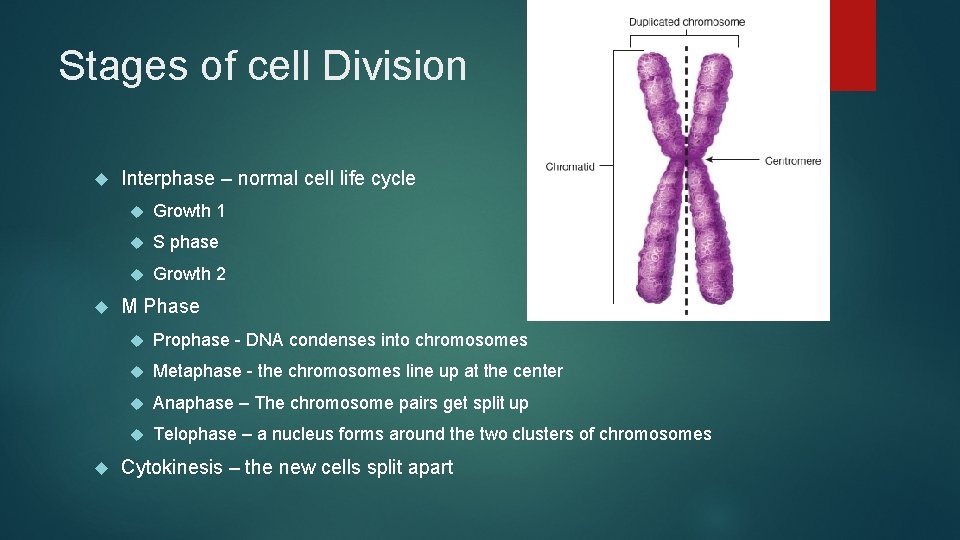
Stages of cell Division Interphase – normal cell life cycle Growth 1 S phase Growth 2 M Phase Prophase - DNA condenses into chromosomes Metaphase - the chromosomes line up at the center Anaphase – The chromosome pairs get split up Telophase – a nucleus forms around the two clusters of chromosomes Cytokinesis – the new cells split apart
Chromosomes There are 22 Homologous pairs of chromosomes in human cells known as Autosomes, and two sex chromosomes. The chromosomes are X and Y. Women have two X chromosomes and men have and X and a Y. This configuration means the many sex linked disorders can disproportionately affect men. Such as hemophilia and colorblindness.
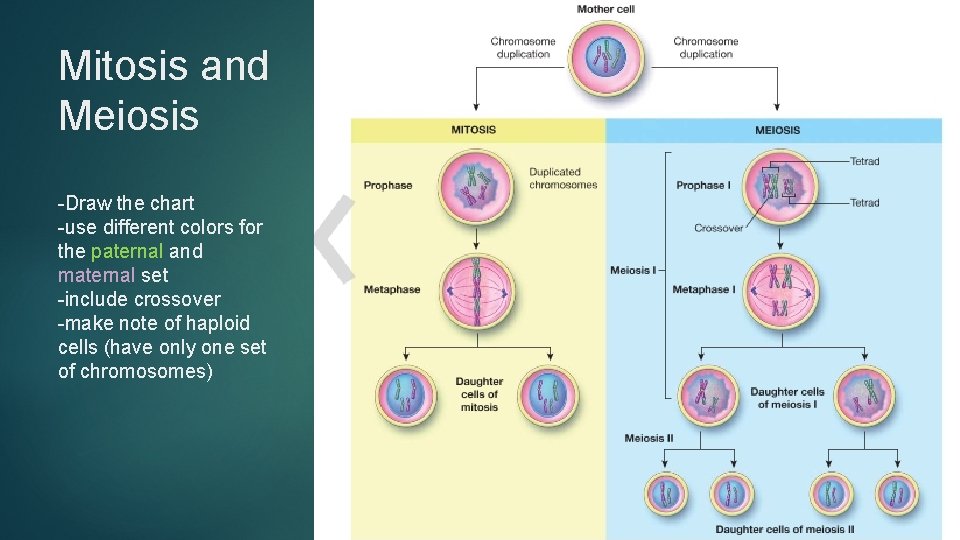
Mitosis and Meiosis -Draw the chart -use different colors for the paternal and maternal set -include crossover -make note of haploid cells (have only one set of chromosomes)
Mitosis and Meiosis Mitosis is simple asexual cellular reproduction. It produces genetically identical cells and is what the body uses to replicate it’s own body cells, or somatic cells. Meiosis produces specialized cells known as gametes. Games only have one set (haploid) of DNA instead of two (diploid) and will combine with another gamete to make up the difference. The new cell produced in this process will be a genetically unique individual. Whose cells will start to divide to form the body of the organism.
Embryonic and Fetal Development At 5 weeks the embryo develops the precursors for sexual organs. Which are identical in male and female embryos. At 7 weeks the effects of the SRY gene located on the Y chromosome begin the development of male sexual organs starting with the testes. After the testes develop, they start to produce testosterone which starts the development of the penis scrotum and male accessory organs. The “default” state of the embryo is female and at week 8 if there was no expression of the SRY gene, the embryo will develop ovaries and external female genitalia.
Puberty At the age of 8 -13 the first phase of puberty in girls is marked by breast growth, followed by the development of secondary sexual characteristics: axillary hair(underarm) widening of the pelvis and pelvic outlet. About two years after the beginning of puberty menarche occurs (the first menstrual bleeding). At the age of 9 -14 the fist phase of puberty is marked by the growth of the scrotum and testes. Secondary sexual characteristics such as axillary hair growth and increase in size of the larynx and lengthening of the vocal cords, which deepens the voice. The penis will enlarge and males may experience erections at unexpected times and occasional emissions of semen during sleep.