
Human Reproduction The Menstrual Cycle What is the











- Slides: 37
Human Reproduction The Menstrual Cycle
What is the Menstrual Cycle? • Cycle of events involving changes in the ovaries and uterus in preparation for reproduction • Starts at puberty, and ends at menopause (around age 45 -55).
Hormone = chemical signal released into blood-communicates messages throughout body Endocrine & Reproductive Systems work together
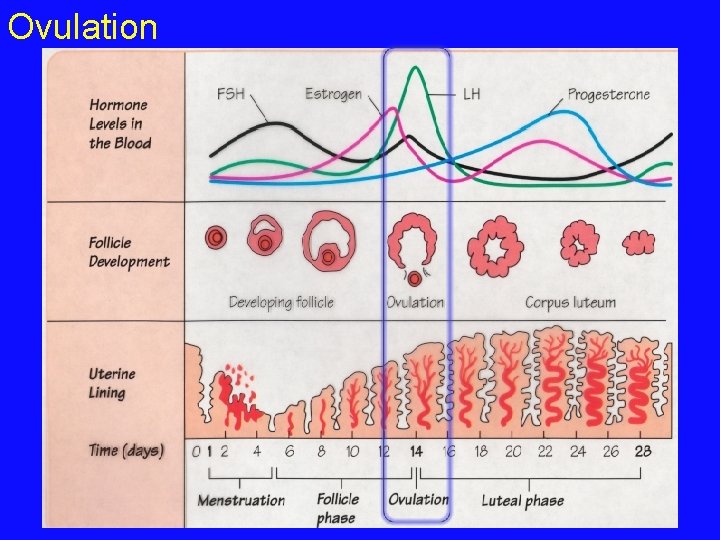
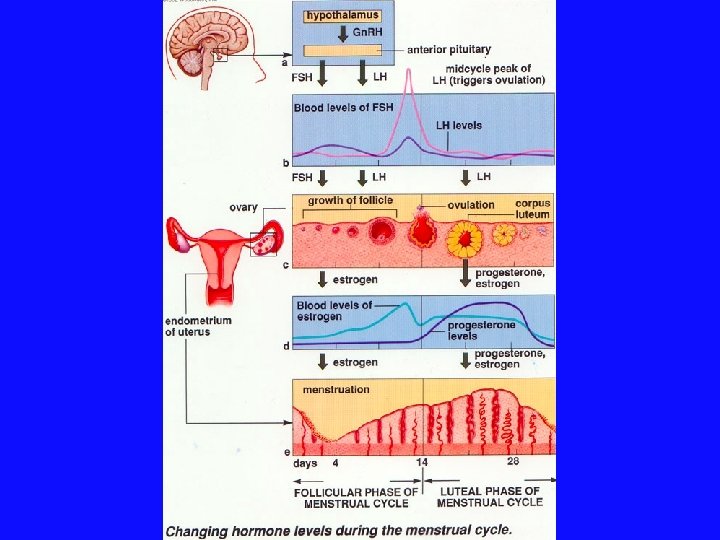
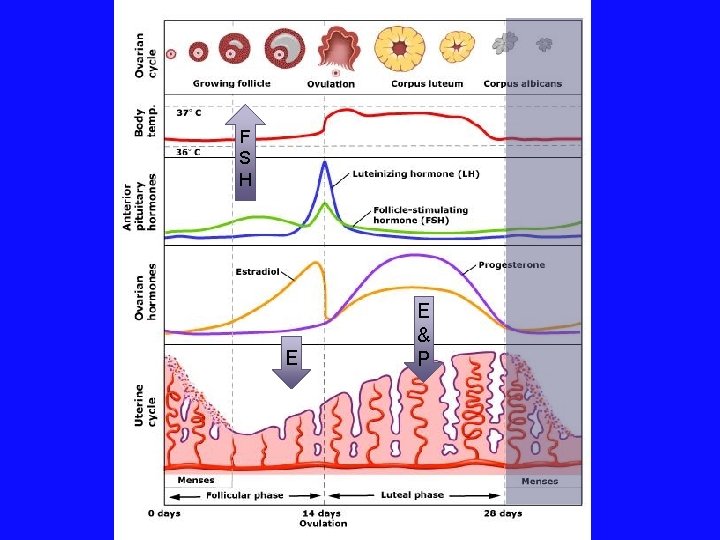
Menstrual Cycle • Four major hormones involved: FSH & LH (released by pituitary); progesterone & estrogen (released by ovarian cells)
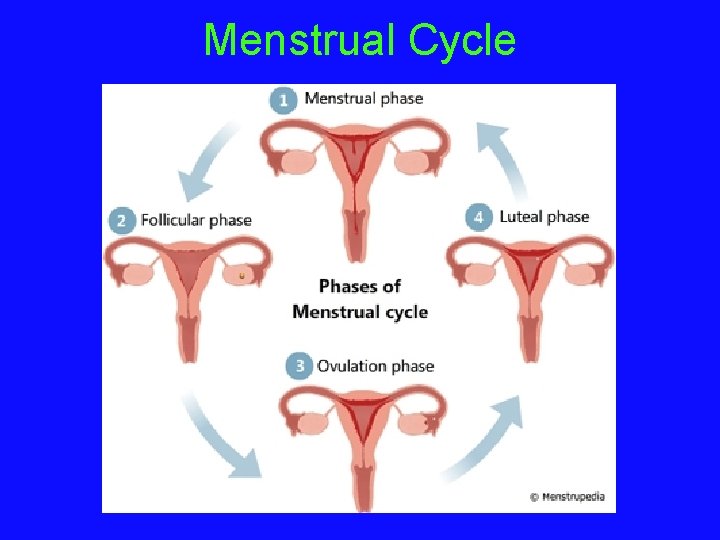
• The Menstrual Cycle is broken down into four phases
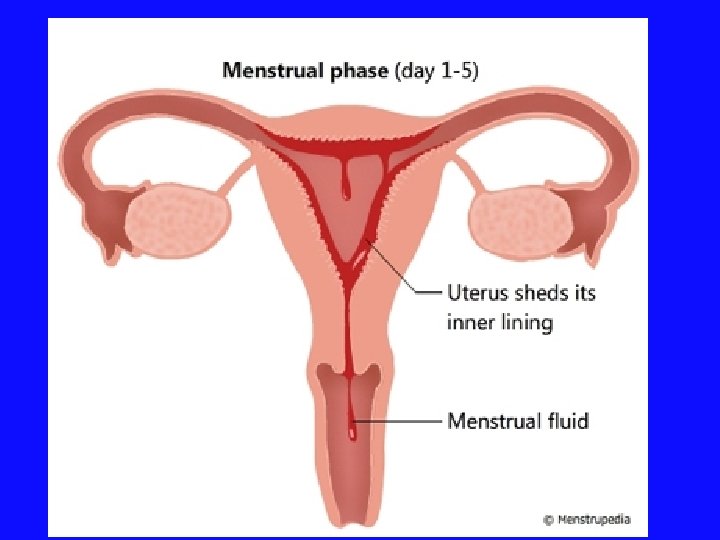
Menstrual Cycle A. Menstruation phase- lasts 4 -7 days 1. The uterine lining is discharged 2. FSH and LH released by pituitary
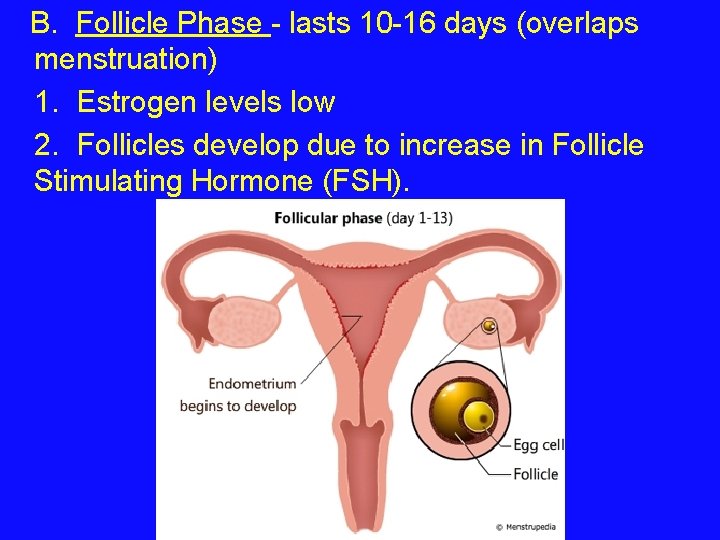
B. Follicle Phase - lasts 10 -16 days (overlaps menstruation) 1. Estrogen levels low 2. Follicles develop due to increase in Follicle Stimulating Hormone (FSH).
a. FSH causes a follicle and the egg to mature.
Follicle Phase
3. As the follicle develops, it begins to secrete estrogen, which: a. causes the lining of the uterus to thicken b. Causes an increase in LH
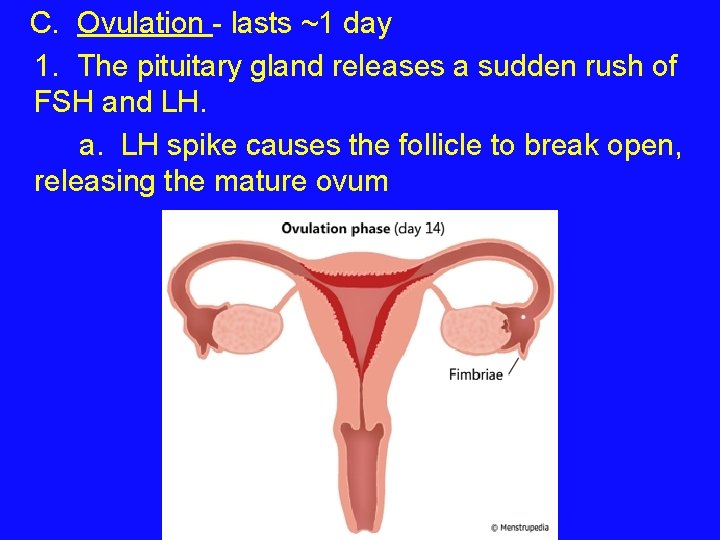
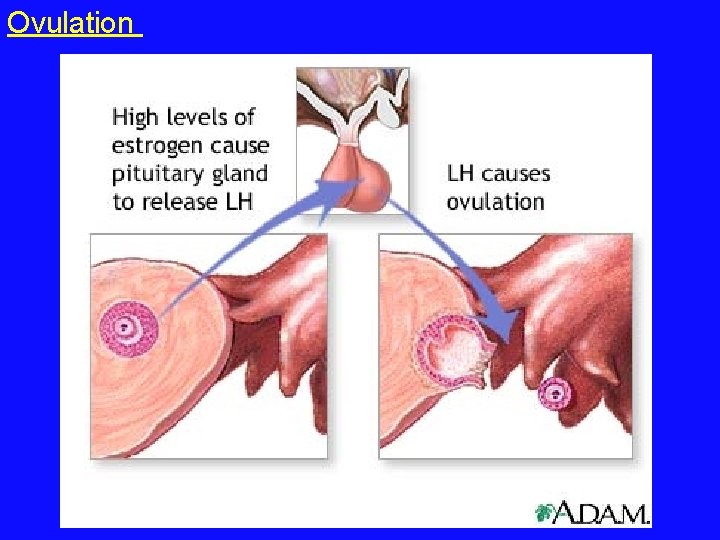
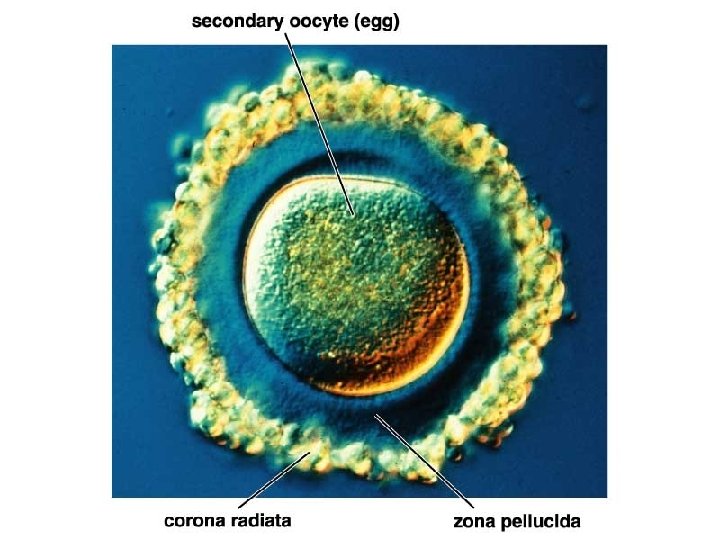
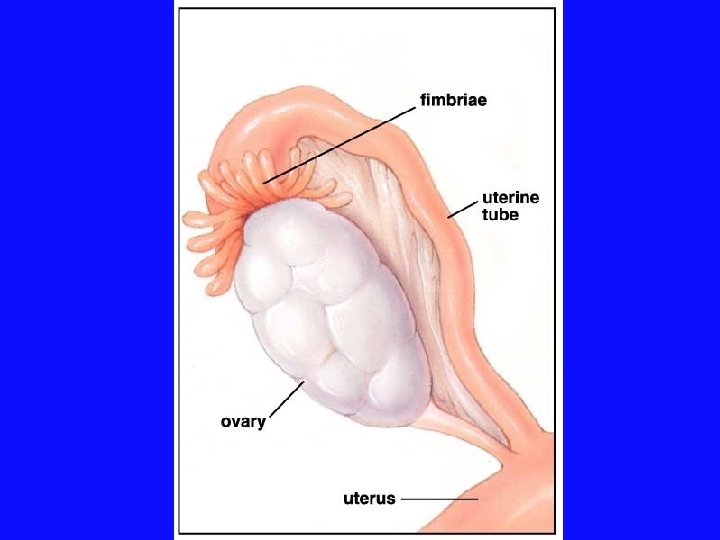
C. Ovulation - lasts ~1 day 1. The pituitary gland releases a sudden rush of FSH and LH. a. LH spike causes the follicle to break open, releasing the mature ovum
Ovulation
Ovulation
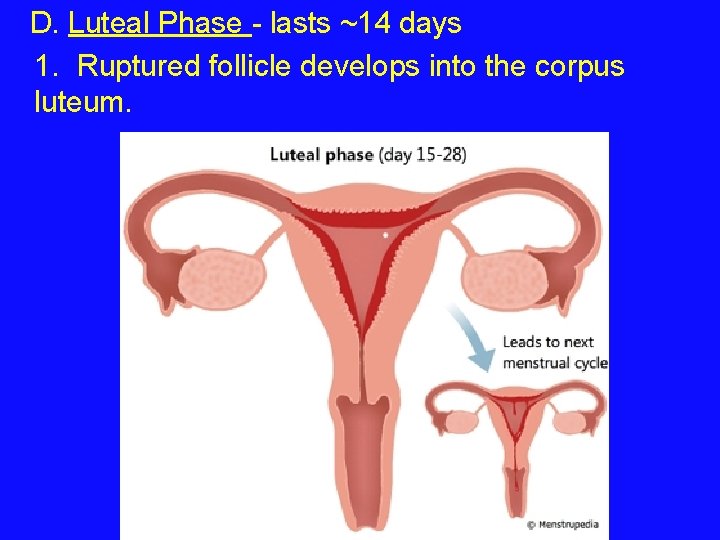
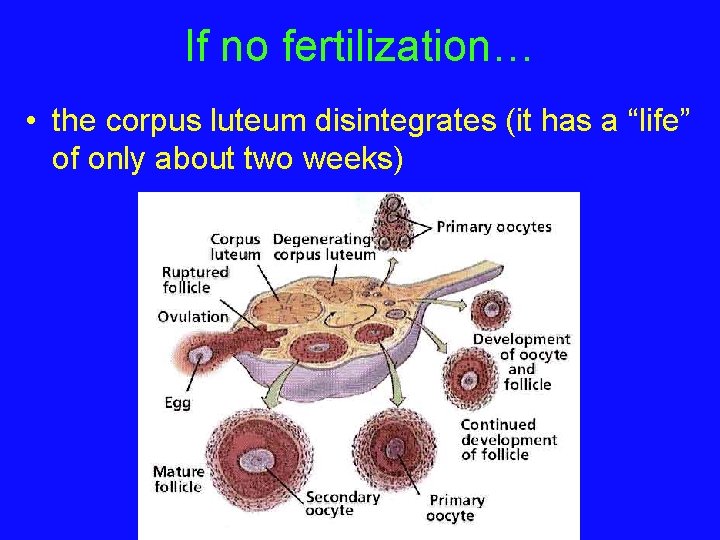
D. Luteal Phase - lasts ~14 days 1. Ruptured follicle develops into the corpus luteum.
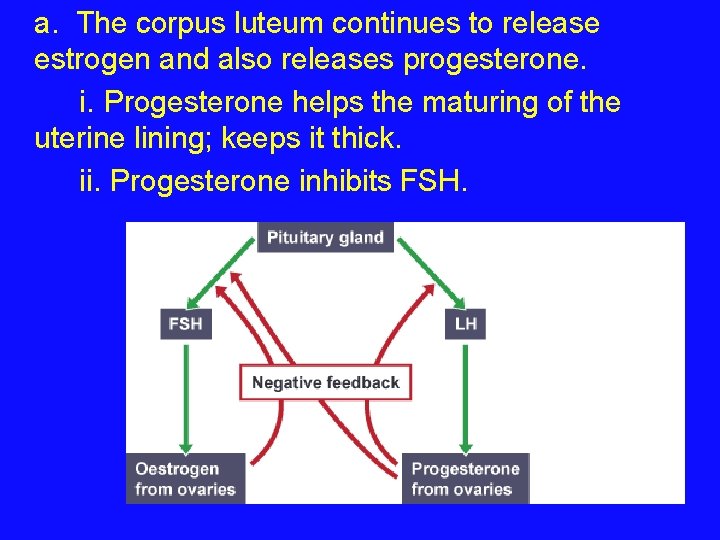
a. The corpus luteum continues to release estrogen and also releases progesterone. i. Progesterone helps the maturing of the uterine lining; keeps it thick. ii. Progesterone inhibits FSH.
If no fertilization… • the corpus luteum disintegrates (it has a “life” of only about two weeks)
If no fertilization… • A cascade of events results: – estrogen and progesterone levels go very low – These low levels causes the uterine lining to detach from the uterine wall – beginning of cycle starts again with menstruation and increase in FSH and LH
Menstrual Cycle
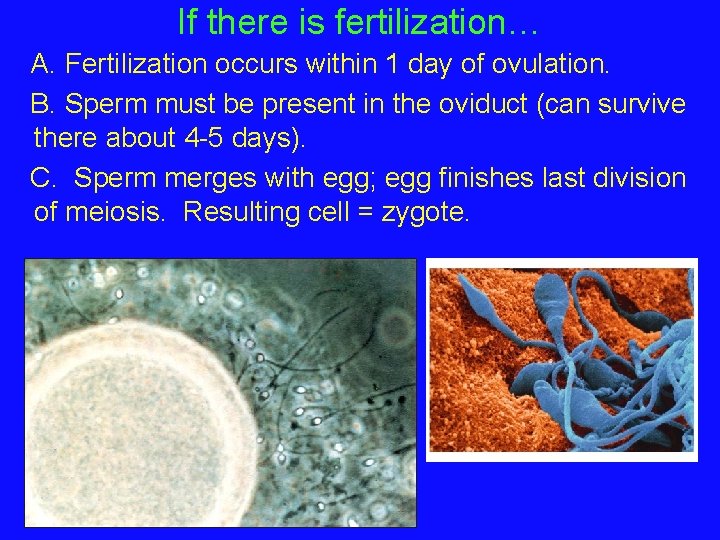
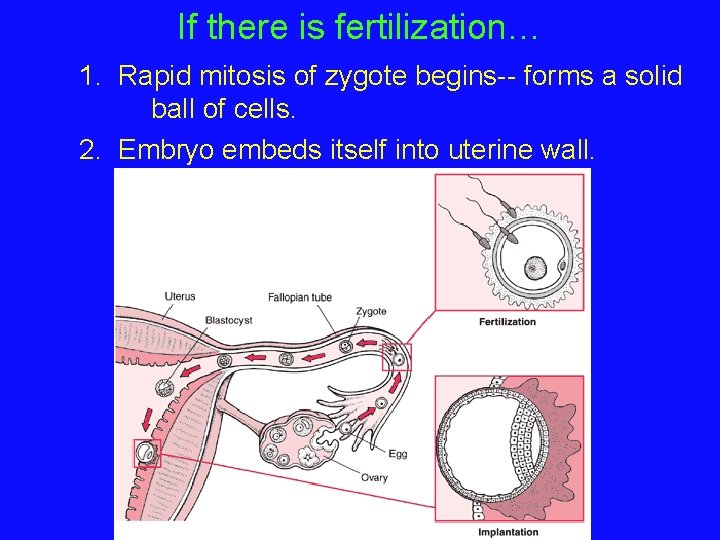
If there is fertilization… A. Fertilization occurs within 1 day of ovulation. B. Sperm must be present in the oviduct (can survive there about 4 -5 days). C. Sperm merges with egg; egg finishes last division of meiosis. Resulting cell = zygote.
If there is fertilization… 1. Rapid mitosis of zygote begins-- forms a solid ball of cells. 2. Embryo embeds itself into uterine wall.
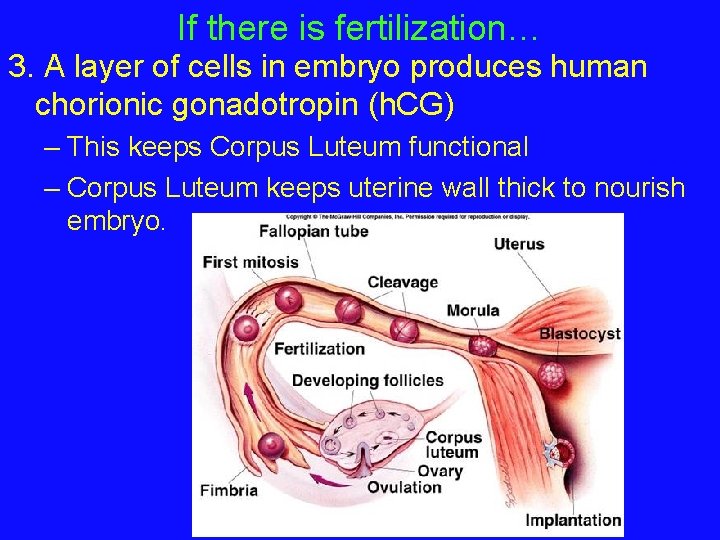
If there is fertilization… 3. A layer of cells in embryo produces human chorionic gonadotropin (h. CG) – This keeps Corpus Luteum functional – Corpus Luteum keeps uterine wall thick to nourish embryo.
If there is fertilization… 4. Tissues in embryo produce estrogen and progesterone – Prevents pituitary from releasing FSH and LH – WHY?
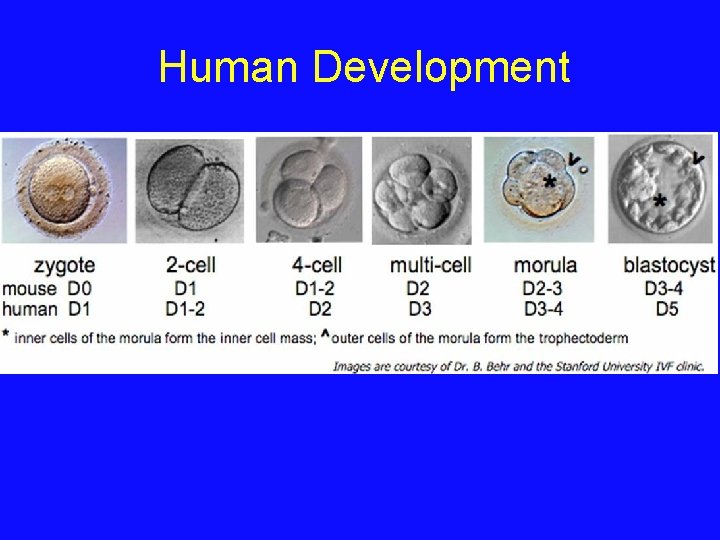
Human Development
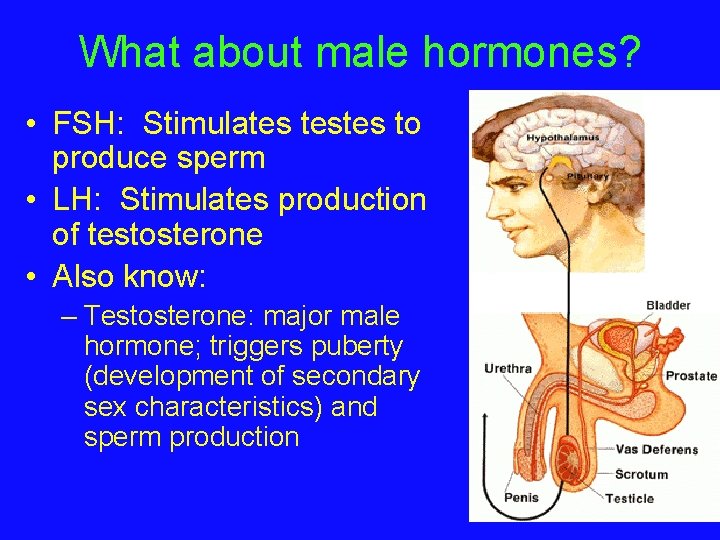
What about male hormones? • FSH: Stimulates testes to produce sperm • LH: Stimulates production of testosterone • Also know: – Testosterone: major male hormone; triggers puberty (development of secondary sex characteristics) and sperm production
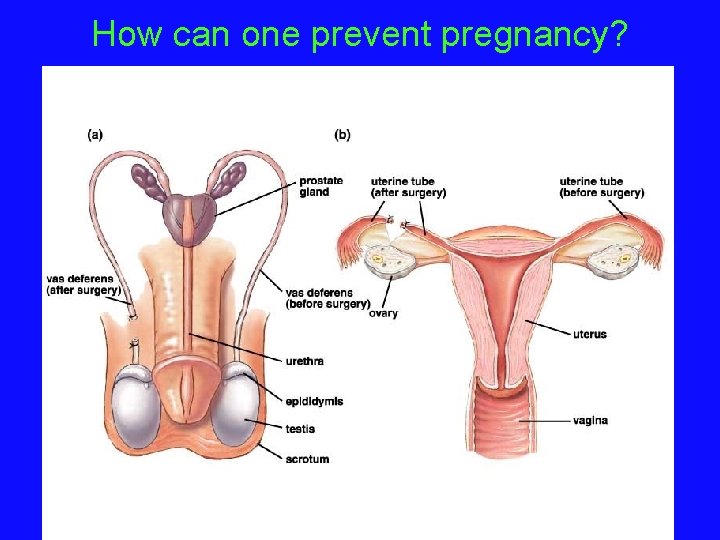
How can one prevent pregnancy?
How can one prevent pregnancy?
F S H E E & P