
HUMAN REPRODUCTION MALE REPRODUCTION SYSTEMS MALE SEXUAL CHARACTERISTICS
- Slides: 13
HUMAN REPRODUCTION MALE REPRODUCTION SYSTEMS
MALE SEXUAL CHARACTERISTICS • Primary Sexual Characteristics – physical anatomy of the male that produces sperm, and delivers the sperm to the egg. • At birth the male’s primary sexual characteristics are present, but it isn’t until puberty that the secondary sexual characteristics are developed. • Puberty in males develop between 11 – 13 years of age and stops around the age of 18.
MALE SEXUAL CHARACTERISTICS • During puberty hormones are released from the pituitary gland in the brain to produce male sex hormones called testosterone. • Testosterone helps produce the secondary characteristics of the male. • Secondary characteristics include: growth spurts, emergence of facial, underarm and pubic hair and the deepening of the voice.
MALE SEXUAL CHARACTERISTICS • Once the secondary characteristics start to develop, the male human is potentially able and ready to reproduce. • The secondary characteristics DO NOT influence the male primary sexual characteristics.
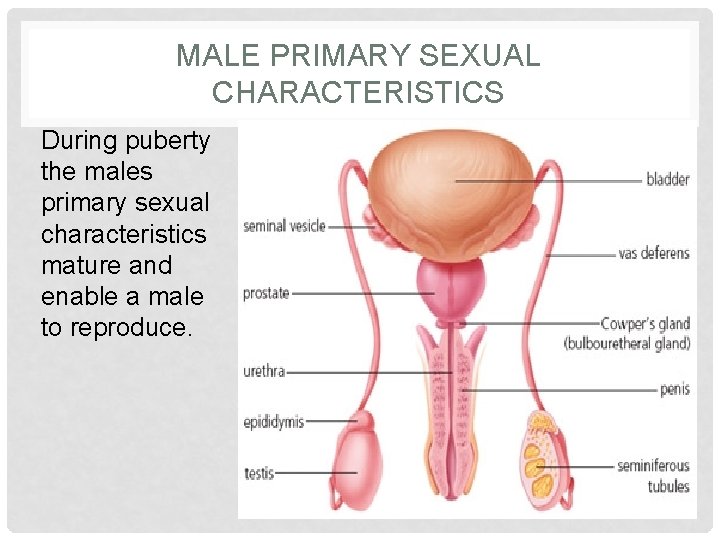
MALE PRIMARY SEXUAL CHARACTERISTICS During puberty the males primary sexual characteristics mature and enable a male to reproduce.
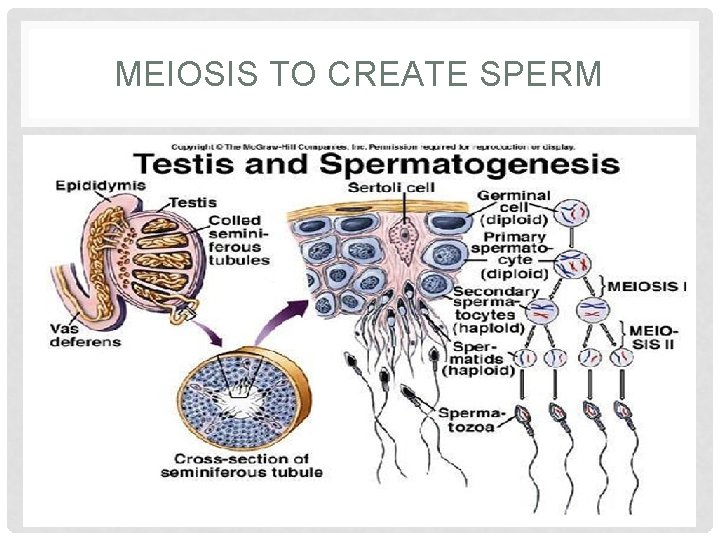
MALE REPRODUCTIVE STRUCTURES • Scrotum: A protective sac that holds testicles. • Testicle (Testis singular): Produce and nourish developing sperm. • Seminiferous Tubules: A group of tubes containing diploid cells that are undergoing meiosis and becoming haploid cells. • Epididymis: Sac that stores mature sperm.
MALE REPRODUCTIVE STRUCTURES • Vas Deferens: Tube that carries mature sperm from the epididymis to the urethra. • Seminal vesicles, Prostate gland, Cowper’s gland: are glands that release seminal fluid. • Urethra: Transports both sperm and urine to outside the body. • Penis: The organ that contains the urethra. Enters the female during sexual intercourse.
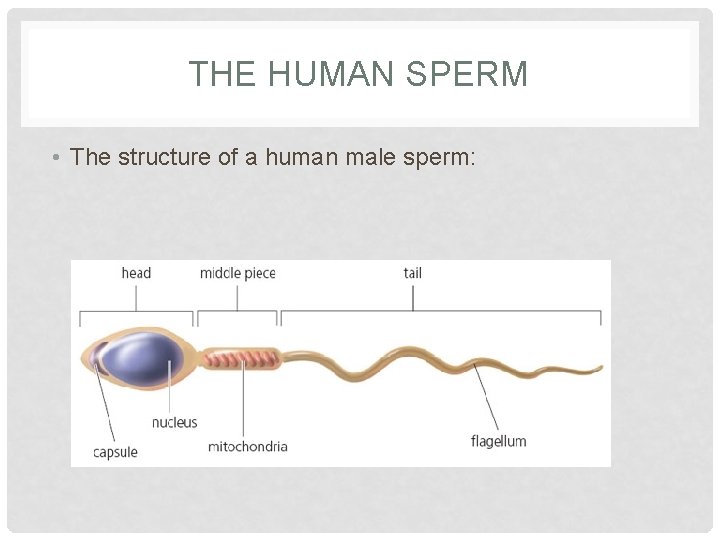
THE HUMAN SPERM • The structure of a human male sperm:
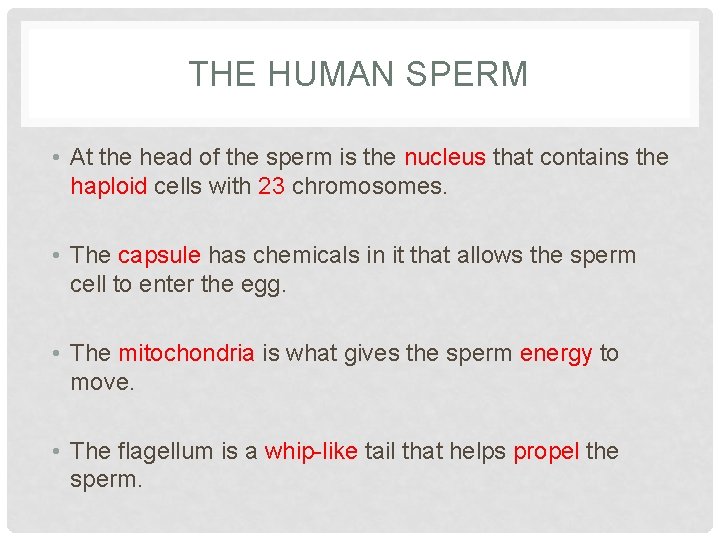
THE HUMAN SPERM • At the head of the sperm is the nucleus that contains the haploid cells with 23 chromosomes. • The capsule has chemicals in it that allows the sperm cell to enter the egg. • The mitochondria is what gives the sperm energy to move. • The flagellum is a whip-like tail that helps propel the sperm.
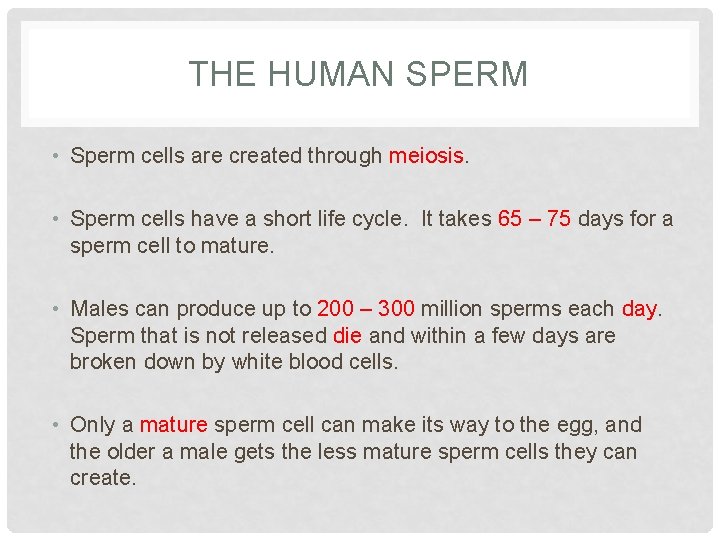
THE HUMAN SPERM • Sperm cells are created through meiosis. • Sperm cells have a short life cycle. It takes 65 – 75 days for a sperm cell to mature. • Males can produce up to 200 – 300 million sperms each day. Sperm that is not released die and within a few days are broken down by white blood cells. • Only a mature sperm cell can make its way to the egg, and the older a male gets the less mature sperm cells they can create.
MEIOSIS TO CREATE SPERM
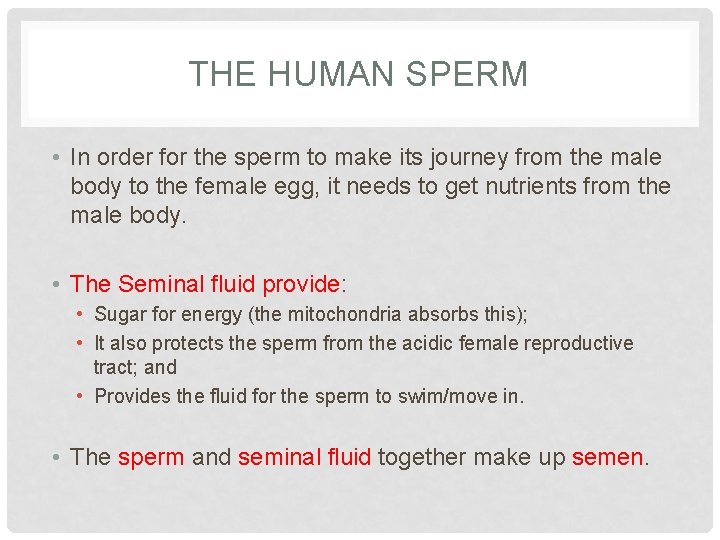
THE HUMAN SPERM • In order for the sperm to make its journey from the male body to the female egg, it needs to get nutrients from the male body. • The Seminal fluid provide: • Sugar for energy (the mitochondria absorbs this); • It also protects the sperm from the acidic female reproductive tract; and • Provides the fluid for the sperm to swim/move in. • The sperm and seminal fluid together make up semen.
ASSIGNMENT • Page 111 Textbook – Questions 1, 2, 3, 4, 5, 6, 8, 9, 10, 11, 12, 13