
Human Remains The Postmortem Interval Determining the Time


- Slides: 33
Human Remains
The Postmortem Interval: Determining the Time of Death • • Pathologist usually determines Done most accurately within the first 24 hrs of death
Algor mortis • • Cooling rate of the body after death Glaister formula – H=(98°F-internal temperature)/1. 5 – Body generally cools 1 to 1. 5 degrees per hour until it reaches environmental temp.
• Factors to consider – – – Temp. of environment Type of clothing Clothing wet or dry Air movement Layers of clothing Surface area to body mass
Livor Mortis • • • Pooling of blood after the heart stops, caused by gravity Can indicate the position of the body at the time of death None found in areas of the body that touch the ground Begins within ½ hr after death After 12 hrs discoloration will not move
Rigor Mortis • • Rigidity of the skeletal muscles after death due to buildup of calcium ions Occurs within 2 or 3 hrs after death Gone within 30 hrs when muscle protein begins decomposing Affected by temp. , dehydration, condition of muscles, and use prior to death
Decomposition • • • Gradual breakdown of dead organic matter which releases elements and compounds Caused by bacteria and fungi autolysis occurs as well
Stages of decomposition 1. 2. 3. Fresh Initial decay Putrefaction 4. Black putrefaction 5. Butyric fermentation 6. Dry decay
Rate of decomposition • • Dependent on environmental factors Fastest in warm, humid areas Slowest in cold, arid areas Results in either skeletonization or mummification
Forensic Anthropology • • Anthropology – study of humankind including anatomy, variability, evolution, and culture Forensic anthropology – specializes in the human skeletal system and its changes and variations, for purposes of legal inquiry
• • • Bodies are decomposed, badly burned, or mummified Identification of crime victims Cause of death Time of death (approx. ) Demographics
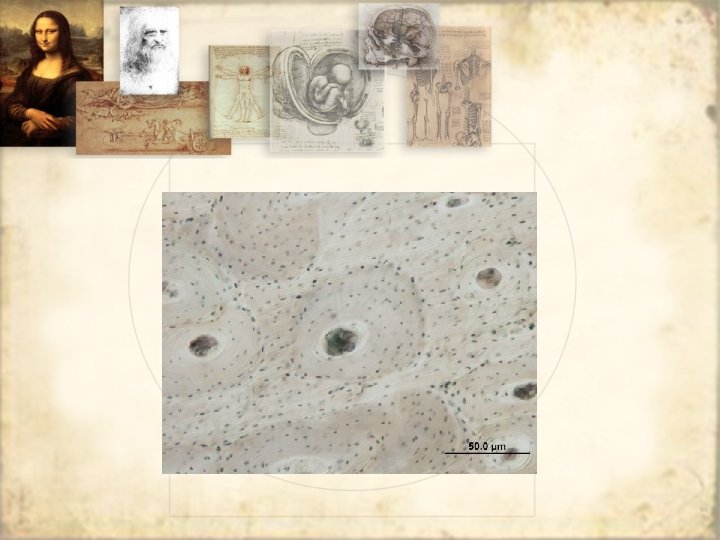
Human vs. Animal Bones • • • Osteology – study of bones Can be determined by visual inspection Can be determined through microscopic examination (osteons irregular pattern in humans)
The Skeleton • • Adult human has 206 bones Classified as long (arms), short (wrist), flat (scapula), or irregular (vertebrae)
Estimating Height Using Long Bones • See page 275
Sex Determination • • • Most obvious differences in pubis, sacrum, and ilium Also shape of skull and mandible and size of occipital prtuberance Size of bones Sacrum is straighter in females Space in middle of pelvic bone is larger in women
Characteristics of Pubic Bone • • • Width of arch (larger in fem) Width of body (wider in fem) Existence of well-defined ventral arc (not present in male)
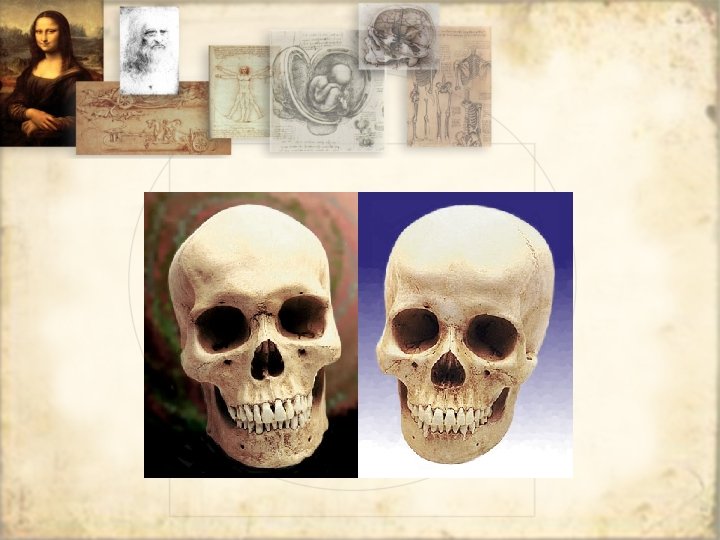
Determining Sex Using Skull Features • • • Angle of mandible Space at between mandible attachment Size of cranial bones
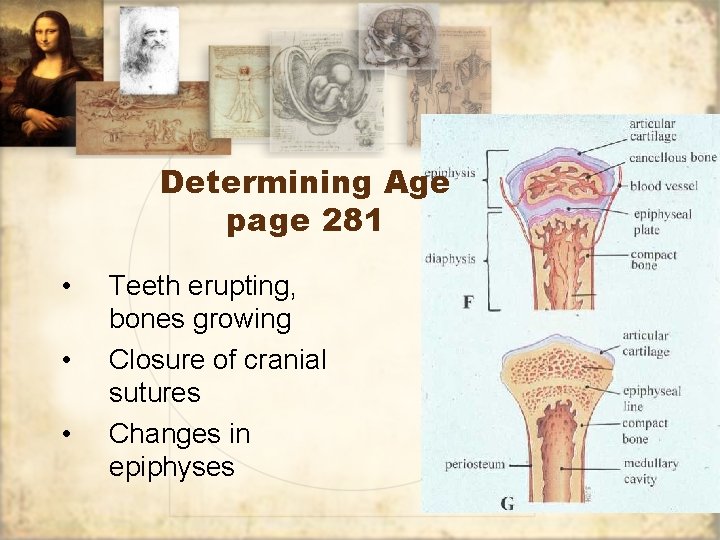
Determining Age page 281 • • • Teeth erupting, bones growing Closure of cranial sutures Changes in epiphyses
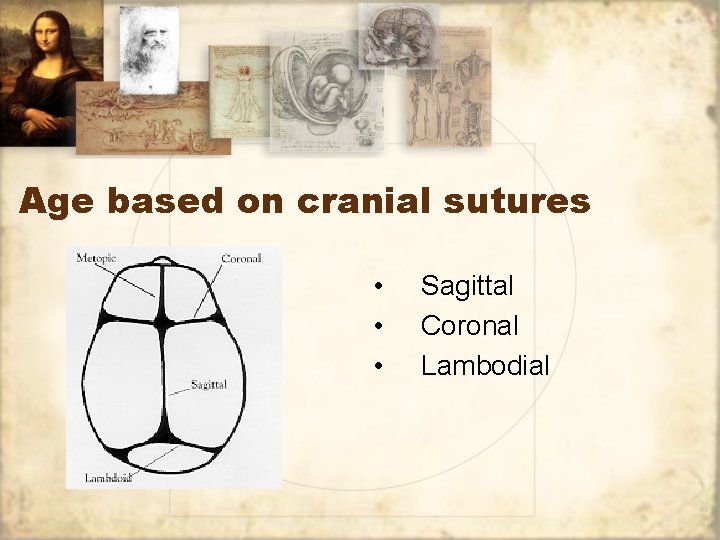
Age based on cranial sutures • • • Sagittal Coronal Lambodial
• Sagittal completely closed – – Male 26 or older Female 28 or older • All three major sutures completely closed – – Male 35 or older Female 50 or older
Age based on pubic bone • Pattern on symphysis – regular rows or furrows in younger individuals – smooth with an oval surface – Breakdown of the bone in older individuals
Determining of Race p. 286 -287 • Caucasoid – European, Middle Eastern, East Indian • Negroid – African, Aborigine, Melanesian • Mongoloids – Asian, Native American, Polynesian
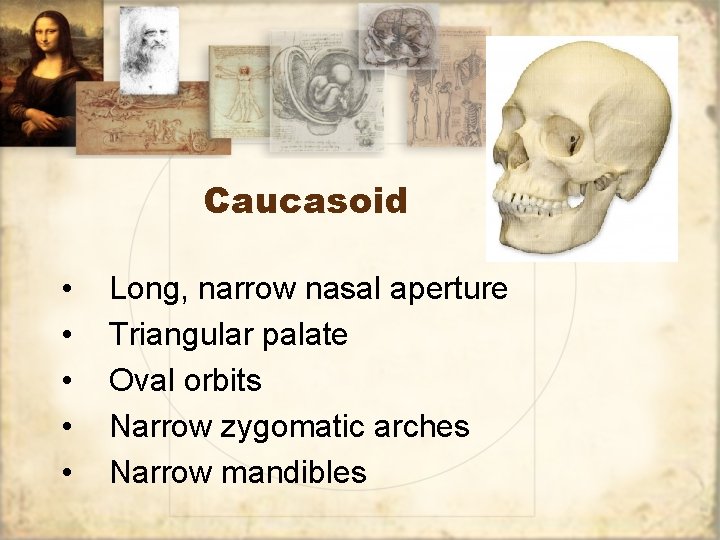
Caucasoid • • • Long, narrow nasal aperture Triangular palate Oval orbits Narrow zygomatic arches Narrow mandibles
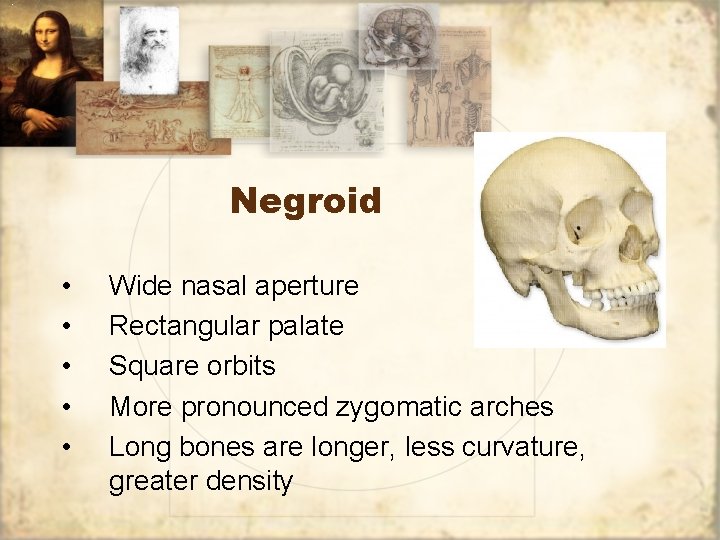
Negroid • • • Wide nasal aperture Rectangular palate Square orbits More pronounced zygomatic arches Long bones are longer, less curvature, greater density
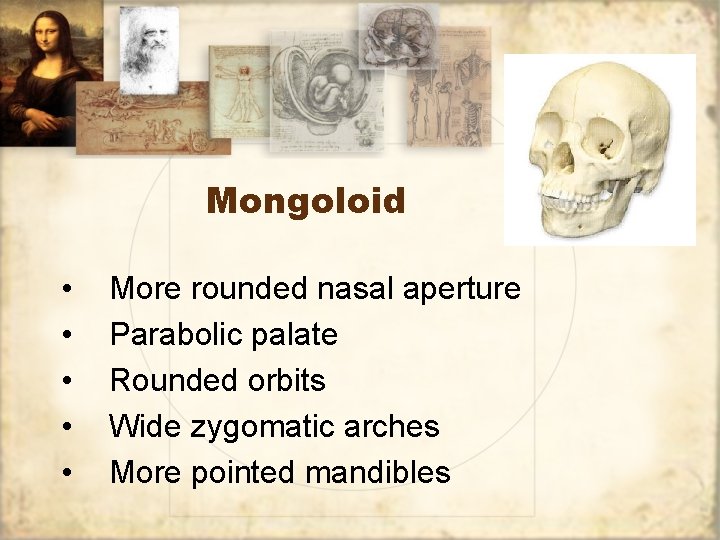
Mongoloid • • • More rounded nasal aperture Parabolic palate Rounded orbits Wide zygomatic arches More pointed mandibles
Facial Reconstruction • • Uses standard tissue thickness and facial muscles to build a new face on a skull Not completely accurate, but has proven helpful
Steps in facial reconstruction • • • Establish gender, • age, race Glue markers on skull • for tissue thickness • Mark muscle insertion points • Mount eyes in sockets Apply clay Determine nose and mouth thickness and width Cover the skull with layers of skin and add detail
After reconstruction • • • Photographs distributed Skull-photo superimpositions Proportion most important
Cause of death • • Stab wounds Bullet holes Blows to the head Tool mark
Bone Anomalies • • Healed breaks or fractures Joint replacements Osteoporosis Arthritis
Classwork/Homework • • Page 289 -290 #2 -18 even only!! Write questions and answers