
HUMAN REGULATION The Endocrine System The Endocrine system

- Slides: 14
HUMAN REGULATION
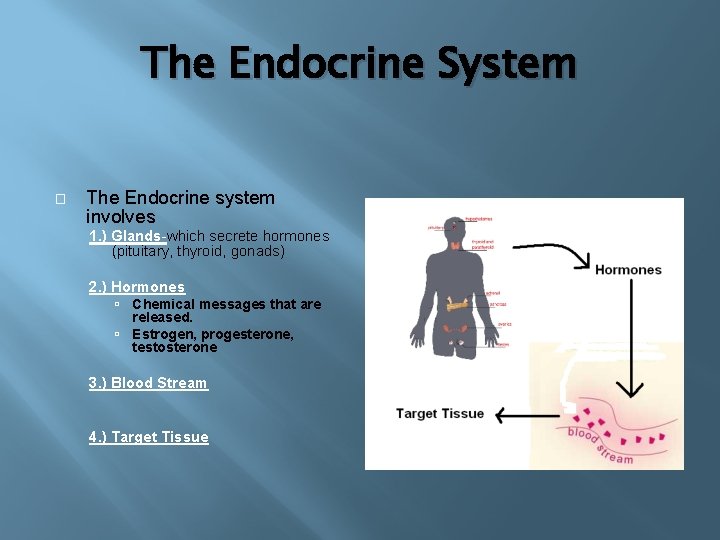
The Endocrine System � The Endocrine system involves 1. ) Glands-which secrete hormones (pituitary, thyroid, gonads) 2. ) Hormones Chemical messages that are released. Estrogen, progesterone, testosterone 3. ) Blood Stream 4. ) Target Tissue
The message is carried by hormones. The response is slower and the effect is long term.
Nervous System https: //www. youtube. com/watch? v=j. Jf. ESatt. ZO Y
Nervous System Involves the 1. )Central Nervous System -Brain and Spinal Cord 2. )Peripheral Nervous System
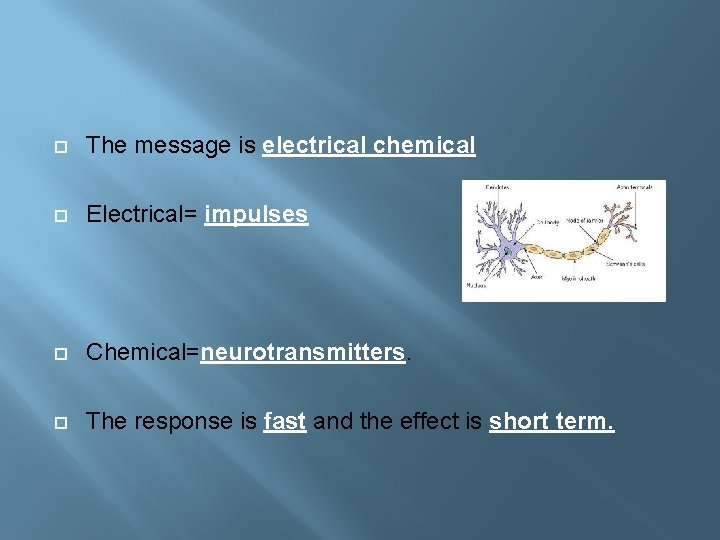
The message is electrical chemical Electrical= impulses Chemical=neurotransmitters. The response is fast and the effect is short term.
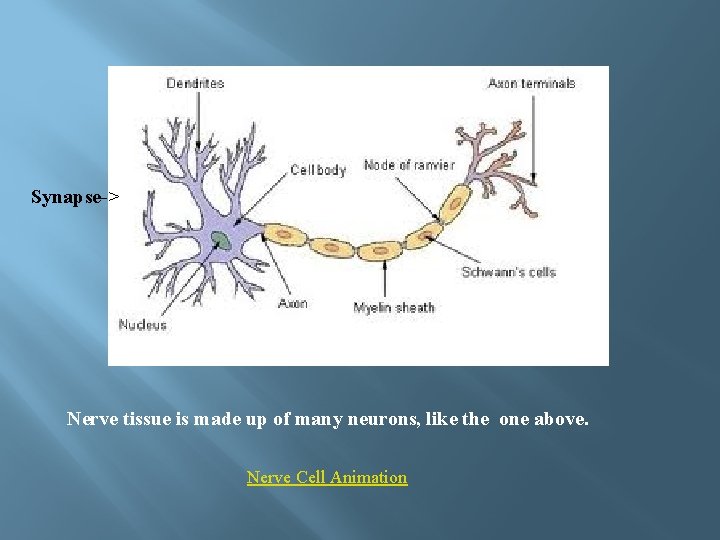
Synapse-> Nerve tissue is made up of many neurons, like the one above. Nerve Cell Animation
Class Activity
The Central Nervous System is composed of: 1. ) Spinal cord 2. ) Brain
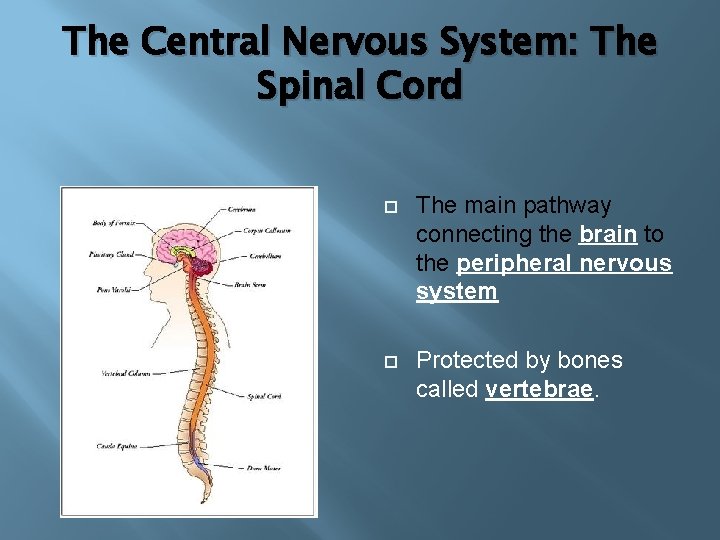
The Central Nervous System: The Spinal Cord The main pathway connecting the brain to the peripheral nervous system Protected by bones called vertebrae.
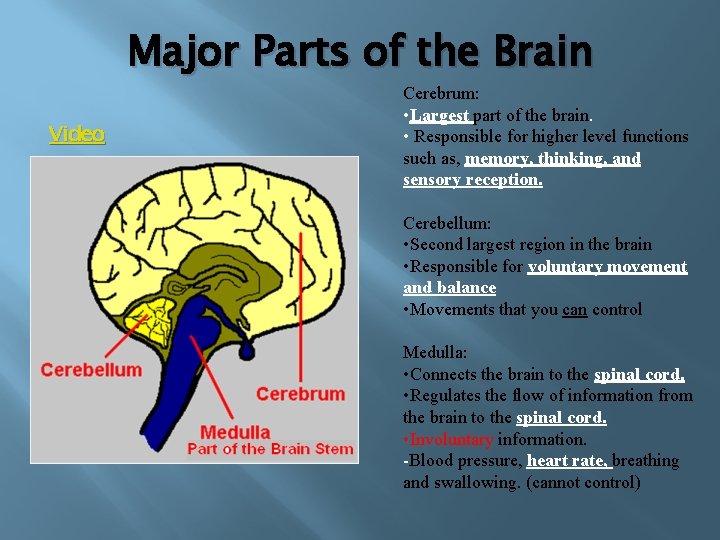
Major Parts of the Brain Video Cerebrum: • Largest part of the brain. • Responsible for higher level functions such as, memory, thinking, and sensory reception. Cerebellum: • Second largest region in the brain • Responsible for voluntary movement and balance • Movements that you can control Medulla: • Connects the brain to the spinal cord. • Regulates the flow of information from the brain to the spinal cord. • Involuntary information. -Blood pressure, heart rate, breathing and swallowing. (cannot control)
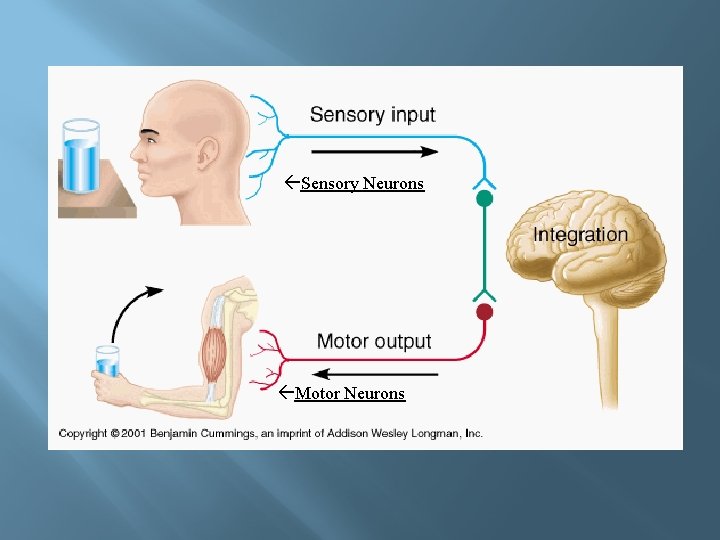
The Peripheral Nervous System Composed of motor and sensory neurons. They are not associated with cells that are a part of the brain and spinal cord. Transmits impulses from the CNS to the muscles or glands, and they respond.
Sensory Neurons Motor Neurons