
Human Population Growth Impacts Tragedy of the Commons
- Slides: 10
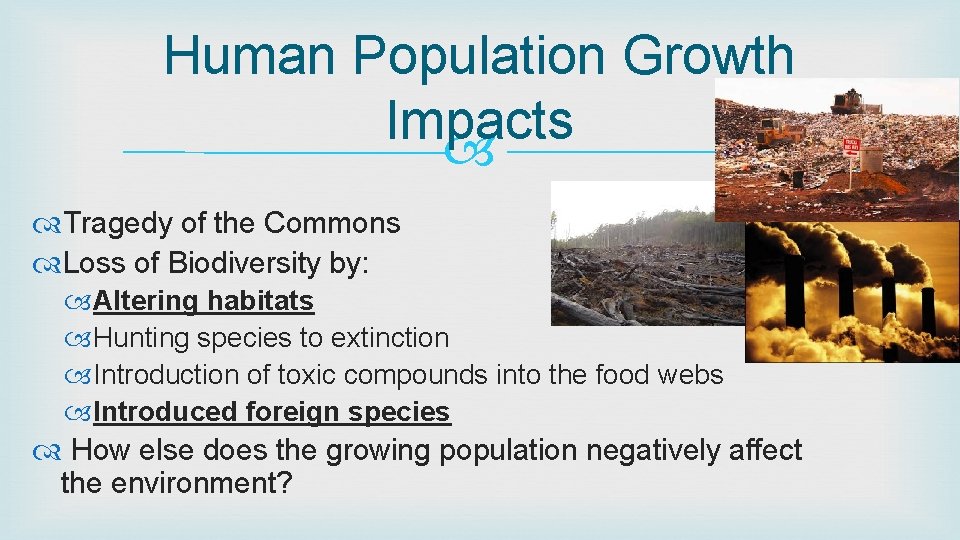
Human Population Growth Impacts Tragedy of the Commons Loss of Biodiversity by: Altering habitats Hunting species to extinction Introduction of toxic compounds into the food webs Introduced foreign species How else does the growing population negatively affect the environment?
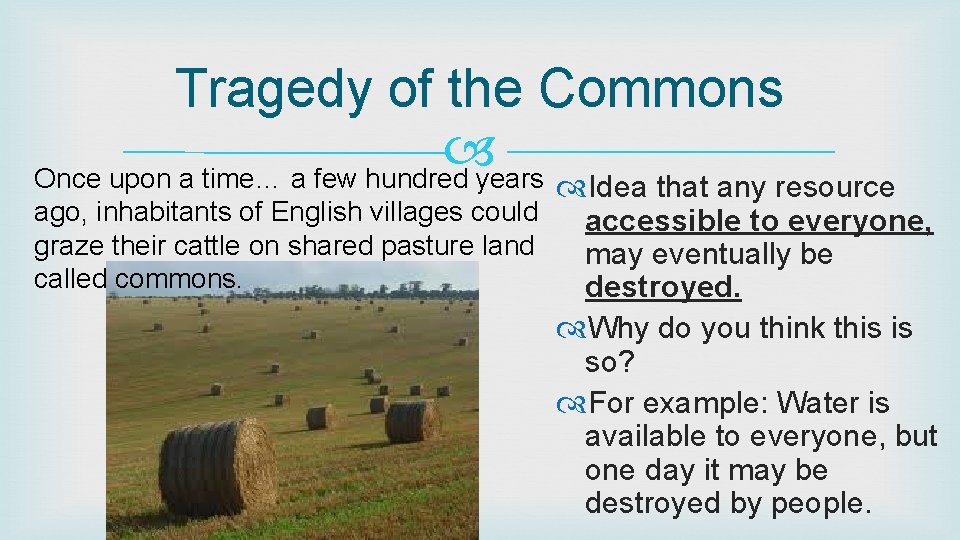
Tragedy of the Commons Once upon a time… a few hundred years Idea that any resource ago, inhabitants of English villages could accessible to everyone, graze their cattle on shared pasture land may eventually be called commons. destroyed. Why do you think this is so? For example: Water is available to everyone, but one day it may be destroyed by people.
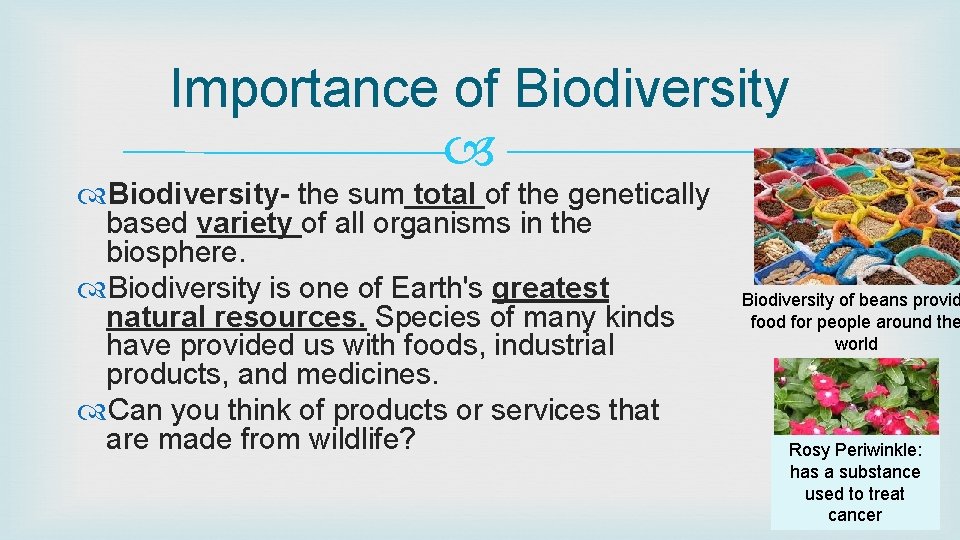
Importance of Biodiversity- the sum total of the genetically based variety of all organisms in the biosphere. Biodiversity is one of Earth's greatest natural resources. Species of many kinds have provided us with foods, industrial products, and medicines. Can you think of products or services that are made from wildlife? Biodiversity of beans provid food for people around the world Rosy Periwinkle: has a substance used to treat cancer
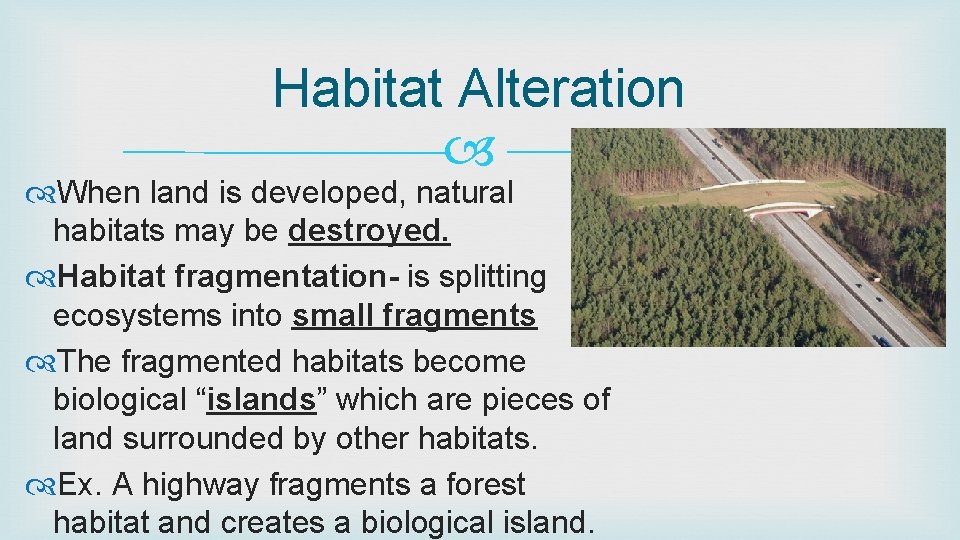
Habitat Alteration When land is developed, natural habitats may be destroyed. Habitat fragmentation- is splitting ecosystems into small fragments The fragmented habitats become biological “islands” which are pieces of land surrounded by other habitats. Ex. A highway fragments a forest habitat and creates a biological island.
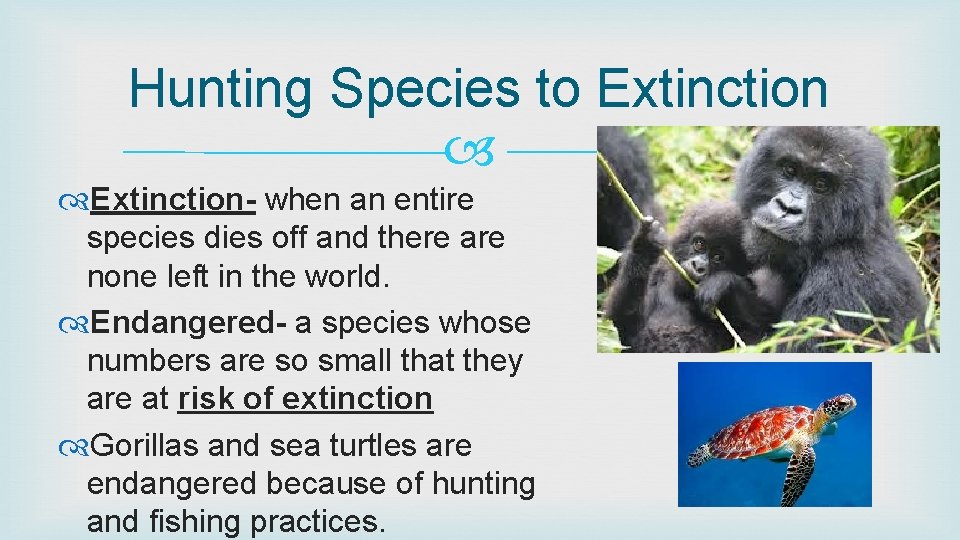
Hunting Species to Extinction- when an entire species dies off and there are none left in the world. Endangered- a species whose numbers are so small that they are at risk of extinction Gorillas and sea turtles are endangered because of hunting and fishing practices.
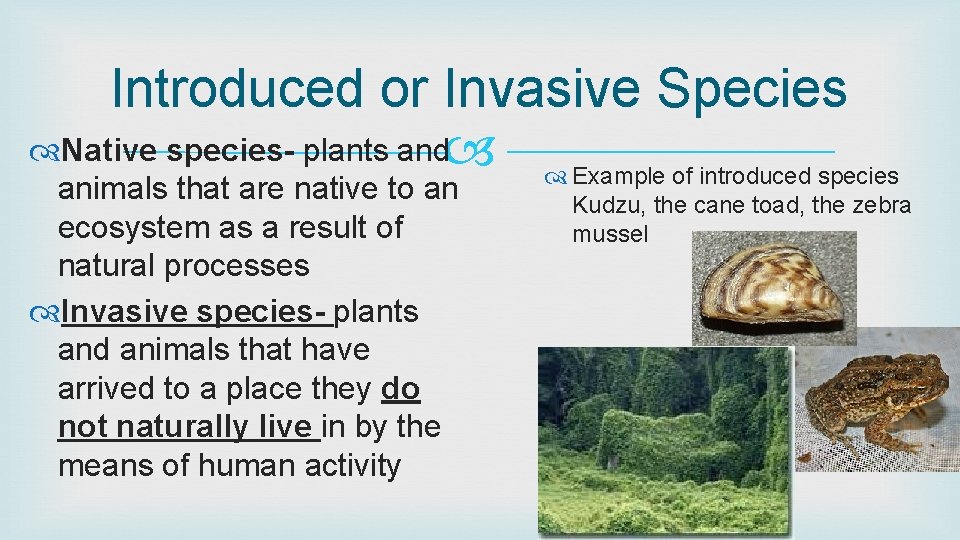
Introduced or Invasive Species Native species- plants and Example of introduced species animals that are native to an ecosystem as a result of natural processes Invasive species- plants and animals that have arrived to a place they do not naturally live in by the means of human activity Kudzu, the cane toad, the zebra mussel
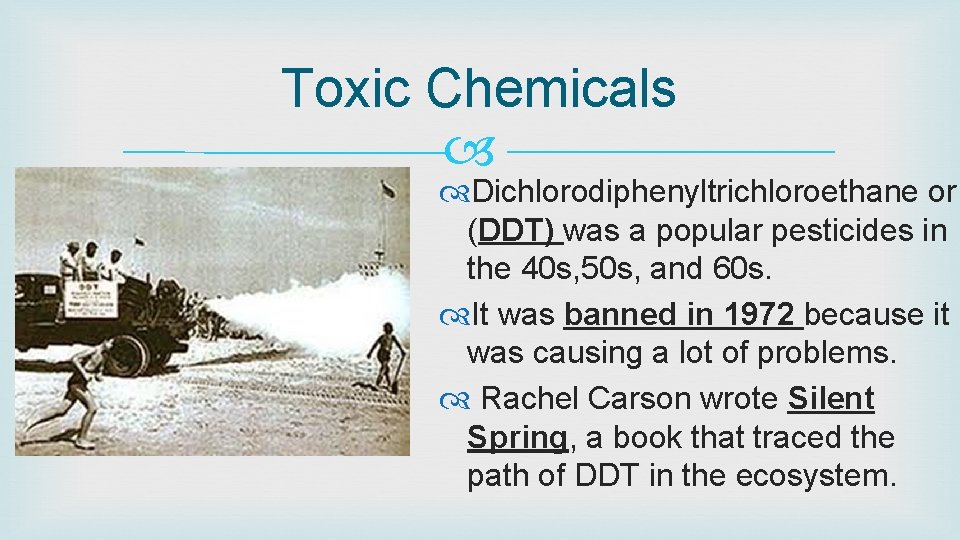
Toxic Chemicals Dichlorodiphenyltrichloroethane or (DDT) was a popular pesticides in the 40 s, 50 s, and 60 s. It was banned in 1972 because it was causing a lot of problems. Rachel Carson wrote Silent Spring, a book that traced the path of DDT in the ecosystem.
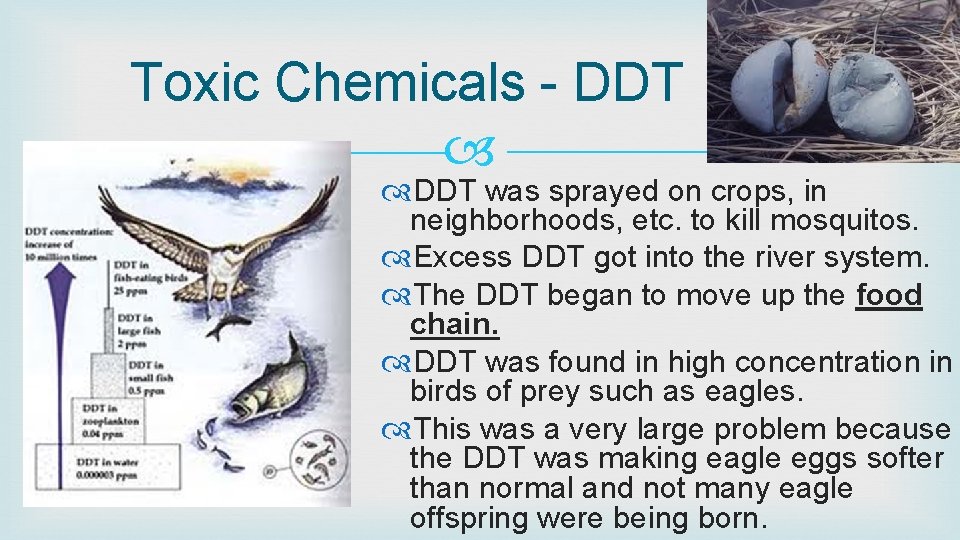
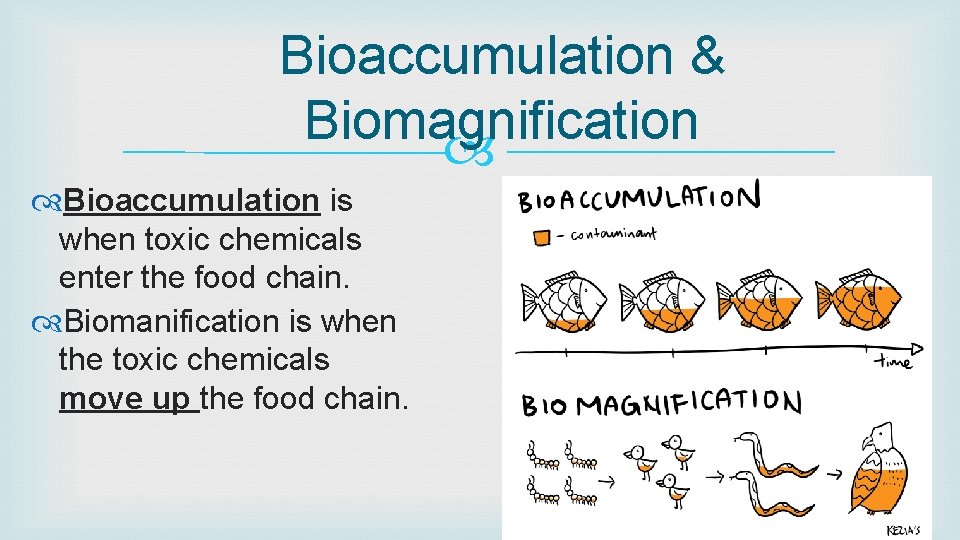
Toxic Chemicals - DDT was sprayed on crops, in neighborhoods, etc. to kill mosquitos. Excess DDT got into the river system. The DDT began to move up the food chain. DDT was found in high concentration in birds of prey such as eagles. This was a very large problem because the DDT was making eagle eggs softer than normal and not many eagle offspring were being born.
Bioaccumulation & Biomagnification Bioaccumulation is when toxic chemicals enter the food chain. Biomanification is when the toxic chemicals move up the food chain.
What can we do to protect the environment?