
Human Performance Technology HPT An Overview Human Performance
- Slides: 62
Human Performance Technology HPT An Overview
Human Performance Technology The best way to predict the future is to help design it” Peter F. Drucker
The Role of Training in World Class Organization • Assume a responsibility for Performance • Focus on Return On Investment not volume metrics • Partner with the Line Organization • Pro-active Performance Problem Solvers
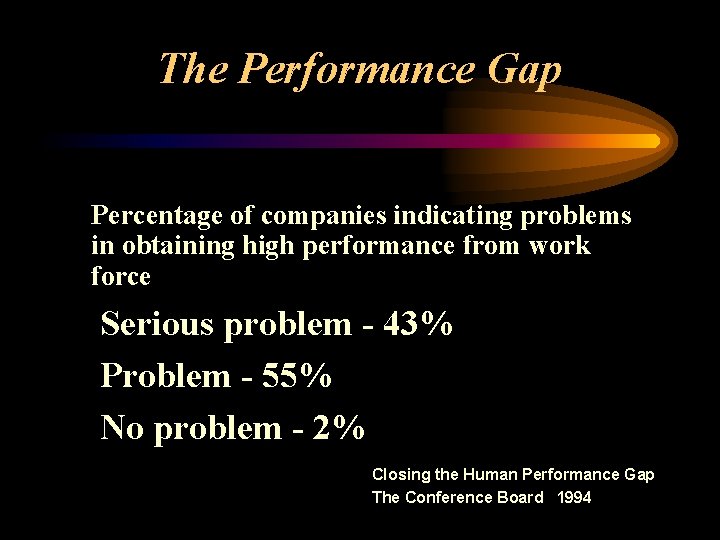
The Performance Gap Percentage of companies indicating problems in obtaining high performance from work force Serious problem - 43% Problem - 55% No problem - 2% Closing the Human Performance Gap The Conference Board 1994
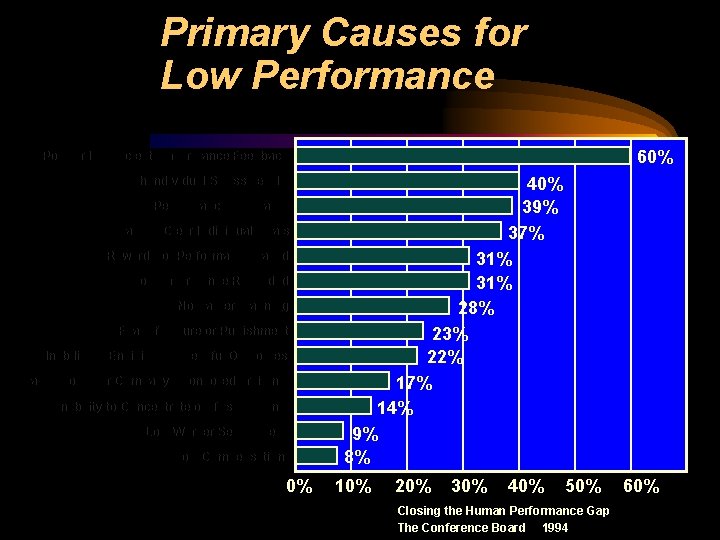
Primary Causes for Low Performance 60% Poor or Insufficient Performance Feedback High Individual Stress Levels No Performance Standards Lack of Clear Individual Goals Reward Not Performance Based Poor Performance Rewarded No Career Planning Fear of Failure or Punishment Inability to Envision Successful Outcomes Lack of or Poor Company-Sponsored Training Inability to Concentrate on Task at Hand Low Worker Self-Esteem Low Compensation 0% 40% 39% 37% 31% 28% 23% 22% 17% 14% 9% 8% 10% 20% 30% 40% 50% Closing the Human Performance Gap The Conference Board 1994 60%
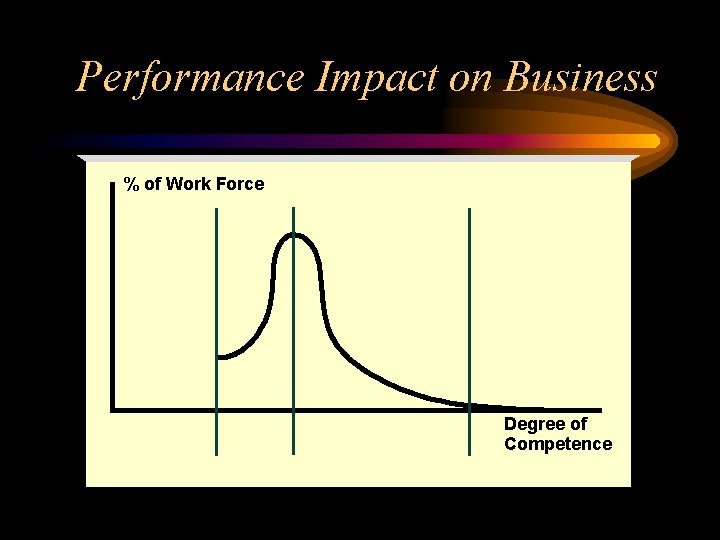
Performance Impact on Business % of Work Force Minimal Standard Degree of Competence Exemplary
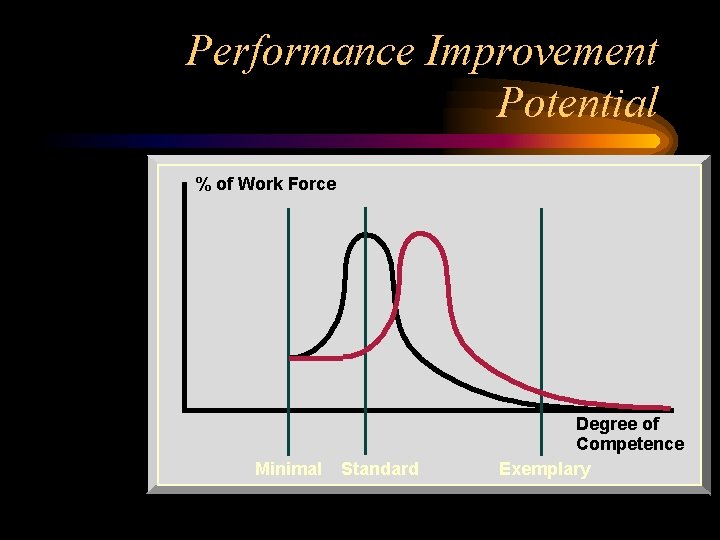
Performance Improvement Potential % of Work Force Minimal Standard Degree of Competence Exemplary
Human Performance Technology Rules for Managing People • Founded in the behavioral sciences. . . Human Performance Technology (HPT) provides managers with a tested set of rules for managing people. • HPT addresses the two major factors in managing people INFORMATION and INCENTIVE.
What is HPT? • Modern behavioral science applied to the workplace. • An engineering approach to managing people. • A “Technology” based upon a set of rules. • It is THE way to manage people
Edge Above • A means to assure a high performance workforce • We need to be able to – Assures the ongoing relevance of training to the business needs of the organization. – Positions training as an operations resource to the line manager. – Tie trainers and their customers together • Provides a common focus on improved individual or group performance. • Assures congruence between training and the business operating units. .
What is HPT. . . • NOT, just another fad. . . • NOT, a programmatic solution. . . • A unique blend of bottom-line business acumen and individualistic, self-interested common-sense. • Not an art, but a rules based scientific and engineering approach to managing people in the workplace.
Where Did HPT Come From. . . ? • Harvard University early 60’s – Skinner, Gilbert, Harless – Behavioral Science Labs – Did the original science • Praxis Consulting – Rummler, Gilbert – Turned science into a practical engineering method
What Gilbert Did • Applied proven behavioral principles to the world of work. – Six dimensions – The objective - PROFIT! – Focus on Accomplishment not Behavior • Recognized the basic American motivational driver. . . enlightened selfinterest! • Established a practical set of rules for management.
Attributes of HPT (#1) • HPT is systematic – It is organized, rigorous, and applied in a methodical manner. Procedures exists that permit practitioners to identify performance gaps (problems or opportunities), characterize these in measurable or observable ways, analyze them, select suitable interventions, and apply these in a controlled an monitored manner.
Attributes of HPT (#2) • HPT is systemic – It perceives identified human performance gaps as elements of systems, which in turn interface with other systems. It rejects accepting apparent causes and solutions without also examining other facets of the system. Performance is seen as the result of a number of influencing variables (selection, training, feedback, resources, management support, incentives, task interference), all of which must be analyzed before appropriate, cost-effective interventions are selected and deployed.
Attributes of HPT (#3) • HPT is grounded in scientifically derived theories and the best empirical evidence available – It seeks to achieve desired human performance through means that have been derived from scientific research, when possible, or from documented evidence, when not. It rejects enthusiastic, unsubstantiated interventions that cannot demonstrate firm theoretical foundations or valid performance results. HPT is open to new ideas and potentially valuable methods or interventions. It requires, however, that these offer systematically organized evidence to support their potential value.
Attributes of HPT (#4) • HPT is open to all means, methods, and media – It it not limited by a set of resources of technologies that it must apply. On the contrary, human performance technology is constantly searching for the most effective and efficient ways to obtain results at the least cost. .
Attributes of HPT (#5) • HPT is focused on achievements that human performers and the system value. – It seeks bottom-line results – or as Gilbert (1978) characterizes these, valuable accomplishments, “worthy performance. ” The focus is not on behavior or on one-sided winning. HPT has worthy performance as its aim, as perceived by both the performer and the organization in which she or he performs.
Summary of Attributes • HPT is an engineering approach to attaining desired accomplishments from human performance. • HP technologist are those who adopt a systems view of performance gaps, systematically analysis both gap and system and design cost-effective interventions that are based on analysis data, scientific knowledge and documented precedents, or order to close the gap in the most desirable manner.
HPT Benefits: • Language compatible with language of organizational decision makers. • HPT provide map for working through performance situations in complicated organizational settings. • Process ensures analysis is completed BEFORE reaching conclusions.
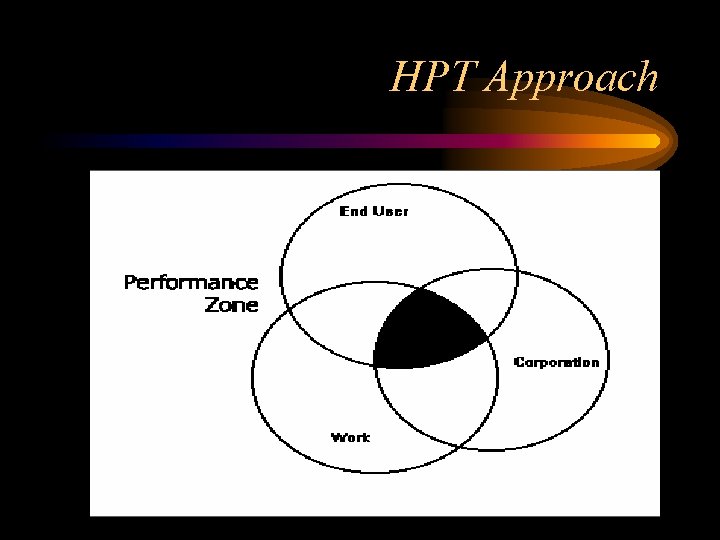
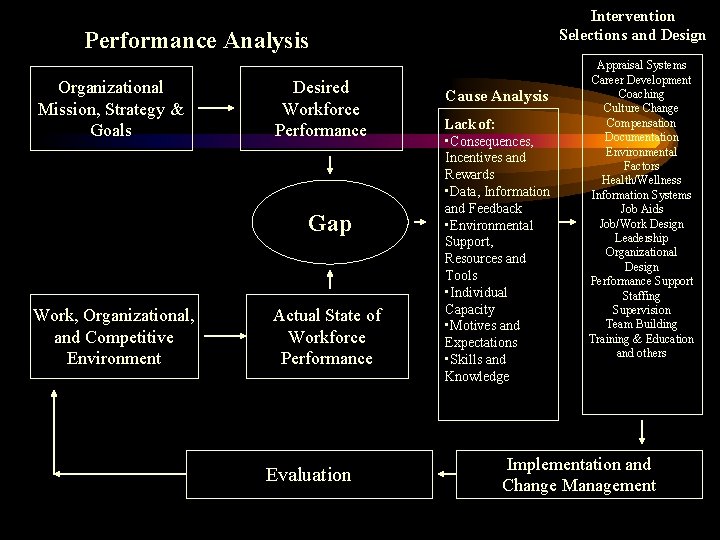
HPT Approach • Problems and opportunities are analyzed on three levels: – Organization – Process – Performance
HPT Approach
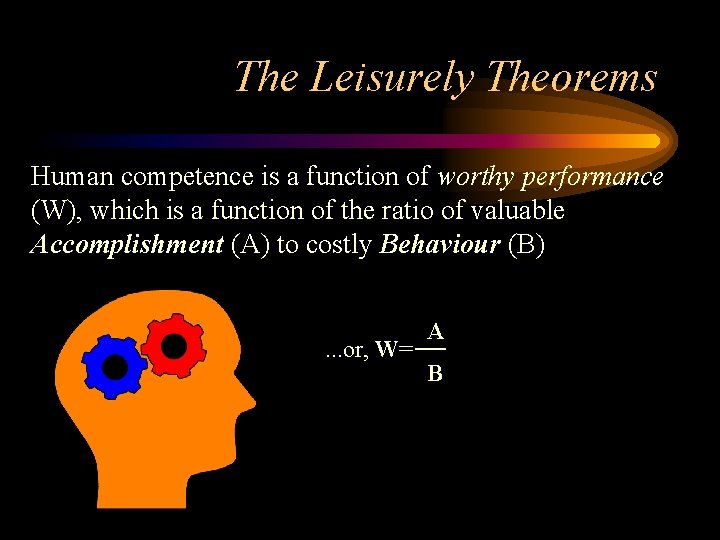
The Leisurely Theorems Human competence is a function of worthy performance (W), which is a function of the ratio of valuable Accomplishment (A) to costly Behaviour (B) . . . or, W= A B
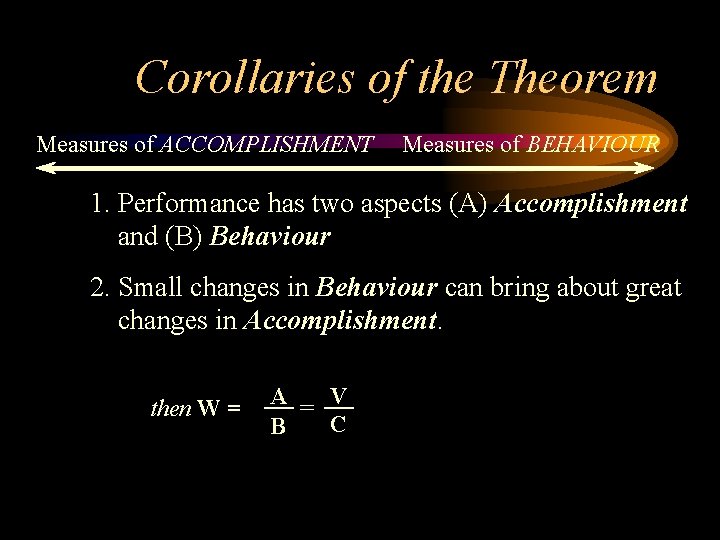
Corollaries of the Theorem Measures of ACCOMPLISHMENT Measures of BEHAVIOUR 1. Performance has two aspects (A) Accomplishment and (B) Behaviour 2. Small changes in Behaviour can bring about great changes in Accomplishment. then W = A = V C B
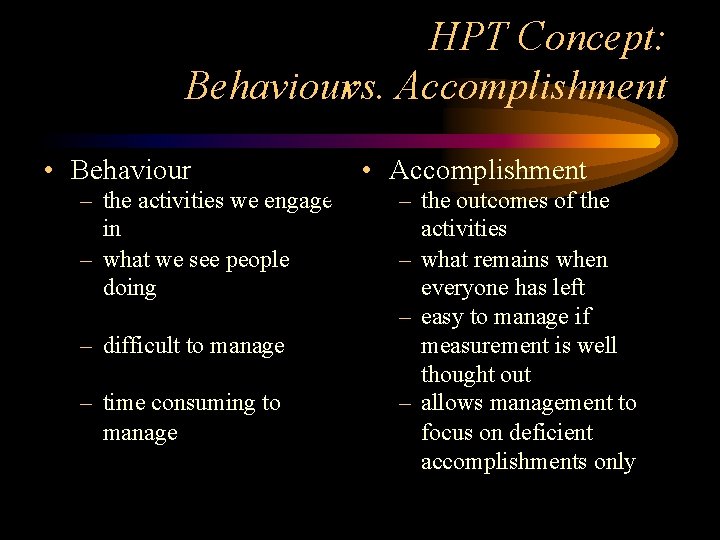
HPT Concept: Behaviourvs. Accomplishment • Behaviour – the activities we engage in – what we see people doing – difficult to manage – time consuming to manage • Accomplishment – the outcomes of the activities – what remains when everyone has left – easy to manage if measurement is well thought out – allows management to focus on deficient accomplishments only
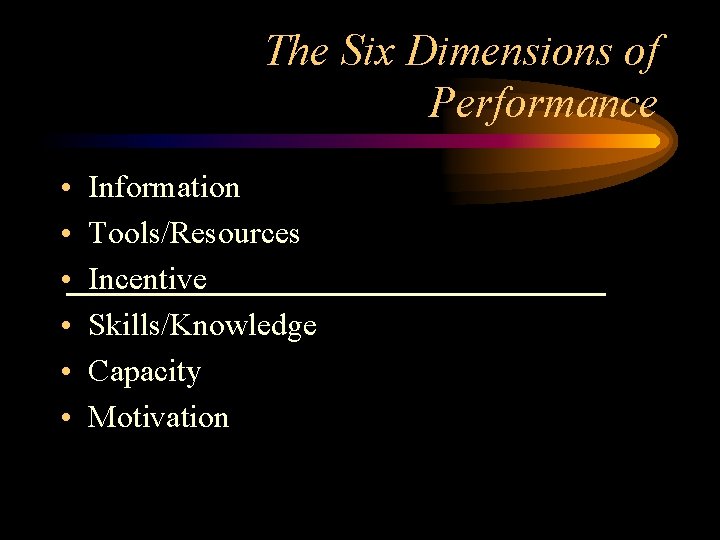
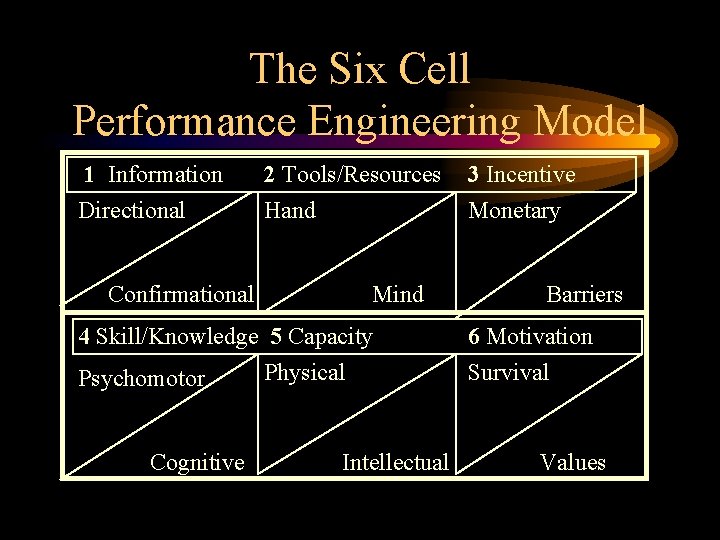
The Six Dimensions of Performance • • • Information Tools/Resources Incentive Skills/Knowledge Capacity Motivation
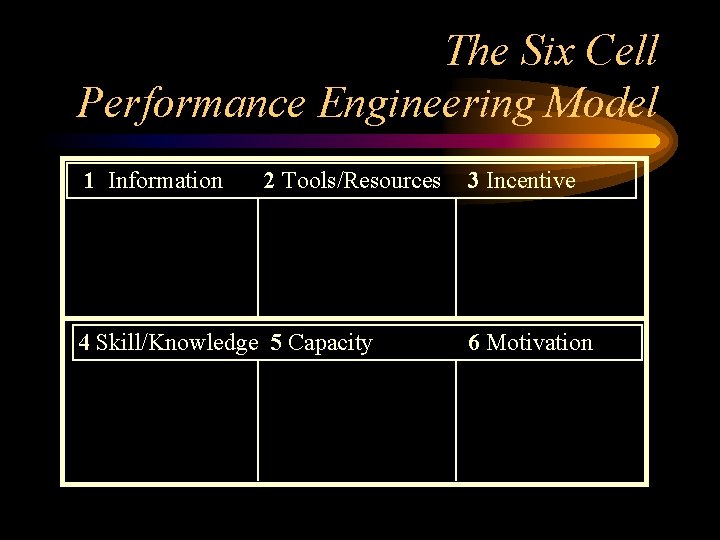
The Six Cell Performance Engineering Model 1 Information 2 Tools/Resources 4 Skill/Knowledge 5 Capacity 3 Incentive 6 Motivation
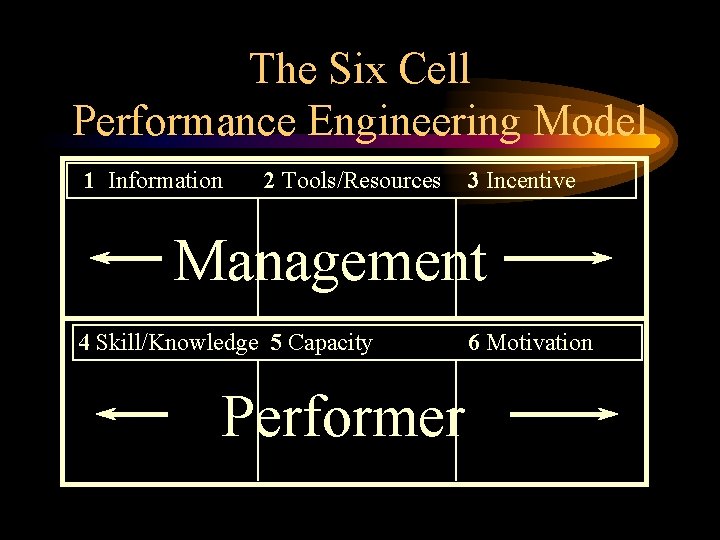
The Six Cell Performance Engineering Model 1 Information 2 Tools/Resources 3 Incentive Management 4 Skill/Knowledge 5 Capacity Performer 6 Motivation
The Six Cell Performance Engineering Model 1 Information Directional Confirmational 2 Tools/Resources Hand Mind 4 Skill/Knowledge 5 Capacity Physical Psychomotor Cognitive Intellectual 3 Incentive Monetary Barriers 6 Motivation Survival Values
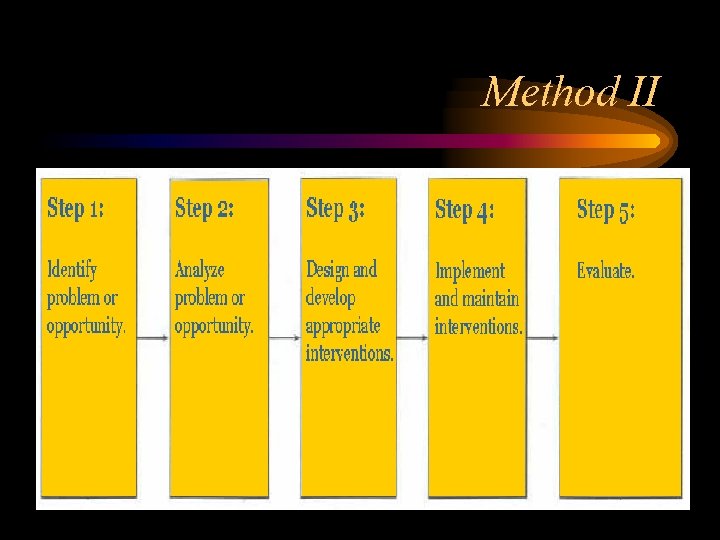
Method II
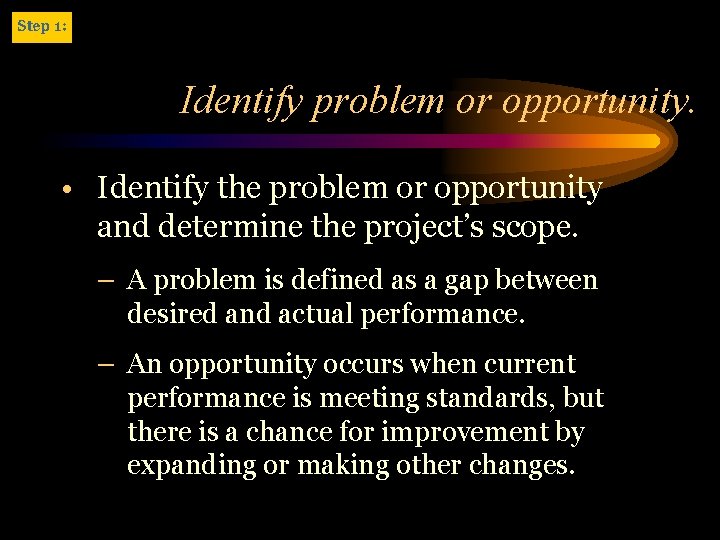
Identify problem or opportunity. • Identify the problem or opportunity and determine the project’s scope. – A problem is defined as a gap between desired and actual performance. – An opportunity occurs when current performance is meeting standards, but there is a chance for improvement by expanding or making other changes.
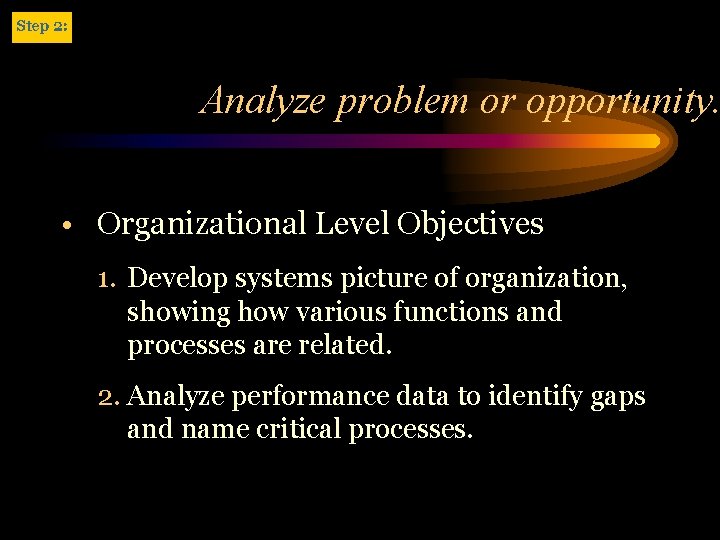
Analyze problem or opportunity. • Organizational Level Objectives 1. Develop systems picture of organization, showing how various functions and processes are related. 2. Analyze performance data to identify gaps and name critical processes.
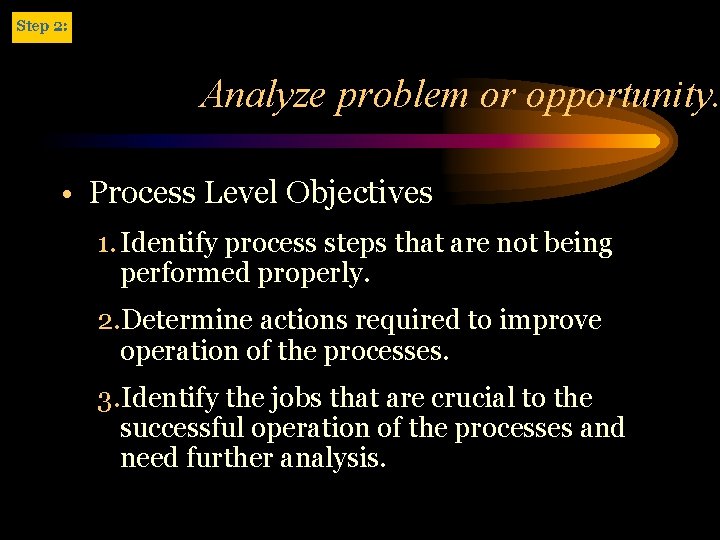
Analyze problem or opportunity. • Process Level Objectives 1. Identify process steps that are not being performed properly. 2. Determine actions required to improve operation of the processes. 3. Identify the jobs that are crucial to the successful operation of the processes and need further analysis.
Analyze problem or opportunity • Performer Level Objectives – Identify the appropriate corrective actions to improve job outputs.
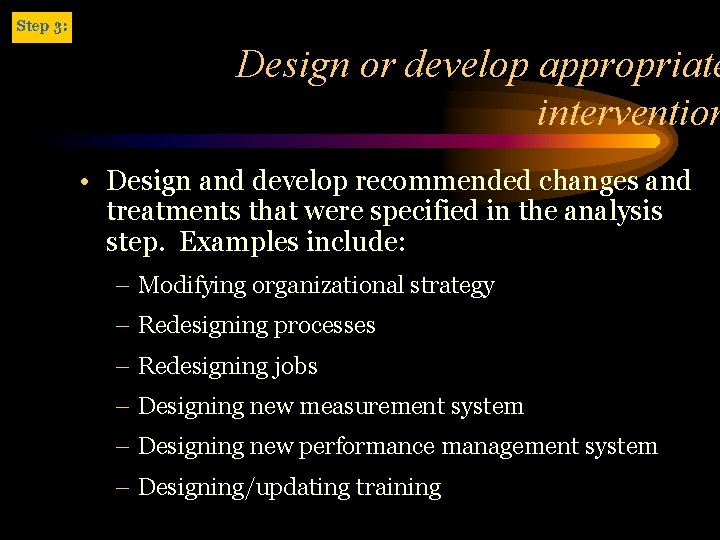
Design or develop appropriate intervention • Design and develop recommended changes and treatments that were specified in the analysis step. Examples include: – Modifying organizational strategy – Redesigning processes – Redesigning jobs – Designing new measurement system – Designing new performance management system – Designing/updating training
Implement and maintain. • Successfully implement and maintain the various solutions. – Keys: • Planning the sequence of implementation. • Top management's support.
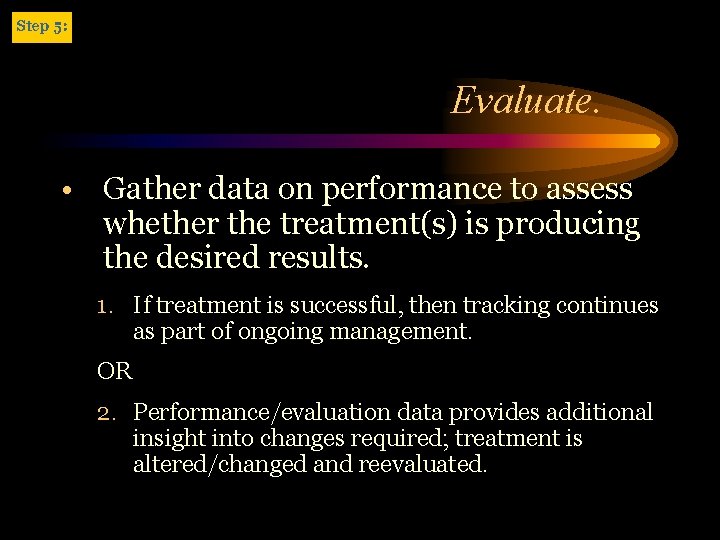
Evaluate. • Gather data on performance to assess whether the treatment(s) is producing the desired results. 1. If treatment is successful, then tracking continues as part of ongoing management. OR 2. Performance/evaluation data provides additional insight into changes required; treatment is altered/changed and reevaluated.
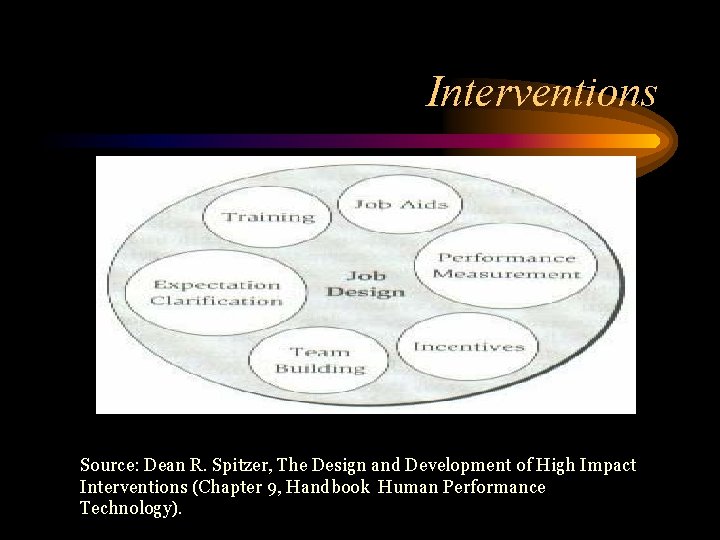
Interventions Source: Dean R. Spitzer, The Design and Development of High Impact Interventions (Chapter 9, Handbook Human Performance Technology).
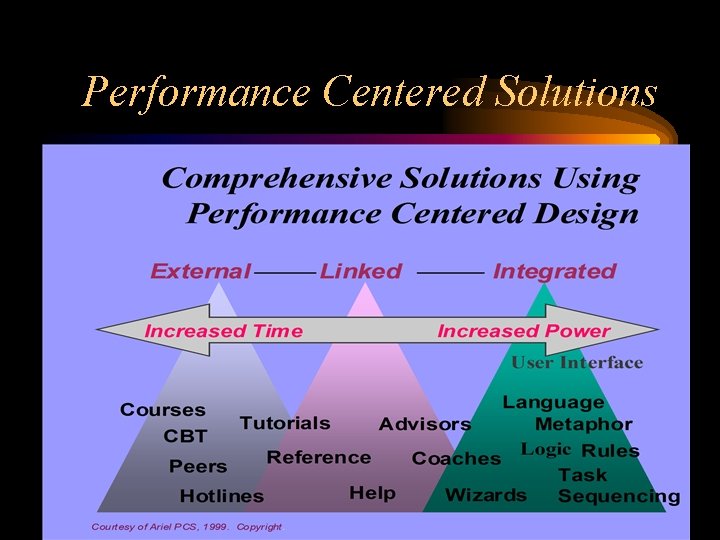
Performance Centered Solutions
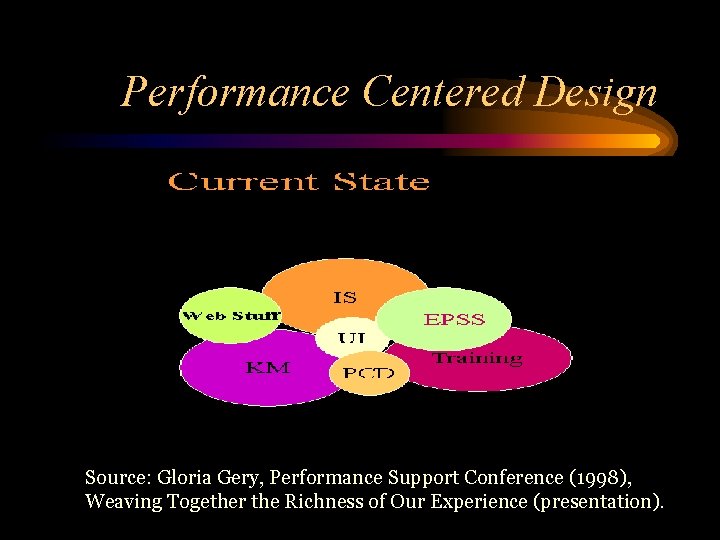
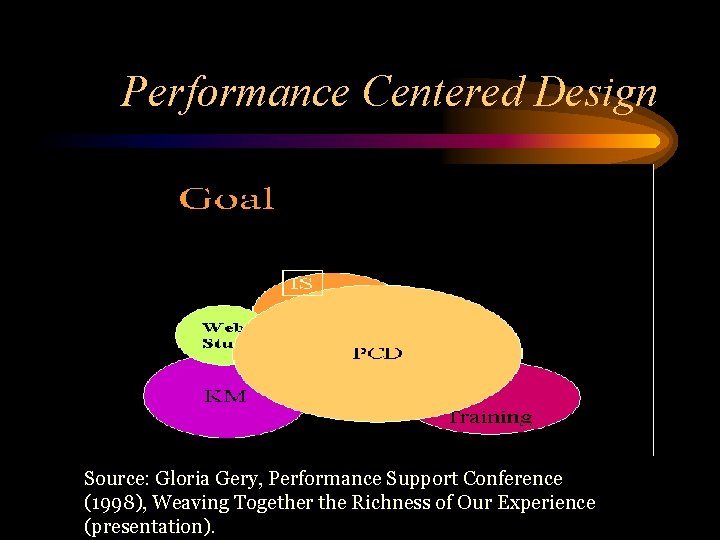
Performance Centered Design Source: Gloria Gery, Performance Support Conference (1998), Weaving Together the Richness of Our Experience (presentation).
Performance Centered Design Source: Gloria Gery, Performance Support Conference (1998), Weaving Together the Richness of Our Experience (presentation).
A Case Study KG PCS Source: INSYS 551 Sangchul Oh
Background – The KG PCS sells cellular phones and maintains telecommunication services – The organization of this company consists of an executive manager, managers of sales, manufacture, and engineering departments. Also there are product manager group which coordinates the product process. – Engineering department coordinates job process and develops new product. Commercial department takes sales order. – The product managers coordinate this workflow and they help to produce and sale.
Company Biography • Profile – The KG PCS is an affiliate of the KG Group. The capital of the company is US$700 million. The KG PCS was established in 1996. – The number of cellular phone service subscribers is 2 million at present. – The company wants to promote its enhanced cellular phone services.
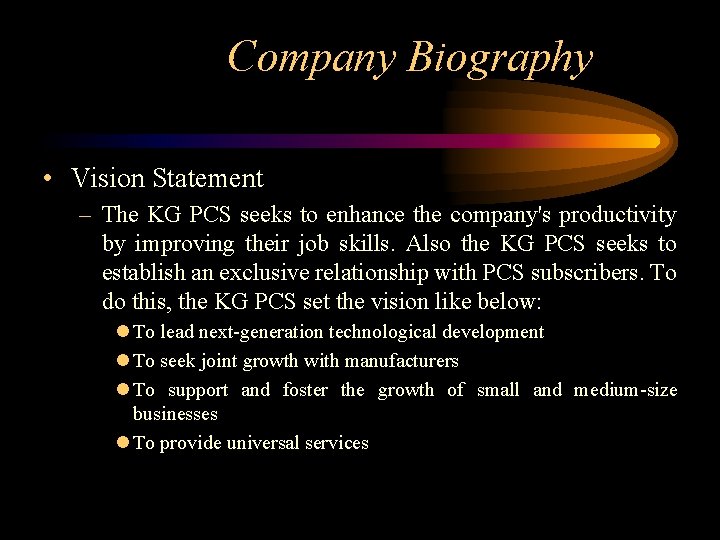
Company Biography • Vision Statement – The KG PCS seeks to enhance the company's productivity by improving their job skills. Also the KG PCS seeks to establish an exclusive relationship with PCS subscribers. To do this, the KG PCS set the vision like below: l To lead next-generation technological development l To seek joint growth with manufacturers l To support and foster the growth of small and medium-size businesses l To provide universal services
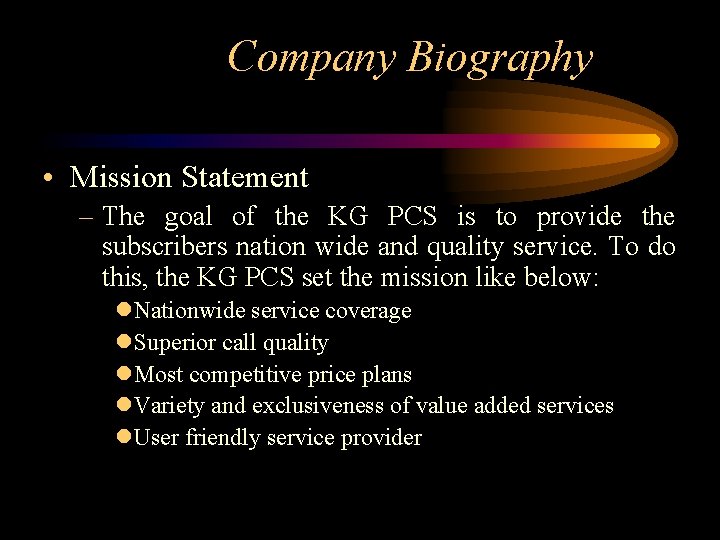
Company Biography • Mission Statement – The goal of the KG PCS is to provide the subscribers nation wide and quality service. To do this, the KG PCS set the mission like below: l. Nationwide service coverage l. Superior call quality l. Most competitive price plans l. Variety and exclusiveness of value added services l. User friendly service provider
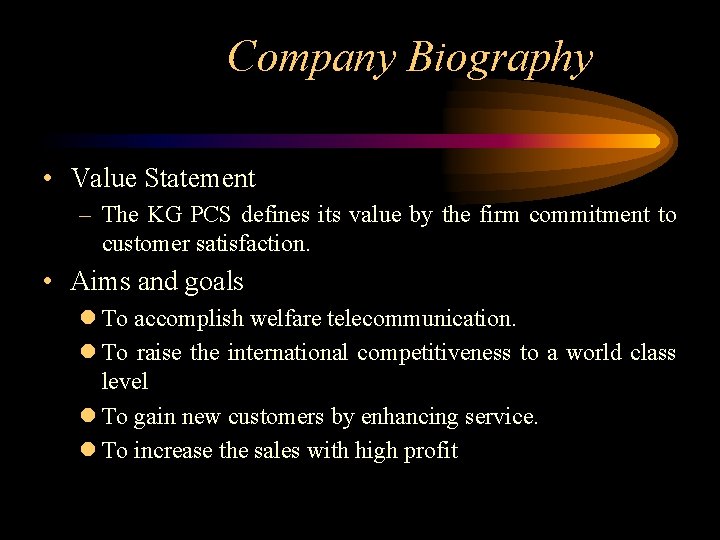
Company Biography • Value Statement – The KG PCS defines its value by the firm commitment to customer satisfaction. • Aims and goals l To accomplish welfare telecommunication. l To raise the international competitiveness to a world class level l To gain new customers by enhancing service. l To increase the sales with high profit
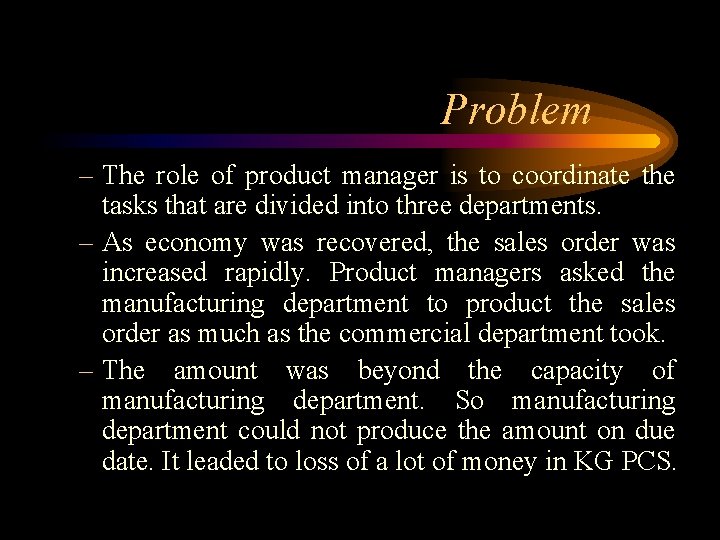
Problem – The role of product manager is to coordinate the tasks that are divided into three departments. – As economy was recovered, the sales order was increased rapidly. Product managers asked the manufacturing department to product the sales order as much as the commercial department took. – The amount was beyond the capacity of manufacturing department. So manufacturing department could not produce the amount on due date. It leaded to loss of a lot of money in KG PCS.
Intervention • Data – Provide product managers with information about market analysis. Actual records help them forecast the appropriate amount of product • Incentives – Provide them authority to control the departments. The product managers will be confident of their jobs if they aware that they have the right to control each department.
Intervention • Knowledge – Provide them decision making simulation system to practice forecasting future market trends. Provide them job aids about their coordination and investigation skills • Capacity – Select product managers who experience related to the task. have long
Intervention • Motives – Provide them with chance to promote in accordance with their task results.
Intervention • At the policy level • mission – provide the superior quality service to the customers • The role of product managers – is to coordinate each department’ needs and to match the sales orders with the amount of the manufacturing product. • The lack of real data – caused the product managers not to match the sales order with the amount of the product. – So a great deal of sales loss happened.
Intervention • The problem can be solved if the product manager have the actual data to analyze the current market trends. Also the training program is needed.
Intervention – At the strategy level • provide the product manager proper information on inventory management • They don’t have any accountability for their work. They don’t have experiences in the area. It is because most of the selected are from many other departments. They don’t have sufficient careers in the coordinate fields. • They need more affluent resources to manage and coordinate the inventory systems.
Intervention • Tactical level • The product managers are lack of confidence because the company does not provide them authority to control the product process. • They do not believe that they can coordinate several departments because they have not possessed the right to control each department. • Provide them authority to control the departments. The product managers will be confident of their jobs if they aware that they have the right to control each department.
End of Case Study Source: INSYS 551 Sangchul Oh
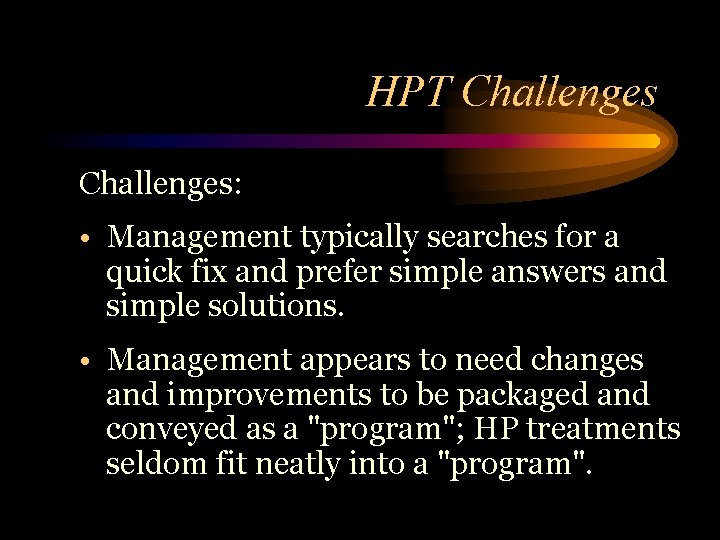
HPT Challenges: • Management typically searches for a quick fix and prefer simple answers and simple solutions. • Management appears to need changes and improvements to be packaged and conveyed as a "program"; HP treatments seldom fit neatly into a "program".
HPT Approach • Let’s take our first example again. Wearing your HPT : – What would be your approach to this scenario? – What intervention(s) would you likely recommend? • An outside organization is contracted to help market and sell your company’s products. The contractor is not familiar with the products. The internal marketing organization has come to us with a request to develop sales training for this contractor. Since our services are often undersold in contracts, we see this as opportunity to help the company and our department.
Current Approach & HPT • Let’s compare/contrast our current approach and the HPT approach – How are they similar? – How are they different?
Intervention Selections and Design Performance Analysis Organizational Mission, Strategy & Goals Desired Workforce Performance Gap Work, Organizational, and Competitive Environment Actual State of Workforce Performance Evaluation Cause Analysis Lack of: • Consequences, Incentives and Rewards • Data, Information and Feedback • Environmental Support, Resources and Tools • Individual Capacity • Motives and Expectations • Skills and Knowledge Appraisal Systems Career Development Coaching Culture Change Compensation Documentation Environmental Factors Health/Wellness Information Systems Job Aids Job/Work Design Leadership Organizational Design Performance Support Staffing Supervision Team Building Training & Education and others Implementation and Change Management
Blount (1980) Says: • “I believe that the untapped and unapplied proven potential for improvement in our business, in our people, in our products, in our service, in our customer relations through human performance technology is absolutely awesome. ”
Jalasayanan@lycos. co. uk Improved human performance can result in dramatic increases in productivity and worker’s satisfaction. Go for it. Thanks for being with me today!