
Human Performance Improvement Principles for Managers Unclassified Course

- Slides: 44
Human Performance Improvement Principles for Managers Unclassified
Course Objective • Management will be able to create an environment where workers can make good decisions by: – Recognizing the role of the individual and human fallibility in human performance – Identifying how organizational systems influence human behavior – Embracing the role of the leader to manage organizational systems and positively influence human behavior Unclassified 1
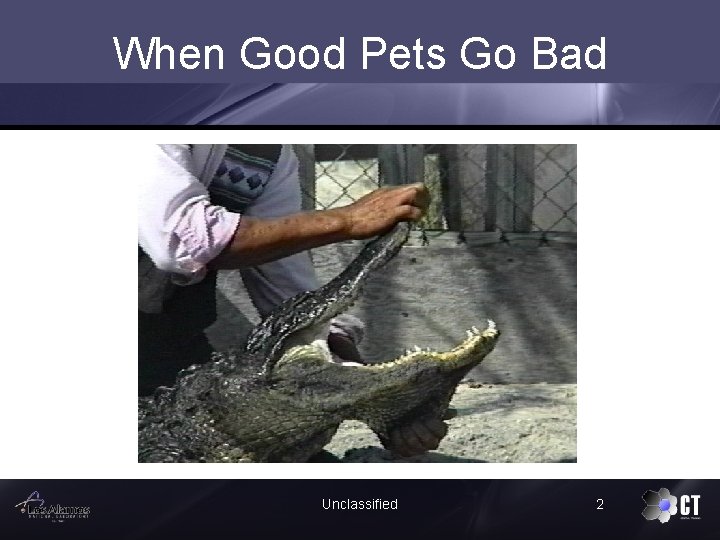
When Good Pets Go Bad Unclassified 2
Human Performance “People do not operate in a vacuum, where they can decide and act allpowerfully. To err or not to err is not a choice. Instead, people’s work is subject to and constrained by multiple factors”. — Sidney Dekker Unclassified 3
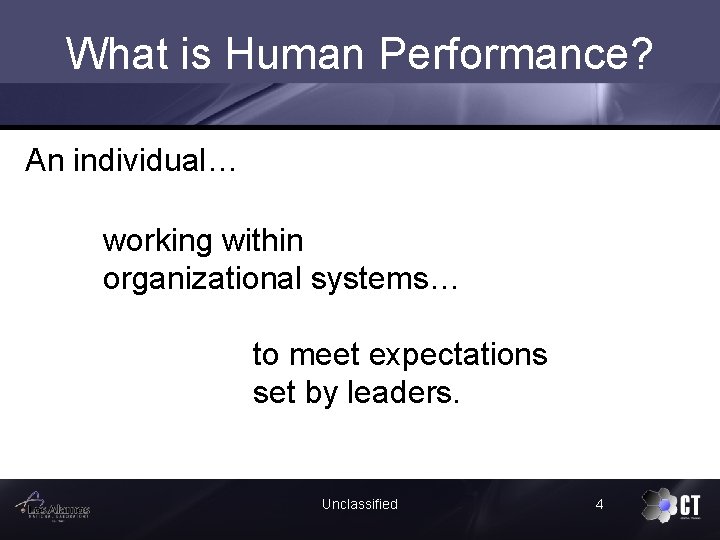
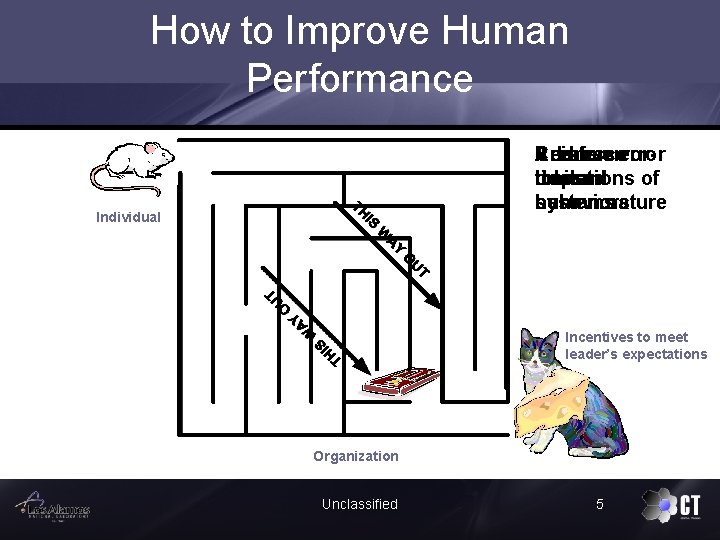
What is Human Performance? An individual… working within organizational systems… to meet expectations set by leaders. Unclassified 4
How to Improve Human Performance Address Removeerror. Create Reinforce error limitations of traps tolerant desired human systemsnature behaviors Individual Incentives to meet leader’s expectations Organization Unclassified 5
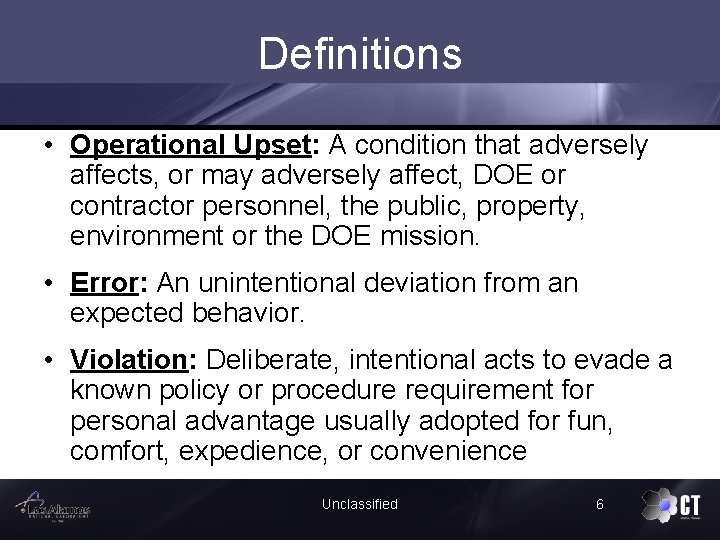
Definitions • Operational Upset: A condition that adversely affects, or may adversely affect, DOE or contractor personnel, the public, property, environment or the DOE mission. • Error: An unintentional deviation from an expected behavior. • Violation: Deliberate, intentional acts to evade a known policy or procedure requirement for personal advantage usually adopted for fun, comfort, expedience, or convenience Unclassified 6
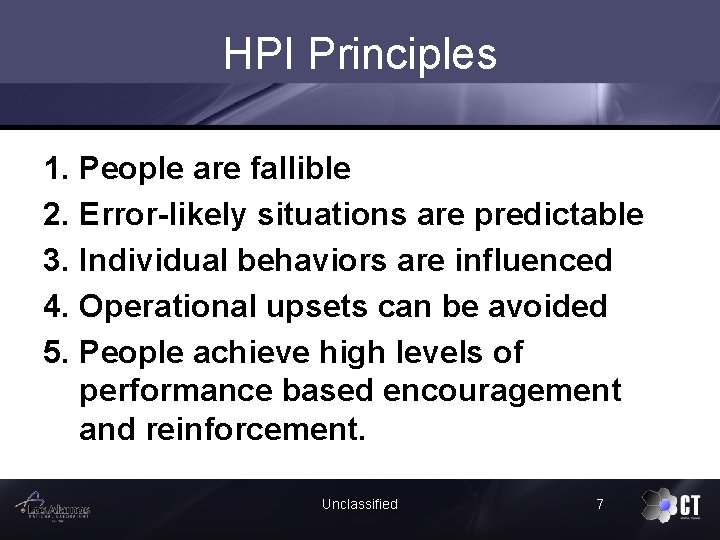
HPI Principles 1. People are fallible 2. Error-likely situations are predictable 3. Individual behaviors are influenced 4. Operational upsets can be avoided 5. People achieve high levels of performance based encouragement and reinforcement. Unclassified 7
The Individual HPI Principle #1: People are fallible, and even the best make mistakes. Unclassified 8
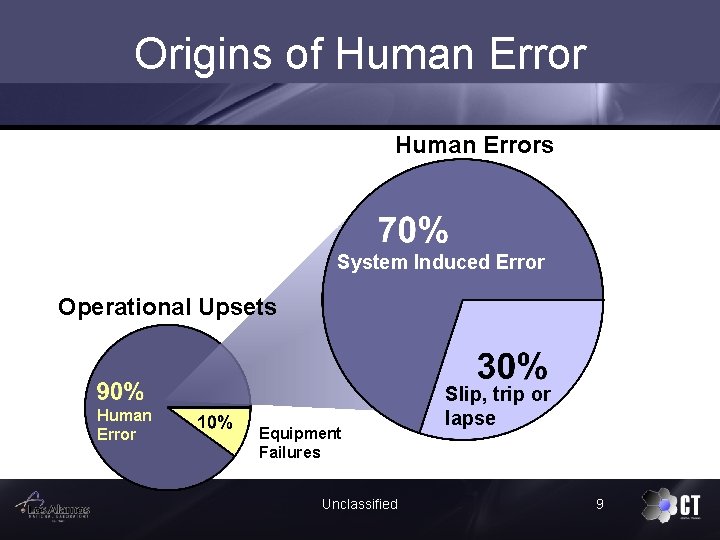
Origins of Human Errors System Induced Error Operational Upsets Human Error Equipment Failures Unclassified Slip, trip or lapse 9
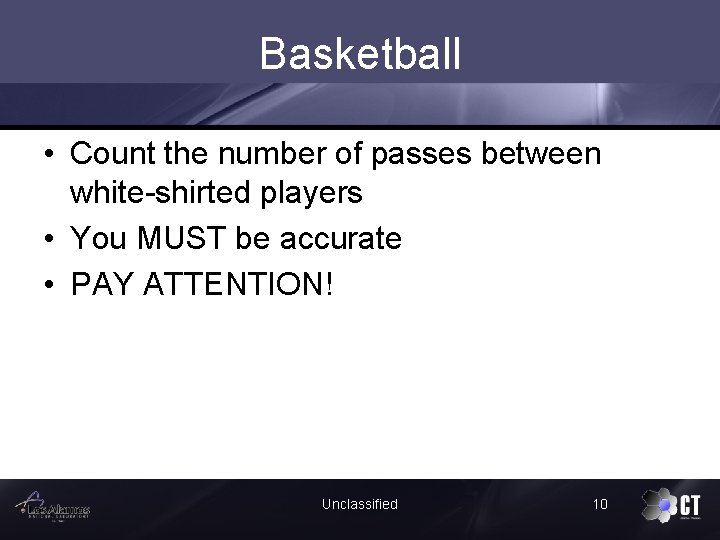
Basketball • Count the number of passes between white-shirted players • You MUST be accurate • PAY ATTENTION! Unclassified 10
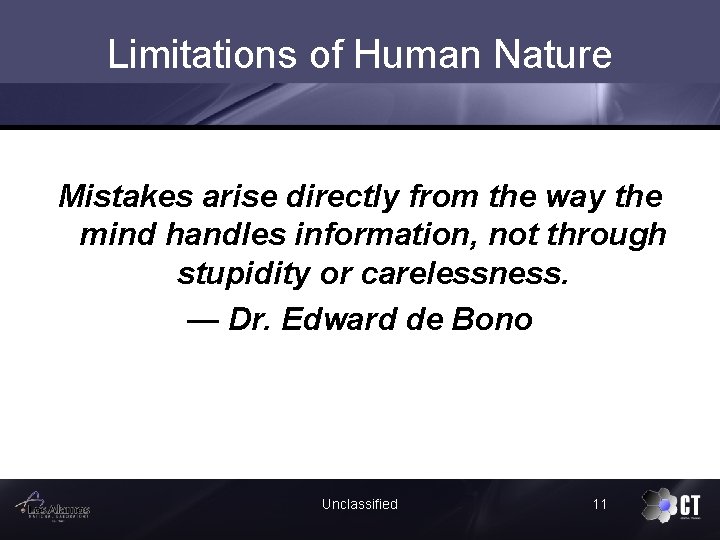
Limitations of Human Nature Mistakes arise directly from the way the mind handles information, not through stupidity or carelessness. — Dr. Edward de Bono Unclassified 11
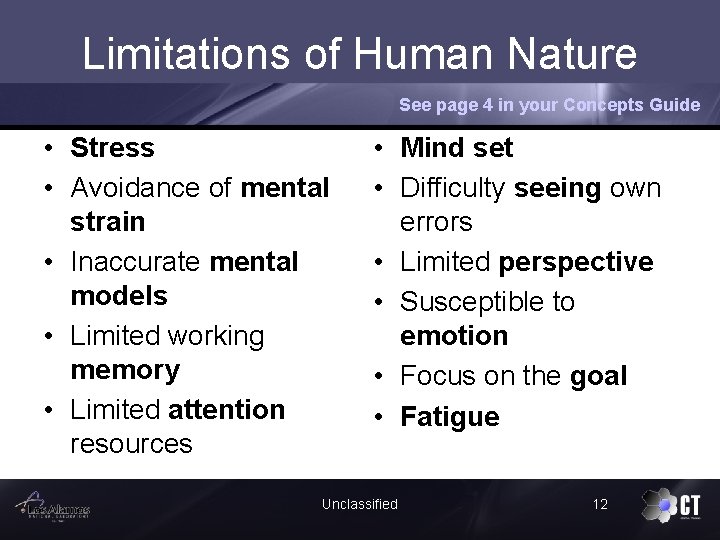
Limitations of Human Nature See page 4 in your Concepts Guide • Stress • Avoidance of mental strain • Inaccurate mental models • Limited working memory • Limited attention resources • Mind set • Difficulty seeing own errors • Limited perspective • Susceptible to emotion • Focus on the goal • Fatigue Unclassified 12
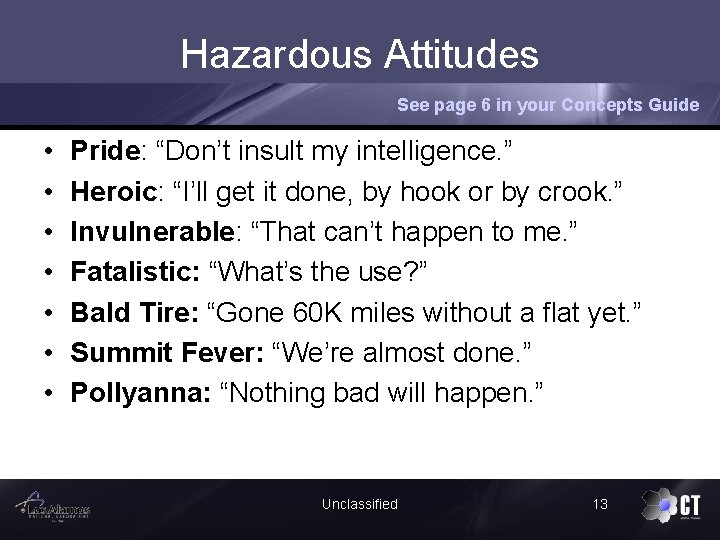
Hazardous Attitudes See page 6 in your Concepts Guide • • Pride: “Don’t insult my intelligence. ” Heroic: “I’ll get it done, by hook or by crook. ” Invulnerable: “That can’t happen to me. ” Fatalistic: “What’s the use? ” Bald Tire: “Gone 60 K miles without a flat yet. ” Summit Fever: “We’re almost done. ” Pollyanna: “Nothing bad will happen. ” Unclassified 13
Risk “Risks that you can control are much less a source of outrage than risks you can NOT control. ” — Peter Sandman … in other words, the risks that scare people and the risks that actually kill people are very different Unclassified 14
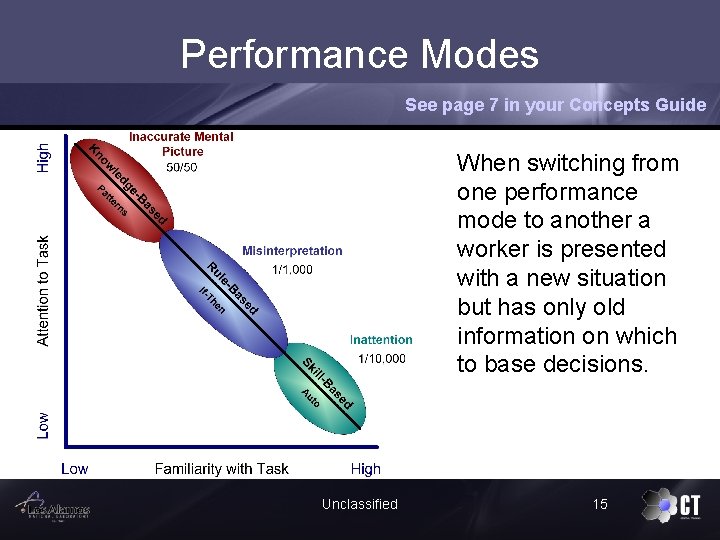
Performance Modes See page 7 in your Concepts Guide When switching from one performance mode to another a worker is presented with a new situation but has only old information on which to base decisions. Unclassified 15
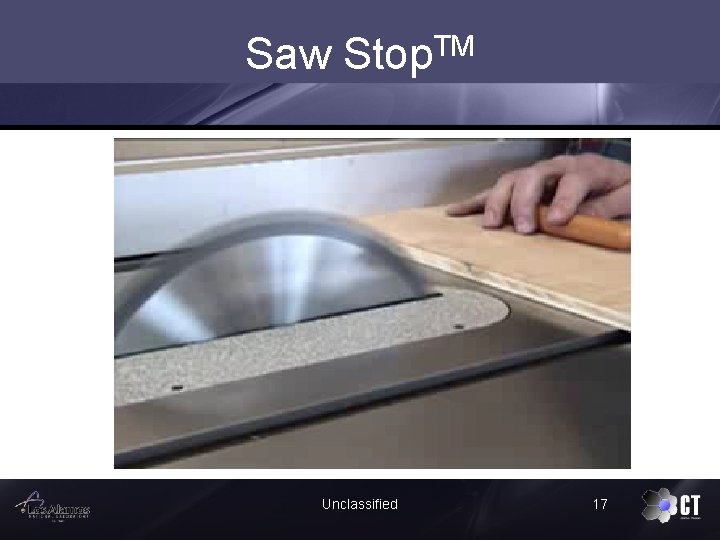
Error Traps HPI Principle #2: Error-likely situations are predictable, manageable, and preventable. Unclassified 16
Saw TM Stop Unclassified 17
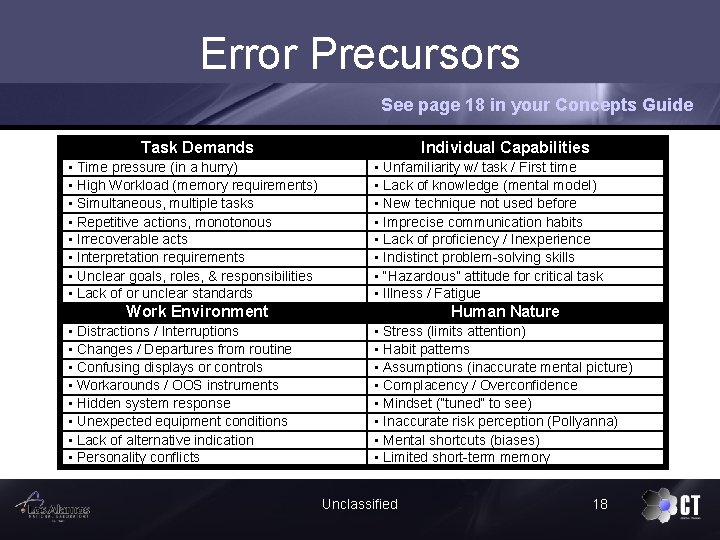
Error Precursors See page 18 in your Concepts Guide Task Demands • Time pressure (in a hurry) • High Workload (memory requirements) • Simultaneous, multiple tasks • Repetitive actions, monotonous • Irrecoverable acts • Interpretation requirements • Unclear goals, roles, & responsibilities • Lack of or unclear standards Individual Capabilities • Unfamiliarity w/ task / First time • Lack of knowledge (mental model) • New technique not used before • Imprecise communication habits • Lack of proficiency / Inexperience • Indistinct problem-solving skills • “Hazardous” attitude for critical task • Illness / Fatigue Work Environment • Distractions / Interruptions • Changes / Departures from routine • Confusing displays or controls • Workarounds / OOS instruments • Hidden system response • Unexpected equipment conditions • Lack of alternative indication • Personality conflicts Human Nature • Stress (limits attention) • Habit patterns • Assumptions (inaccurate mental picture) • Complacency / Overconfidence • Mindset (“tuned” to see) • Inaccurate risk perception (Pollyanna) • Mental shortcuts (biases) • Limited short-term memory Unclassified 18
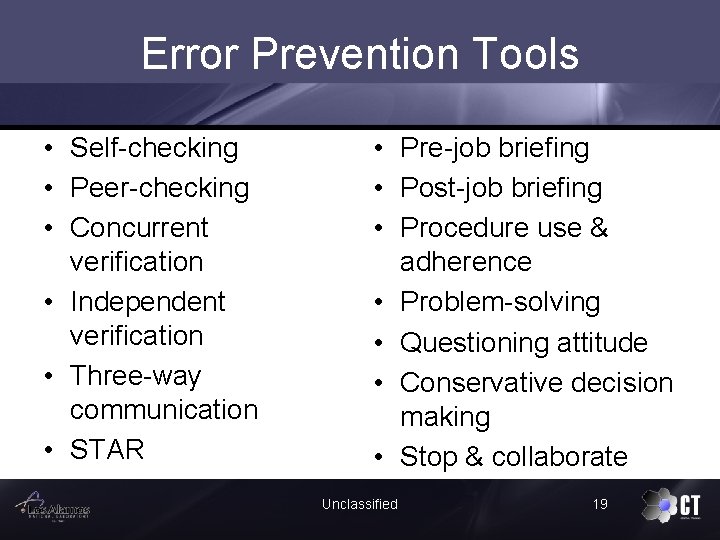
Error Prevention Tools • Self-checking • Peer-checking • Concurrent verification • Independent verification • Three-way communication • STAR • Pre-job briefing • Post-job briefing • Procedure use & adherence • Problem-solving • Questioning attitude • Conservative decision making • Stop & collaborate Unclassified 19
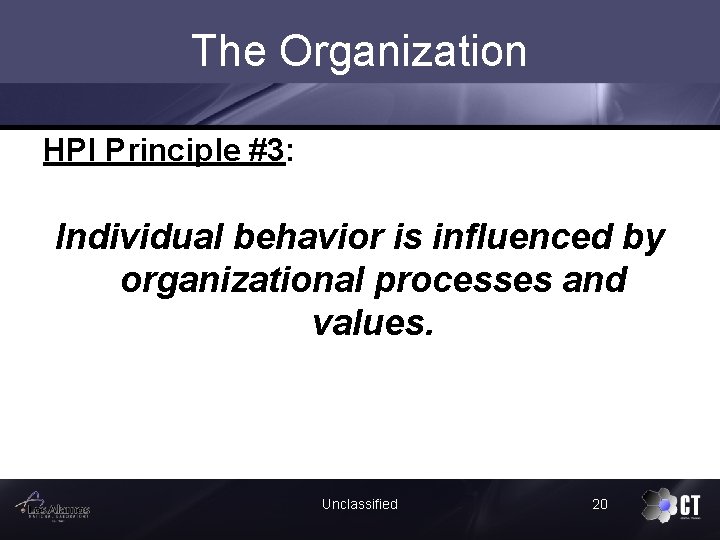
The Organization HPI Principle #3: Individual behavior is influenced by organizational processes and values. Unclassified 20
New vs. Old View of Human Error • Human error is a cause of accidents • To explain failure, investigations must seek failure • They must find people’s inaccurate assessments, wrong decisions and bad judgments • Human error is a symptom of trouble deeper inside a system… • To explain failure, do not try to find where people went wrong. • Instead, find how people’s assessments and actions made sense at the time, given the circumstances that surrounded them. Unclassified 21
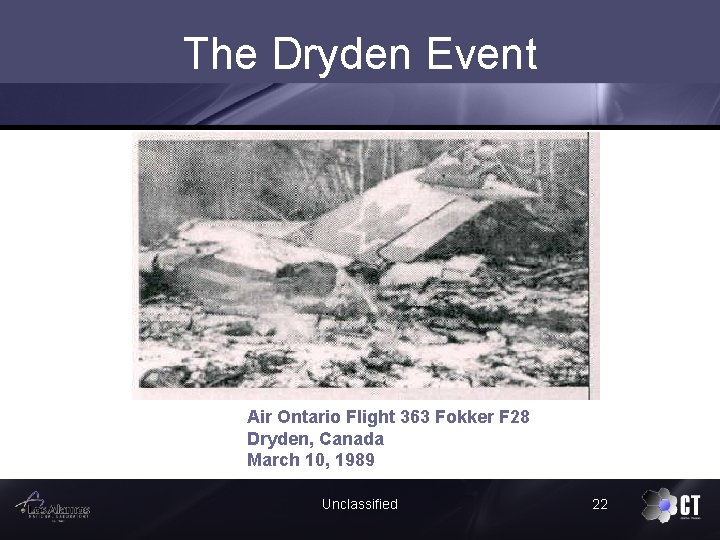
The Dryden Event Air Ontario Flight 363 Fokker F 28 Dryden, Canada March 10, 1989 Unclassified 22
Types of Error See page 12 in your Concepts Guide • Active Errors change equipment, system or processes that trigger immediate undesired consequences. • Latent Errors result in undetected organization-related weaknesses or equipment flaws that lie dormant. Unclassified 23
Understanding Events • Incentives are the cornerstone of human behavior • Dramatic events often have distant even subtle causes • Conventional wisdom is often wrong • Knowing what to measure and how to measure it makes a complex world much less complicated Unclassified 24
Organizational Processes Workplaces and organizations are easier to manage than the minds of individual workers. You cannot change the human condition, but you can change the conditions under which people work. — Dr. James Reason Unclassified 25
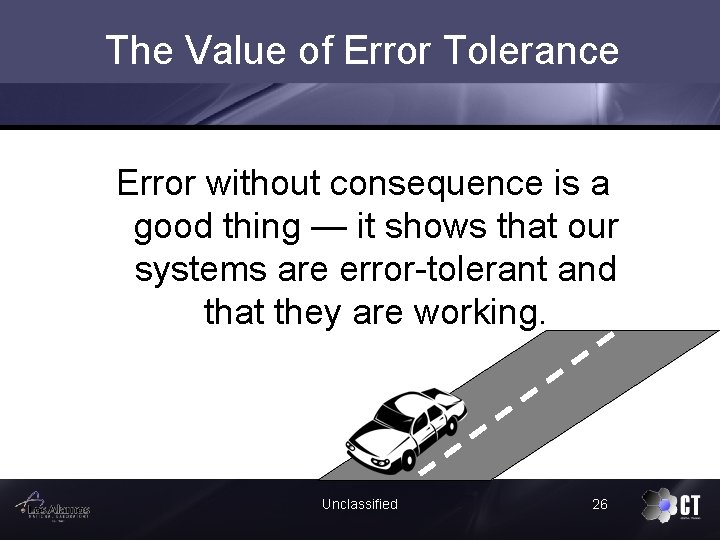
The Value of Error Tolerance Error without consequence is a good thing — it shows that our systems are error-tolerant and that they are working. Unclassified 26
Defenses in Depth See page 14 in your Concepts Guide • Redundancy: many layers of protection. • Diversity: many different varieties of protection. • Independence: separate/autonomous layers of protection. Unclassified 27
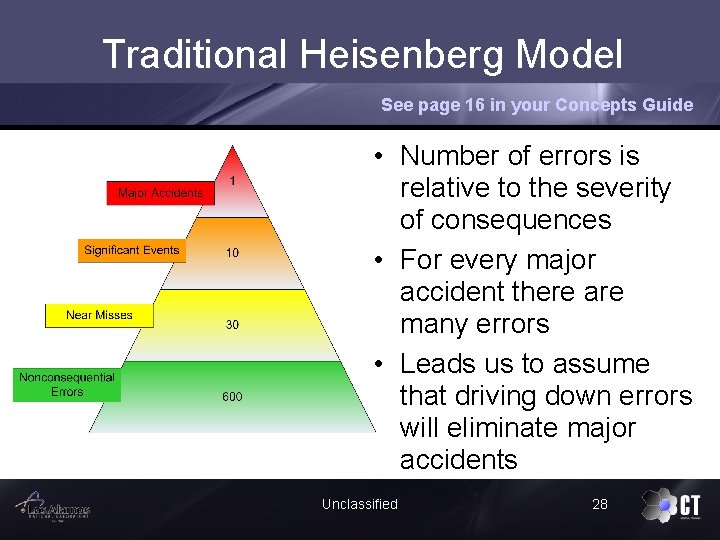
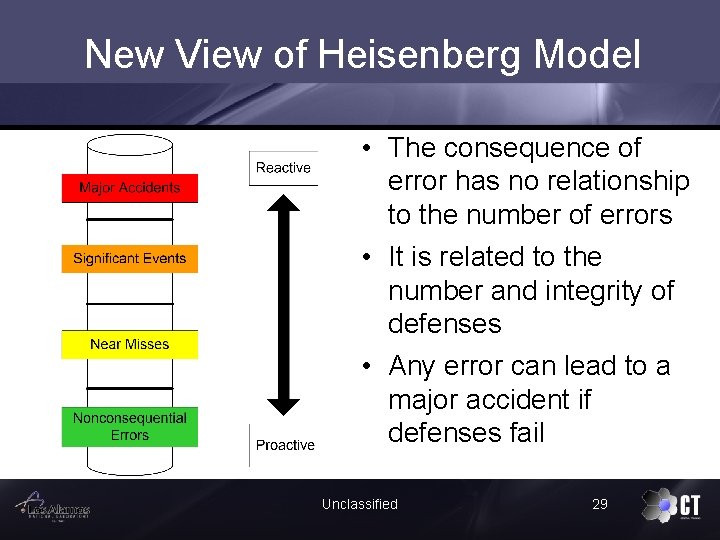
Traditional Heisenberg Model See page 16 in your Concepts Guide • Number of errors is relative to the severity of consequences • For every major accident there are many errors • Leads us to assume that driving down errors will eliminate major accidents Unclassified 28
New View of Heisenberg Model • The consequence of error has no relationship to the number of errors • It is related to the number and integrity of defenses • Any error can lead to a major accident if defenses fail Unclassified 29
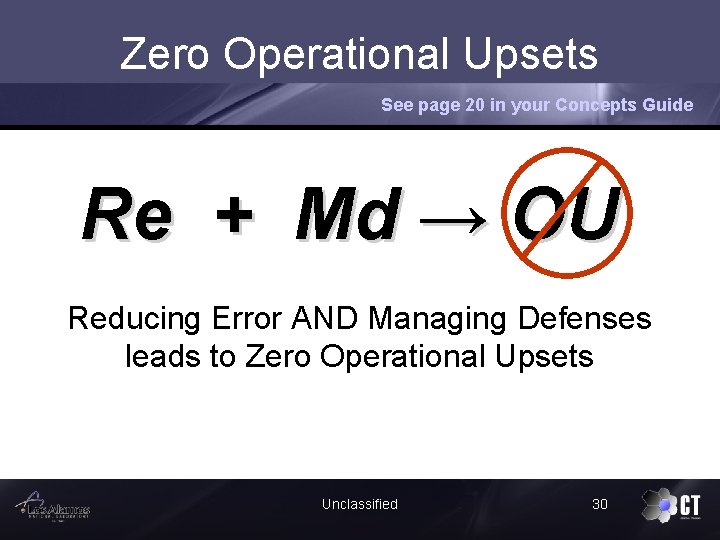
Zero Operational Upsets See page 20 in your Concepts Guide Re + Md → OU Reducing Error AND Managing Defenses leads to Zero Operational Upsets Unclassified 30
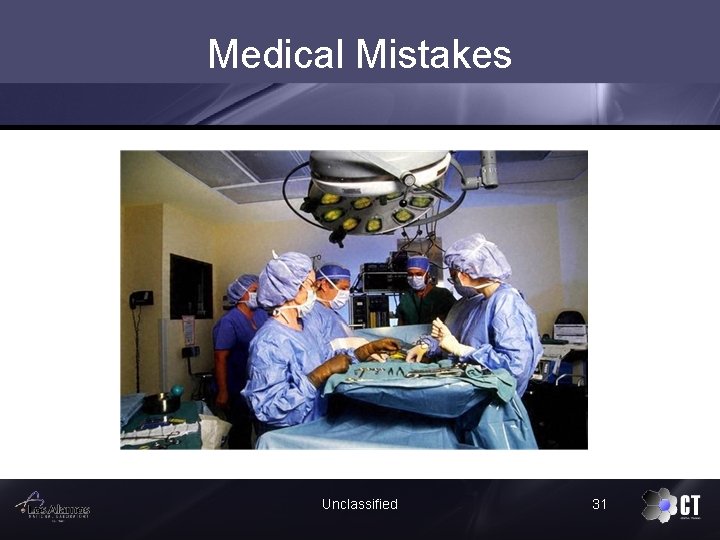
Medical Mistakes Unclassified 31
Organizational Values HPI Principle #4: Operational upsets can be avoided by understanding the reasons mistakes occur and applying the lessons learned from past events. Unclassified 32
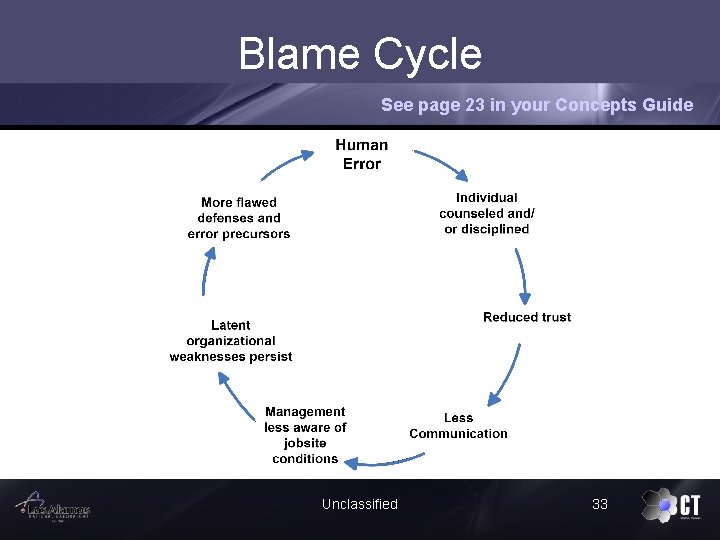
Blame Cycle See page 23 in your Concepts Guide Unclassified 33
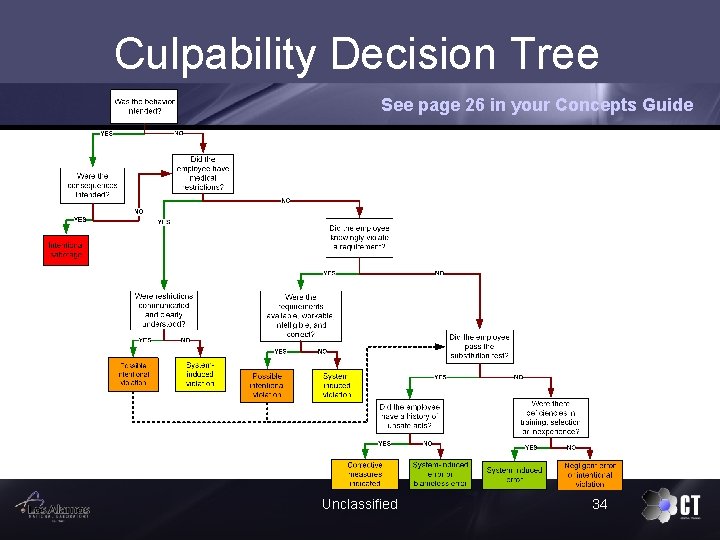
Culpability Decision Tree See page 26 in your Concepts Guide Unclassified 34
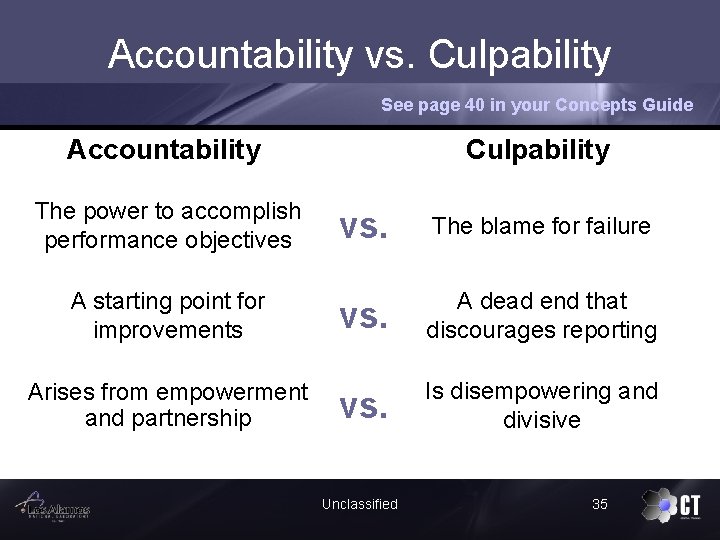
Accountability vs. Culpability See page 40 in your Concepts Guide Accountability The power to accomplish performance objectives A starting point for improvements Arises from empowerment and partnership Culpability vs. The blame for failure vs. A dead end that discourages reporting vs. Is disempowering and divisive Unclassified 35
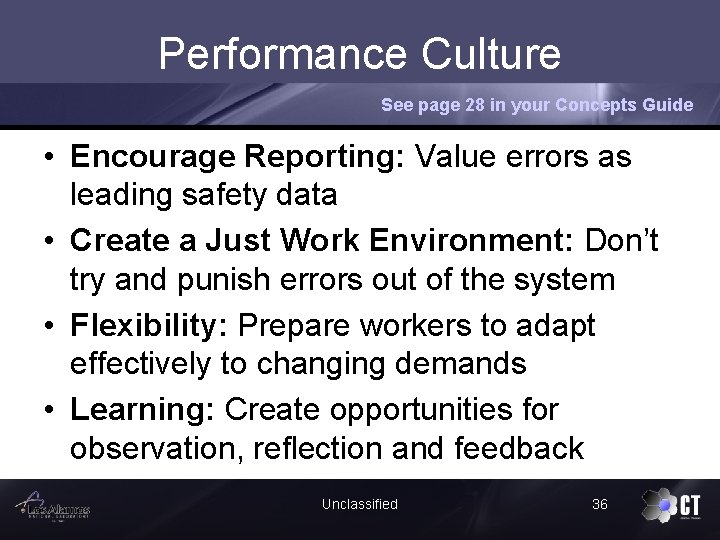
Performance Culture See page 28 in your Concepts Guide • Encourage Reporting: Value errors as leading safety data • Create a Just Work Environment: Don’t try and punish errors out of the system • Flexibility: Prepare workers to adapt effectively to changing demands • Learning: Create opportunities for observation, reflection and feedback Unclassified 36
Barriers to a Learning Organization • 20 years of experience = 1 year of learning repeated 20 times • Experts use their informational advantage to reinforce their biases Unclassified 37
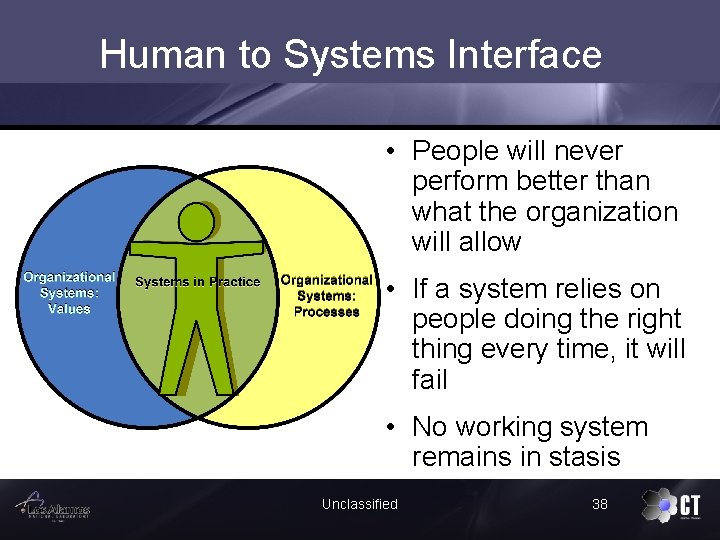
Human to Systems Interface • People will never perform better than what the organization will allow • If a system relies on people doing the right thing every time, it will fail • No working system remains in stasis Unclassified 38
The Leader HPI Principle #5: People achieve high levels of performance based largely on the encouragement and reinforcement received from peers, leaders, and subordinates. Unclassified 39
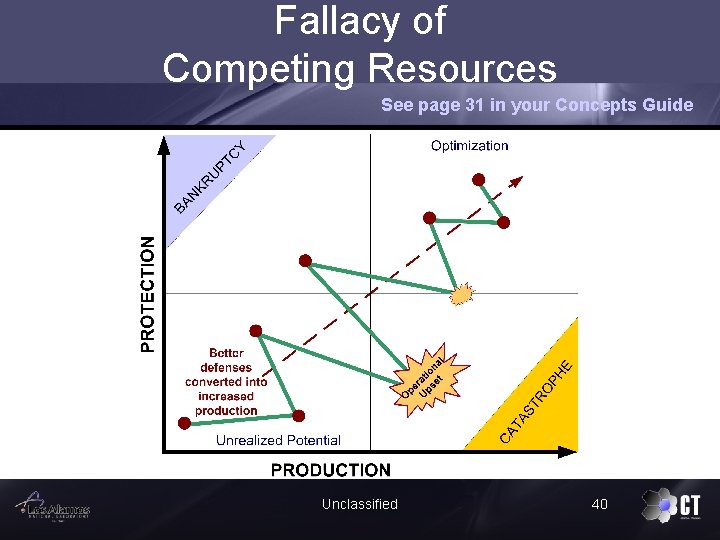
Fallacy of Competing Resources See page 31 in your Concepts Guide Unclassified 40
How Leaders Influence Protection vs. Production See page 33 in your Concepts Guide • • What they pay attention to, measure, and control Their reactions to critical incidents or crises The allocation of resources Their criteria for allocation of rewards and punishment • Their criteria for selection, advancement, and termination • Their deliberate attempts to coach or model behaviors. Unclassified 41
Reality Check • Safety values express how you desire safety to be in your organization. • Safety systems are real defenses and actionable programs that provide measurable safety data sets. Unclassified 42
Implementing HPI • HPI is not just training • It is a way of doing business that includes: – Behavioral observation and walk-arounds – Conduct of operations and work management – Systems development and re-engineering – Issues reporting, management and corrective actions – Event investigation and lessons learned – Performance management and assurance – Simulations and training Unclassified 43