
Human Performance Improvement HPI Martha Michels Assistant Director

- Slides: 17
Human Performance Improvement (HPI) Martha Michels, Assistant Director for ESH&Q International Technical Safety Forum September 11, 2014
HPI – What is it? • HPI is a proactive, systematic process for discovering and analyzing human performance gaps (errors) and taking actions to minimize or eliminate these gaps. If implemented properly, it prevents unwanted outcomes triggered by human error. • HPI is a powerful approach because it deals not only with individual and team behaviors, but also seeks to understand organizational and workplace factors (weaknesses) that influence these behaviors. • The program takes the results from an (HPI) evaluation or investigation and feeds it back into the work processes. 2 Martha Michels | Human Performance Improvement 9/11/2014
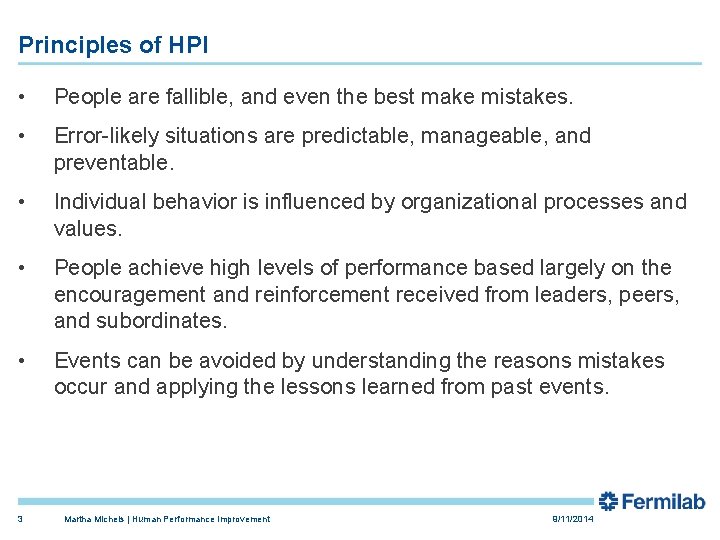
Principles of HPI • People are fallible, and even the best make mistakes. • Error-likely situations are predictable, manageable, and preventable. • Individual behavior is influenced by organizational processes and values. • People achieve high levels of performance based largely on the encouragement and reinforcement received from leaders, peers, and subordinates. • Events can be avoided by understanding the reasons mistakes occur and applying the lessons learned from past events. 3 Martha Michels | Human Performance Improvement 9/11/2014
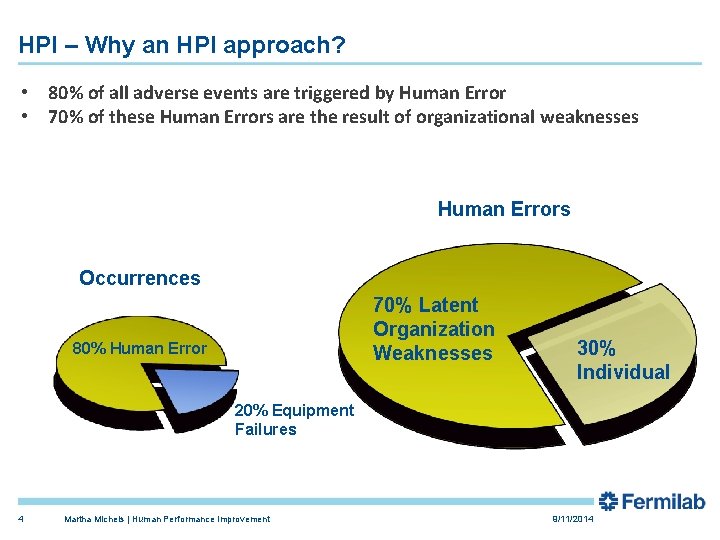
HPI – Why an HPI approach? • 80% of all adverse events are triggered by Human Error • 70% of these Human Errors are the result of organizational weaknesses Human Errors Occurrences 70% Latent Organization Weaknesses 80% Human Error 30% Individual 20% Equipment Failures 4 Martha Michels | Human Performance Improvement 9/11/2014
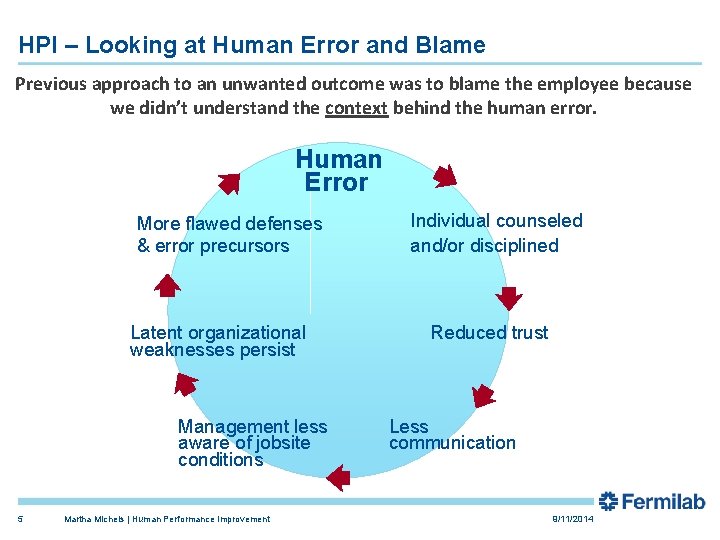
HPI – Looking at Human Error and Blame Previous approach to an unwanted outcome was to blame the employee because we didn’t understand the context behind the human error. Human Error More flawed defenses & error precursors Latent organizational weaknesses persist Management less aware of jobsite conditions 5 Martha Michels | Human Performance Improvement Individual counseled and/or disciplined Reduced trust Less communication 9/11/2014
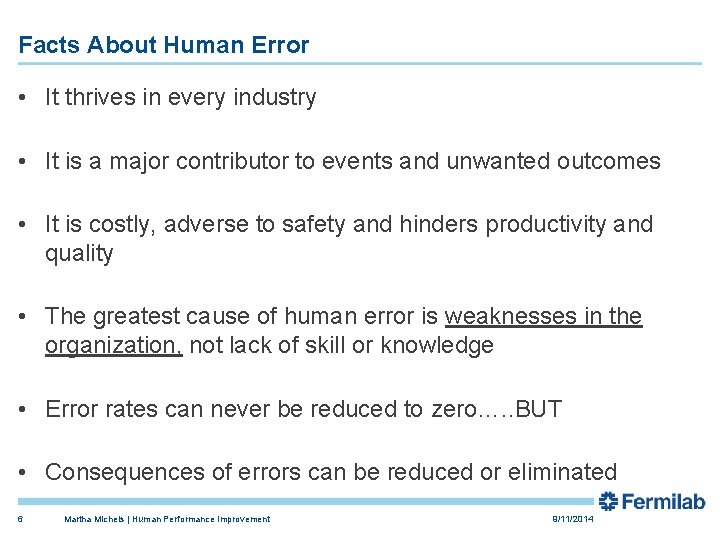
Facts About Human Error • It thrives in every industry • It is a major contributor to events and unwanted outcomes • It is costly, adverse to safety and hinders productivity and quality • The greatest cause of human error is weaknesses in the organization, not lack of skill or knowledge • Error rates can never be reduced to zero…. . BUT • Consequences of errors can be reduced or eliminated 6 Martha Michels | Human Performance Improvement 9/11/2014
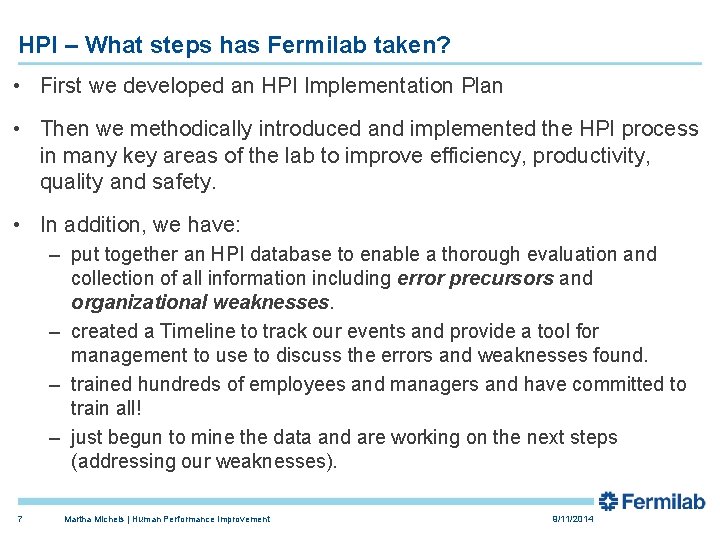
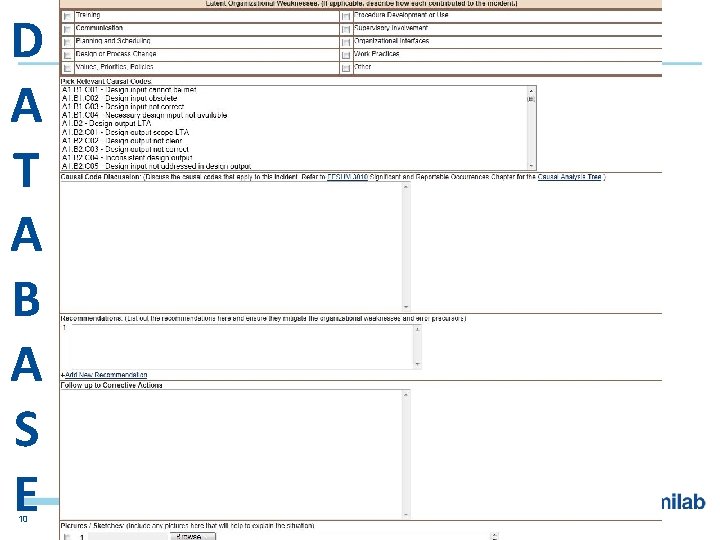
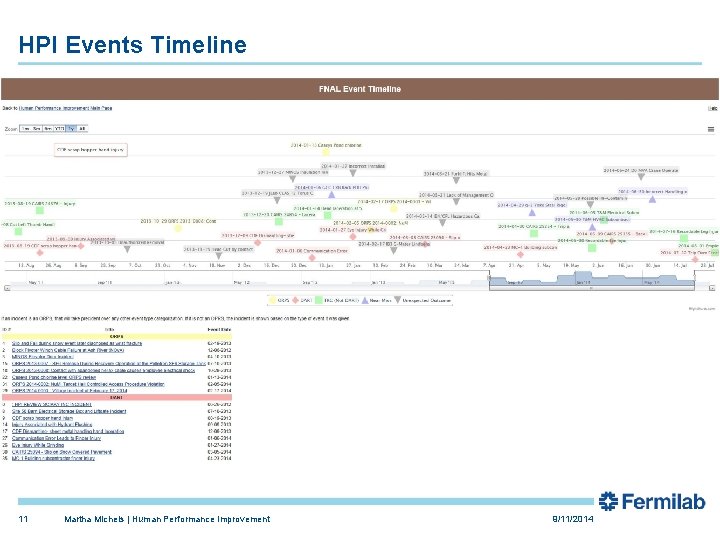
HPI – What steps has Fermilab taken? • First we developed an HPI Implementation Plan • Then we methodically introduced and implemented the HPI process in many key areas of the lab to improve efficiency, productivity, quality and safety. • In addition, we have: – put together an HPI database to enable a thorough evaluation and collection of all information including error precursors and organizational weaknesses. – created a Timeline to track our events and provide a tool for management to use to discuss the errors and weaknesses found. – trained hundreds of employees and managers and have committed to train all! – just begun to mine the data and are working on the next steps (addressing our weaknesses). 7 Martha Michels | Human Performance Improvement 9/11/2014
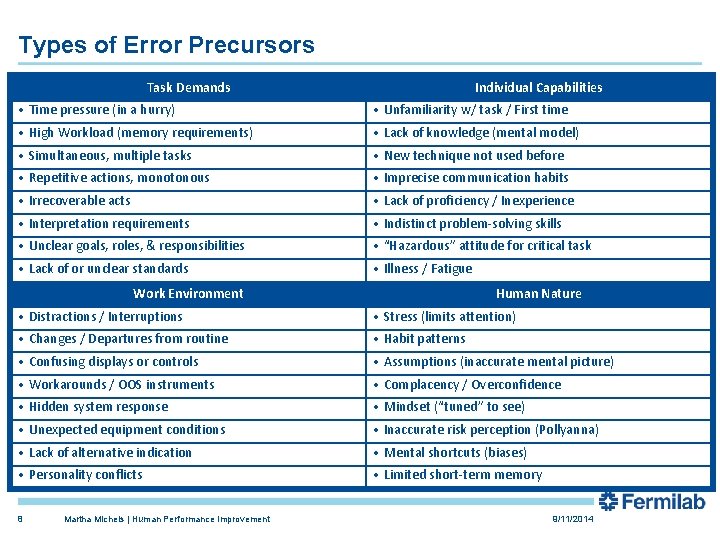
Types of Error Precursors Task Demands Individual Capabilities • Time pressure (in a hurry) • Unfamiliarity w/ task / First time • High Workload (memory requirements) • Lack of knowledge (mental model) • Simultaneous, multiple tasks • New technique not used before • Repetitive actions, monotonous • Imprecise communication habits • Irrecoverable acts • Lack of proficiency / Inexperience • Interpretation requirements • Indistinct problem-solving skills • Unclear goals, roles, & responsibilities • “Hazardous” attitude for critical task • Lack of or unclear standards • Illness / Fatigue Work Environment Human Nature • Distractions / Interruptions • Stress (limits attention) • Changes / Departures from routine • Habit patterns • Confusing displays or controls • Assumptions (inaccurate mental picture) • Workarounds / OOS instruments • Complacency / Overconfidence • Hidden system response • Mindset (“tuned” to see) • Unexpected equipment conditions • Inaccurate risk perception (Pollyanna) • Lack of alternative indication • Mental shortcuts (biases) • Personality conflicts • Limited short-term memory 8 Martha Michels | Human Performance Improvement 9/11/2014
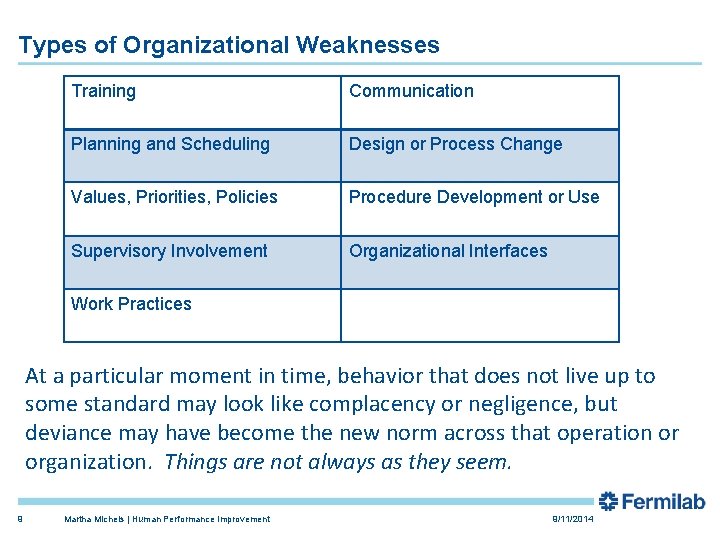
Types of Organizational Weaknesses Training Communication Planning and Scheduling Design or Process Change Values, Priorities, Policies Procedure Development or Use Supervisory Involvement Organizational Interfaces Work Practices At a particular moment in time, behavior that does not live up to some standard may look like complacency or negligence, but deviance may have become the new norm across that operation or organization. Things are not always as they seem. 9 Martha Michels | Human Performance Improvement 9/11/2014
D A T A B A S E 10 Martha Michels | Human Performance Improvement 9/11/2014
HPI Events Timeline 11 Martha Michels | Human Performance Improvement 9/11/2014
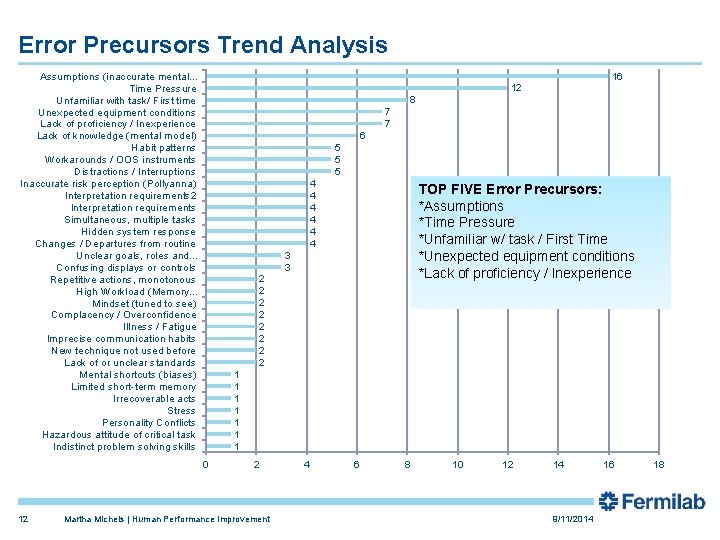
Error Precursors Trend Analysis Assumptions (inaccurate mental. . . Time Pressure Unfamiliar with task/ First time Unexpected equipment conditions Lack of proficiency / Inexperience Lack of knowledge (mental model) Habit patterns Workarounds / OOS instruments Distractions / Interruptions Inaccurate risk perception (Pollyanna) Interpretation requirements 2 Interpretation requirements Simultaneous, multiple tasks Hidden system response Changes / Departures from routine Unclear goals, roles and. . . Confusing displays or controls Repetitive actions, monotonous High Workload (Memory. . . Mindset (tuned to see) Complacency / Overconfidence Illness / Fatigue Imprecise communication habits New technique not used before Lack of or unclear standards Mental shortcuts (biases) Limited short-term memory Irrecoverable acts Stress Personality Conflicts Hazardous attitude of critical task Indistinct problem solving skills 16 12 8 7 7 6 5 5 5 4 4 4 3 3 2 2 2 2 1 1 1 1 0 12 TOP FIVE Error Precursors: *Assumptions *Time Pressure *Unfamiliar w/ task / First Time *Unexpected equipment conditions *Lack of proficiency / Inexperience 2 Martha Michels | Human Performance Improvement 4 6 8 10 12 14 9/11/2014 16 18
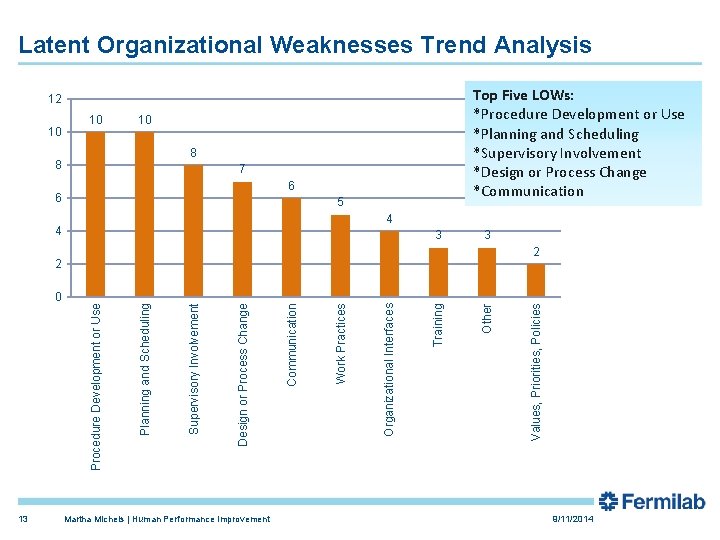
Latent Organizational Weaknesses Trend Analysis Top Five LOWs: *Procedure Development or Use *Planning and Scheduling *Supervisory Involvement *Design or Process Change *Communication 12 10 8 8 7 6 6 5 4 4 3 3 2 13 Martha Michels | Human Performance Improvement Other Training Organizational Interfaces Work Practices Communication Design or Process Change Supervisory Involvement Planning and Scheduling 0 Procedure Development or Use 2 Values, Priorities, Policies 10 10 9/11/2014
HPI – Does it work? • We think so, yes! • It creates a just culture • It improves morale – drives the “team” mentality • It helps with efficiency and quality • It creates a safer work environment 14 Martha Michels | Human Performance Improvement 9/11/2014
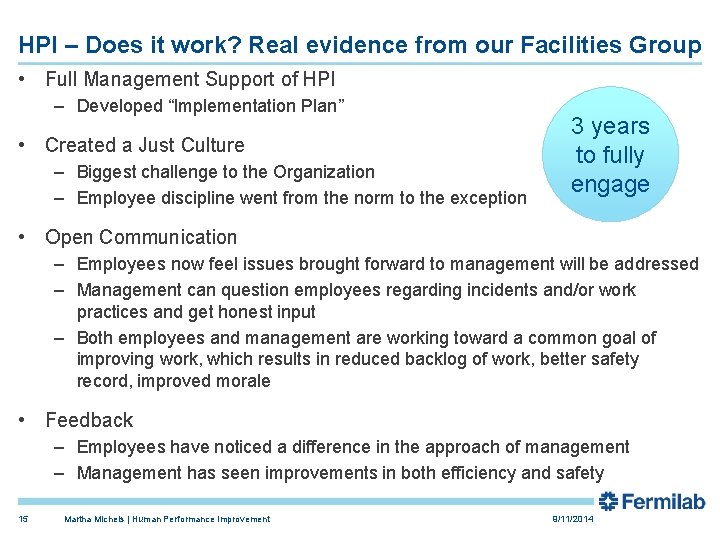
HPI – Does it work? Real evidence from our Facilities Group • Full Management Support of HPI – Developed “Implementation Plan” • Created a Just Culture – Biggest challenge to the Organization – Employee discipline went from the norm to the exception 3 years to fully engage • Open Communication – Employees now feel issues brought forward to management will be addressed – Management can question employees regarding incidents and/or work practices and get honest input – Both employees and management are working toward a common goal of improving work, which results in reduced backlog of work, better safety record, improved morale • Feedback – Employees have noticed a difference in the approach of management – Management has seen improvements in both efficiency and safety 15 Martha Michels | Human Performance Improvement 9/11/2014
HPI – What are our next steps? • Maintain Senior Management Support • Continue to push HPI in other Divisions and Sections using the “seed organizations” we’ve developed • Train everyone at the lab in HPI and how it works • will help to shift the culture • will empower employees to identify areas needing improvement • Continue to trend the data from the HPI database and develop a plan to correct some of the weaknesses identified 16 Martha Michels | Human Performance Improvement 9/11/2014
HPI – Questions? 17 Martha Michels | Human Performance Improvement 9/11/2014