
Human Origins and Patterns of Change Unit 1

- Slides: 16
Human Origins and Patterns of Change Unit 1 -
I will be able to: • Describe key scientific findings about human origins • List human achievements during the Stone Age • Describe the emergence of modern humans
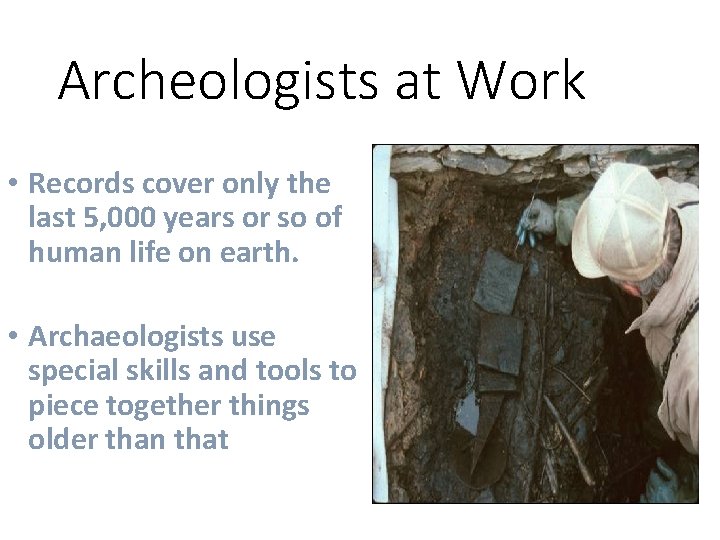
Archeologists at Work • Records cover only the last 5, 000 years or so of human life on earth. • Archaeologists use special skills and tools to piece together things older than that
Artifacts vs Fossils Artifacts: Tools, jewelry, or other objects modified by human hands. Fossils: Bones preserved in stone
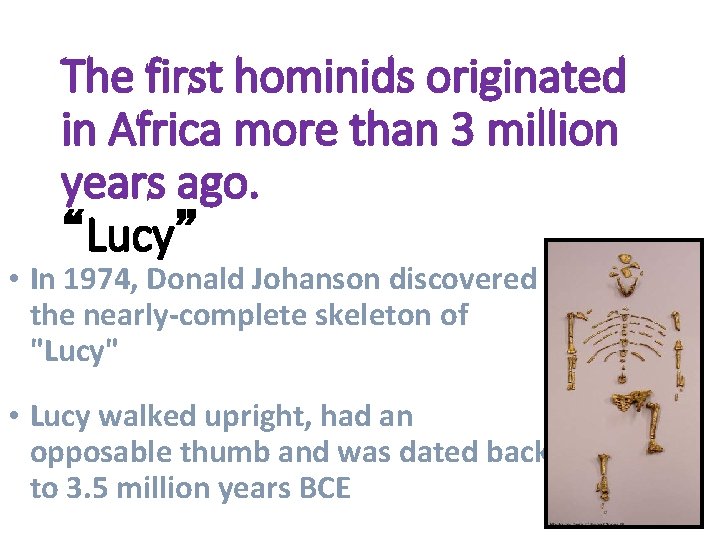
The first hominids originated in Africa more than 3 million years ago. “Lucy” • In 1974, Donald Johanson discovered the nearly-complete skeleton of "Lucy" • Lucy walked upright, had an opposable thumb and was dated back to 3. 5 million years BCE
Homo Sapiens • Homo sapien (wise man) is the name given to modern humans.
Neanderthal Man • The first modern humans, bigger and more powerful • Resourceful hunters • Had religious beliefs (ritual burials) • Vanished about 20, 000 years ago
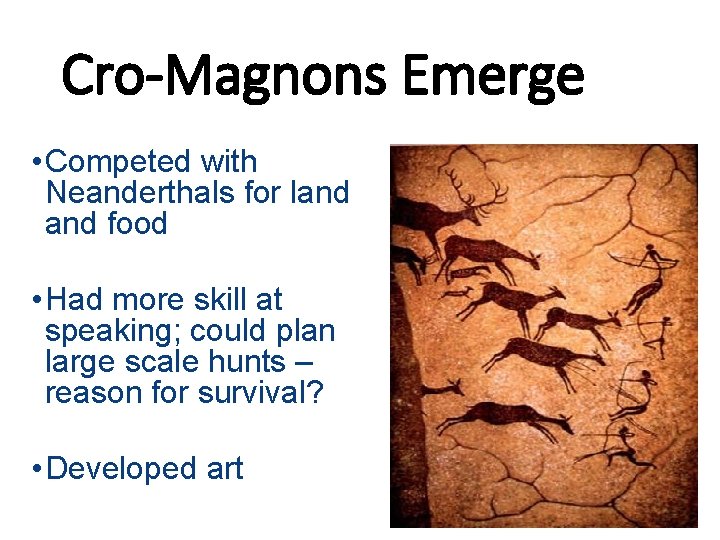
Cro-Magnons Emerge • Competed with Neanderthals for land food • Had more skill at speaking; could plan large scale hunts – reason for survival? • Developed art
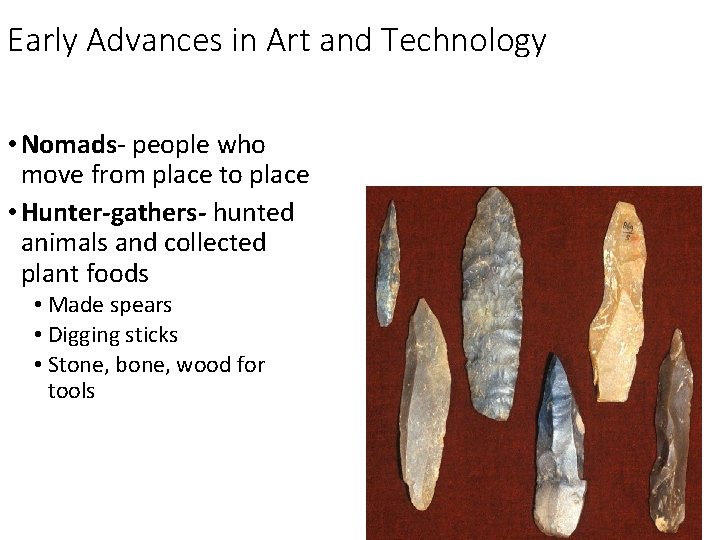
Early Advances in Art and Technology • Nomads- people who move from place to place • Hunter-gathers- hunted animals and collected plant foods • Made spears • Digging sticks • Stone, bone, wood for tools
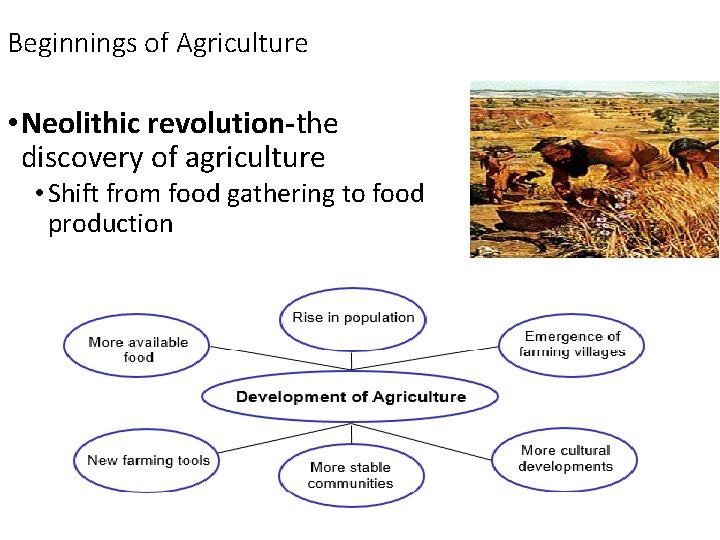
Beginnings of Agriculture • Neolithic revolution-the discovery of agriculture • Shift from food gathering to food production
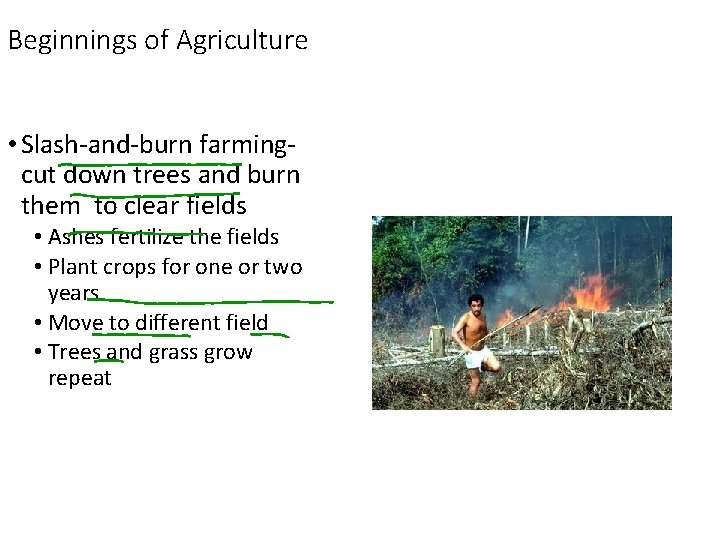
Beginnings of Agriculture • Slash-and-burn farmingcut down trees and burn them to clear fields • Ashes fertilize the fields • Plant crops for one or two years • Move to different field • Trees and grass grow repeat
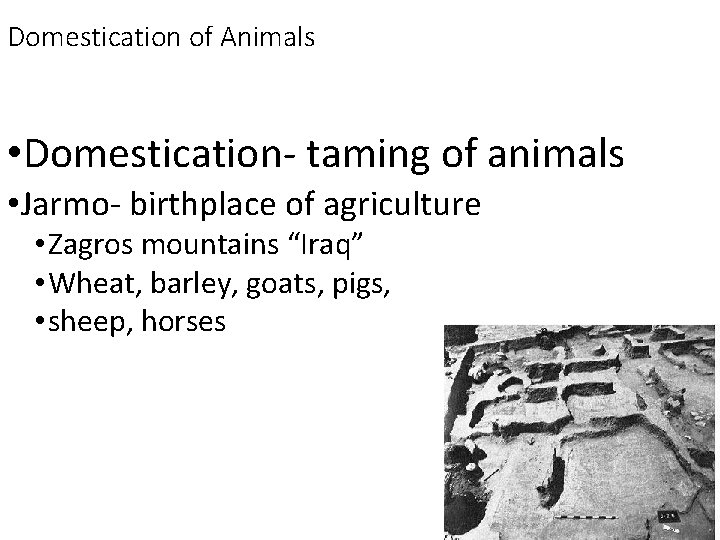
Domestication of Animals • Domestication- taming of animals • Jarmo- birthplace of agriculture • Zagros mountains “Iraq” • Wheat, barley, goats, pigs, • sheep, horses
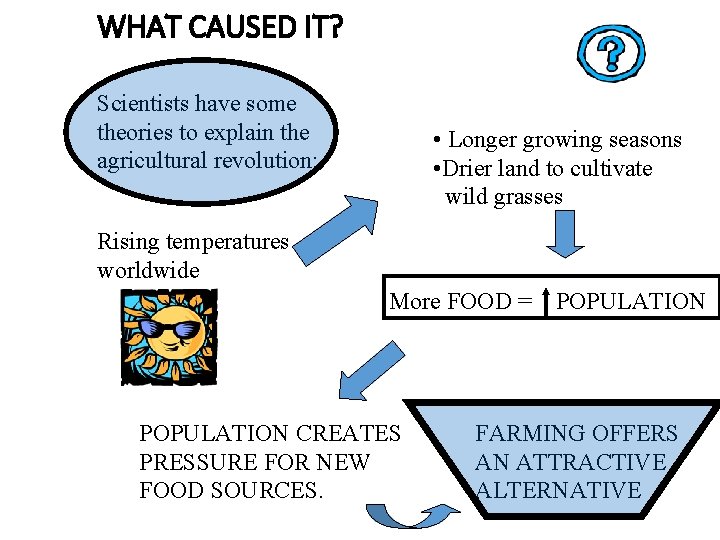
WHAT CAUSED IT? Scientists have some theories to explain the agricultural revolution: • Longer growing seasons • Drier land to cultivate wild grasses Rising temperatures worldwide More FOOD = POPULATION CREATES PRESSURE FOR NEW FOOD SOURCES. POPULATION FARMING OFFERS AN ATTRACTIVE ALTERNATIVE
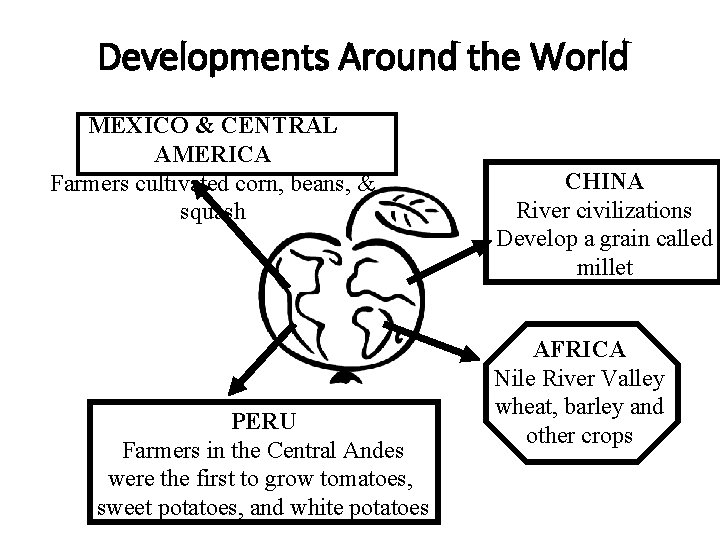
Developments Around the World MEXICO & CENTRAL AMERICA Farmers cultivated corn, beans, & squash PERU Farmers in the Central Andes were the first to grow tomatoes, sweet potatoes, and white potatoes CHINA River civilizations Develop a grain called millet AFRICA Nile River Valley wheat, barley and other crops
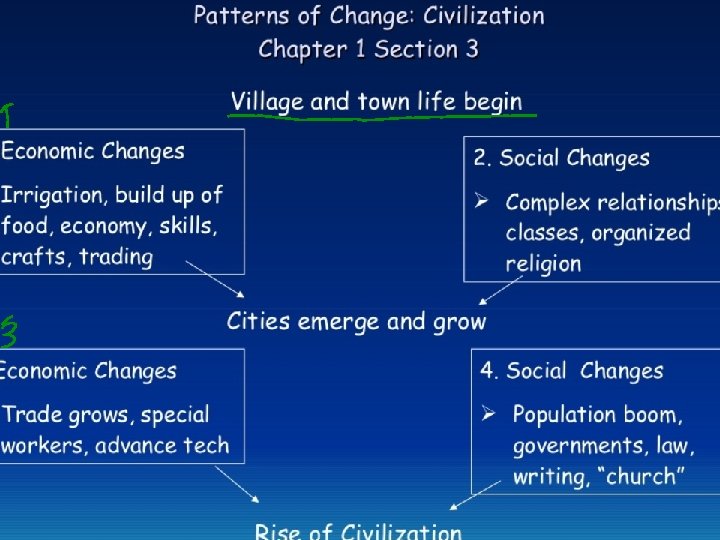
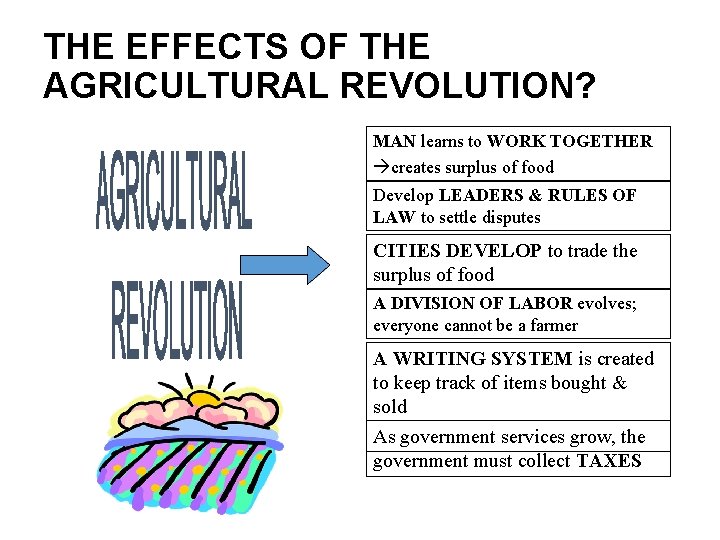
THE EFFECTS OF THE AGRICULTURAL REVOLUTION? MAN learns to WORK TOGETHER creates surplus of food Develop LEADERS & RULES OF LAW to settle disputes CITIES DEVELOP to trade the surplus of food A DIVISION OF LABOR evolves; everyone cannot be a farmer A WRITING SYSTEM is created to keep track of items bought & sold As government services grow, the government must collect TAXES