
Human Organ Systems What are Humans made of
- Slides: 16
Human Organ Systems
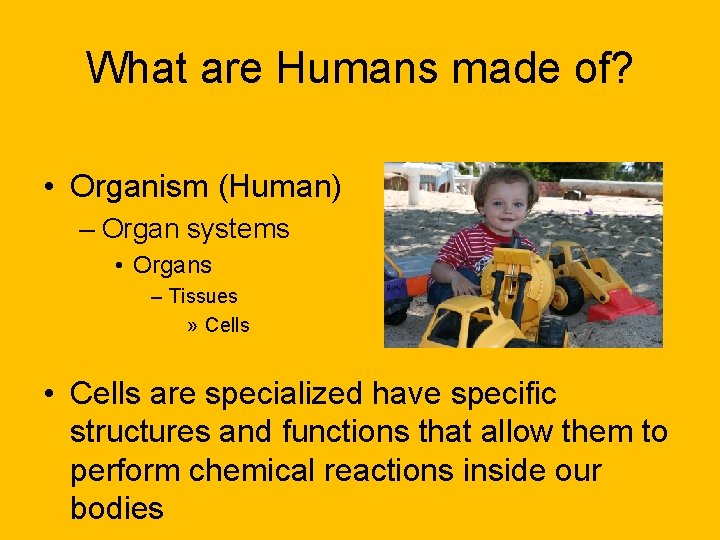
What are Humans made of? • Organism (Human) – Organ systems • Organs – Tissues » Cells • Cells are specialized have specific structures and functions that allow them to perform chemical reactions inside our bodies
Humans • Advanced • Complex – Bodies are broken into various organ systems that perform the major functions needed to survive – Systems work together to ensure our survival
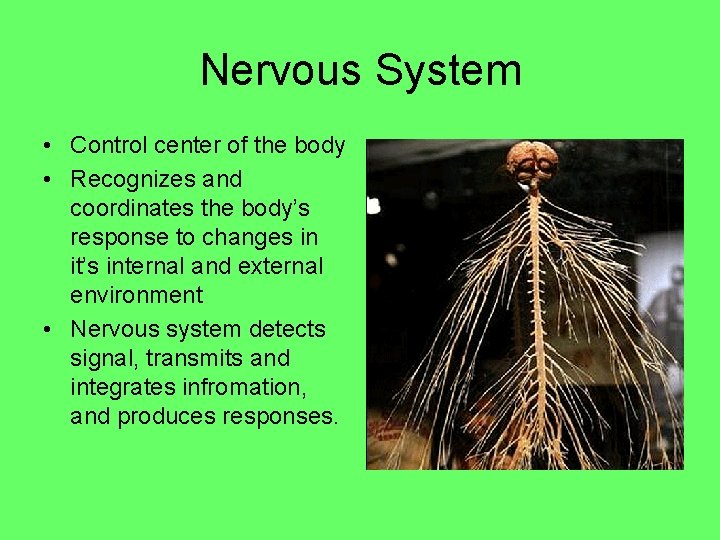
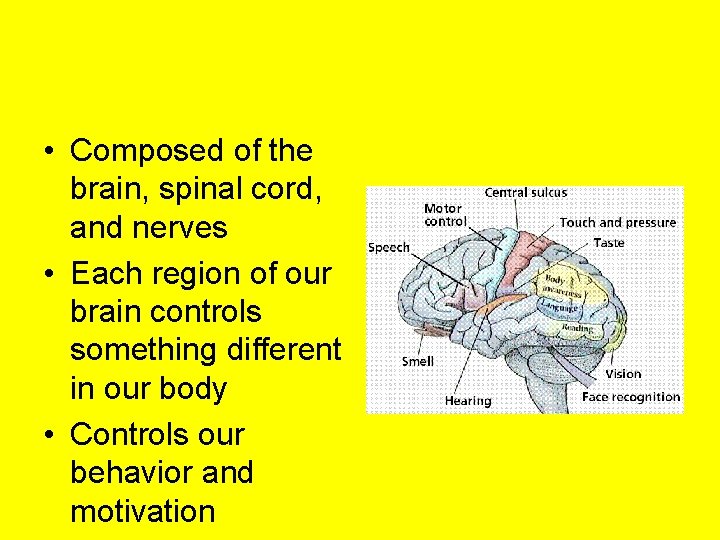
Nervous System • Control center of the body • Recognizes and coordinates the body’s response to changes in it’s internal and external environment • Nervous system detects signal, transmits and integrates infromation, and produces responses.
• Composed of the brain, spinal cord, and nerves • Each region of our brain controls something different in our body • Controls our behavior and motivation
How does it work? 1. Sensory receptor 4. Efferent neuron sends detects internal or message to muscle, external stimuli gland or organ need to 2. Afferent neurons (nerve respond cells) sends stimulus to 5. Muscle, gland or organ Central Nervous System responds to stimuli (directly to brain or to spinal cord then brain) 3. Integration center (brain) responds to stimulus (signal goes to specific region of brain involved with interpreting message)
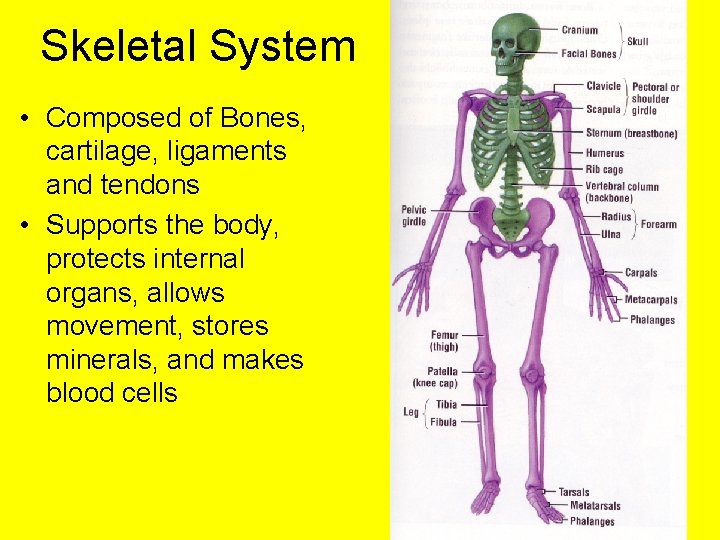
Skeletal System • Composed of Bones, cartilage, ligaments and tendons • Supports the body, protects internal organs, allows movement, stores minerals, and makes blood cells
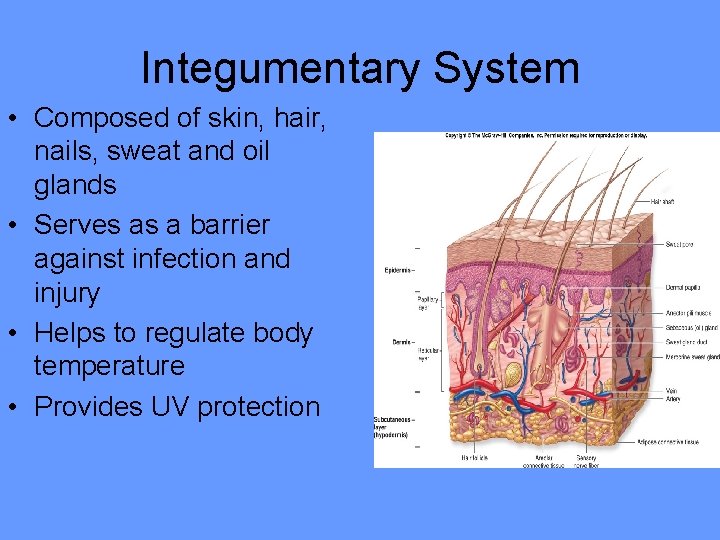
Integumentary System • Composed of skin, hair, nails, sweat and oil glands • Serves as a barrier against infection and injury • Helps to regulate body temperature • Provides UV protection
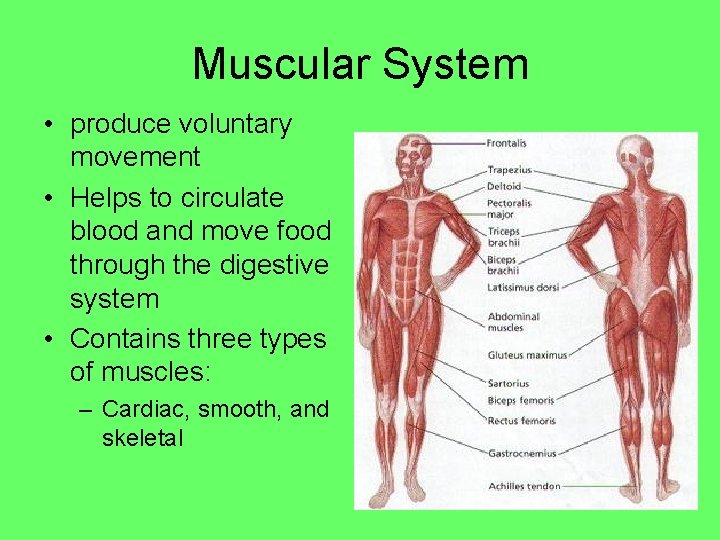
Muscular System • produce voluntary movement • Helps to circulate blood and move food through the digestive system • Contains three types of muscles: – Cardiac, smooth, and skeletal
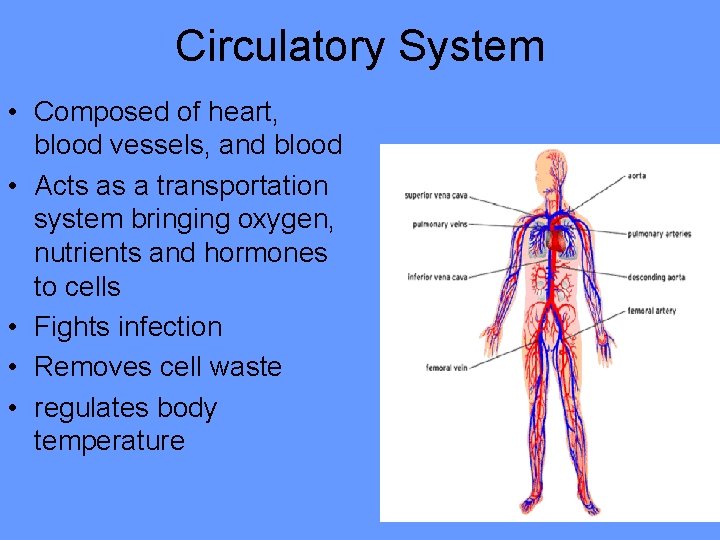
Circulatory System • Composed of heart, blood vessels, and blood • Acts as a transportation system bringing oxygen, nutrients and hormones to cells • Fights infection • Removes cell waste • regulates body temperature
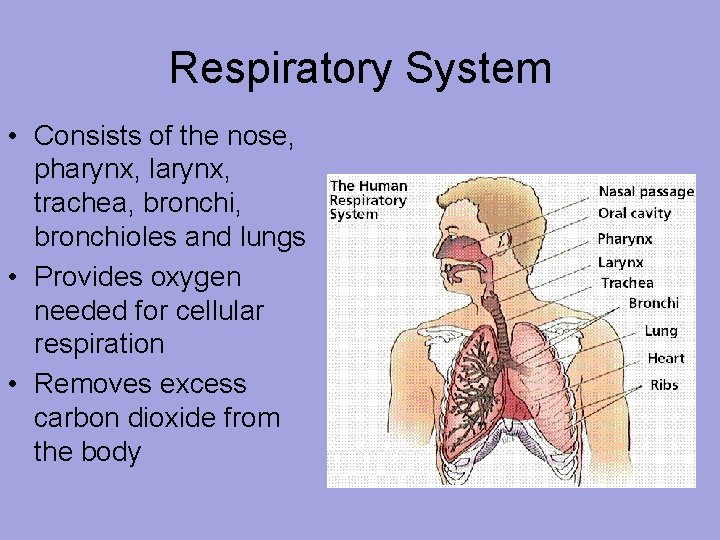
Respiratory System • Consists of the nose, pharynx, larynx, trachea, bronchioles and lungs • Provides oxygen needed for cellular respiration • Removes excess carbon dioxide from the body
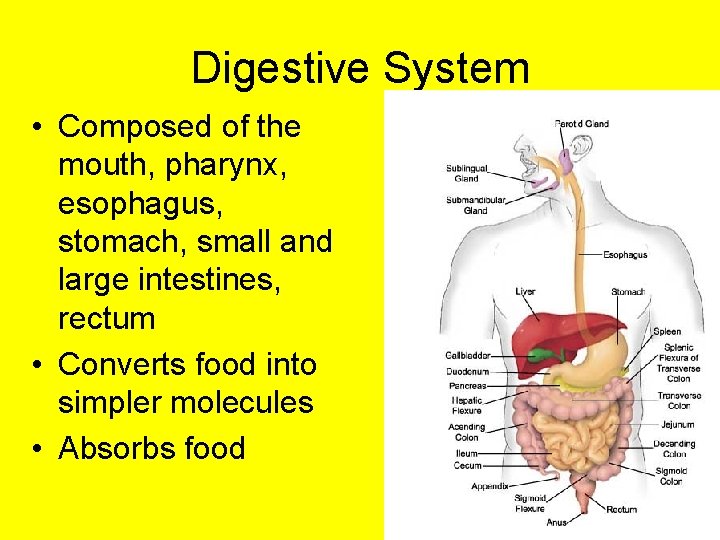
Digestive System • Composed of the mouth, pharynx, esophagus, stomach, small and large intestines, rectum • Converts food into simpler molecules • Absorbs food
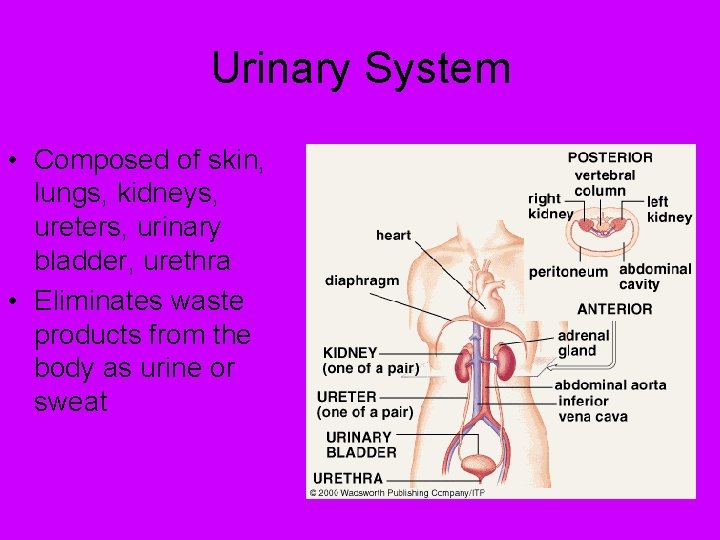
Urinary System • Composed of skin, lungs, kidneys, ureters, urinary bladder, urethra • Eliminates waste products from the body as urine or sweat
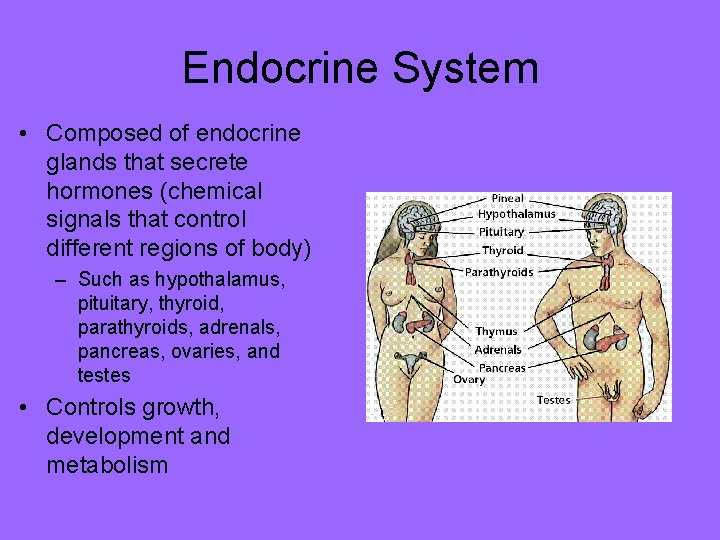
Endocrine System • Composed of endocrine glands that secrete hormones (chemical signals that control different regions of body) – Such as hypothalamus, pituitary, thyroid, parathyroids, adrenals, pancreas, ovaries, and testes • Controls growth, development and metabolism
Reproductive System • Males have testes, epididymis, vas deferens, urethra, and penis • Females have ovaries, fallopian tubes, uterus, vagina • Produces reproductive cells • In females, nurtures and protects developing embryo
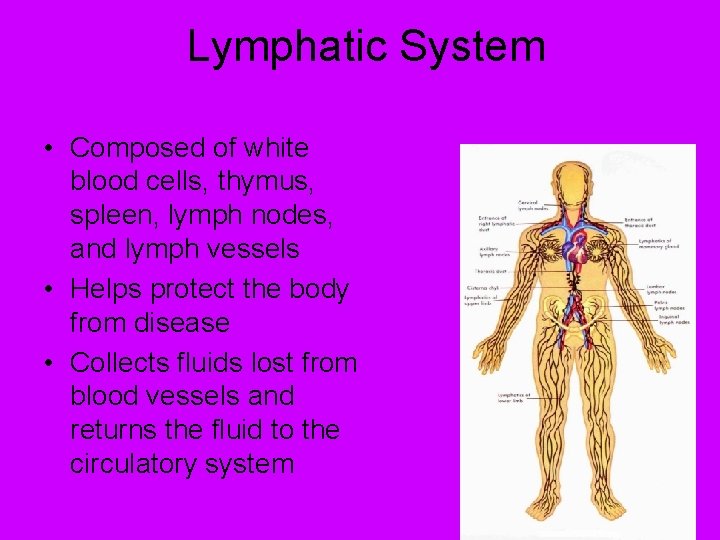
Lymphatic System • Composed of white blood cells, thymus, spleen, lymph nodes, and lymph vessels • Helps protect the body from disease • Collects fluids lost from blood vessels and returns the fluid to the circulatory system