
HUMAN NUTRITION 10 000 years ago Humans were

- Slides: 48
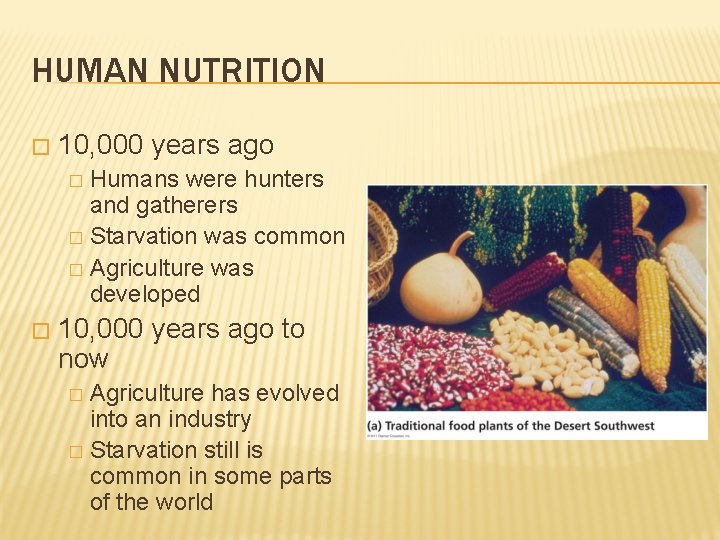
HUMAN NUTRITION � 10, 000 years ago Humans were hunters and gatherers � Starvation was common � Agriculture was developed � � 10, 000 years ago to now Agriculture has evolved into an industry � Starvation still is common in some parts of the world �
HUMAN NUTRITION � Undernutrition � � Not consuming enough calories to maintain the body Malnutrition Lacking sufficient protein, vitamins, and minerals � Even a single missing nutrient can have drastic consequences � � Anemia � (iron), blindness (vitamin A) Overnutrition � Consuming too many calories, usually from poor quality foods
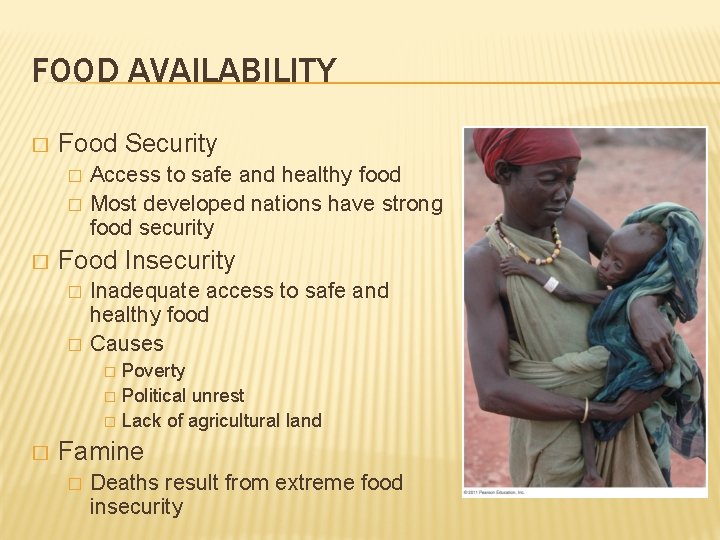
FOOD AVAILABILITY � Food Security � � � Access to safe and healthy food Most developed nations have strong food security Food Insecurity � � Inadequate access to safe and healthy food Causes Poverty � Political unrest � Lack of agricultural land � � Famine � Deaths result from extreme food insecurity
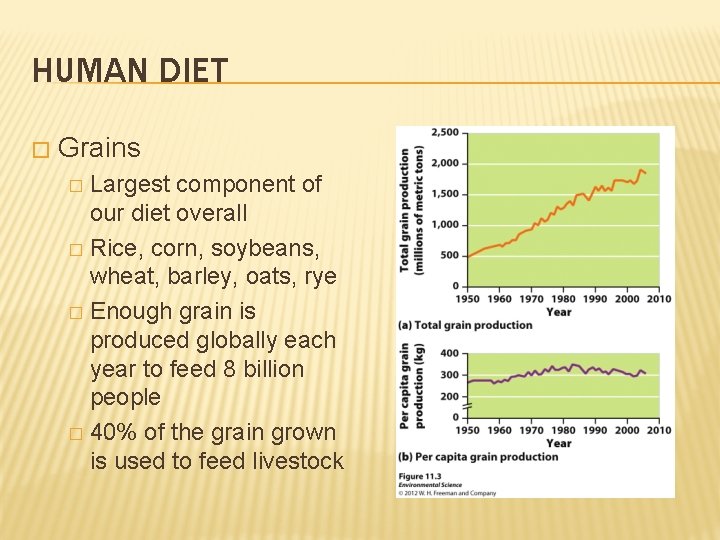
HUMAN DIET � Grains Largest component of our diet overall � Rice, corn, soybeans, wheat, barley, oats, rye � Enough grain is produced globally each year to feed 8 billion people � 40% of the grain grown is used to feed livestock �
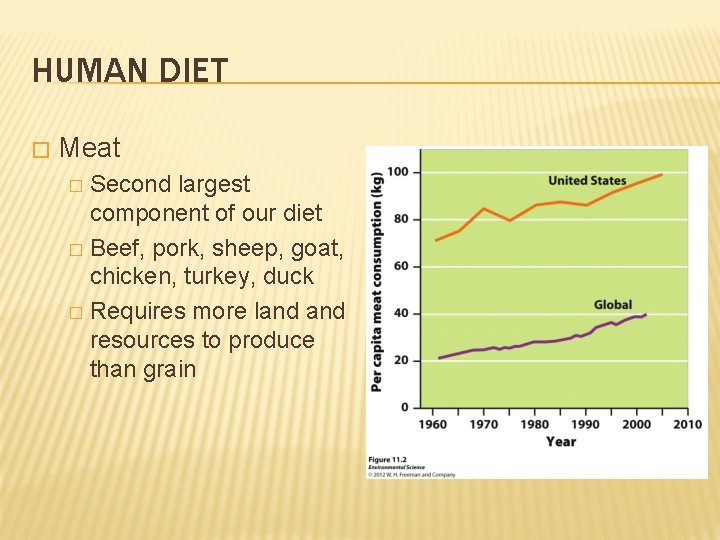
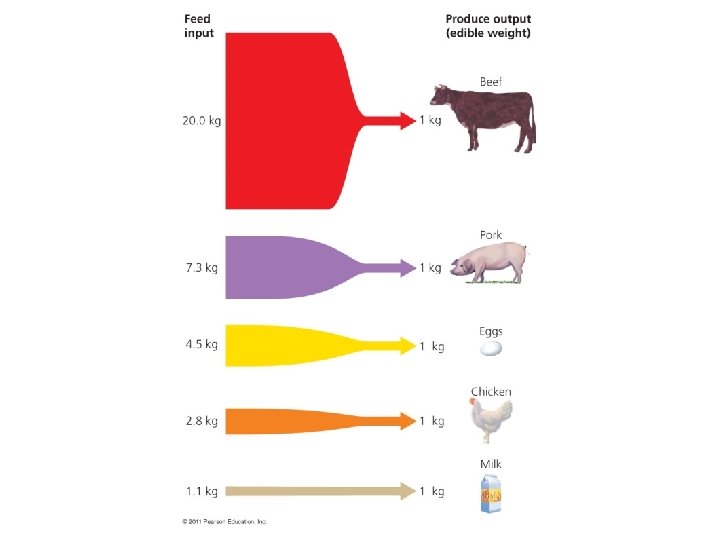
HUMAN DIET � Meat Second largest component of our diet � Beef, pork, sheep, goat, chicken, turkey, duck � Requires more land resources to produce than grain �
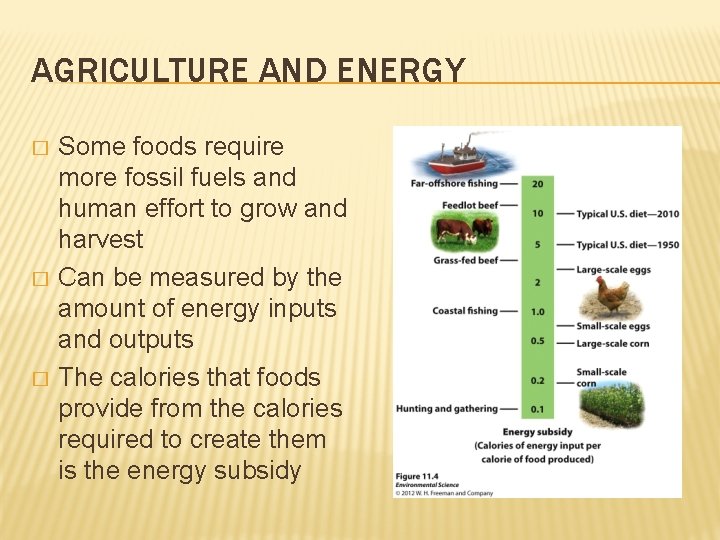
AGRICULTURE AND ENERGY � � � Some foods require more fossil fuels and human effort to grow and harvest Can be measured by the amount of energy inputs and outputs The calories that foods provide from the calories required to create them is the energy subsidy
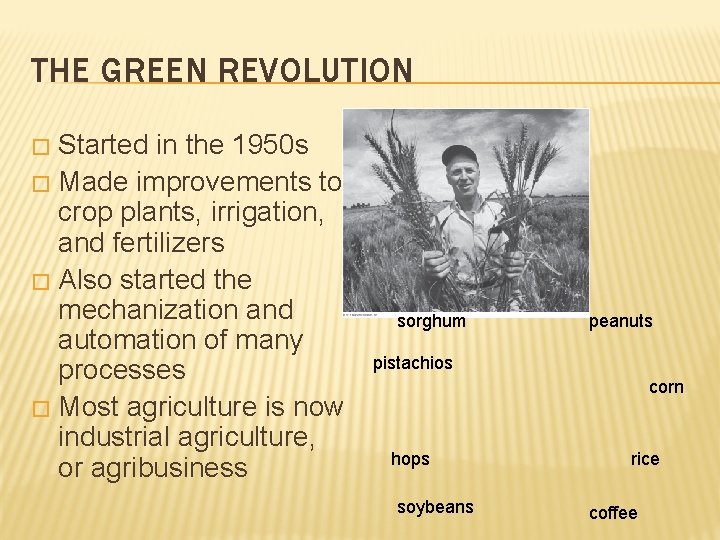
THE GREEN REVOLUTION Started in the 1950 s � Made improvements to crop plants, irrigation, and fertilizers � Also started the mechanization and automation of many processes � Most agriculture is now industrial agriculture, or agribusiness � sorghum peanuts pistachios corn hops soybeans rice coffee
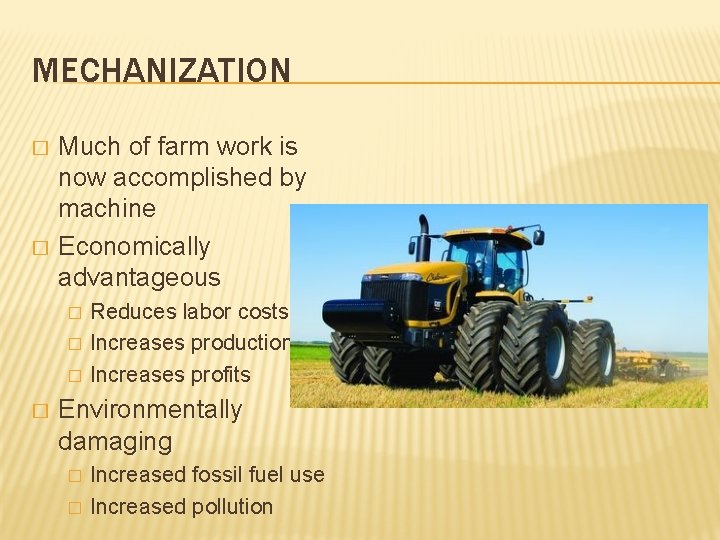
MECHANIZATION � � Much of farm work is now accomplished by machine Economically advantageous � � Reduces labor costs Increases production Increases profits Environmentally damaging � � Increased fossil fuel use Increased pollution
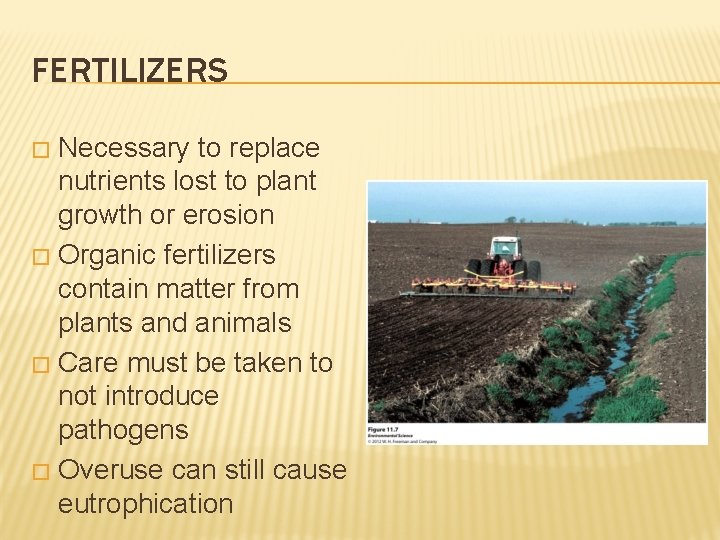
FERTILIZERS Necessary to replace nutrients lost to plant growth or erosion � Organic fertilizers contain matter from plants and animals � Care must be taken to not introduce pathogens � Overuse can still cause eutrophication �
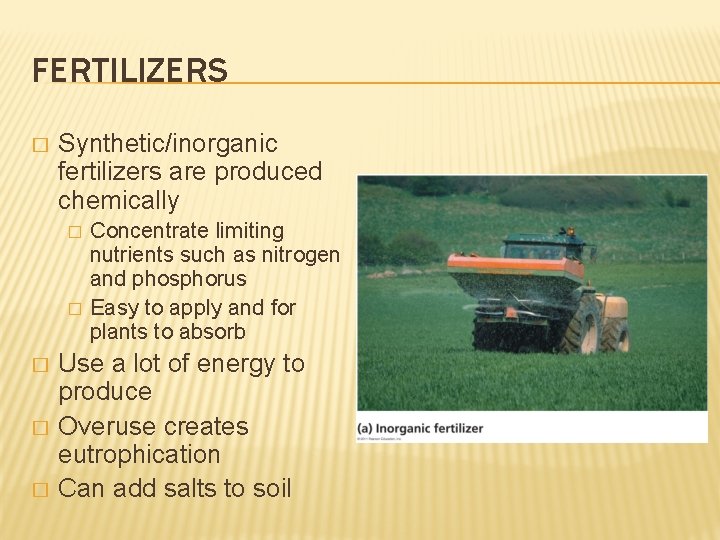
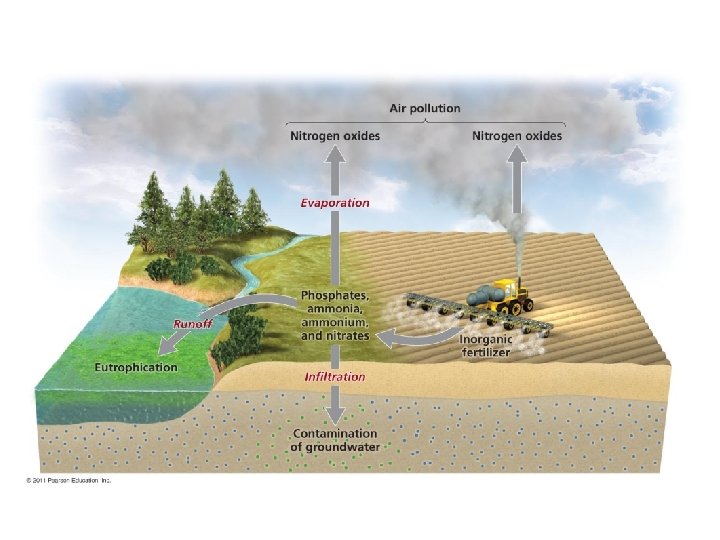
FERTILIZERS � Synthetic/inorganic fertilizers are produced chemically � � � Concentrate limiting nutrients such as nitrogen and phosphorus Easy to apply and for plants to absorb Use a lot of energy to produce Overuse creates eutrophication Can add salts to soil
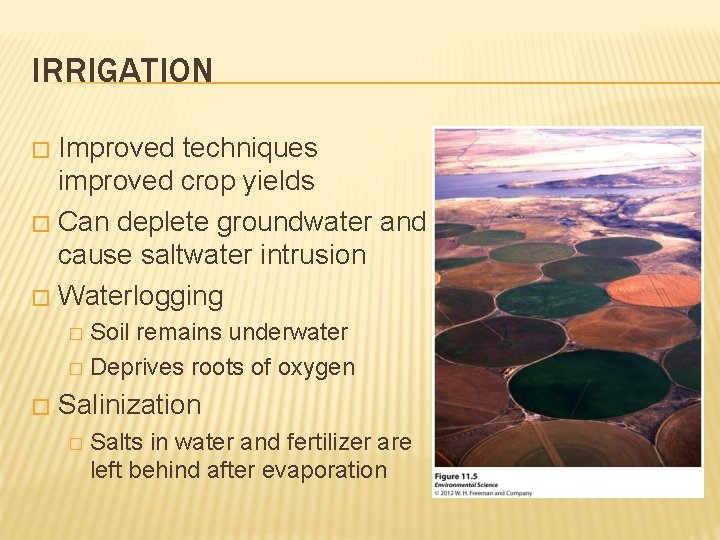
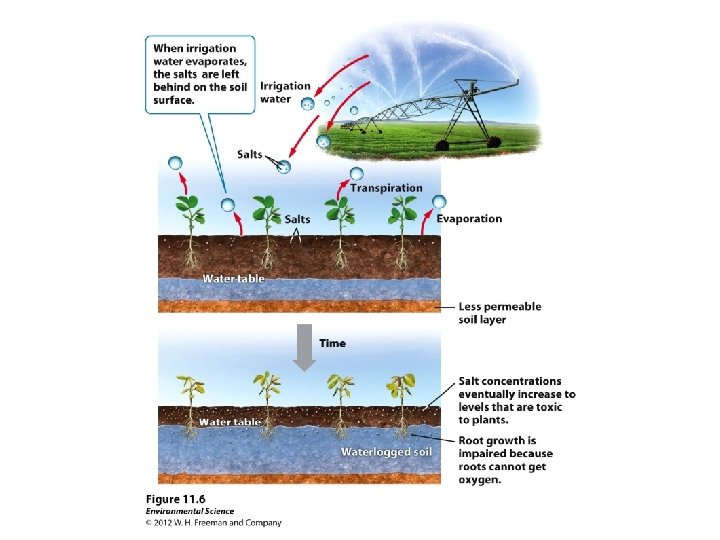
IRRIGATION Improved techniques improved crop yields � Can deplete groundwater and cause saltwater intrusion � Waterlogging � Soil remains underwater � Deprives roots of oxygen � � Salinization � Salts in water and fertilizer are left behind after evaporation
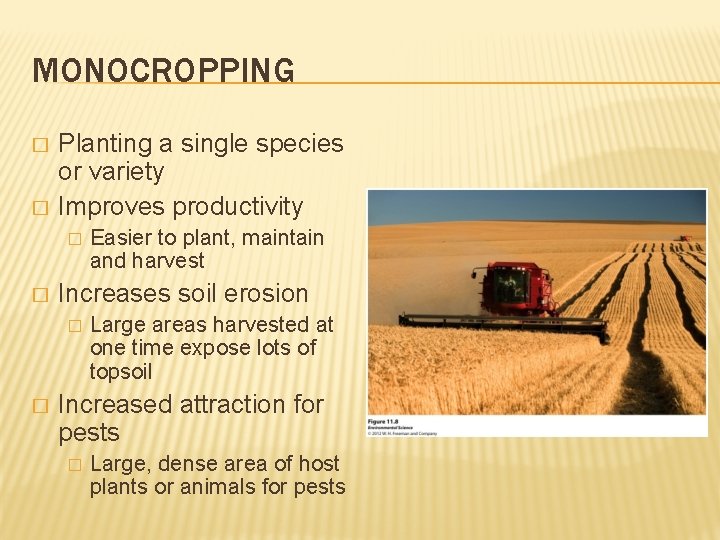
MONOCROPPING � � Planting a single species or variety Improves productivity � � Increases soil erosion � � Easier to plant, maintain and harvest Large areas harvested at one time expose lots of topsoil Increased attraction for pests � Large, dense area of host plants or animals for pests
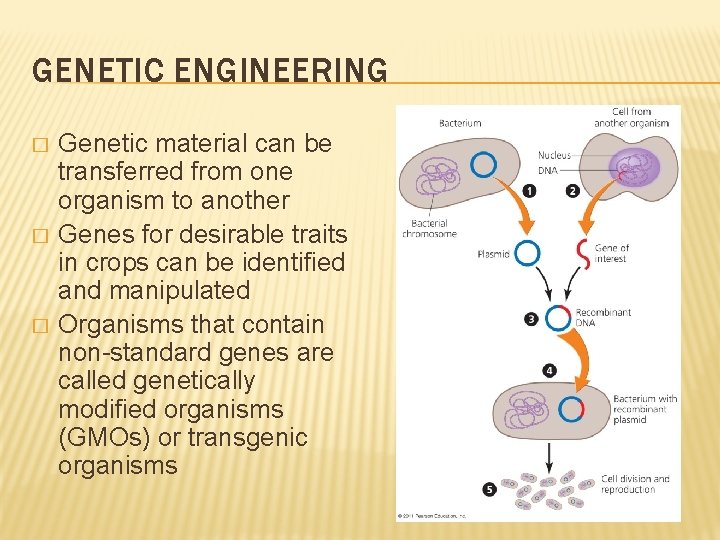
GENETIC ENGINEERING � � � Genetic material can be transferred from one organism to another Genes for desirable traits in crops can be identified and manipulated Organisms that contain non-standard genes are called genetically modified organisms (GMOs) or transgenic organisms
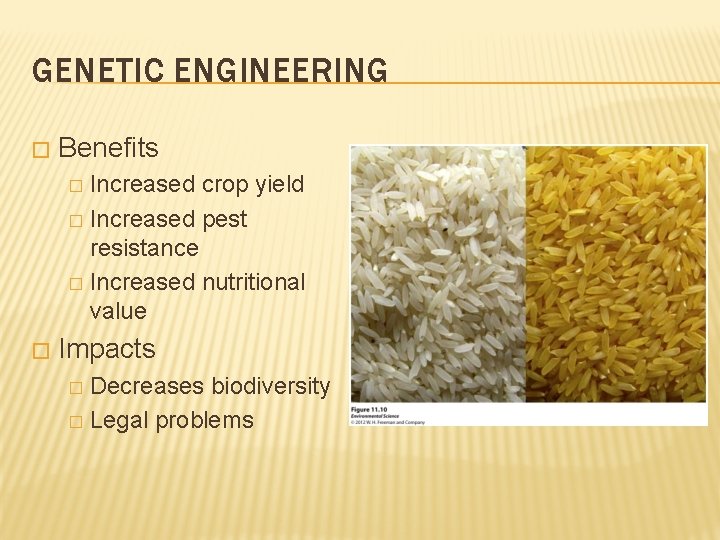
GENETIC ENGINEERING � Benefits Increased crop yield � Increased pest resistance � Increased nutritional value � � Impacts Decreases biodiversity � Legal problems �
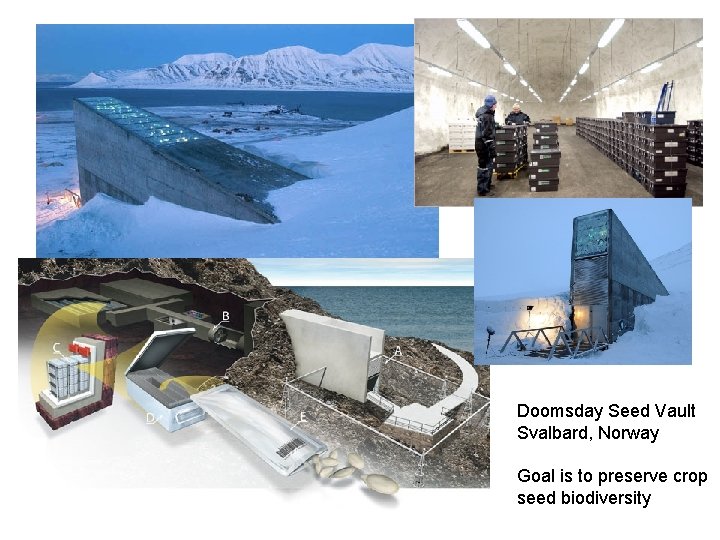
Doomsday Seed Vault Svalbard, Norway Goal is to preserve crop seed biodiversity
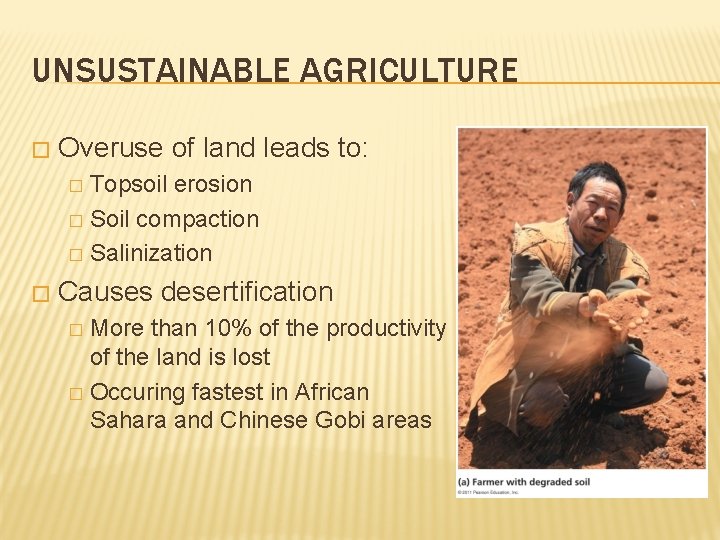
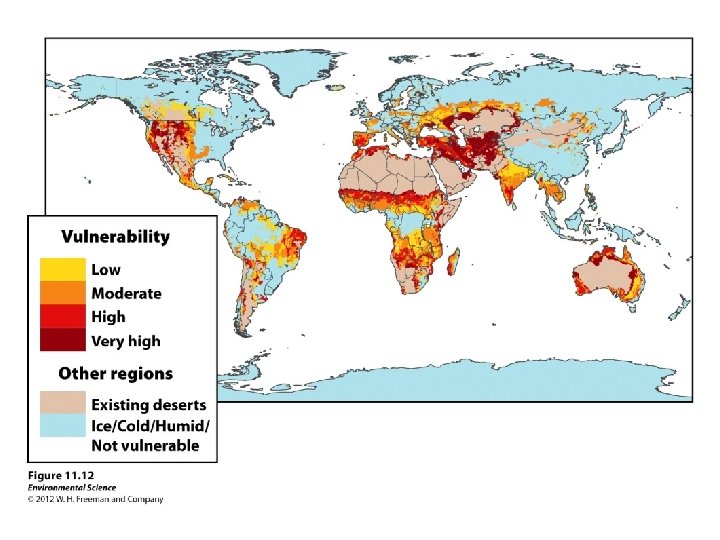
UNSUSTAINABLE AGRICULTURE � Overuse of land leads to: Topsoil erosion � Soil compaction � Salinization � � Causes desertification More than 10% of the productivity of the land is lost � Occuring fastest in African Sahara and Chinese Gobi areas �
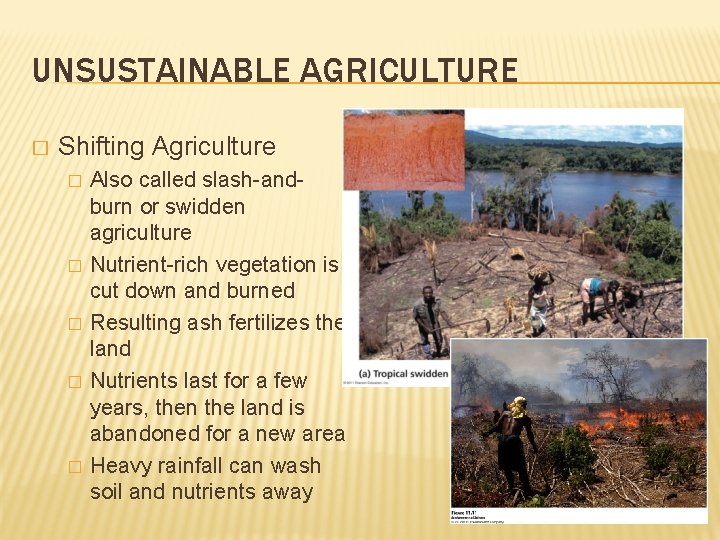
UNSUSTAINABLE AGRICULTURE � Shifting Agriculture � � � Also called slash-andburn or swidden agriculture Nutrient-rich vegetation is cut down and burned Resulting ash fertilizes the land Nutrients last for a few years, then the land is abandoned for a new area Heavy rainfall can wash soil and nutrients away
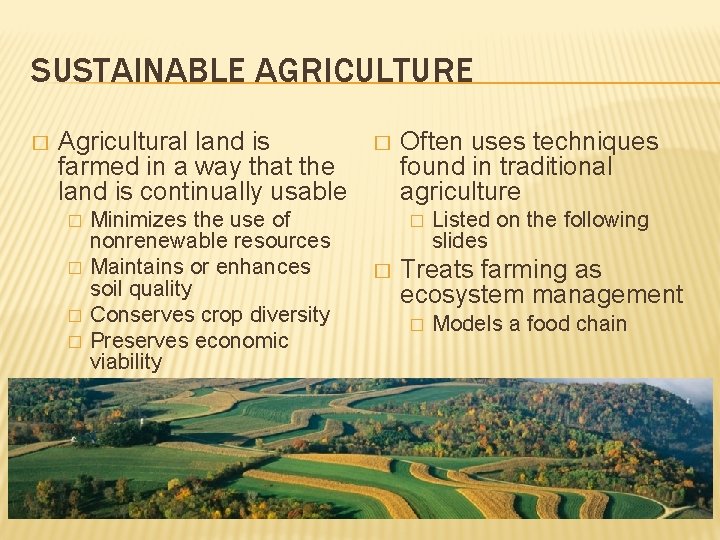
SUSTAINABLE AGRICULTURE � Agricultural land is farmed in a way that the land is continually usable � � Minimizes the use of nonrenewable resources Maintains or enhances soil quality Conserves crop diversity Preserves economic viability � Often uses techniques found in traditional agriculture � � Listed on the following slides Treats farming as ecosystem management � Models a food chain
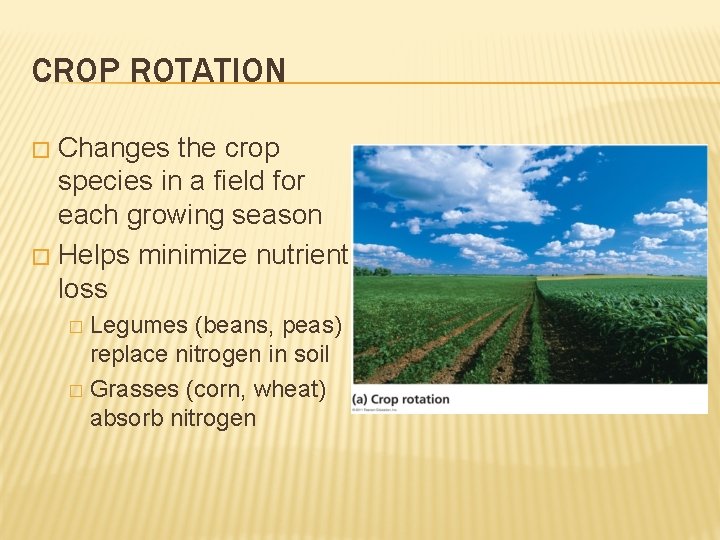
CROP ROTATION Changes the crop species in a field for each growing season � Helps minimize nutrient loss � Legumes (beans, peas) replace nitrogen in soil � Grasses (corn, wheat) absorb nitrogen �
INTERCROPPING Is planting multiple crops in the same field � Achieves the same goals as crop rotation � Allows for the growth of multiple crops in a smaller space � Can also include planting crops in orchards (agroforestry) �
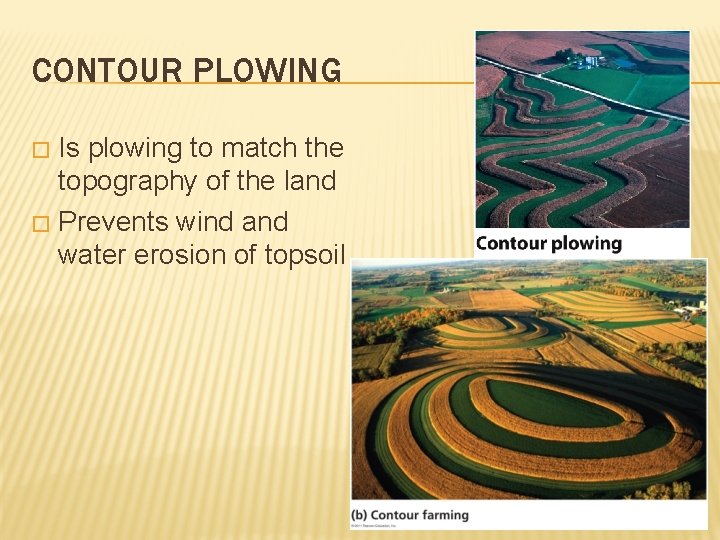
CONTOUR PLOWING Is plowing to match the topography of the land � Prevents wind and water erosion of topsoil �
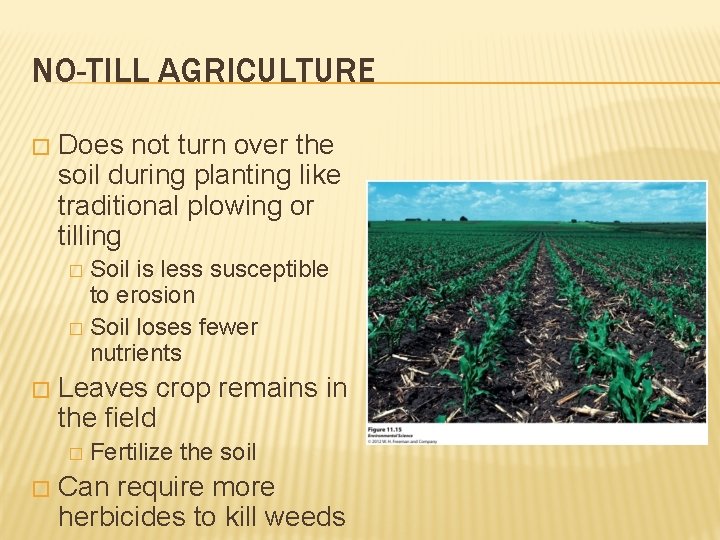
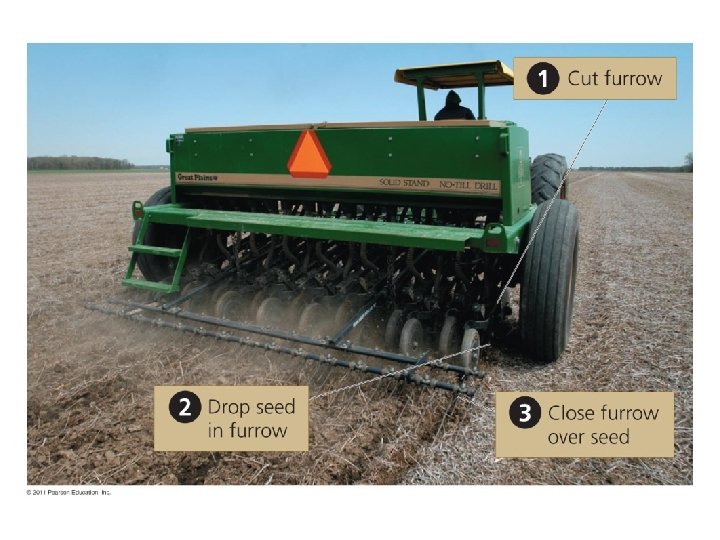
NO-TILL AGRICULTURE � Does not turn over the soil during planting like traditional plowing or tilling Soil is less susceptible to erosion � Soil loses fewer nutrients � � Leaves crop remains in the field � � Fertilize the soil Can require more herbicides to kill weeds
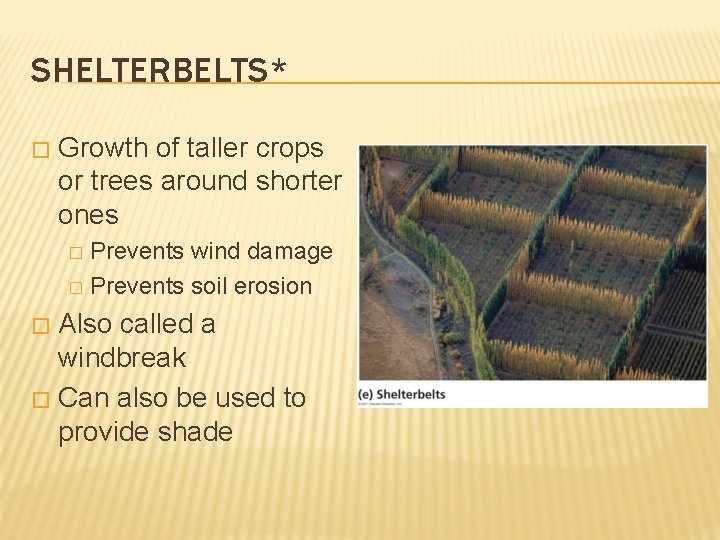
SHELTERBELTS* � Growth of taller crops or trees around shorter ones Prevents wind damage � Prevents soil erosion � Also called a windbreak � Can also be used to provide shade �
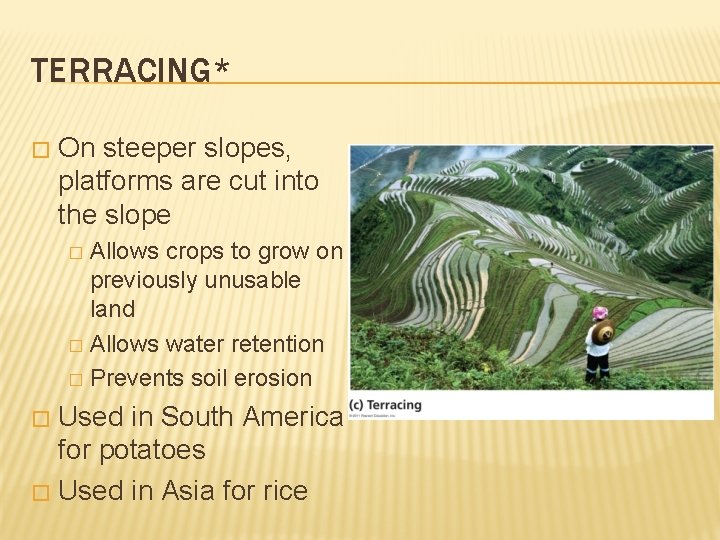
TERRACING* � On steeper slopes, platforms are cut into the slope Allows crops to grow on previously unusable land � Allows water retention � Prevents soil erosion � Used in South America for potatoes � Used in Asia for rice �
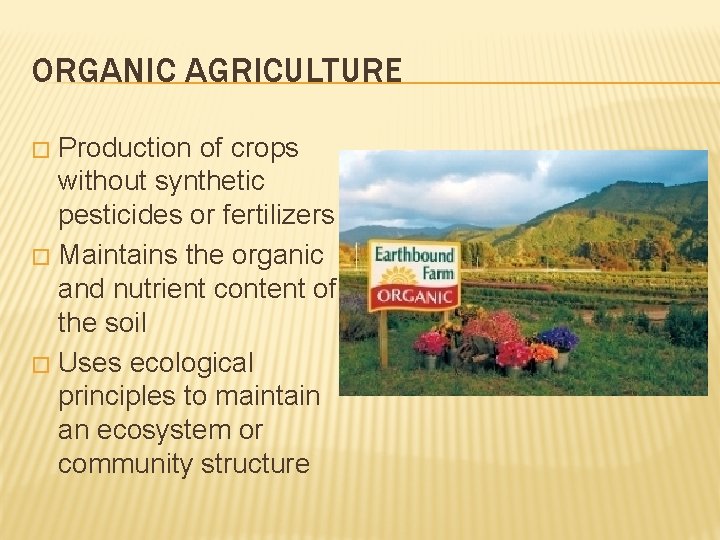
ORGANIC AGRICULTURE Production of crops without synthetic pesticides or fertilizers � Maintains the organic and nutrient content of the soil � Uses ecological principles to maintain an ecosystem or community structure �
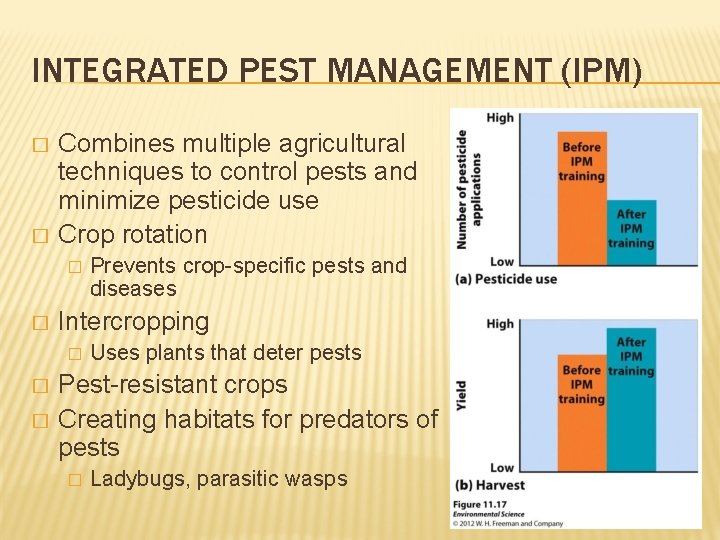
INTEGRATED PEST MANAGEMENT (IPM) � � Combines multiple agricultural techniques to control pests and minimize pesticide use Crop rotation � � Intercropping � � � Prevents crop-specific pests and diseases Uses plants that deter pests Pest-resistant crops Creating habitats for predators of pests � Ladybugs, parasitic wasps
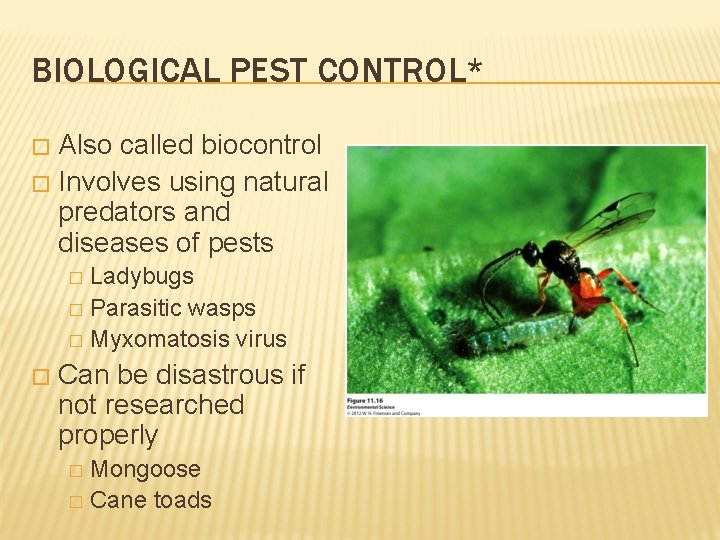
BIOLOGICAL PEST CONTROL* Also called biocontrol � Involves using natural predators and diseases of pests � Ladybugs � Parasitic wasps � Myxomatosis virus � � Can be disastrous if not researched properly Mongoose � Cane toads �
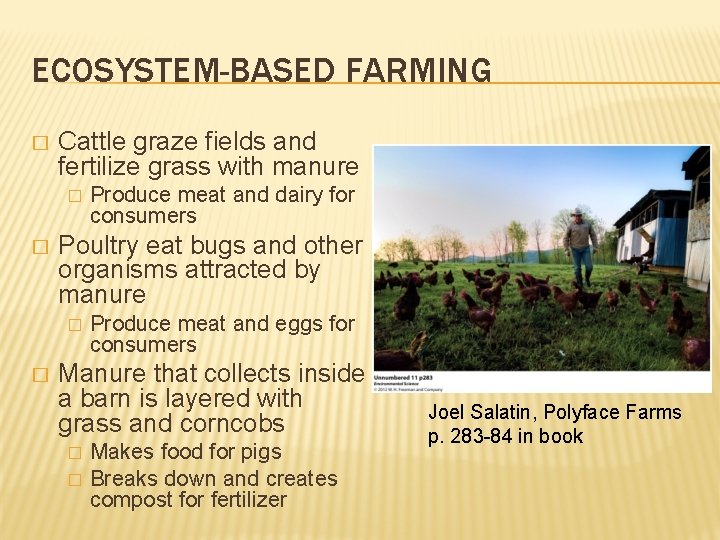
ECOSYSTEM-BASED FARMING � Cattle graze fields and fertilize grass with manure � � Poultry eat bugs and other organisms attracted by manure � � Produce meat and dairy for consumers Produce meat and eggs for consumers Manure that collects inside a barn is layered with grass and corncobs � � Makes food for pigs Breaks down and creates compost for fertilizer Joel Salatin, Polyface Farms p. 283 -84 in book
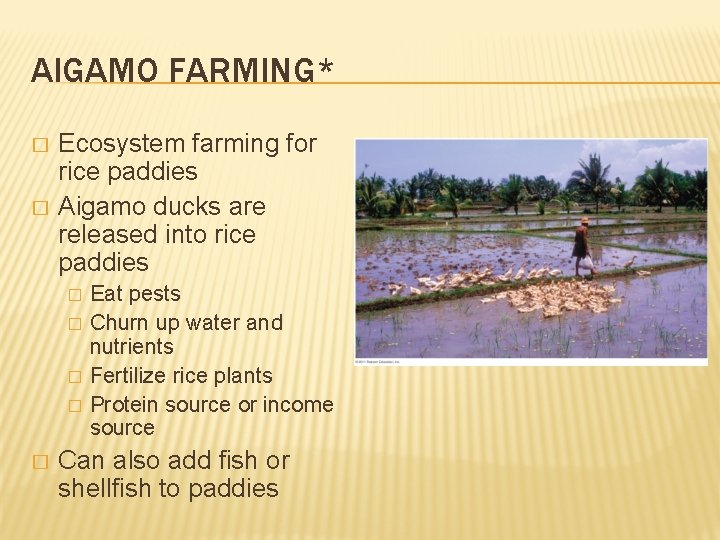
AIGAMO FARMING* � � Ecosystem farming for rice paddies Aigamo ducks are released into rice paddies � � � Eat pests Churn up water and nutrients Fertilize rice plants Protein source or income source Can also add fish or shellfish to paddies
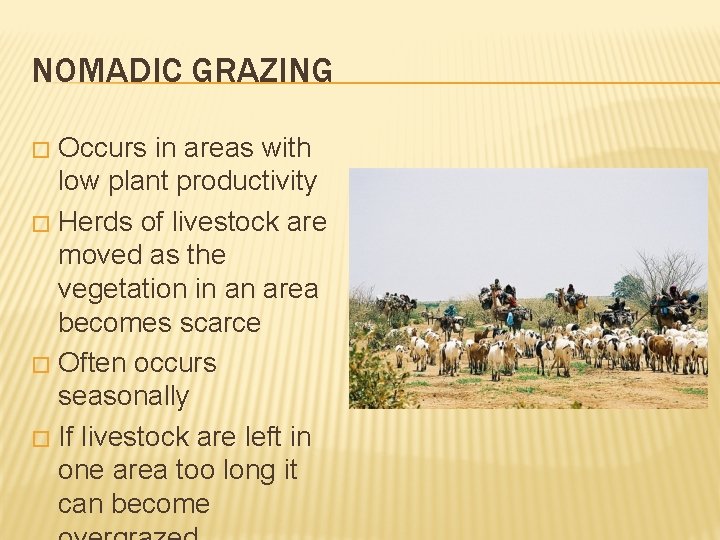
NOMADIC GRAZING Occurs in areas with low plant productivity � Herds of livestock are moved as the vegetation in an area becomes scarce � Often occurs seasonally � If livestock are left in one area too long it can become �
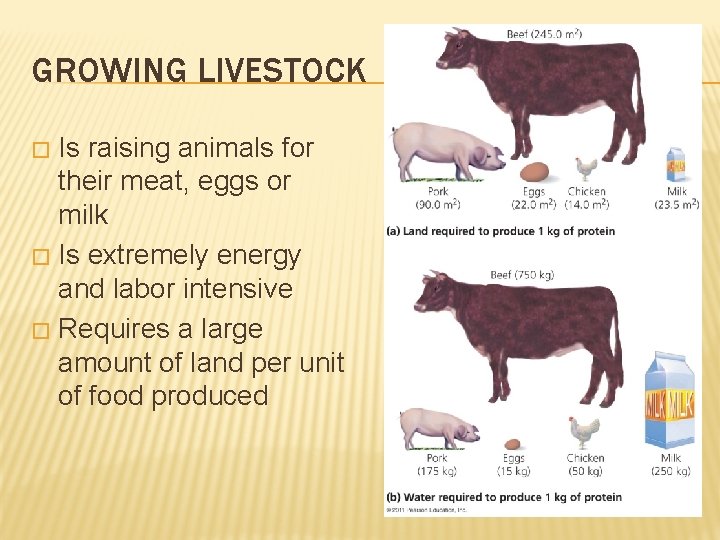
GROWING LIVESTOCK Is raising animals for their meat, eggs or milk � Is extremely energy and labor intensive � Requires a large amount of land per unit of food produced �
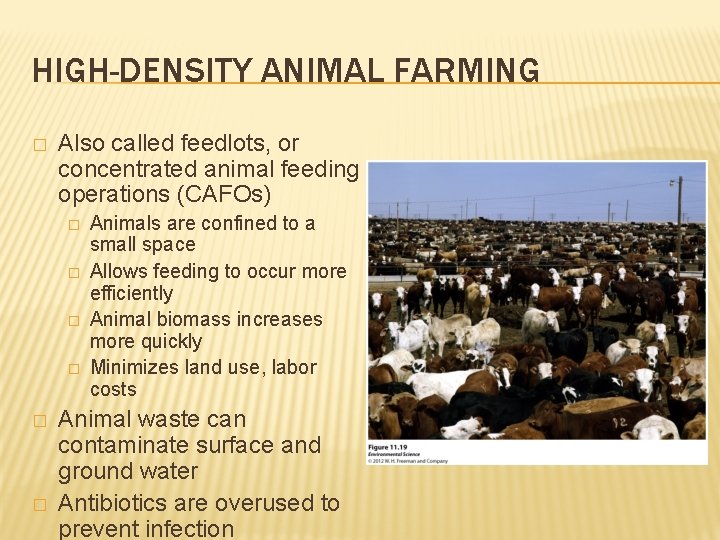
HIGH-DENSITY ANIMAL FARMING � Also called feedlots, or concentrated animal feeding operations (CAFOs) � � � Animals are confined to a small space Allows feeding to occur more efficiently Animal biomass increases more quickly Minimizes land use, labor costs Animal waste can contaminate surface and ground water Antibiotics are overused to prevent infection
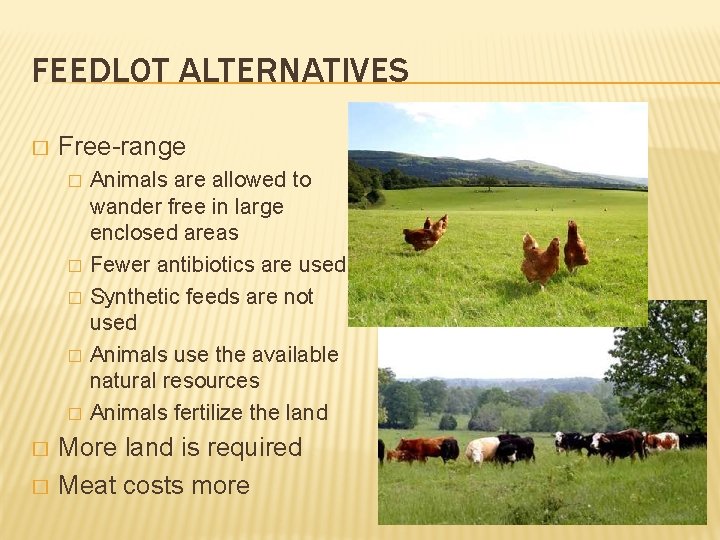
FEEDLOT ALTERNATIVES � Free-range � � � � Animals are allowed to wander free in large enclosed areas Fewer antibiotics are used Synthetic feeds are not used Animals use the available natural resources Animals fertilize the land More land is required Meat costs more
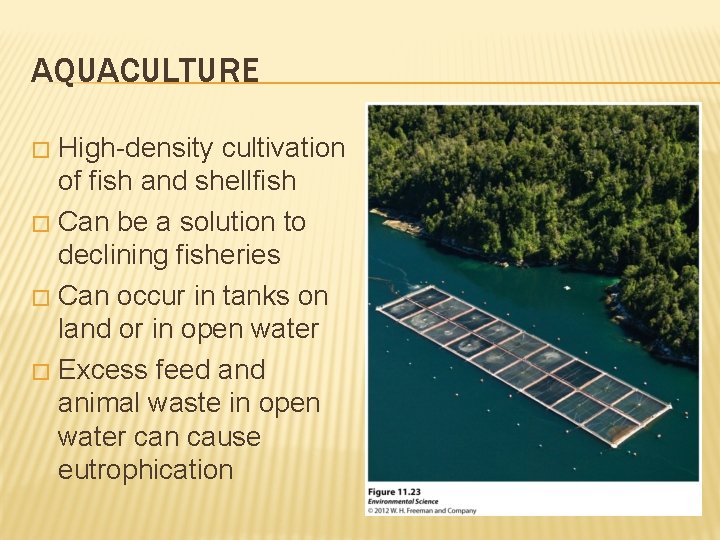
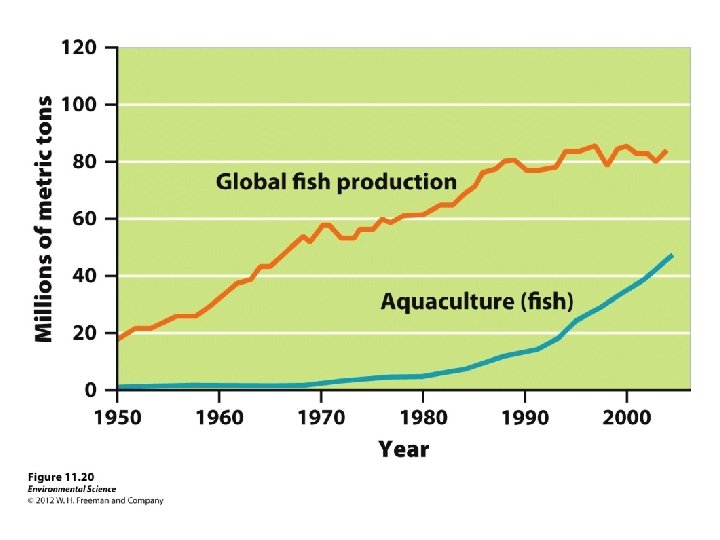
AQUACULTURE High-density cultivation of fish and shellfish � Can be a solution to declining fisheries � Can occur in tanks on land or in open water � Excess feed animal waste in open water can cause eutrophication �
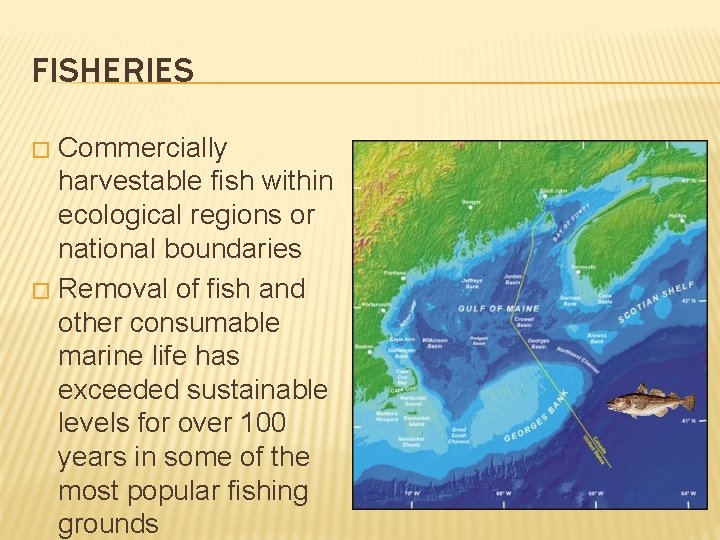
FISHERIES Commercially harvestable fish within ecological regions or national boundaries � Removal of fish and other consumable marine life has exceeded sustainable levels for over 100 years in some of the most popular fishing grounds �
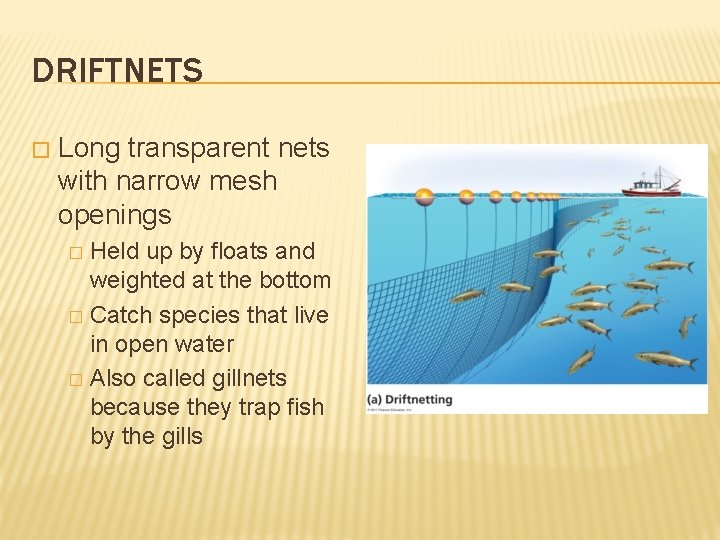
DRIFTNETS � Long transparent nets with narrow mesh openings Held up by floats and weighted at the bottom � Catch species that live in open water � Also called gillnets because they trap fish by the gills �
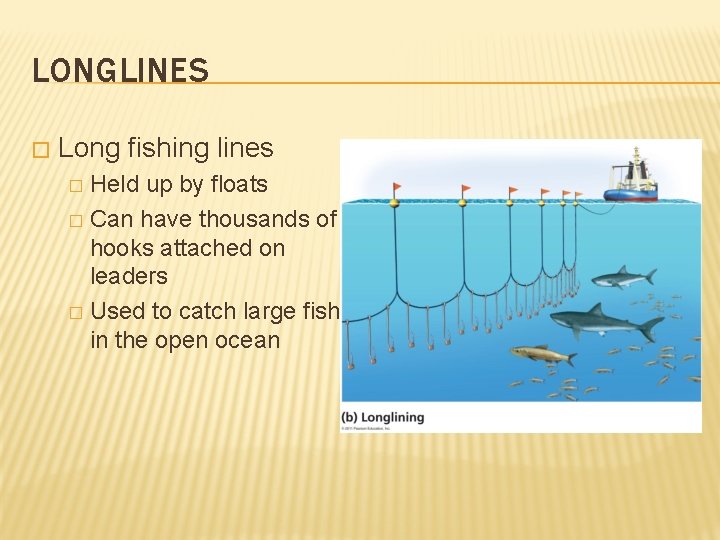
LONGLINES � Long fishing lines Held up by floats � Can have thousands of hooks attached on leaders � Used to catch large fish in the open ocean �
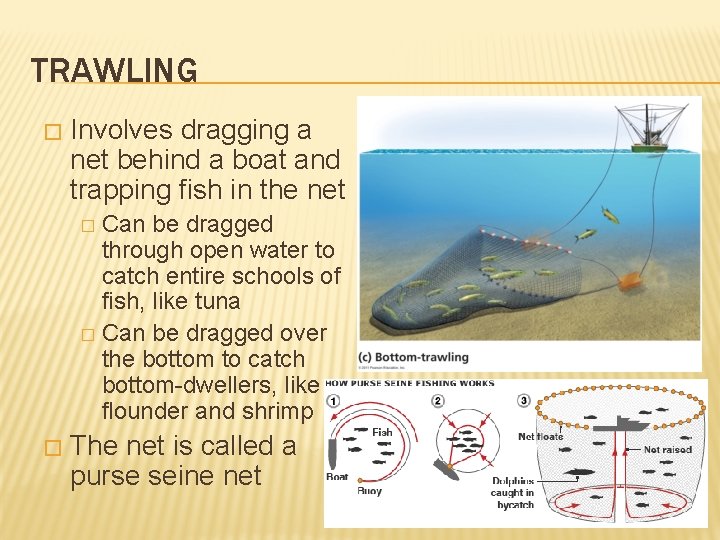
TRAWLING � Involves dragging a net behind a boat and trapping fish in the net Can be dragged through open water to catch entire schools of fish, like tuna � Can be dragged over the bottom to catch bottom-dwellers, like flounder and shrimp � � The net is called a purse seine net
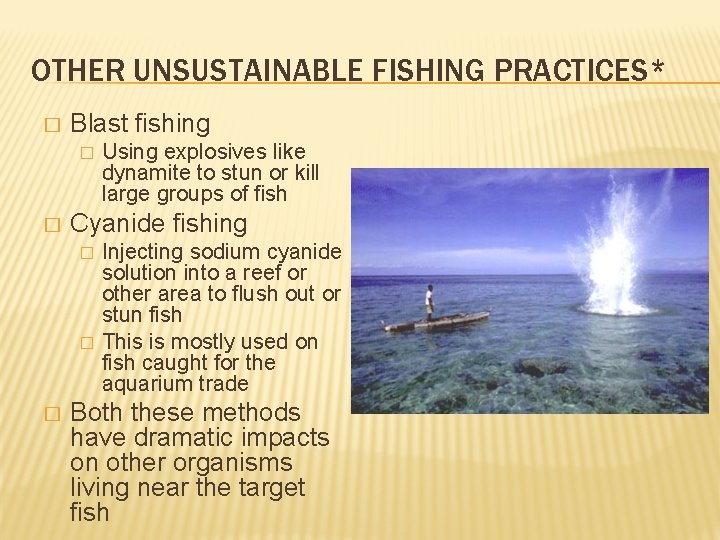
OTHER UNSUSTAINABLE FISHING PRACTICES* � Blast fishing � � Cyanide fishing � � � Using explosives like dynamite to stun or kill large groups of fish Injecting sodium cyanide solution into a reef or other area to flush out or stun fish This is mostly used on fish caught for the aquarium trade Both these methods have dramatic impacts on other organisms living near the target fish
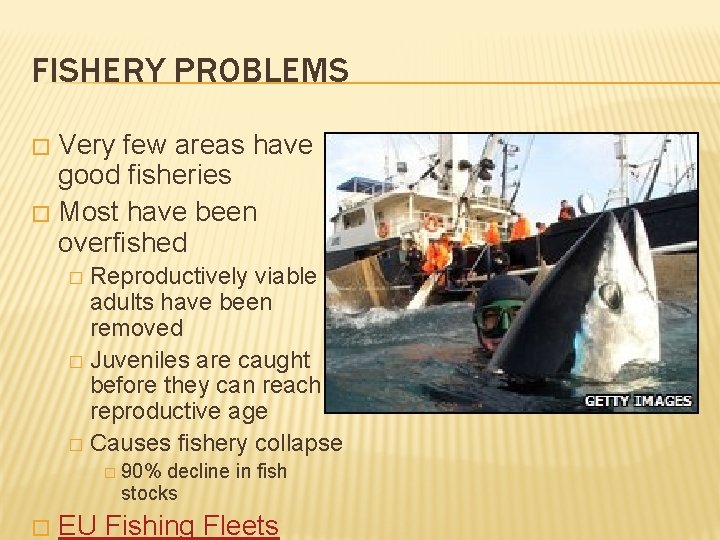
FISHERY PROBLEMS Very few areas have good fisheries � Most have been overfished � Reproductively viable adults have been removed � Juveniles are caught before they can reach reproductive age � Causes fishery collapse � � 90% decline in fish stocks � EU Fishing Fleets
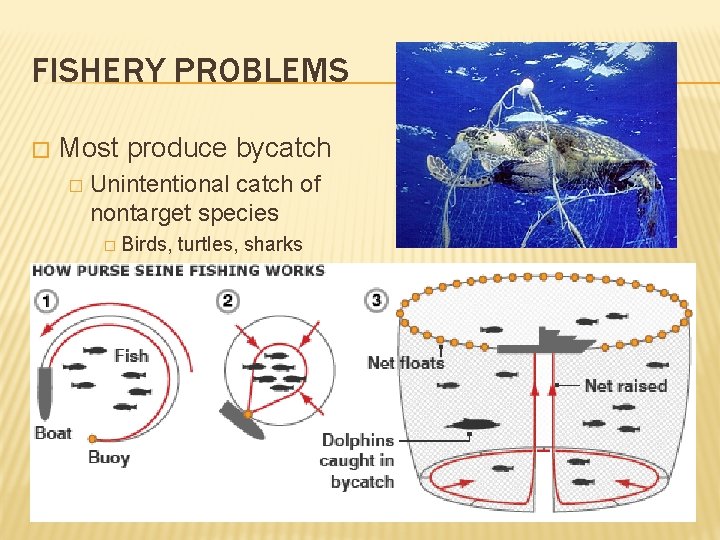
FISHERY PROBLEMS � Most produce bycatch � Unintentional catch of nontarget species � Birds, turtles, sharks
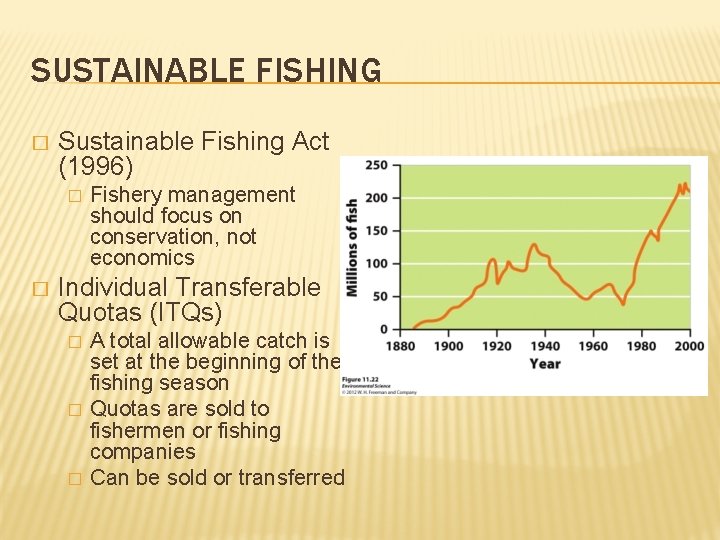
SUSTAINABLE FISHING � Sustainable Fishing Act (1996) � � Fishery management should focus on conservation, not economics Individual Transferable Quotas (ITQs) � � � A total allowable catch is set at the beginning of the fishing season Quotas are sold to fishermen or fishing companies Can be sold or transferred