
Human Mitochondrial DNA Polymerase Holoenzyme Reconstitution and Characterization

- Slides: 13
Human Mitochondrial DNA Polymerase Holoenzyme: Reconstitution and Characterization Translated by: Perray Saravanane
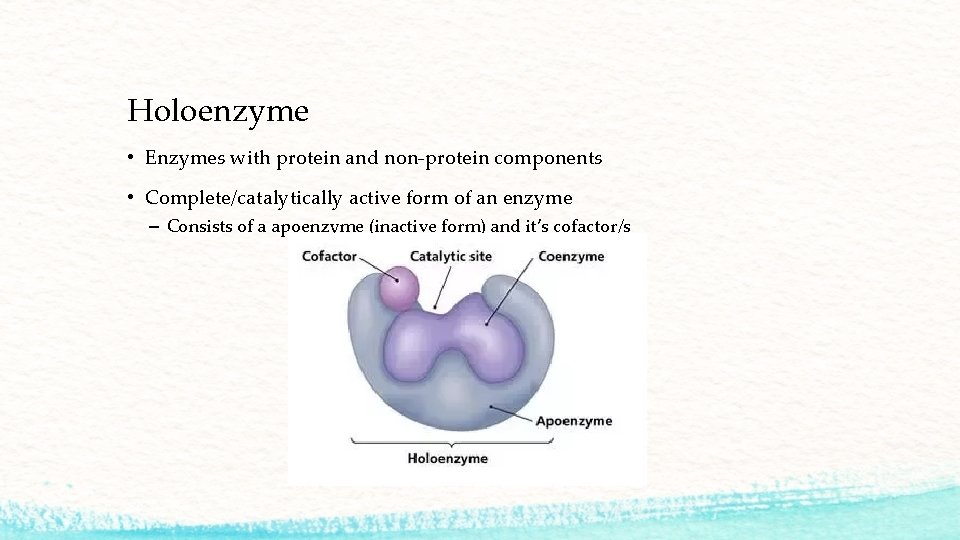
Holoenzyme • Enzymes with protein and non-protein components • Complete/catalytically active form of an enzyme – Consists of a apoenzyme (inactive form) and it’s cofactor/s
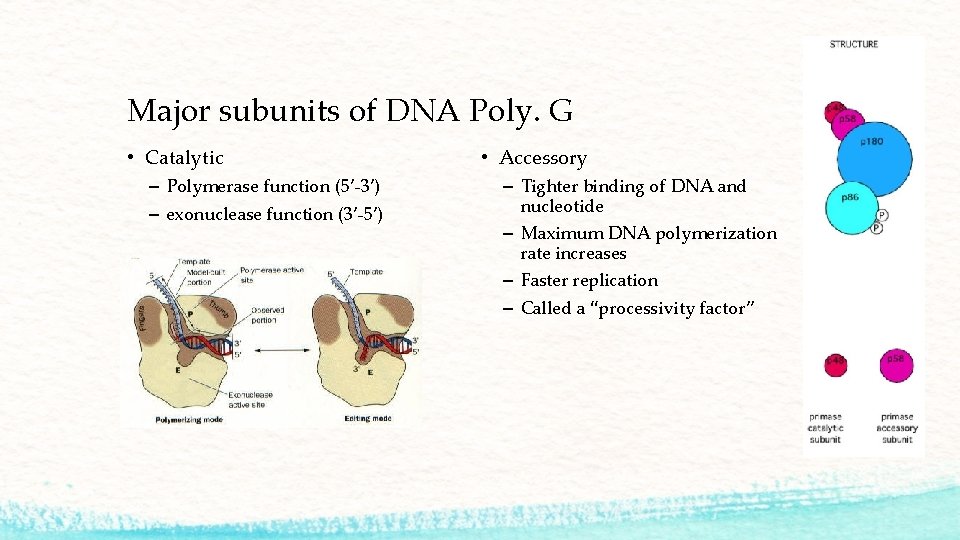
Major subunits of DNA Poly. G • Catalytic – Polymerase function (5’-3’) – exonuclease function (3’-5’) • Accessory – Tighter binding of DNA and nucleotide – Maximum DNA polymerization rate increases – Faster replication – Called a “processivity factor”
Key areas of investigation • The individual function of the accessory subunit – Finding the correct c. DNA (complementary DNA) in Homo Sapiens • Assembling a soluble, active human mitochondrial DNA polymerase holoenzyme – Containing artificial catalytic and accessory subunits
Experimental Procedures
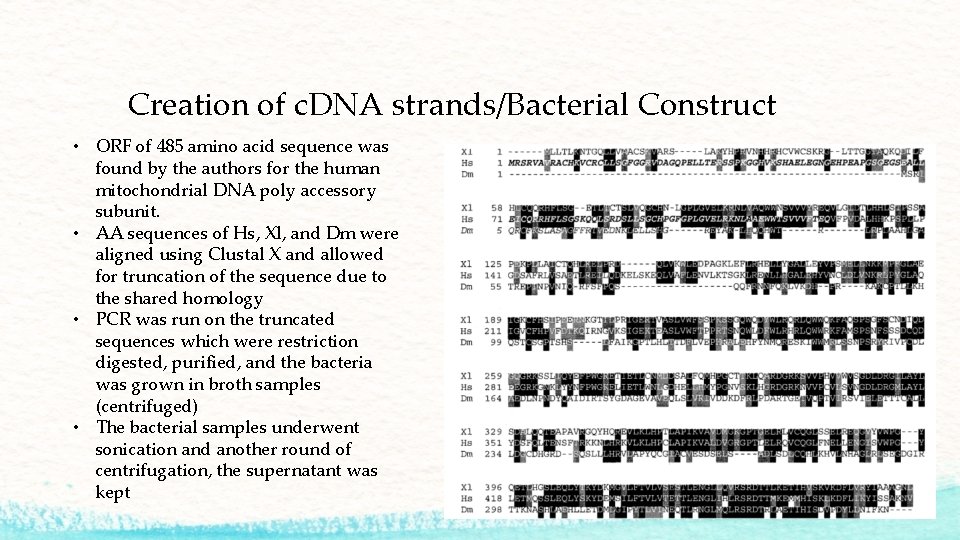
Creation of c. DNA strands/Bacterial Construct • ORF of 485 amino acid sequence was found by the authors for the human mitochondrial DNA poly accessory subunit. • AA sequences of Hs, Xl, and Dm were aligned using Clustal X and allowed for truncation of the sequence due to the shared homology • PCR was run on the truncated sequences which were restriction digested, purified, and the bacteria was grown in broth samples (centrifuged) • The bacterial samples underwent sonication and another round of centrifugation, the supernatant was kept
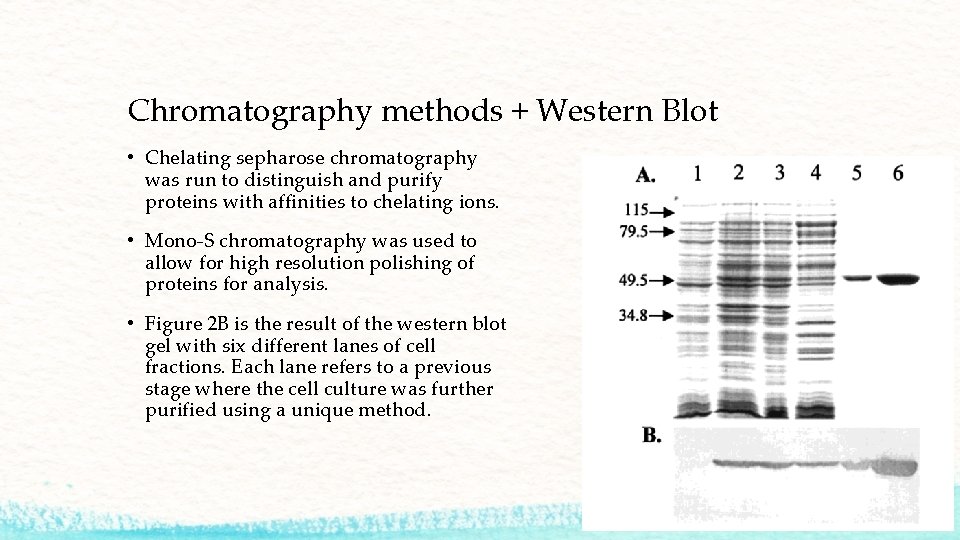
Chromatography methods + Western Blot • Chelating sepharose chromatography was run to distinguish and purify proteins with affinities to chelating ions. • Mono-S chromatography was used to allow for high resolution polishing of proteins for analysis. • Figure 2 B is the result of the western blot gel with six different lanes of cell fractions. Each lane refers to a previous stage where the cell culture was further purified using a unique method.
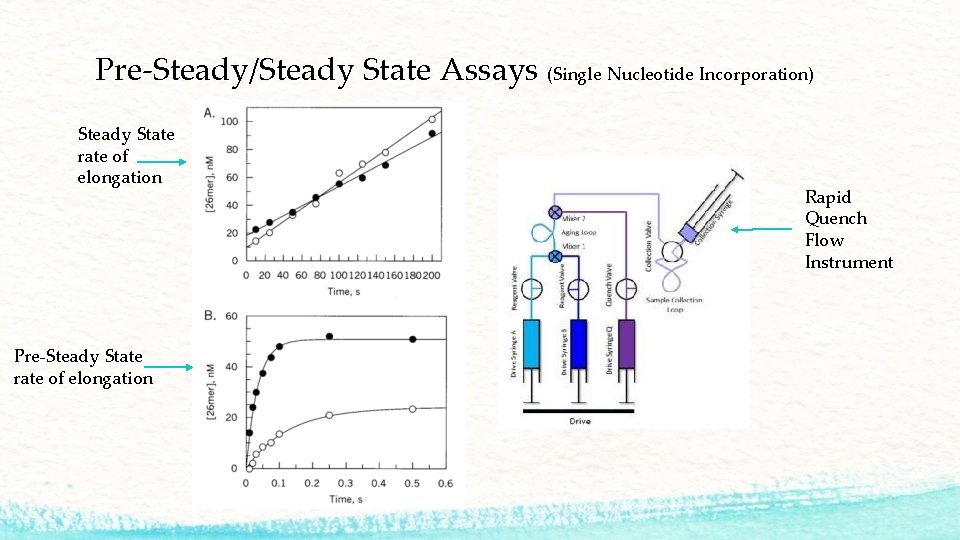
Pre-Steady/Steady State Assays (Single Nucleotide Incorporation) Steady State rate of elongation Pre-Steady State rate of elongation Rapid Quench Flow Instrument
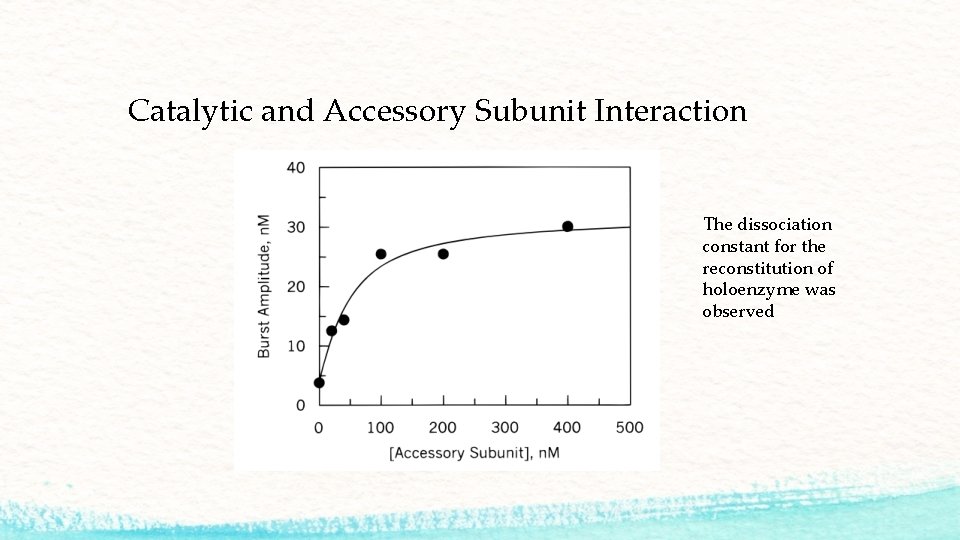
Catalytic and Accessory Subunit Interaction The dissociation constant for the reconstitution of holoenzyme was observed
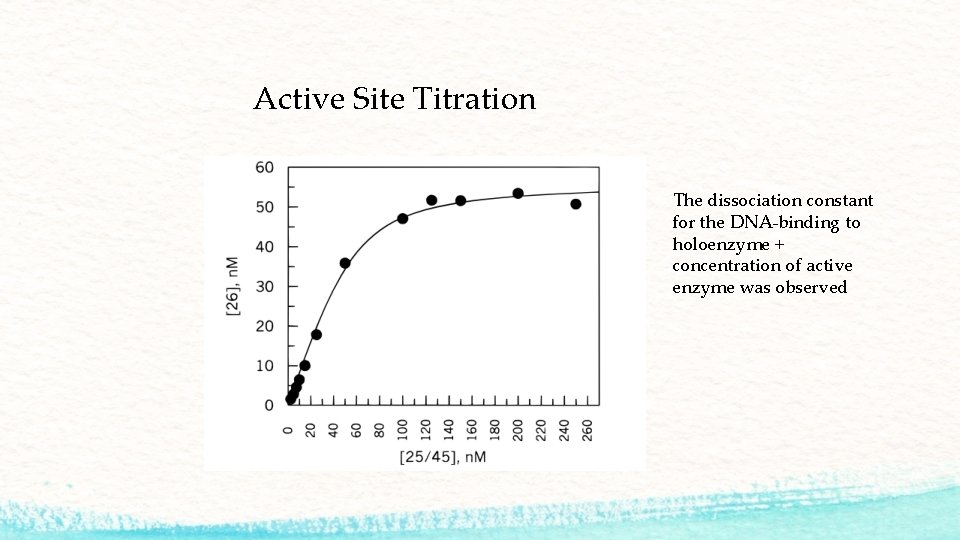
Active Site Titration The dissociation constant for the DNA-binding to holoenzyme + concentration of active enzyme was observed
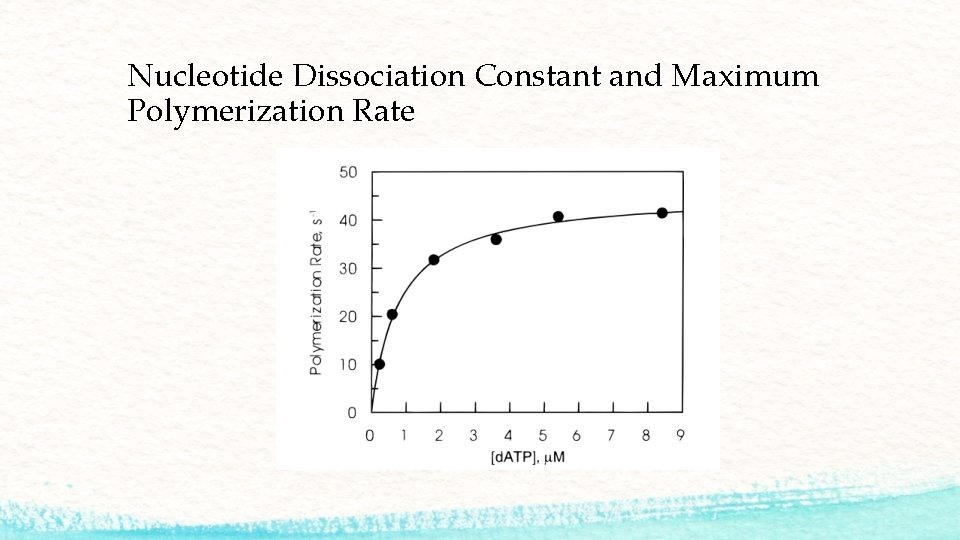
Nucleotide Dissociation Constant and Maximum Polymerization Rate
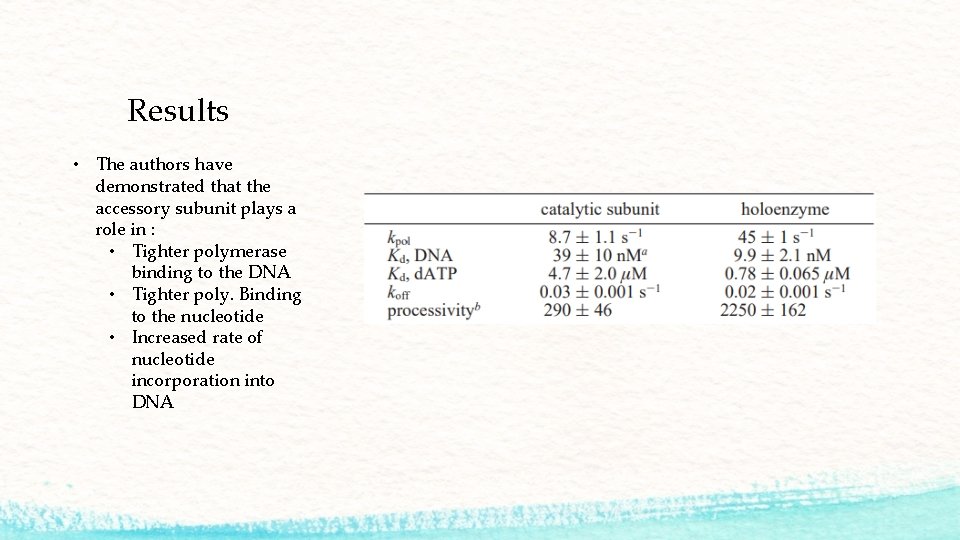
Results • The authors have demonstrated that the accessory subunit plays a role in : • Tighter polymerase binding to the DNA • Tighter poly. Binding to the nucleotide • Increased rate of nucleotide incorporation into DNA
Significance • In combating diseases such as AIDS and Hepatitis B, nucleoside analogues are used to decrease the binding of the DNA backbone from occurring, however a major side of effect is causing a decrease in mitochondrial function. • Through a better understanding of the complex nature of DNA poly. Gamma and its subunits, researchers can perform structure-function studies to screen new nucleoside analogues that have low toxicity levels.