
Human Mitochondrial DNA 1 st Review Cell Theory
- Slides: 24
Human Mitochondrial DNA
1 st Review: Cell Theory All organisms are composed of cells. � All cells come from preexisting cells � The cell is the basic unit of structure & organization of organisms �
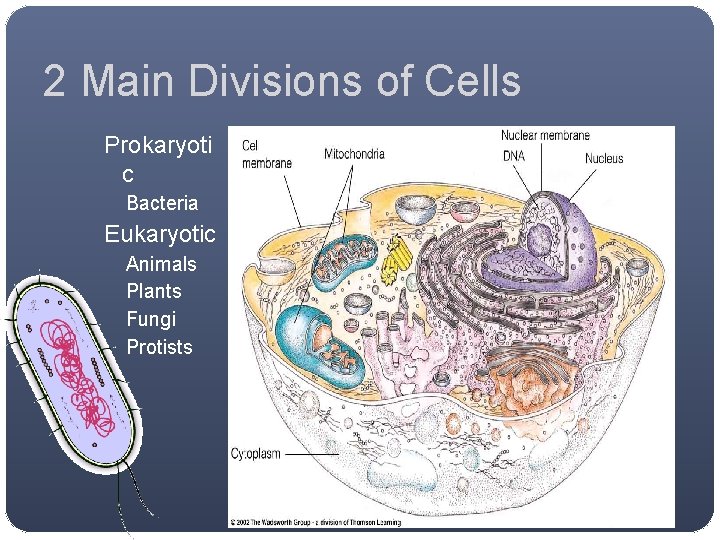
2 Main Divisions of Cells Prokaryoti c Bacteria Eukaryotic Animals Plants Fungi Protists
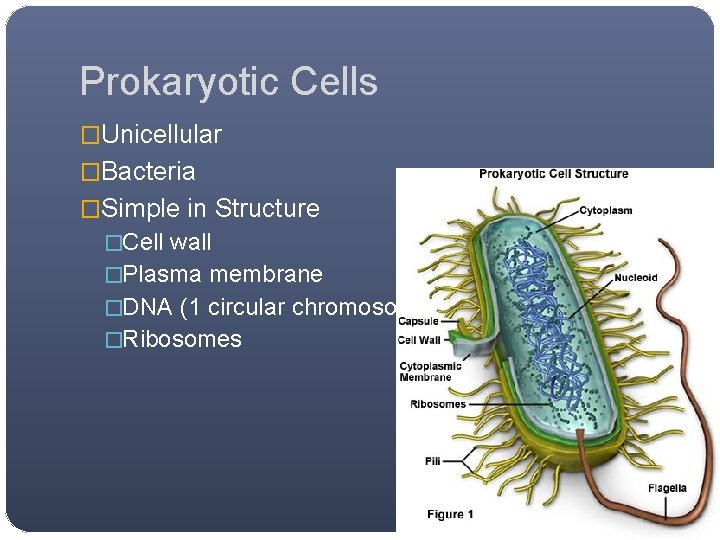
Prokaryotic Cells �Unicellular �Bacteria �Simple in Structure �Cell wall �Plasma membrane �DNA (1 circular chromosome) �Ribosomes
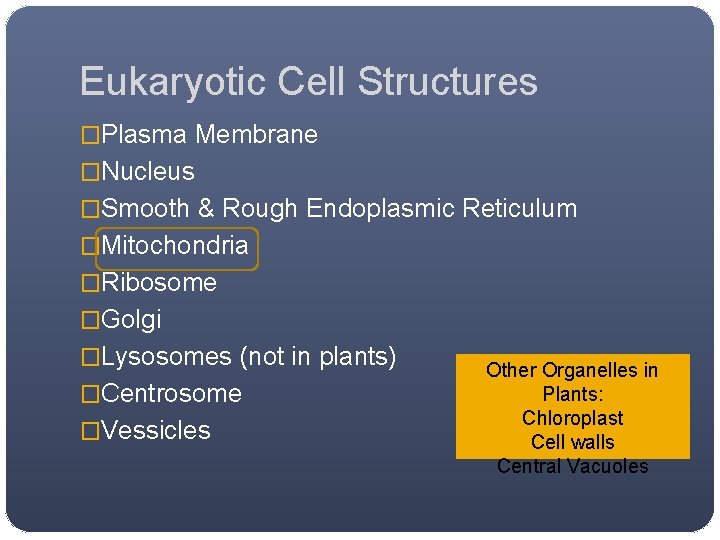
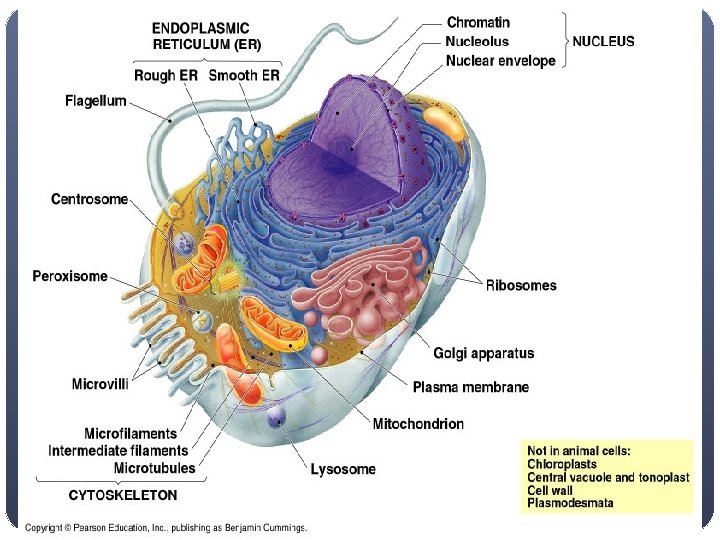
Eukaryotic Cell Structures �Plasma Membrane �Nucleus �Smooth & Rough Endoplasmic Reticulum �Mitochondria �Ribosome �Golgi �Lysosomes (not in plants) �Centrosome �Vessicles Other Organelles in Plants: Chloroplast Cell walls Central Vacuoles
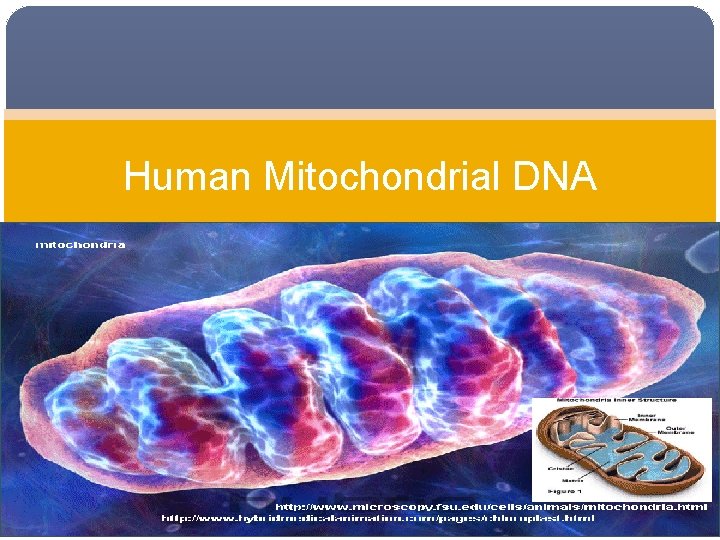
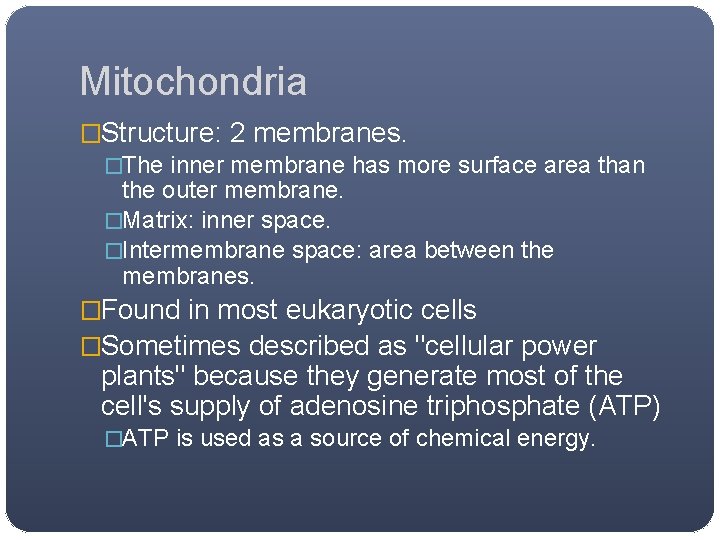
Mitochondria �Structure: 2 membranes. �The inner membrane has more surface area than the outer membrane. �Matrix: inner space. �Intermembrane space: area between the membranes. �Found in most eukaryotic cells �Sometimes described as "cellular power plants" because they generate most of the cell's supply of adenosine triphosphate (ATP) �ATP is used as a source of chemical energy.
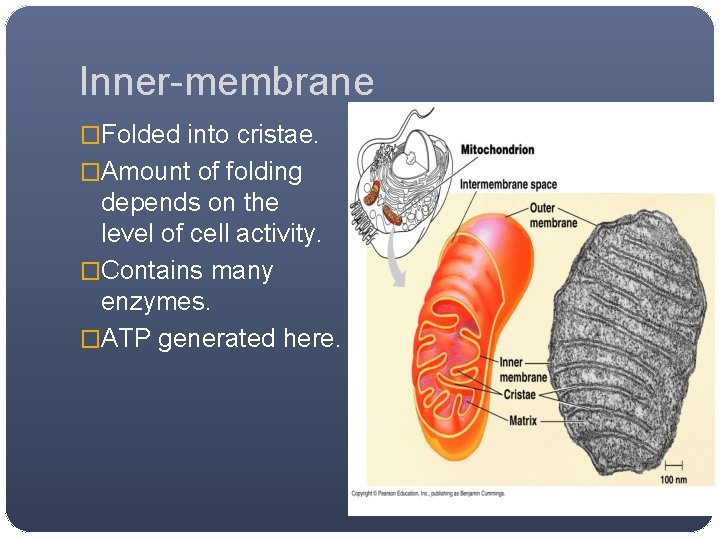
Inner-membrane �Folded into cristae. �Amount of folding depends on the level of cell activity. �Contains many enzymes. �ATP generated here.
Origins of Mitochondria �There is strong evidence that mitochondria once existed as free living bacteria, which were taken up by primitive ancestors of eukaryotic cells �The mitochondria were an example of endosymbionts, prokaryotic species that lived within larger prokaryotes. �The host cell (the larger prokaryote) provided a ready source of energy rich nutrients , and the mitochondrion provided a means to extract energy using oxygen �This attribute was key to survival as oxygen accumulated in the early atmosphere
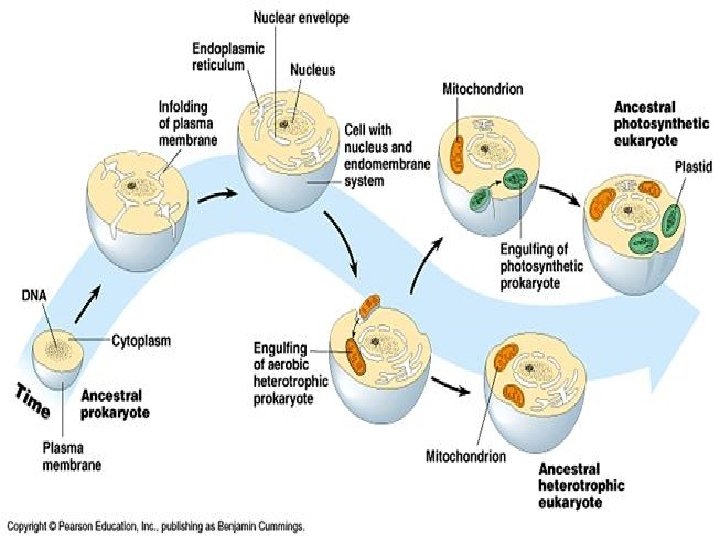
Endosymbiont Theory �Chloroplasts are thought to have descended from endosymbiotic photosynthesising prokaryotes living in larger cells. �Mitochondria are postulated to be descendants of prokaryotic aerobic heterotrophs that may have been parasites or undigested prey of larger prokaryotes. �It is believed that the association progressed from parasitism or predation to mutualism.
Origins of the Mitochondria �Endosymbiont Theory:
Evidence that Supports the Endosymbiont Theory �Are appropriate size to be descendants of eubacteria, �in other words, mitochondria and chloroplast are the same size as most eubacteria �Have inner membranes containing several enzymes and transport systems similar to those on prokaryotic plasma membranes. �Replicate through binary fission,
Evidence that Supports the Endosymbiont Theory �DNA is circular and not associated with histones or other proteins, as in prokaryotes. �There are very few introns (noncoding) sequences in the mitochondrial genome �Contain their own components for DNA transcription and translation into proteins �Have ribosomes similar to prokaryotic ribosomes �-molecular systematics lends evidence to support this theory
Mitochondrial DNA �In addition to the 46 chromosomes found in the nucleus of human cells, each mitochondrion in the cells cytoplasm has several copies of its own genome �The mitochondrial genome contains only 37 genes �Mt genes code for proteins that are involved in the process of oxidative phosphorylation �Energy production and storage in ATP
Mitochondrial Genome �The entire DNA sequence of the mitochondrial genome is 16, 569 nucleotides long �The mt genome was sequenced in 1981, well before the completion of the human genome project �There is a small noncoding region of approximately 1, 200 nucleotides that contains signals which control the replication of the chromosome and transcription of mt genes �This region is known as the mt “control region”
Mitochondrial Control Region �The DNA sequence of the mitochondrial control region is termed hypervariable �It accumulates mutations at approximately 10 times the rate of nuclear DNA �This high mutation rate results in unique patterns of single nucleotide polymorphisms (SNP’s) which are inherited through generations
A Universal Family Tree �In the 1980 s Alan Wilson at the University of California at Berkeley used mt DNA polymorphisms to create a “family tree” showing ancestral relationships between modern populations �He reasoned that all human populations arose from a common ancestor in the distant evolutionary past �Wilsons group calculated how long it would take to accumulate the patterns of mutations observed in modern populations
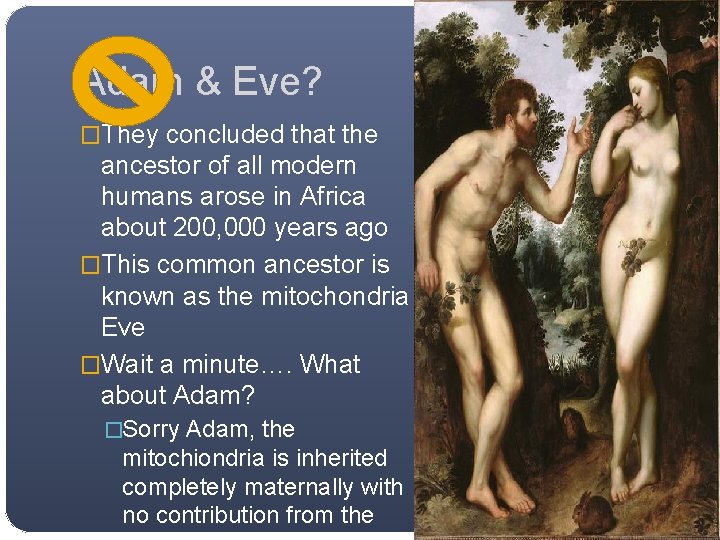
Adam & Eve? �They concluded that the ancestor of all modern humans arose in Africa about 200, 000 years ago �This common ancestor is known as the mitochondria Eve �Wait a minute…. What about Adam? �Sorry Adam, the mitochiondria is inherited completely maternally with no contribution from the
Mitochondrial Eve �is defined as the woman who is the matrilineal most recent common ancestor for all living humans. �Passed down from mother to offspring, all mitochondrial DNA (mt. DNA) in every living person is directly descended from hers. �Mitochondrial Eve is the female counterpart of Ychromosomal Adam, the patrilineal most recent common ancestor, although they lived thousands of years apart
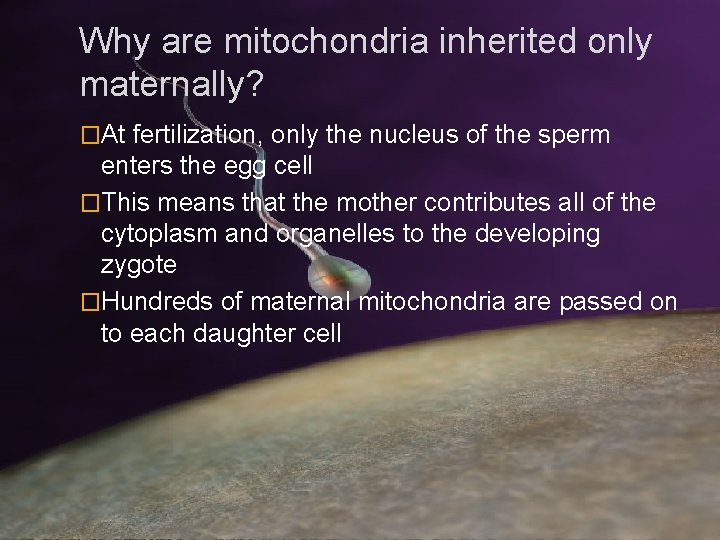
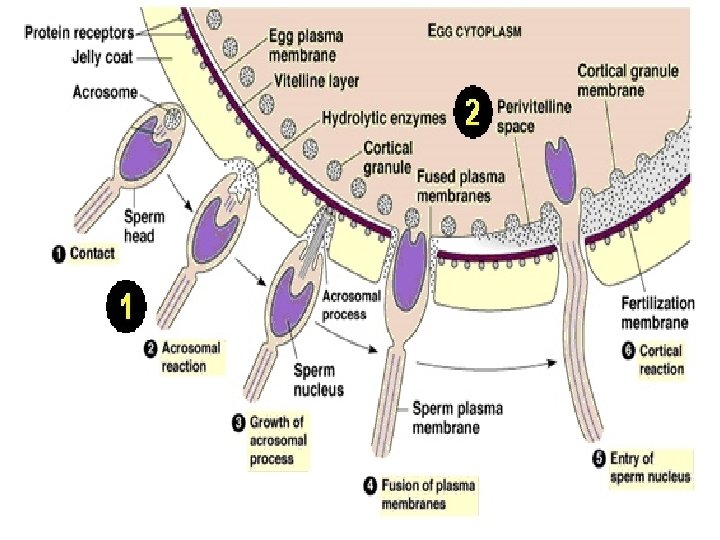
Why are mitochondria inherited only maternally? �At fertilization, only the nucleus of the sperm enters the egg cell �This means that the mother contributes all of the cytoplasm and organelles to the developing zygote �Hundreds of maternal mitochondria are passed on to each daughter cell
mt. DNA is Important in Forensic Biology �While each cell contains only 2 copies of a given nuclear gene (one inherited maternally and one inherited paternally), there are hundreds to thousands of copies of a given mitochondrial gene in a cell �Thus mitochondrial DNA analysis is important in forensic biology �especially in cases where the tissue is very old or the nuclear DNA is badly degraded
mt. DNA analysis has been used to �Identify the remains of an unknown soldier killed in the Vietnam War �Identify the remains of the Romanov royal family killed in the Russian Revolution �Determine the relationship of Neandertal remains (30, 000+ years old) to modern humans
This Experiment �PCR will be used to amplify a 440 nucleotide sequence within the control region of the mt genome �It will allow you to visualize a discreet region of your own genetic material �A mt. DNA sequence will be amplified several thousand fold over a nuclear sequence that has only 2 copies �The source of template DNA will be several thousand squamous cells obtained from either your cheeks or hair sheaths