
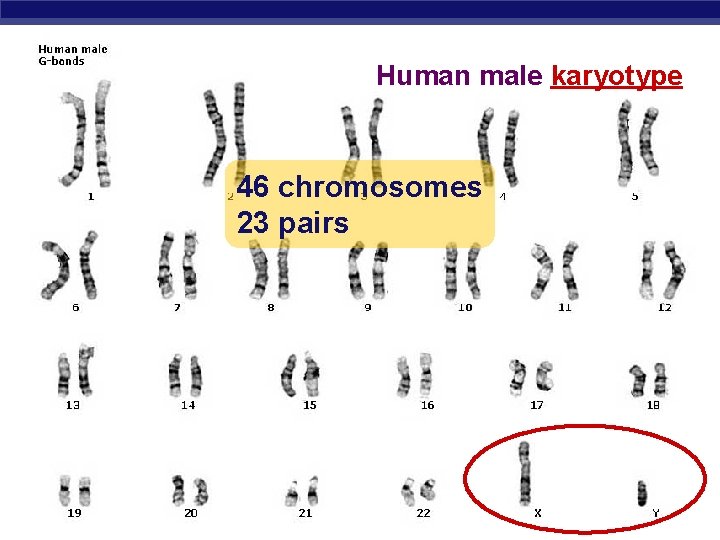
Human male karyotype 46 chromosomes 23 pairs AP
- Slides: 12
Human male karyotype 46 chromosomes 23 pairs AP Biology
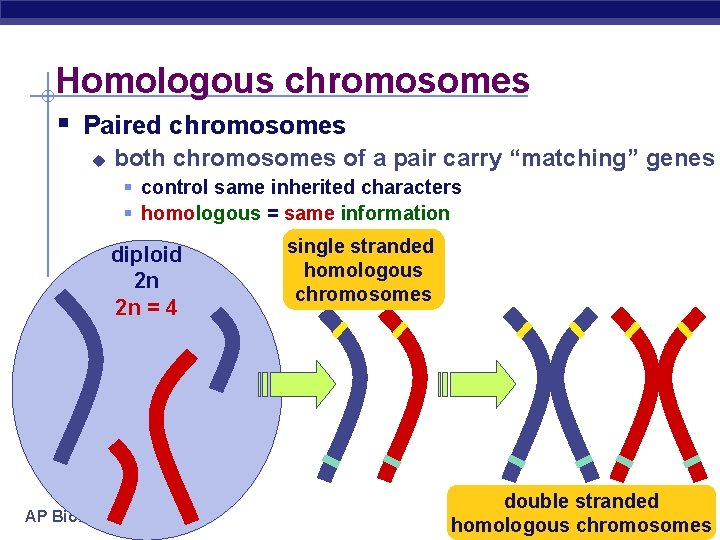
Homologous chromosomes § Paired chromosomes u both chromosomes of a pair carry “matching” genes § control same inherited characters § homologous = same information diploid 2 n 2 n = 4 AP Biology single stranded homologous chromosomes double stranded homologous chromosomes
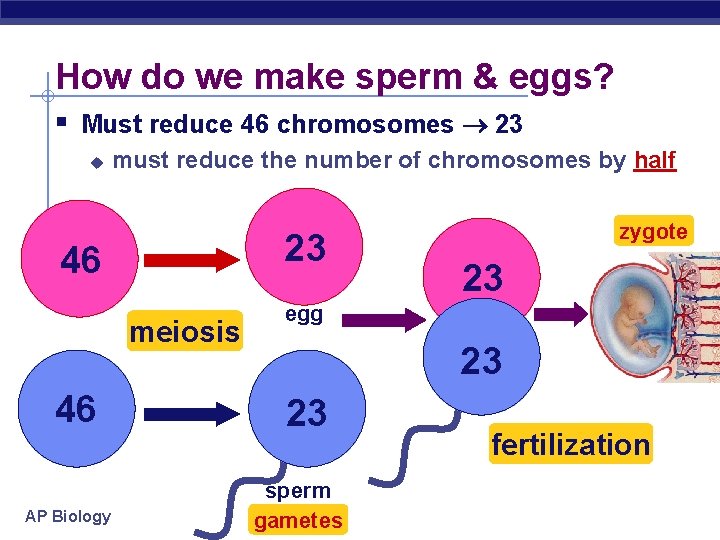
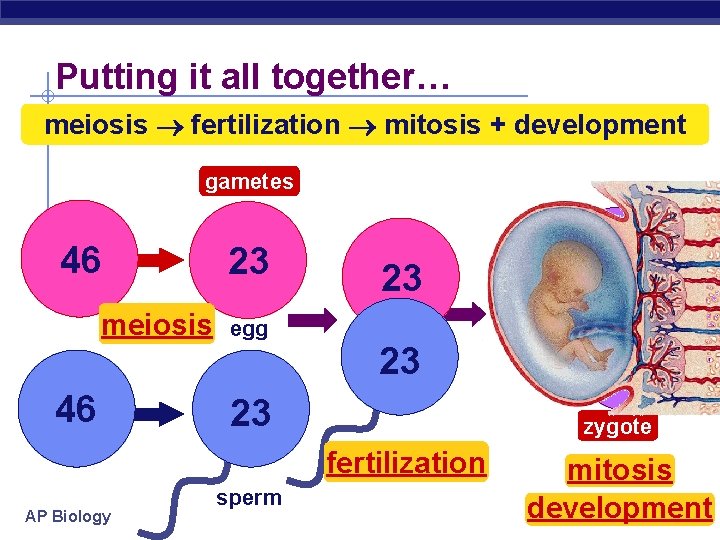
How do we make sperm & eggs? § Must reduce 46 chromosomes 23 u must reduce the number of chromosomes by half 23 46 meiosis 46 AP Biology zygote 23 egg 23 23 sperm gametes fertilization
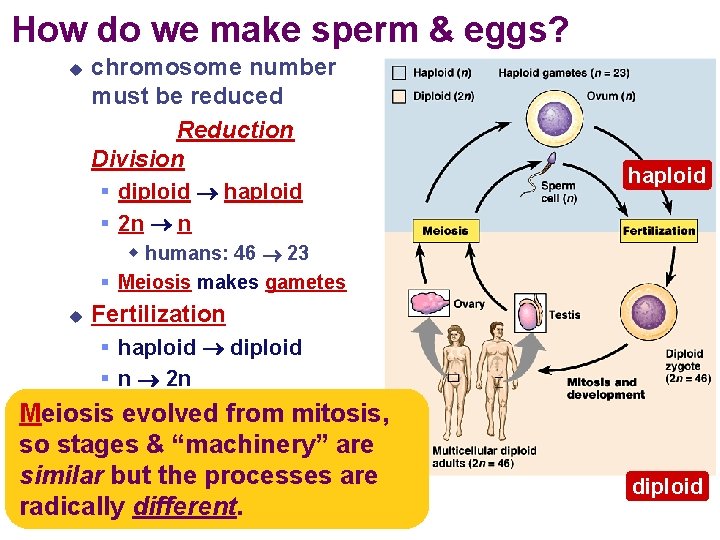
How do we make sperm & eggs? u chromosome number must be reduced Reduction Division § diploid haploid § 2 n n haploid w humans: 46 23 § Meiosis makes gametes u Fertilization § haploid diploid § n 2 n Meiosis evolved from mitosis, so stages & “machinery” are similar but the processes are radically different. diploid
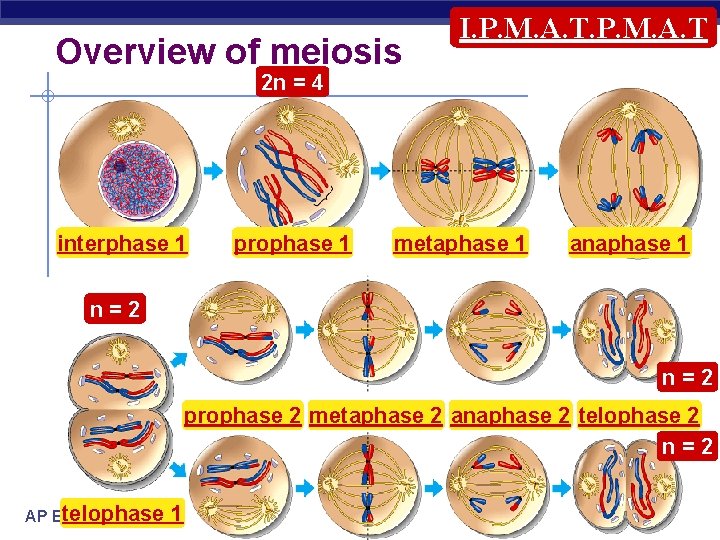
Overview of meiosis I. P. M. A. T 2 n = 4 interphase 1 prophase 1 metaphase 1 anaphase 1 n=2 prophase 2 metaphase 2 anaphase 2 telophase 2 n=2 telophase AP Biology 1
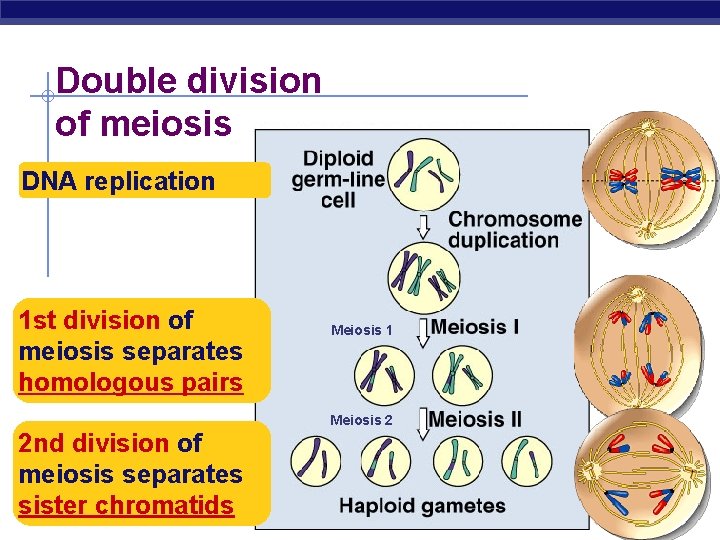
Double division of meiosis DNA replication 1 st division of meiosis separates homologous pairs 2 nd division of meiosis separates sister chromatids AP Biology Meiosis 1 Meiosis 2
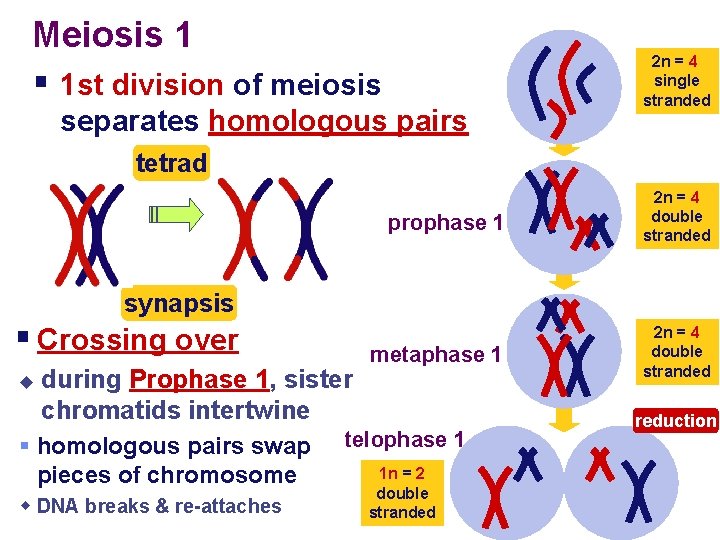
Meiosis 1 § 1 st division of meiosis separates homologous pairs 2 n = 4 single stranded tetrad prophase 1 2 n = 4 double stranded metaphase 1 2 n = 4 double stranded synapsis § Crossing over u during Prophase 1, sister chromatids intertwine § homologous pairs swap pieces of chromosome w DNA breaks & re-attaches telophase 1 1 n = 2 double stranded reduction
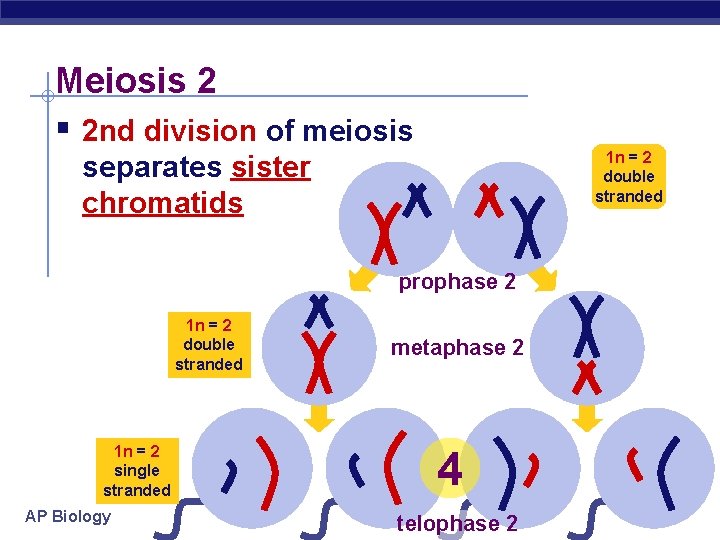
Meiosis 2 § 2 nd division of meiosis 1 n = 2 double stranded separates sister chromatids prophase 2 1 n = 2 double stranded 1 n = 2 single stranded AP Biology metaphase 2 4 telophase 2
Putting it all together… meiosis fertilization mitosis + development gametes 46 meiosis 46 23 egg 23 23 23 zygote fertilization AP Biology sperm 46 46 46 mitosis development
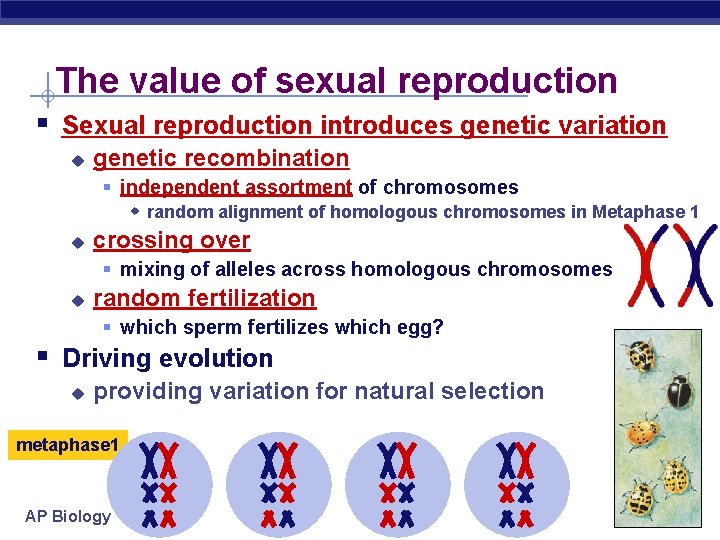
The value of sexual reproduction § Sexual reproduction introduces genetic variation u genetic recombination § independent assortment of chromosomes w random alignment of homologous chromosomes in Metaphase 1 u crossing over § mixing of alleles across homologous chromosomes u random fertilization § which sperm fertilizes which egg? § Driving evolution u providing variation for natural selection metaphase 1 AP Biology
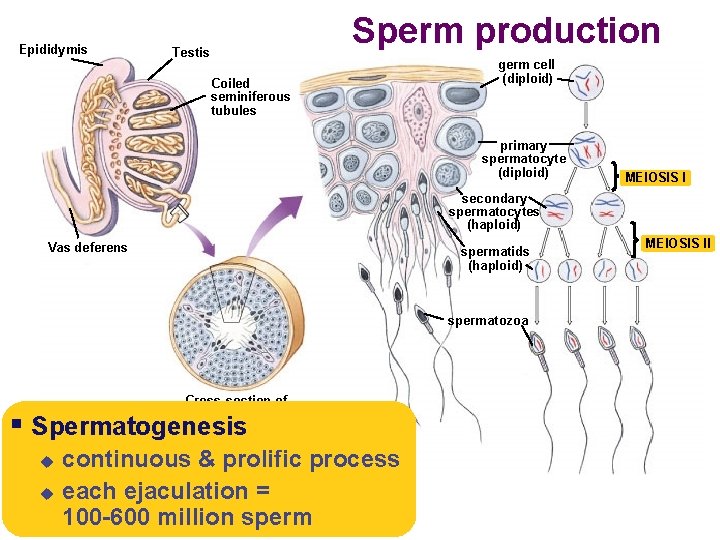
Epididymis Sperm production Testis Coiled seminiferous tubules germ cell (diploid) primary spermatocyte (diploid) MEIOSIS I secondary spermatocytes (haploid) Vas deferens spermatids (haploid) spermatozoa Cross-section of seminiferous tubule § Spermatogenesis u u continuous & prolific process each ejaculation = 100 -600 million sperm MEIOSIS II
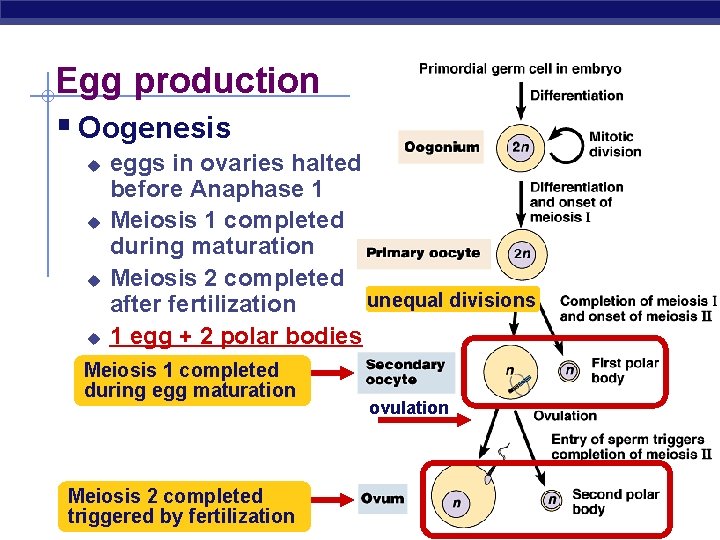
Egg production § Oogenesis u u eggs in ovaries halted before Anaphase 1 Meiosis 1 completed during maturation Meiosis 2 completed unequal divisions after fertilization 1 egg + 2 polar bodies Meiosis 1 completed during egg maturation Meiosis 2 completed AP Biology triggered by fertilization ovulation