
Human Knowledge Seeking and Information Visualization Exploring New

- Slides: 50
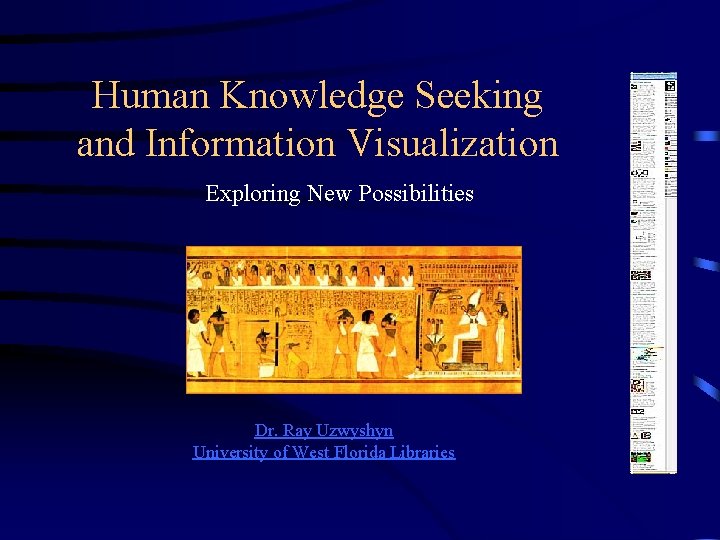
Human Knowledge Seeking and Information Visualization Exploring New Possibilities Dr. Ray Uzwyshyn University of West Florida Libraries
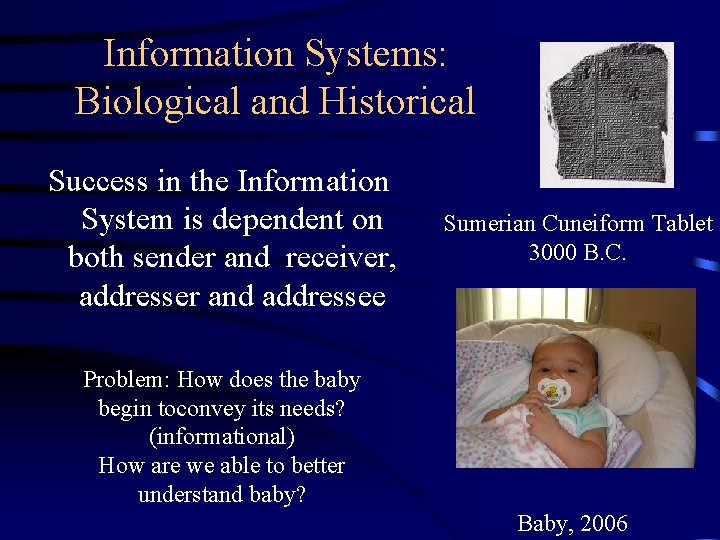
Information Systems: Biological and Historical Success in the Information System is dependent on both sender and receiver, addresser and addressee Sumerian Cuneiform Tablet 3000 B. C. Problem: How does the baby begin toconvey its needs? (informational) How are we able to better understand baby? Baby, 2006
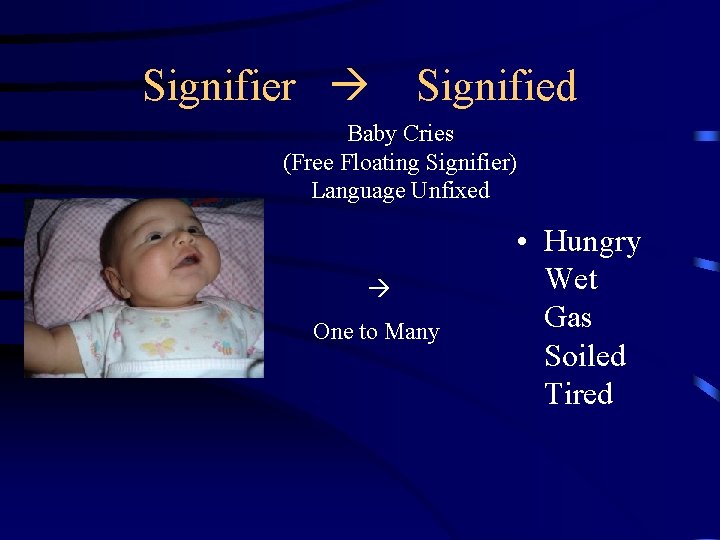
Signifier Signified Baby Cries (Free Floating Signifier) Language Unfixed One to Many • Hungry Wet Gas Soiled Tired
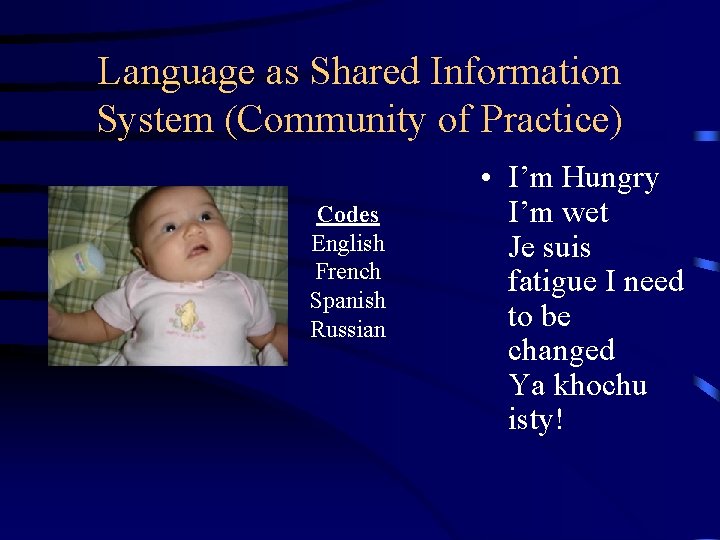
Language as Shared Information System (Community of Practice) Codes English French Spanish Russian • I’m Hungry I’m wet Je suis fatigue I need to be changed Ya khochu isty!
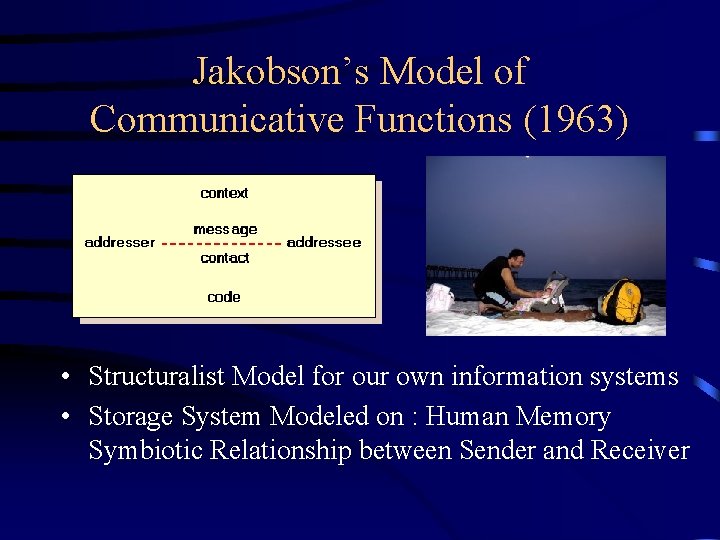
Jakobson’s Model of Communicative Functions (1963) • Structuralist Model for our own information systems • Storage System Modeled on : Human Memory Symbiotic Relationship between Sender and Receiver
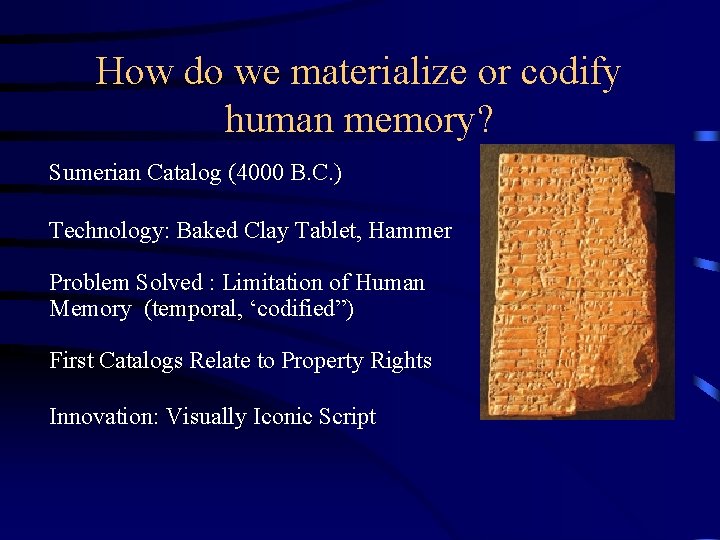
How do we materialize or codify human memory? Sumerian Catalog (4000 B. C. ) Technology: Baked Clay Tablet, Hammer Problem Solved : Limitation of Human Memory (temporal, ‘codified”) First Catalogs Relate to Property Rights Innovation: Visually Iconic Script
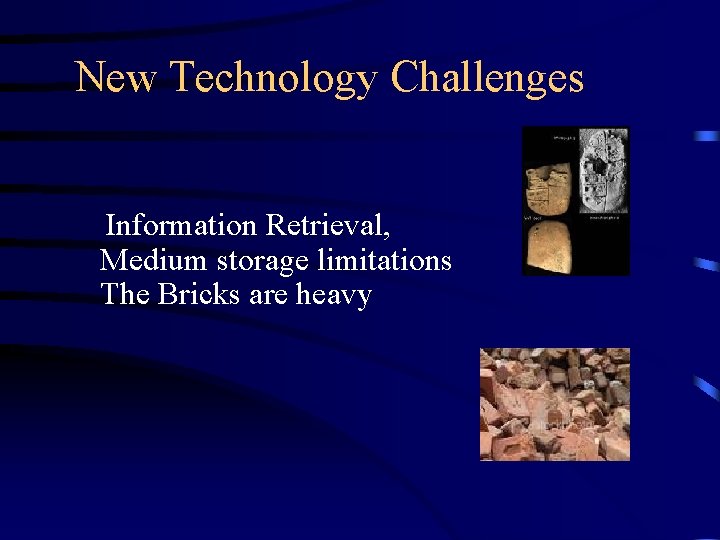
New Technology Challenges Information Retrieval, Medium storage limitations The Bricks are heavy
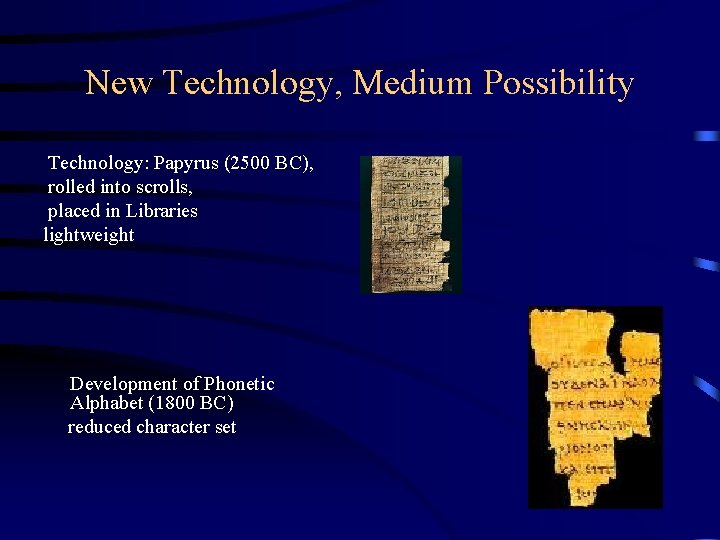
New Technology, Medium Possibility Technology: Papyrus (2500 BC), rolled into scrolls, placed in Libraries lightweight Development of Phonetic Alphabet (1800 BC) reduced character set
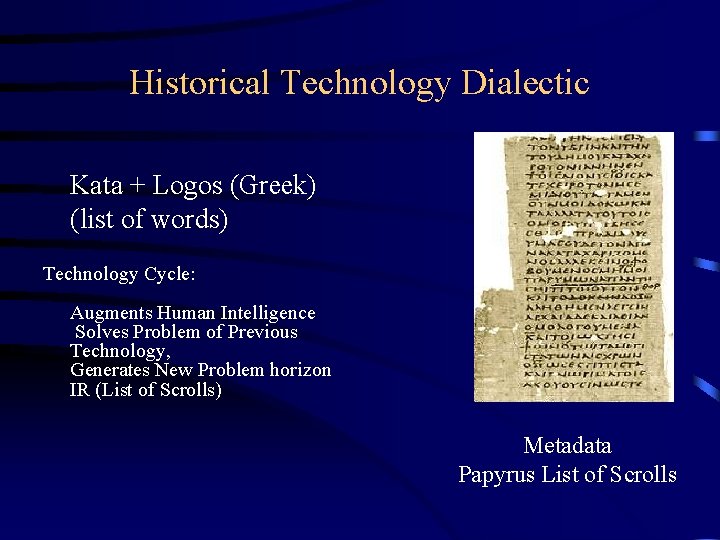
Historical Technology Dialectic Kata + Logos (Greek) (list of words) Technology Cycle: Augments Human Intelligence Solves Problem of Previous Technology, Generates New Problem horizon IR (List of Scrolls) Metadata Papyrus List of Scrolls
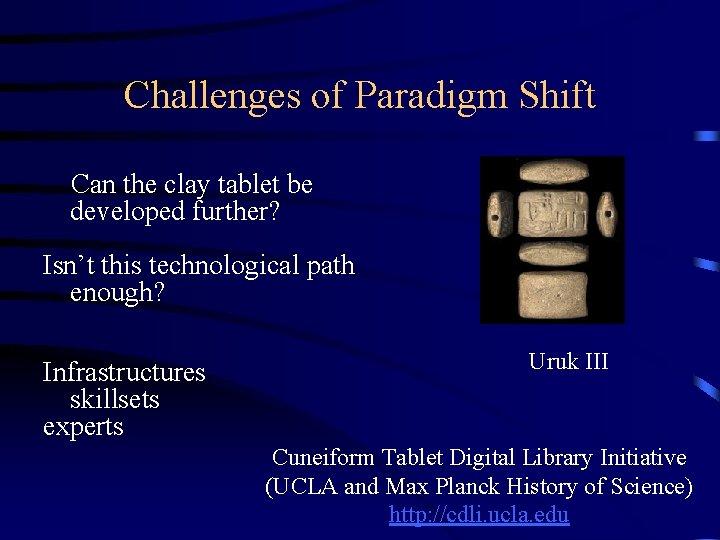
Challenges of Paradigm Shift Can the clay tablet be developed further? Isn’t this technological path enough? Infrastructures skillsets experts Uruk III Cuneiform Tablet Digital Library Initiative (UCLA and Max Planck History of Science) http: //cdli. ucla. edu
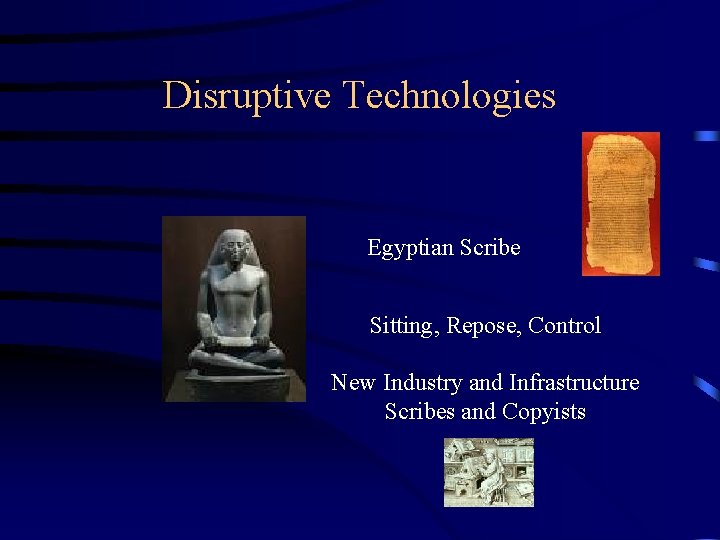
Disruptive Technologies Egyptian Scribe Sitting, Repose, Control New Industry and Infrastructure Scribes and Copyists
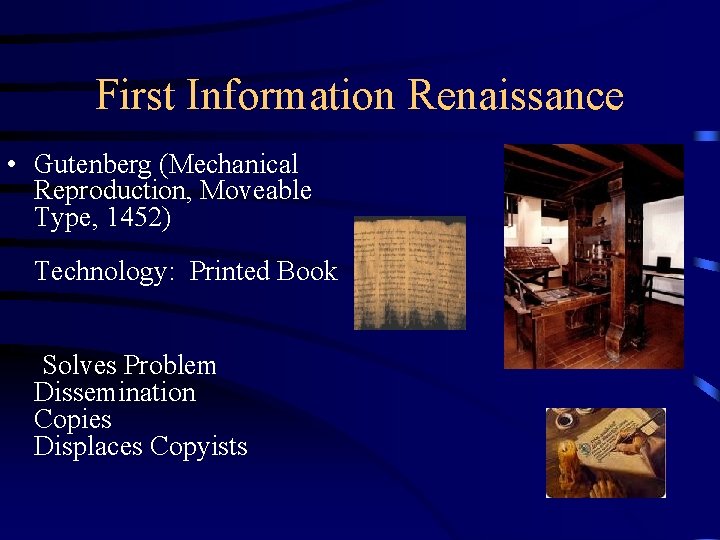
First Information Renaissance • Gutenberg (Mechanical Reproduction, Moveable Type, 1452) Technology: Printed Book Solves Problem Dissemination Copies Displaces Copyists
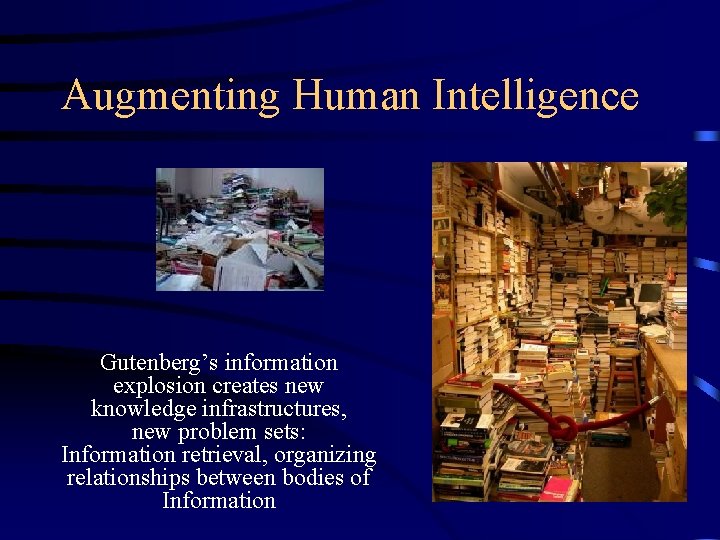
Augmenting Human Intelligence Gutenberg’s information explosion creates new knowledge infrastructures, new problem sets: Information retrieval, organizing relationships between bodies of Information
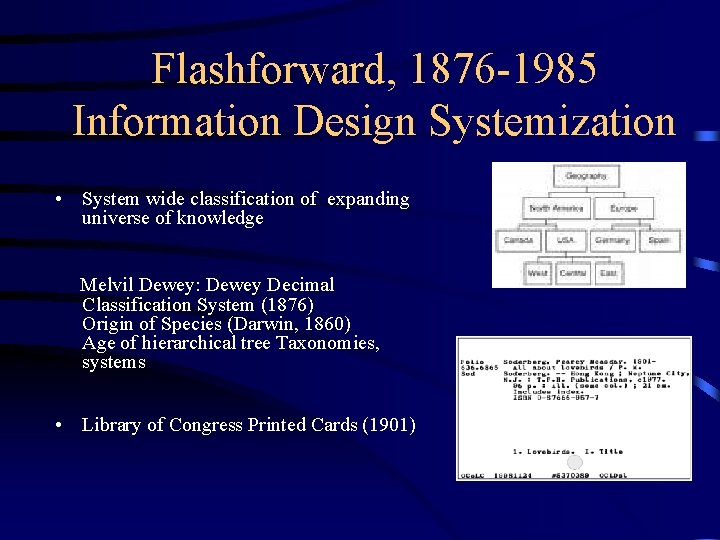
Flashforward, 1876 -1985 Information Design Systemization • System wide classification of expanding universe of knowledge Melvil Dewey: Dewey Decimal Classification System (1876) Origin of Species (Darwin, 1860) Age of hierarchical tree Taxonomies, systems • Library of Congress Printed Cards (1901)
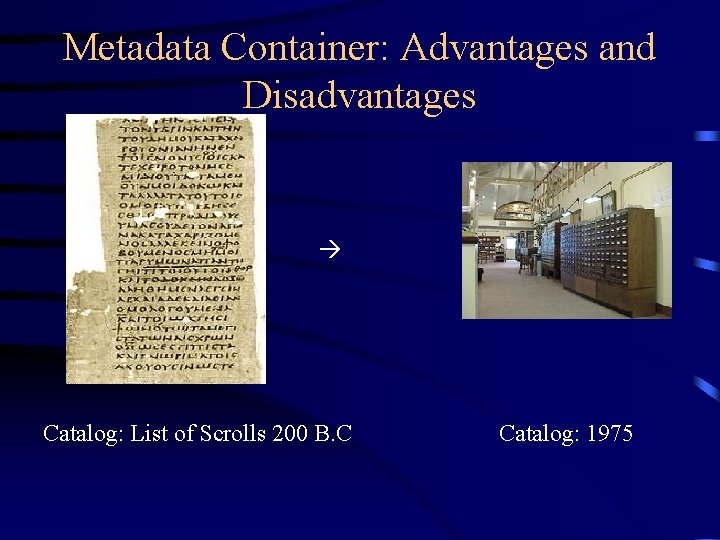
Metadata Container: Advantages and Disadvantages Catalog: List of Scrolls 200 B. C Catalog: 1975
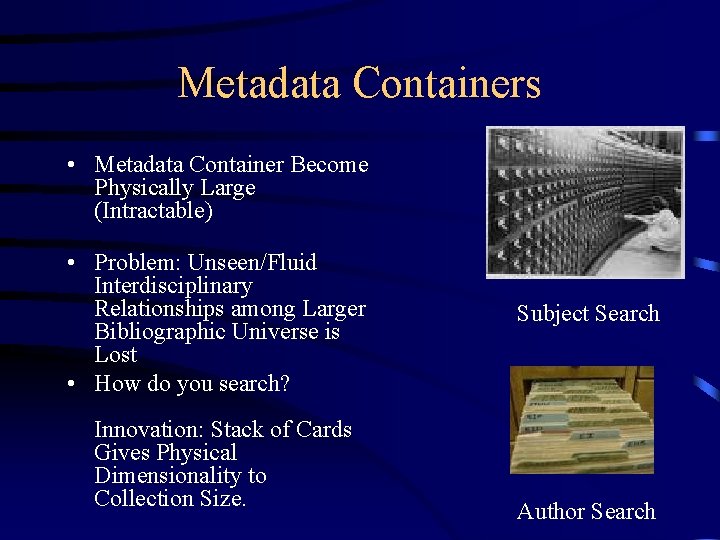
Metadata Containers • Metadata Container Become Physically Large (Intractable) • Problem: Unseen/Fluid Interdisciplinary Relationships among Larger Bibliographic Universe is Lost • How do you search? Innovation: Stack of Cards Gives Physical Dimensionality to Collection Size. Subject Search Author Search
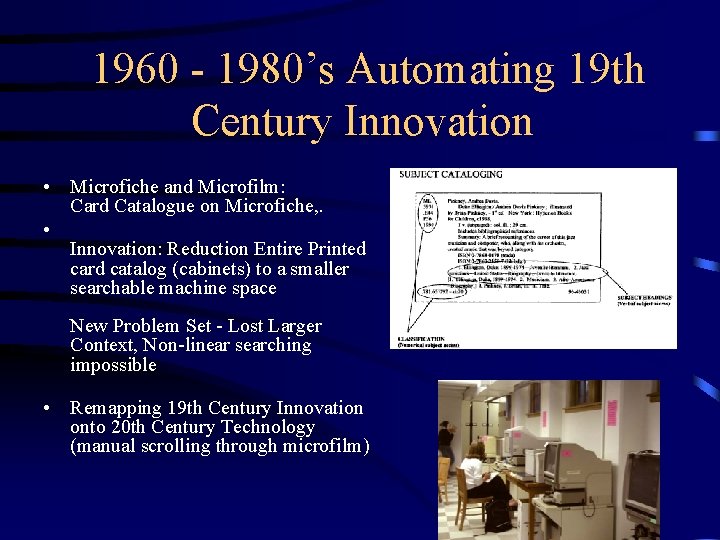
1960 - 1980’s Automating 19 th Century Innovation • Microfiche and Microfilm: Card Catalogue on Microfiche, . • Innovation: Reduction Entire Printed card catalog (cabinets) to a smaller searchable machine space New Problem Set - Lost Larger Context, Non-linear searching impossible • Remapping 19 th Century Innovation onto 20 th Century Technology (manual scrolling through microfilm)
1980 s Microcomputer Revolution • Reducing Printed card catalog (cabinets) to a smaller non-linearly searchable machine space • Keyword Innovation
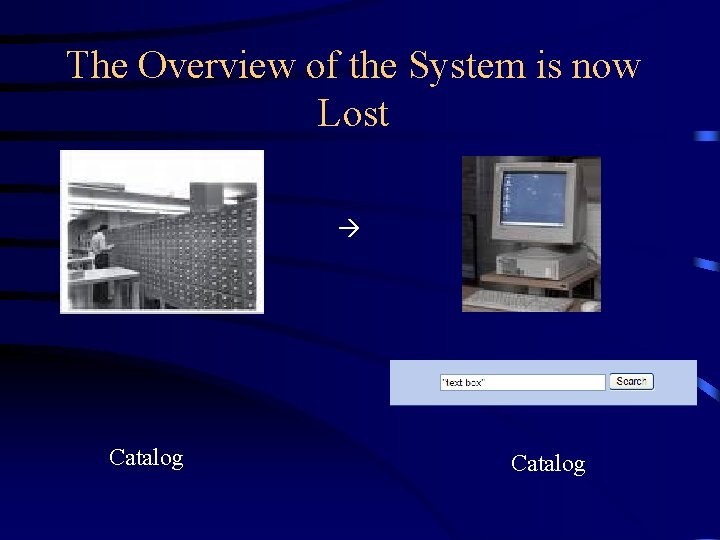
The Overview of the System is now Lost Catalog
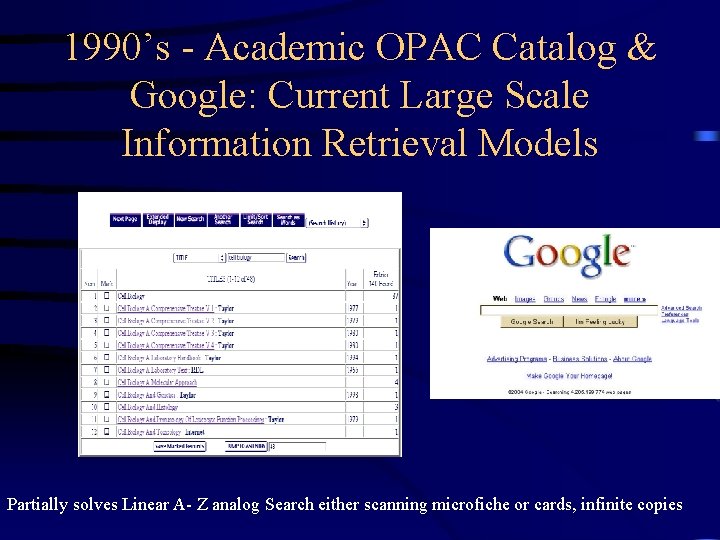
1990’s - Academic OPAC Catalog & Google: Current Large Scale Information Retrieval Models Partially solves Linear A- Z analog Search either scanning microfiche or cards, infinite copies
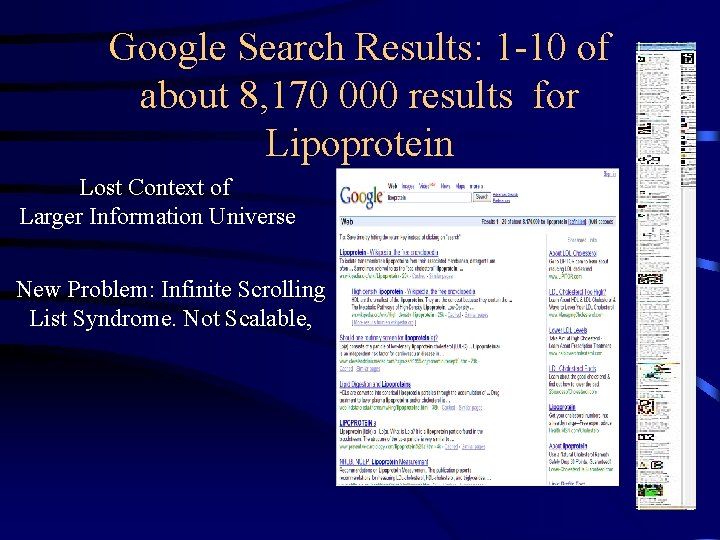
Google Search Results: 1 -10 of about 8, 170 000 results for Lipoprotein Lost Context of Larger Information Universe New Problem: Infinite Scrolling List Syndrome. Not Scalable,
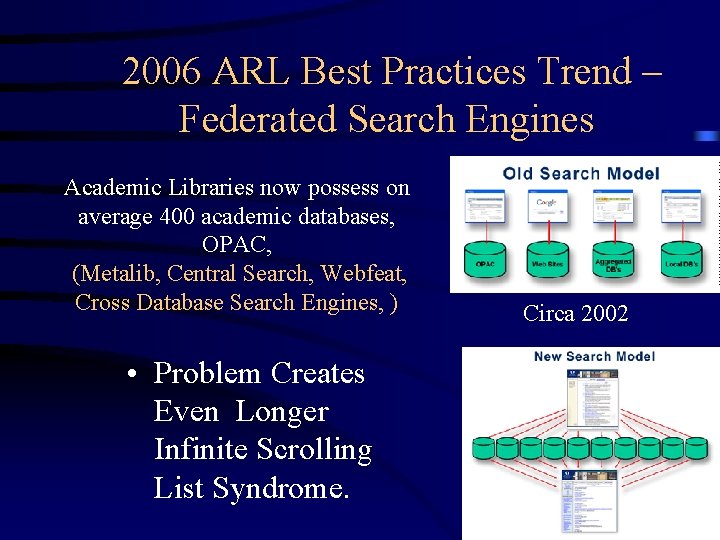
2006 ARL Best Practices Trend – Federated Search Engines Academic Libraries now possess on average 400 academic databases, OPAC, (Metalib, Central Search, Webfeat, Cross Database Search Engines, ) • Problem Creates Even Longer Infinite Scrolling List Syndrome. Circa 2002
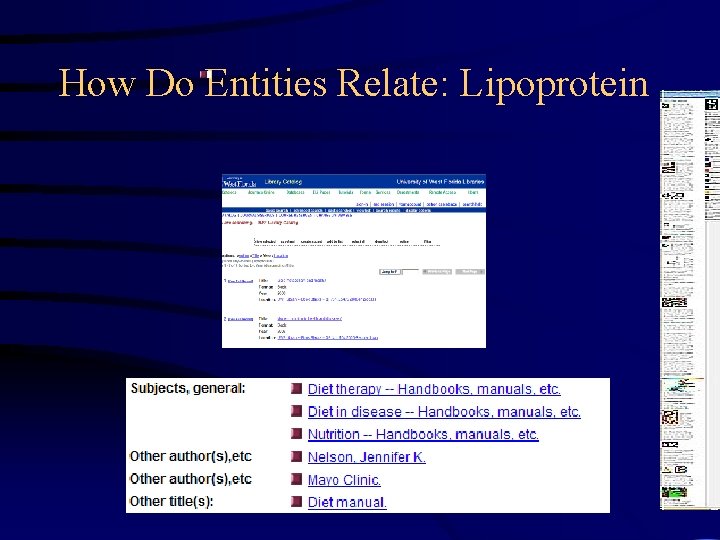
How Do Entities Relate: Lipoprotein
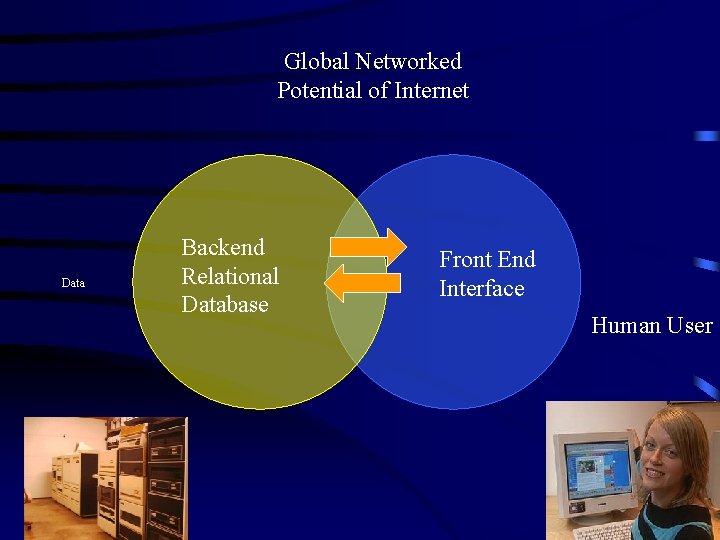
Global Networked Potential of Internet Data Backend Relational Database Front End Interface Human User
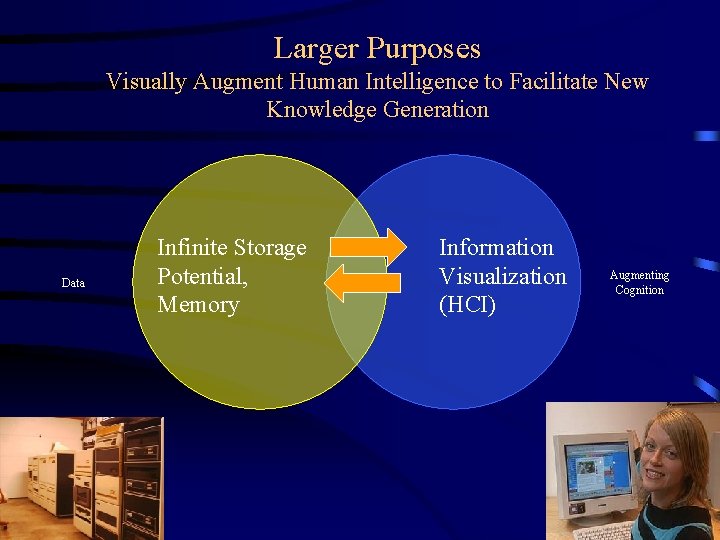
Larger Purposes Visually Augment Human Intelligence to Facilitate New Knowledge Generation Data Infinite Storage Potential, Memory Information Visualization (HCI) Augmenting Cognition
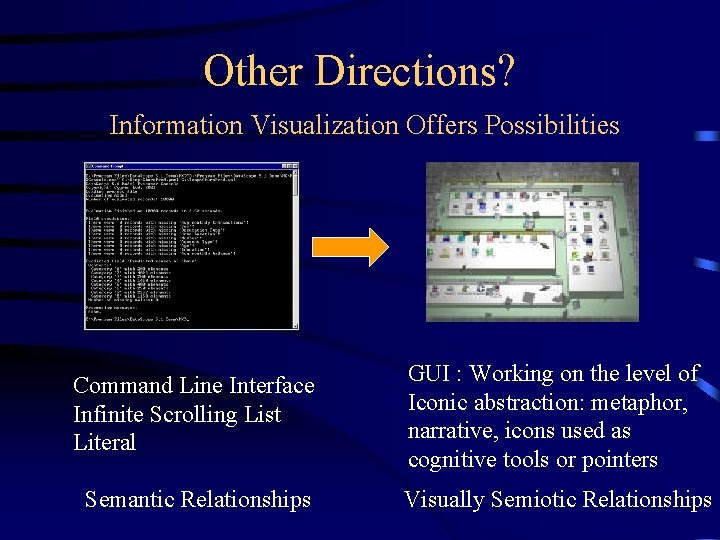
Other Directions? Information Visualization Offers Possibilities Command Line Interface Infinite Scrolling List Literal GUI : Working on the level of Iconic abstraction: metaphor, narrative, icons used as cognitive tools or pointers Semantic Relationships Visually Semiotic Relationships
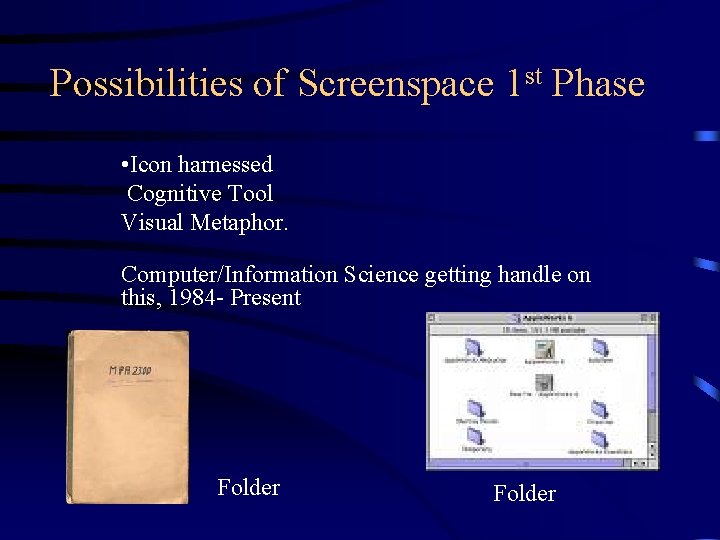
Possibilities of Screenspace 1 st Phase • Icon harnessed Cognitive Tool Visual Metaphor. Computer/Information Science getting handle on this, 1984 - Present Folder
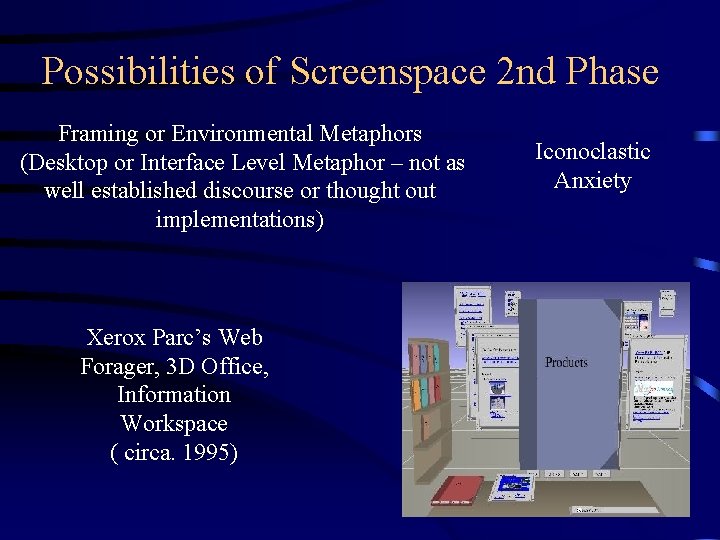
Possibilities of Screenspace 2 nd Phase Framing or Environmental Metaphors (Desktop or Interface Level Metaphor – not as well established discourse or thought out implementations) Xerox Parc’s Web Forager, 3 D Office, Information Workspace ( circa. 1995) Iconoclastic Anxiety
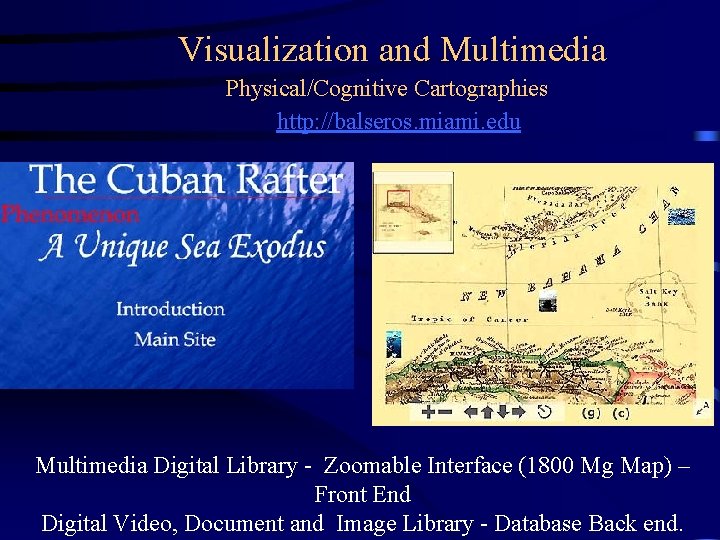
Visualization and Multimedia Physical/Cognitive Cartographies http: //balseros. miami. edu Multimedia Digital Library - Zoomable Interface (1800 Mg Map) – Front End Digital Video, Document and Image Library - Database Back end.
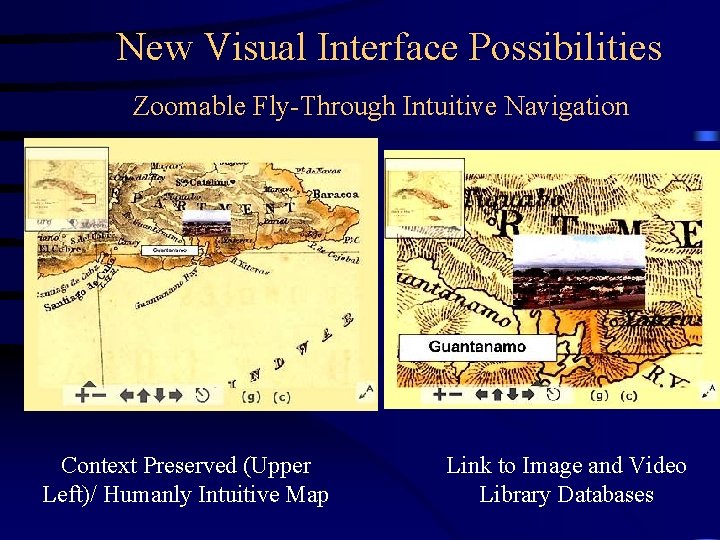
New Visual Interface Possibilities Zoomable Fly-Through Intuitive Navigation Context Preserved (Upper Left)/ Humanly Intuitive Map Link to Image and Video Library Databases
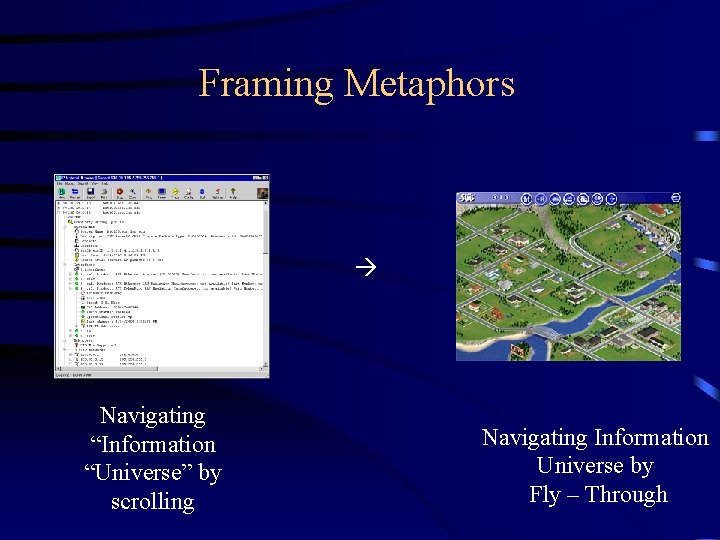
Framing Metaphors Navigating “Information “Universe” by scrolling Navigating Information Universe by Fly – Through
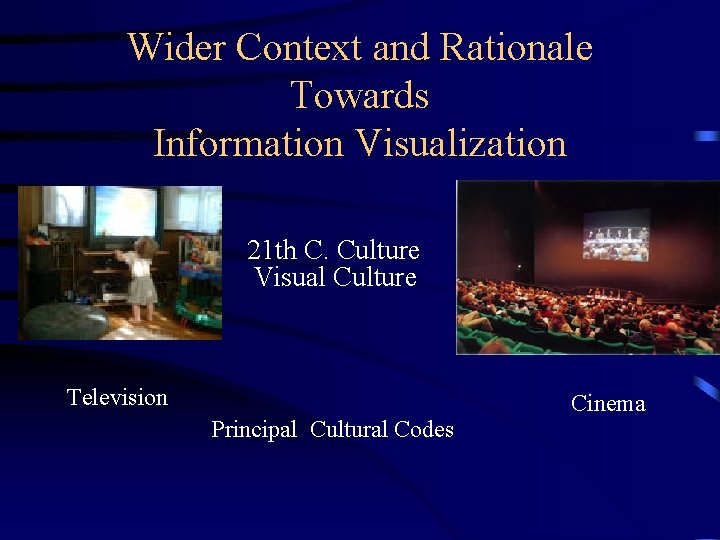
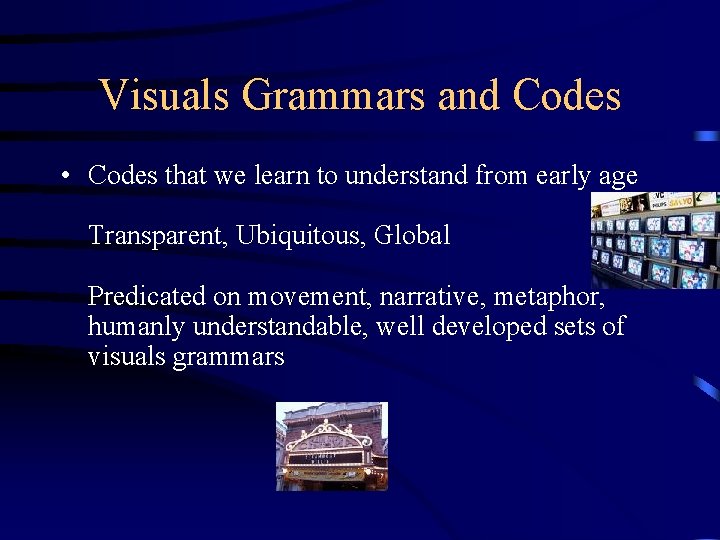
Wider Context and Rationale Towards Information Visualization 21 th C. Culture Visual Culture Television Principal Cultural Codes Cinema
Visuals Grammars and Codes • Codes that we learn to understand from early age Transparent, Ubiquitous, Global Predicated on movement, narrative, metaphor, humanly understandable, well developed sets of visuals grammars
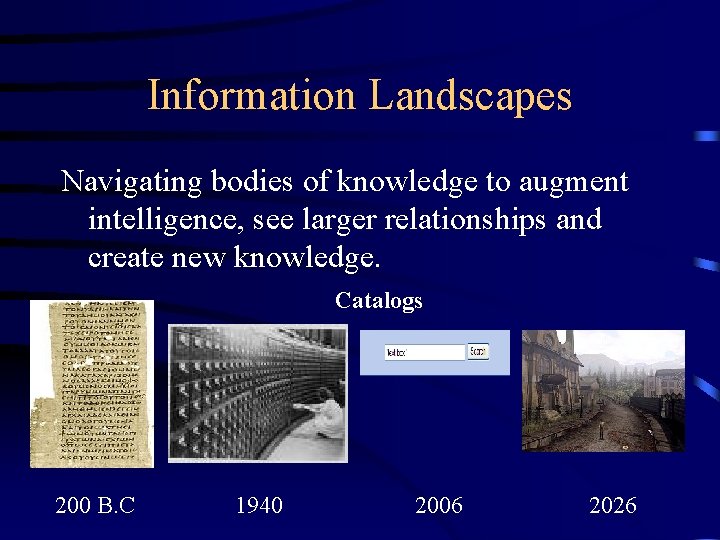
Information Landscapes Navigating bodies of knowledge to augment intelligence, see larger relationships and create new knowledge. Catalogs 200 B. C 1940 2006 2026
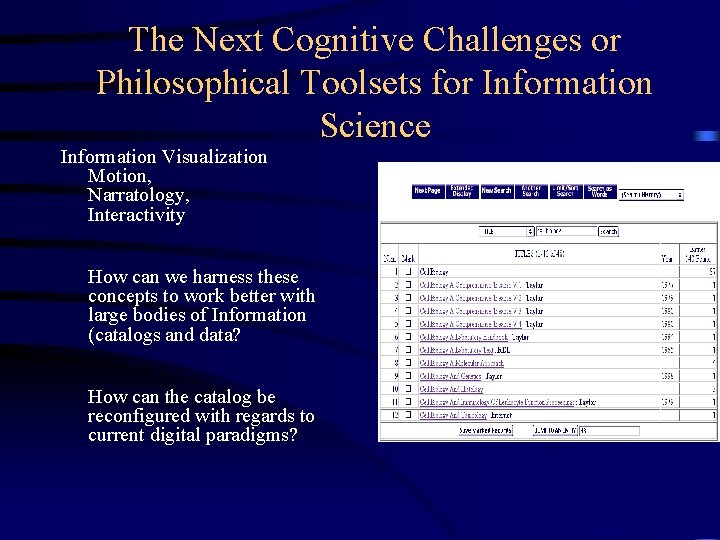
The Next Cognitive Challenges or Philosophical Toolsets for Information Science Information Visualization Motion, Narratology, Interactivity How can we harness these concepts to work better with large bodies of Information (catalogs and data? How can the catalog be reconfigured with regards to current digital paradigms?
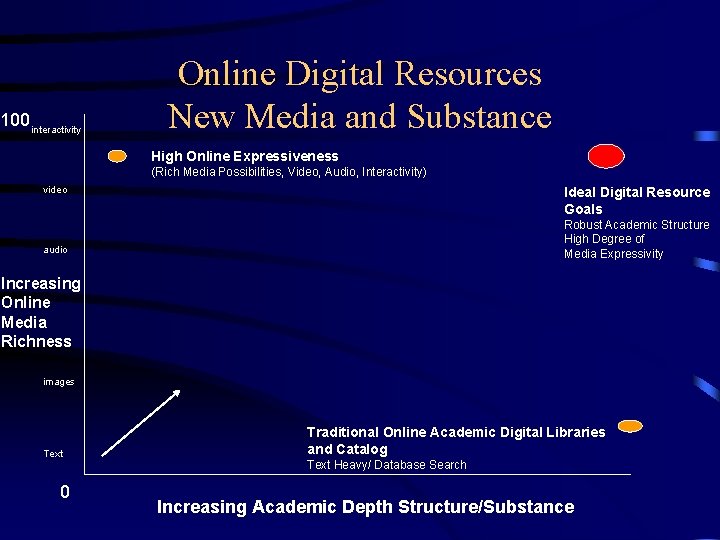
100 interactivity Online Digital Resources New Media and Substance High Online Expressiveness (Rich Media Possibilities, Video, Audio, Interactivity) video Ideal Digital Resource Goals Robust Academic Structure High Degree of Media Expressivity audio Increasing Online Media Richness images Text 0 Traditional Online Academic Digital Libraries and Catalog Text Heavy/ Database Search Increasing Academic Depth Structure/Substance
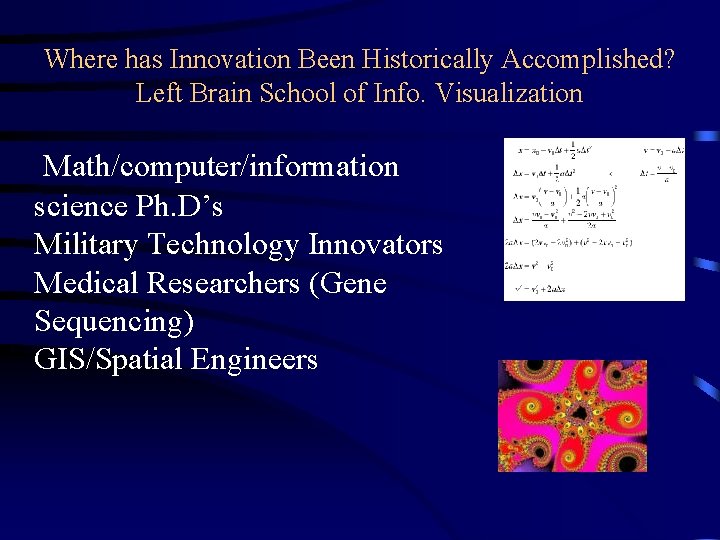
Where has Innovation Been Historically Accomplished? Left Brain School of Info. Visualization Math/computer/information science Ph. D’s Military Technology Innovators Medical Researchers (Gene Sequencing) GIS/Spatial Engineers
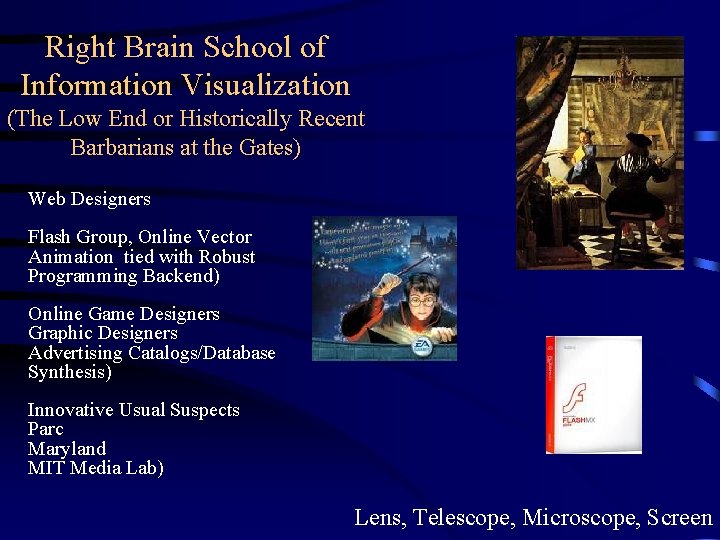
Right Brain School of Information Visualization (The Low End or Historically Recent Barbarians at the Gates) Web Designers Flash Group, Online Vector Animation tied with Robust Programming Backend) Online Game Designers Graphic Designers Advertising Catalogs/Database Synthesis) Innovative Usual Suspects Parc Maryland MIT Media Lab) Lens, Telescope, Microscope, Screen
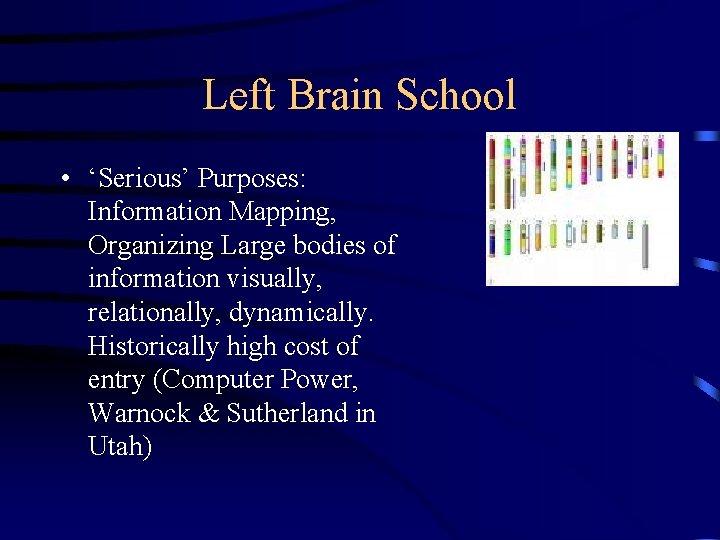
Left Brain School • ‘Serious’ Purposes: Information Mapping, Organizing Large bodies of information visually, relationally, dynamically. Historically high cost of entry (Computer Power, Warnock & Sutherland in Utah)
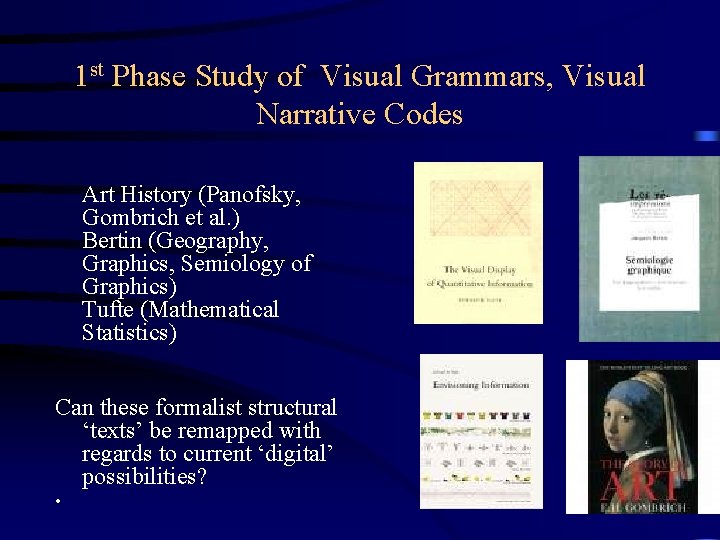
1 st Phase Study of Visual Grammars, Visual Narrative Codes Art History (Panofsky, Gombrich et al. ) Bertin (Geography, Graphics, Semiology of Graphics) Tufte (Mathematical Statistics) Can these formalist structural ‘texts’ be remapped with regards to current ‘digital’ possibilities? •
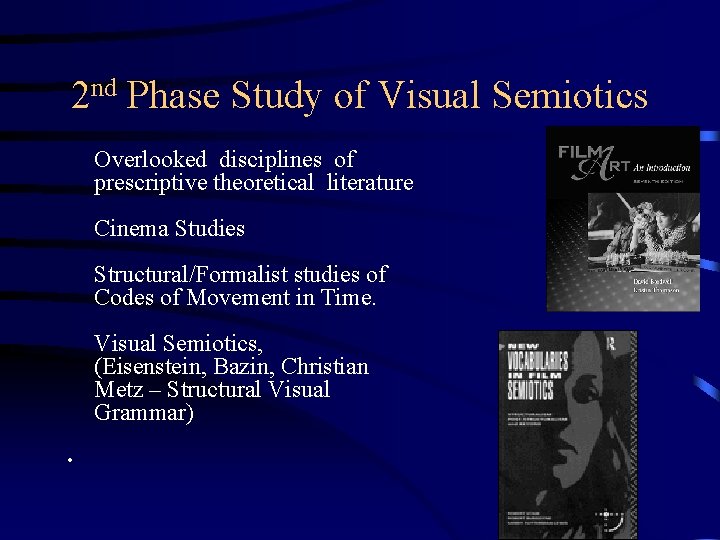
2 nd Phase Study of Visual Semiotics Overlooked disciplines of prescriptive theoretical literature Cinema Studies Structural/Formalist studies of Codes of Movement in Time. Visual Semiotics, (Eisenstein, Bazin, Christian Metz – Structural Visual Grammar) •
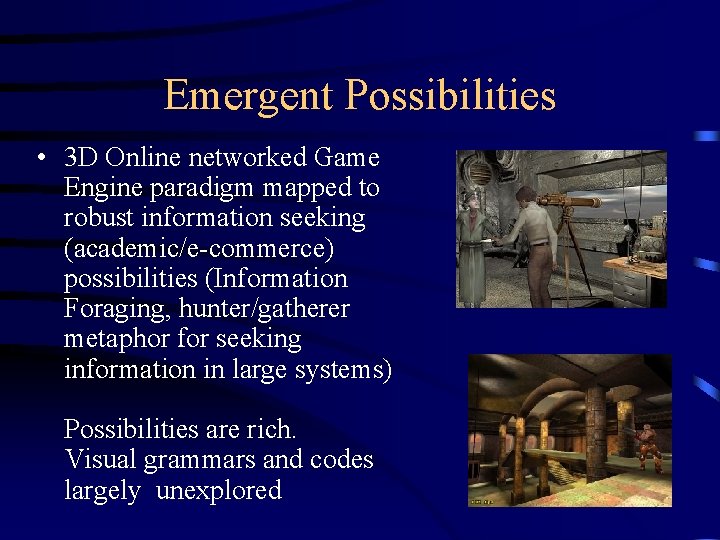
Emergent Possibilities • 3 D Online networked Game Engine paradigm mapped to robust information seeking (academic/e-commerce) possibilities (Information Foraging, hunter/gatherer metaphor for seeking information in large systems) Possibilities are rich. Visual grammars and codes largely unexplored
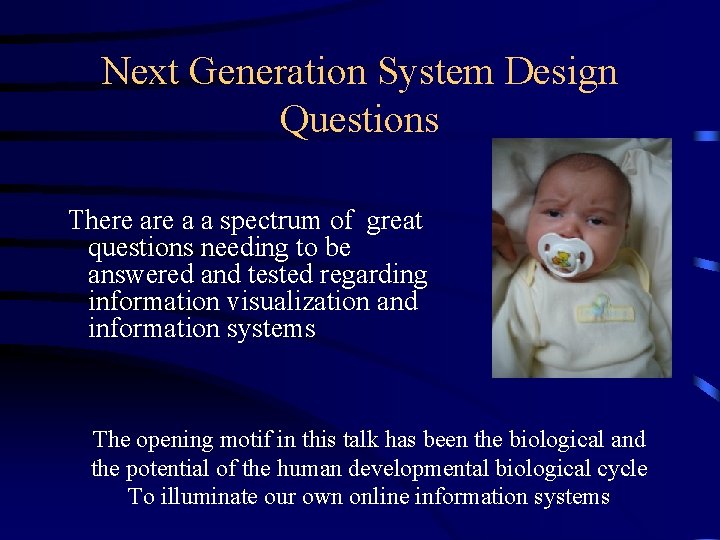
Next Generation System Design Questions There a a spectrum of great questions needing to be answered and tested regarding information visualization and information systems The opening motif in this talk has been the biological and the potential of the human developmental biological cycle To illuminate our own online information systems
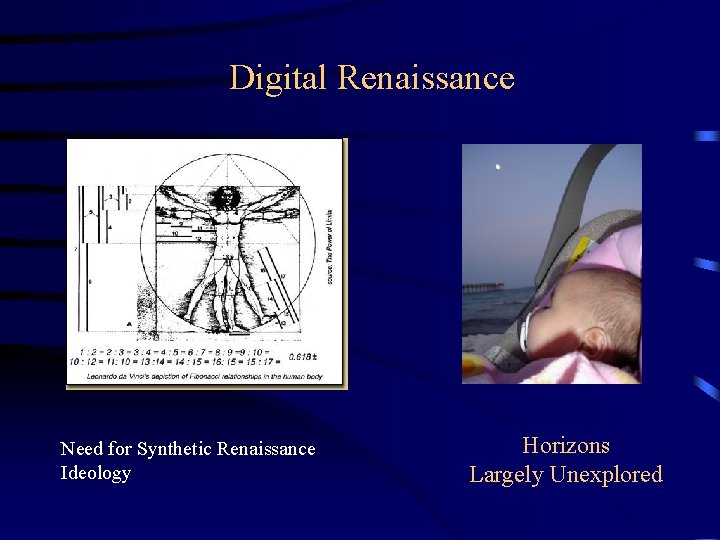
Digital Renaissance Need for Synthetic Renaissance Ideology Horizons Largely Unexplored
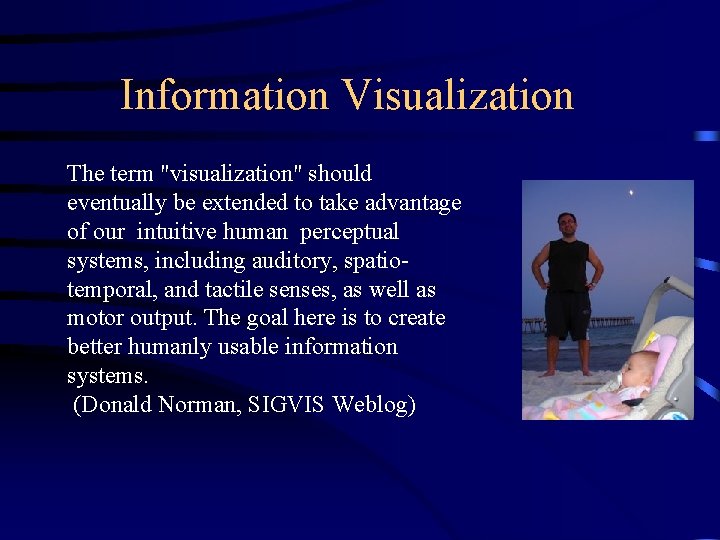
Information Visualization The term "visualization" should eventually be extended to take advantage of our intuitive human perceptual systems, including auditory, spatiotemporal, and tactile senses, as well as motor output. The goal here is to create better humanly usable information systems. (Donald Norman, SIGVIS Weblog)
Thank You for Coming Questions? http: //library. uwf. edu/presentation. ppt Contact Information: Ray Uzwyshyn ruzwyshyn@uwf. edu
Brief Information Visualization Bibliography - Books Chen, Chaomei. Information Visualization and Virtual Environments. New York: Springer, 1999. (also, other texts ) Shneiderman, Ben. Card, Stuart K. , Mackinlay, Jock D. Readings in Information Visualization. San Francisco: Moran Kaufmann, 1999. (also, other texts) Spence, Robert. Information Visualization. ACM Press, 2000.
Websites – Links to Working Applications and Current R&D • Human Computer Interaction Laboratory (Shneiderman et al. , College Park Maryland) http: //www. cs. umd. edu/hcil/ (click Visualization) Flashforward http: //www. flashforward 2003. com (Click on past winners for excellent examples) MIT Media Lab, In particular John Maeda’s Aesthetics and Computation/Visual Language Groups) http: //acg. media. mit. edu/ and http: //plw. media. mit. edu Xerox Parc Research Group http: //www. parc. xerox. com/research
A Few R&D Developers • Jared Tarbell http: //levitated. net Eric Natzke http: //www. natzke. com Yugo Nakamura http: //www. yugop. com Joshua Davis http: //www. joshuadavis. com • Finally, my more informal weblog: horizons of visualization/digital library explorations: http: //libprod. library. miami. edu: 41430/webservices