
Human Impact energy flows through nutrients cycle biosphere

Human Impact
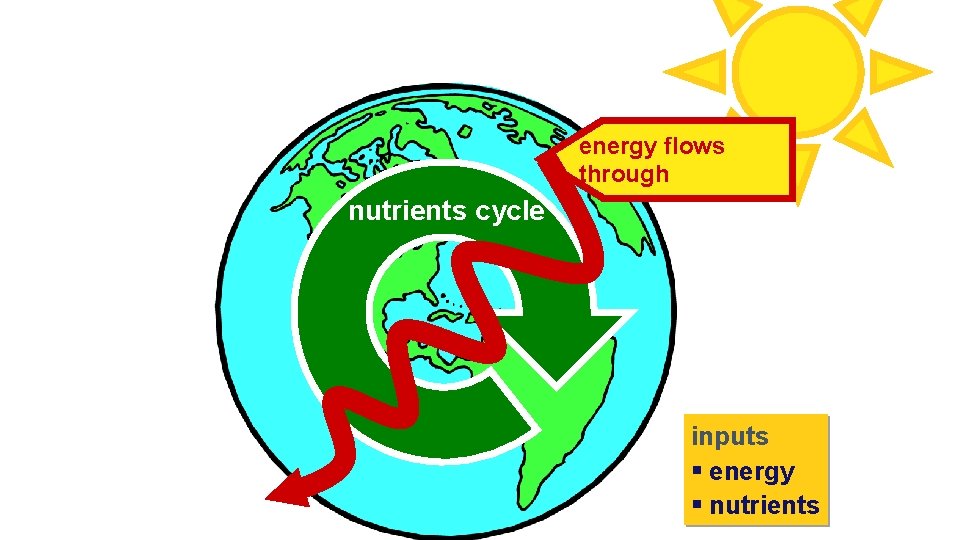
energy flows through nutrients cycle biosphere inputs § energy § nutrients
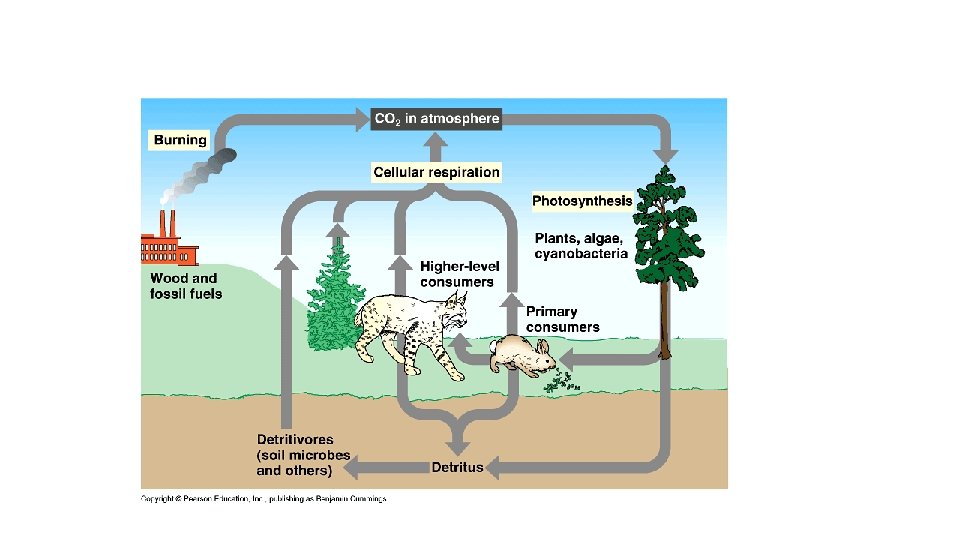
Carbon Cycle There are four main 'pools' of carbon in the environment: • Atmosphere • Biosphere • Sediments • Ocean There a number of processes by which carbon can be cycled between these pools: Photosynthesis Feeding Respiration Fossilization Combustion • In oceans, carbon can be reversibly trapped and stored as limestone (storage happens more readily at low temperatures)
Draw a diagram of the carbon cycle
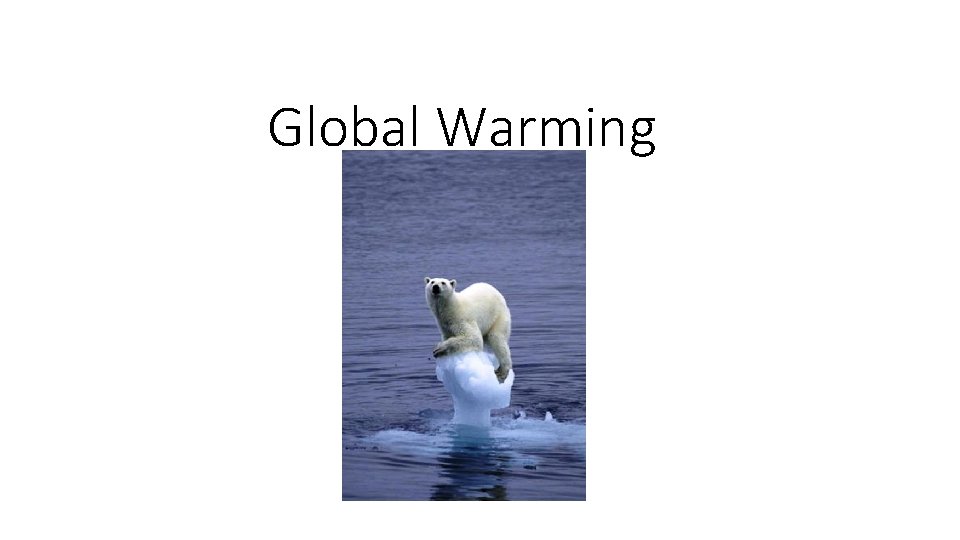
Global Warming
List 5 things that you “know” about global warming and climate change
What do you want to know about global warming?
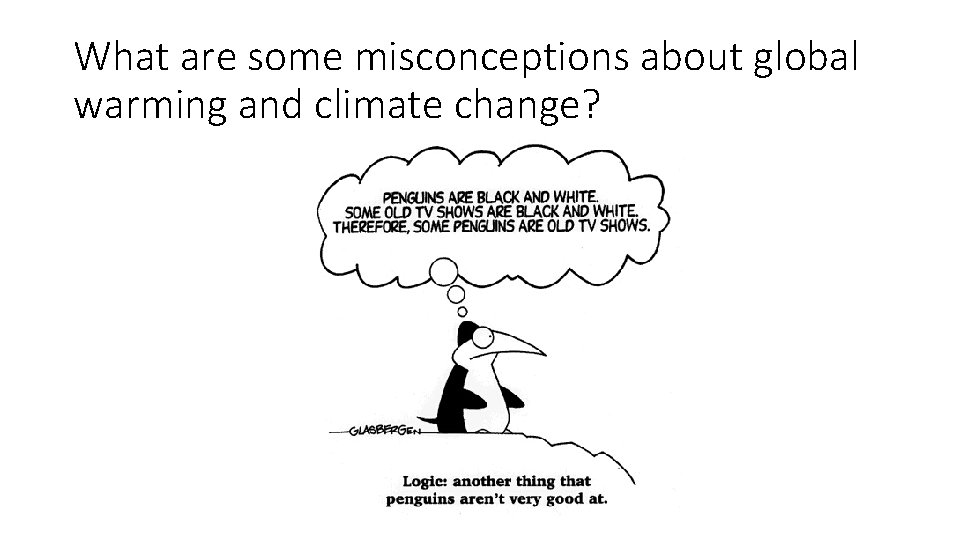
What are some misconceptions about global warming and climate change?
Is there a difference between the green house effect and the hole in the ozone layer? YES!!!
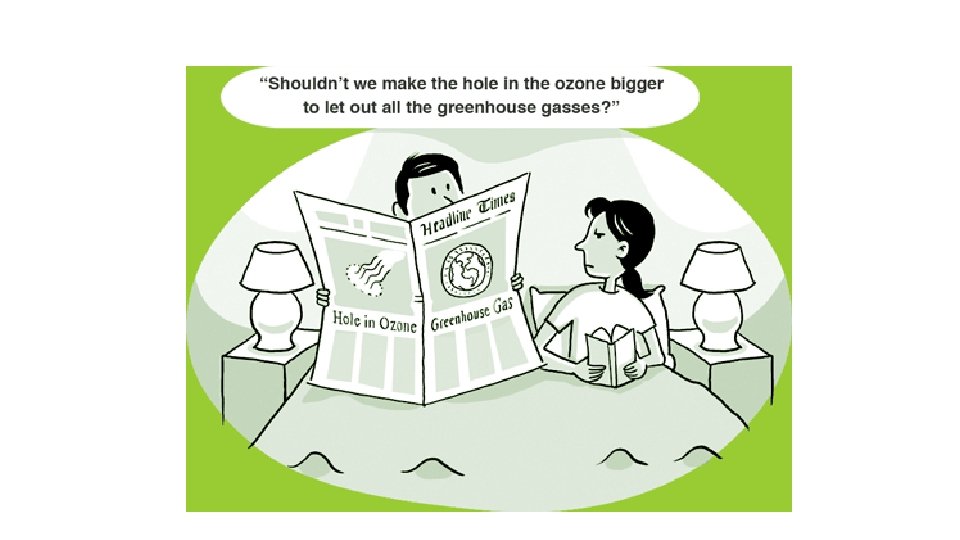
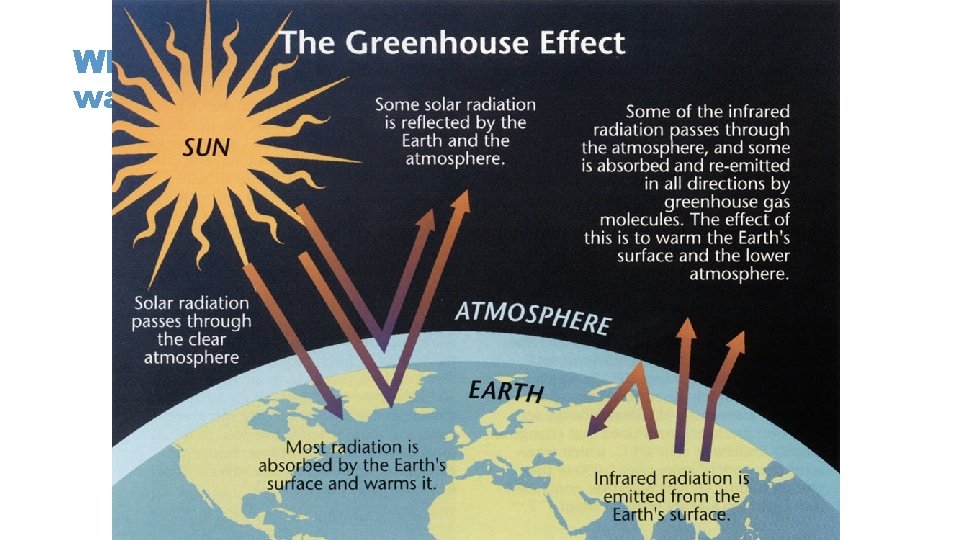
What is the difference between global warming and climate change? GLOBAL WARMING is the increase of the Earth’s average surface temperature due to a build-up of greenhouse gases in the atmosphere. CLIMATE CHANGE is a broader term that refers to long-term changes in climate, including average temperature and precipitation.
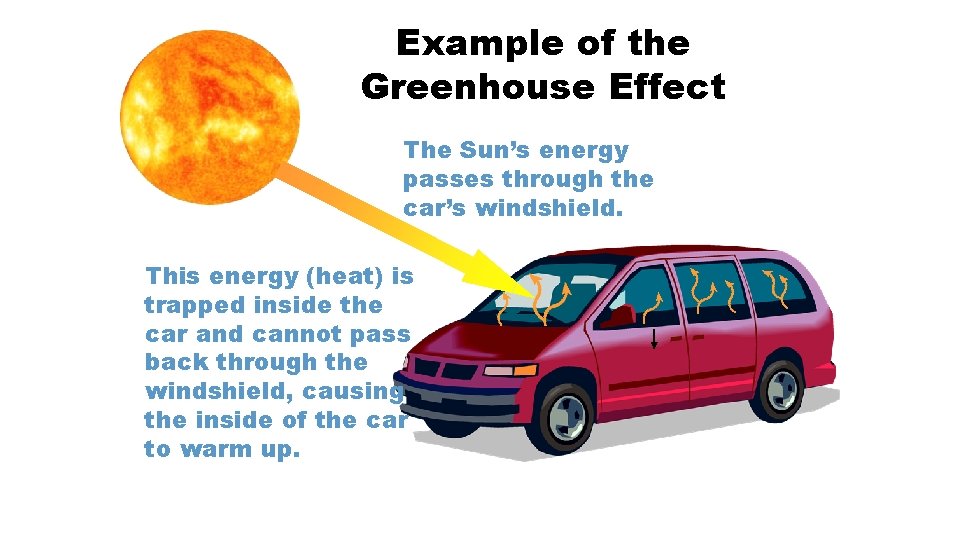
Example of the Greenhouse Effect The Sun’s energy passes through the car’s windshield. This energy (heat) is trapped inside the car and cannot pass back through the windshield, causing the inside of the car to warm up.
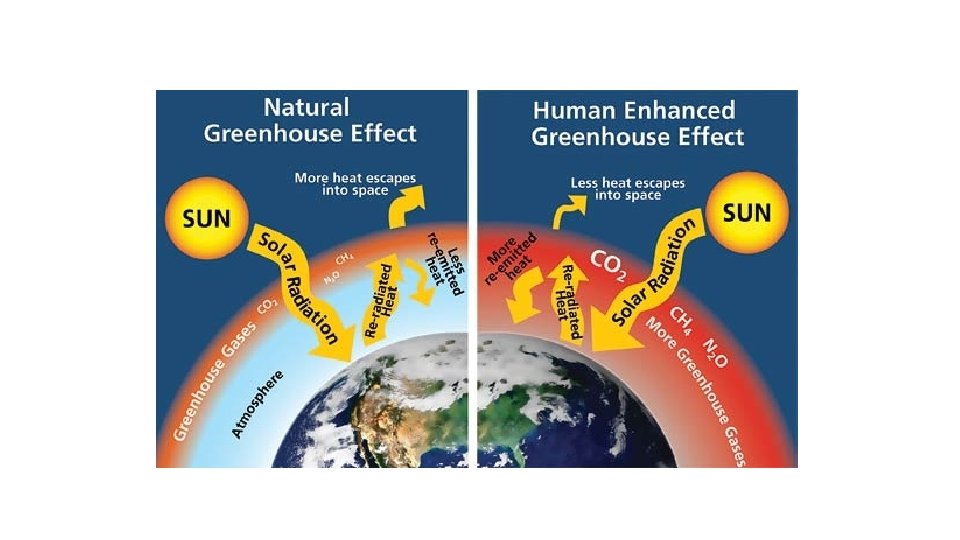
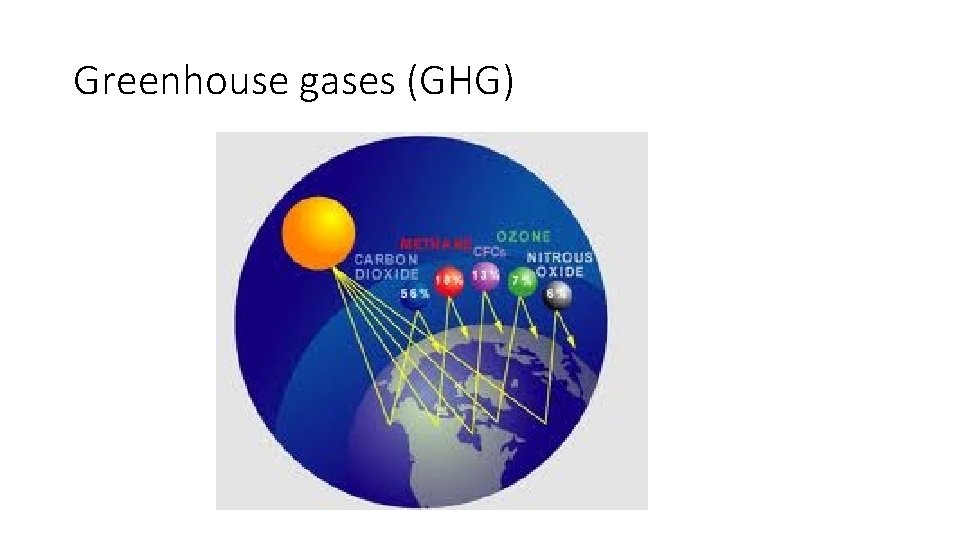
Greenhouse gases (GHG)
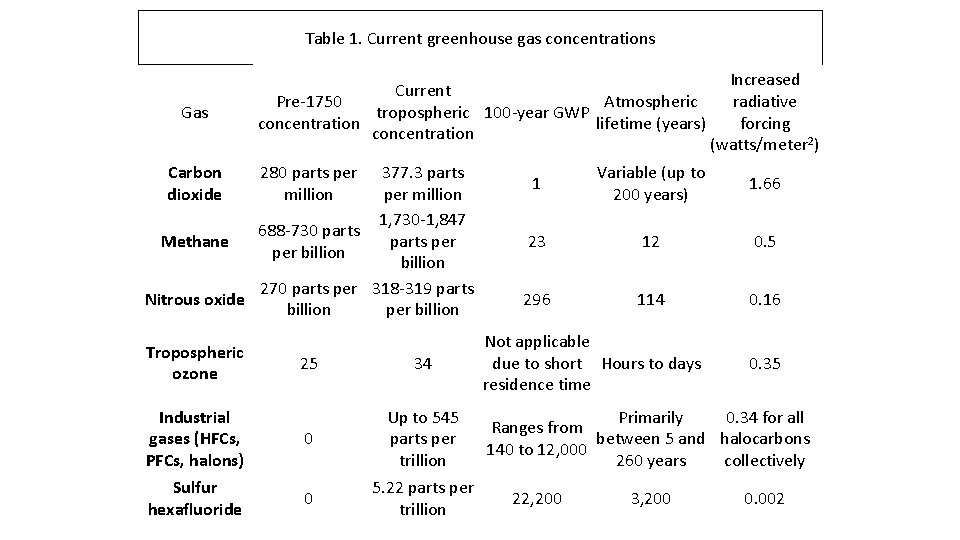
Table 1. Current greenhouse gas concentrations Gas Carbon dioxide Current Pre-1750 Atmospheric tropospheric 100 -year GWP concentration lifetime (years) concentration 377. 3 parts per million 1, 730 -1, 847 688 -730 parts Methane parts per billion 270 parts per 318 -319 parts Nitrous oxide billion per billion Tropospheric ozone 280 parts per million 25 34 Industrial gases (HFCs, PFCs, halons) 0 Up to 545 parts per trillion Sulfur hexafluoride 0 5. 22 parts per trillion Increased radiative forcing (watts/meter 2) 1 Variable (up to 200 years) 1. 66 23 12 0. 5 296 114 0. 16 Not applicable due to short Hours to days residence time 0. 35 Primarily 0. 34 for all Ranges from between 5 and halocarbons 140 to 12, 000 260 years collectively 22, 200 3, 200 0. 002
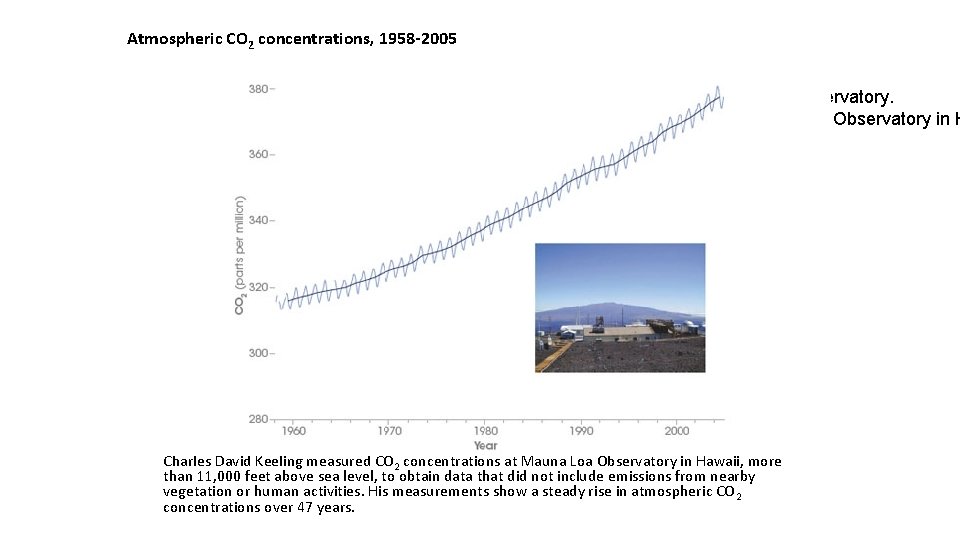
Atmospheric CO 2 concentrations, 1958 -2005 © 2005. National Aeronautics and Space Administration. Earth Observatory. Charles David Keeling measured CO 2 concentrations at Mauna Loa Observatory in H concentrations over 47 years. Charles David Keeling measured CO 2 concentrations at Mauna Loa Observatory in Hawaii, more than 11, 000 feet above sea level, to obtain data that did not include emissions from nearby vegetation or human activities. His measurements show a steady rise in atmospheric CO 2 concentrations over 47 years.
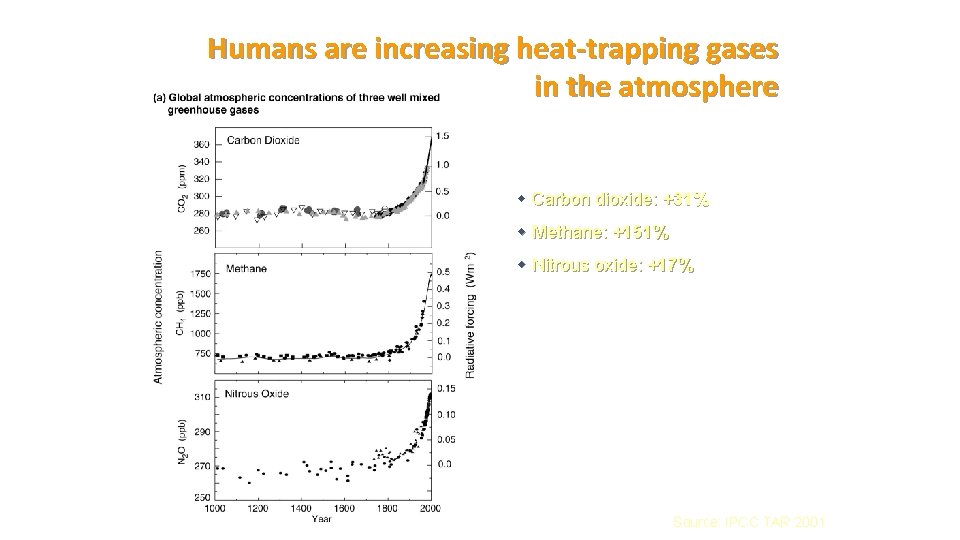
Humans are increasing heat-trapping gases in the atmosphere w Carbon dioxide: +31% w Methane: +151% w Nitrous oxide: +17% Source: IPCC TAR 2001
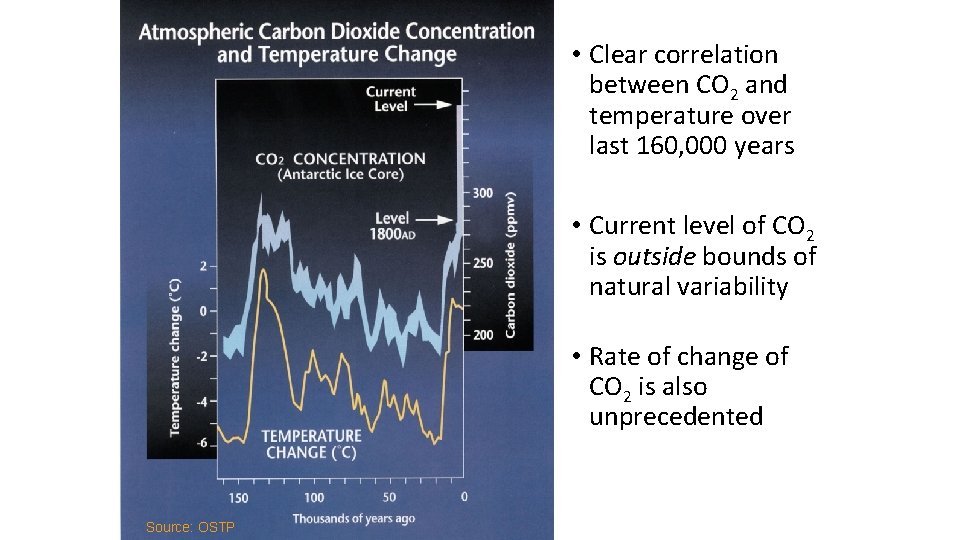
• Clear correlation between CO 2 and temperature over last 160, 000 years • Current level of CO 2 is outside bounds of natural variability • Rate of change of CO 2 is also unprecedented Source: OSTP
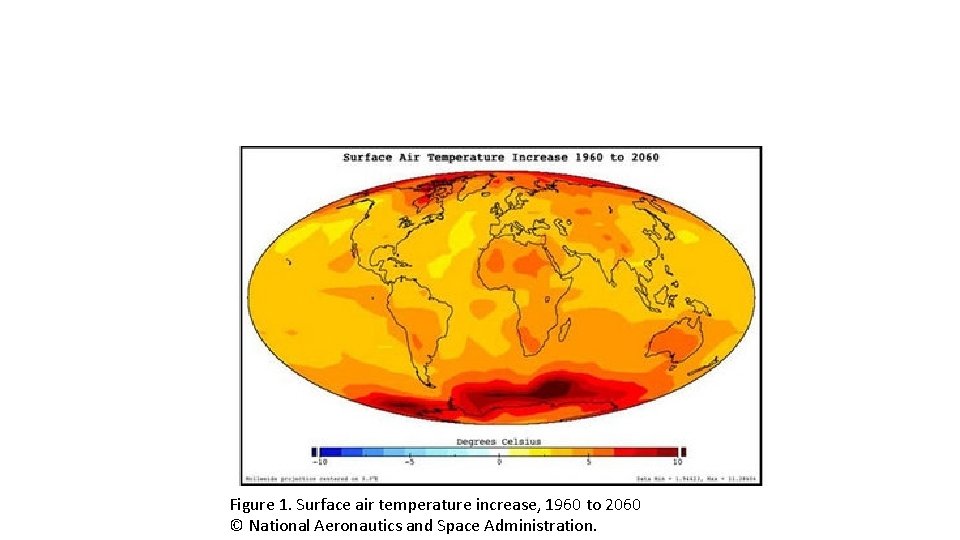
Figure 1. Surface air temperature increase, 1960 to 2060 © National Aeronautics and Space Administration.

Global Average Surface Temperature Has Risen 1. 1°F (0. 6°C) Over the Past 100 Years Source: IPCC TAR 2001
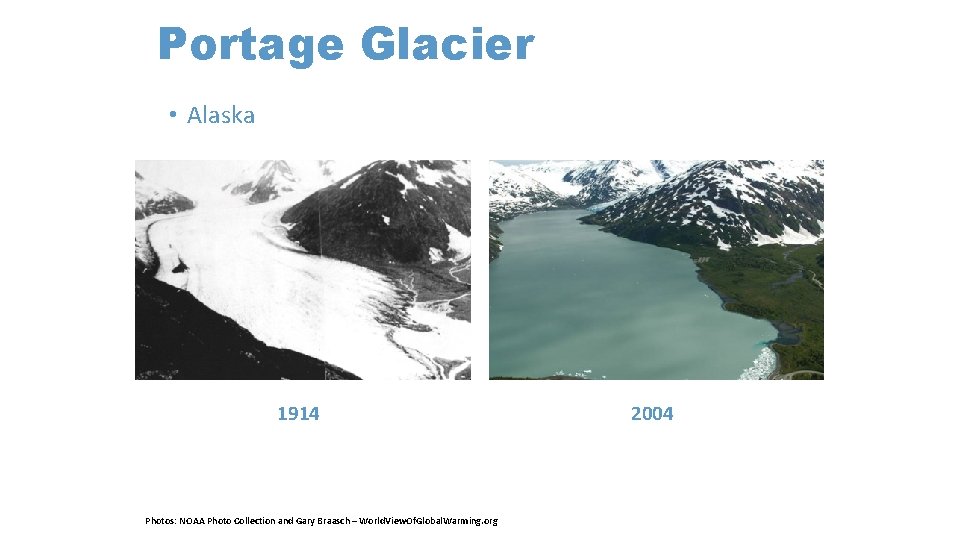
Portage Glacier • Alaska 1914 Photos: NOAA Photo Collection and Gary Braasch – World. View. Of. Global. Warming. org 2004
5. 2. 4 Outline the precautionary principle • The precautionary principle states that when a human-induced activity raises a significant threat of harm to the environment or human health, then precautionary measures should be taken even if there is no scientific consensus regarding cause and effect • So in order to engage in an activity that MAY cause changes to the environment, the group/ company/ government/ individual must first prove that is will do no harm. • This is a reversal of previous policies where we had to prove it would be harmful to stop it.
5. 2. 5 Evaluate the precautionary principle as a justification for strong action in response to the threats posed by the enhanced greenhouse effect How does this apply to global warming? Give reasons that action must be taken, how could global warming result in harm for others.
5. 2. 6 Outline the consequences of a global temperature rise on arctic ecosystems • List 3 consequences specific to arctic ecosystems
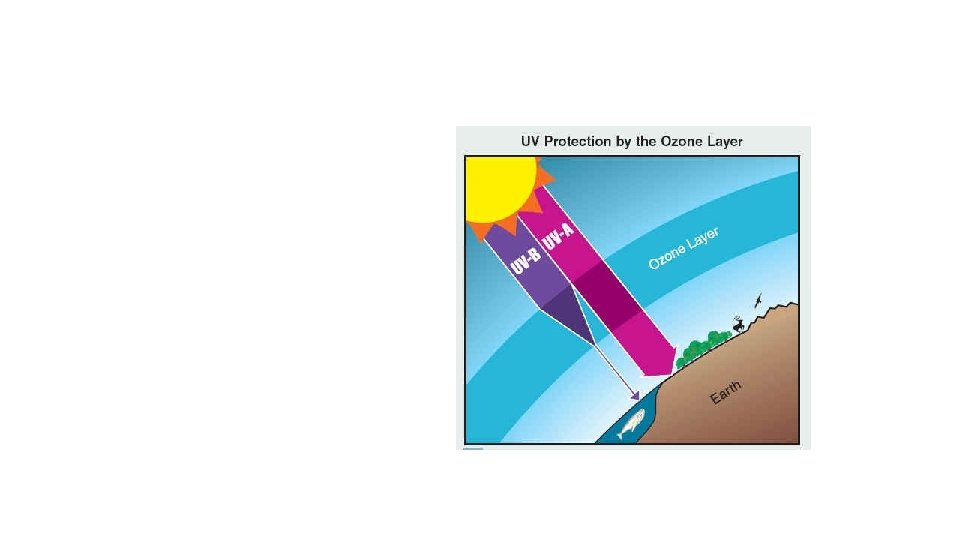
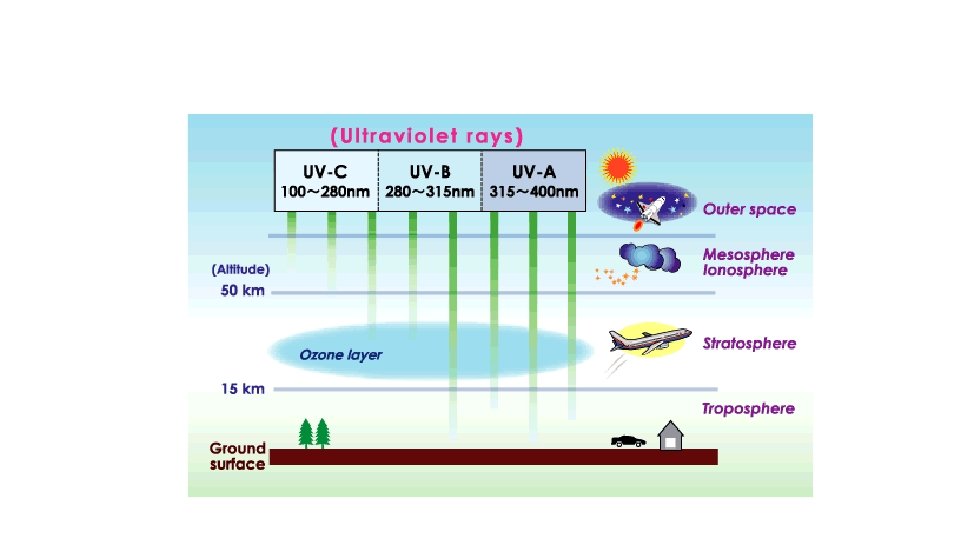
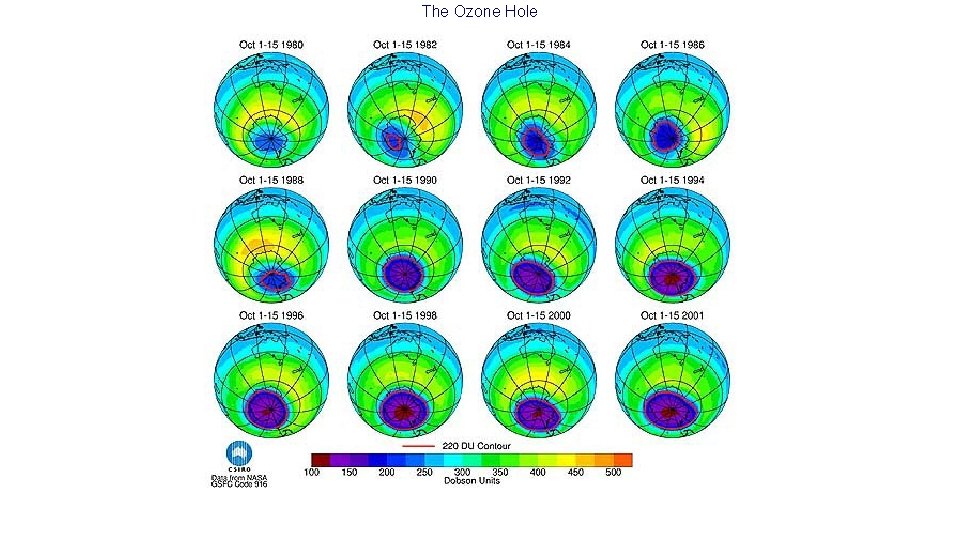
The Ozone Hole
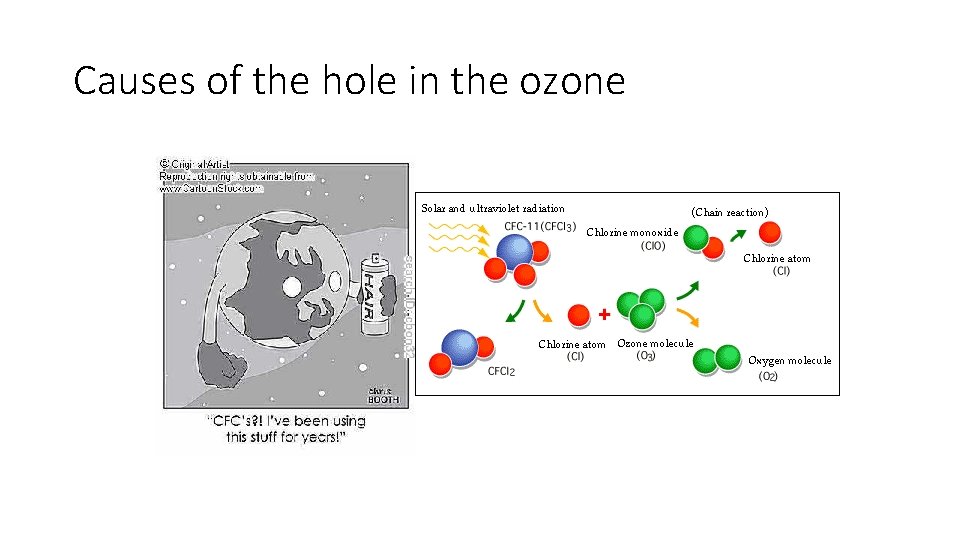
Causes of the hole in the ozone
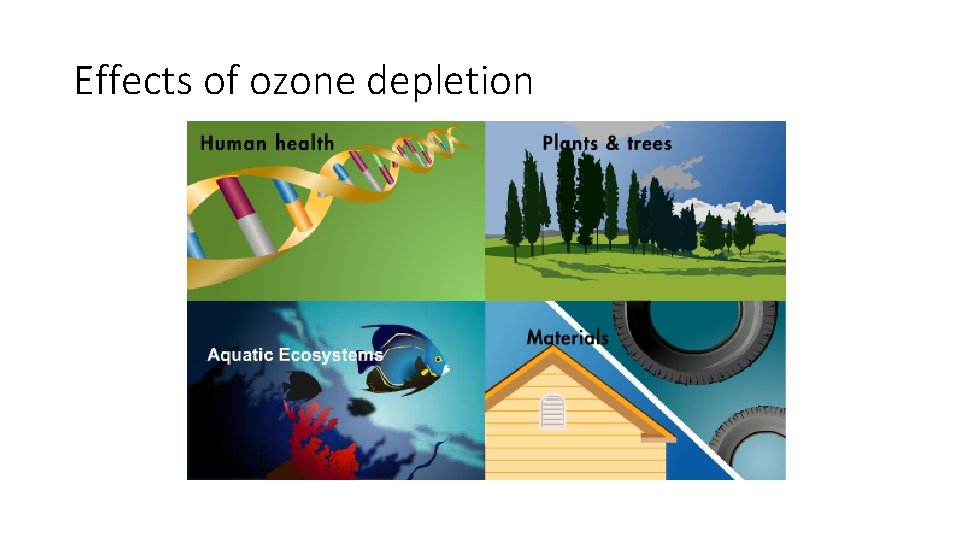
Effects of ozone depletion
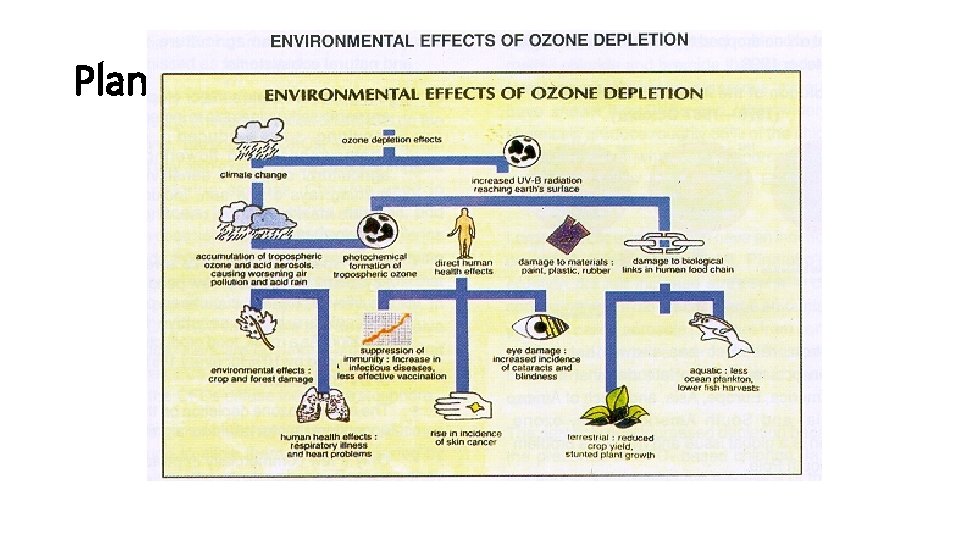
Plants and Trees
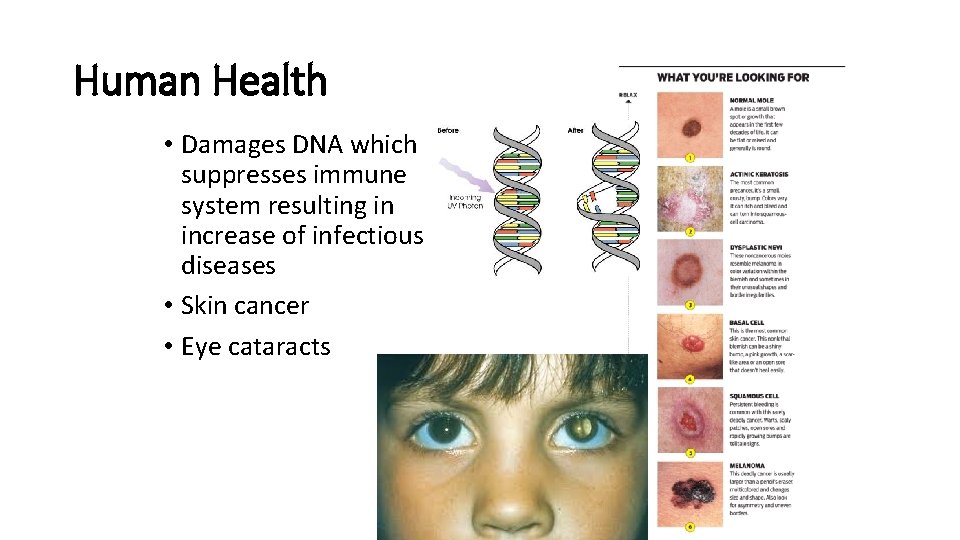
Human Health • Damages DNA which suppresses immune system resulting in increase of infectious diseases • Skin cancer • Eye cataracts
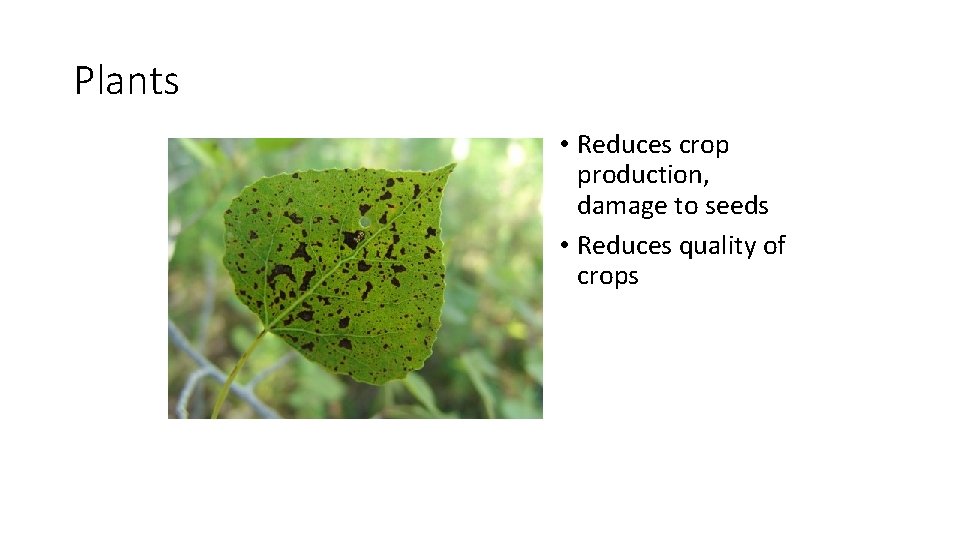
Plants • Reduces crop production, damage to seeds • Reduces quality of crops
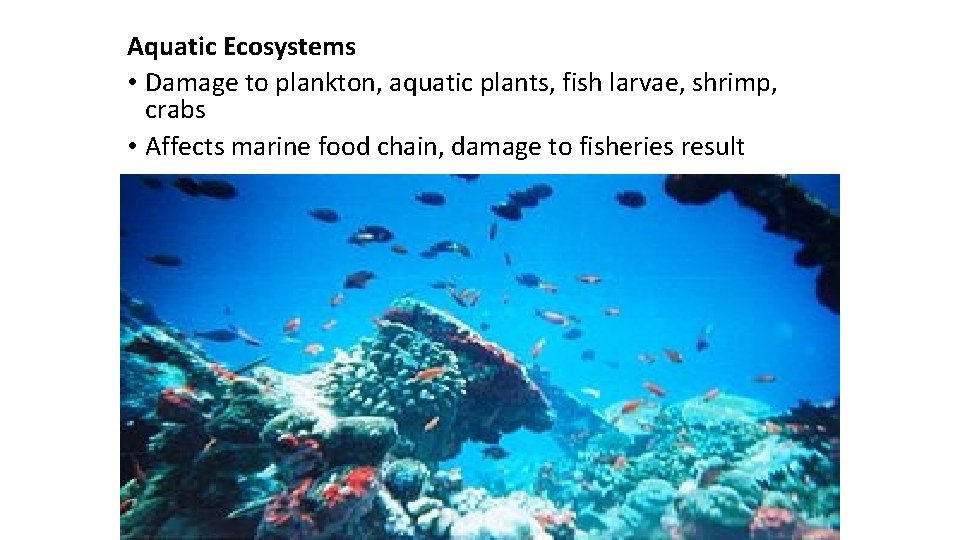
Aquatic Ecosystems • Damage to plankton, aquatic plants, fish larvae, shrimp, crabs • Affects marine food chain, damage to fisheries result
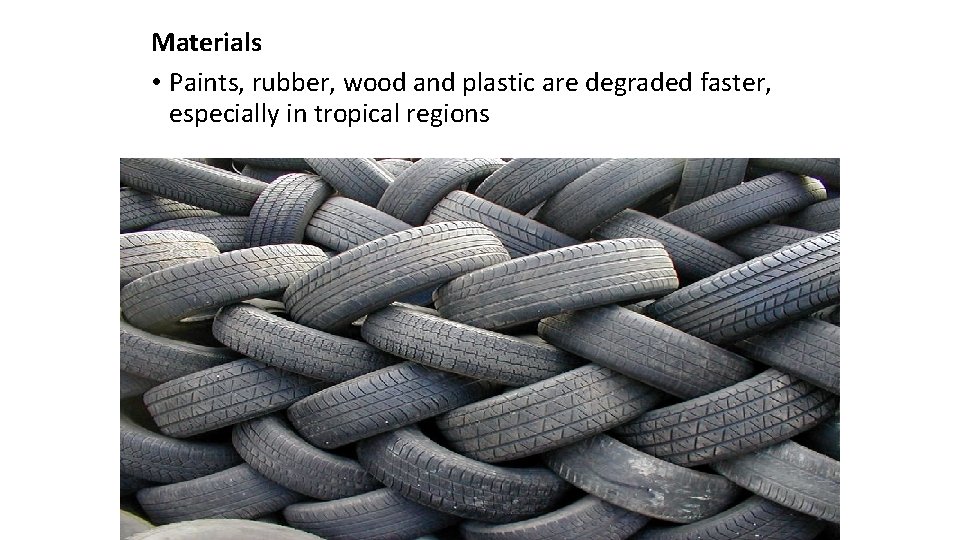
Materials • Paints, rubber, wood and plastic are degraded faster, especially in tropical regions
• G. 3. 9 Outline the effects of ultraviolet (UV) radiation on living tissues and biological productivity. • G. 3. 10 Outline the effect of chlorofluorocarbons (CFCs) on the ozone layer. • G. 3. 11 State that ozone in the stratosphere absorbs UV radiation.
Human Impact on Food Chains G. 3. 7 Define biomagnification. Biomagnification is when the effects of certain toxins stored in an organism are magnified as one moves up the food chain. Therefore, the top predators have the greatest concentration of these toxins in their bodies.
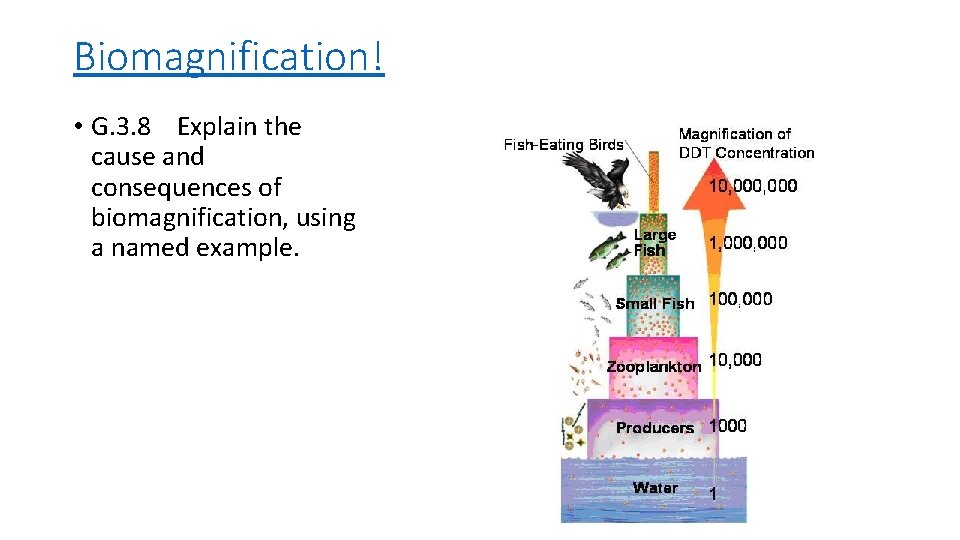
Biomagnification! • G. 3. 8 Explain the cause and consequences of biomagnification, using a named example.

Aliens!!!
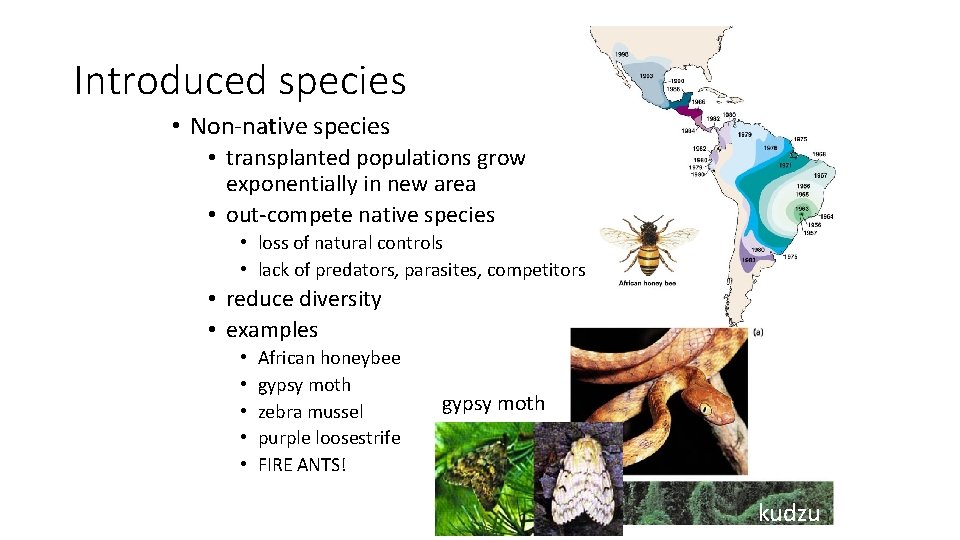
Introduced species • Non-native species • transplanted populations grow exponentially in new area • out-compete native species • loss of natural controls • lack of predators, parasites, competitors • reduce diversity • examples • • • African honeybee gypsy moth zebra mussel purple loosestrife FIRE ANTS! gypsy moth kudzu
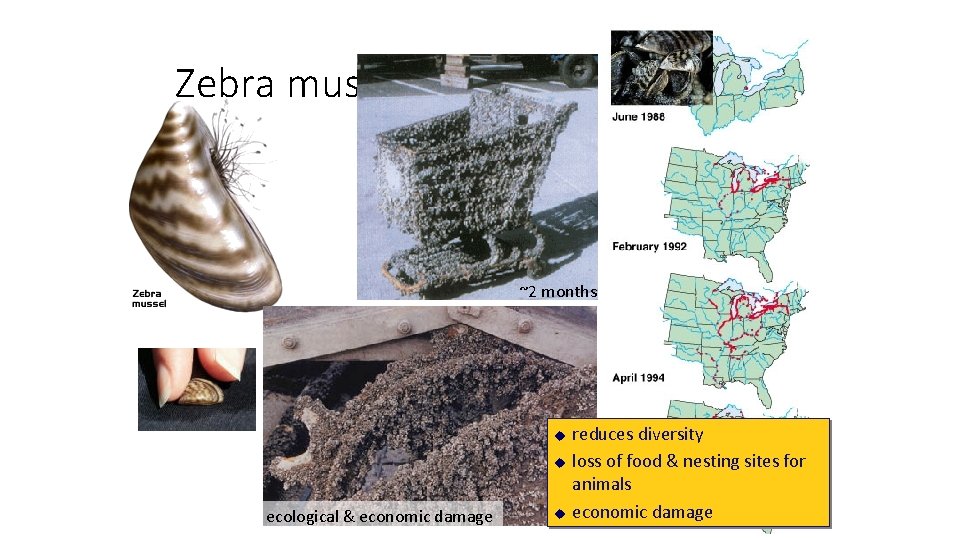
Zebra mussel ~2 months u u ecological & economic damage u reduces diversity loss of food & nesting sites for animals economic damage
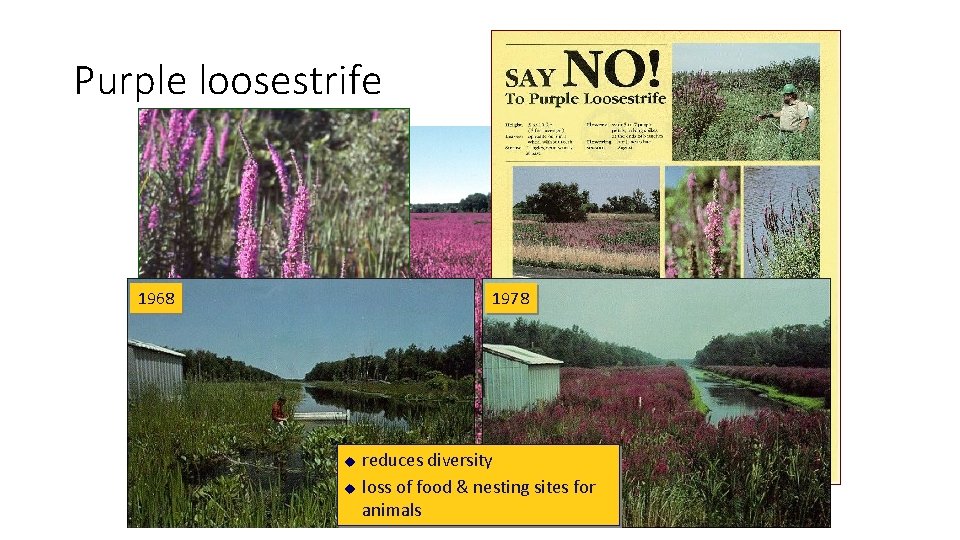
Purple loosestrife 1968 1978 u u reduces diversity loss of food & nesting sites for animals
- Slides: 43