
Human health effects bioaccumulation and toxicity Joint thematic
Human health effects - bioaccumulation and toxicity Joint thematic session – Heavy metals with focus on mercury Dr Dorota Jarosinska WHO European Centre for Environment and Health Fourth Joint session of the Working Group on Effects and the Steering Body to EMEP Geneva, Switzerland, 10 -14 September, 2018
Presentation outline • Health effects of mercury – an overview • Mercury human biomonitoring (HBM) • Mercury in WHO air quality guidelines and related documents
Health impacts of mercury Mercury is one of the top priority chemicals of major public health concern globally: • environmental ubiquity and persistence • adverse developmental effects observed at relatively low levels of exposure Exposure to all forms of mercury can contribute to the burden of disease Different forms of mercury are toxic to people • elemental mercury • inorganic mercury • organic mercury, mainly methylmercury
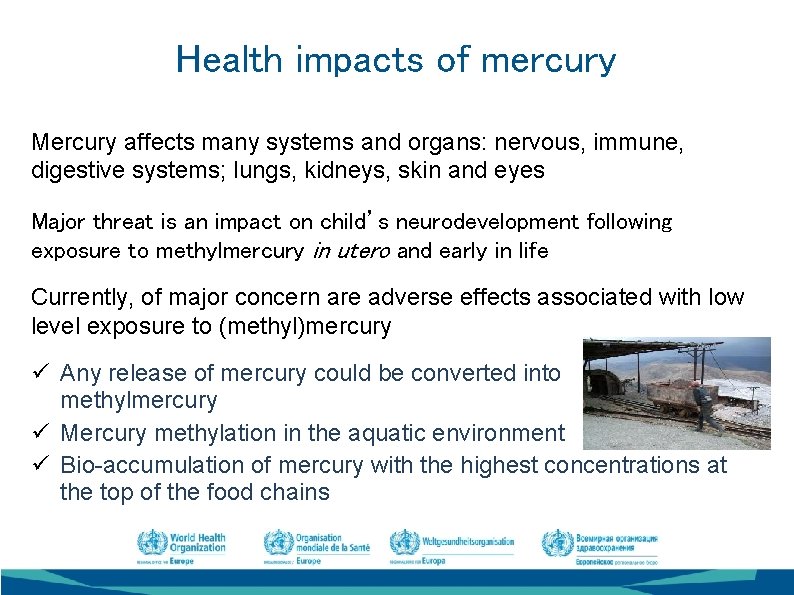
Health impacts of mercury Mercury affects many systems and organs: nervous, immune, digestive systems; lungs, kidneys, skin and eyes Major threat is an impact on child’s neurodevelopment following exposure to methylmercury in utero and early in life Currently, of major concern are adverse effects associated with low level exposure to (methyl)mercury ü Any release of mercury could be converted into methylmercury ü Mercury methylation in the aquatic environment ü Bio-accumulation of mercury with the highest concentrations at the top of the food chains
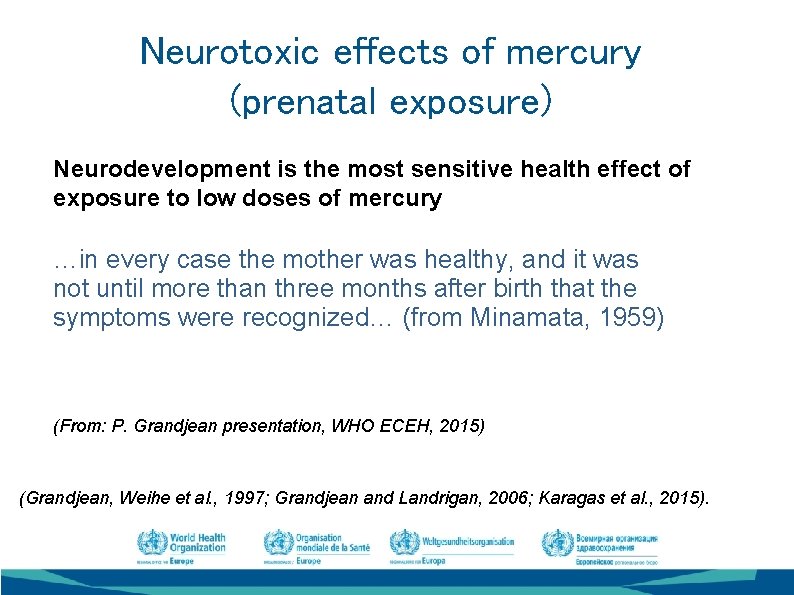
Neurotoxic effects of mercury (prenatal exposure) Neurodevelopment is the most sensitive health effect of exposure to low doses of mercury Neurodevelopmental and neuropsychological dysfunctions: …in every case the mother was healthy, and it was • cognitive development not until more than three months after birth that the • behaviour symptoms were recognized… (from Minamata, 1959) • memory • language • visual-spatial and (From: P. Grandjean presentation, • motor function WHO ECEH, 2015) (Grandjean, Weihe et al. , 1997; Grandjean and Landrigan, 2006; Karagas et al. , 2015).
2013 UN Minamata Convention EEA, 2013
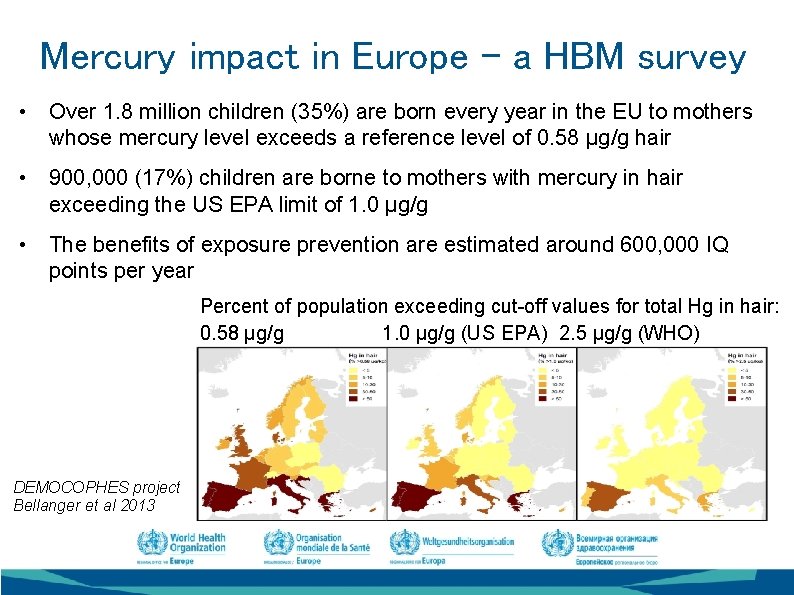
Mercury impact in Europe – a HBM survey • Over 1. 8 million children (35%) are born every year in the EU to mothers whose mercury level exceeds a reference level of 0. 58 µg/g hair • 900, 000 (17%) children are borne to mothers with mercury in hair exceeding the US EPA limit of 1. 0 µg/g • The benefits of exposure prevention are estimated around 600, 000 IQ points per year Percent of population exceeding cut-off values for total Hg in hair: 0. 58 µg/g 1. 0 µg/g (US EPA) 2. 5 µg/g (WHO) DEMOCOPHES project Bellanger et al 2013
WHO work on human biomonitoring (HBM) • reflects cumulative exposure from various sources • exposure biomarkers are linked with health effects • allows identification of highly exposed population groups • enables assessing geographical and temporal trends in exposure • facilitates evaluation of the effectiveness of risk reduction measures • provides basis for cost-effectiveness analysis and socialeconomic impact assessment
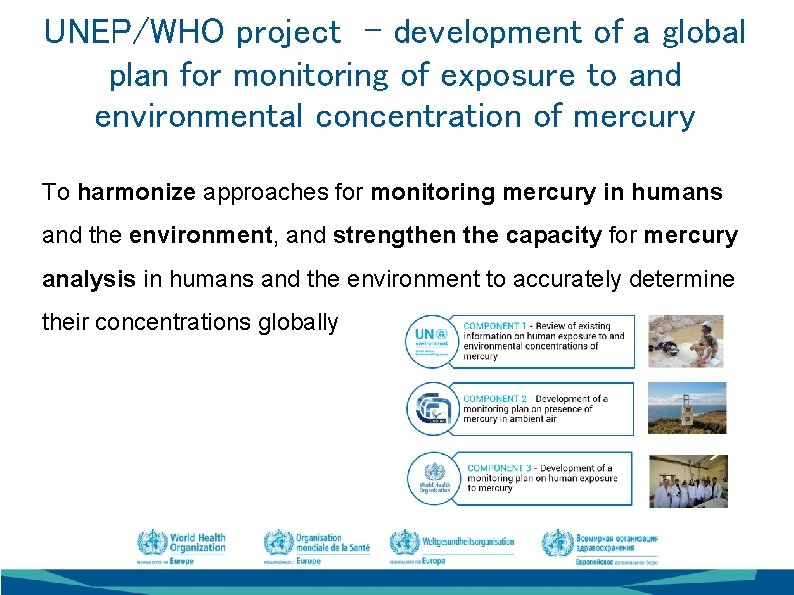
UNEP/WHO project - development of a global plan for monitoring of exposure to and environmental concentration of mercury To harmonize approaches for monitoring mercury in humans and the environment, and strengthen the capacity for mercury analysis in humans and the environment to accurately determine their concentrations globally
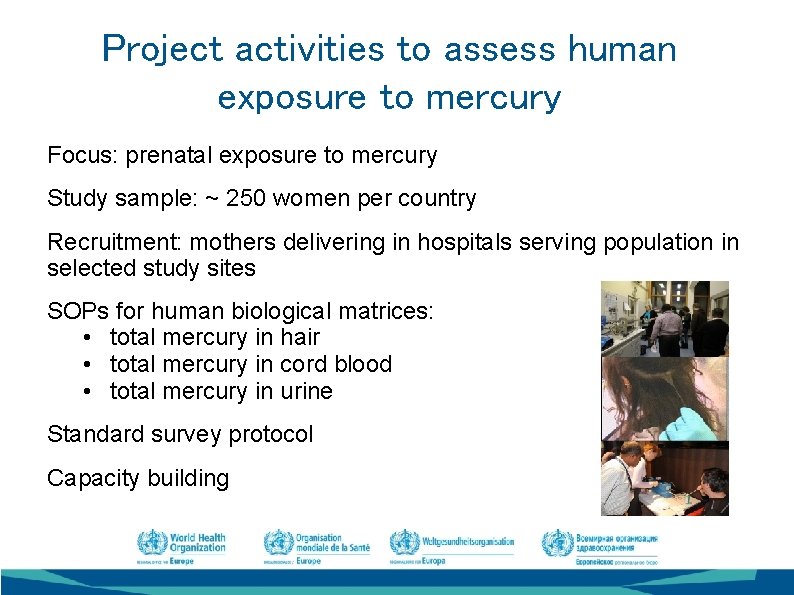
Project activities to assess human exposure to mercury Focus: prenatal exposure to mercury Study sample: ~ 250 women per country Recruitment: mothers delivering in hospitals serving population in selected study sites SOPs for human biological matrices: • total mercury in hair • total mercury in cord blood • total mercury in urine Standard survey protocol Capacity building
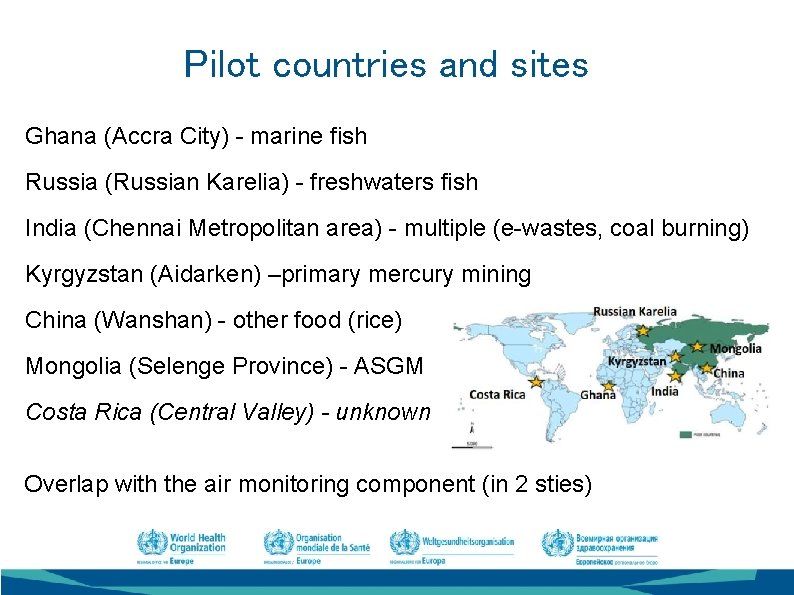
Pilot countries and sites Ghana (Accra City) - marine fish Russia (Russian Karelia) - freshwaters fish India (Chennai Metropolitan area) - multiple (e-wastes, coal burning) Kyrgyzstan (Aidarken) –primary mercury mining China (Wanshan) - other food (rice) Mongolia (Selenge Province) - ASGM Costa Rica (Central Valley) - unknown Overlap with the air monitoring component (in 2 sties)
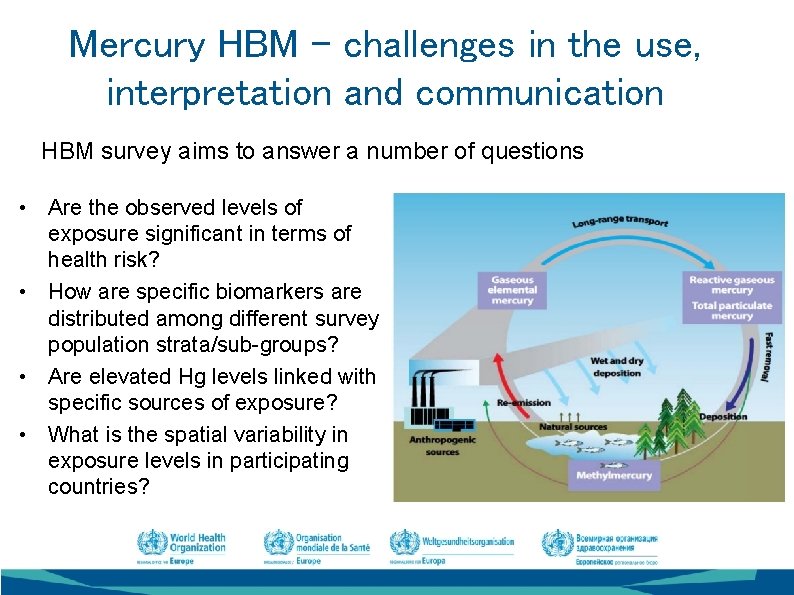
Mercury HBM – challenges in the use, interpretation and communication HBM survey aims to answer a number of questions • Are the observed levels of exposure significant in terms of health risk? • How are specific biomarkers are distributed among different survey population strata/sub-groups? • Are elevated Hg levels linked with specific sources of exposure? • What is the spatial variability in exposure levels in participating countries?
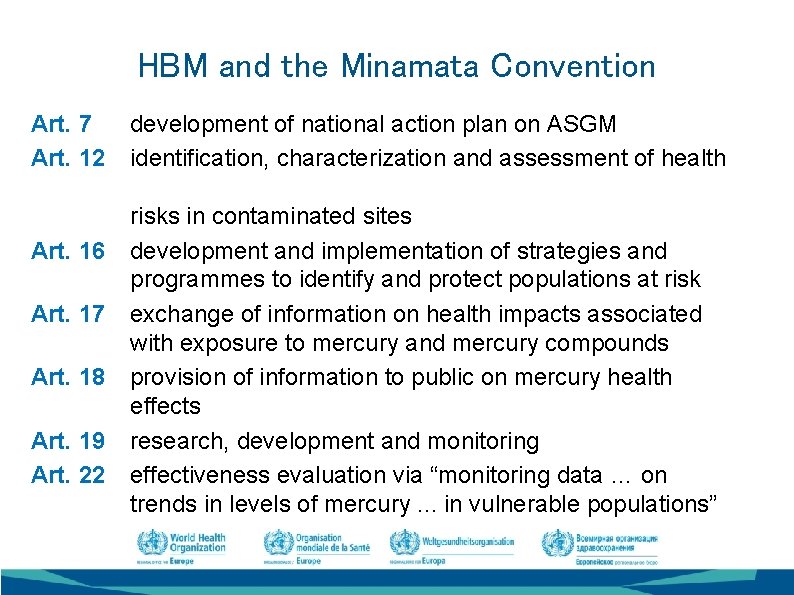
HBM and the Minamata Convention Art. 7 Art. 12 development of national action plan on ASGM identification, characterization and assessment of health risks in contaminated sites Art. 16 development and implementation of strategies and programmes to identify and protect populations at risk Art. 17 exchange of information on health impacts associated with exposure to mercury and mercury compounds Art. 18 provision of information to public on mercury health effects Art. 19 research, development and monitoring Art. 22 effectiveness evaluation via “monitoring data … on trends in levels of mercury. . . in vulnerable populations”
HBM and the Minamata Convention • Recognition of mercury HBM as an instrument for the effectiveness evaluation of international and national measures; • Policy at national level - implementation of national HBM programs • Capacity building/strengthening (strong support from national scientific community) • Synergy with other monitoring systems (air, biota, fish) • Effective management of international databases
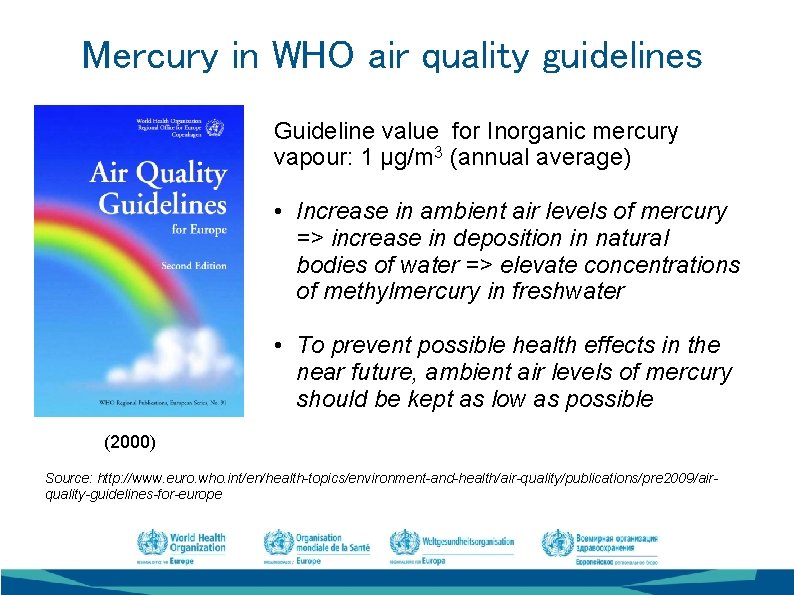
Mercury in WHO air quality guidelines Guideline value for Inorganic mercury vapour: 1 µg/m 3 (annual average) • Increase in ambient air levels of mercury => increase in deposition in natural bodies of water => elevate concentrations of methylmercury in freshwater • To prevent possible health effects in the near future, ambient air levels of mercury should be kept as low as possible (2000) Source: http: //www. euro. who. int/en/health-topics/environment-and-health/air-quality/publications/pre 2009/airquality-guidelines-for-europe
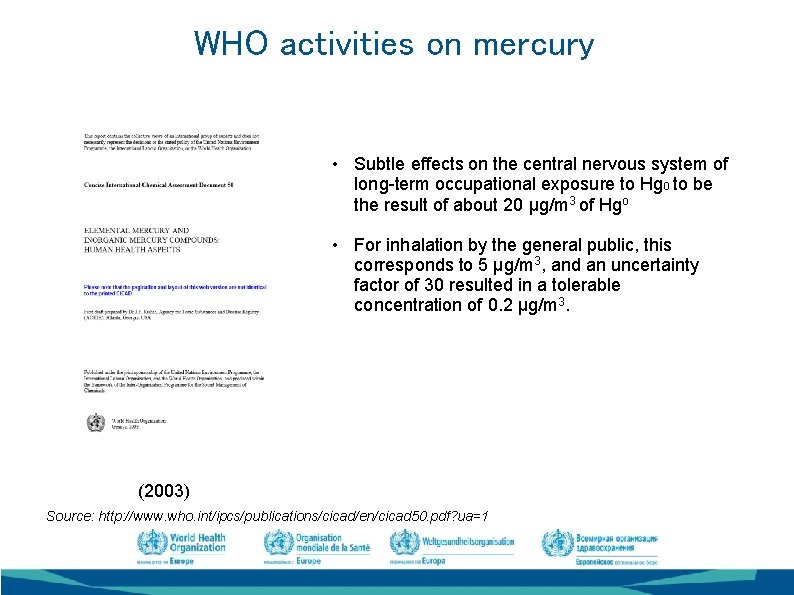
WHO activities on mercury • Subtle effects on the central nervous system of long-term occupational exposure to Hg 0 to be the result of about 20 μg/m 3 of Hgo • For inhalation by the general public, this corresponds to 5 μg/m 3, and an uncertainty factor of 30 resulted in a tolerable concentration of 0. 2 μg/m 3. (2003) Source: http: //www. who. int/ipcs/publications/cicad/en/cicad 50. pdf? ua=1
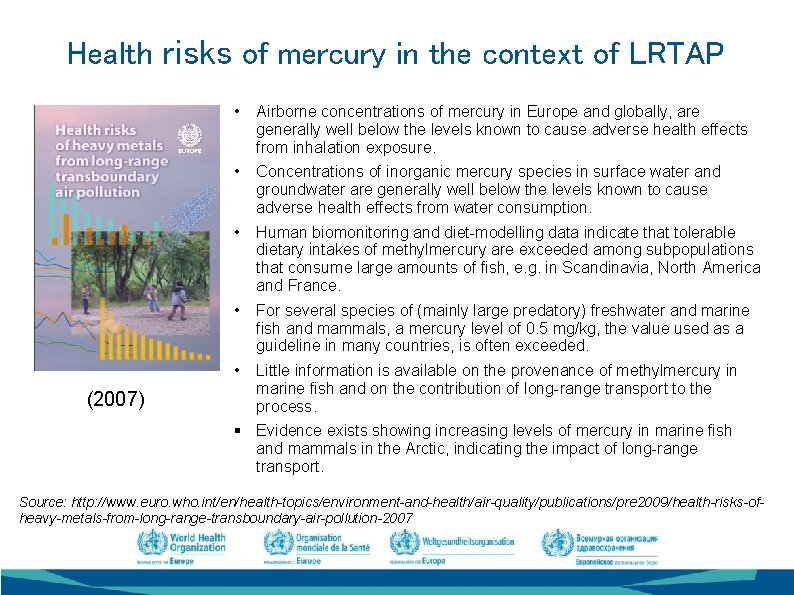
Health risks of mercury in the context of LRTAP (2007) • Airborne concentrations of mercury in Europe and globally, are generally well below the levels known to cause adverse health effects from inhalation exposure. • Concentrations of inorganic mercury species in surface water and groundwater are generally well below the levels known to cause adverse health effects from water consumption. • Human biomonitoring and diet-modelling data indicate that tolerable dietary intakes of methylmercury are exceeded among subpopulations that consume large amounts of fish, e. g. in Scandinavia, North America and France. • For several species of (mainly large predatory) freshwater and marine fish and mammals, a mercury level of 0. 5 mg/kg, the value used as a guideline in many countries, is often exceeded. • Little information is available on the provenance of methylmercury in marine fish and on the contribution of long-range transport to the process. § Evidence exists showing increasing levels of mercury in marine fish and mammals in the Arctic, indicating the impact of long-range transport. Source: http: //www. euro. who. int/en/health-topics/environment-and-health/air-quality/publications/pre 2009/health-risks-ofheavy-metals-from-long-range-transboundary-air-pollution-2007
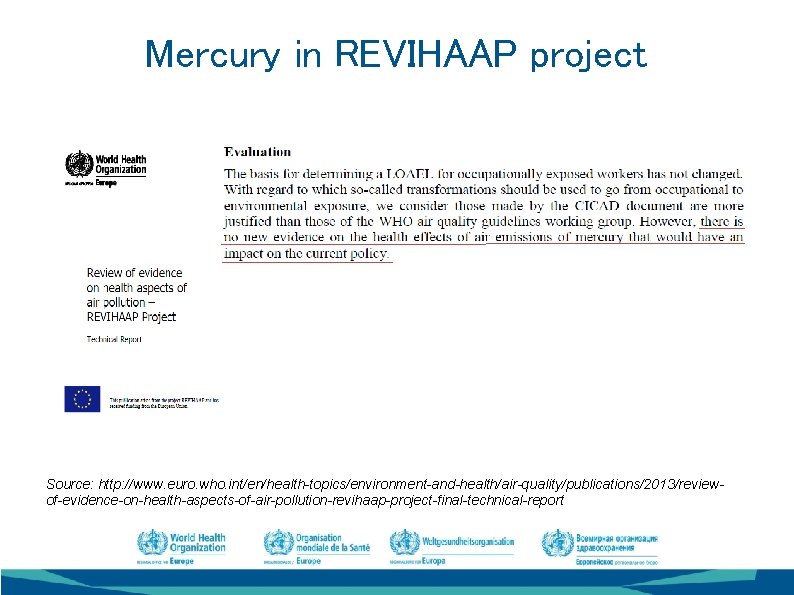
Mercury in REVIHAAP project Source: http: //www. euro. who. int/en/health-topics/environment-and-health/air-quality/publications/2013/reviewof-evidence-on-health-aspects-of-air-pollution-revihaap-project-final-technical-report
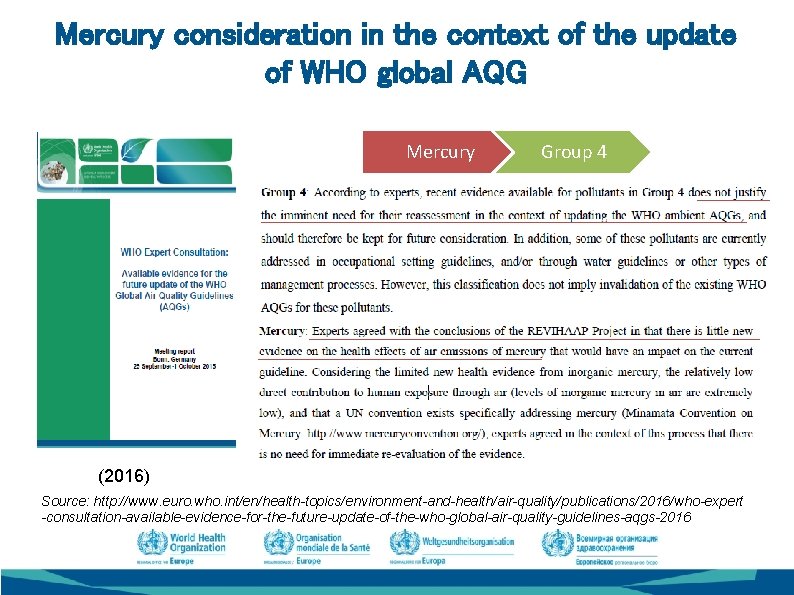
Mercury consideration in the context of the update of WHO global AQG Mercury Group 4 (2016) Source: http: //www. euro. who. int/en/health-topics/environment-and-health/air-quality/publications/2016/who-expert -consultation-available-evidence-for-the-future-update-of-the-who-global-air-quality-guidelines-aqgs-2016
Thank you for your attention http: //www. euro. who. int/en/health-topics/environment-and-health
- Slides: 20