
HUMAN HEALTH AND DISEASES Contents at a glance

- Slides: 25
HUMAN HEALTH AND DISEASES
Contents at a glance �Concepts of Immunology : Types of Immunity �Structure of Antibody, Antigen-antibody complex Antigens on blood cells. �Pathogens and Parasites (Amoebiasis, Malaria, Filariasis, Ascariasis, Typhoid, Pneumonia, Common cold and Ring worm �Cancer and AIDS �Adolescence, Drug and alcohol abuse
INTRODUCTION �How to maintain the good health? Balanced diet Regular exercise Personal hygiene Right attitude of mind Good habits
Concepts of Immunology �Branches of Immunology 1) Clinical 2) Basic 3) Serology �Human immun system consists of – Lymphoid organs Lymphoid tissue Lymphoid cell �Antigen �Antibody
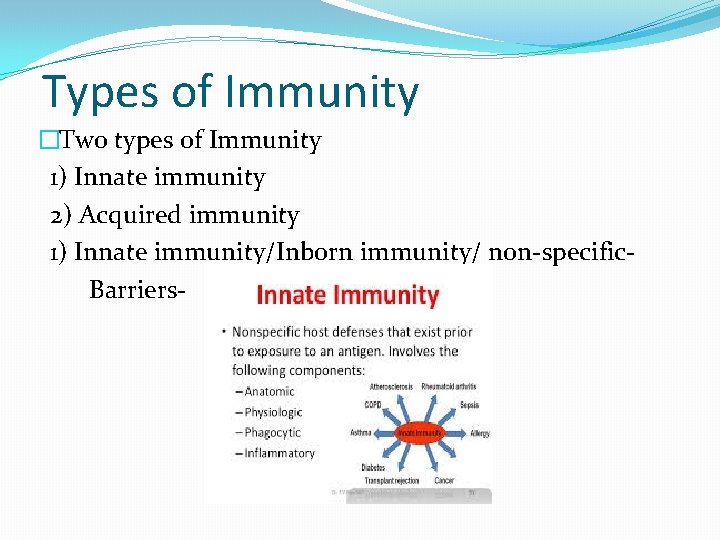
Types of Immunity �Two types of Immunity 1) Innate immunity 2) Acquired immunity 1) Innate immunity/Inborn immunity/ non-specific. Barriers-
2) Acquired immunity �Unique features of acquired immunity I) Specificity II) Diversity III) Discrimination between self and non-self IV) Memory � Types of Acquired immunity 1) Acquired active immunitya) Natural acquired active immunity b)Artificial acquired active immunity 2) Acquired pasive immunitya)Natural acquired pasive immunity b) Artificial acquired pasive immunity
Cells of acquired/ specific immun system �A) Lymphocytes �Mechanism of action of T-lymphocytes to antigens i)Helper T-cells ii) Killer T-cells iii) suppressor iv) memory �Mechanism of action of B-lymphocytes to antigens i) Plasma cells ii) B-cells �B) Antigen Presenting cells i) macrophages ii) B-lymphocytes iii) Dendritic cells
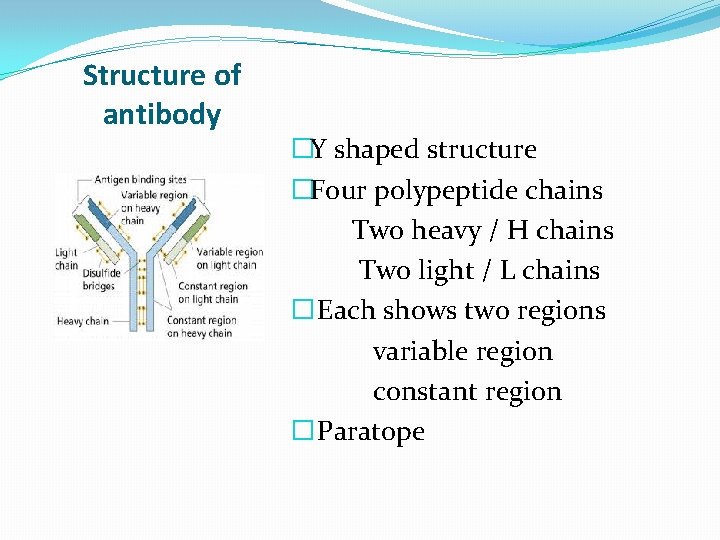
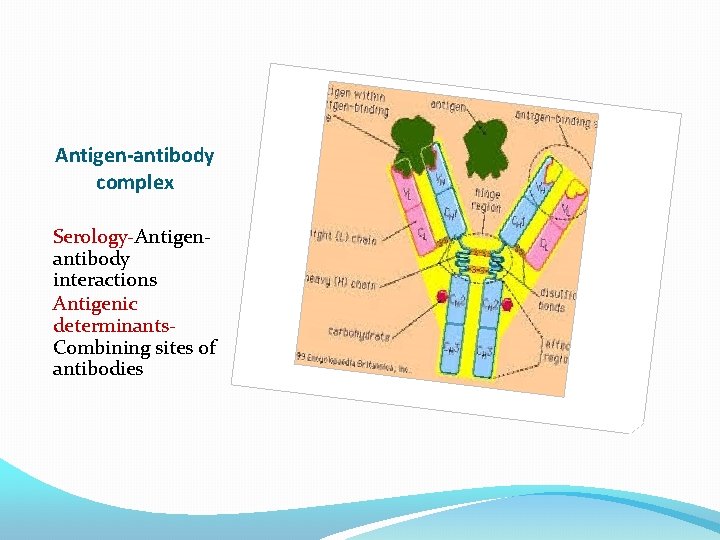
Structure of antibody �Y shaped structure �Four polypeptide chains Two heavy / H chains Two light / L chains � Each shows two regions variable region constant region � Paratope
Antigen-antibody complex Serology-Antigenantibody interactions Antigenic determinants. Combining sites of antibodies
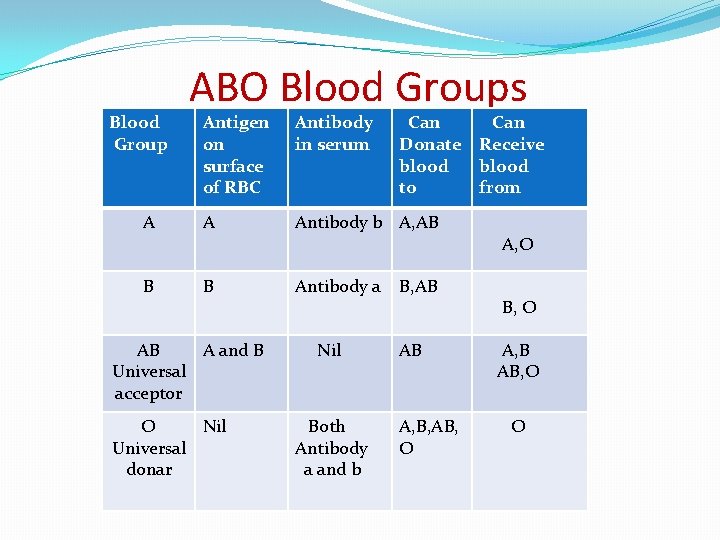
Blood Group ABO Blood Groups Antigen 0 n surface of RBC Antibody in serum A A Antibody b A, AB B B Antibody a AB A and B Universal acceptor O Nil Universal donar Nil Both Antibody a and b Can Donate Receive blood to from B, AB AB A, B, AB, O A, O B, O A, B AB, O O
PATHOGENS AND PARASITES �Pathogen : viruses, rickettsia, bacteria, fungi, yeasts, protozoa, helmints, and certain insects larval stages � Parasite - Organism that lives in/on and takes its nourishment from another organism. �Two types Parasite 1)Ectoparasite 2) Endoparasite
oebiasis Disease causing organism. Entamoeba histolytica Transmission route. Foeco-oral route, contact with dirty hands/ objects, cotaminated water and food, Symptoms. Diarrohea to dysentry with mucus and blood Preventive measures. Wash hands with soap and hot water , clean bathrooms and toiets, avoid raw vegetables, drink boiled water, avoid eating unhygienically prepared food Am
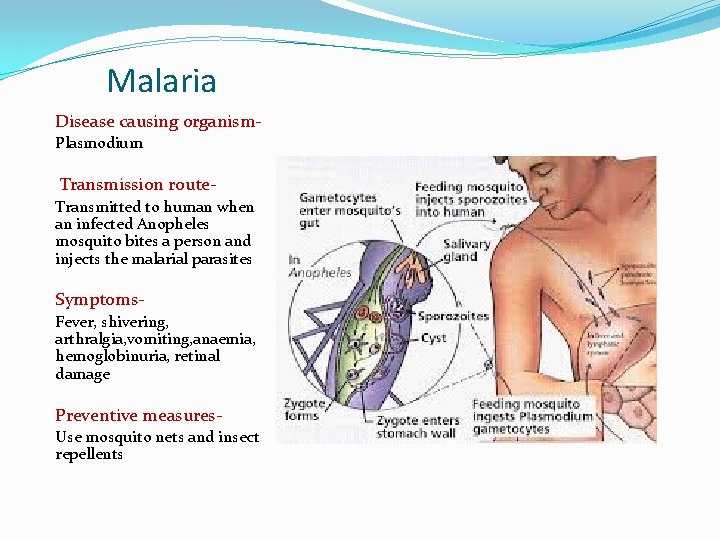
Malaria Disease causing organism. Plasmodium Transmission route. Transmitted to human when an infected Anopheles mosquito bites a person and injects the malarial parasites Symptoms. Fever, shivering, arthralgia, vomiting, anaemia, hemoglobinuria, retinal damage Preventive measures. Use mosquito nets and insect repellents
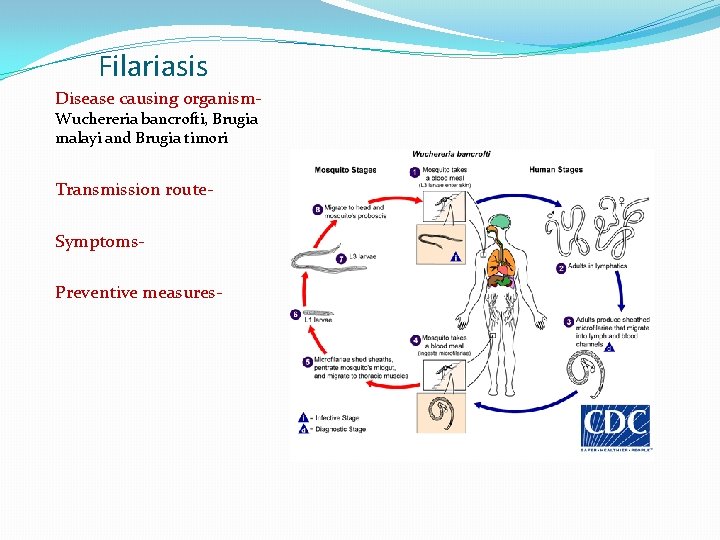
Filariasis Disease causing organism. Wuchereria bancrofti, Brugia malayi and Brugia timori Transmission route. Symptoms. Preventive measures-
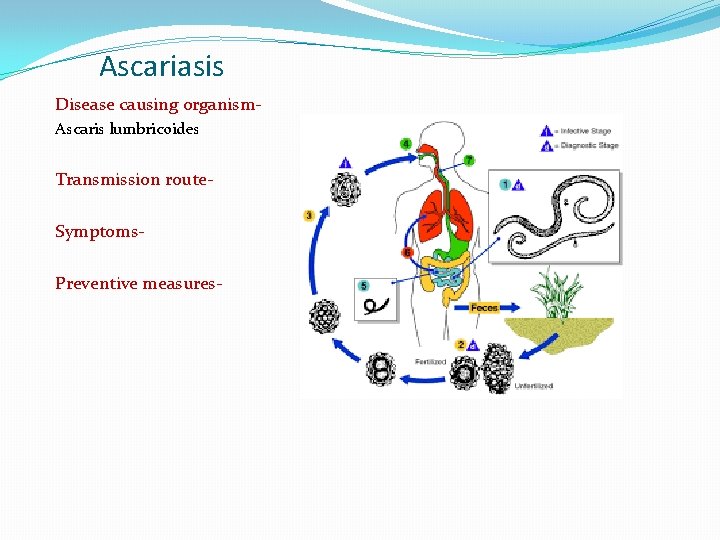
Ascariasis Disease causing organism. Ascaris lumbricoides Transmission route. Symptoms. Preventive measures-
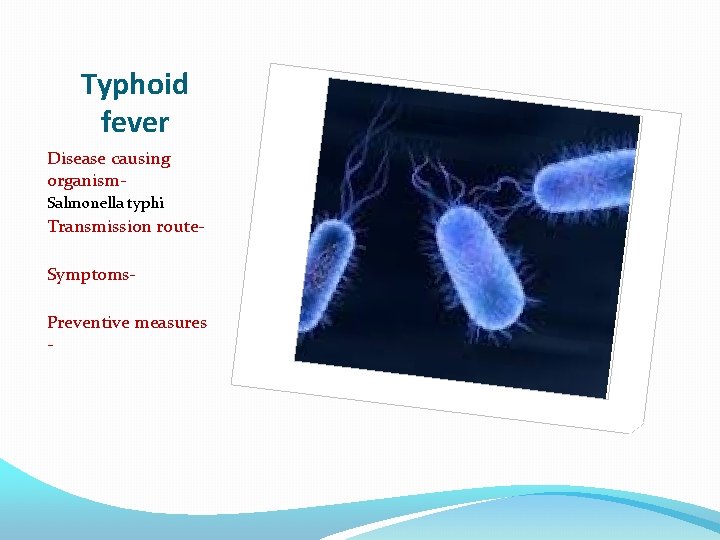
Typhoid fever Disease causing organism. Salmonella typhi Transmission route. Symptoms. Preventive measures -
Pneumonia �Disease causing organism- bacteria, viruses, fungi /parasites �Transmission route�Symptoms�Preventive measures-
Common cold �Disease causing organism- bacteria, viruses �Transmission route�Symptoms�Preventive measures-
Ring worm �Disease causing organism�Transmission route�Symptoms�Preventive measures-
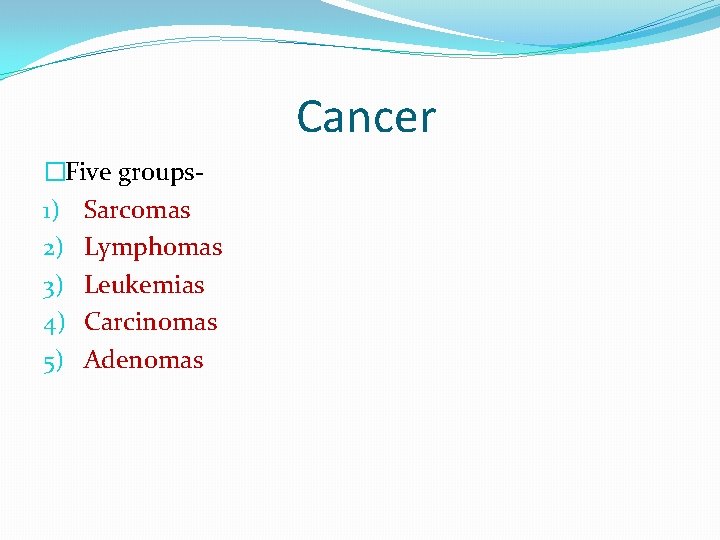
Cancer �Five groups 1) Sarcomas 2) Lymphomas 3) Leukemias 4) Carcinomas 5) Adenomas
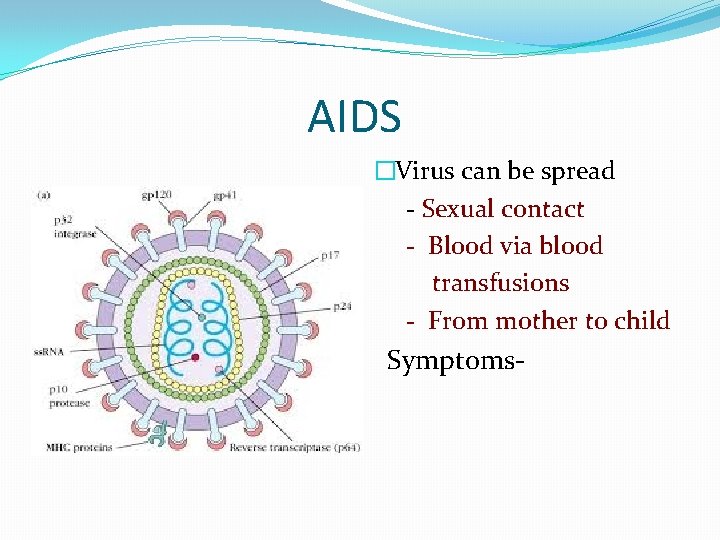
AIDS �Virus can be spread - Sexual contact - Blood via blood transfusions - From mother to child Symptoms-
MULTIPLE CHOICE QUESTIONS 1) Diabetes is a………. . A) Metabolic disease B) Degenerative disease C) Congenital disease D) Communicable disease 2) One of the following diseases will spread with a high rate……… A) Non-contagious disease like cancer B) Congenital disease like colourblindness C) Metabolic disease like diabetes D) Communicable disease like typhoid 3) Carcinoma is cancer of A) Bone B) Connective tissue C) Epithelial tissue D) Lymphoid tissue 4) Which of the following causes cancer of liver? A) Benzopyrene B) Alfatoxin C) Cadium D) Mustard gas 5) Nagging cough and hoarseness is the symptom of A) AIDS B) Cancer C) Typhoid D) Leprosy
6) Typhiod is also called A) Enteric fever B) Scarlet fever C) Typhus fever D) Yellow fever 7) T- lymphocytes get differentiated in - - - A) Pancreas B) Thyms C) Liver D) Spleen 8) The pore forming secretion given by killer –T cells is known as A) Hormons B) Interferon C) Perforins D) Lymphokinase 9) The scientific study of interaction between antigen and antibody Is called A) Haematology B) Angiology C) Serology D) Nosology 10) Acquired immunity is phylogenetically more recent and Found only in - - - A)Vertebrates B) Urochordates C)Cephalochordates D) Hemichordates 11) The flexible region between light and heavy chain on antibody Is called - - - A) Parotope B) Epitope C) Hing D) Variable region
12) The immunity present since from birth is called A)Adaptive B) Innate C)Active D) Passive 13) After vaccination body build up A) Toxins B) Plasma cells C) Antibodies D) Lymphatic tissue 14) Universal recipient blood groop is A) A B)AB C)B D) O 15) Immunodeficiency disease is A) AIDS B)Rheumatoid arthritis C) Asthma D) Erythroblastosis foetalis 16) Rh- factor is A) An enzyme present in the blood B) Protein present in serum of the blood C) Protein present on the surface of RBC’S D) Antigen found on RBC’S of Rhesus monkey
THANK YOU