
Human Health Anatomy and Physiology a very brief
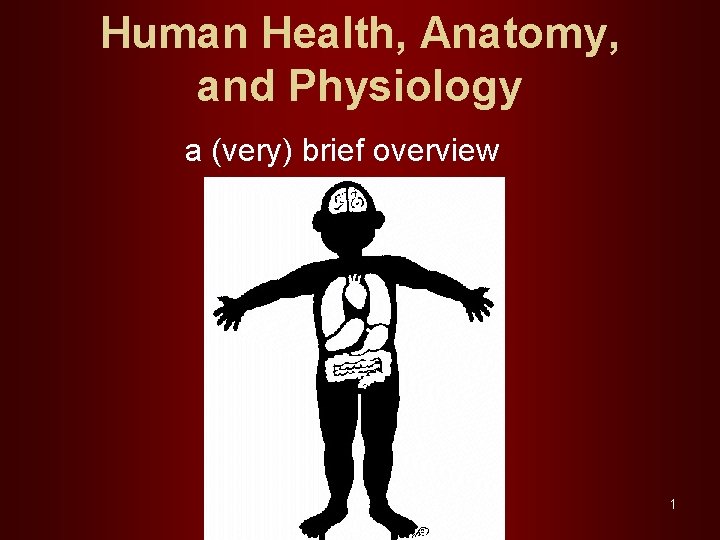
Human Health, Anatomy, and Physiology a (very) brief overview 1
Anatomy and Physiology • Anatomy deals with the structure (morphology) of the body and its parts, in other words, what are things called? • Physiology studies the functions of these parts or asks the question, “how do they work? • The two disciplines are closely interrelated because the functional role of a part depends on how it is constructed. “function depends on form” 2
Homeostasis • the maintenance of a stable internal environment. • Ex: Recall that enzymes function best when within a certain range of temperature and p. H • Ex: Cells must strive to maintain a balance between having too much or too little water in relation to their external environment. Both situations demonstrate homeostasis. Online activity 32. 1 3

• www. pearsonsuccessnet. com • Login: – Ex: Edward. M • Password: – Biology 1 • Online Activity 32. 1 4
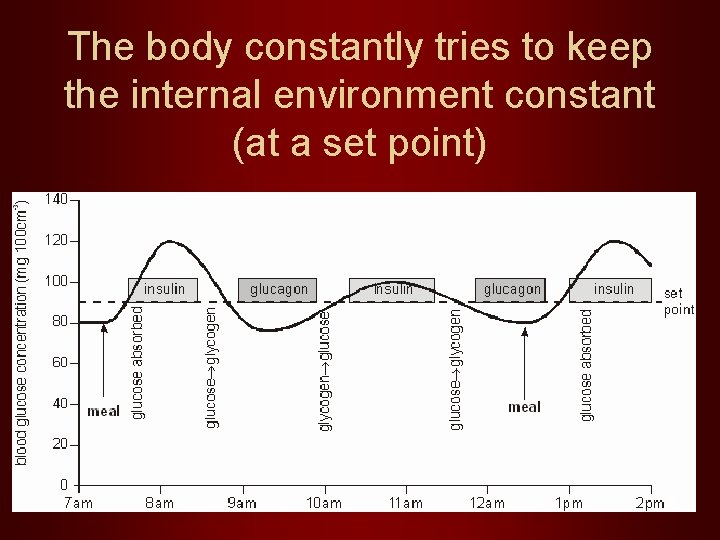
The body constantly tries to keep the internal environment constant (at a set point) 5
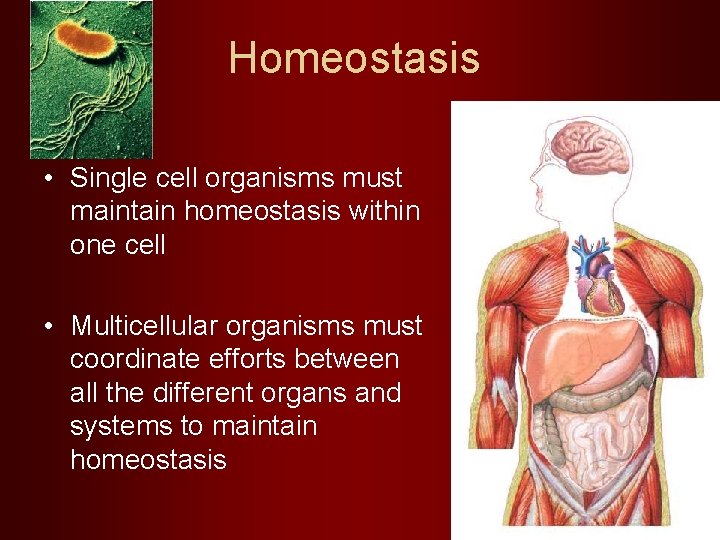
Homeostasis • Single cell organisms must maintain homeostasis within one cell • Multicellular organisms must coordinate efforts between all the different organs and systems to maintain homeostasis 6
What are the different systems? • • • Lymphatic (immune) System Nervous System Endocrine Circulatory Respiratory Digestive Excretory Muscular Skeletal Reproductive 7
Immune System Specialized cells of the system and the molecules they produce are designed to protect against organisms and substances that enter from outside the body and against some cancer cells that arise from within 8
9
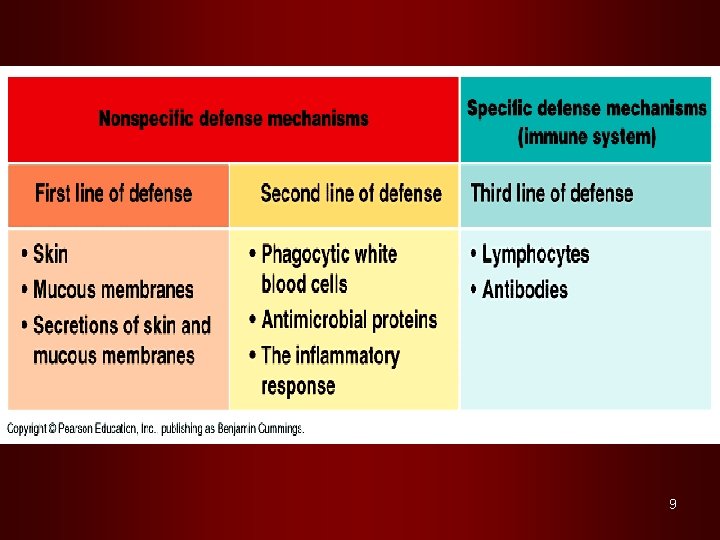
Barriers to Pathogens at Body Surface • Intact skin and mucous membranes • Lysozyme • Normal bacterial flora • Flushing effect and low p. H of urine 10
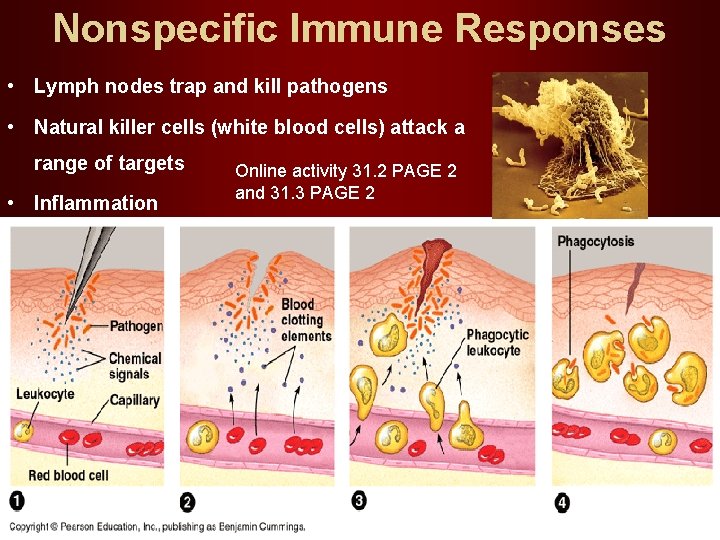
Nonspecific Immune Responses • Lymph nodes trap and kill pathogens • Natural killer cells (white blood cells) attack a range of targets • Inflammation Online activity 31. 2 PAGE 2 and 31. 3 PAGE 2 11
Antibodies • Antibodies are proteins that recognize and bind to specific antigens • Antigens are foreign substances that stimulate the production of antibodies • Antibodies usually only bind to one specific antigen • Antigens can be any of a wide range of substances including cell walls of pathogenic bacteria or fungi and protein coats of pathogenic viruses • Antibodies defend the body against pathogens by binding to antigens on the surface of a pathogen and stimulating its destruction 12
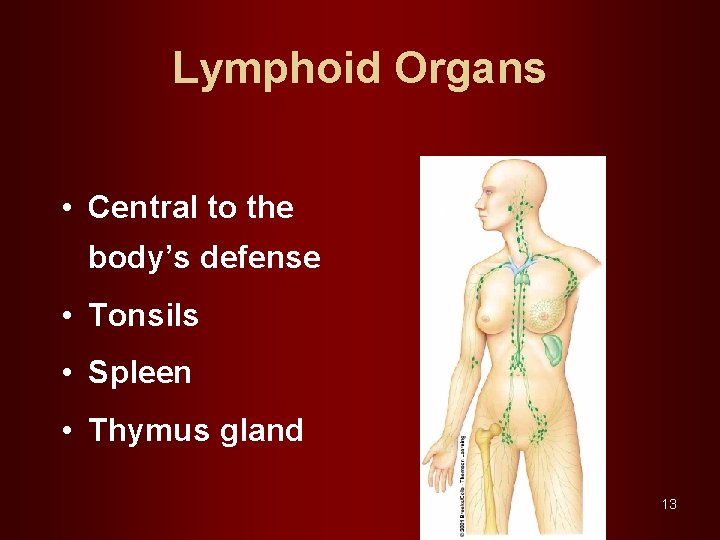
Lymphoid Organs • Central to the body’s defense • Tonsils • Spleen • Thymus gland 13
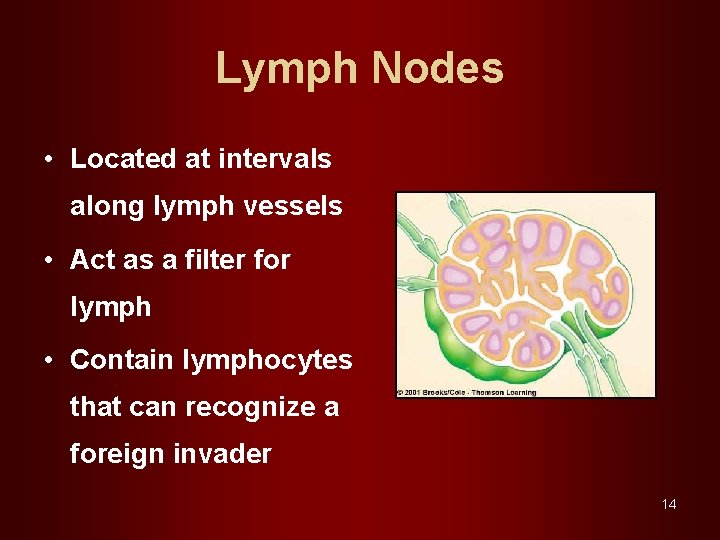
Lymph Nodes • Located at intervals along lymph vessels • Act as a filter for lymph • Contain lymphocytes that can recognize a foreign invader 14

Nervous System Communication between cells is required for coordination of body functions. The nerves 15 communicate with electrochemical signals
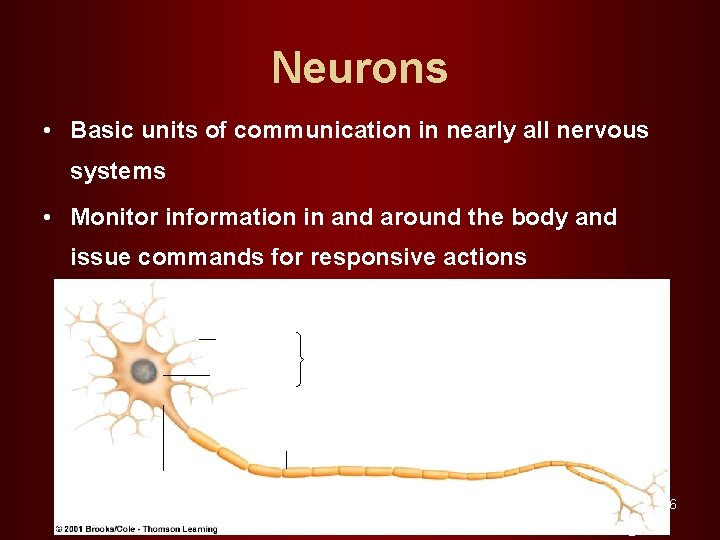
Neurons • Basic units of communication in nearly all nervous systems • Monitor information in and around the body and issue commands for responsive actions dendrites INPUT ZONE cell body axon TRIGGER ZONE CONDUCTING ZONE OUPUT ZONE axon endings 16
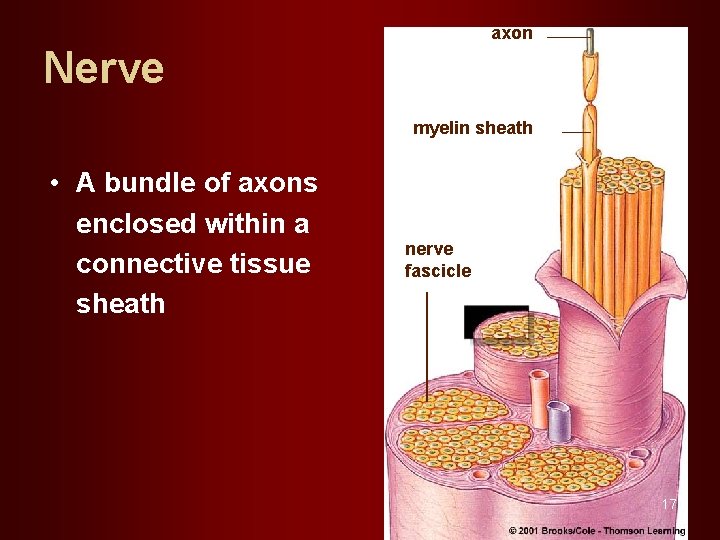
axon Nerve myelin sheath • A bundle of axons enclosed within a connective tissue sheath nerve fascicle 17
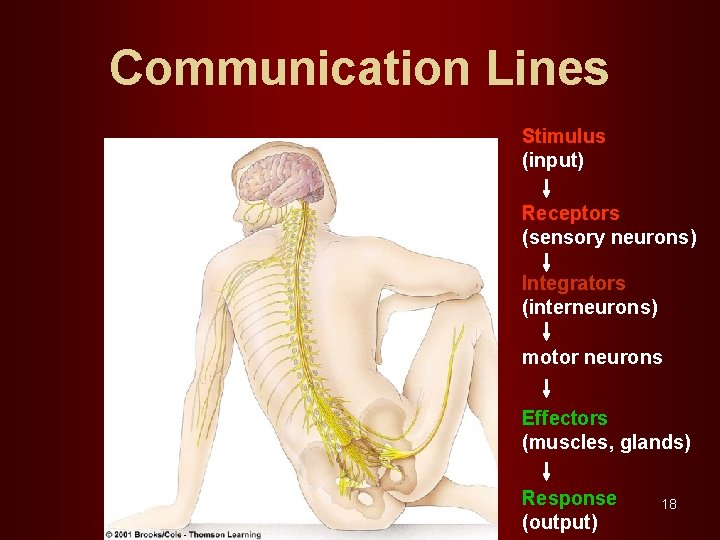
Communication Lines Stimulus (input) Receptors (sensory neurons) Integrators (interneurons) motor neurons Effectors (muscles, glands) Response (output) 18
Central and Peripheral Nervous Systems • Central nervous system (CNS) – Brain – Spinal cord • Peripheral nervous system – Nerves that thread through the body Online activity 28. 6 19
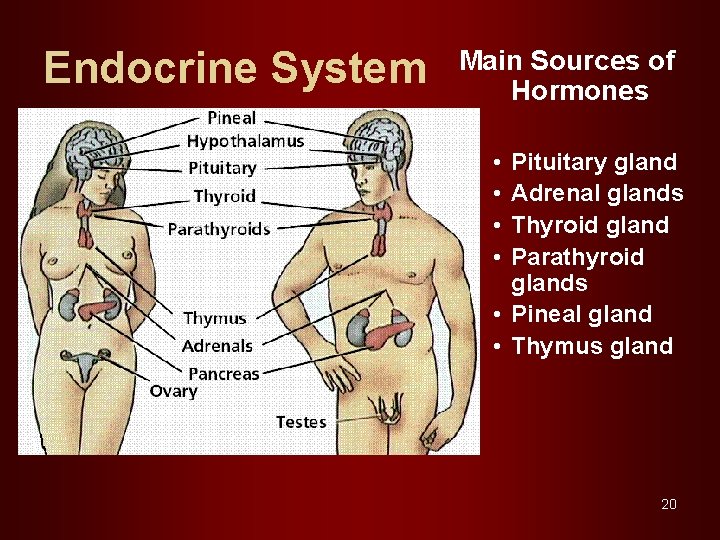
Endocrine System Main Sources of Hormones • • Pituitary gland Adrenal glands Thyroid gland Parathyroid glands • Pineal gland • Thymus gland 20
Hormones • Secreted by endocrine glands, endocrine cells, and certain neurons • Travel through the bloodstream to nonadjacent target cells • Helps communication between cells for coordination of body functions Online activity 32. 4 PAGE 2 21
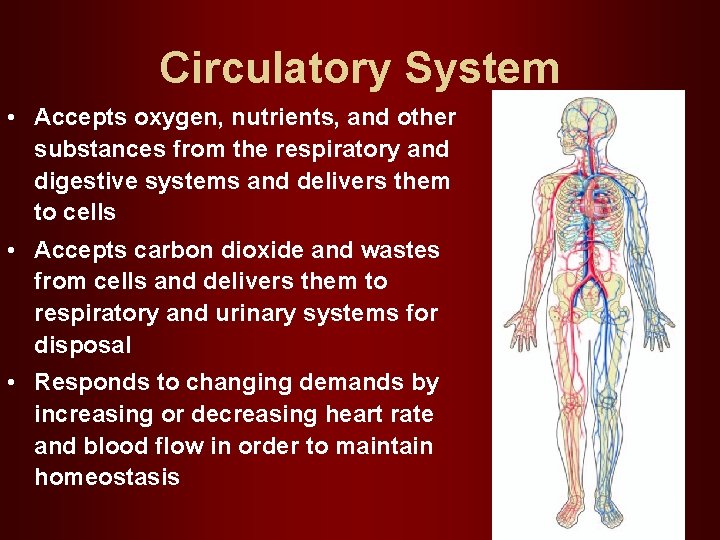
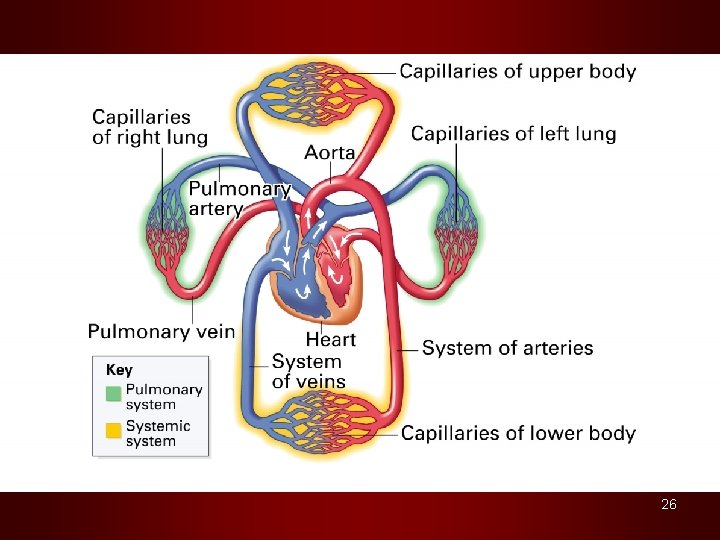
Circulatory System • Accepts oxygen, nutrients, and other substances from the respiratory and digestive systems and delivers them to cells • Accepts carbon dioxide and wastes from cells and delivers them to respiratory and urinary systems for disposal • Responds to changing demands by increasing or decreasing heart rate and blood flow in order to maintain homeostasis 22
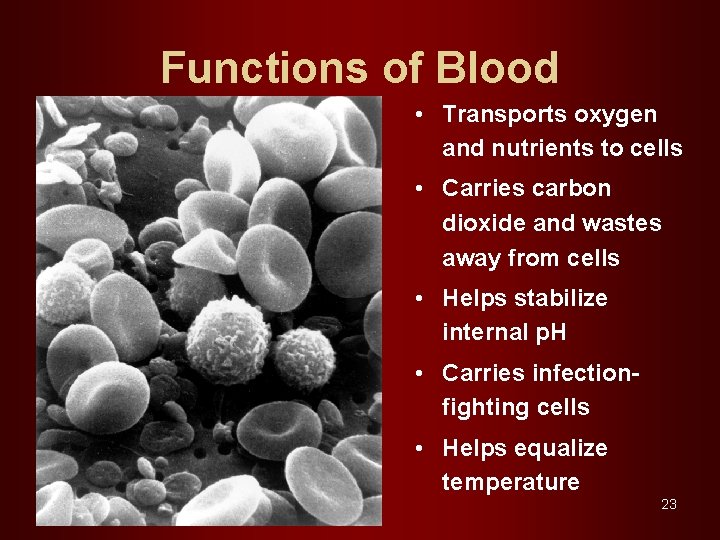
Functions of Blood • Transports oxygen and nutrients to cells • Carries carbon dioxide and wastes away from cells • Helps stabilize internal p. H • Carries infectionfighting cells • Helps equalize temperature 23
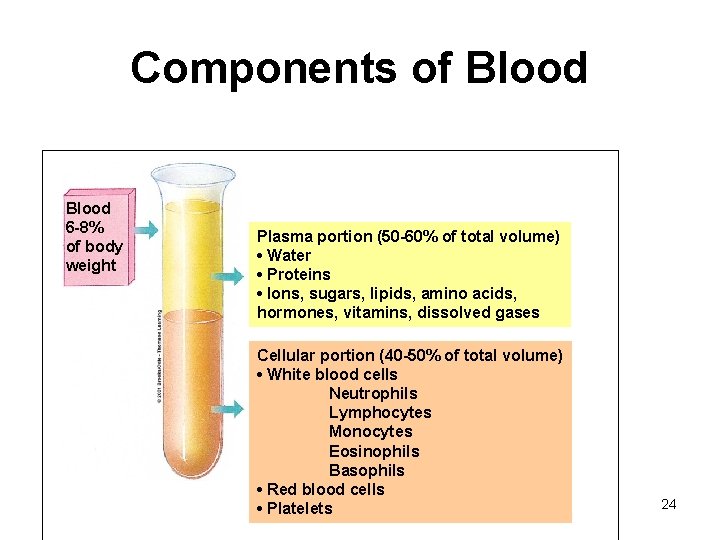
Components of Blood 6 -8% of body weight Plasma portion (50 -60% of total volume) • Water • Proteins • Ions, sugars, lipids, amino acids, hormones, vitamins, dissolved gases Cellular portion (40 -50% of total volume) • White blood cells Neutrophils Lymphocytes Monocytes Eosinophils Basophils • Red blood cells • Platelets 24
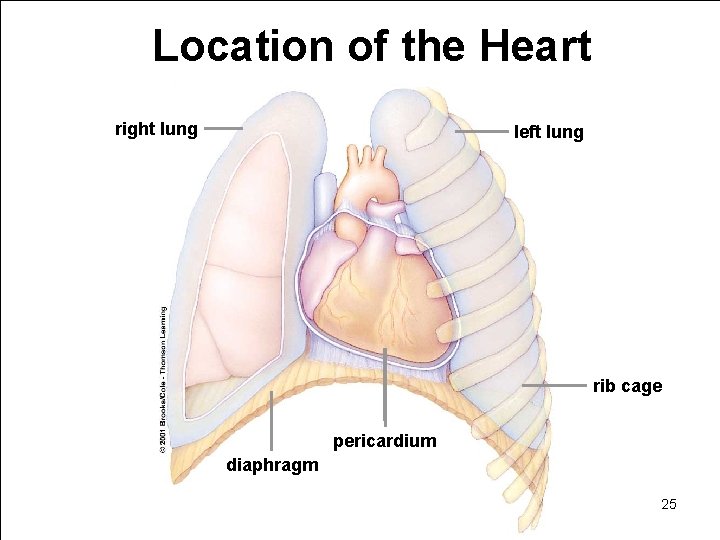
Location of the Heart right lung left lung Figure 38. 12 Page 674 rib cage pericardium diaphragm 25
26
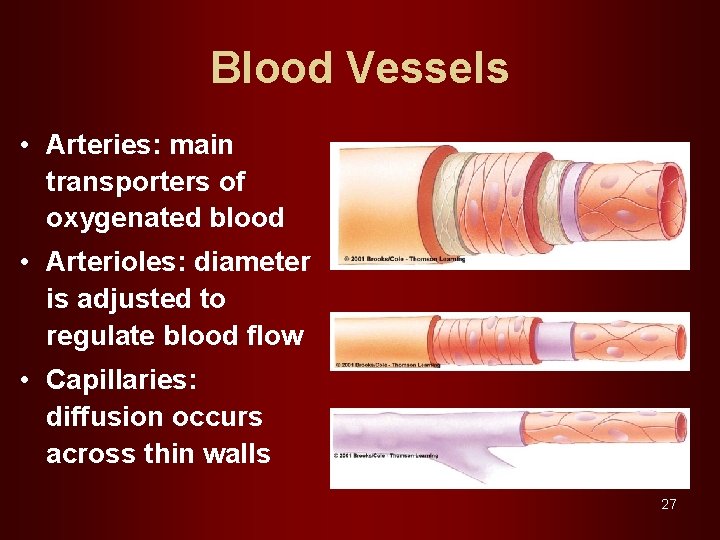
Blood Vessels • Arteries: main transporters of oxygenated blood • Arterioles: diameter is adjusted to regulate blood flow • Capillaries: diffusion occurs across thin walls 27
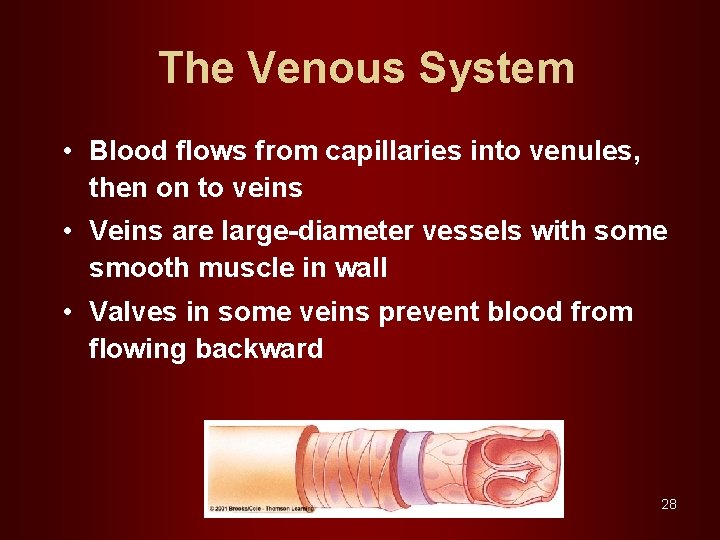
The Venous System • Blood flows from capillaries into venules, then on to veins • Veins are large-diameter vessels with some smooth muscle in wall • Valves in some veins prevent blood from flowing backward 28
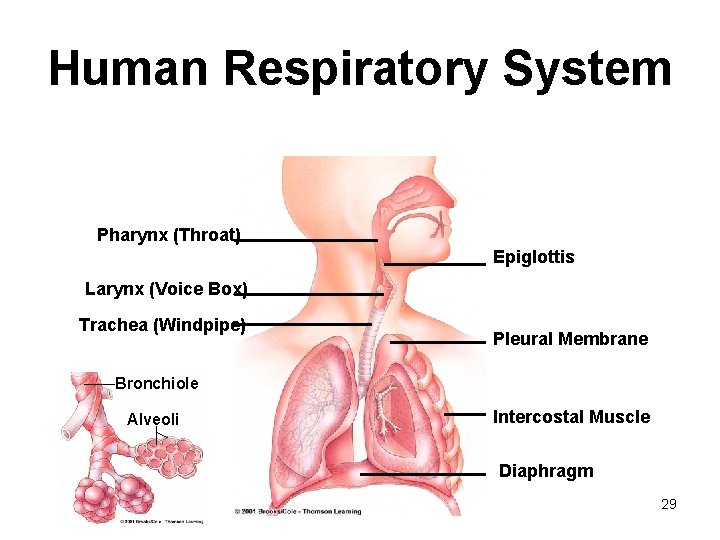
Human Respiratory System Pharynx (Throat) Epiglottis Larynx (Voice Box) Trachea (Windpipe) Pleural Membrane Bronchiole Alveoli Intercostal Muscle Diaphragm 29
Respiration • Physiological process by which oxygen moves into internal environment and carbon dioxide moves out • Oxygen is needed for aerobic respiration • Carbon dioxide is produced by same 30
Respiratory System • Acts in concert with the circulatory system to deliver oxygen and remove carbon dioxide • Responds to changing demands by increasing or decreasing breathing rate in order to maintain homeostasis 31
Pressure Gradients • Concentration gradients for gases • Gases diffuse down their pressure gradients • Gases enter and leave the body by diffusing down pressure gradients across respiratory membranes Online activity 30. 4 and 30. 6 32
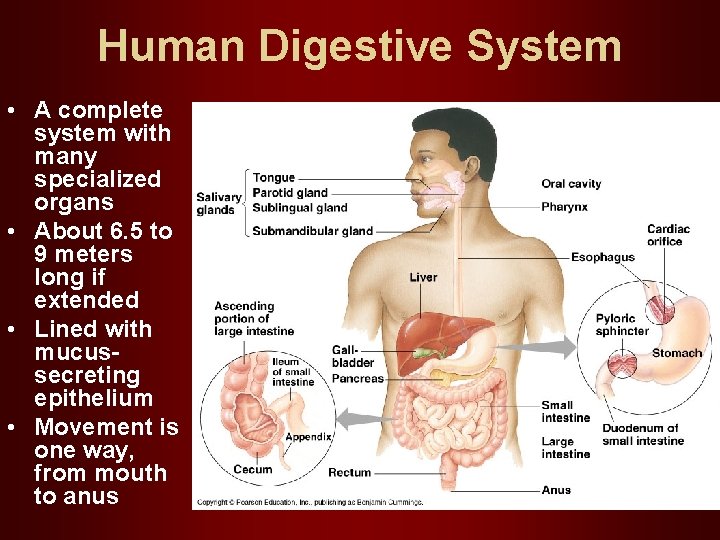
Human Digestive System • A complete system with many specialized organs • About 6. 5 to 9 meters long if extended • Lined with mucussecreting epithelium • Movement is one way, from mouth to anus 33
Digestive System Tasks • For the body to use food for energy, the food must first be digested into molecules that are absorbed and transported to cells, where the food is used for energy and for repair and growth • Break up, mix, and move food material • Secrete enzymes into tube where digestion occurs • Digest (break down) food particles into smaller molecules • Absorb nutrients and fluids • Eliminate wastes and residues 34
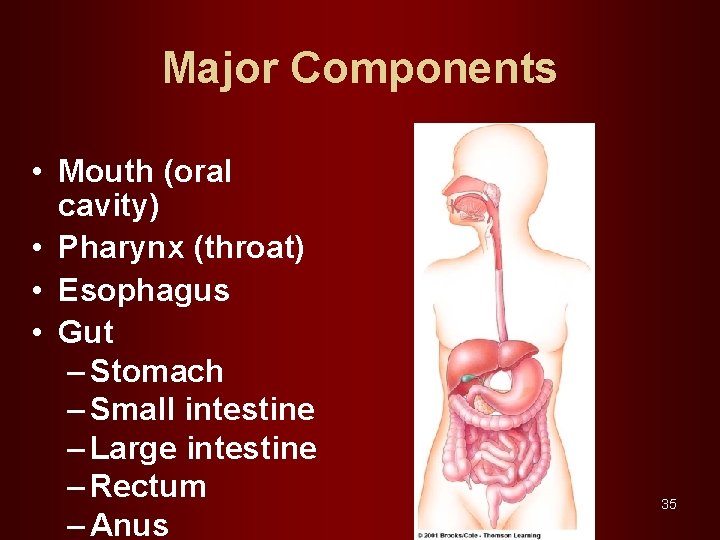
Major Components • Mouth (oral cavity) • Pharynx (throat) • Esophagus • Gut – Stomach – Small intestine – Large intestine – Rectum – Anus 35
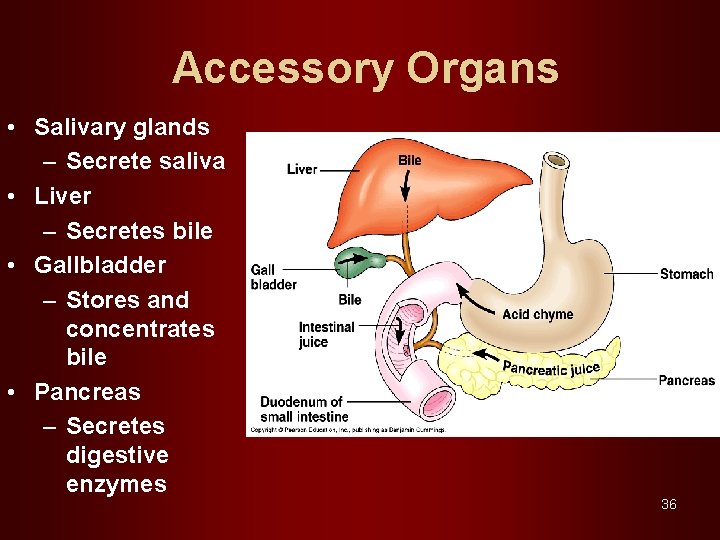
Accessory Organs • Salivary glands – Secrete saliva • Liver – Secretes bile • Gallbladder – Stores and concentrates bile • Pancreas – Secretes digestive enzymes 36
Swallowing • Complex reflex • Tongue forces food into pharynx • Epiglottis and vocal cords close off trachea; breathing temporarily ceases (you can’t breath and swallow!) • Bolus moves into esophagus, then through esophageal sphincter into stomach 37
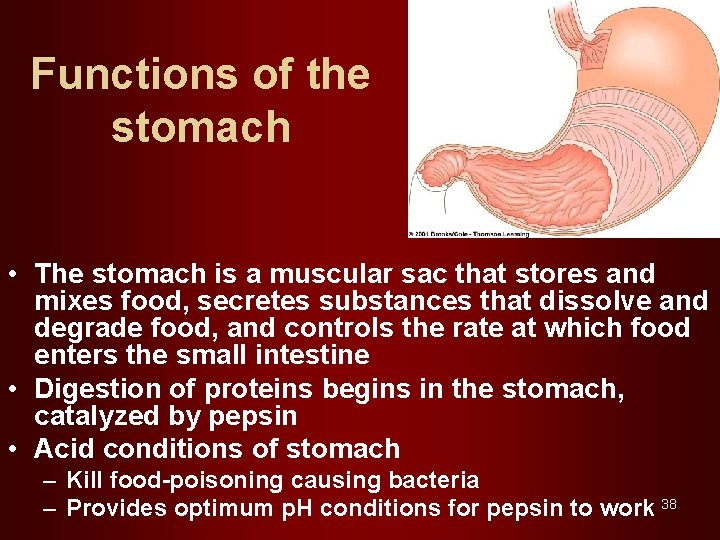
Functions of the stomach • The stomach is a muscular sac that stores and mixes food, secretes substances that dissolve and degrade food, and controls the rate at which food enters the small intestine • Digestion of proteins begins in the stomach, catalyzed by pepsin • Acid conditions of stomach – Kill food-poisoning causing bacteria – Provides optimum p. H conditions for pepsin to work 38
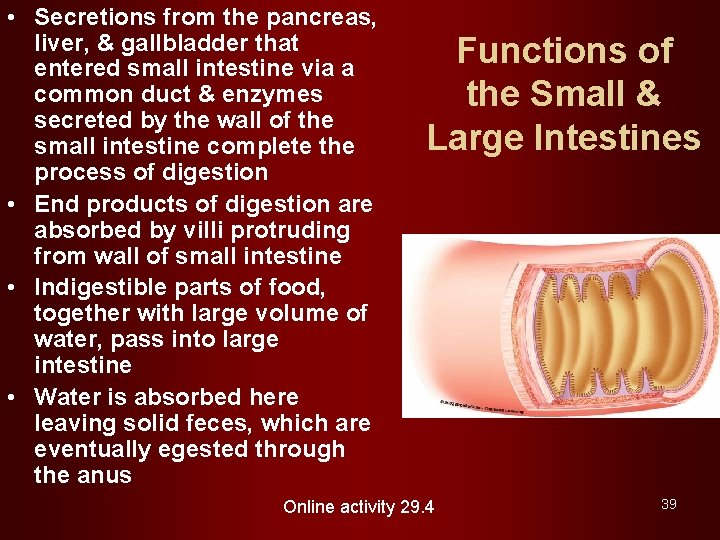
• Secretions from the pancreas, liver, & gallbladder that entered small intestine via a common duct & enzymes secreted by the wall of the small intestine complete the process of digestion • End products of digestion are absorbed by villi protruding from wall of small intestine • Indigestible parts of food, together with large volume of water, pass into large intestine • Water is absorbed here leaving solid feces, which are eventually egested through the anus Functions of the Small & Large Intestines Online activity 29. 4 39
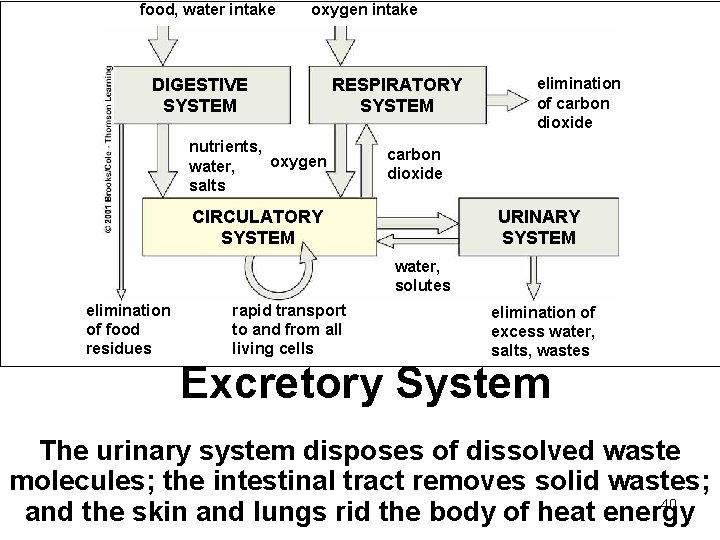
food, water intake oxygen intake DIGESTIVE SYSTEM RESPIRATORY SYSTEM nutrients, oxygen water, salts elimination of carbon dioxide CIRCULATORY SYSTEM URINARY SYSTEM water, solutes elimination of food residues rapid transport to and from all living cells elimination of excess water, salts, wastes Excretory System The urinary system disposes of dissolved waste molecules; the intestinal tract removes solid wastes; 40 and the skin and lungs rid the body of heat energy
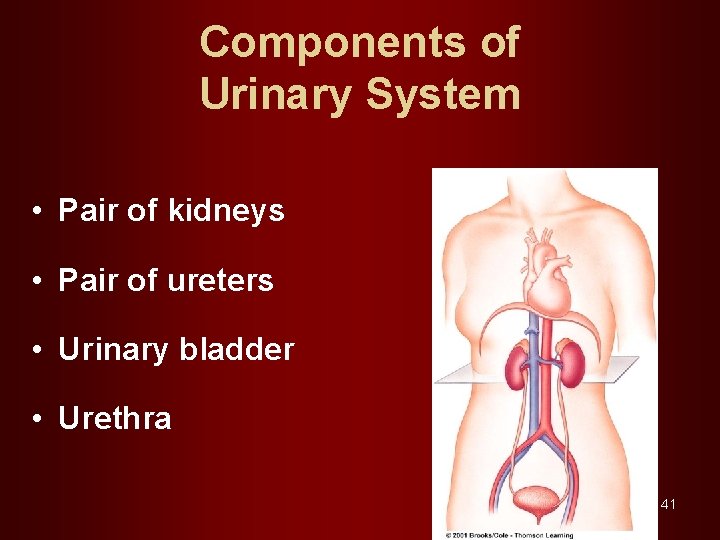
Components of Urinary System • Pair of kidneys • Pair of ureters • Urinary bladder • Urethra 41
Function of Kidneys • Filter water, mineral ions, wastes from the blood, leaving behind filtrate • Adjust filtrate concentration and return most to blood • Remaining water and solutes in filtrate constitute urine Online activity 32. 2 PAGE 2 42
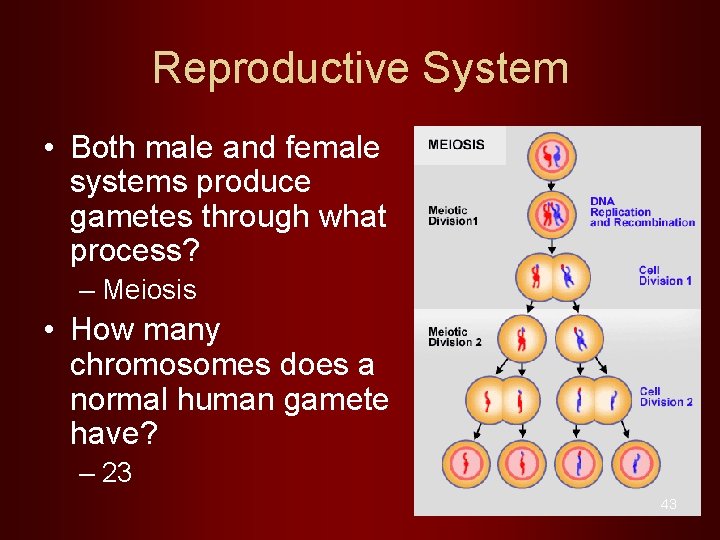
Reproductive System • Both male and female systems produce gametes through what process? – Meiosis • How many chromosomes does a normal human gamete have? – 23 43
What factors can impact homeostasis? • • Diet Exercise Sleep Stress Toxic substances that enter the body Viruses Other living organisms that infect the body Changes in the environmental temperature 44
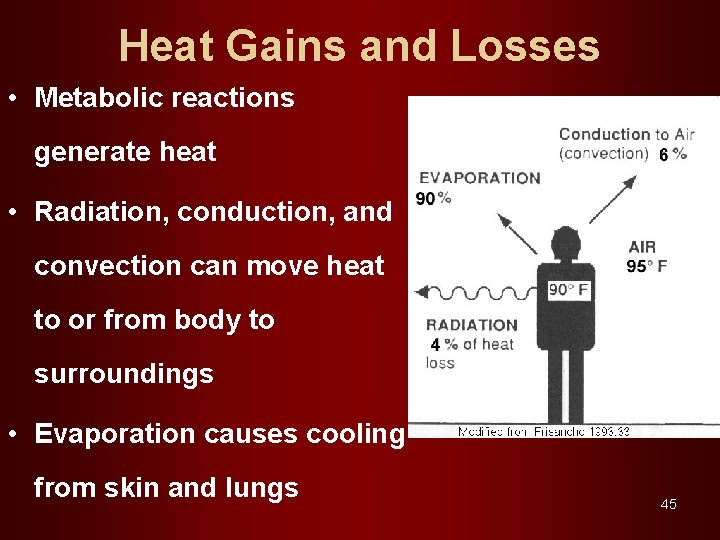
Heat Gains and Losses • Metabolic reactions generate heat • Radiation, conduction, and convection can move heat to or from body to surroundings • Evaporation causes cooling from skin and lungs 45
- Slides: 45