
Human Growth and Development NUR 311 Child Development

- Slides: 14
Human Growth and Development NUR 311 Child Development Theories Lecture 3
What is a theory? A theory should allow us to predict and explain human behavior Different theorists place different emphasis on the genetic, environmental or interactive influences on development
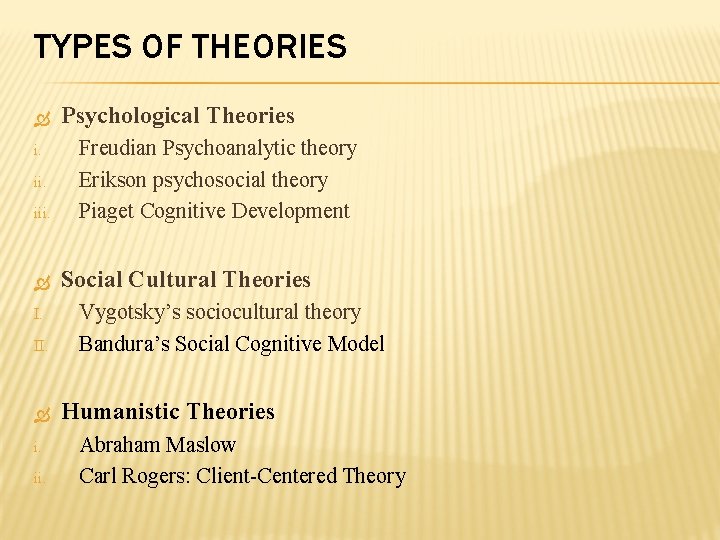
TYPES OF THEORIES i. iii. I. II. i. ii. Psychological Theories Freudian Psychoanalytic theory Erikson psychosocial theory Piaget Cognitive Development Social Cultural Theories Vygotsky’s sociocultural theory Bandura’s Social Cognitive Model Humanistic Theories Abraham Maslow Carl Rogers: Client-Centered Theory
PSYCHOLOGICAL THEORIES i. Freudian Psychoanalytic Theory ii. Erikson Psychosocial Theory iii. Piaget Cognitive Development
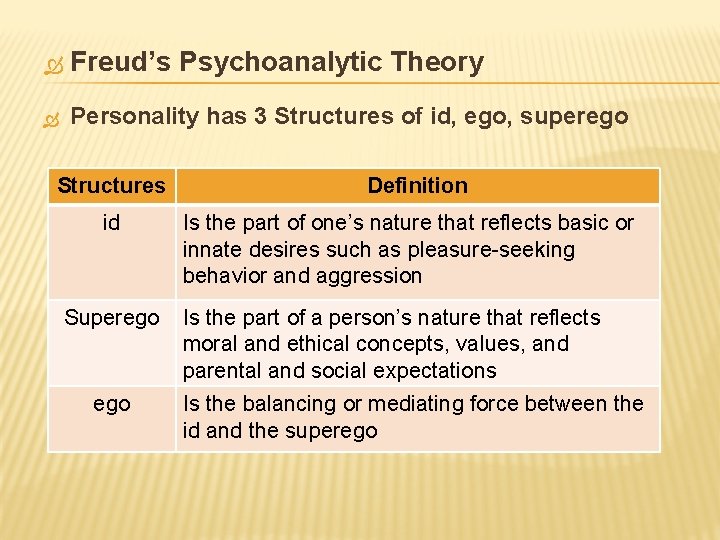
Freud’s Psychoanalytic Theory Personality has 3 Structures of id, ego, superego Structures id Superego Definition Is the part of one’s nature that reflects basic or innate desires such as pleasure-seeking behavior and aggression Is the part of a person’s nature that reflects moral and ethical concepts, values, and parental and social expectations Is the balancing or mediating force between the id and the superego
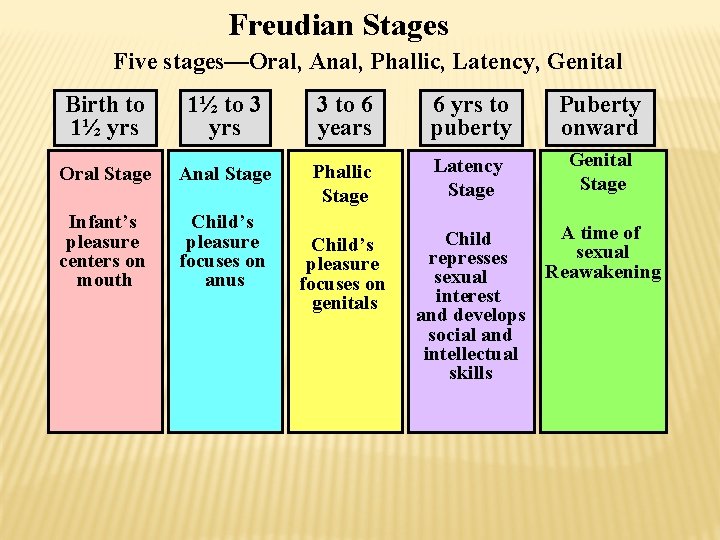
Freudian Stages Five stages—Oral, Anal, Phallic, Latency, Genital Birth to 1½ yrs 1½ to 3 yrs 3 to 6 years 6 yrs to puberty Puberty onward Oral Stage Anal Stage Phallic Stage Latency Stage Genital Stage Infant’s pleasure centers on mouth Child’s pleasure focuses on anus Child’s pleasure focuses on genitals A time of Child sexual represses Reawakening sexual interest and develops social and intellectual skills
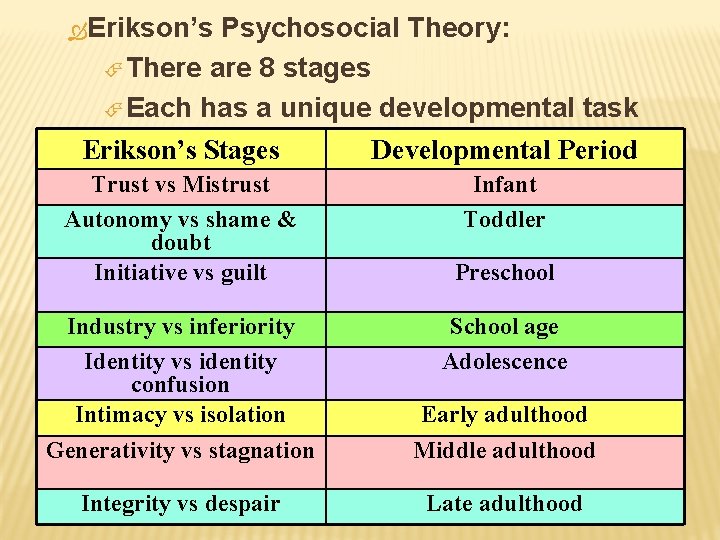
Erikson’s Psychosocial Theory: There are 8 stages Each has a unique developmental task Erikson’s Stages Developmental Period Trust vs Mistrust Autonomy vs shame & doubt Initiative vs guilt Infant Toddler Preschool Industry vs inferiority Identity vs identity confusion Intimacy vs isolation Generativity vs stagnation School age Adolescence Early adulthood Middle adulthood Integrity vs despair Late adulthood
Piaget Cognitive theories: Four Stages of Cognitive Development Sensorimotor Stage: Birth to 2 The infant constructs an understanding of the world years of age by coordinating sensory experiences with physical actions. 2 to 6 years of age Preoperational Stage: The child begins to represent the world with words and images. These words and images reflect increased symbolic thinking. Concrete Operational Stage: 6 to 12 years The child can now reason logically about concrete of age events and classify objects into different sets. 12– 15 years of age Formal Operational Stage The adolescent reasons in more abstract idealistic and logical ways.
SOCIAL CULTURAL THEORIES Vygotsky’s Bandura’s sociocultural theory Social Cognitive Model
Vygotsky’s sociocultural theory Learning is based upon inventions of society Knowledge is created through interactions with other people and objects in the culture Less skilled persons learn from the more skilled
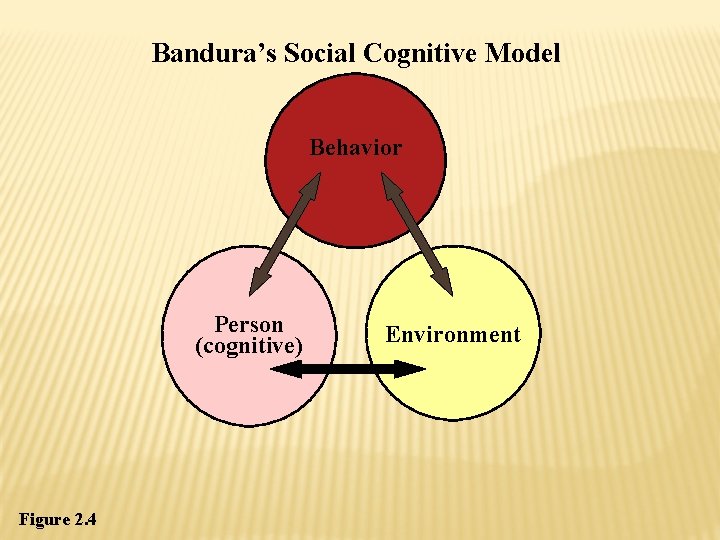
Bandura’s Social Cognitive Model Behavior Person (cognitive) Figure 2. 4 Environment
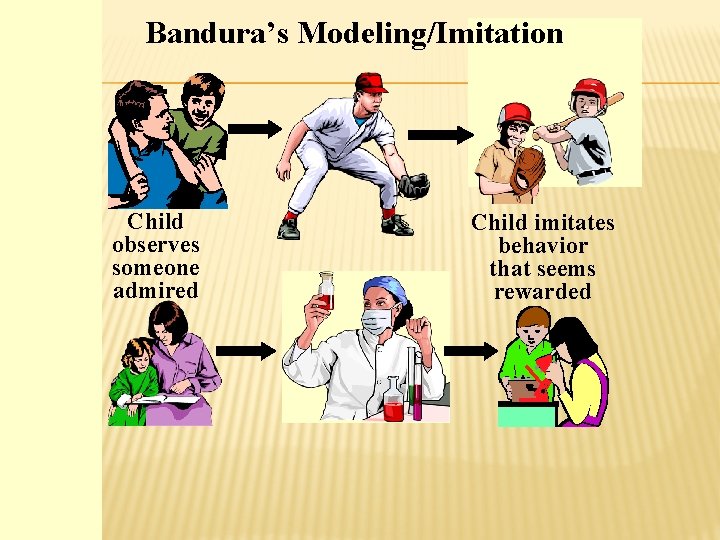
Bandura’s Modeling/Imitation Child observes someone admired Child imitates behavior that seems rewarded
HUMANISTIC THEORIES Abraham Carl Maslow Rogers: Client-Centered Theory
HUMANISTIC THEORIES Abraham Maslow studied the needs or motivations of the individual Carl Rogers: Client-Centered Theory Carl Rogers focused on therapeutic relationship and developed a new method of client centered therapy. Rogers was one of the first to use the term “client” rather than “patient. ” Client centered therapy focused on the role of the client, rather than therapist, as the key to the healing process