
HUMAN GROWTH AND DEVELOPMENT DR LYCKE DEVELOPMENTAL PSYCHOLOGY


- Slides: 17
HUMAN GROWTH AND DEVELOPMENT DR. LYCKE
DEVELOPMENTAL PSYCHOLOGY • Definition --The study of how people grow and change throughout the lifespan—from birth to death. – Infancy/childhood – Adolescence – Adulthood/Geriatrics WHY STUDY HUMAN DEVELOPMENT? • Research Methods – Longitudinal – long-term research study of participants over stages, years, or even decades – Cross-sectional – participants are of different ages/stages and compared WHAT ARE THE ADVANTAGES AND DISADVANTAGES OF THESE RESEARCH METHODS?
7 -UP LONGITUDINAL STUDY 1964 -2012
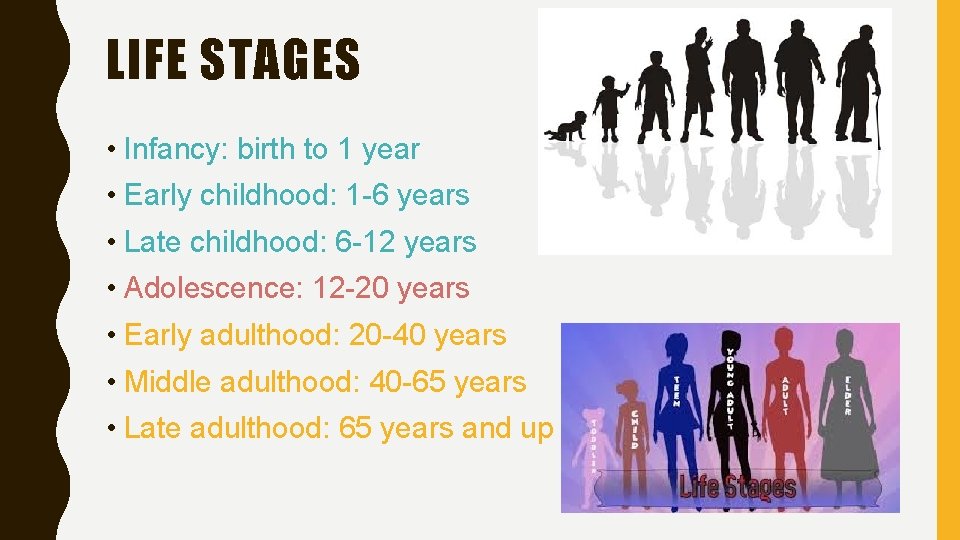
LIFE STAGES • Infancy: birth to 1 year • Early childhood: 1 -6 years • Late childhood: 6 -12 years • Adolescence: 12 -20 years • Early adulthood: 20 -40 years • Middle adulthood: 40 -65 years • Late adulthood: 65 years and up
THREE MAIN TYPES OF GROWTH AND DEVELOPMENT • Physical: body growth • Social/Emotional: interactions and relationships with others • Cognitive: mental development and brain development v. Do all three types of development occur during each stage of development? v. How might types of development overlap?
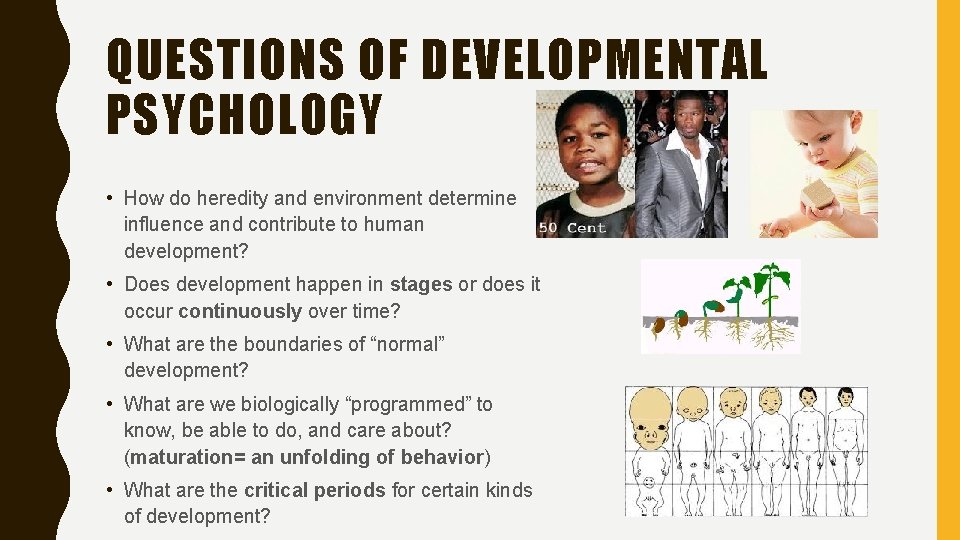
QUESTIONS OF DEVELOPMENTAL PSYCHOLOGY • How do heredity and environment determine influence and contribute to human development? • Does development happen in stages or does it occur continuously over time? • What are the boundaries of “normal” development? • What are we biologically “programmed” to know, be able to do, and care about? (maturation= an unfolding of behavior) • What are the critical periods for certain kinds of development?
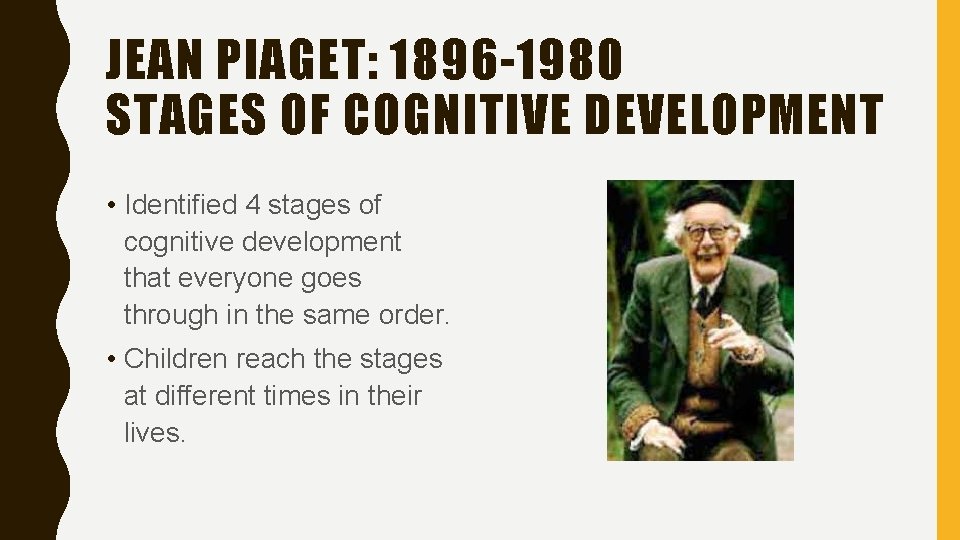
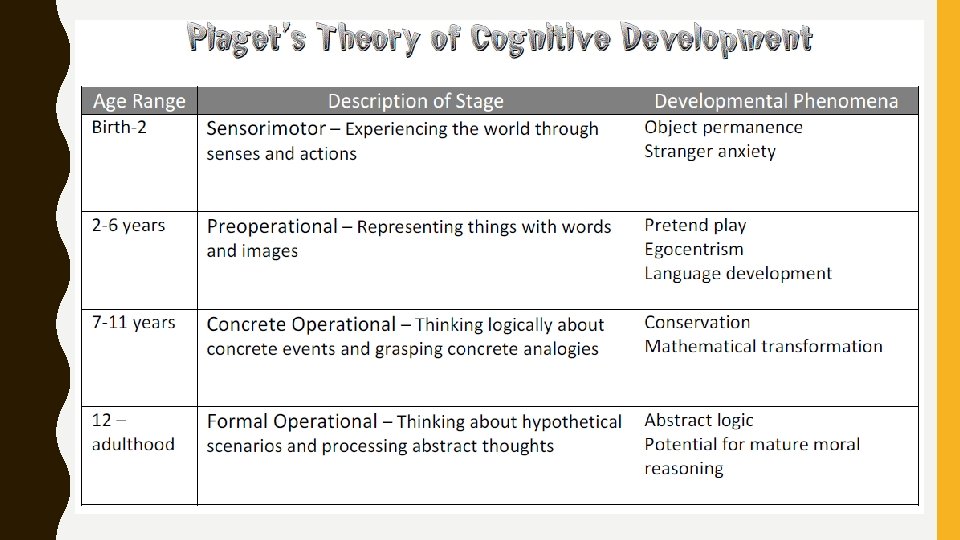
JEAN PIAGET: 1896 -1980 STAGES OF COGNITIVE DEVELOPMENT • Identified 4 stages of cognitive development that everyone goes through in the same order. • Children reach the stages at different times in their lives.
PIAGET • Swiss psychologist, trained as a biologist, published research about mollusks in his teens. • Believed that learning is an adaptive feature of human capacity. • Researched his own 3 children from birth. • As a biologist he believed that physical structures carry out important functions; learning (adapting, problem solving) is a function that happens in the brain.
2 INHERENT MENTAL FUNCTIONS 1. Organization—we organize info into psychological structures Piaget calls schema (schemata, pl. ); schemata help us form mental representations and categorization systems. 2. Adaptation—we adapt to our physical and social worlds (stress on physical) through 2 processes • Assimilation— fitting new info into existing schemata (skunk = kitty) • Accommodation— altering existing schemata or creating new ones in response to new info � A key idea for understanding the stages of development: Operations—conceptualizations that have been “interiorized. ”
PIAGET’S STAGES OF DEVELOPMENT
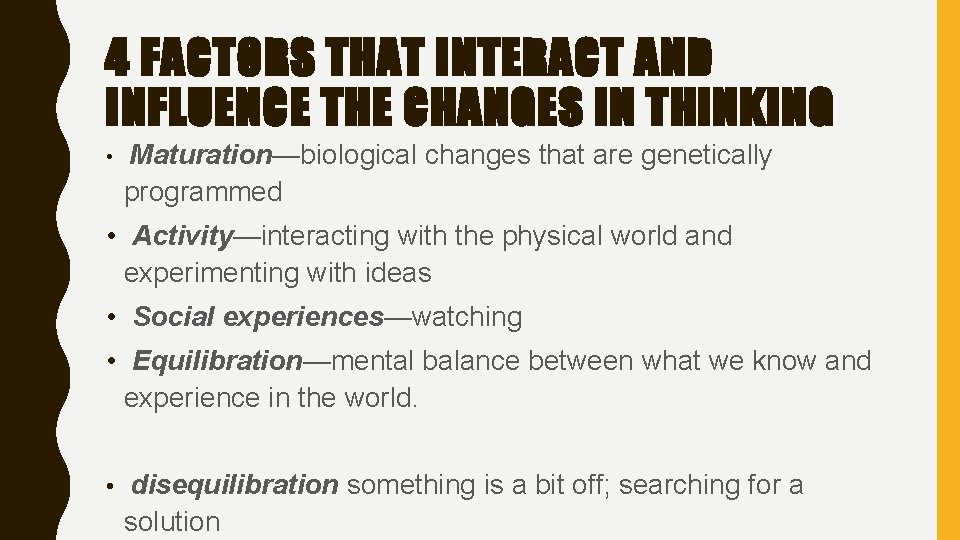
4 FACTORS THAT INTERACT AND INFLUENCE THE CHANGES IN THINKING • Maturation—biological changes that are genetically programmed • Activity—interacting with the physical world and experimenting with ideas • Social experiences—watching • Equilibration—mental balance between what we know and experience in the world. • disequilibration something is a bit off; searching for a solution
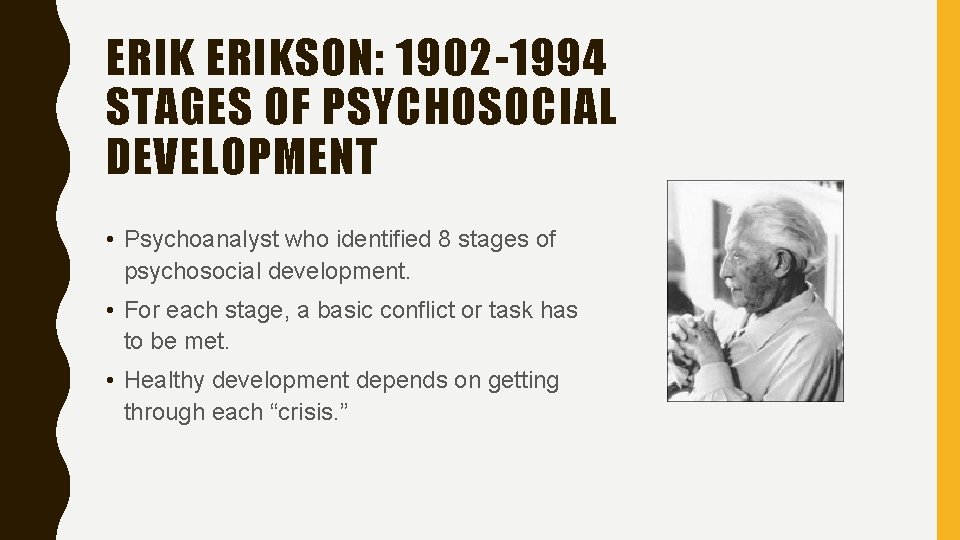
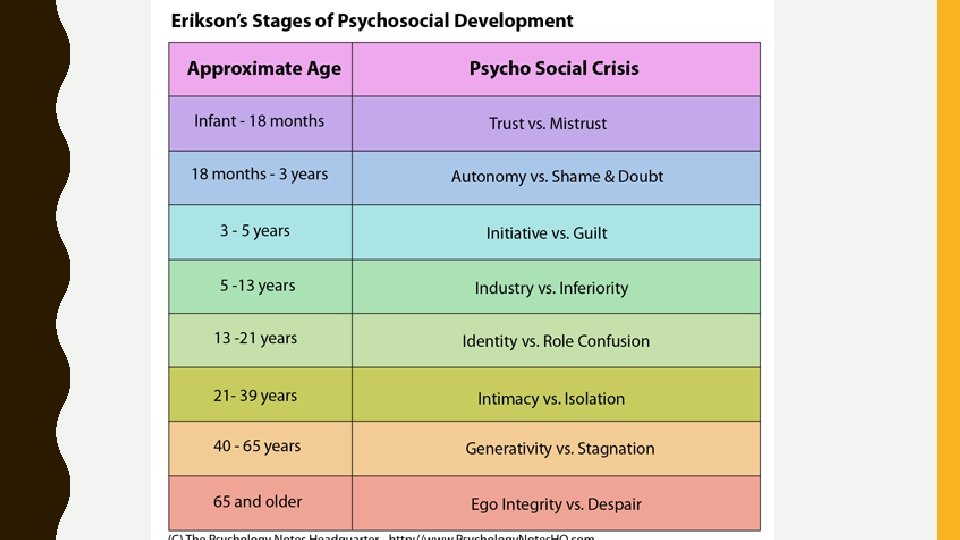
ERIKSON: 1902 -1994 STAGES OF PSYCHOSOCIAL DEVELOPMENT • Psychoanalyst who identified 8 stages of psychosocial development. • For each stage, a basic conflict or task has to be met. • Healthy development depends on getting through each “crisis. ”
ERIKSON • Born in Frankfurt, Germany. • Through his travels around Europe and his immigration to the US (1933), he observed that the developing relationship between culture and the individual follow similar patterns in every society. • Believed that because all humans have the same basic need, society should provide for those needs. • Interested in emotional changes and their relationship to the social environment.
DISNEY PIXAR AND ERKISON’S PSYCHOSOCIALDEVELOPMENT