
Human Geography of SubSaharan Africa 5 Regions 1
Human Geography of Sub-Saharan Africa
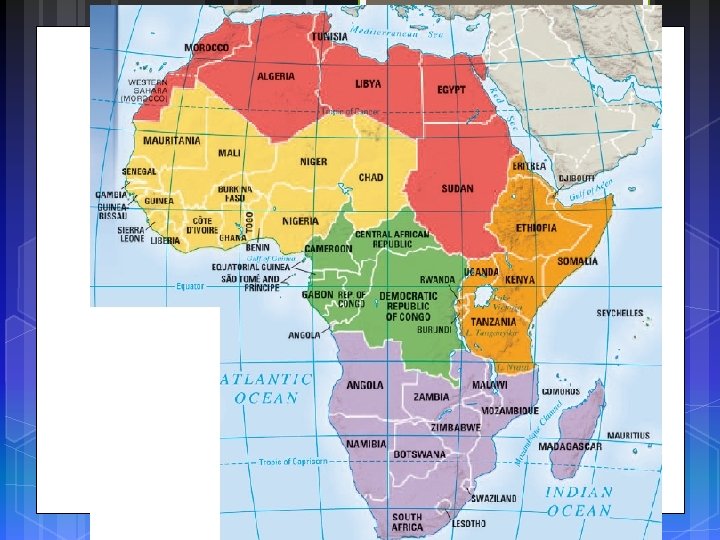
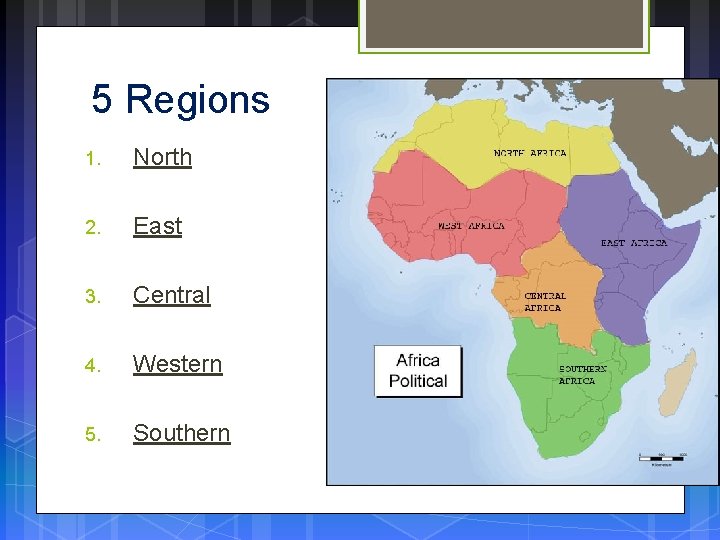
5 Regions 1. North 2. East 3. Central 4. Western 5. Southern
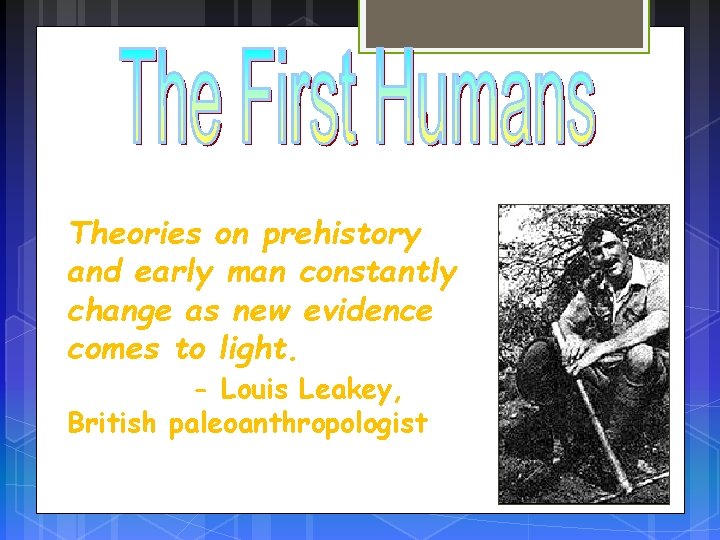
Theories on prehistory and early man constantly change as new evidence comes to light. - Louis Leakey, British paleoanthropologist
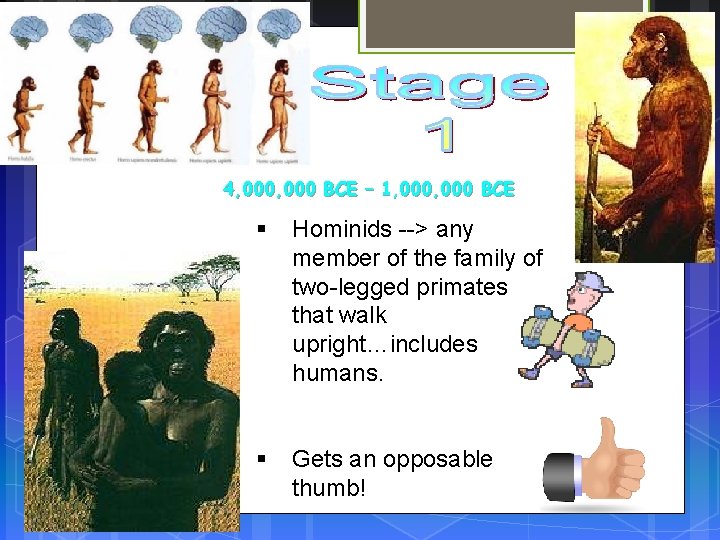
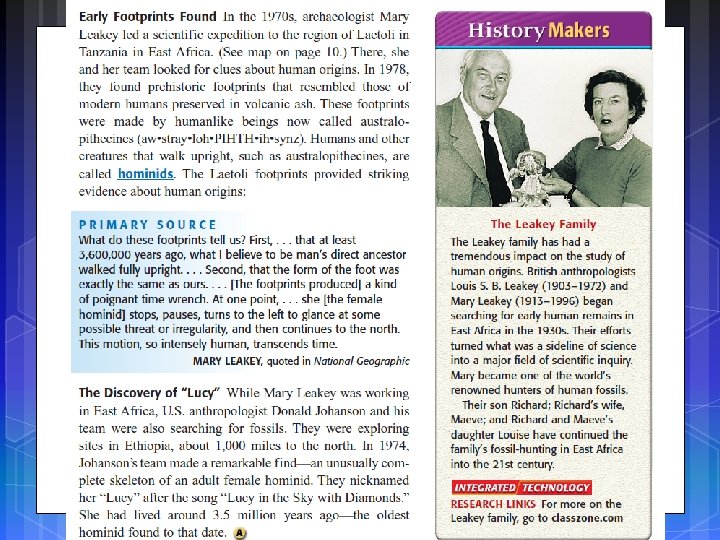
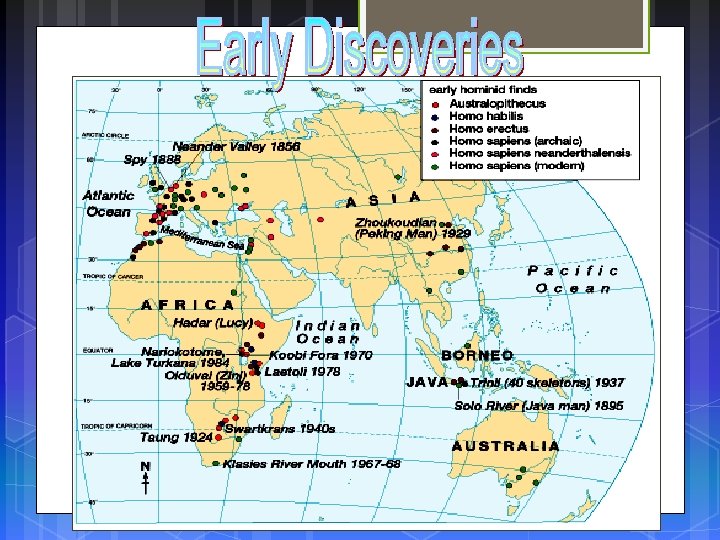
4, 000 BCE – 1, 000 BCE § Hominids --> any member of the family of two-legged primates that walk upright…includes humans. § Gets an opposable thumb!
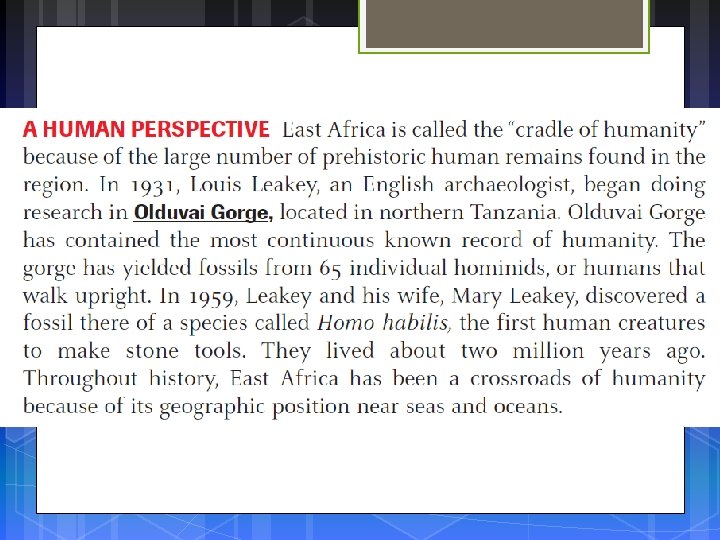
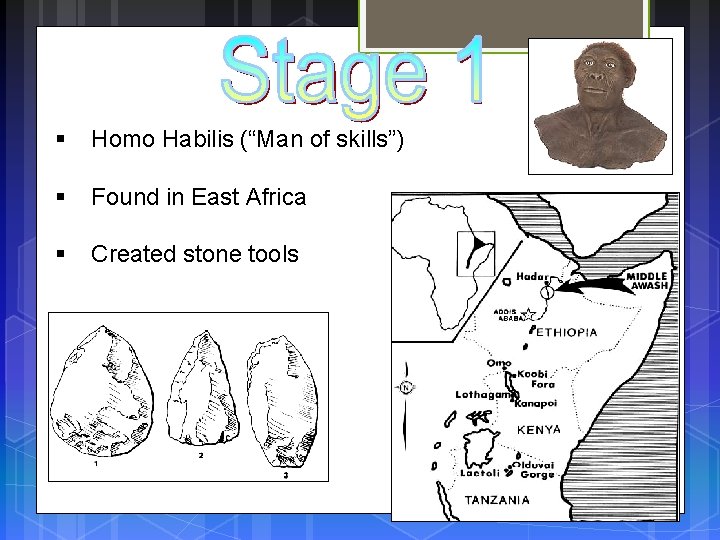
§ Homo Habilis (“Man of skills”) § Found in East Africa § Created stone tools
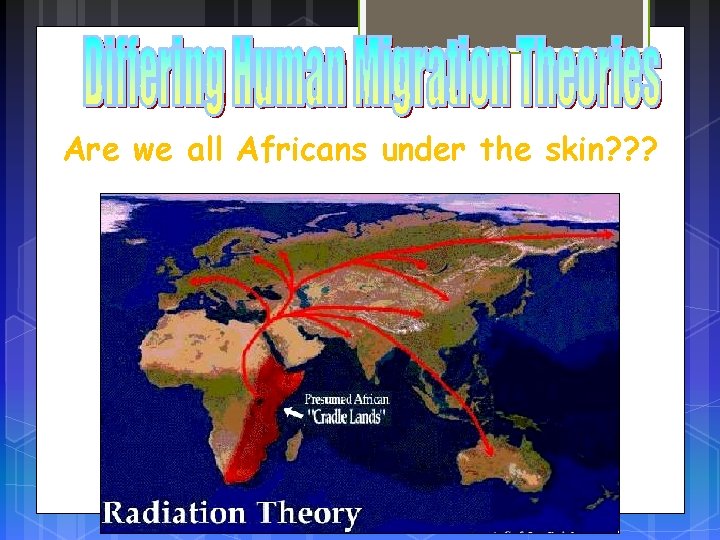
Are we all Africans under the skin? ? ?
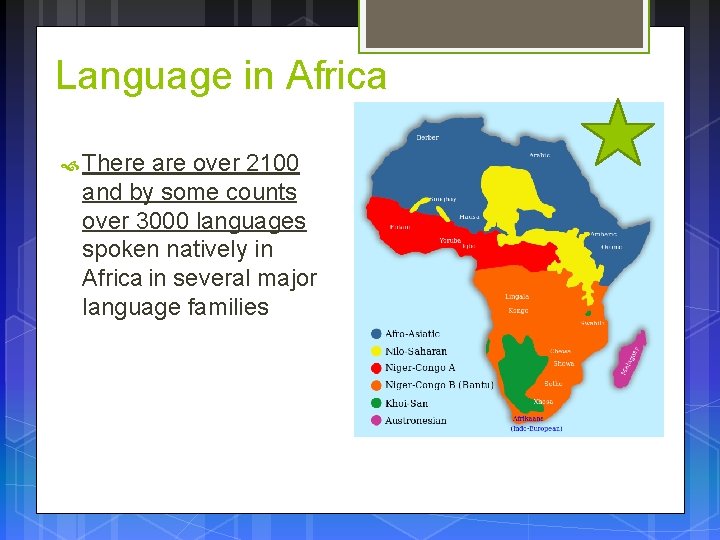
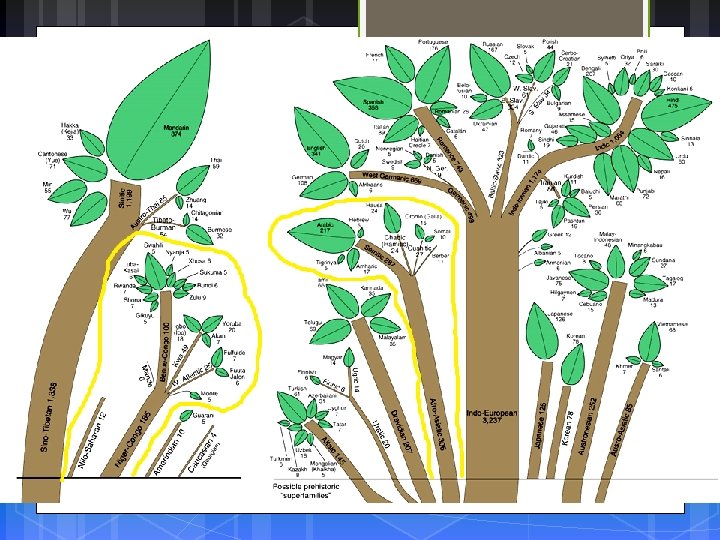
Language in Africa There are over 2100 and by some counts over 3000 languages spoken natively in Africa in several major language families
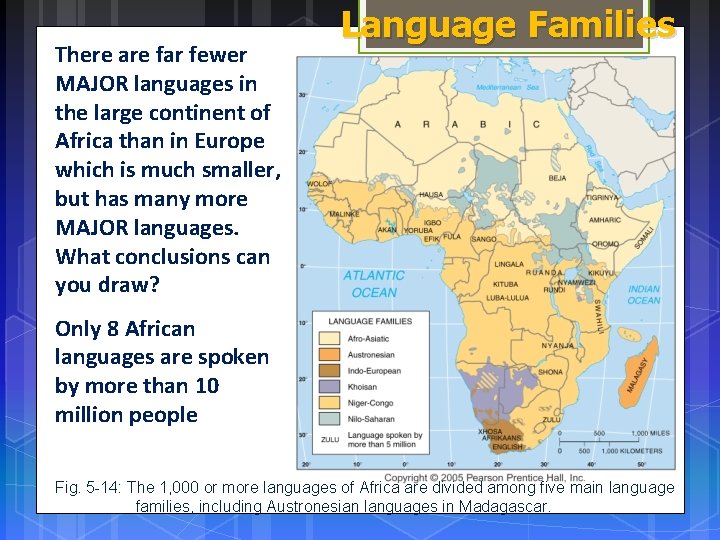
There are far fewer MAJOR languages in the large continent of Africa than in Europe which is much smaller, but has many more MAJOR languages. What conclusions can you draw? Language Families Only 8 African languages are spoken by more than 10 million people Fig. 5 -14: The 1, 000 or more languages of Africa are divided among five main language families, including Austronesian languages in Madagascar.
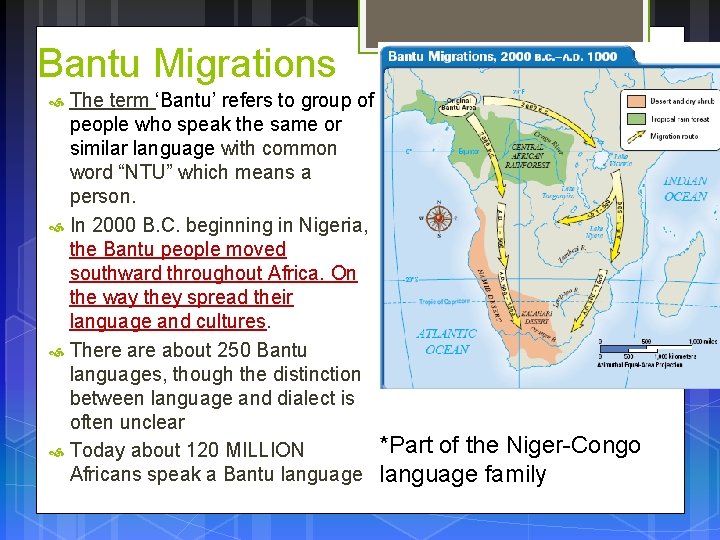
Bantu Migrations The term ‘Bantu’ refers to group of people who speak the same or similar language with common word “NTU” which means a person. In 2000 B. C. beginning in Nigeria, the Bantu people moved southward throughout Africa. On the way they spread their language and cultures. There about 250 Bantu languages, though the distinction between language and dialect is often unclear *Part of the Niger-Congo Today about 120 MILLION Africans speak a Bantu language family
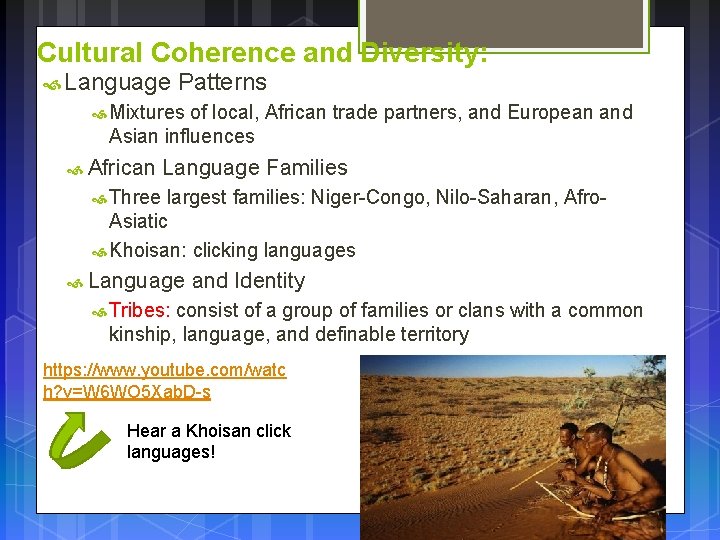
Cultural Coherence and Diversity: Language Patterns Mixtures of local, African trade partners, and European and Asian influences African Language Families Three largest families: Niger-Congo, Nilo-Saharan, Afro. Asiatic Khoisan: clicking languages Language and Identity Tribes: consist of a group of families or clans with a common kinship, language, and definable territory https: //www. youtube. com/watc h? v=W 6 WO 5 Xab. D-s Hear a Khoisan click languages! 14
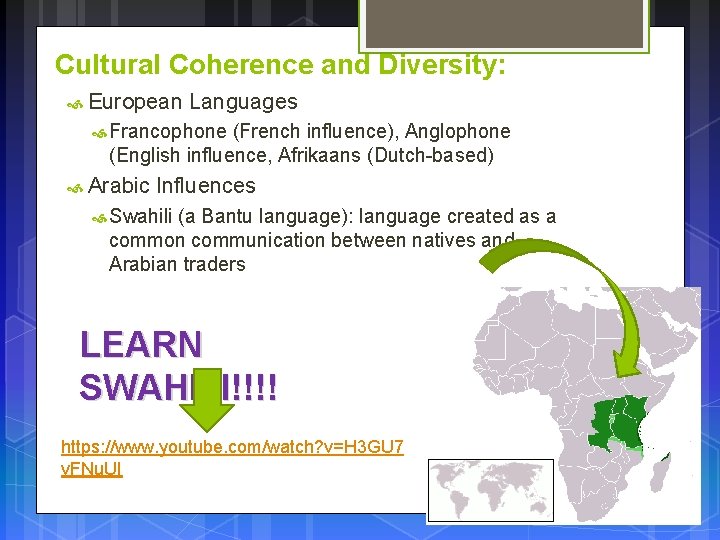
Cultural Coherence and Diversity: European Languages Francophone (French influence), Anglophone (English influence, Afrikaans (Dutch-based) Arabic Influences Swahili (a Bantu language): language created as a common communication between natives and Arabian traders LEARN SWAHILI!!!! https: //www. youtube. com/watch? v=H 3 GU 7 v. FNu. UI 15
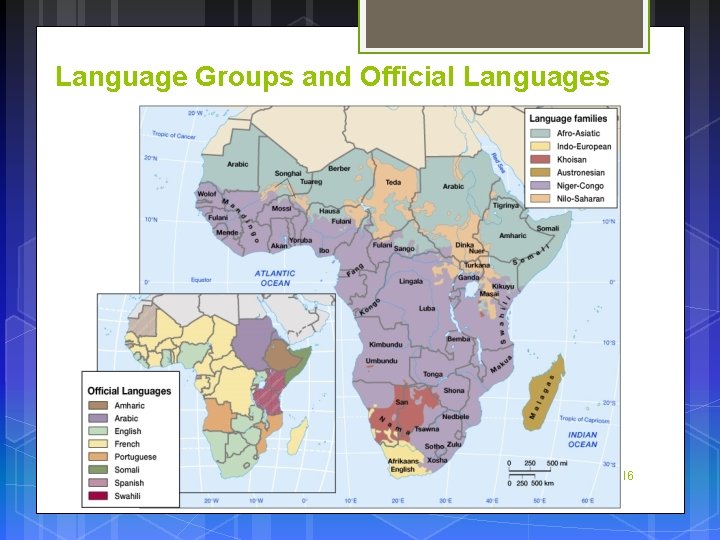
Language Groups and Official Languages 16
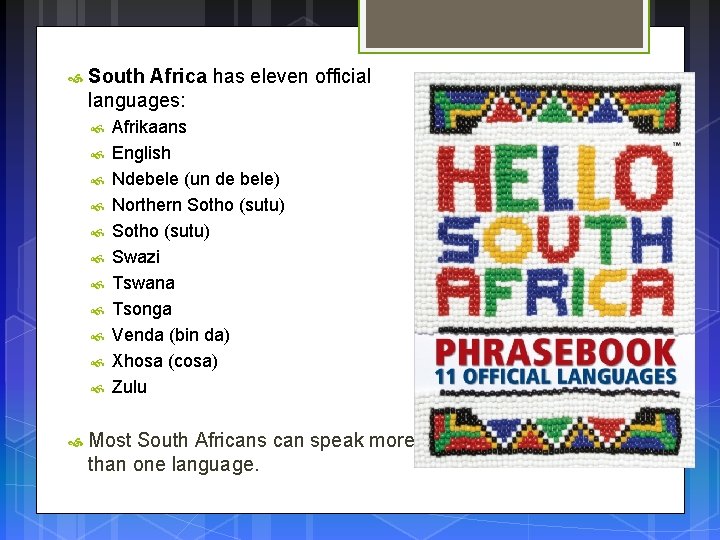
South Africa has eleven official languages: Afrikaans English Ndebele (un de bele) Northern Sotho (sutu) Swazi Tswana Tsonga Venda (bin da) Xhosa (cosa) Zulu Most South Africans can speak more than one language.
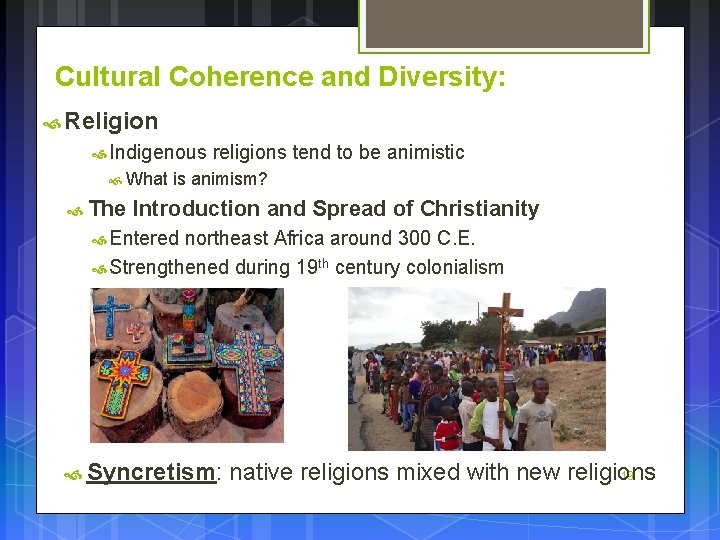
Cultural Coherence and Diversity: Religion Indigenous What The religions tend to be animistic is animism? Introduction and Spread of Christianity Entered northeast Africa around 300 C. E. Strengthened during 19 th century colonialism Syncretism: 19 native religions mixed with new religions
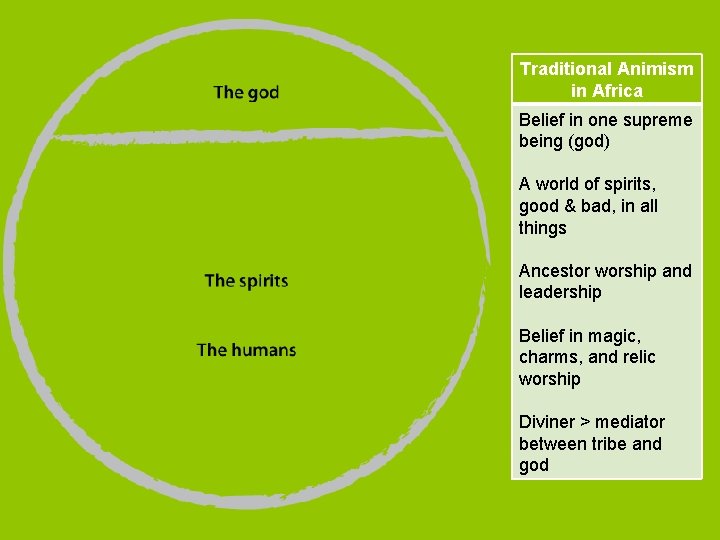
Traditional Animism in Africa Belief in one supreme being (god) A world of spirits, good & bad, in all things Ancestor worship and leadership Belief in magic, charms, and relic worship Diviner > mediator between tribe and god
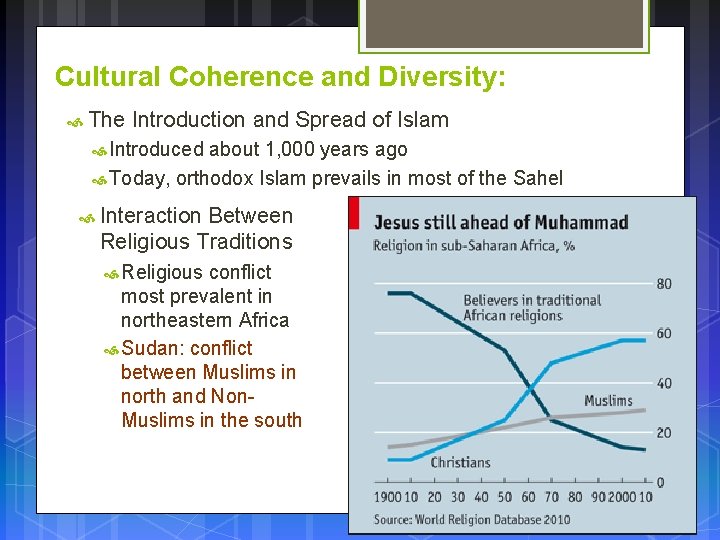
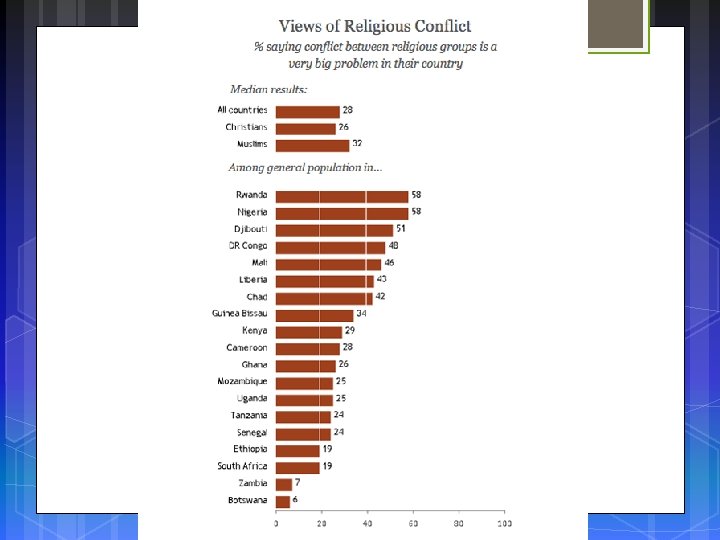
Cultural Coherence and Diversity: The Introduction and Spread of Islam Introduced about 1, 000 years ago Today, orthodox Islam prevails in most of the Sahel Interaction Between Religious Traditions Religious conflict most prevalent in northeastern Africa Sudan: conflict between Muslims in north and Non. Muslims in the south 22
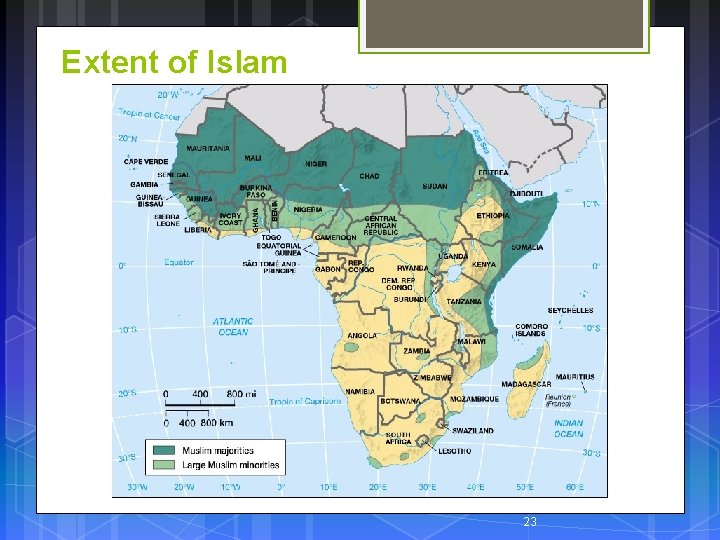
Extent of Islam 23
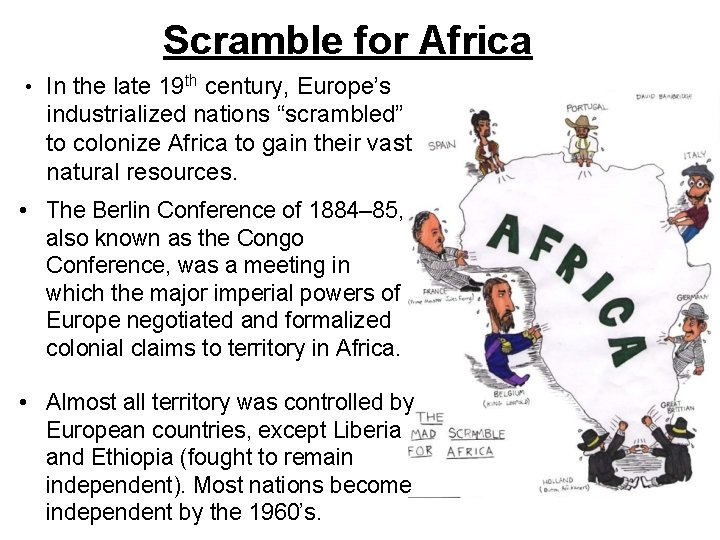
Scramble for Africa • In the late 19 th century, Europe’s industrialized nations “scrambled” to colonize Africa to gain their vast natural resources. • The Berlin Conference of 1884– 85, also known as the Congo Conference, was a meeting in which the major imperial powers of Europe negotiated and formalized colonial claims to territory in Africa. • Almost all territory was controlled by European countries, except Liberia and Ethiopia (fought to remain independent). Most nations become independent by the 1960’s.
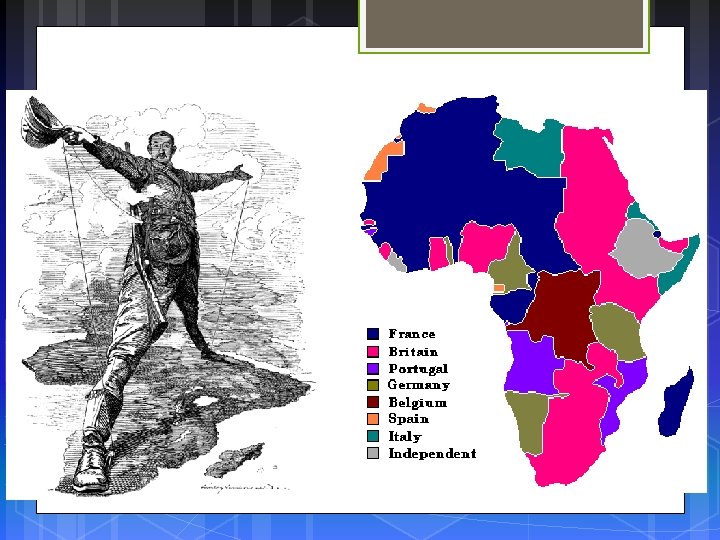
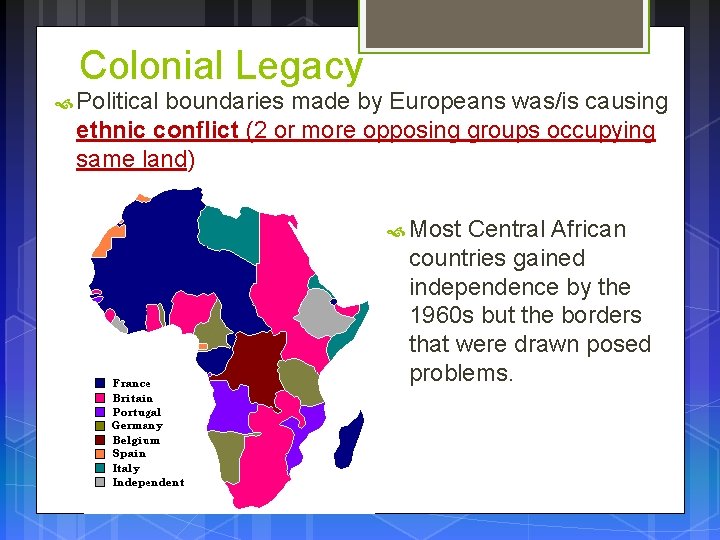
Colonial Legacy Political boundaries made by Europeans was/is causing ethnic conflict (2 or more opposing groups occupying same land) Most Central African countries gained independence by the 1960 s but the borders that were drawn posed problems.
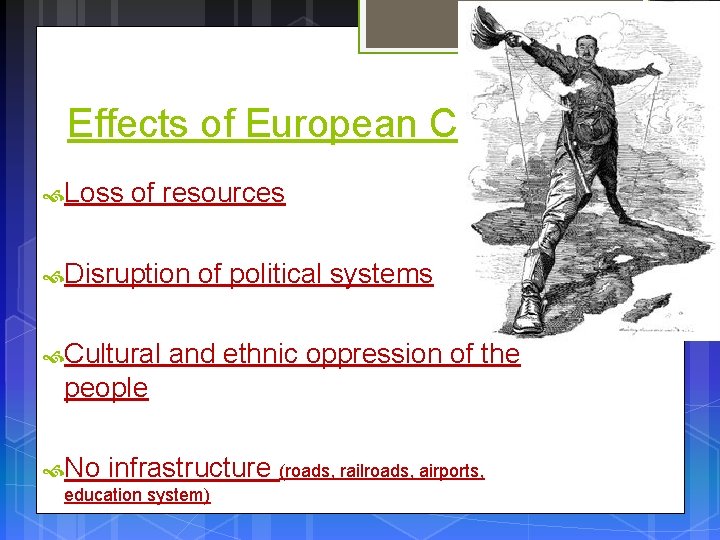
Effects of European Colonization Loss of resources Disruption Cultural of political systems and ethnic oppression of the people No infrastructure (roads, railroads, airports, education system)
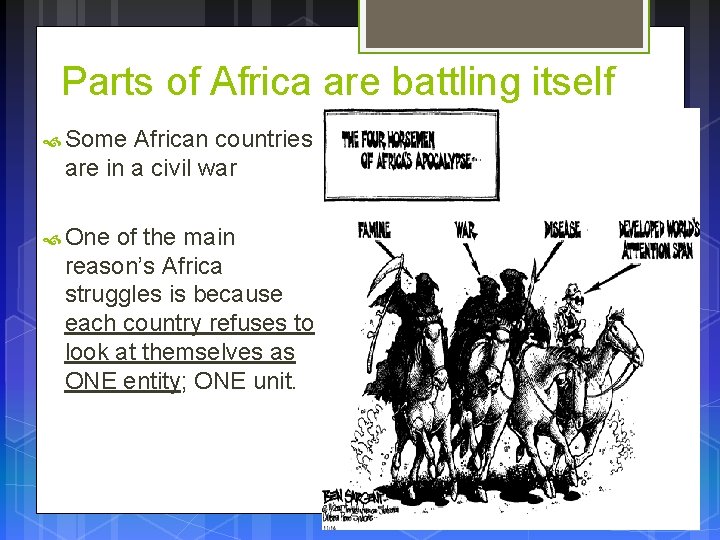
Parts of Africa are battling itself Some African countries are in a civil war One of the main reason’s Africa struggles is because each country refuses to look at themselves as ONE entity; ONE unit.
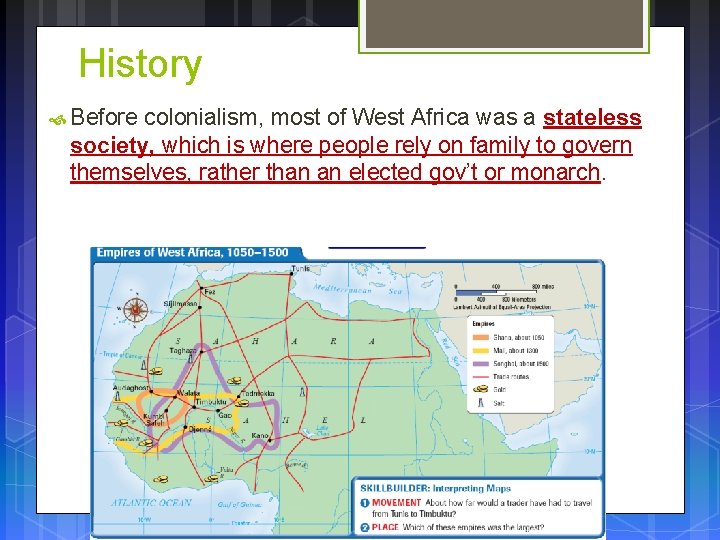
History Before colonialism, most of West Africa was a stateless society, which is where people rely on family to govern themselves, rather than an elected gov’t or monarch.
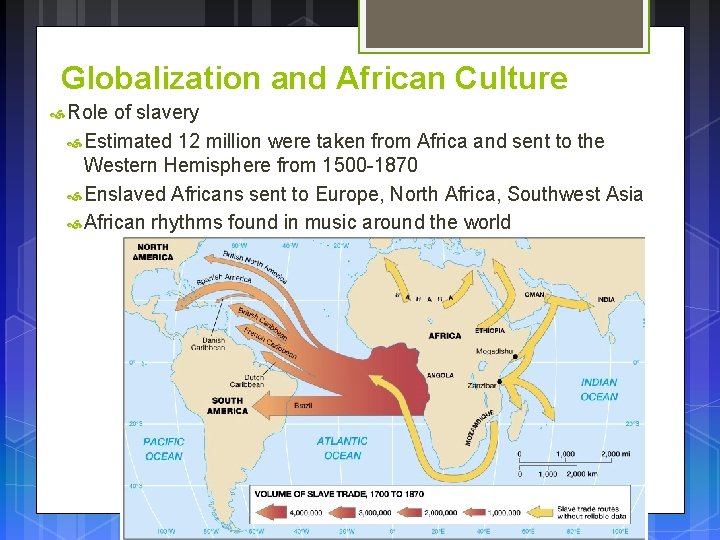
Globalization and African Culture Role of slavery Estimated 12 million were taken from Africa and sent to the Western Hemisphere from 1500 -1870 Enslaved Africans sent to Europe, North Africa, Southwest Asia African rhythms found in music around the world 31
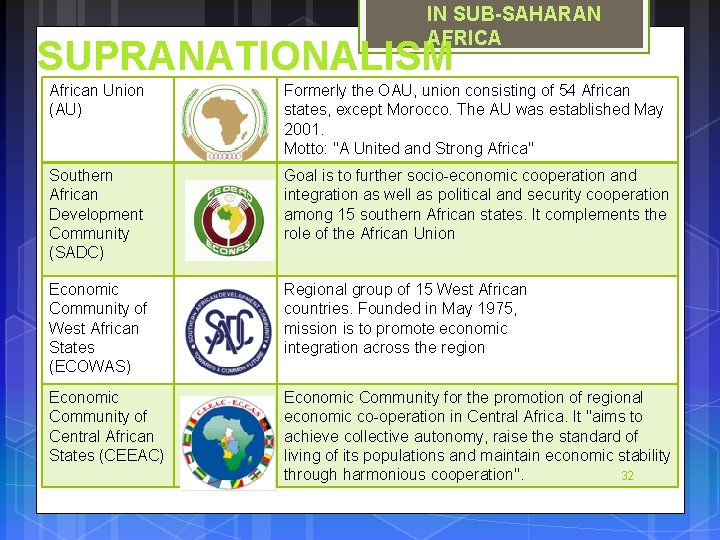
IN SUB-SAHARAN AFRICA SUPRANATIONALISM African Union (AU) Formerly the OAU, union consisting of 54 African states, except Morocco. The AU was established May 2001. Motto: "A United and Strong Africa" Southern African Development Community (SADC) Goal is to further socio-economic cooperation and integration as well as political and security cooperation among 15 southern African states. It complements the role of the African Union Economic Community of West African States (ECOWAS) Regional group of 15 West African countries. Founded in May 1975, mission is to promote economic integration across the region Economic Community of Central African States (CEEAC) Economic Community for the promotion of regional economic co-operation in Central Africa. It "aims to achieve collective autonomy, raise the standard of living of its populations and maintain economic stability 32 through harmonious cooperation".
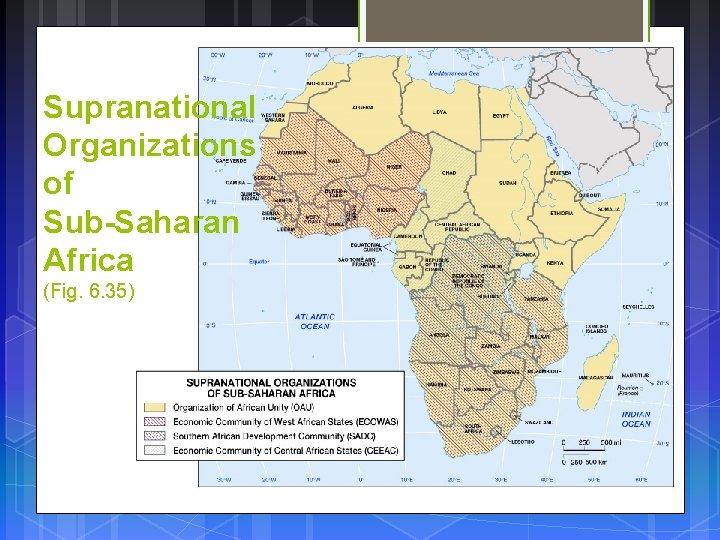
Supranational Organizations of Sub-Saharan Africa (Fig. 6. 35) 33
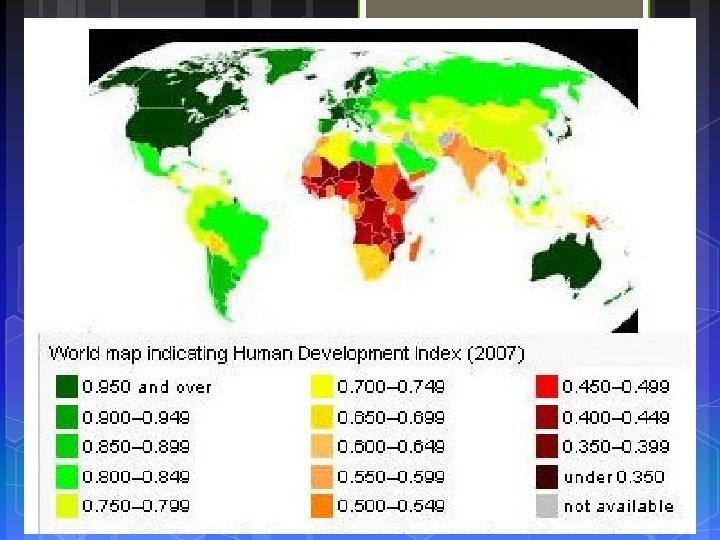
Development in Africa: HDI Reminder: HDI (human development index) is a combination of economic, social, and demographic factors. It is calculated by measuring: Gross domestic product (GDP) Literacy Rate Average number of school years attended. Life expectancy The number assigned is from 0. 1 to 1. 0. The higher the better/more developed. Where do you think most of Sub-Saharan African countries would be? ?
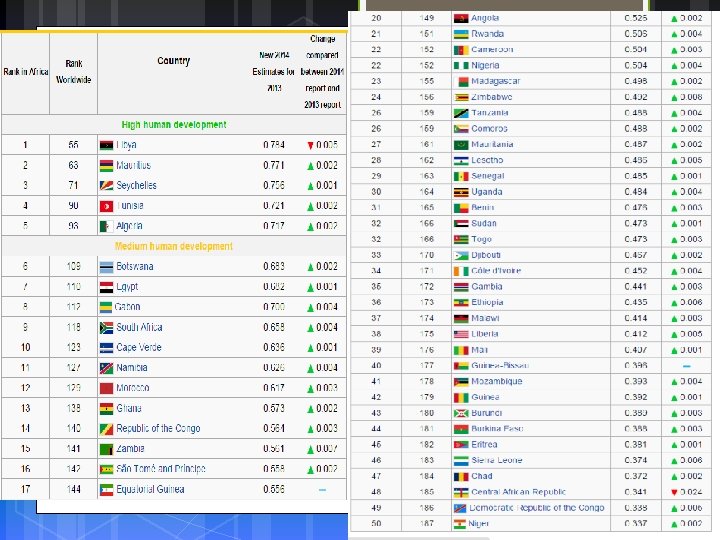
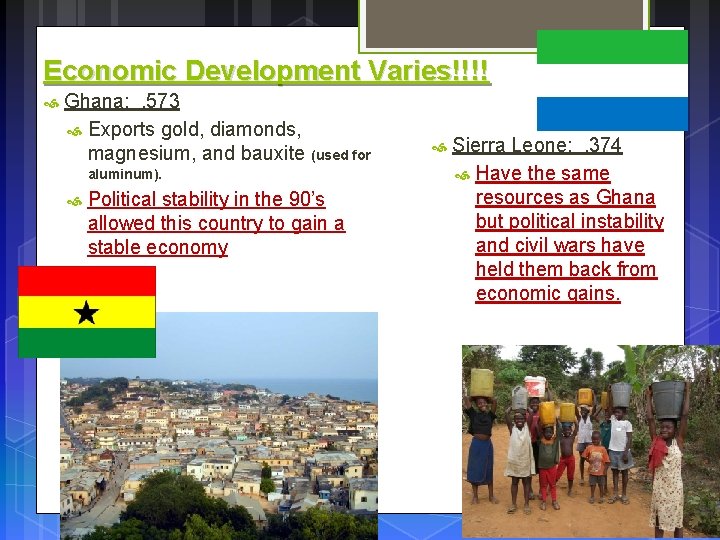
Economic Development Varies!!!! Ghana: . 573 Exports gold, diamonds, magnesium, and bauxite (used for aluminum). Political stability in the 90’s allowed this country to gain a stable economy Sierra Leone: . 374 Have the same resources as Ghana but political instability and civil wars have held them back from economic gains.
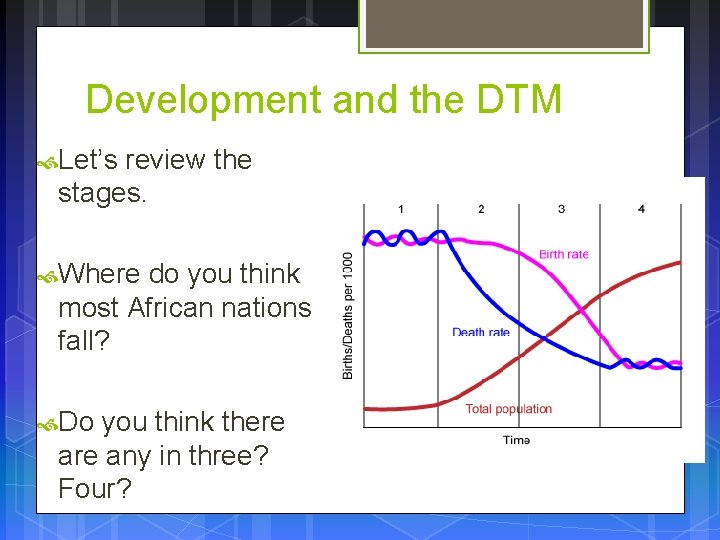
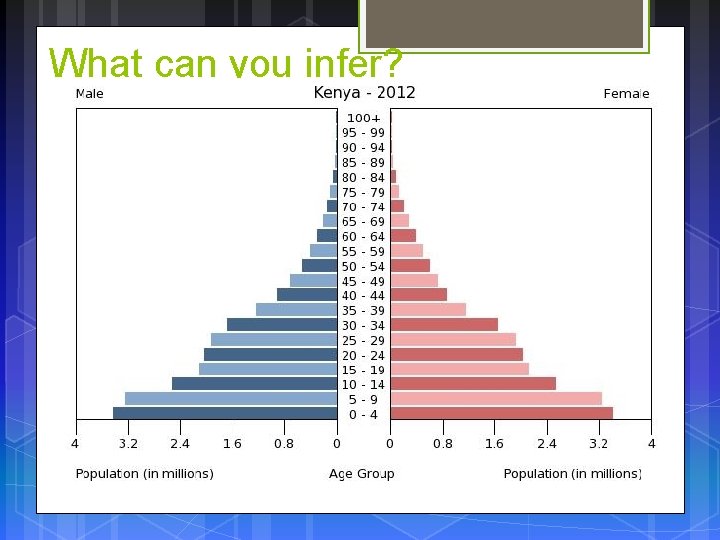
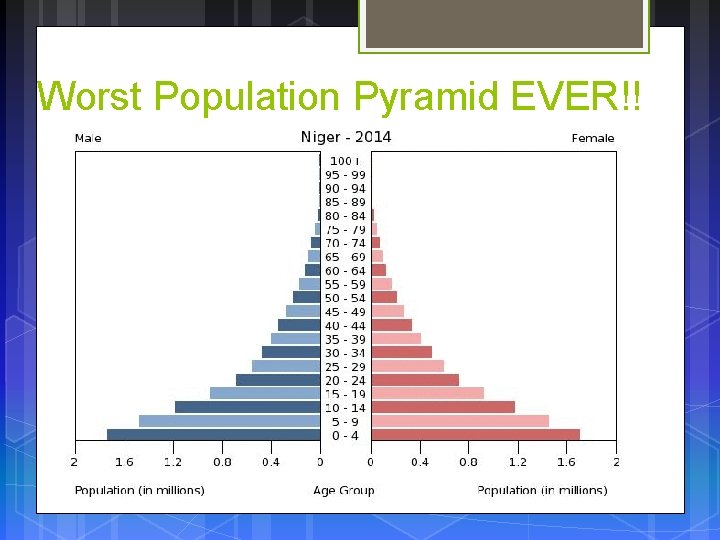
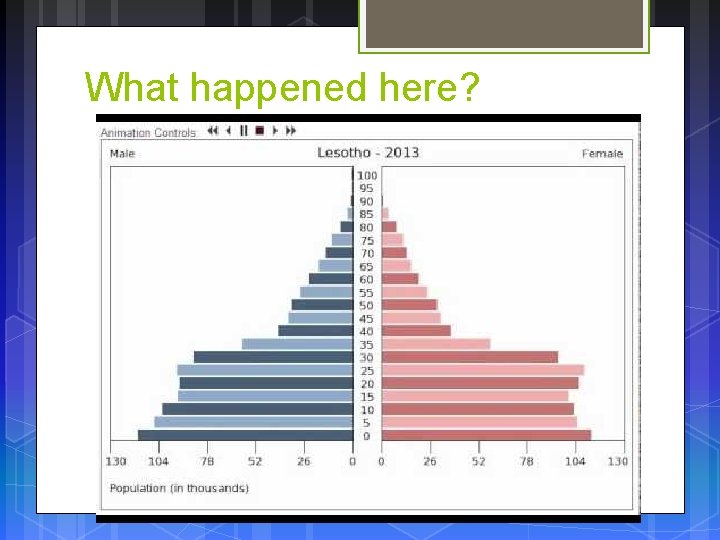
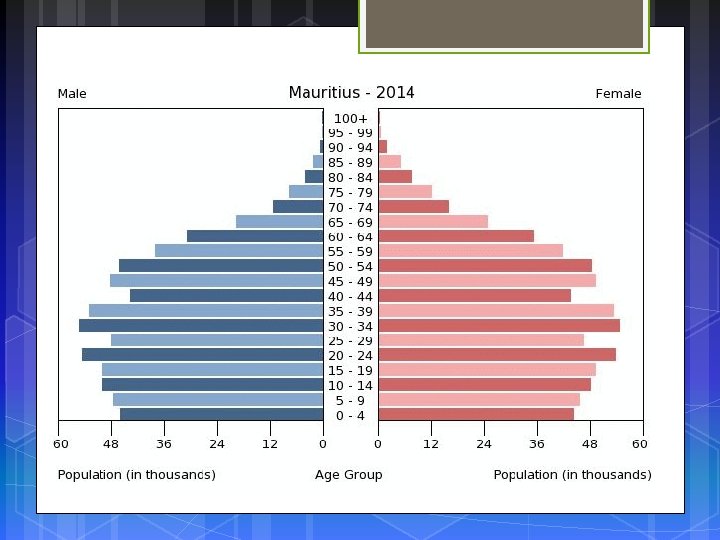
Development and the DTM Let’s review the stages. Where do you think most African nations fall? Do you think there any in three? Four?
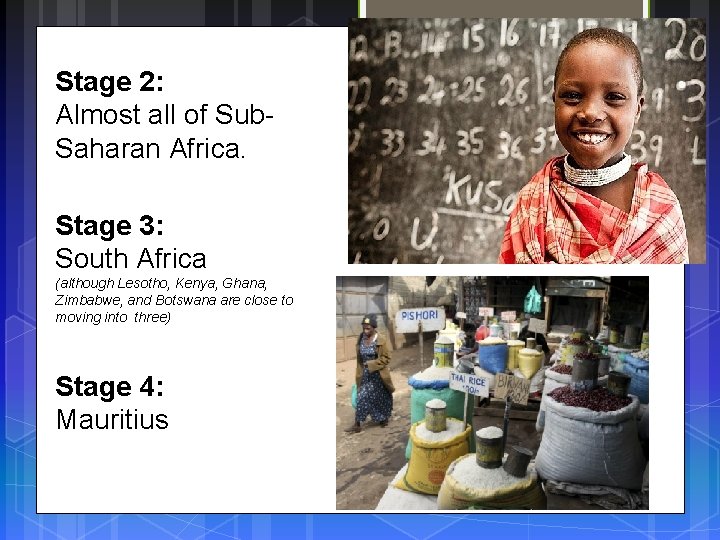
Stage 2: Almost all of Sub. Saharan Africa. Stage 3: South Africa (although Lesotho, Kenya, Ghana, Zimbabwe, and Botswana are close to moving into three) Stage 4: Mauritius
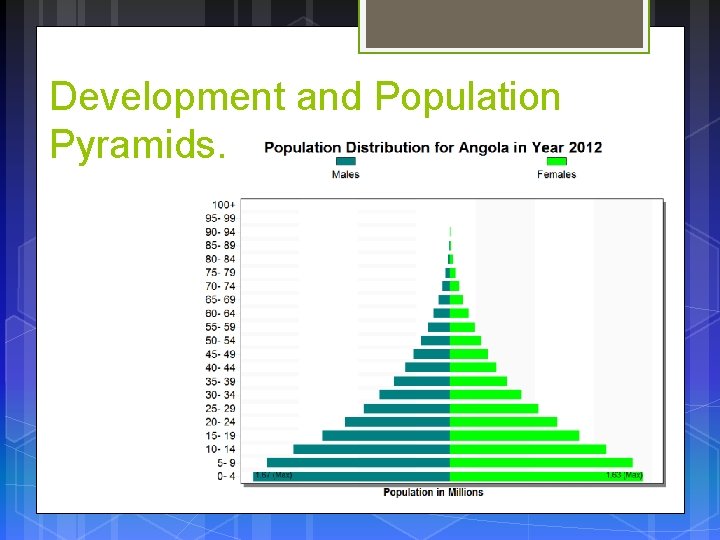
Development and Population Pyramids.
What can you infer?
Worst Population Pyramid EVER!!
What happened here?
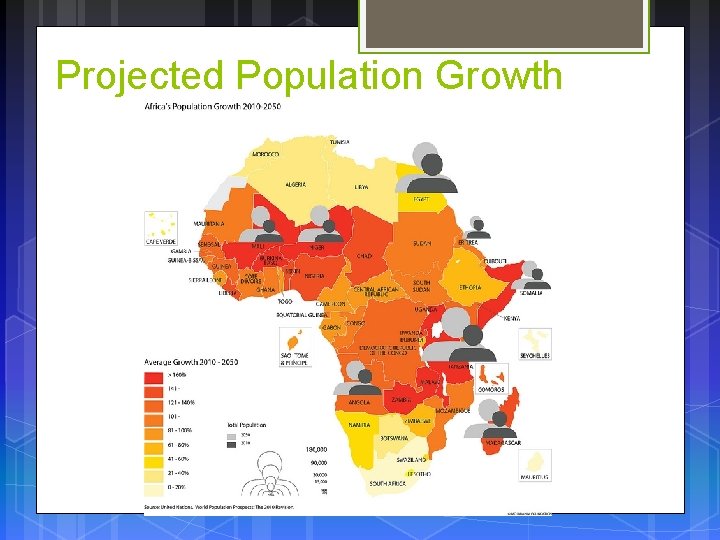
Projected Population Growth
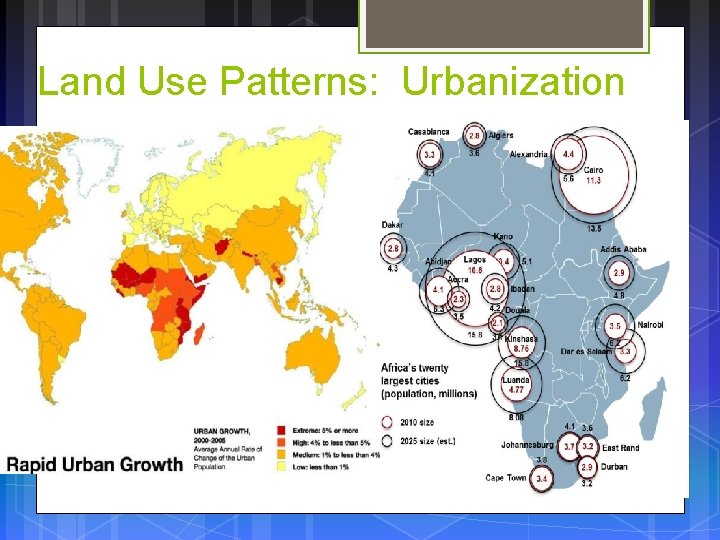
Land Use Patterns: Urbanization
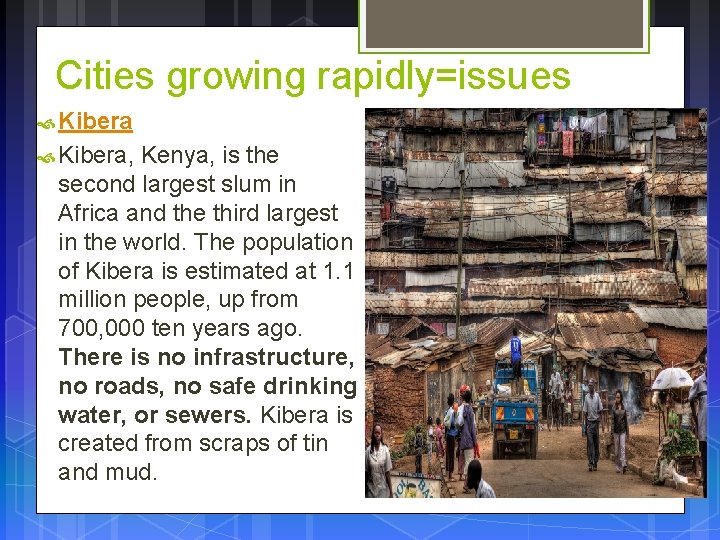
Cities growing rapidly=issues Kibera, Kenya, is the second largest slum in Africa and the third largest in the world. The population of Kibera is estimated at 1. 1 million people, up from 700, 000 ten years ago. There is no infrastructure, no roads, no safe drinking water, or sewers. Kibera is created from scraps of tin and mud.
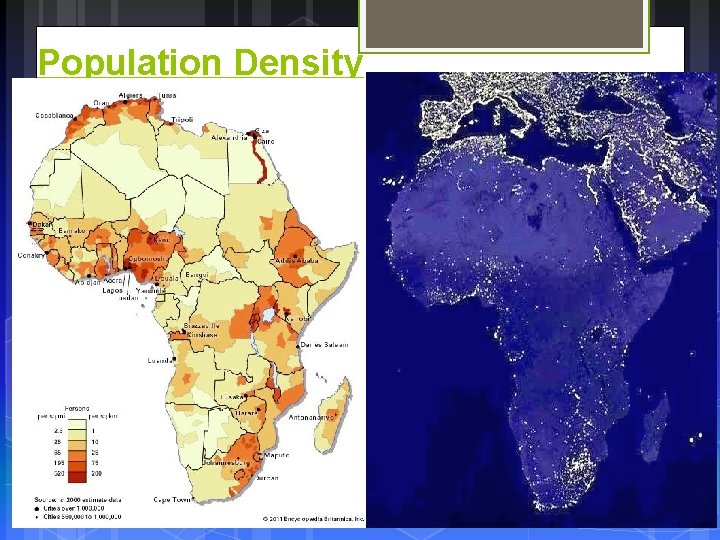
Population Density
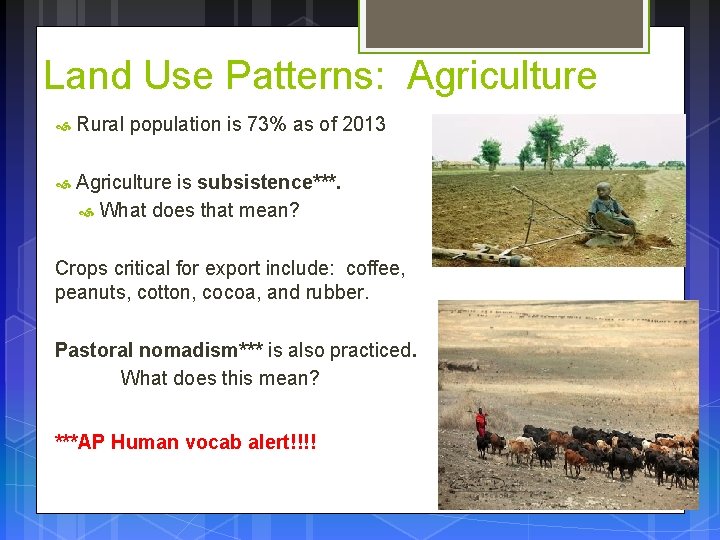
Land Use Patterns: Agriculture Rural population is 73% as of 2013 Agriculture is subsistence***. What does that mean? Crops critical for export include: coffee, peanuts, cotton, cocoa, and rubber. Pastoral nomadism*** is also practiced. What does this mean? ***AP Human vocab alert!!!!
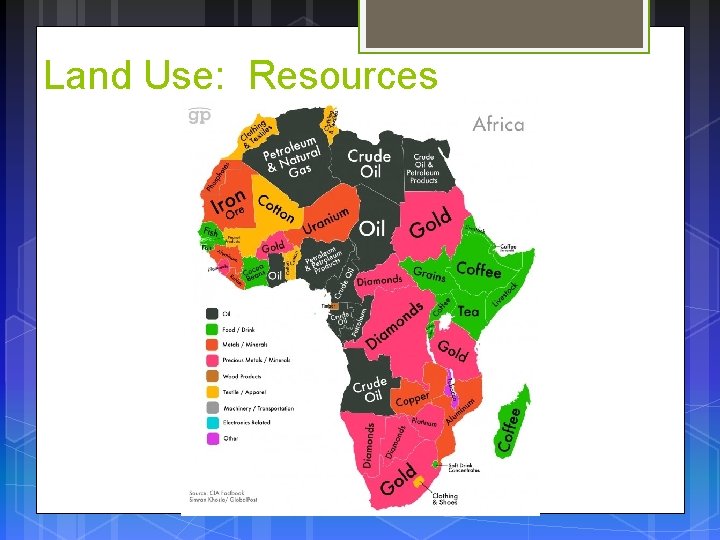
Land Use: Resources
Conclusions Globalization & Diversity: Rowntree, Lewis, Price, Wyckoff • Problems lead to pessimism –Civil wars –Health problems –Poverty • Reasons for optimism –Large areas of land available for farming –Signs of declining birth rates –Some wars have ended –Improving infrastructure –Some countries doing relatively well: Mozambique, Botswana, S. Africa, Senegal, others. 51
- Slides: 51