
Human Geography Oceania 1 Chapter 31 Human Geography

- Slides: 19
Human Geography Oceania 1
Chapter 31 Human Geography of Oceania, and Antarctica: Migration and Conquest Pacific islanders remained isolated. Eventually, European colonization greatly altered the entire region. Section 2: Oceania Section 3: Australia, New Zealand, and Antarctica 2
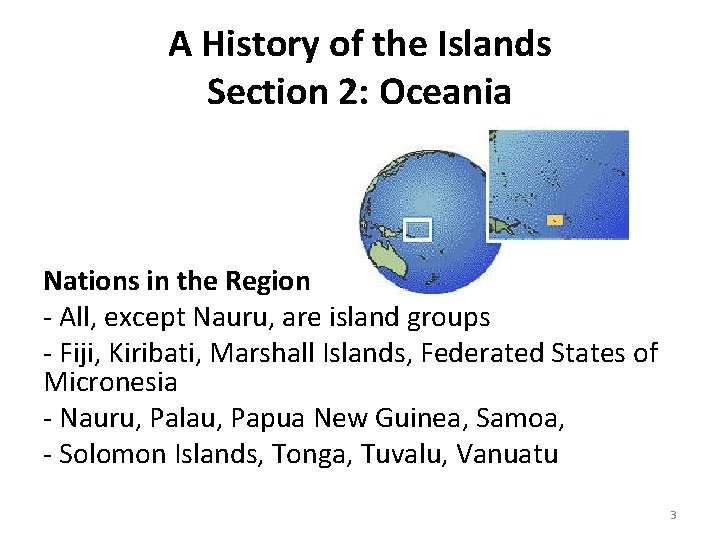
A History of the Islands Section 2: Oceania Nations in the Region - All, except Nauru, are island groups - Fiji, Kiribati, Marshall Islands, Federated States of Micronesia - Nauru, Palau, Papua New Guinea, Samoa, - Solomon Islands, Tonga, Tuvalu, Vanuatu 3
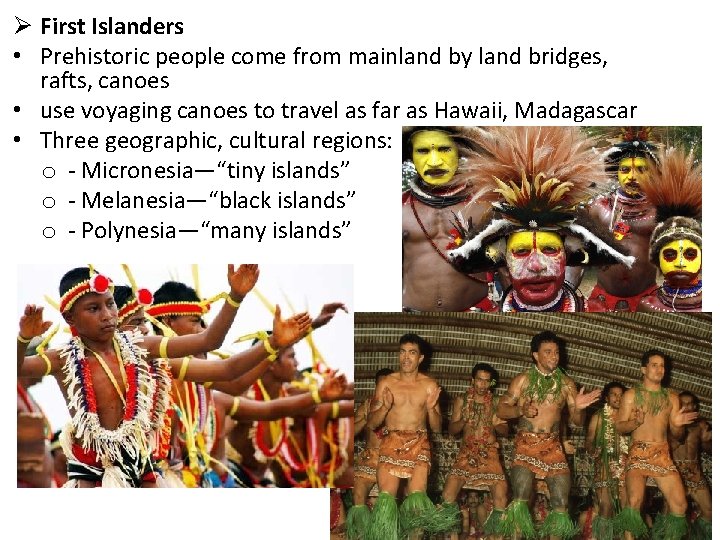
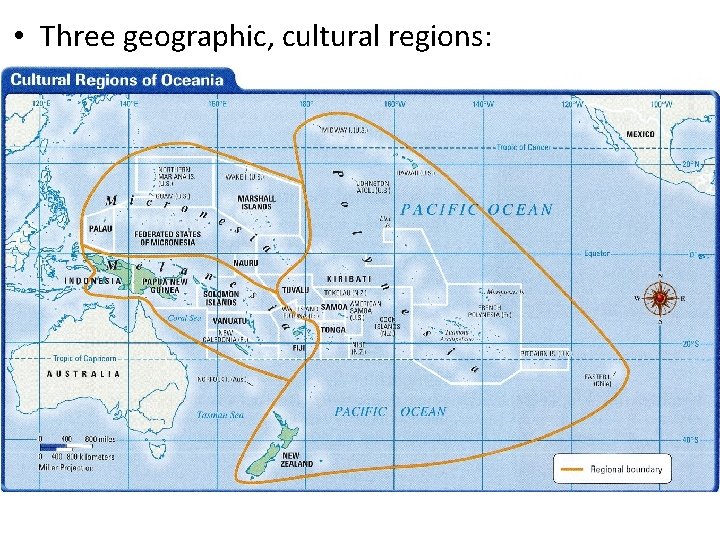
Ø First Islanders • Prehistoric people come from mainland by land bridges, rafts, canoes • use voyaging canoes to travel as far as Hawaii, Madagascar • Three geographic, cultural regions: o - Micronesia—“tiny islands” o - Melanesia—“black islands” o - Polynesia—“many islands”
• Three geographic, cultural regions:
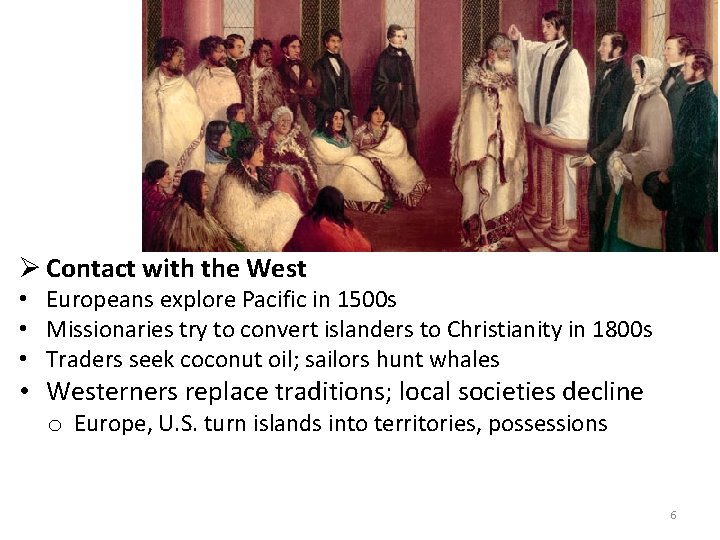
Ø Contact with the West • Europeans explore Pacific in 1500 s • Missionaries try to convert islanders to Christianity in 1800 s • Traders seek coconut oil; sailors hunt whales • Westerners replace traditions; local societies decline o Europe, U. S. turn islands into territories, possessions 6
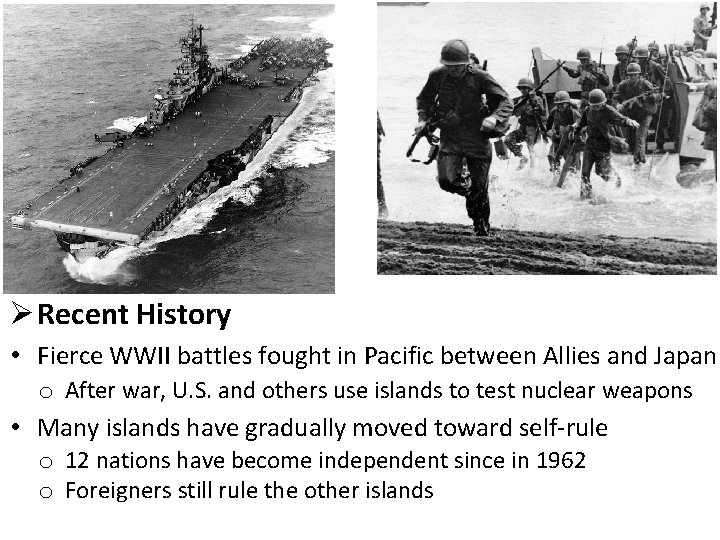
Ø Recent History • Fierce WWII battles fought in Pacific between Allies and Japan o After war, U. S. and others use islands to test nuclear weapons • Many islands have gradually moved toward self-rule o 12 nations have become independent since in 1962 o Foreigners still rule the other islands
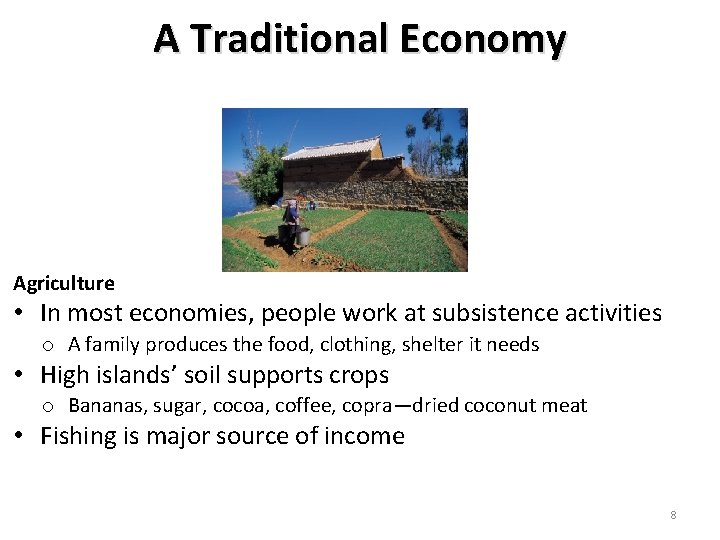
A Traditional Economy Agriculture • In most economies, people work at subsistence activities o A family produces the food, clothing, shelter it needs • High islands’ soil supports crops o Bananas, sugar, cocoa, coffee, copra—dried coconut meat • Fishing is major source of income 8
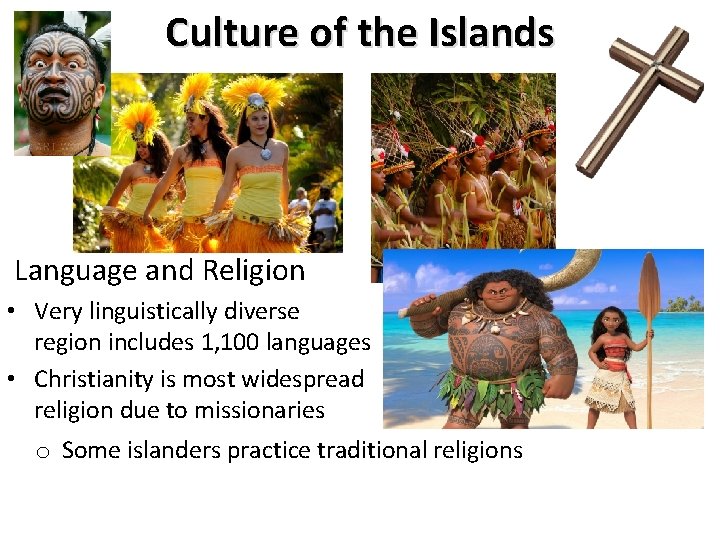
Culture of the Islands Language and Religion • Very linguistically diverse region includes 1, 100 languages • Christianity is most widespread religion due to missionaries o Some islanders practice traditional religions
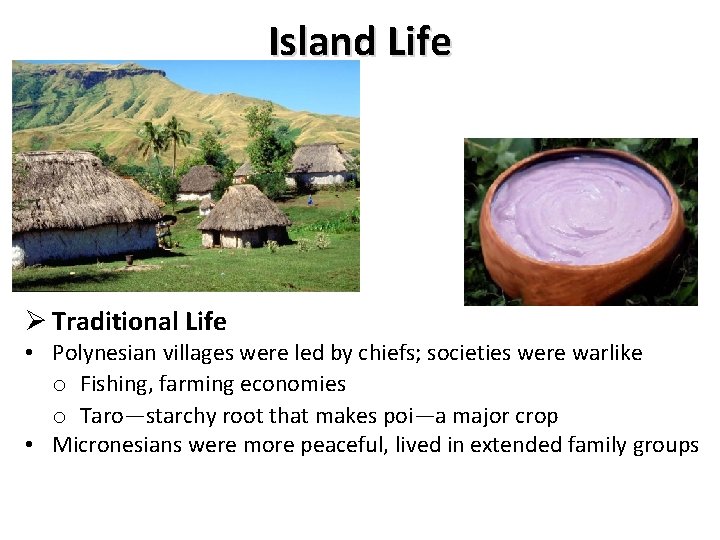
Island Life Ø Traditional Life • Polynesian villages were led by chiefs; societies were warlike o Fishing, farming economies o Taro—starchy root that makes poi—a major crop • Micronesians were more peaceful, lived in extended family groups
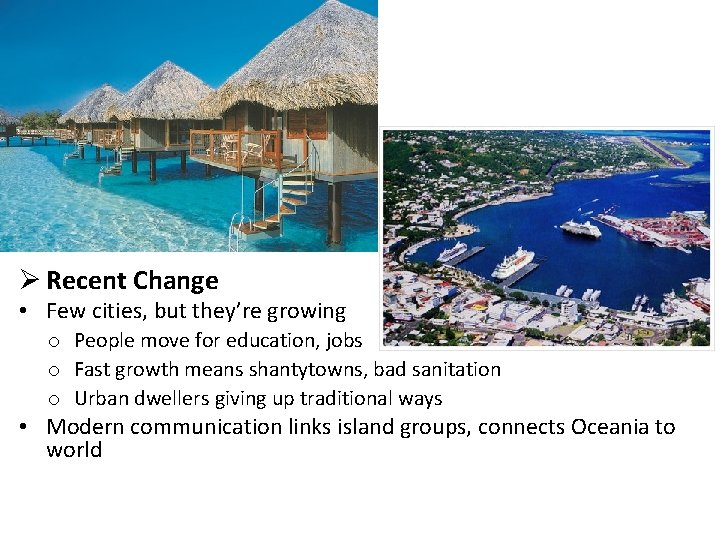
Ø Recent Change • Few cities, but they’re growing o People move for education, jobs o Fast growth means shantytowns, bad sanitation o Urban dwellers giving up traditional ways • Modern communication links island groups, connects Oceania to world
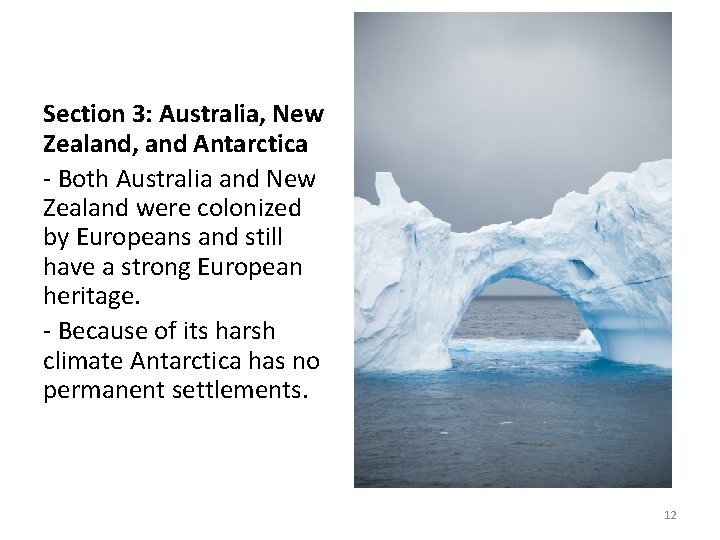
Section 3: Australia, New Zealand, and Antarctica - Both Australia and New Zealand were colonized by Europeans and still have a strong European heritage. - Because of its harsh climate Antarctica has no permanent settlements. 12
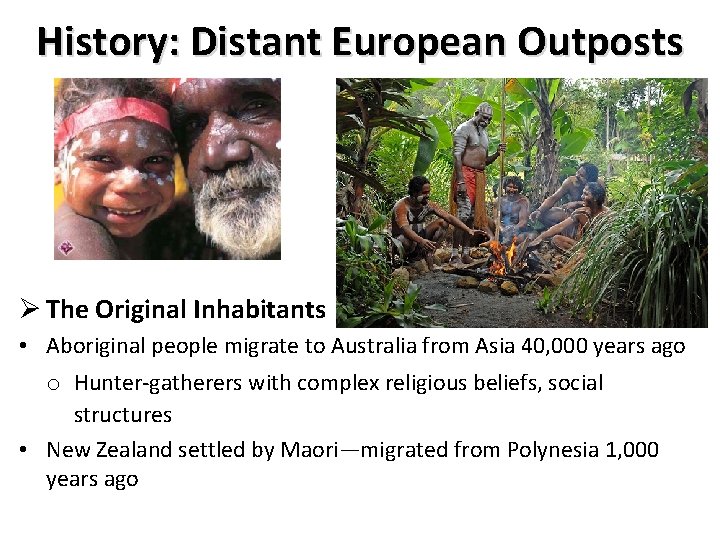
History: Distant European Outposts Ø The Original Inhabitants • Aboriginal people migrate to Australia from Asia 40, 000 years ago o Hunter-gatherers with complex religious beliefs, social structures • New Zealand settled by Maori—migrated from Polynesia 1, 000 years ago
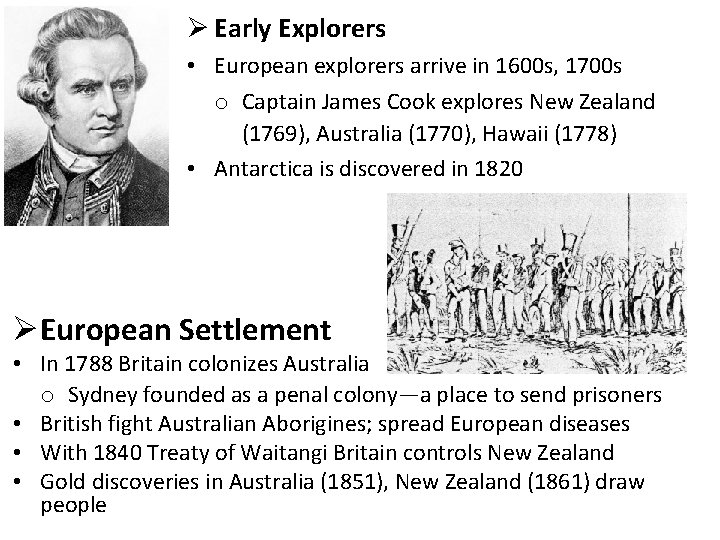
Ø Early Explorers • European explorers arrive in 1600 s, 1700 s o Captain James Cook explores New Zealand (1769), Australia (1770), Hawaii (1778) • Antarctica is discovered in 1820 ØEuropean Settlement • In 1788 Britain colonizes Australia o Sydney founded as a penal colony—a place to send prisoners • British fight Australian Aborigines; spread European diseases • With 1840 Treaty of Waitangi Britain controls New Zealand • Gold discoveries in Australia (1851), New Zealand (1861) draw people
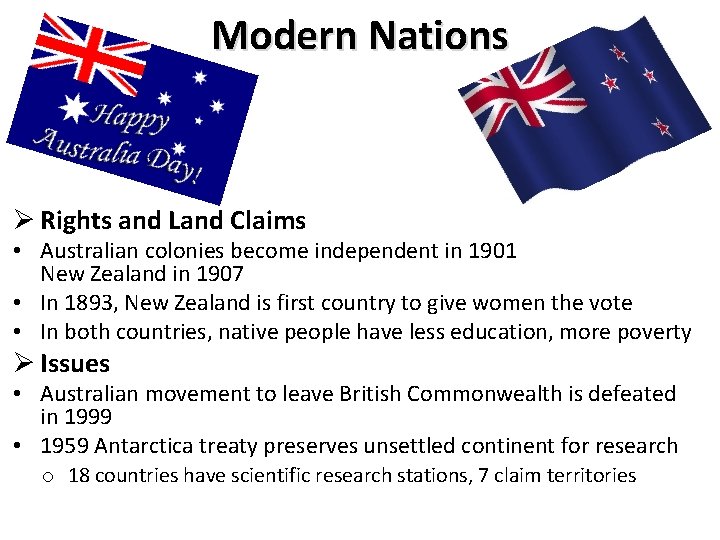
Modern Nations Ø Rights and Land Claims • Australian colonies become independent in 1901 New Zealand in 1907 • In 1893, New Zealand is first country to give women the vote • In both countries, native people have less education, more poverty Ø Issues • Australian movement to leave British Commonwealth is defeated in 1999 • 1959 Antarctica treaty preserves unsettled continent for research o 18 countries have scientific research stations, 7 claim territories
The Road Train Stop at 2: 10
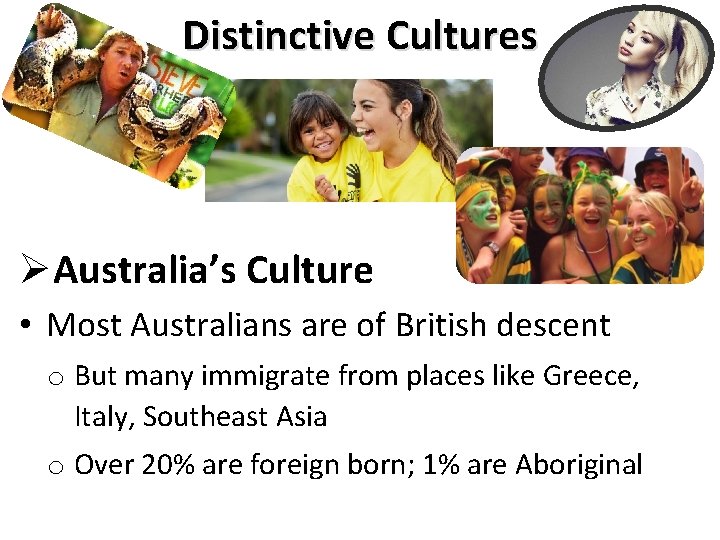
Distinctive Cultures ØAustralia’s Culture • Most Australians are of British descent o But many immigrate from places like Greece, Italy, Southeast Asia o Over 20% are foreign born; 1% are Aboriginal
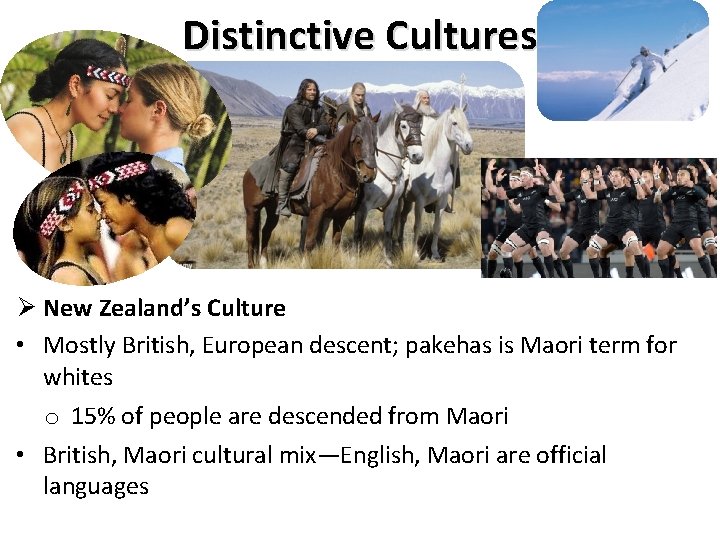
Distinctive Cultures Ø New Zealand’s Culture • Mostly British, European descent; pakehas is Maori term for whites o 15% of people are descended from Maori • British, Maori cultural mix—English, Maori are official languages
Modern Life City and Country • Both countries highly urbanized: 85% of people live in cities, towns o Australia’s large cities have pollution, traffic problems o New Zealand’s cites are quiet, un-crowded, and pollution-free • In both countries, ranchers live far from cities Recreation • Tennis, rugby, soccer, Australian rules football are popular o New Zealand has skiing, mountain climbing 19