
Human Genome Project 13 year project completed in
- Slides: 37
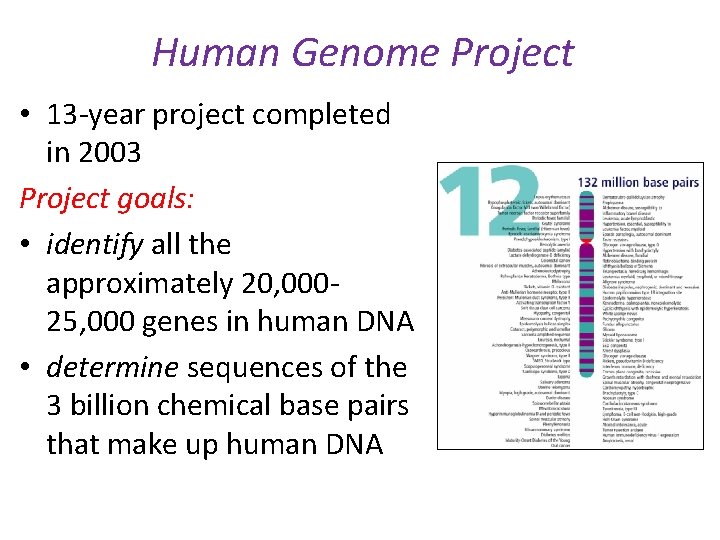
Human Genome Project • 13 -year project completed in 2003 Project goals: • identify all the approximately 20, 00025, 000 genes in human DNA • determine sequences of the 3 billion chemical base pairs that make up human DNA
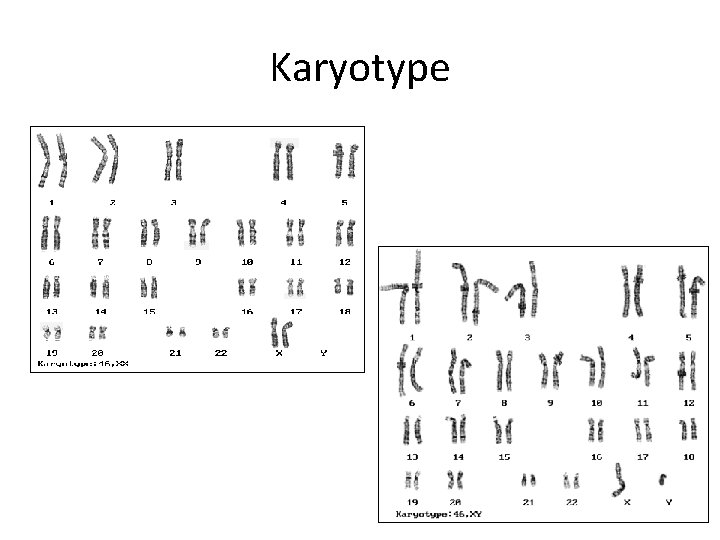
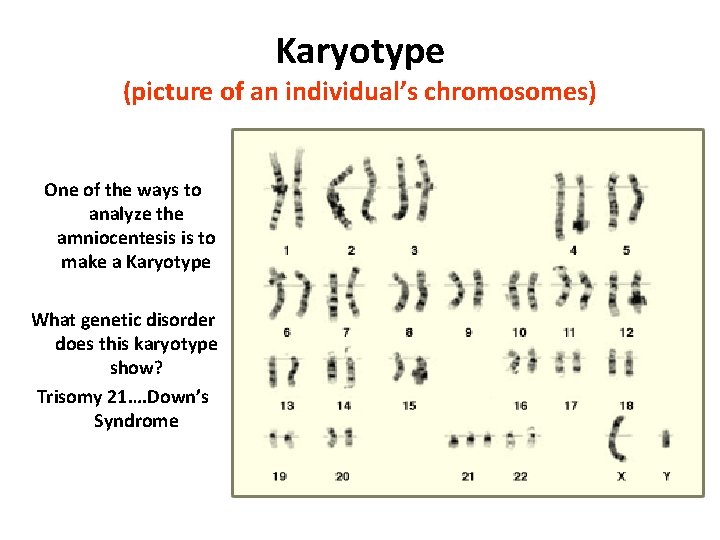
Karyotype
Genetic Disorders • Major types of genetic disorders: – Autosomal • Single genes • Multiple genes – Sex-linked – Chromosome abnormalities
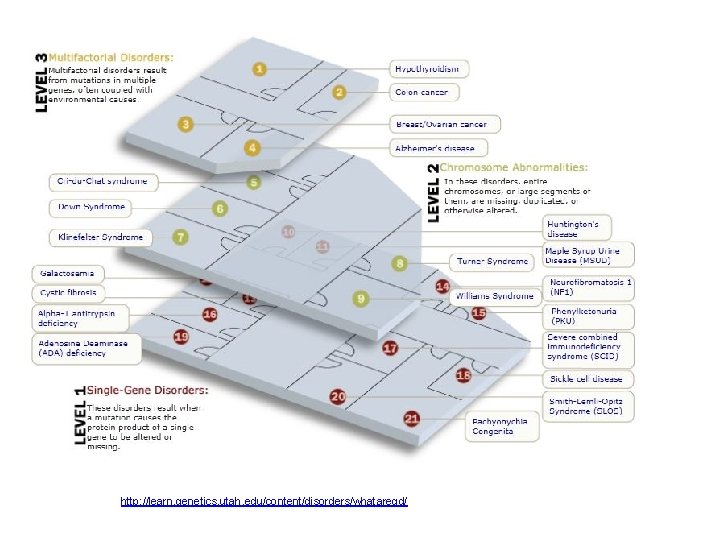
Levels of Genetic Disorders • Level 1 Single gene – mutation affecting a single gene • Level 2 Chromosomes – entire chromosomes, or large segments of them, are missing, duplicated, or otherwise altered • Level 3 Multifactor – mutations in multiple genes, often coupled with environmental causes
http: //learn. genetics. utah. edu/content/disorders/whataregd/
Autosomal Disorders • Autosomal genetic disorders are caused by alleles on autosomes (the non-sex chromosomes) • Most are recessive (need 2 recessive alleles) – People with 1 recessive allele are carriers – they do NOT have the disorder but are able to pass the allele on to their children – Ex: Cystic fibrosis (CF), sickle cell anemia • Can also be dominant (need only 1 allele to have disorder) – Ex: Huntington’s disease
Other Genetic disorders Huntington's • Dominant disorder • neurodegenerative genetic disorder – affects muscle coordination – leads to cognitive decline and psychiatric problems – Noticeable in mid-adult life http: //www. youtube. com/watch? v=65 xf 1 ol. Ep. QM
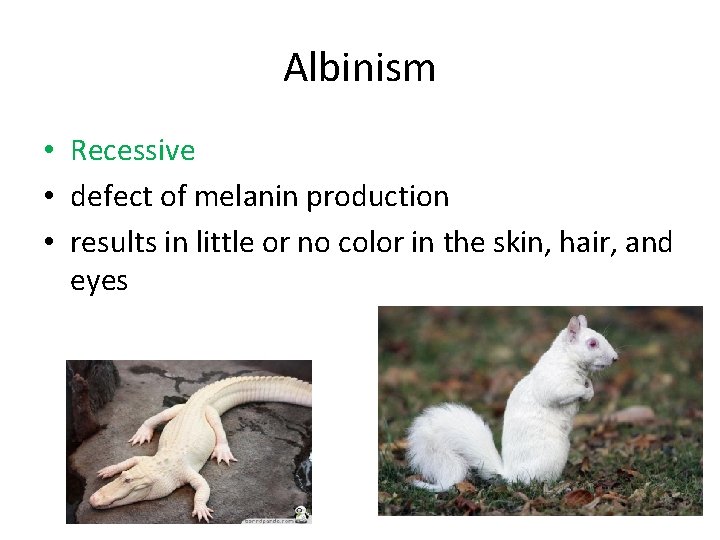
Albinism • Recessive • defect of melanin production • results in little or no color in the skin, hair, and eyes
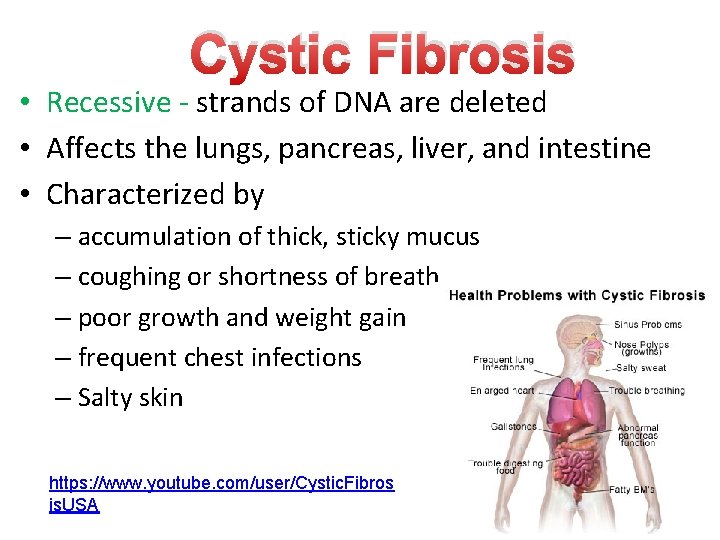
Cystic Fibrosis • Recessive - strands of DNA are deleted • Affects the lungs, pancreas, liver, and intestine • Characterized by – accumulation of thick, sticky mucus – coughing or shortness of breath – poor growth and weight gain – frequent chest infections – Salty skin https: //www. youtube. com/user/Cystic. Fibros is. USA
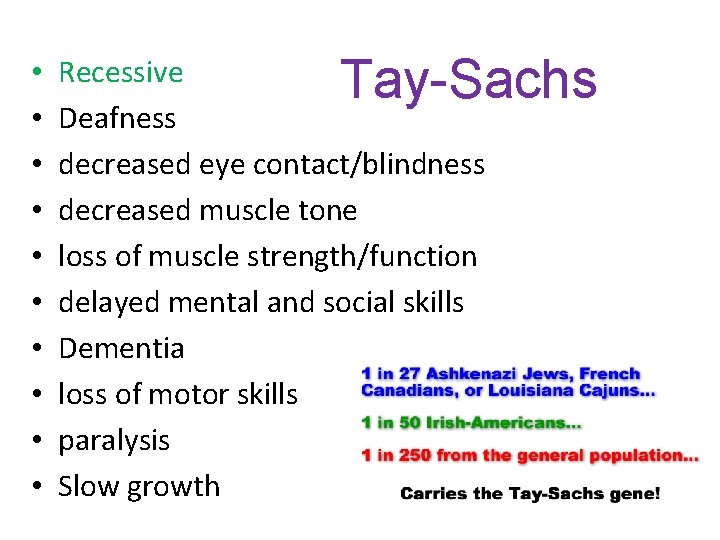
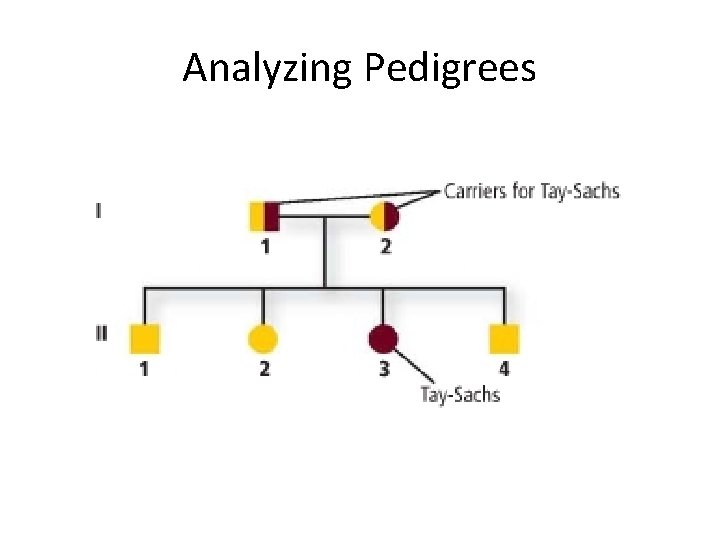
• • • Tay-Sachs Recessive Deafness decreased eye contact/blindness decreased muscle tone loss of muscle strength/function delayed mental and social skills Dementia loss of motor skills paralysis Slow growth
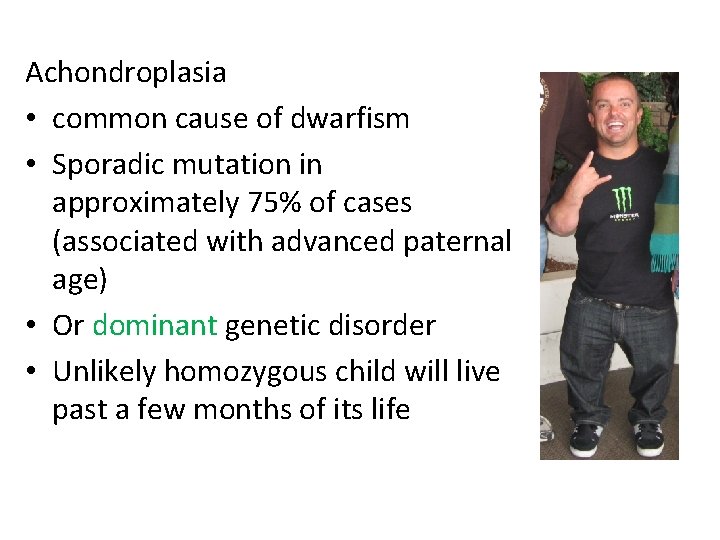
Achondroplasia • common cause of dwarfism • Sporadic mutation in approximately 75% of cases (associated with advanced paternal age) • Or dominant genetic disorder • Unlikely homozygous child will live past a few months of its life
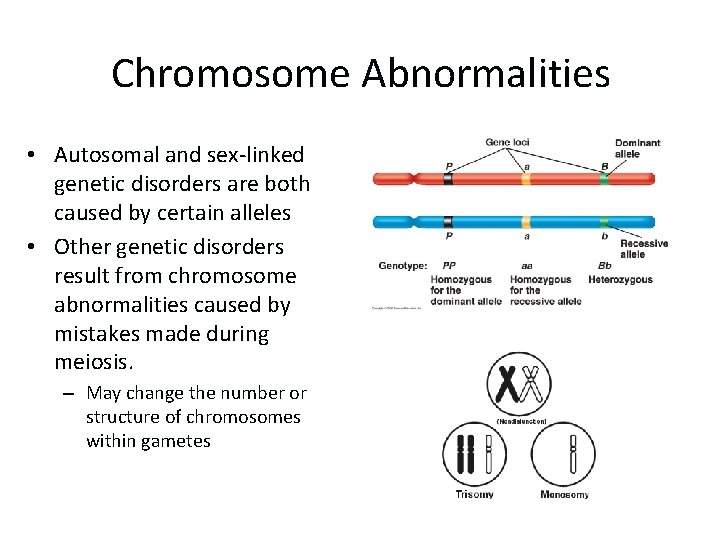
Chromosome Abnormalities • Autosomal and sex-linked genetic disorders are both caused by certain alleles • Other genetic disorders result from chromosome abnormalities caused by mistakes made during meiosis. – May change the number or structure of chromosomes within gametes
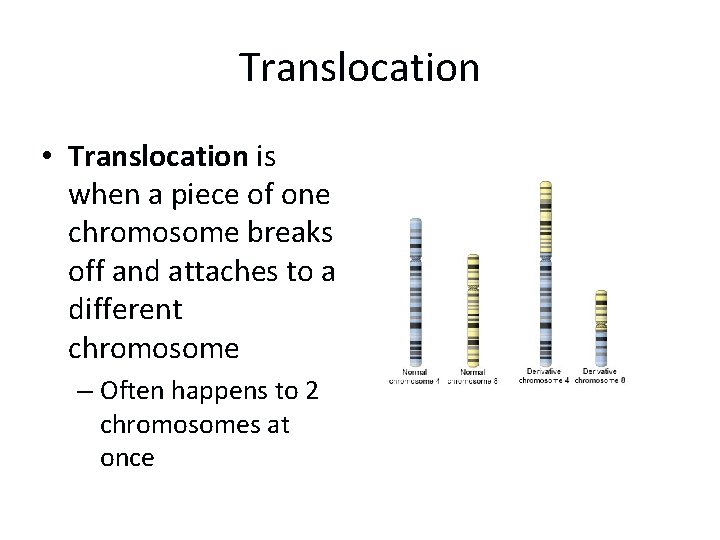
Translocation • Translocation is when a piece of one chromosome breaks off and attaches to a different chromosome – Often happens to 2 chromosomes at once
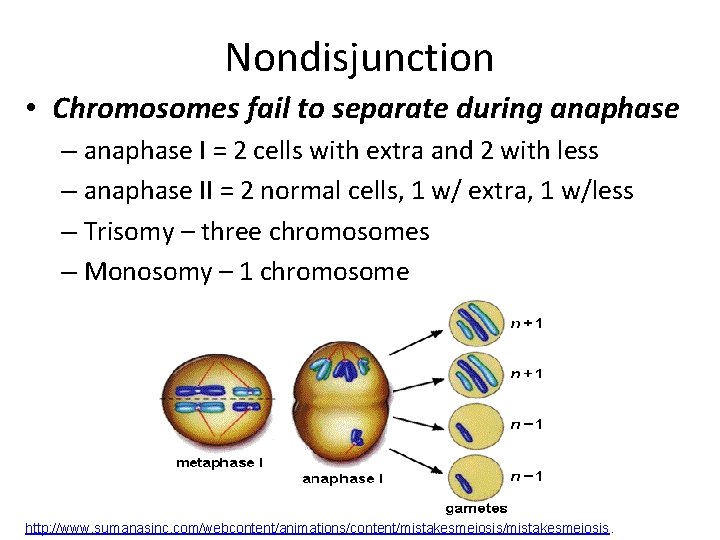
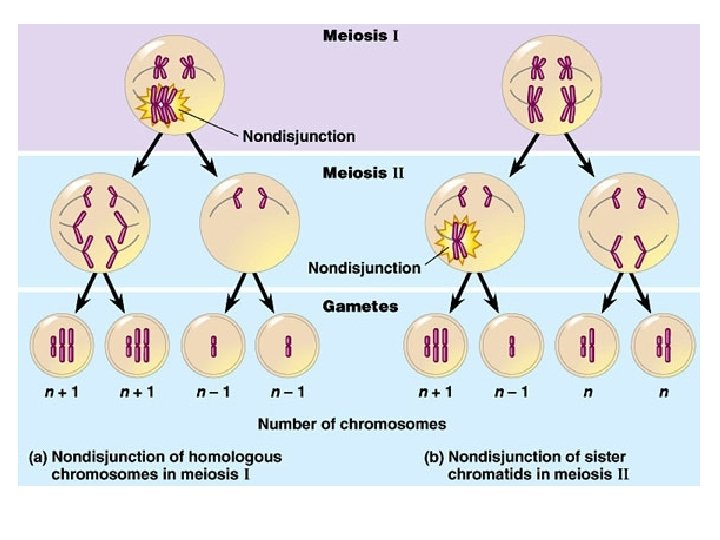
Nondisjunction • Chromosomes fail to separate during anaphase – anaphase I = 2 cells with extra and 2 with less – anaphase II = 2 normal cells, 1 w/ extra, 1 w/less – Trisomy – three chromosomes – Monosomy – 1 chromosome http: //www. sumanasinc. com/webcontent/animations/content/mistakesmeiosis.
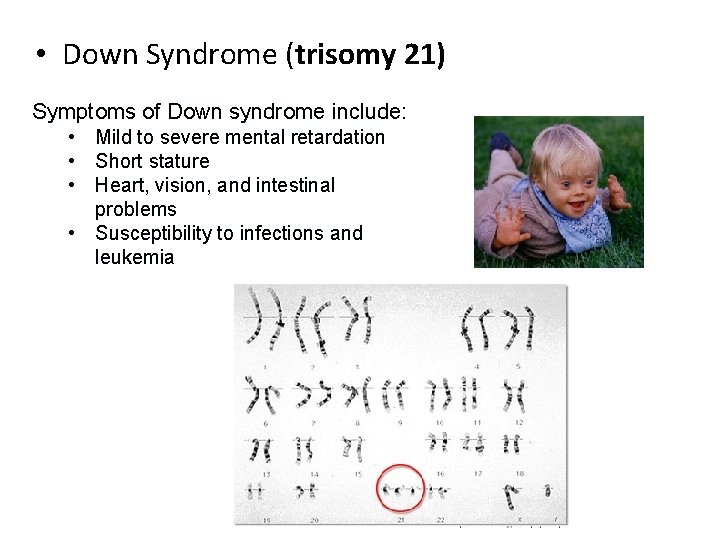
• Down Syndrome (trisomy 21) Symptoms of Down syndrome include: • Mild to severe mental retardation • Short stature • Heart, vision, and intestinal problems • Susceptibility to infections and leukemia
Other Nondisjunctions • Patau syndrome (trisomy 13): serious eye, brain, circulatory defects as well as cleft palate. – Children rarely live more than a few months • Edward's syndrome (trisomy 18): almost every organ system affected – Children with full Trisomy 18 generally do not live more than a few months
Nondisjunction of the sex chromosomes (X or Y chromosome) • Klinefelter syndrome: 47, XXY males. – Male sex organs – unusually small testes, sterile – Breast enlargement and other feminine body characteristics – Normal intelligence
• 47, XYY males – Jacob Syndrome – Individuals are somewhat taller than average – often have below normal intelligence – Thought that these men were likely to be criminally aggressive, but this has been disproven • Trisomy X: 47, XXX females – healthy and fertile - usually cannot be distinguished from normal female except by karyotype
• Monosomy X (Turner's syndrome) – the only viable monosomy in humans - women with Turner's have only 45 chromosomes – XO individuals are genetically female – do not mature sexually during puberty and are sterile – Short stature and normal intelligence – 98% of these fetuses die before birth
How do we find disorders? • Genetic tests use blood and other tissue Doctors use genetic tests for: • Find possible genetic diseases in unborn babies • Find out if people carry a gene • Screening embryos for disease • Test for genetic diseases before symptoms occur • Confirming a diagnosis
Diagnosing Genetic Disorders • There are several ways to determine whether a child will have a genetic disorder • Two main ways to diagnose: – Analysis of fetal cells • Amniocentesis • Chorionic villus biopsy – Imaging techniques • Ultrasonography (computerized image) • Fetoscopy (direct observation)
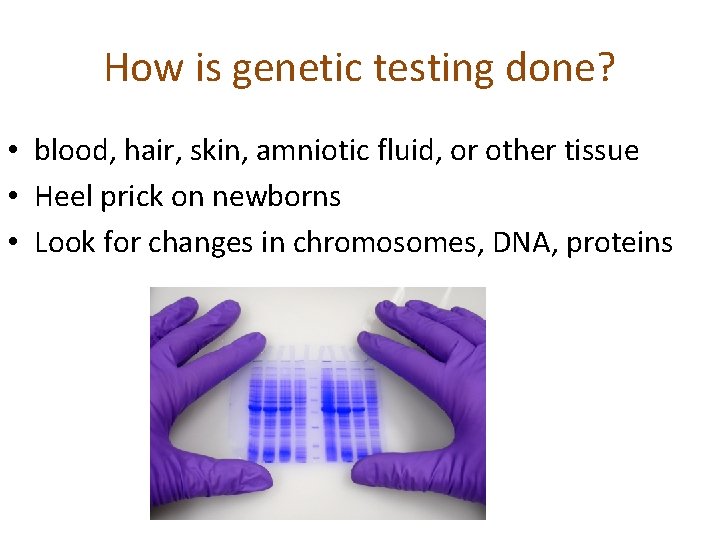
How is genetic testing done? • blood, hair, skin, amniotic fluid, or other tissue • Heel prick on newborns • Look for changes in chromosomes, DNA, proteins
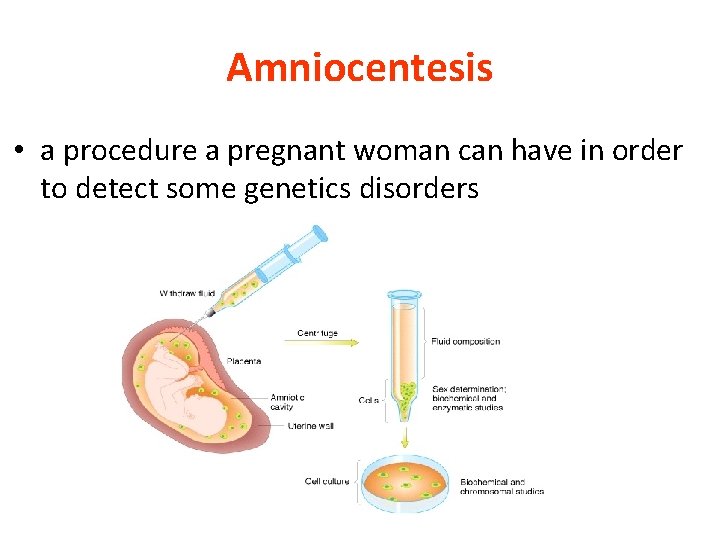
Amniocentesis • a procedure a pregnant woman can have in order to detect some genetics disorders
Karyotype (picture of an individual’s chromosomes) One of the ways to analyze the amniocentesis is to make a Karyotype What genetic disorder does this karyotype show? Trisomy 21…. Down’s Syndrome
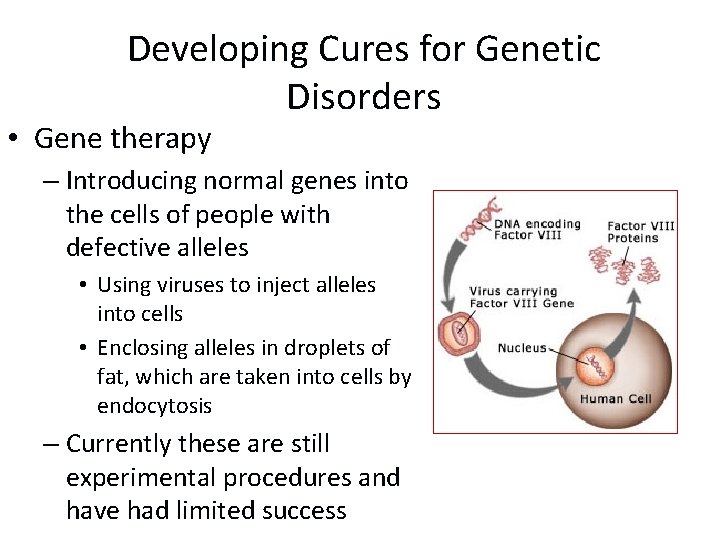
Developing Cures for Genetic Disorders • Gene therapy – Introducing normal genes into the cells of people with defective alleles • Using viruses to inject alleles into cells • Enclosing alleles in droplets of fat, which are taken into cells by endocytosis – Currently these are still experimental procedures and have had limited success
Genetic Dilemmas
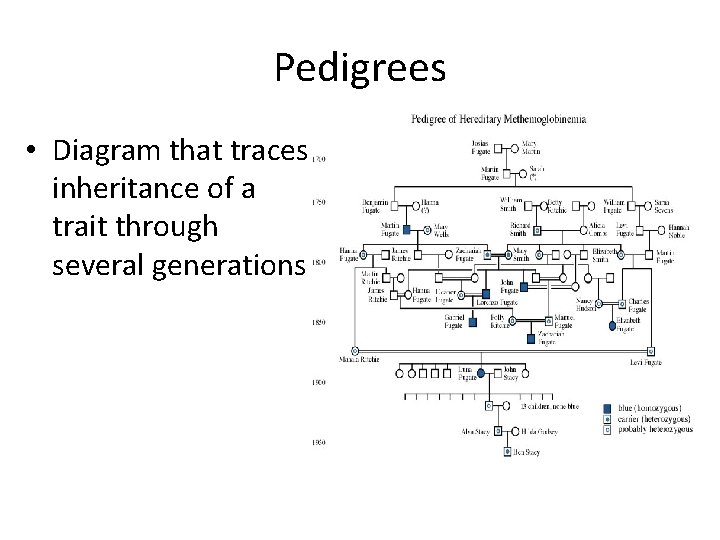
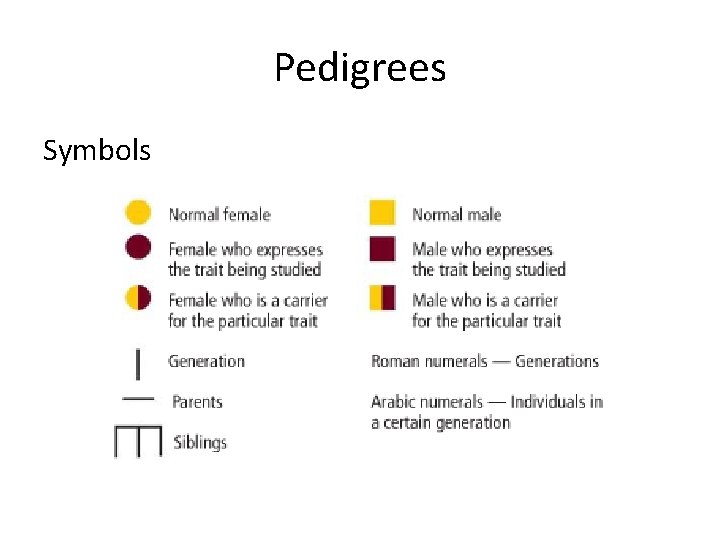
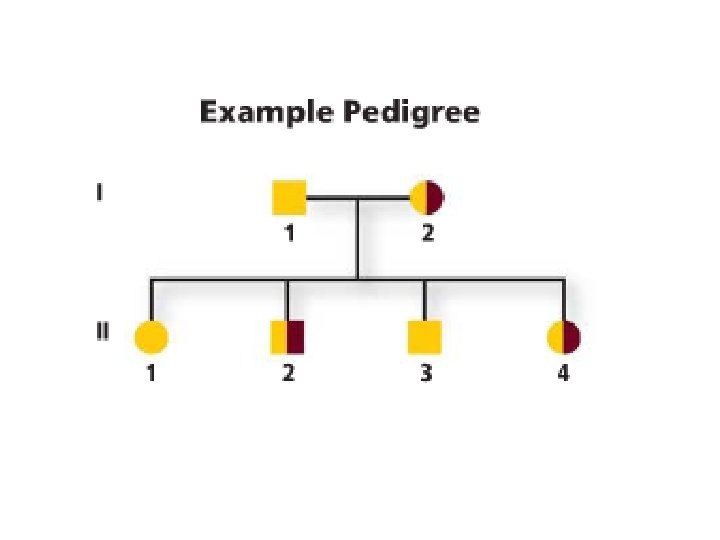
Pedigrees • Diagram that traces inheritance of a trait through several generations
Pedigrees Symbols
Analyzing Pedigrees
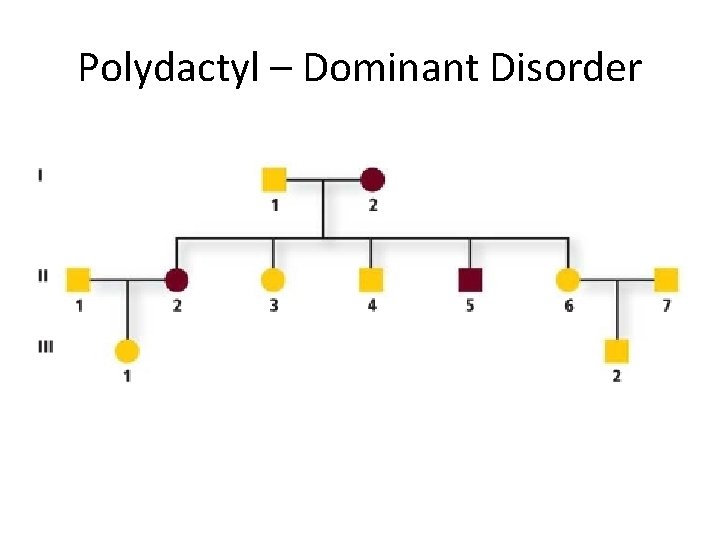
Polydactyl – Dominant Disorder
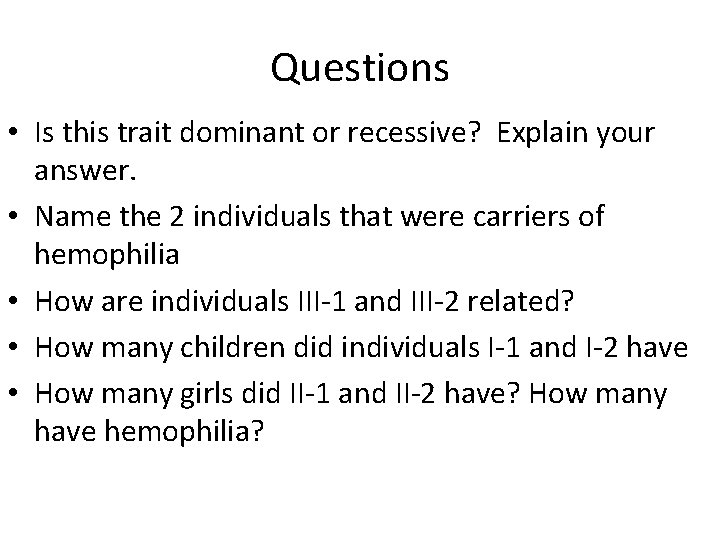
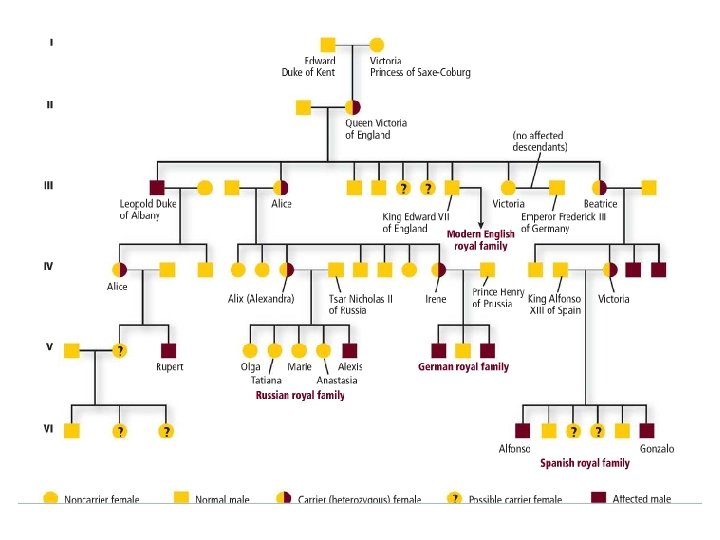
Questions • Is this trait dominant or recessive? Explain your answer. • Name the 2 individuals that were carriers of hemophilia • How are individuals III-1 and III-2 related? • How many children did individuals I-1 and I-2 have • How many girls did II-1 and II-2 have? How many have hemophilia?
Book Questions • • • Page 276 1, 2, 4, 5 Page 282 2, 3, 4 Page 285 1, 3 Page 301 1, 3 Page 310 1 -5 Page 315 1 -4
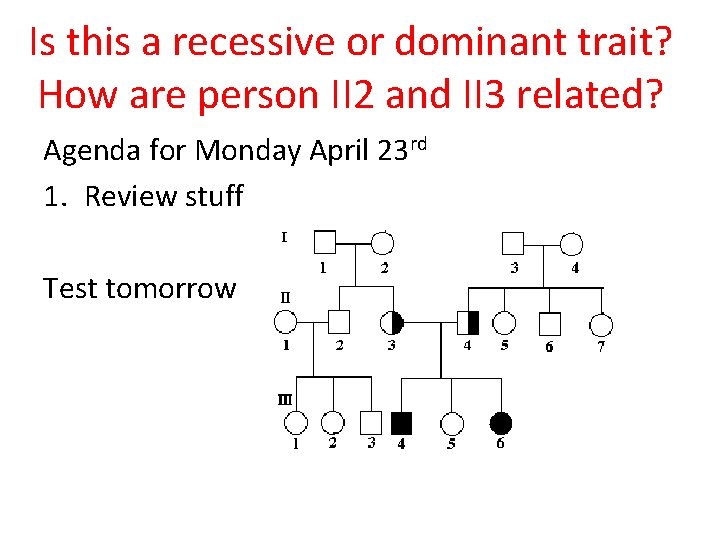
Is this a recessive or dominant trait? How are person II 2 and II 3 related? Agenda for Monday April 23 rd 1. Review stuff Test tomorrow
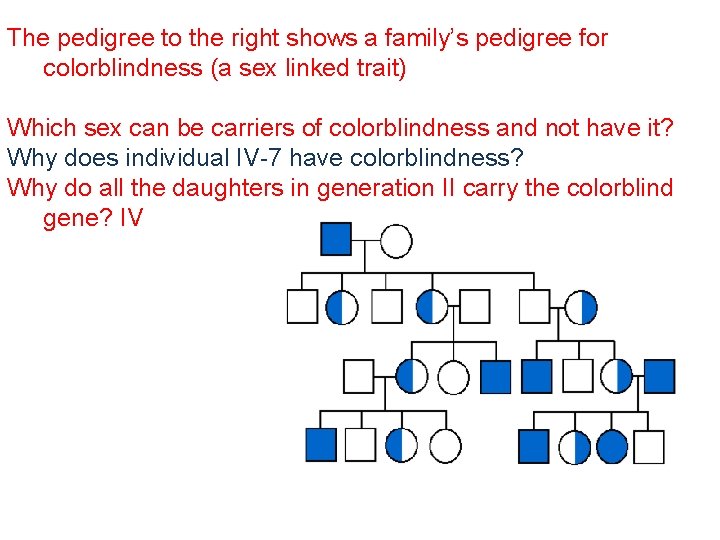
The pedigree to the right shows a family’s pedigree for colorblindness (a sex linked trait) Which sex can be carriers of colorblindness and not have it? Why does individual IV-7 have colorblindness? Why do all the daughters in generation II carry the colorblind gene? IV