
Human Genetics 458 Zoo Syllabus of Human Genetics
Human Genetics (458 Zoo)
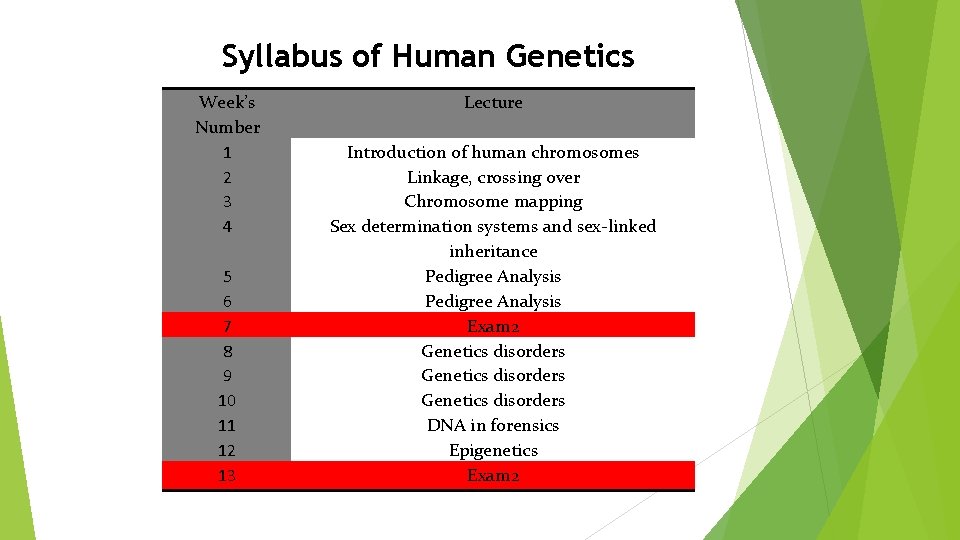
Syllabus of Human Genetics Week’s Number 1 2 3 4 5 6 7 8 9 10 11 12 13 Lecture Introduction of human chromosomes Linkage, crossing over Chromosome mapping Sex determination systems and sex-linked inheritance Pedigree Analysis Exam 2 Genetics disorders DNA in forensics Epigenetics Exam 2
Introduction of human chromosomes
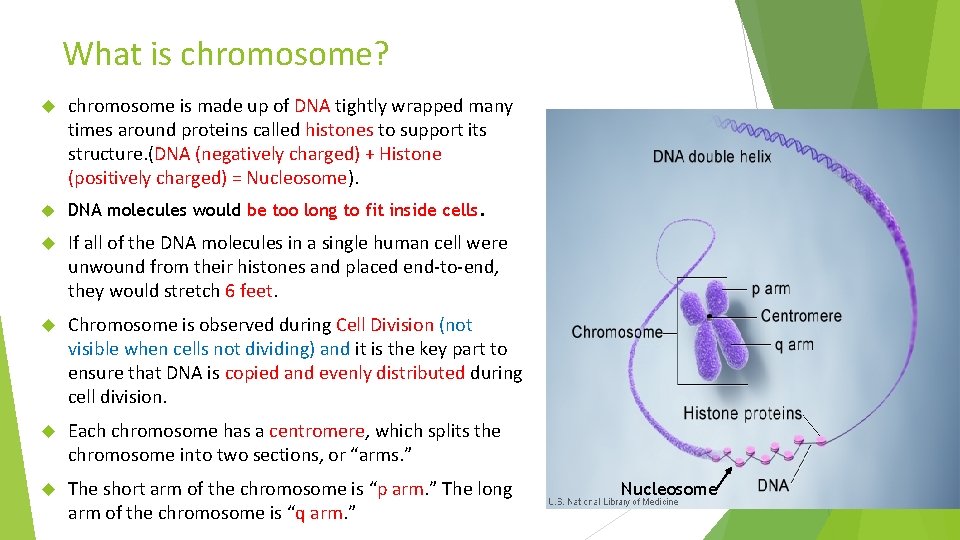
What is chromosome? chromosome is made up of DNA tightly wrapped many times around proteins called histones to support its structure. (DNA (negatively charged) + Histone (positively charged) = Nucleosome). DNA molecules would be too long to fit inside cells. If all of the DNA molecules in a single human cell were unwound from their histones and placed end-to-end, they would stretch 6 feet. Chromosome is observed during Cell Division (not visible when cells not dividing) and it is the key part to ensure that DNA is copied and evenly distributed during cell division. Each chromosome has a centromere, which splits the chromosome into two sections, or “arms. ” The short arm of the chromosome is “p arm. ” The long arm of the chromosome is “q arm. ” Nucleosome
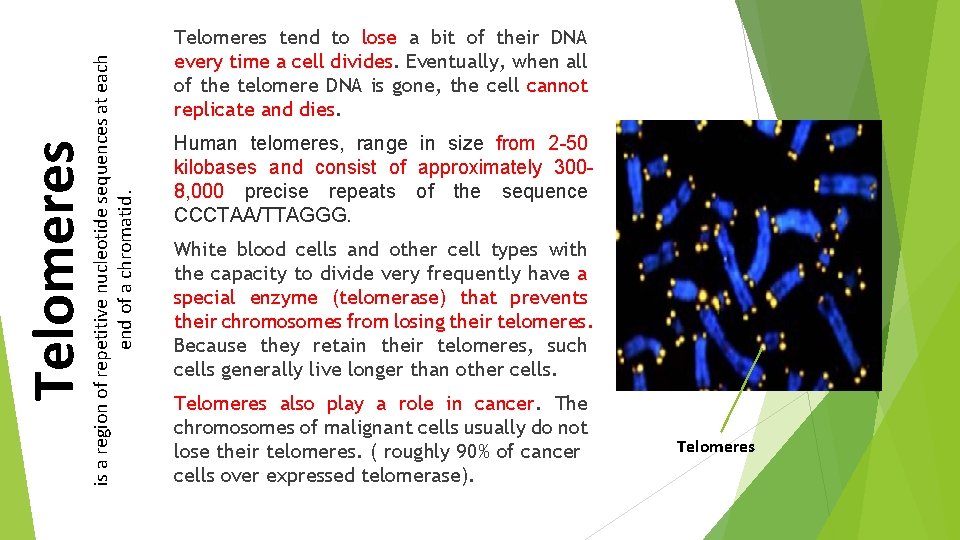
is a region of repetitive nucleotide sequences at each end of a chromatid. Telomeres tend to lose a bit of their DNA every time a cell divides. Eventually, when all of the telomere DNA is gone, the cell cannot replicate and dies. Human telomeres, range in size from 2 -50 kilobases and consist of approximately 3008, 000 precise repeats of the sequence CCCTAA/TTAGGG. White blood cells and other cell types with the capacity to divide very frequently have a special enzyme (telomerase) that prevents their chromosomes from losing their telomeres. Because they retain their telomeres, such cells generally live longer than other cells. Telomeres also play a role in cancer. The chromosomes of malignant cells usually do not lose their telomeres. ( roughly 90% of cancer cells over expressed telomerase). Telomeres
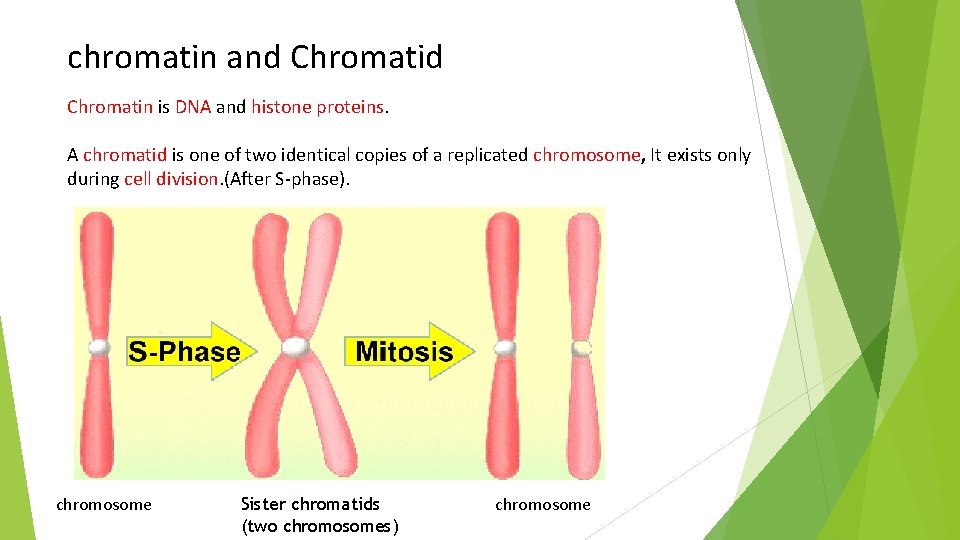
chromatin and Chromatin is DNA and histone proteins. A chromatid is one of two identical copies of a replicated chromosome, It exists only during cell division. (After S-phase). chromosome Sister chromatids (two chromosomes) chromosome

Human chromosome: In typical body, There are 46 chromosomes in somatic cells (diploid) 2 n, theses chromosomes are organized into 23 pairs. 22 pairs (autosome) and 1 pair (sex chromosomes). However, in sex cells (sperm and egg) just 23 chromosome haploid 1 n. Changes in the number or structure of chromosomes in new cells may lead to serious problems. For example, in humans, one type of leukemia and some other cancers are caused by defective chromosomes made up of joined pieces of broken chromosomes. It is also crucial that reproductive cells, such as eggs and sperm, contain the right number of chromosomes and that those chromosomes have the correct structure. If not, the resulting offspring may fail to develop properly. For example, people with Down syndrome have three copies of chromosome 21, instead of the two copies found in other people.
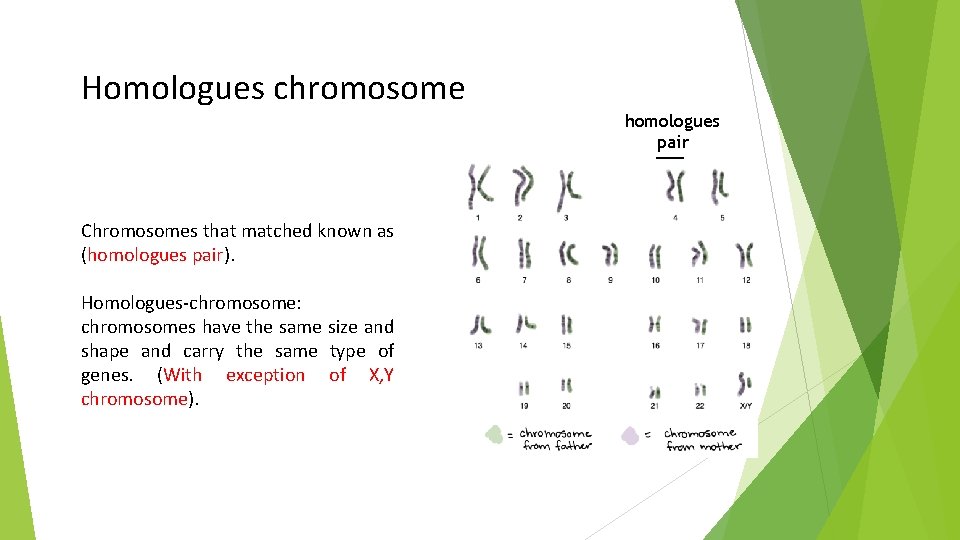
Homologues chromosome homologues pair Chromosomes that matched known as (homologues pair). Homologues-chromosome: chromosomes have the same size and shape and carry the same type of genes. (With exception of X, Y chromosome).
Chromosome classification: Best stage to study a chromosome is meta phase during mitosis division. Chromosome analysis or karyotyping is a test that evaluates the number and structure of a person's chromosomes.
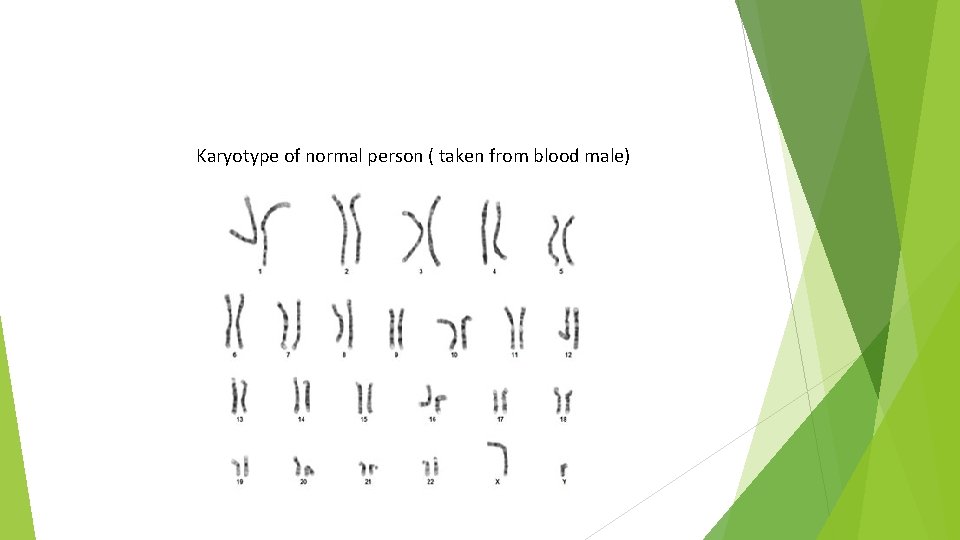
Karyotype of normal person ( taken from blood male)
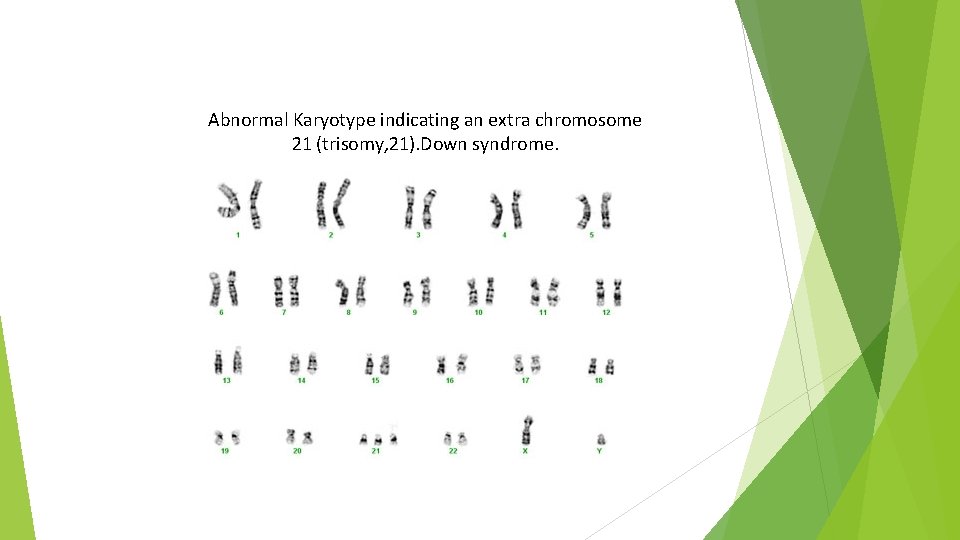
Abnormal Karyotype indicating an extra chromosome 21 (trisomy, 21). Down syndrome.
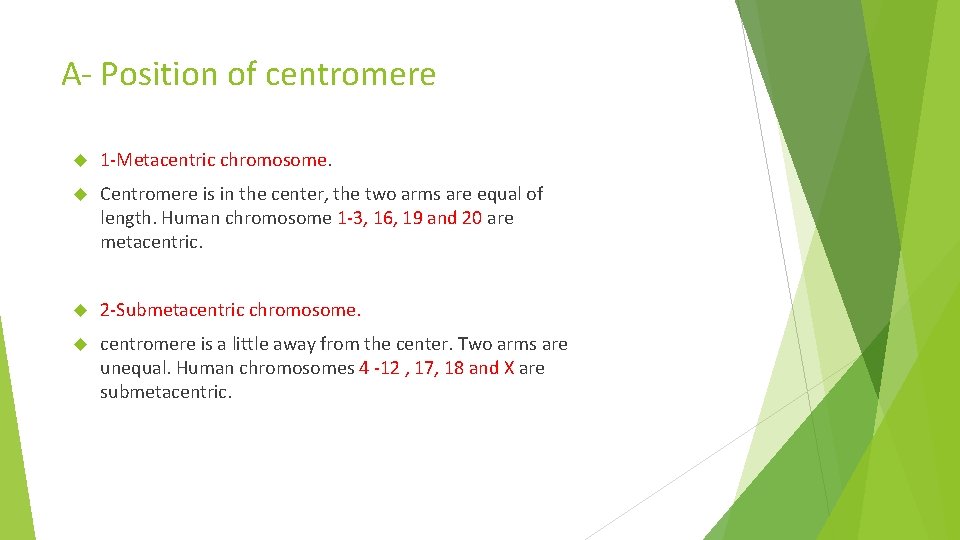
A- Position of centromere 1 -Metacentric chromosome. Centromere is in the center, the two arms are equal of length. Human chromosome 1 -3, 16, 19 and 20 are metacentric. 2 -Submetacentric chromosome. centromere is a little away from the center. Two arms are unequal. Human chromosomes 4 -12 , 17, 18 and X are submetacentric.
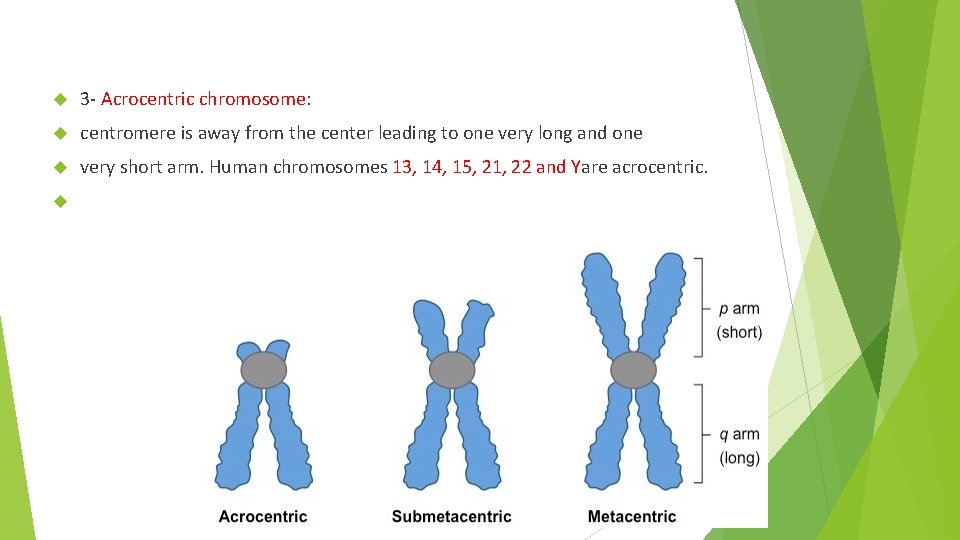
3 - Acrocentric chromosome: centromere is away from the center leading to one very long and one very short arm. Human chromosomes 13, 14, 15, 21, 22 and Yare acrocentric.
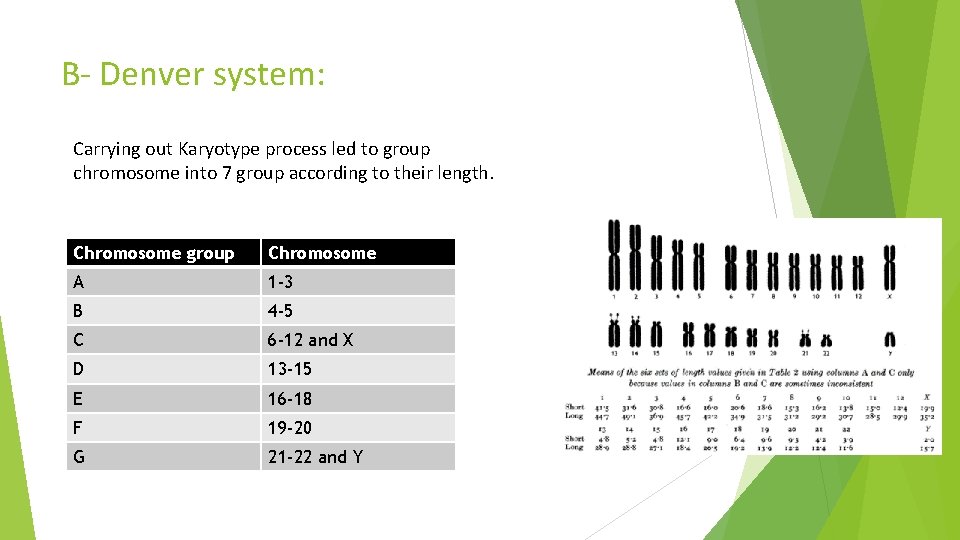
B- Denver system: Carrying out Karyotype process led to group chromosome into 7 group according to their length. Chromosome group Chromosome A 1 -3 B 4 -5 C 6 -12 and X D 13 -15 E 16 -18 F 19 -20 G 21 -22 and Y
- Slides: 14