
Human Genetic Disorders Instructions Read the information on
- Slides: 24
Human Genetic Disorders
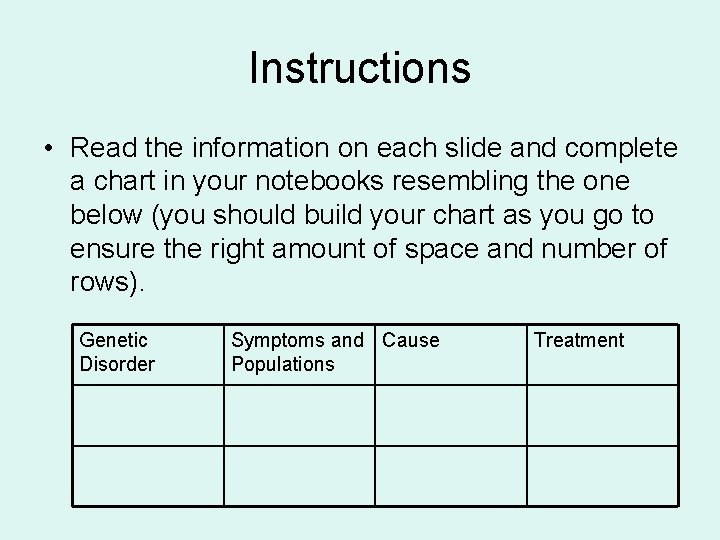
Instructions • Read the information on each slide and complete a chart in your notebooks resembling the one below (you should build your chart as you go to ensure the right amount of space and number of rows). Genetic Disorder Symptoms and Cause Populations Treatment
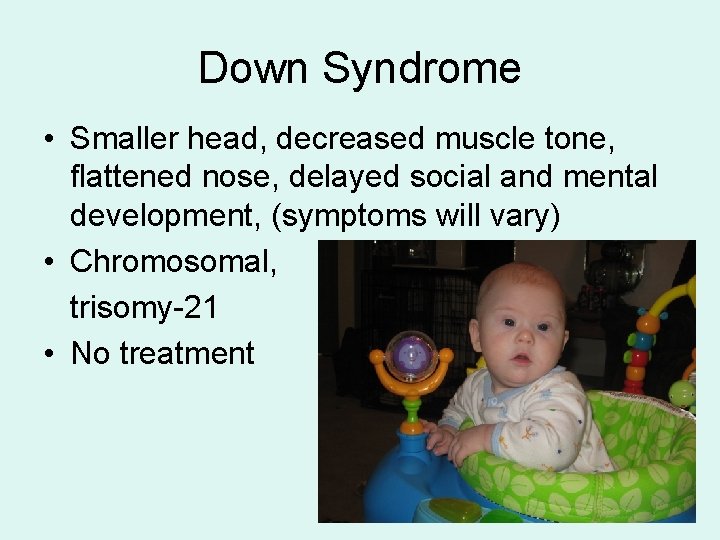
Down Syndrome • Smaller head, decreased muscle tone, flattened nose, delayed social and mental development, (symptoms will vary) • Chromosomal, trisomy-21 • No treatment
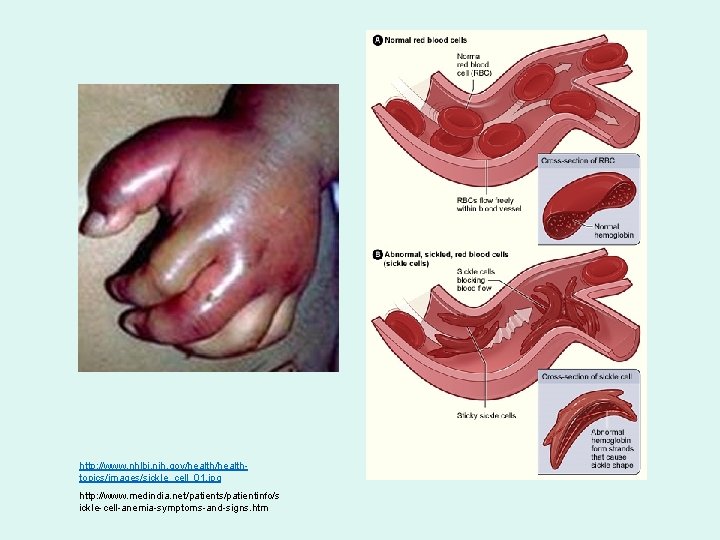
Sickle Cell Anemia • Hemoglobin protein made incorrectly; causes sickled RBC; not enough Oxygen carried in blood; pain episodes and joint swelling • Genetic; autosomal codominant; heterozygote has “trait” and is protected from malaria • Treat symptoms • Specific populations affected: Those of African descent and Hispanics of Caribbean descent. 1 in 12 African-Americans has trait; 1 in 500 births has disease
http: //www. nhlbi. nih. gov/healthtopics/images/sickle_cell_01. jpg http: //www. medindia. net/patients/patientinfo/s ickle-cell-anemia-symptoms-and-signs. htm
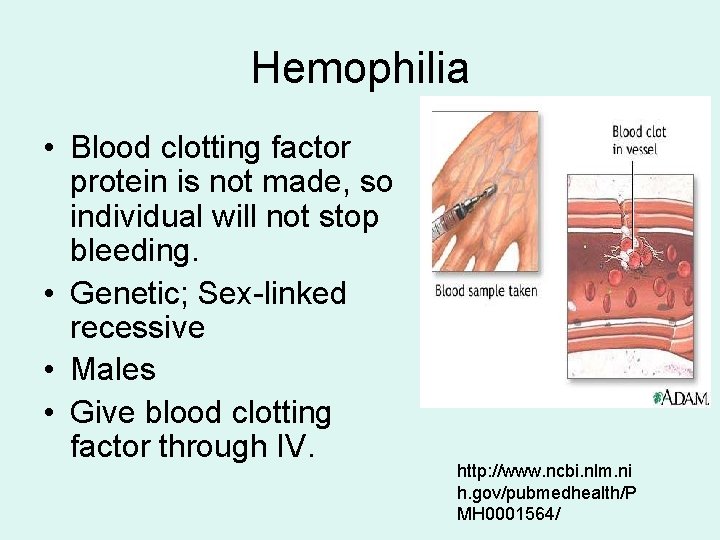
Hemophilia • Blood clotting factor protein is not made, so individual will not stop bleeding. • Genetic; Sex-linked recessive • Males • Give blood clotting factor through IV. http: //www. ncbi. nlm. ni h. gov/pubmedhealth/P MH 0001564/
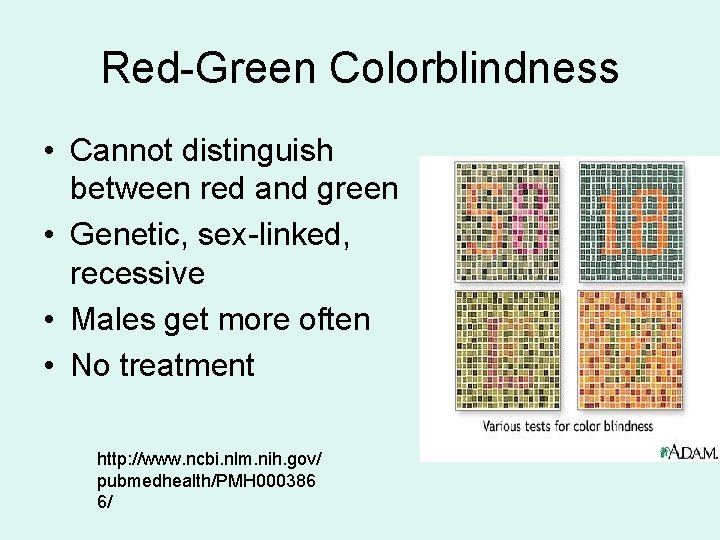
Red-Green Colorblindness • Cannot distinguish between red and green • Genetic, sex-linked, recessive • Males get more often • No treatment http: //www. ncbi. nlm. nih. gov/ pubmedhealth/PMH 000386 6/
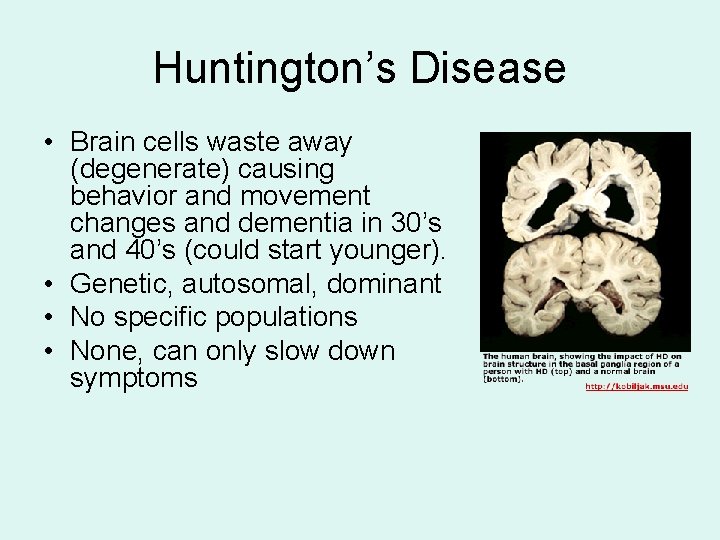
Huntington’s Disease • Brain cells waste away (degenerate) causing behavior and movement changes and dementia in 30’s and 40’s (could start younger). • Genetic, autosomal, dominant • No specific populations • None, can only slow down symptoms
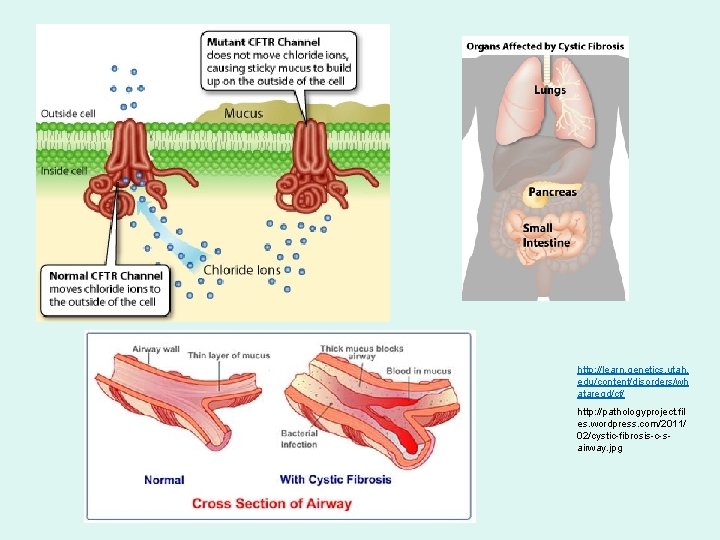
Cystic Fibrosis • Unable to move salt across membranes which allow a thick, sticky mucus to build up in digestive and respiratory tracts; causes infections in lungs, prevents digestion, and imbalance of salt through sweating • Genetic, autosomal recessive • No specific populations • Treatment: Chest physical therapy, inhalers, and gene therapy
http: //learn. genetics. utah. edu/content/disorders/wh ataregd/cf/ http: //pathologyproject. fil es. wordpress. com/2011/ 02/cystic-fibrosis-c-sairway. jpg
Tay-Sach’s Disease • A fatty acid cannot be broken down, so it builds up in nervous tissue. Symptoms show at 3 -6 months; death occurs between 4 -5 years. • Genetic, autosomal, recessive • Ashkenazi Jews inherit this more often(1 in 27 carry the gene) • No treatment
Phenylketonuria • Cannot break down the amino acid phenylalanine leads to lighter hair and skin, severe social and mental developmental delays, and mousy odor. • Genetic, autosomal recessive • No specific populations • A diet avoiding phenylalanine from birth will prevent symptoms from developing. Foods to avoid include milk, eggs, Nutrasweet, and aspartame
Albinism • Body doesn’t produce melanin, which results in very pale skin, hair, eyes, etc. Higher risk of sunburn and light sensitivity. • Genetic, autosomal recessive. • No specific populations. • Treat symptoms by limiting sun exposure, wearing sunscreen and sunglasses.
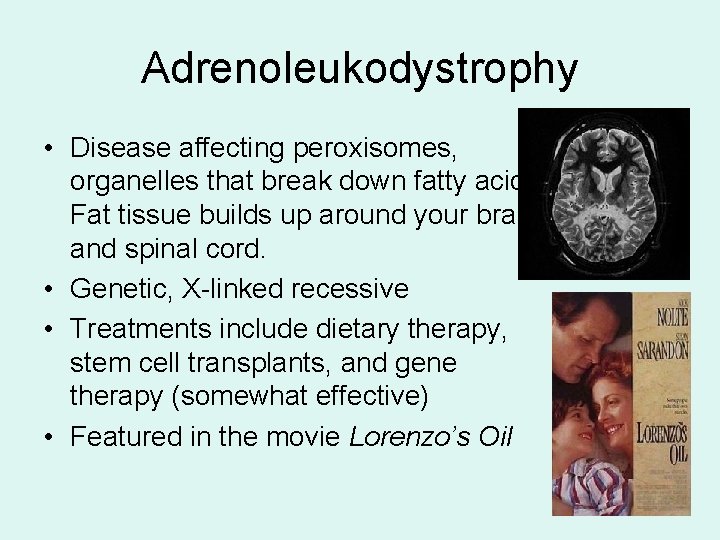
Adrenoleukodystrophy • Disease affecting peroxisomes, organelles that break down fatty acids. Fat tissue builds up around your brain and spinal cord. • Genetic, X-linked recessive • Treatments include dietary therapy, stem cell transplants, and gene therapy (somewhat effective) • Featured in the movie Lorenzo’s Oil
Hereditary Deafness • Hearing loss that is inherited by genetics. Not all deafness is genetic. • Since there are different types of hereditary deafness, the inheritance pattern varies. • Hearing aid and other assistive devices, but no cures.
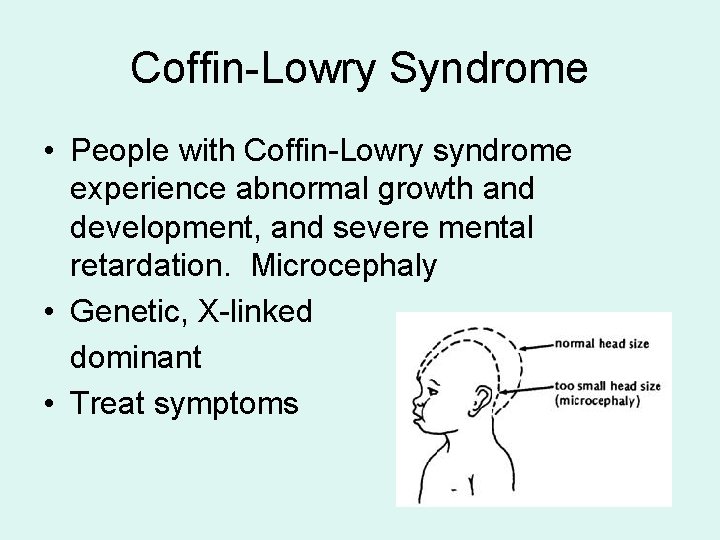
Coffin-Lowry Syndrome • People with Coffin-Lowry syndrome experience abnormal growth and development, and severe mental retardation. Microcephaly • Genetic, X-linked dominant • Treat symptoms
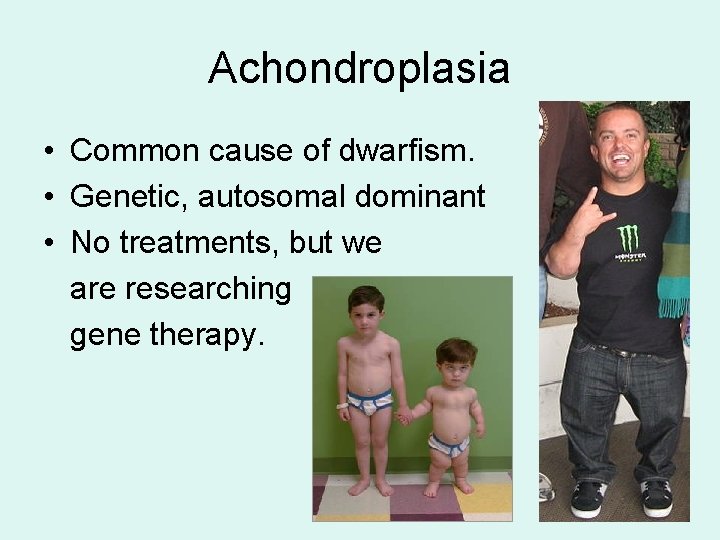
Achondroplasia • Common cause of dwarfism. • Genetic, autosomal dominant • No treatments, but we are researching gene therapy.
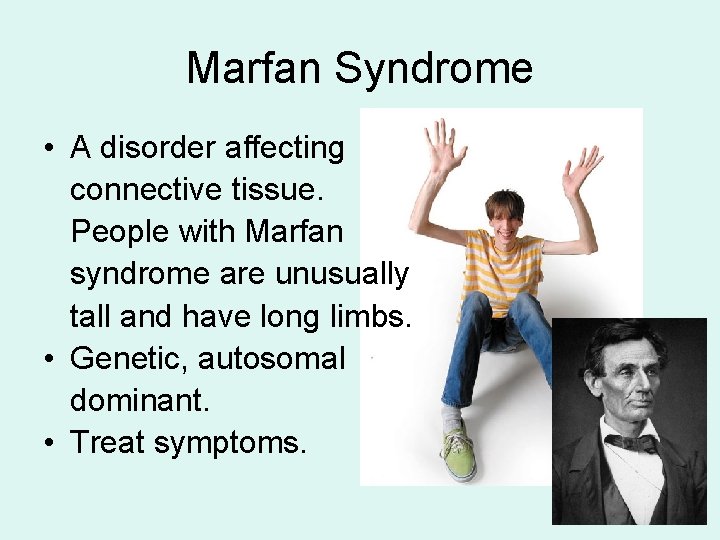
Marfan Syndrome • A disorder affecting connective tissue. People with Marfan syndrome are unusually tall and have long limbs. • Genetic, autosomal dominant. • Treat symptoms.
Rett Syndrome • Almost exclusively found in females, results in mental retardation, seizures and other neurological problems. • Genetic, sex-linked • No treatment currently, but possible gene therapy.
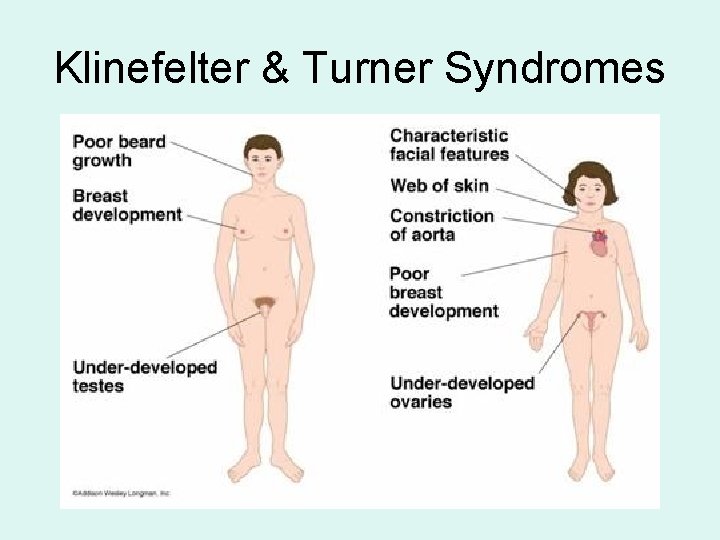
Klinefelter Syndrome • Disorder where males express feminine characteristics and are frequently infertile. • Chromosomal, XXY (trisomy) • No cure, but symptoms can be treated with testosterone.
Turner Syndrome • Females express male features and often have heart problems. They are almost always infertile. • Chromosomal, X (monosomy) • No cure, but symptoms can be treated with growth hormone and estrogen therapy.
Klinefelter & Turner Syndromes
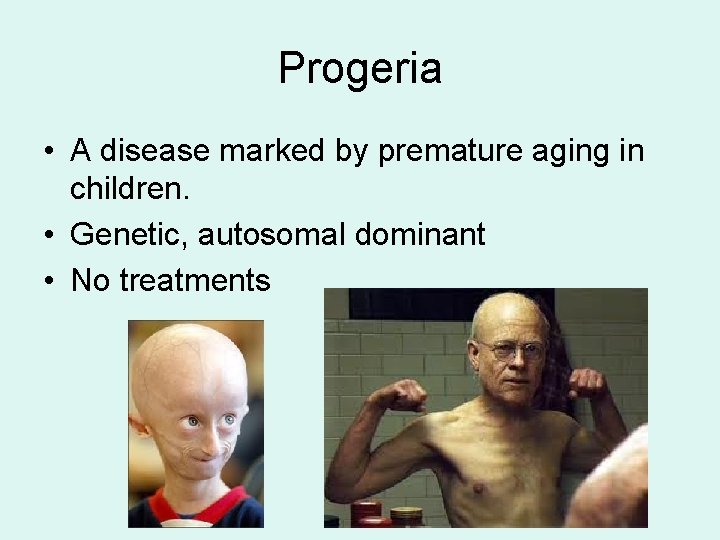
Progeria • A disease marked by premature aging in children. • Genetic, autosomal dominant • No treatments
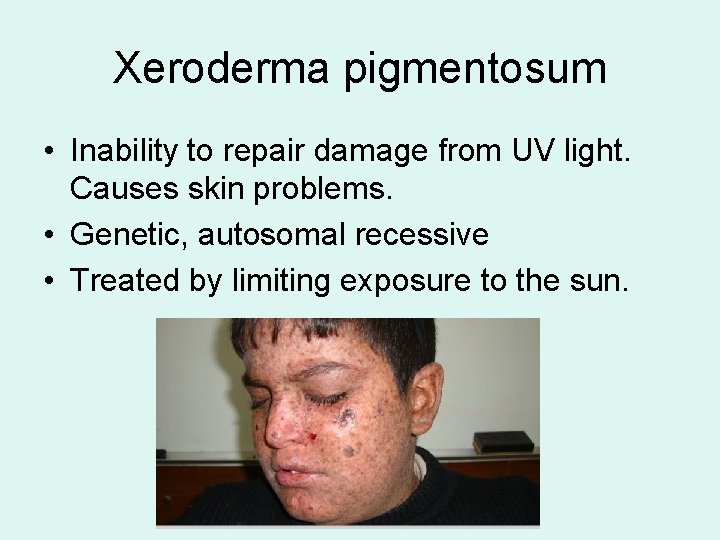
Xeroderma pigmentosum • Inability to repair damage from UV light. Causes skin problems. • Genetic, autosomal recessive • Treated by limiting exposure to the sun.