
Human Genetic Disorders Genetic Disorders Major types of
- Slides: 37
Human Genetic Disorders
Genetic Disorders • Major types of genetic disorders: • Autosomal • Single genes • Multiple genes • Sex-linked • Chromosome abnormalities
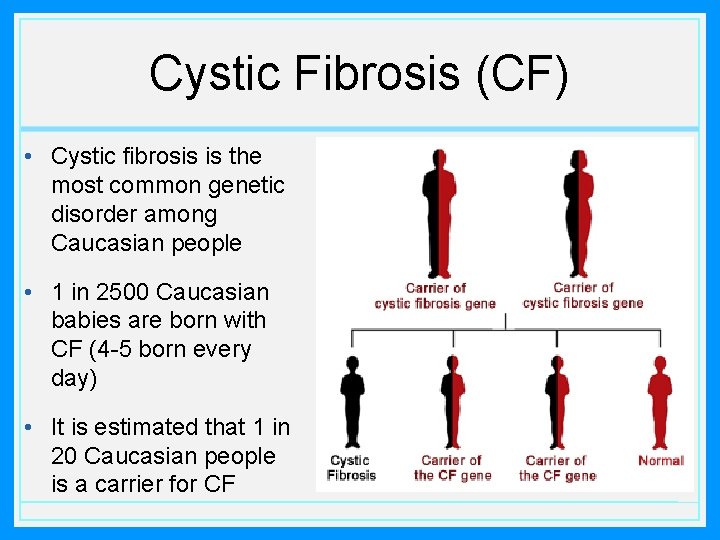
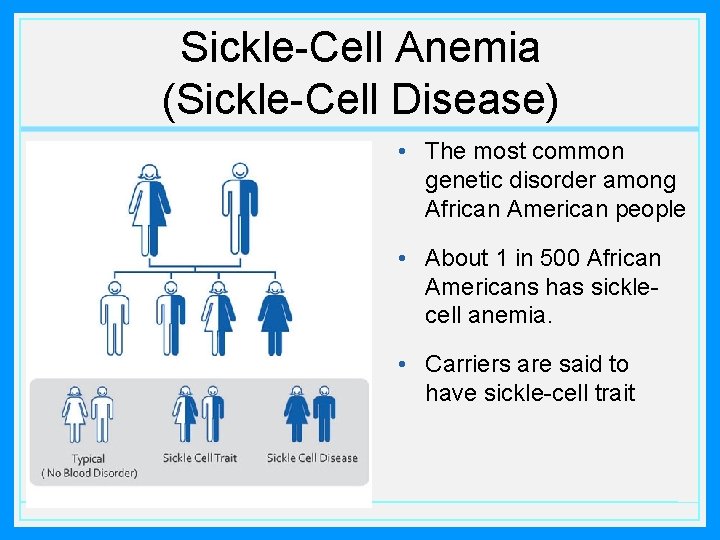
Autosomal Disorders • Autosomal genetic disorders are caused by alleles on autosomes (chromosomes other than the sex chromosomes) • Most are recessive (need 2 recessive alleles to have the disorder) • People with 1 recessive allele are carriers – they do NOT have the disorder but are able to pass the allele on to their children • Ex: Cystic fibrosis (CF), sickle cell anemia, phenylketonuria • Can also be dominant (need only 1 allele to have the disorder) • Ex: Huntington’s disease
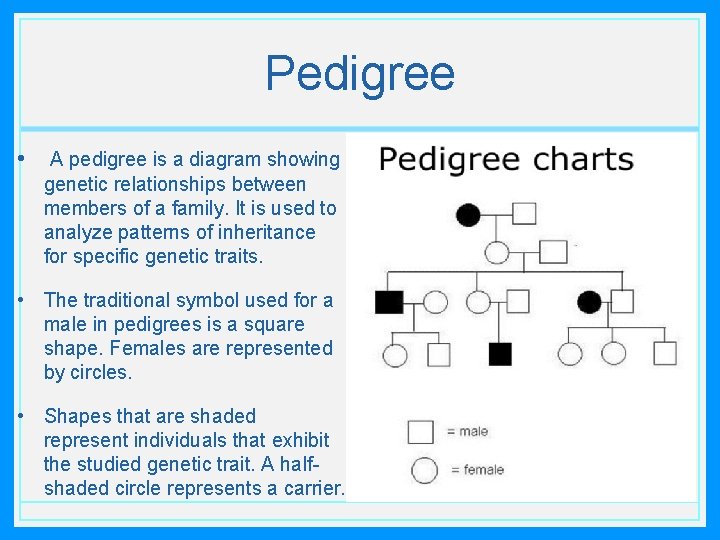
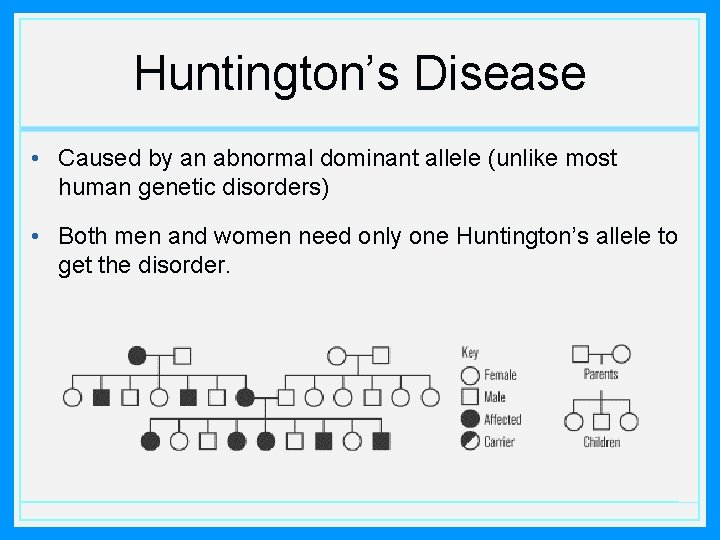
Pedigree • A pedigree is a diagram showing genetic relationships between members of a family. It is used to analyze patterns of inheritance for specific genetic traits. • The traditional symbol used for a male in pedigrees is a square shape. Females are represented by circles. • Shapes that are shaded represent individuals that exhibit the studied genetic trait. A halfshaded circle represents a carrier.
Cystic Fibrosis (CF) • Cystic fibrosis is the most common genetic disorder among Caucasian people • 1 in 2500 Caucasian babies are born with CF (4 -5 born every day) • It is estimated that 1 in 20 Caucasian people is a carrier for CF
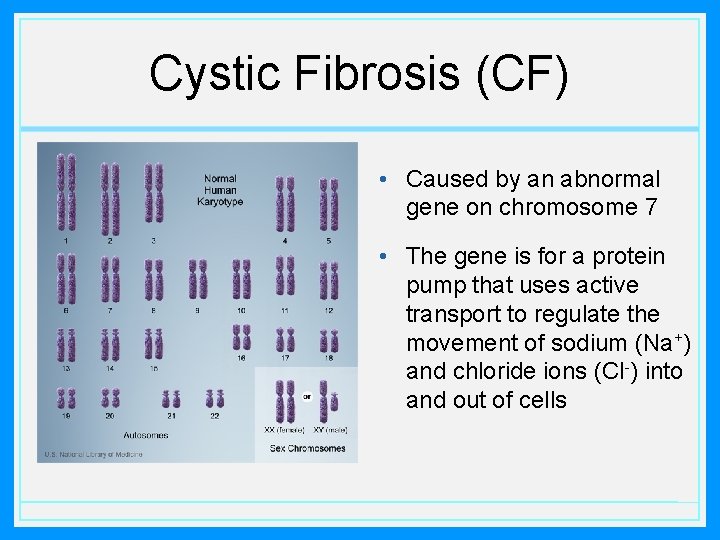
Cystic Fibrosis (CF) • Caused by an abnormal gene on chromosome 7 • The gene is for a protein pump that uses active transport to regulate the movement of sodium (Na+) and chloride ions (Cl-) into and out of cells
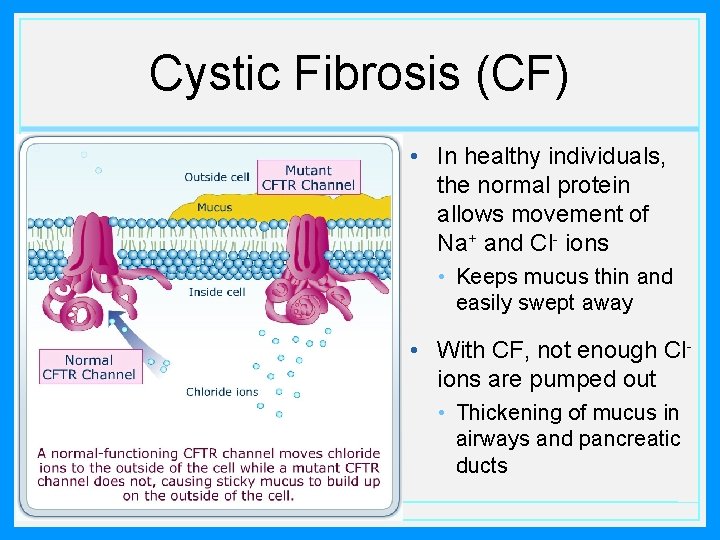
Cystic Fibrosis (CF) • In healthy individuals, the normal protein allows movement of Na+ and Cl- ions • Keeps mucus thin and easily swept away • With CF, not enough Clions are pumped out • Thickening of mucus in airways and pancreatic ducts
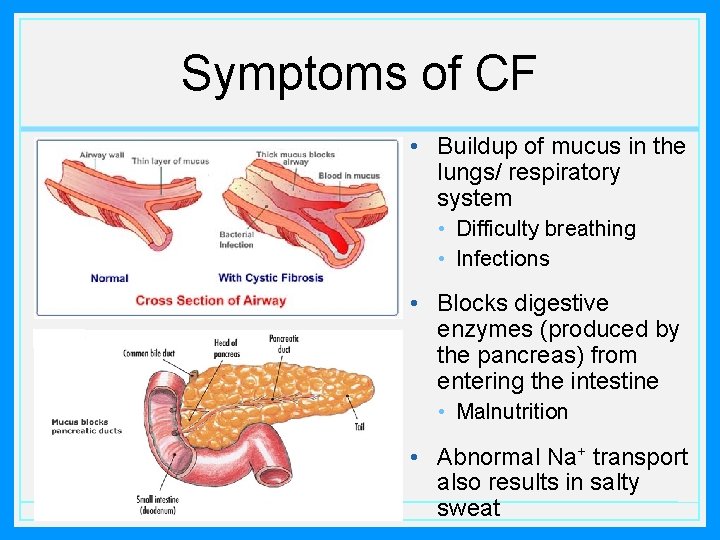
Symptoms of CF • Buildup of mucus in the lungs/ respiratory system • Difficulty breathing • Infections • Blocks digestive enzymes (produced by the pancreas) from entering the intestine • Malnutrition • Abnormal Na+ transport also results in salty sweat
Treatments for CF • For respiratory symptoms: • • Physical therapy Breathing exercises Antibiotics Lung transplants in severe cases • For digestive symptoms: • Capsules containing pancreatic digestive enzymes • Even with treatment, CF continues to be fatal, but patients live longer and have a higher quality of life
Sickle-Cell Anemia (Sickle-Cell Disease) • The most common genetic disorder among African American people • About 1 in 500 African Americans has sicklecell anemia. • Carriers are said to have sickle-cell trait
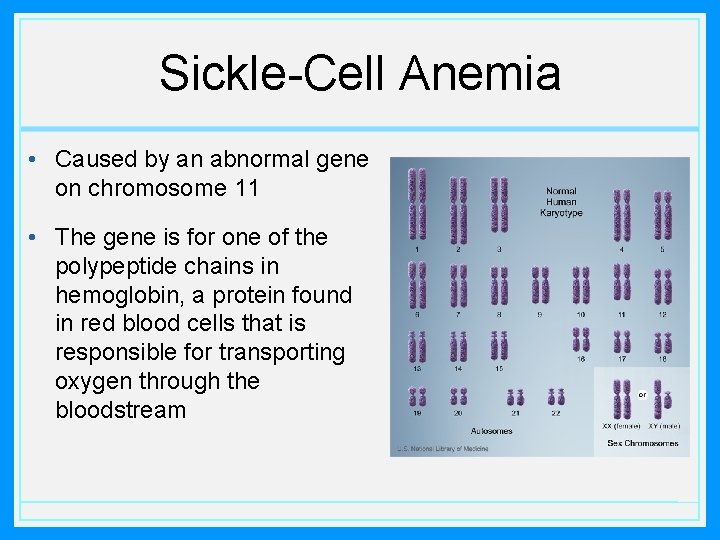
Sickle-Cell Anemia • Caused by an abnormal gene on chromosome 11 • The gene is for one of the polypeptide chains in hemoglobin, a protein found in red blood cells that is responsible for transporting oxygen through the bloodstream
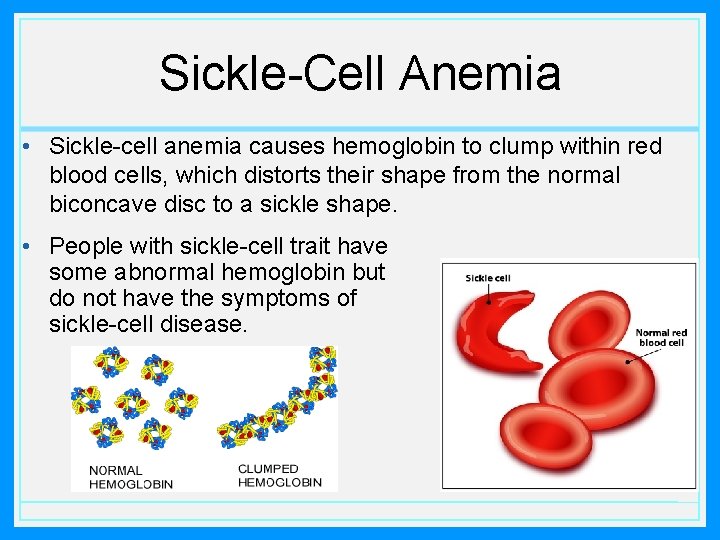
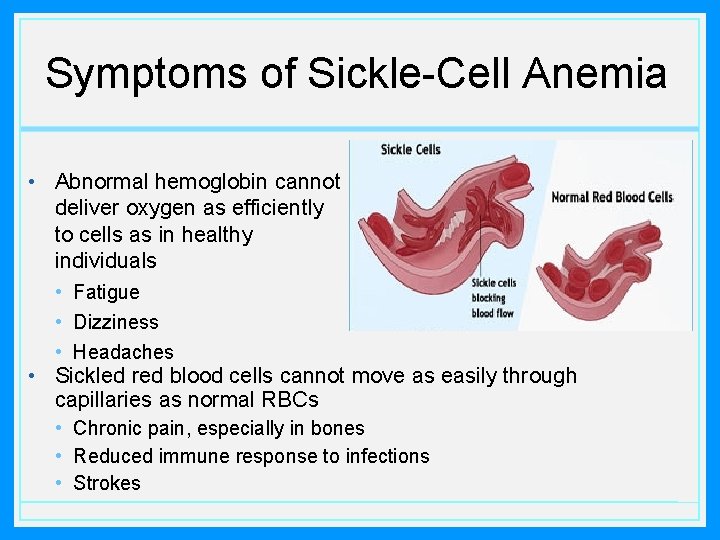
Sickle-Cell Anemia • Sickle-cell anemia causes hemoglobin to clump within red blood cells, which distorts their shape from the normal biconcave disc to a sickle shape. • People with sickle-cell trait have some abnormal hemoglobin but do not have the symptoms of sickle-cell disease.
Symptoms of Sickle-Cell Anemia • Abnormal hemoglobin cannot deliver oxygen as efficiently to cells as in healthy individuals • Fatigue • Dizziness • Headaches • Sickled red blood cells cannot move as easily through capillaries as normal RBCs • Chronic pain, especially in bones • Reduced immune response to infections • Strokes
Treatments for Sickle-Cell Anemia • Treatments for sickle-cell anemia include: • • Blood transfusions Antibiotics Drugs that increase oxygen-carrying capacity of RBCs Drugs that “switch on” the gene for fetal hemoglobin, which is normally switched off after birth • Living with sickle-cell anemia
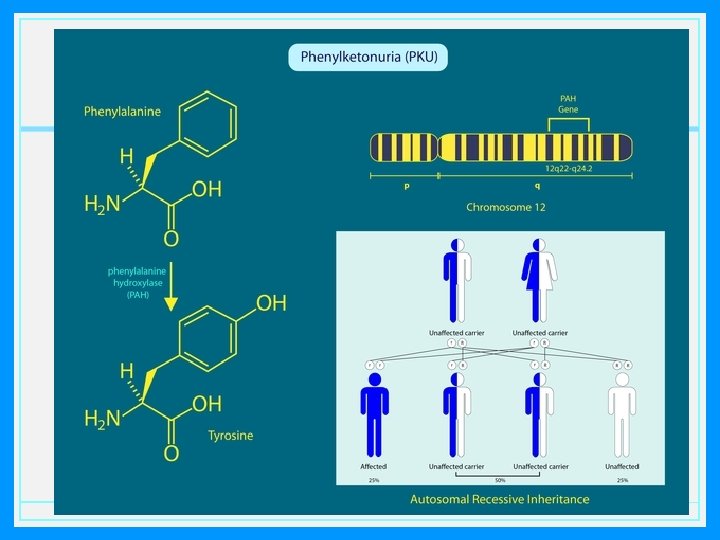
Phenylketonuria • Phenylketonuria (commonly known as PKU) is an inherited disorder that increases the levels of a substance called phenylalanine in the blood. • This condition is inherited in an autosomal recessive pattern, which means both copies of the gene in each cell have mutations. • Phenylalanine is a building block of proteins (an amino acid) that is obtained through the diet. It is found in all proteins and in some artificial sweeteners. • If PKU is not treated, phenylalanine can build up to harmful levels in the body, causing intellectual disability and other serious health problems.
Symptoms of Phenylketonuria • Babies born with PKU usually have no symptoms at first. But if the disease is left untreated, babies experience severe brain damage. • This damage can cause epilepsy, behavioral problems, and stunt the growth of the baby. • Other symptoms include eczema (skin rash), a musty body odor (from too much phenylalanine), a small head (microcephaly), and fair skin (because phenylalanine is necessary for skin pigmentation).
Treatments for Phenylketonuria • People who have PKU must eat a very low-protein diet, because nearly all proteins contain phenylalanine. • Infants are given a special formula without phenylalanine. • Older children and adults have to avoid protein-rich foods such as meat, eggs, cheese, and nuts. • They must also avoid artificial sweeteners with aspertame, which contains phenylalanine.
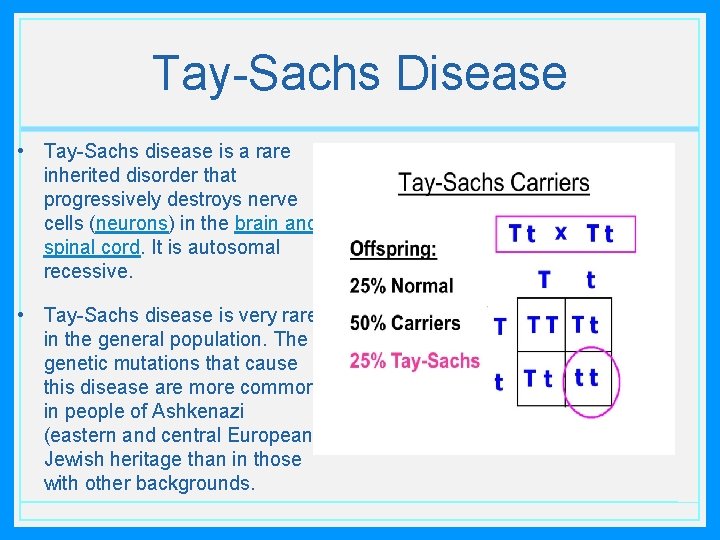
Tay-Sachs Disease • Tay-Sachs disease is a rare inherited disorder that progressively destroys nerve cells (neurons) in the brain and spinal cord. It is autosomal recessive. • Tay-Sachs disease is very rare in the general population. The genetic mutations that cause this disease are more common in people of Ashkenazi (eastern and central European) Jewish heritage than in those with other backgrounds.
Tay-Sachs Disease • The most common form of Tay-Sachs disease becomes apparent in infancy. • Infants with this disorder typically appear normal until the age of 3 to 6 months, when their development slows and muscles used for movement weaken. By about two years of age, most children experience recurrent seizures and diminishing mental function. • It is a fatal disorder. • By the time a child with Tay-Sachs is three or four years old, the nervous system is so badly affected that death usually results by age five.
Huntington’s Disease • Caused by an abnormal dominant allele (unlike most human genetic disorders) • Both men and women need only one Huntington’s allele to get the disorder.
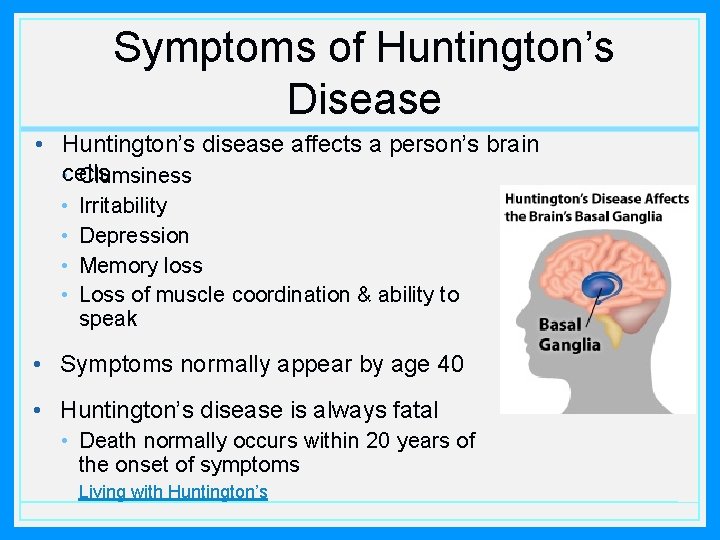
Symptoms of Huntington’s Disease • Huntington’s disease affects a person’s brain • cells Clumsiness • • Irritability Depression Memory loss Loss of muscle coordination & ability to speak • Symptoms normally appear by age 40 • Huntington’s disease is always fatal • Death normally occurs within 20 years of the onset of symptoms Living with Huntington’s
Multiple Genes • Remember……Cystic fibrosis, sickle-cell disease, and Huntington’s disease are all caused by mutant alleles for a single gene. • Many other genetic disorders are believed to be the result of multiple genes: • Diabetes mellitus • Heart disease • Some personality disorders • Bipolar disorder, schizophrenia • These are much more complicated to analyze than disorders caused by single genes
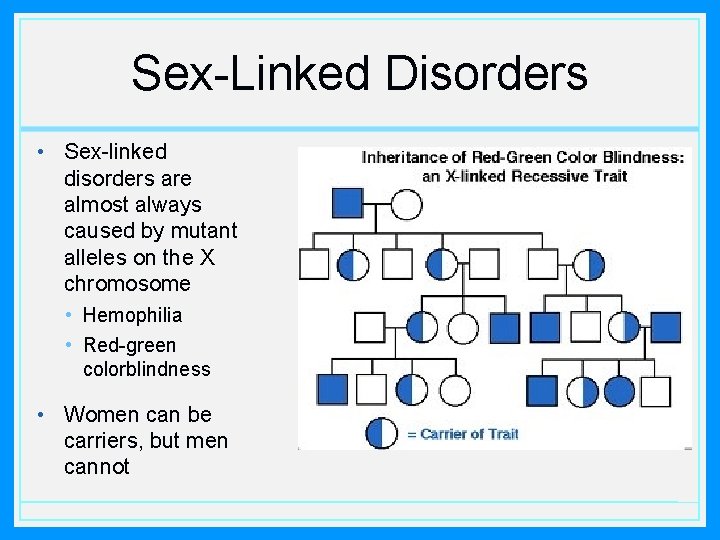
Sex-Linked Disorders • Sex-linked disorders are almost always caused by mutant alleles on the X chromosome • Hemophilia • Red-green colorblindness • Women can be carriers, but men cannot
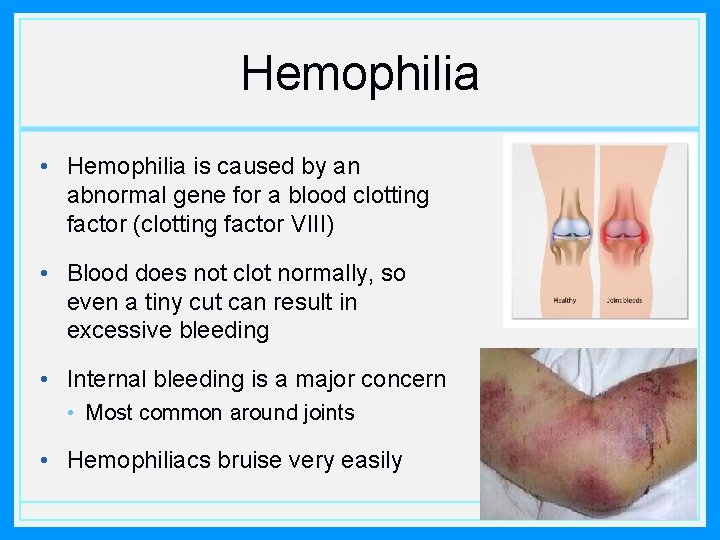
Hemophilia • Hemophilia is caused by an abnormal gene for a blood clotting factor (clotting factor VIII) • Blood does not clot normally, so even a tiny cut can result in excessive bleeding • Internal bleeding is a major concern • Most common around joints • Hemophiliacs bruise very easily
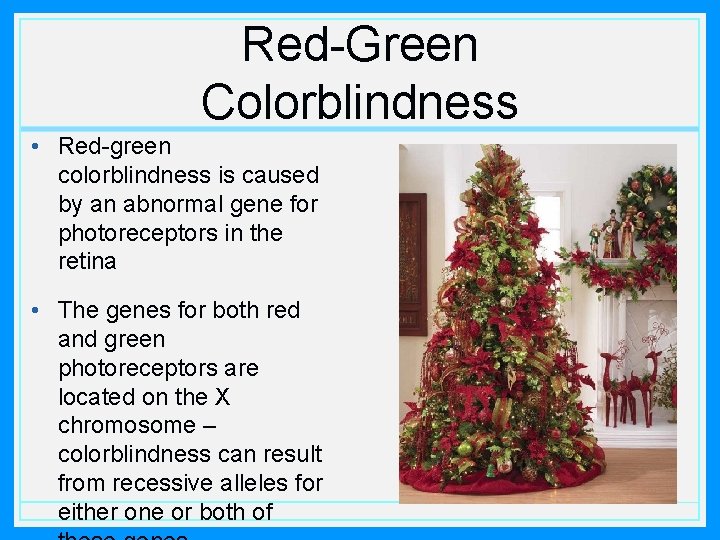
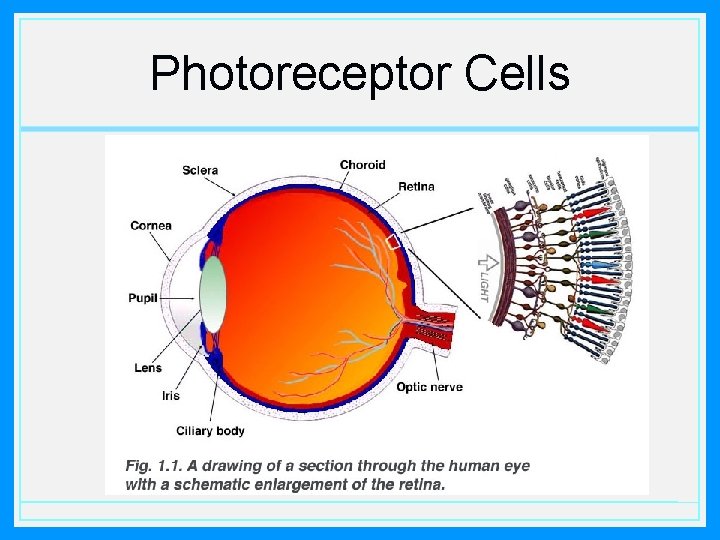
Red-Green Colorblindness • Red-green colorblindness is caused by an abnormal gene for photoreceptors in the retina • The genes for both red and green photoreceptors are located on the X chromosome – colorblindness can result from recessive alleles for either one or both of
Photoreceptor Cells
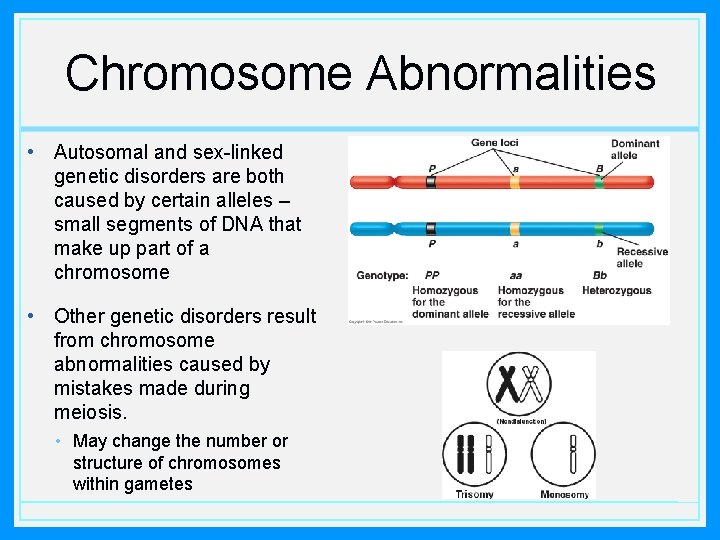
Chromosome Abnormalities • Autosomal and sex-linked genetic disorders are both caused by certain alleles – small segments of DNA that make up part of a chromosome • Other genetic disorders result from chromosome abnormalities caused by mistakes made during meiosis. • May change the number or structure of chromosomes within gametes
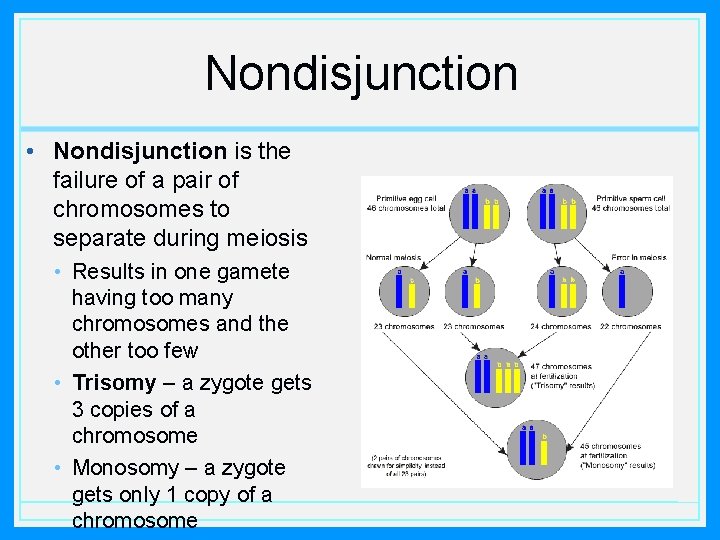
Nondisjunction • Nondisjunction is the failure of a pair of chromosomes to separate during meiosis • Results in one gamete having too many chromosomes and the other too few • Trisomy – a zygote gets 3 copies of a chromosome • Monosomy – a zygote gets only 1 copy of a chromosome
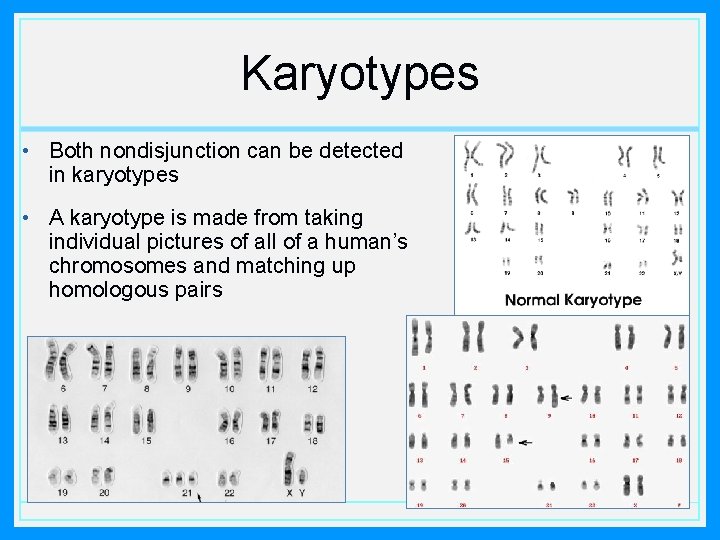
Karyotypes • Both nondisjunction can be detected in karyotypes • A karyotype is made from taking individual pictures of all of a human’s chromosomes and matching up homologous pairs
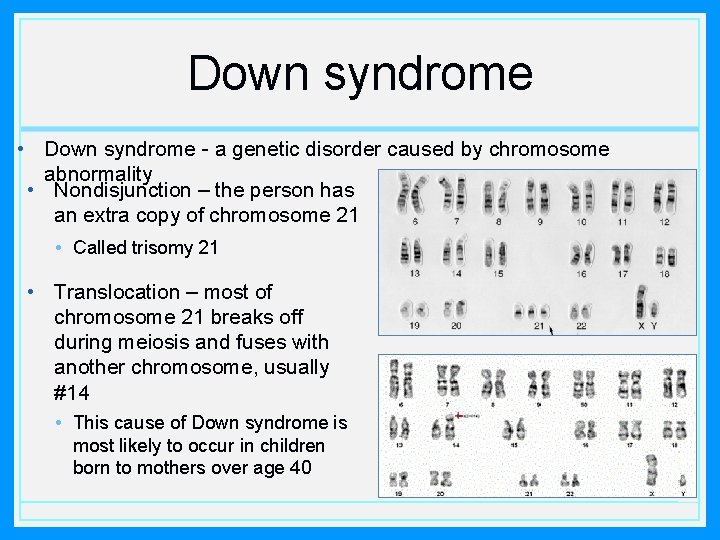
Down syndrome • Down syndrome - a genetic disorder caused by chromosome abnormality • Nondisjunction – the person has an extra copy of chromosome 21 • Called trisomy 21 • Translocation – most of chromosome 21 breaks off during meiosis and fuses with another chromosome, usually #14 • This cause of Down syndrome is most likely to occur in children born to mothers over age 40
Down Syndrome • Symptoms of Down syndrome include: • • Mild to severe mental disability Short stature Heart, vision, and intestinal problems Susceptibility to infections and leukemia
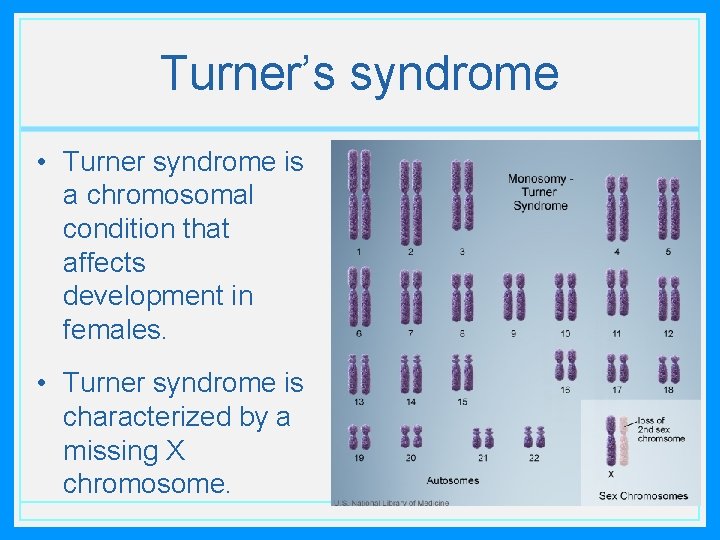
Turner’s syndrome • Turner syndrome is a chromosomal condition that affects development in females. • Turner syndrome is characterized by a missing X chromosome.
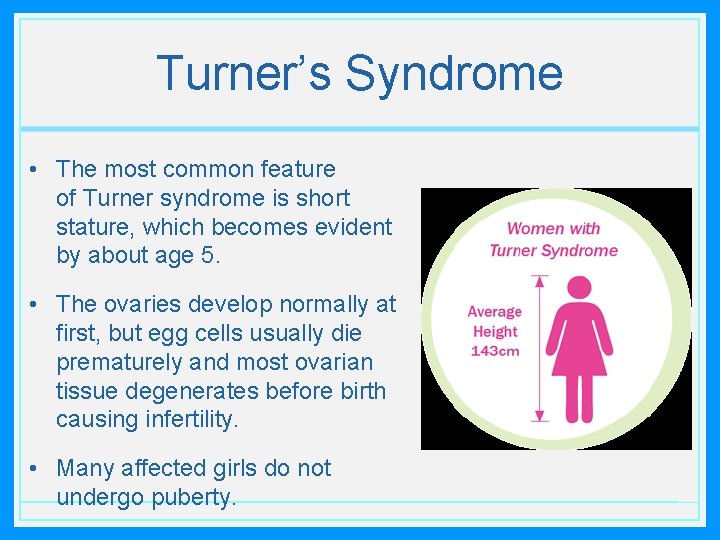
Turner’s Syndrome • The most common feature of Turner syndrome is short stature, which becomes evident by about age 5. • The ovaries develop normally at first, but egg cells usually die prematurely and most ovarian tissue degenerates before birth causing infertility. • Many affected girls do not undergo puberty.
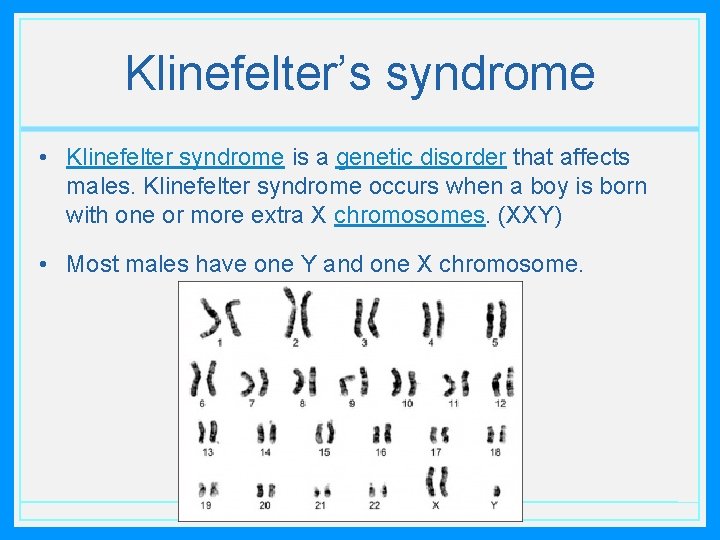
Klinefelter’s syndrome • Klinefelter syndrome is a genetic disorder that affects males. Klinefelter syndrome occurs when a boy is born with one or more extra X chromosomes. (XXY) • Most males have one Y and one X chromosome.
Klinefelter’s Syndrome • Having extra X chromosomes can cause a male to have some physical traits not typical for males. • Many men with an extra X chromosome are not aware that they have it, and they lead normal lives. • Klinefelter syndrome occurs in about 1 out of 1, 000 males.
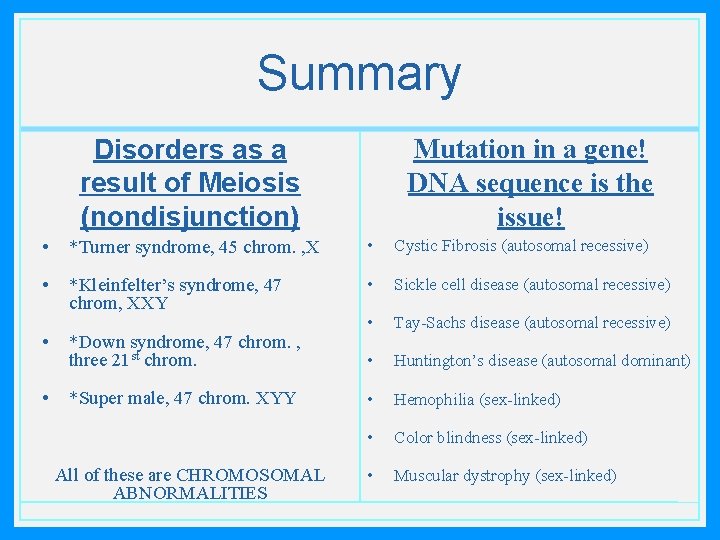
Summary Disorders as a result of Meiosis (nondisjunction) Mutation in a gene! DNA sequence is the issue! • *Turner syndrome, 45 chrom. , X • Cystic Fibrosis (autosomal recessive) • *Kleinfelter’s syndrome, 47 chrom, XXY • Sickle cell disease (autosomal recessive) • Tay-Sachs disease (autosomal recessive) • Huntington’s disease (autosomal dominant) • Hemophilia (sex-linked) • Color blindness (sex-linked) • Muscular dystrophy (sex-linked) • *Down syndrome, 47 chrom. , three 21 st chrom. • *Super male, 47 chrom. XYY All of these are CHROMOSOMAL ABNORMALITIES