
human forward personal brand Your personal brand is

human forward.
personal brand Your personal brand is essentially marketing yourself and your career as a brand, which is establishing an image or impression of yourself consistently in the job market. Your personal brand is how you are remembered and what people say about you when you leave the room. In the world of work, this means sharing a positive image of your skills and achievements, not only with those you currently work with, but everyone within your network, and potentially those you would like to work with in the future. Being in control of your personal brand means knowing who you are, and what you want other people to know you for. Your personal brand is drawn from your values, and if consistent and authentic, should underpin everything you do, day to day. Everyone you meet is touched by your personal brand. Therefore, developing your branding is essential for the advancement of your career, but can also compliment success in your personal life. Your personal brand must be consistent through both areas, and must be authentic. Are your actions consistent in all your interactions with others? How would you describe yourself to someone who didn’t know you? How would the people you interact with on a regular basis describe you? In the space below, note down three words for how each group would describe you. How I would describe myself: How my friends and family would describe me: How my colleagues would describe me: How my clients and suppliers would describe me: Is there consistency in your descriptions? Are these things that you would like to be known for?
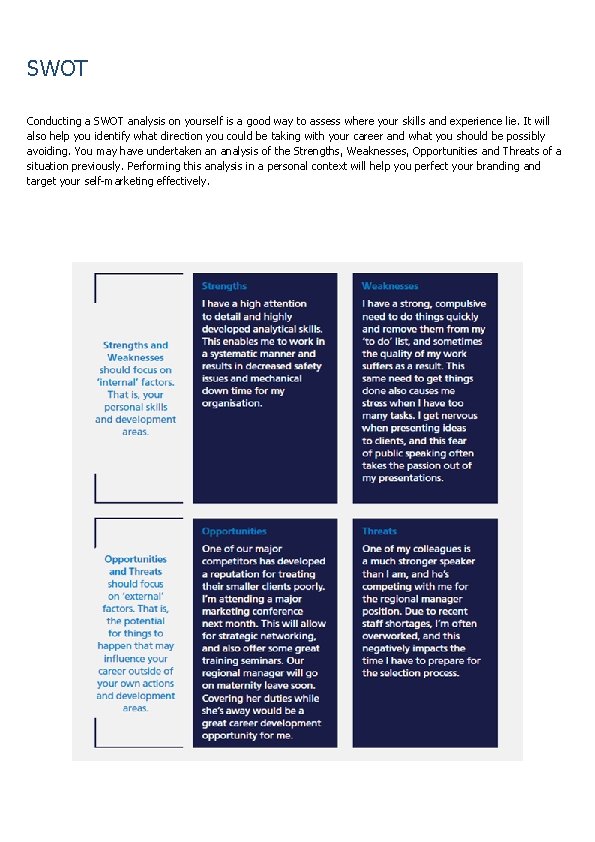
SWOT Conducting a SWOT analysis on yourself is a good way to assess where your skills and experience lie. It will also help you identify what direction you could be taking with your career and what you should be possibly avoiding. You may have undertaken an analysis of the Strengths, Weaknesses, Opportunities and Threats of a situation previously. Performing this analysis in a personal context will help you perfect your branding and target your self-marketing effectively.
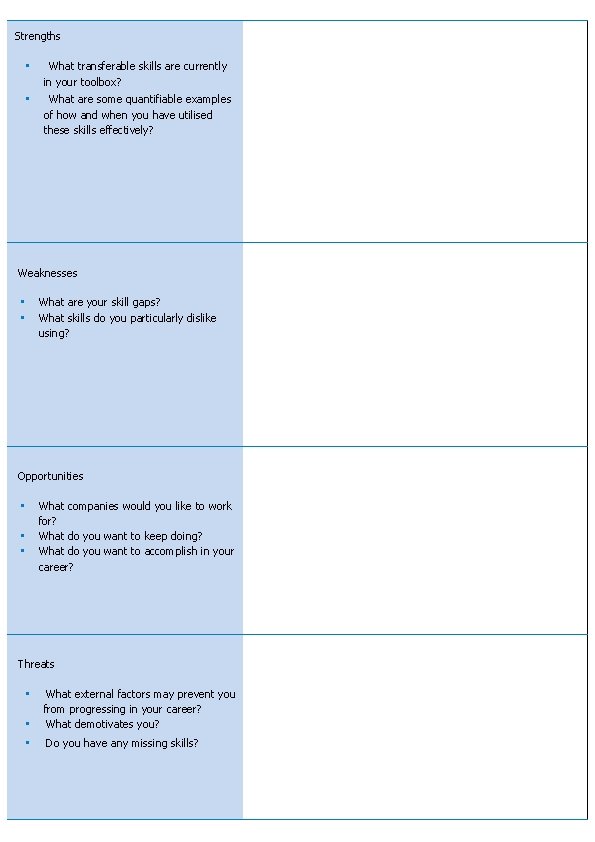
Strengths • What transferable skills are currently in your toolbox? • What are some quantifiable examples of how and when you have utilised these skills effectively? Weaknesses What are your skill gaps? What skills do you particularly dislike using? • • Opportunities What companies would you like to work for? What do you want to keep doing? What do you want to accomplish in your career? • • • Threats • What external factors may prevent you from progressing in your career? What demotivates you? • Do you have any missing skills? •
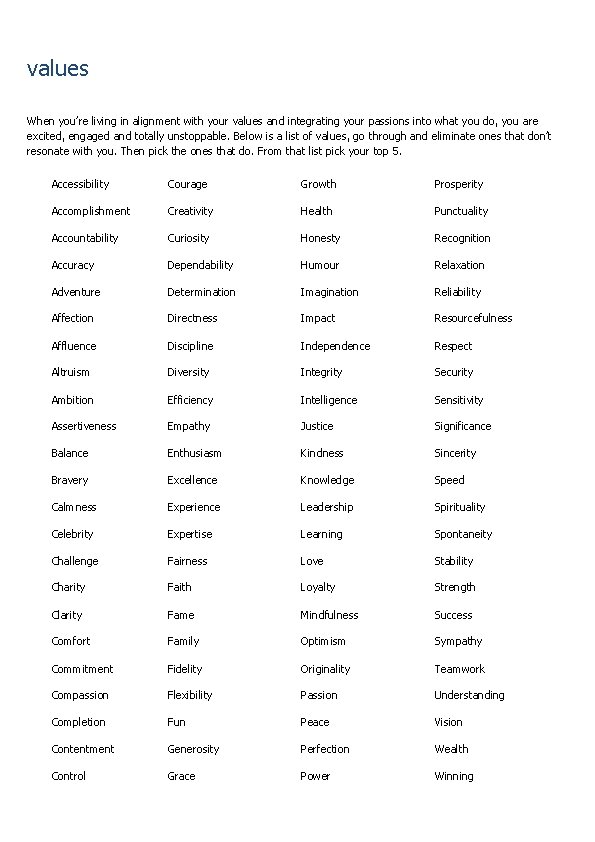
values When you’re living in alignment with your values and integrating your passions into what you do, you are excited, engaged and totally unstoppable. Below is a list of values, go through and eliminate ones that don’t resonate with you. Then pick the ones that do. From that list pick your top 5. Accessibility Courage Growth Prosperity Accomplishment Creativity Health Punctuality Accountability Curiosity Honesty Recognition Accuracy Dependability Humour Relaxation Adventure Determination Imagination Reliability Affection Directness Impact Resourcefulness Affluence Discipline Independence Respect Altruism Diversity Integrity Security Ambition Efficiency Intelligence Sensitivity Assertiveness Empathy Justice Significance Balance Enthusiasm Kindness Sincerity Bravery Excellence Knowledge Speed Calmness Experience Leadership Spirituality Celebrity Expertise Learning Spontaneity Challenge Fairness Love Stability Charity Faith Loyalty Strength Clarity Fame Mindfulness Success Comfort Family Optimism Sympathy Commitment Fidelity Originality Teamwork Compassion Flexibility Passion Understanding Completion Fun Peace Vision Contentment Generosity Perfection Wealth Control Grace Power Winning
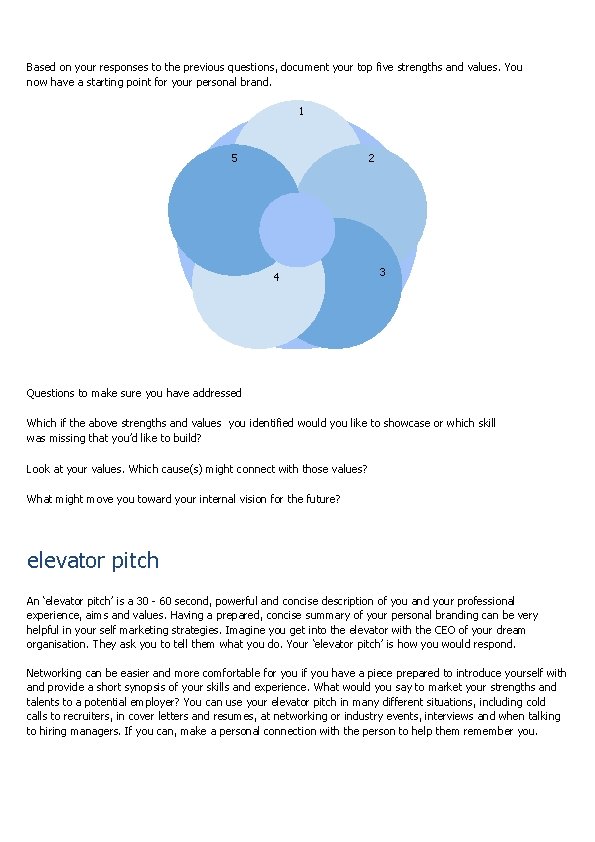
Based on your responses to the previous questions, document your top five strengths and values. You now have a starting point for your personal brand. 1 5 2 4 3 Questions to make sure you have addressed Which if the above strengths and values you identified would you like to showcase or which skill was missing that you’d like to build? Look at your values. Which cause(s) might connect with those values? What might move you toward your internal vision for the future? elevator pitch An ‘elevator pitch’ is a 30 - 60 second, powerful and concise description of you and your professional experience, aims and values. Having a prepared, concise summary of your personal branding can be very helpful in your self marketing strategies. Imagine you get into the elevator with the CEO of your dream organisation. They ask you to tell them what you do. Your ‘elevator pitch’ is how you would respond. Networking can be easier and more comfortable for you if you have a piece prepared to introduce yourself with and provide a short synopsis of your skills and experience. What would you say to market your strengths and talents to a potential employer? You can use your elevator pitch in many different situations, including cold calls to recruiters, in cover letters and resumes, at networking or industry events, interviews and when talking to hiring managers. If you can, make a personal connection with the person to help them remember you.
the do’s and don’ts of your elevator pitch Do • Focus on the strengths and assets that you would like to use in your career • Mention the type of industry with which you have an interest • Practise so you can deliver it effortlessly while appearing natural and sincere • Be sure that what you are saying can be backed up with facts and results • Use your elevator pitch when leaving voicemails for contacts • Have more than one version. Different events and situations will require you to discuss different things • Ask if there is someone else that they would recommend that you also speak with regarding your interests Don’t • Use industry jargon or acronyms • Ramble. If you run out of things to say, ask a question to the person • Lie! developing your elevator pitch Take the time to develop your script and practise it so that you are comfortable talking with anyone. Your speech should be memorable and effective and create interest on the part of the listener. It needs to be polished, but communicated in a casual and conversational manner. Use the space below to write your own elevator pitch and then find someone that you can practise it with face-to-face. Questions to ask yourself: • Who am I? What value do I bring? Identify yourself in terms of a job function or value you can contribute. • What benefits would I bring to an organisation, based upon my strengths, qualities and proven accomplishments? • Can I ask a question that will stimulate further action and/or a referral?
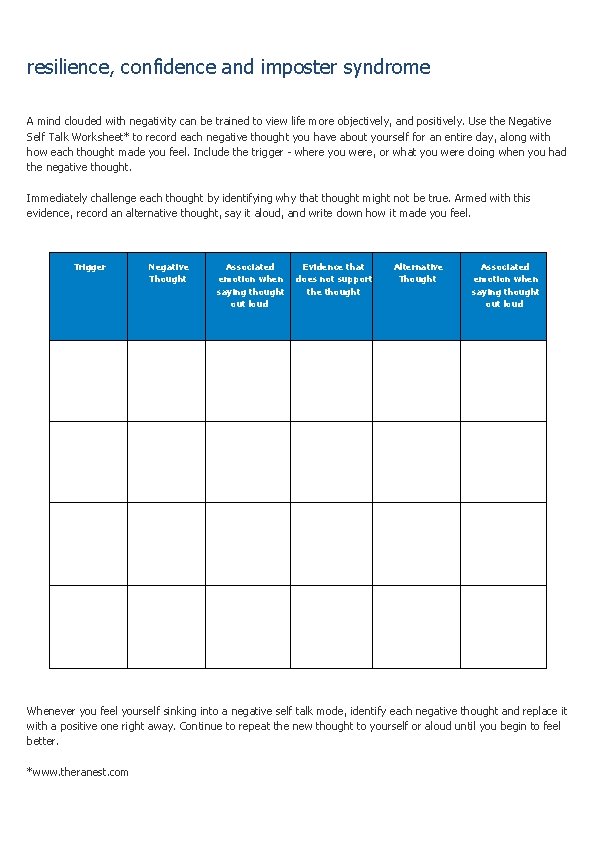
resilience, confidence and imposter syndrome A mind clouded with negativity can be trained to view life more objectively, and positively. Use the Negative Self Talk Worksheet* to record each negative thought you have about yourself for an entire day, along with how each thought made you feel. Include the trigger - where you were, or what you were doing when you had the negative thought. Immediately challenge each thought by identifying why that thought might not be true. Armed with this evidence, record an alternative thought, say it aloud, and write down how it made you feel. Trigger Negative Thought Associated emotion when saying thought out loud Evidence that does not support the thought Alternative Thought Associated emotion when saying thought out loud Whenever you feel yourself sinking into a negative self talk mode, identify each negative thought and replace it with a positive one right away. Continue to repeat the new thought to yourself or aloud until you begin to feel better. *www. theranest. com

thank you. Kerry Mc. Quillan General Manager - Diversity and Inclusion 0435 557 107 linkedin. com/in/kerryemcquillan
- Slides: 9