
Human Form Function Body systems The lymphatic system
Human Form & Function Body systems The lymphatic system
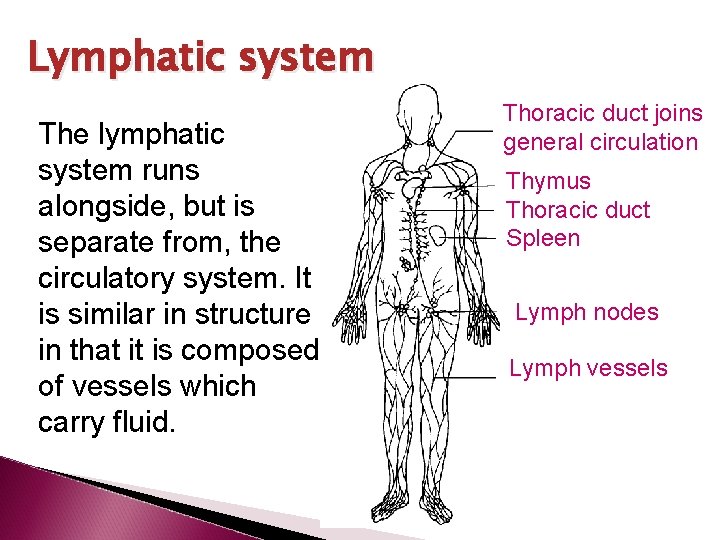
Lymphatic system The lymphatic system runs alongside, but is separate from, the circulatory system. It is similar in structure in that it is composed of vessels which carry fluid. Thoracic duct joins general circulation Thymus Thoracic duct Spleen Lymph nodes Lymph vessels
The lymphatic system Structure Lymph nodes Lymph fluid Lymph vessels Function Drainage system Produces and transports white blood cells (leukocytes)
The lymphatic system - structure Ø Lymph vessels pass through a series of lymph nodes. Ø Lymph vessels are thin-walled, veinlike tubes that carry lymph. Ø Lymph nodes are small bean-shaped structures that contain high concentrations of macrophages and lymphocytes.

Lymphatic vessel Valve Photo by M I Walker
The lymphatic system - function ØTo return excess tissue fluid to the circulation. ØTo filter out cellular material, including pathogens and cancer cells. ØTo activate the immune system.
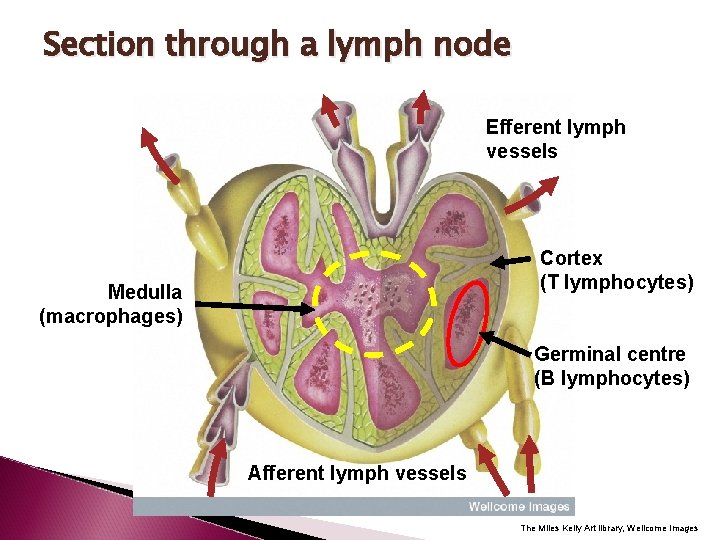
Section through a lymph node Efferent lymph vessels Cortex (T lymphocytes) Medulla (macrophages) Germinal centre (B lymphocytes) Afferent lymph vessels The Miles Kelly Art library, Wellcome Images
Lymphatic tissues Structures in the body that contain lymphatic tissue, but are not part of the lymphatic system, include: v. The spleen v. Thymus gland v. Tonsils v. The appendix
- Slides: 8