
Human Factors Vision Perception Cognition 1 Outline Review

- Slides: 51
Human Factors: Vision, Perception & Cognition 1
Outline § Review § Human visual system § Guidelines for design § Models of human performance (MHP) § Memory 2
Why Study Color? Color can be a powerful tool to improve user interfaces, but its inappropriate use can severely reduce the performance of the systems we build 3
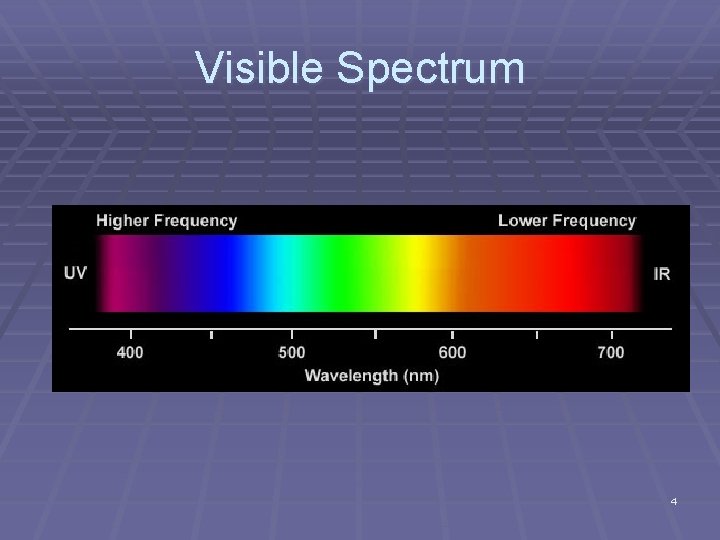
Visible Spectrum 4
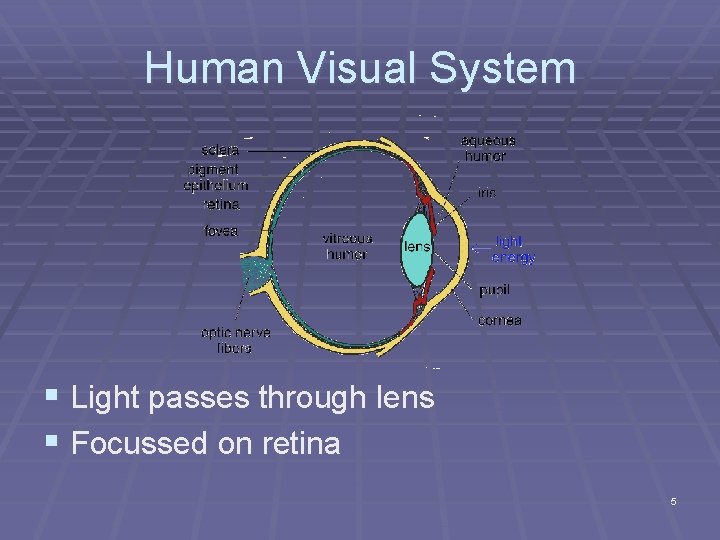
Human Visual System § Light passes through lens § Focussed on retina 5
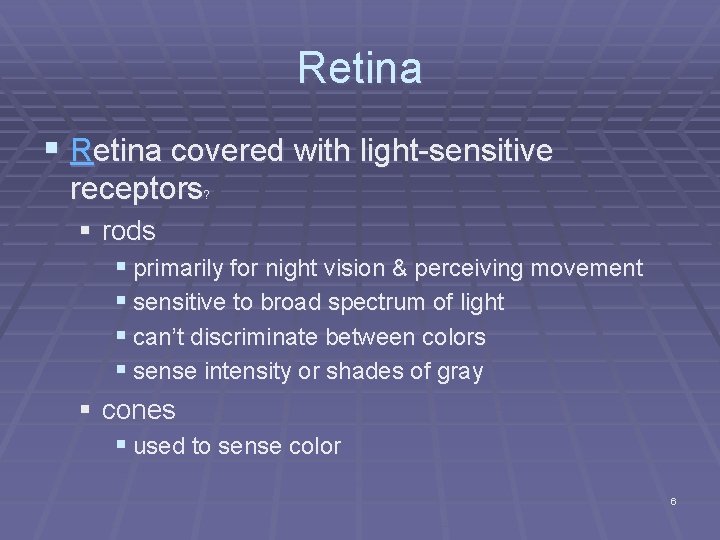
Retina § Retina covered with light-sensitive receptors ? § rods § primarily for night vision & perceiving movement § sensitive to broad spectrum of light § can’t discriminate between colors § sense intensity or shades of gray § cones § used to sense color 6
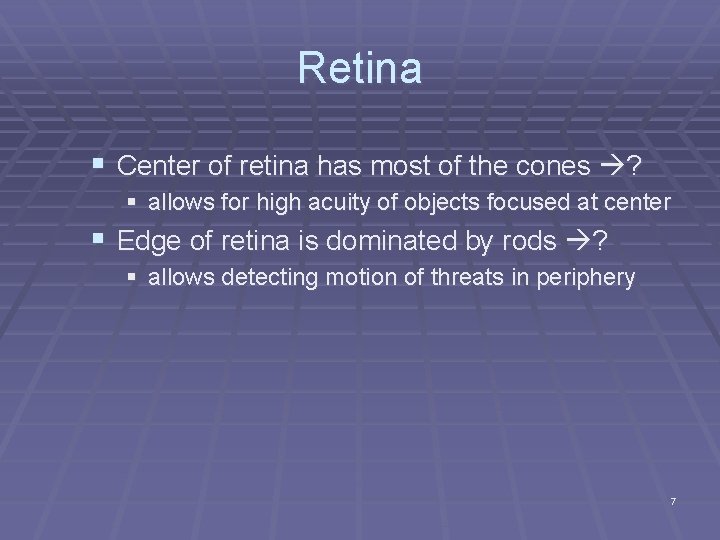
Retina § Center of retina has most of the cones ? § allows for high acuity of objects focused at center § Edge of retina is dominated by rods ? § allows detecting motion of threats in periphery 7
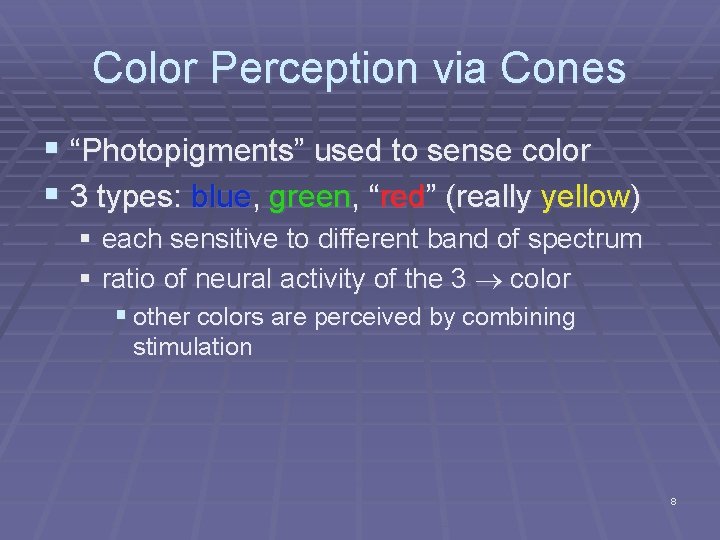
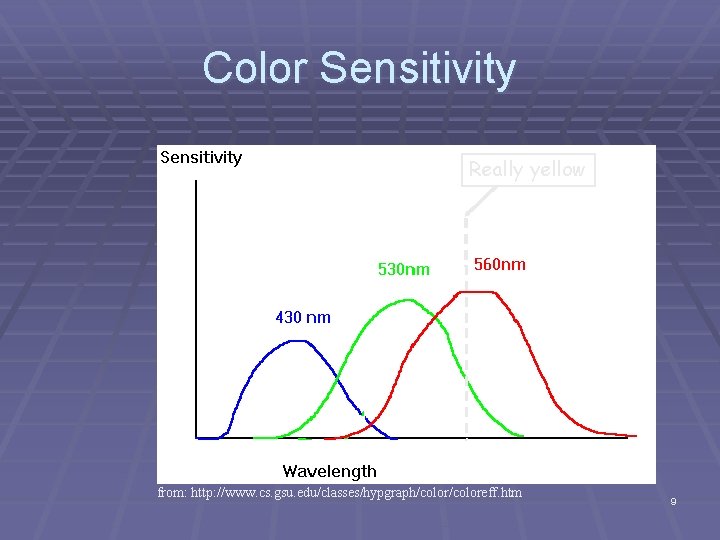
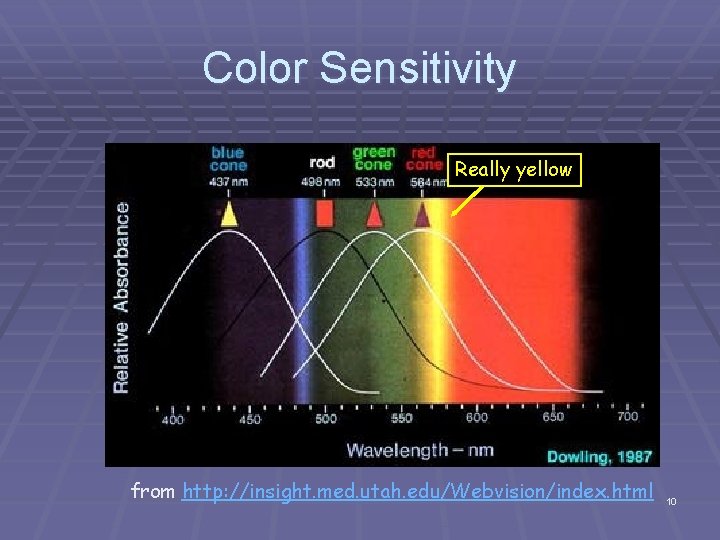
Color Perception via Cones § “Photopigments” used to sense color § 3 types: blue, green, “red” (really yellow) § each sensitive to different band of spectrum § ratio of neural activity of the 3 color § other colors are perceived by combining stimulation 8
Color Sensitivity Really yellow from: http: //www. cs. gsu. edu/classes/hypgraph/coloreff. htm 9
Color Sensitivity Really yellow from http: //insight. med. utah. edu/Webvision/index. html 10
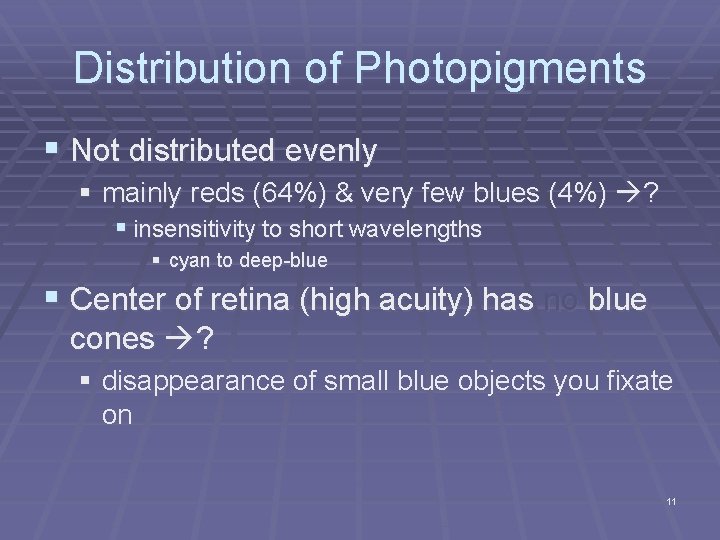
Distribution of Photopigments § Not distributed evenly § mainly reds (64%) & very few blues (4%) ? § insensitivity to short wavelengths § cyan to deep-blue § Center of retina (high acuity) has no blue cones ? § disappearance of small blue objects you fixate on 11
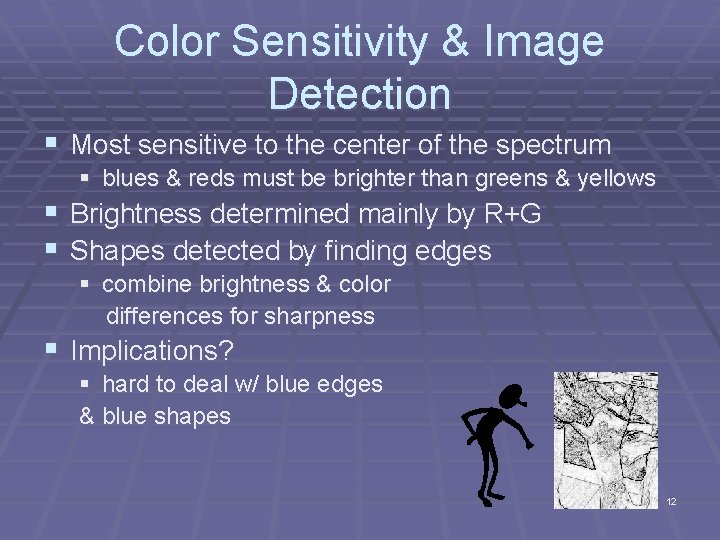
Color Sensitivity & Image Detection § Most sensitive to the center of the spectrum § blues & reds must be brighter than greens & yellows § Brightness determined mainly by R+G § Shapes detected by finding edges § combine brightness & color differences for sharpness § Implications? § hard to deal w/ blue edges & blue shapes 12
Color Sensitivity (cont. ) § As we age § lens yellows & absorbs shorter wavelengths ? § sensitivity to blue is even more reduced § fluid between lens and retina absorbs more light § perceive a lower level of brightness § Implications? § don’t rely on blue for text or small objects! § older users need brighter colors 13
Focus § Different wavelengths of light focused at different distances behind eye’s lens § need for constant refocusing ? § causes fatigue § be careful about color combinations § Pure (saturated) colors require more focusing then less pure (desaturated) § don’t use saturated colors in UIs unless you really need something to stand out (stop sign) 14
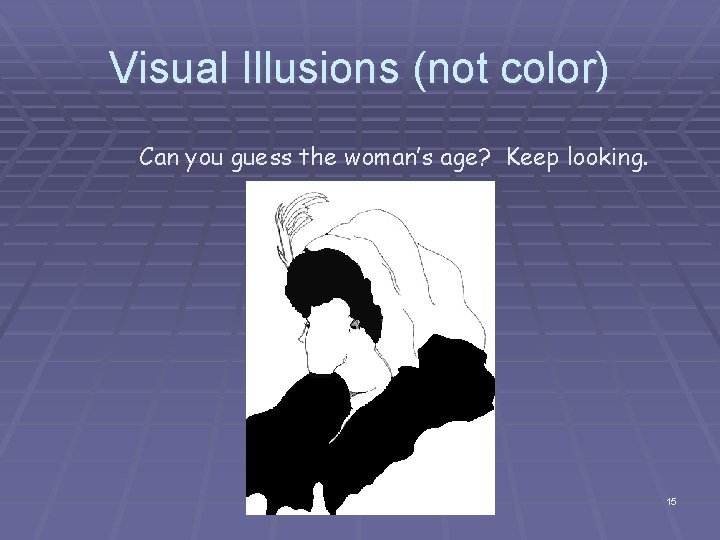
Visual Illusions (not color) Can you guess the woman’s age? Keep looking. 15
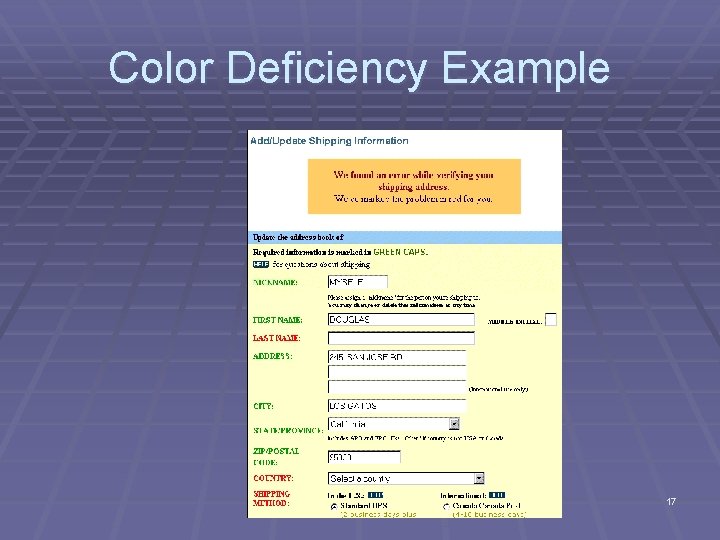
Color Deficiency (also known as “color blindness”) § Trouble discriminating colors § besets about 9% of population § two major types § Different photopigment response § reduces capability to discern small color diffs § particularly those of low brightness § most common § Red-green deficiency is best known § lack of either green or red photopigment ? § can’t discriminate colors dependent on R & G 16
Color Deficiency Example 17
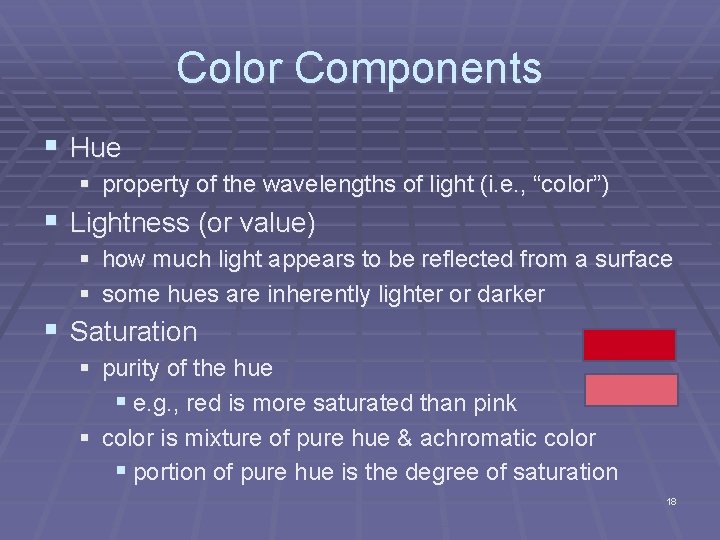
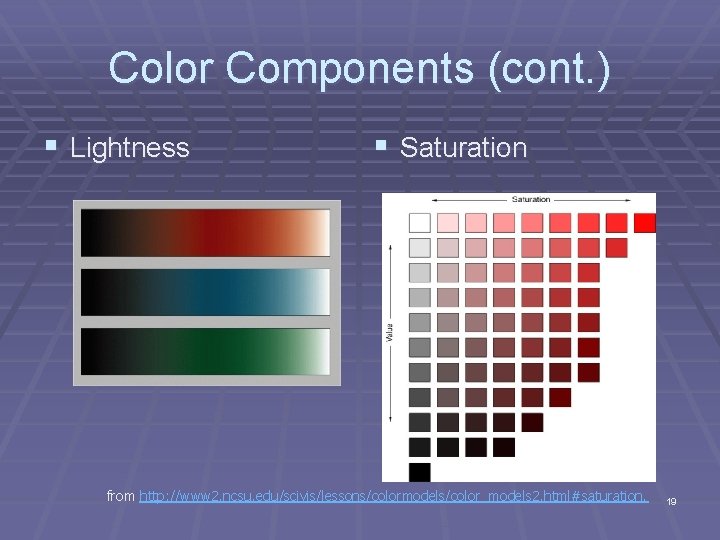
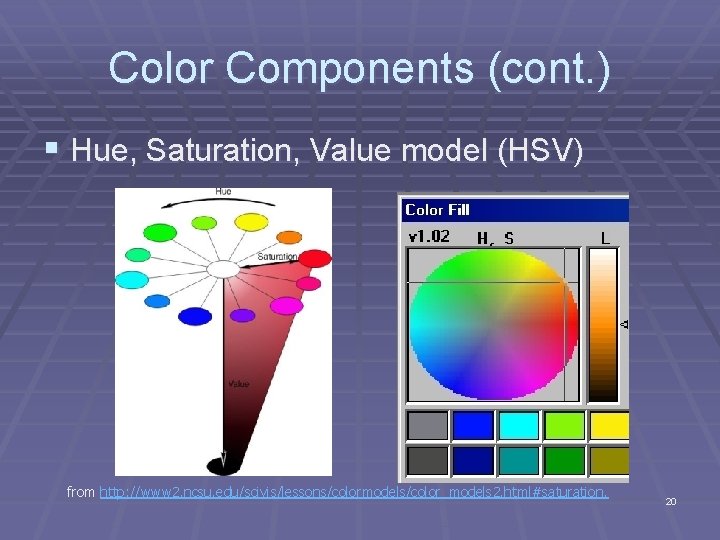
Color Components § Hue § property of the wavelengths of light (i. e. , “color”) § Lightness (or value) § how much light appears to be reflected from a surface § some hues are inherently lighter or darker § Saturation § purity of the hue § e. g. , red is more saturated than pink § color is mixture of pure hue & achromatic color § portion of pure hue is the degree of saturation 18
Color Components (cont. ) § Lightness § Saturation from http: //www 2. ncsu. edu/scivis/lessons/colormodels/color_models 2. html#saturation. 19
Color Components (cont. ) § Hue, Saturation, Value model (HSV) from http: //www 2. ncsu. edu/scivis/lessons/colormodels/color_models 2. html#saturation. 20
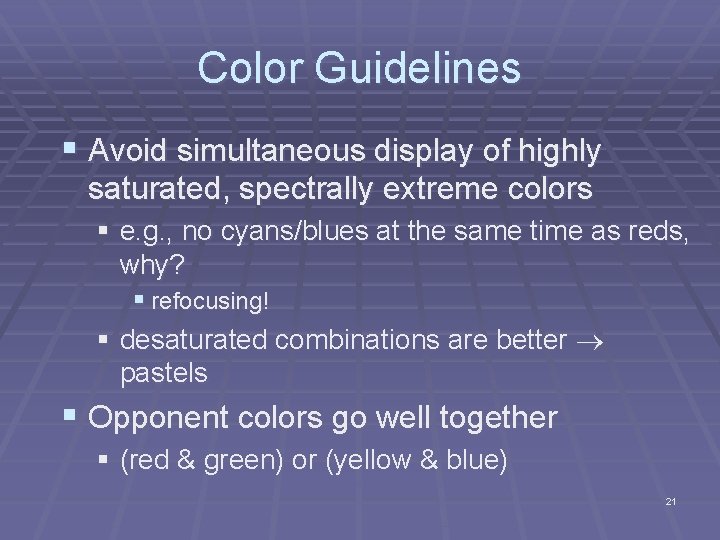
Color Guidelines § Avoid simultaneous display of highly saturated, spectrally extreme colors § e. g. , no cyans/blues at the same time as reds, why? § refocusing! § desaturated combinations are better pastels § Opponent colors go well together § (red & green) or (yellow & blue) 21
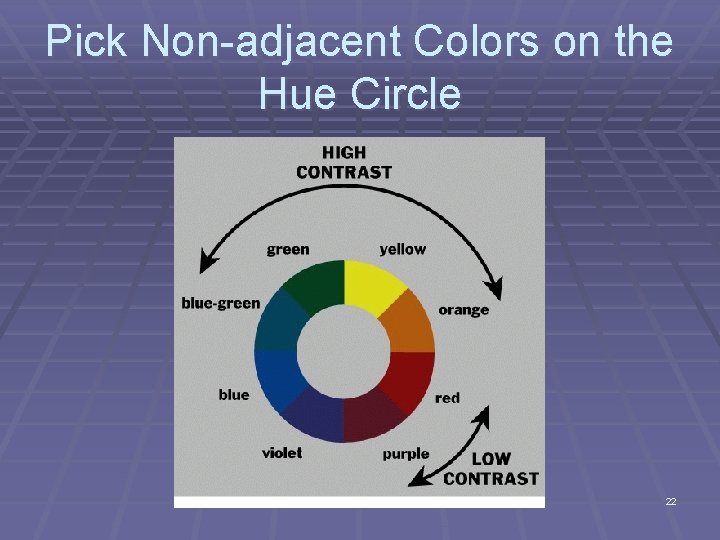
Pick Non-adjacent Colors on the Hue Circle 22
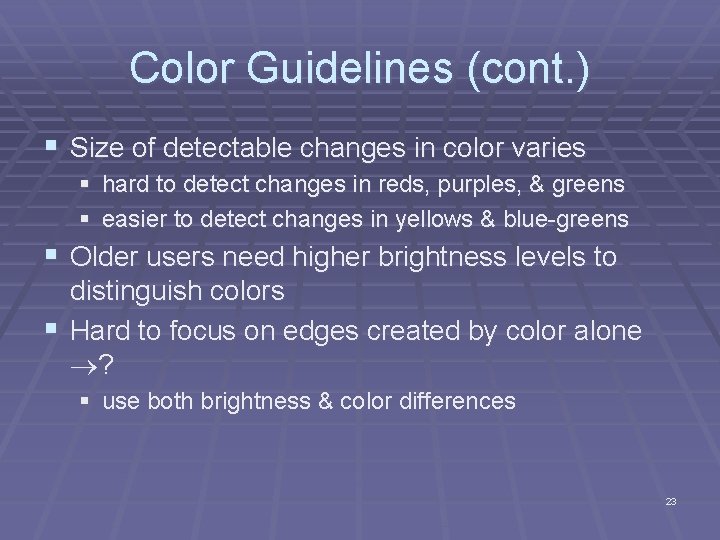
Color Guidelines (cont. ) § Size of detectable changes in color varies § hard to detect changes in reds, purples, & greens § easier to detect changes in yellows & blue-greens § Older users need higher brightness levels to distinguish colors § Hard to focus on edges created by color alone ? § use both brightness & color differences 23
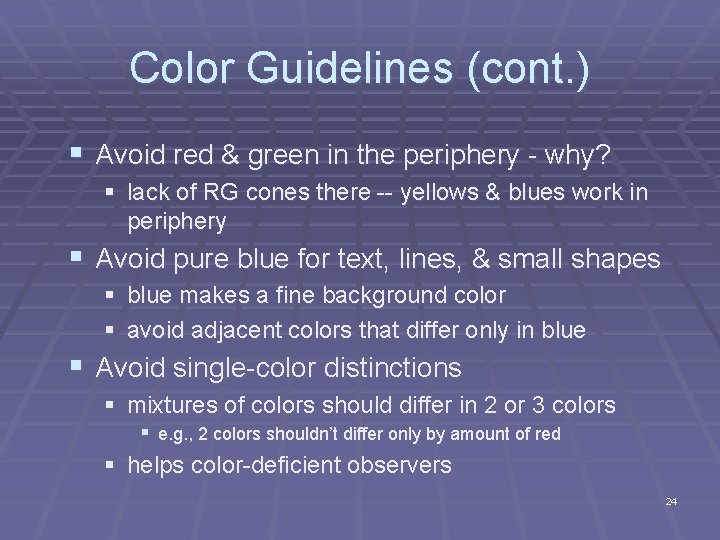
Color Guidelines (cont. ) § Avoid red & green in the periphery - why? § lack of RG cones there -- yellows & blues work in periphery § Avoid pure blue for text, lines, & small shapes § blue makes a fine background color § avoid adjacent colors that differ only in blue § Avoid single-color distinctions § mixtures of colors should differ in 2 or 3 colors § e. g. , 2 colors shouldn’t differ only by amount of red § helps color-deficient observers 24
Why Model Human Performance? § To test understanding § To predict influence of new technology 25
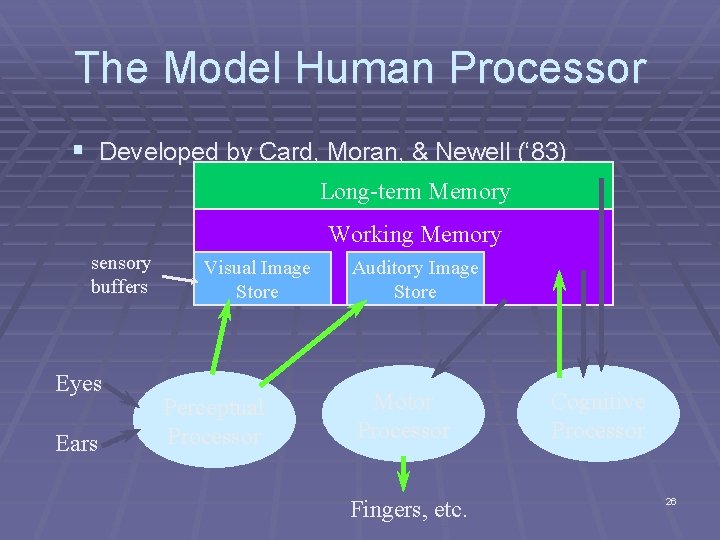
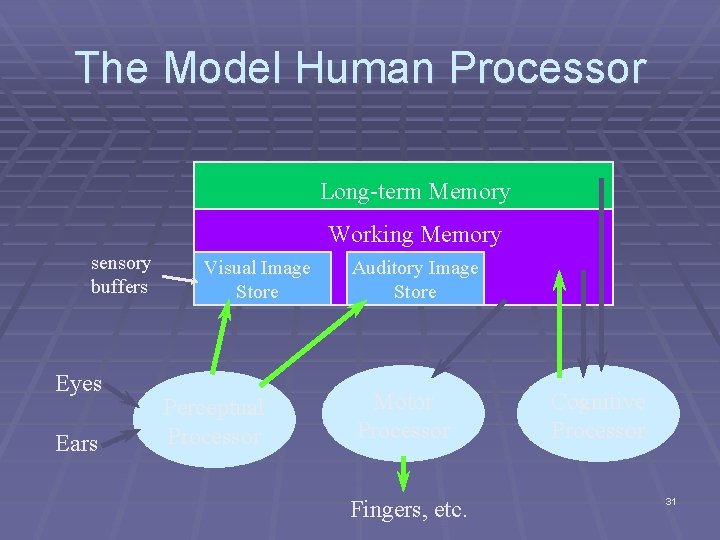
The Model Human Processor § Developed by Card, Moran, & Newell (‘ 83) Long-term Memory Working Memory sensory buffers Eyes Ears Visual Image Store Perceptual Processor Auditory Image Store Motor Processor Fingers, etc. Cognitive Processor 26
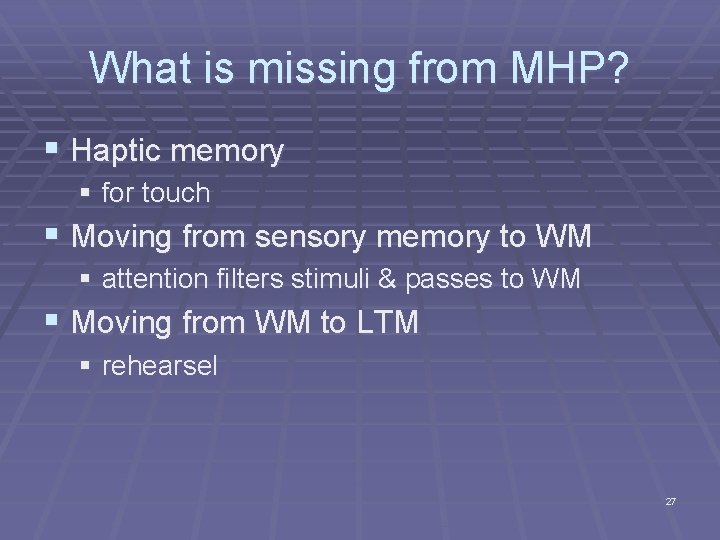
What is missing from MHP? § Haptic memory § for touch § Moving from sensory memory to WM § attention filters stimuli & passes to WM § Moving from WM to LTM § rehearsel 27
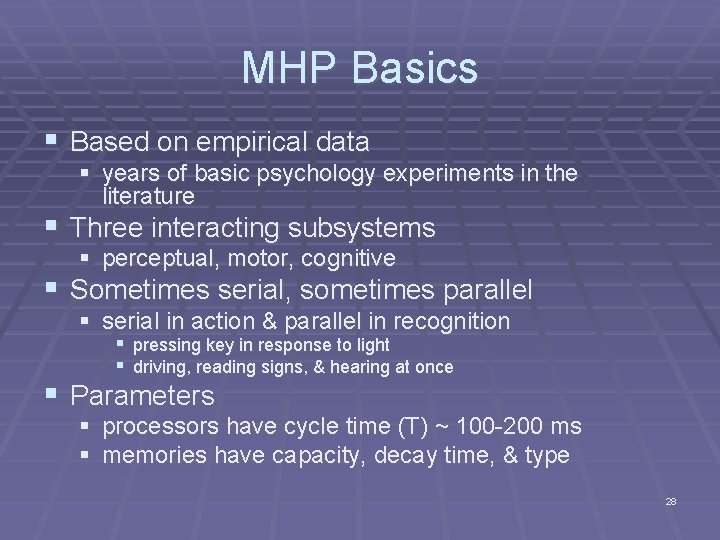
MHP Basics § Based on empirical data § years of basic psychology experiments in the literature § Three interacting subsystems § perceptual, motor, cognitive § Sometimes serial, sometimes parallel § serial in action & parallel in recognition § pressing key in response to light § driving, reading signs, & hearing at once § Parameters § processors have cycle time (T) ~ 100 -200 ms § memories have capacity, decay time, & type 28
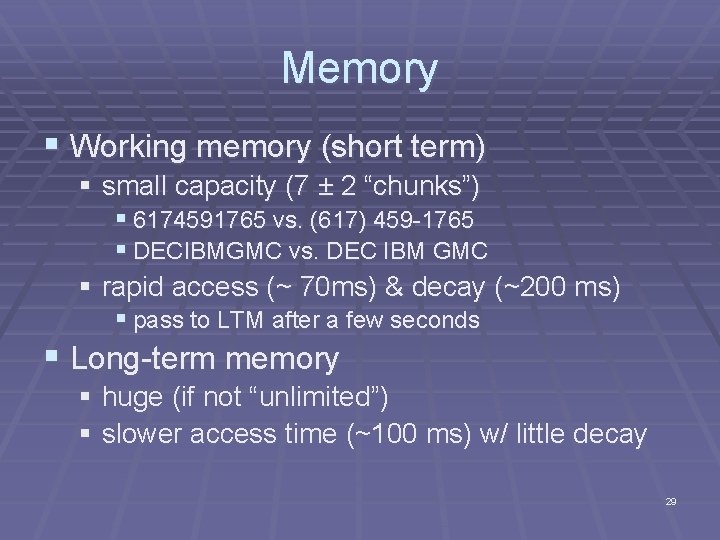
Memory § Working memory (short term) § small capacity (7 ± 2 “chunks”) § 6174591765 vs. (617) 459 -1765 § DECIBMGMC vs. DEC IBM GMC § rapid access (~ 70 ms) & decay (~200 ms) § pass to LTM after a few seconds § Long-term memory § huge (if not “unlimited”) § slower access time (~100 ms) w/ little decay 29
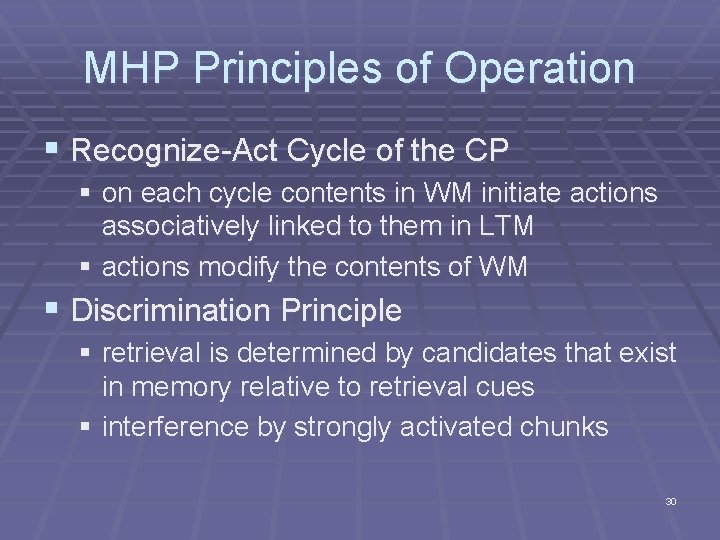
MHP Principles of Operation § Recognize-Act Cycle of the CP § on each cycle contents in WM initiate actions associatively linked to them in LTM § actions modify the contents of WM § Discrimination Principle § retrieval is determined by candidates that exist in memory relative to retrieval cues § interference by strongly activated chunks 30
The Model Human Processor Long-term Memory Working Memory sensory buffers Eyes Ears Visual Image Store Perceptual Processor Auditory Image Store Motor Processor Fingers, etc. Cognitive Processor 31
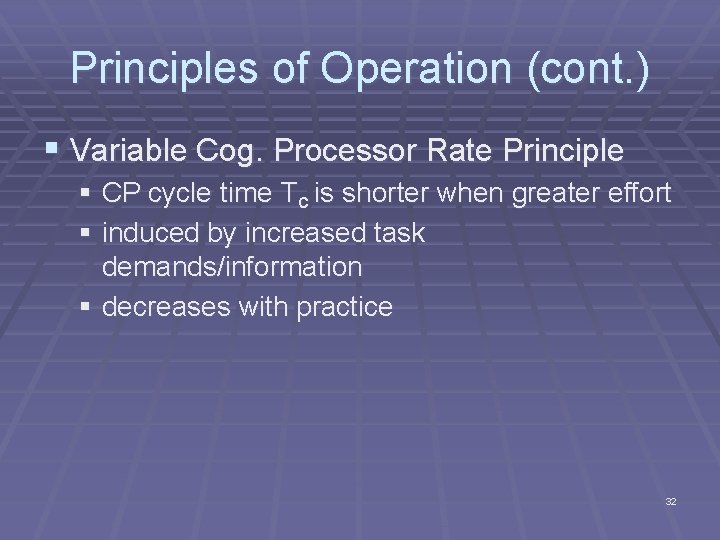
Principles of Operation (cont. ) § Variable Cog. Processor Rate Principle § CP cycle time Tc is shorter when greater effort § induced by increased task demands/information § decreases with practice 32
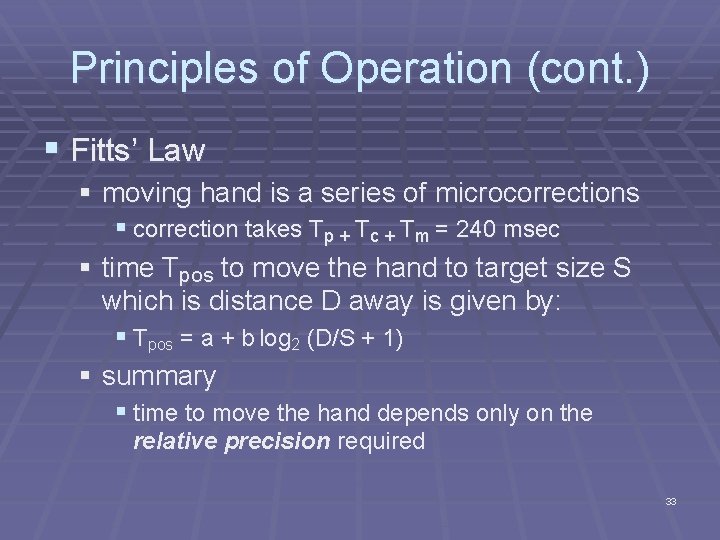
Principles of Operation (cont. ) § Fitts’ Law § moving hand is a series of microcorrections § correction takes Tp + Tc + Tm = 240 msec § time Tpos to move the hand to target size S which is distance D away is given by: § Tpos = a + b log 2 (D/S + 1) § summary § time to move the hand depends only on the relative precision required 33
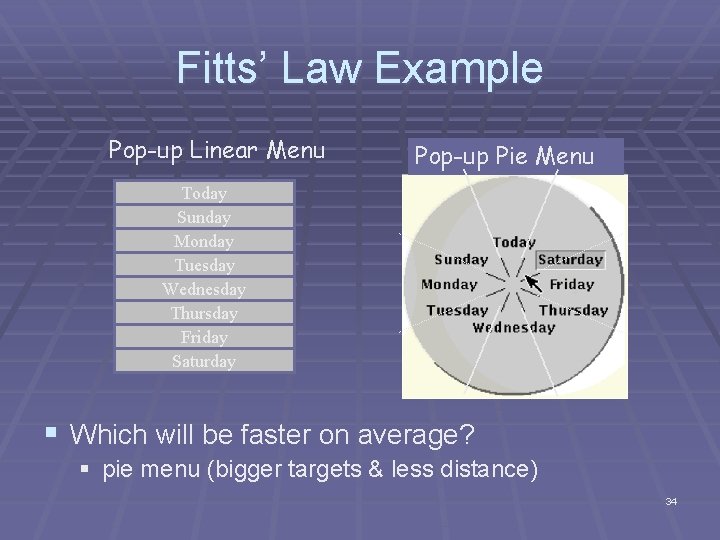
Fitts’ Law Example Pop-up Linear Menu Pop-up Pie Menu Today Sunday Monday Tuesday Wednesday Thursday Friday Saturday § Which will be faster on average? § pie menu (bigger targets & less distance) 34
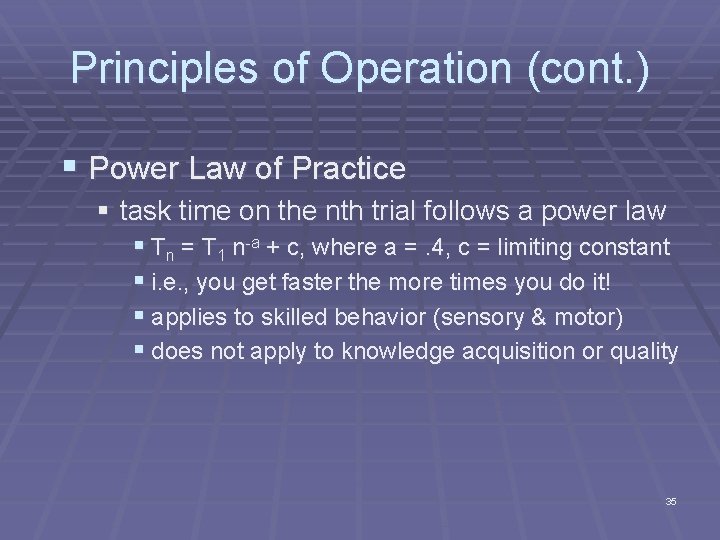
Principles of Operation (cont. ) § Power Law of Practice § task time on the nth trial follows a power law § Tn = T 1 n-a + c, where a =. 4, c = limiting constant § i. e. , you get faster the more times you do it! § applies to skilled behavior (sensory & motor) § does not apply to knowledge acquisition or quality 35
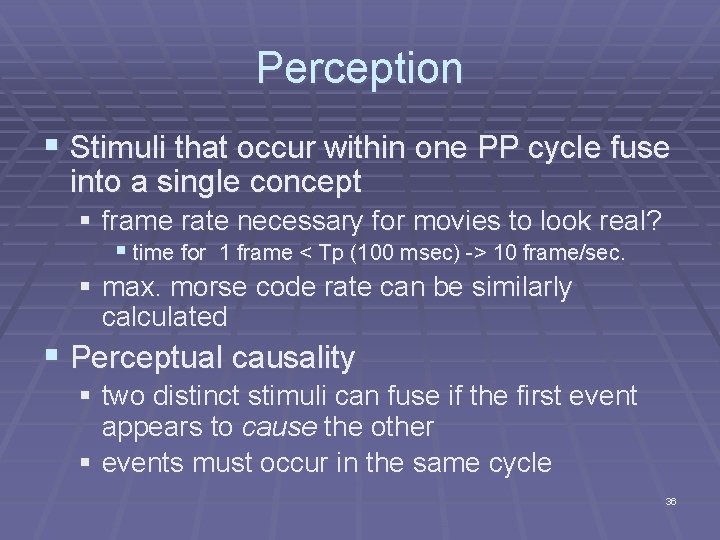
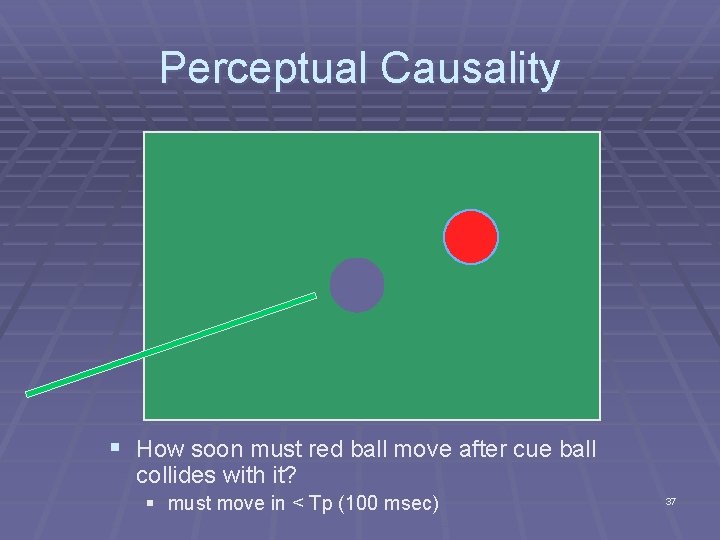
Perception § Stimuli that occur within one PP cycle fuse into a single concept § frame rate necessary for movies to look real? § time for 1 frame < Tp (100 msec) -> 10 frame/sec. § max. morse code rate can be similarly calculated § Perceptual causality § two distinct stimuli can fuse if the first event appears to cause the other § events must occur in the same cycle 36
Perceptual Causality § How soon must red ball move after cue ball collides with it? § must move in < Tp (100 msec) 37
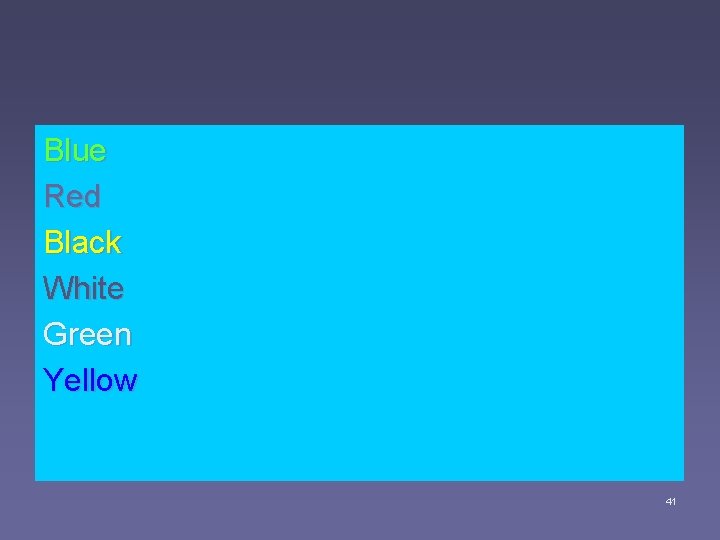
Simple Experiment § Volunteer § Start saying colors you see in list of words § when slide comes up § as fast as you can § Say “done” when finished § Everyone else time it… 38
Paper Home Back Schedule Page Change 39
Simple Experiment § Do it again § Say “done” when finished 40
Blue Red Black White Green Yellow 41
Memory § Interference § two strong cues in working memory § link to different chunks in long term memory § Why learn about memory? § know what’s behind many HCI techniques § helps you understand what users will “get” § aging population of users 42
Stage Theory § Working memory is small § temporary storage § decay § displacement § Maintenance rehearsal § rote repetition § not enough to learn information well § Answer to problem is organization § § Faith Age Cold Idea Value Past Large In a show of faith, the cold boy ran past the church 43
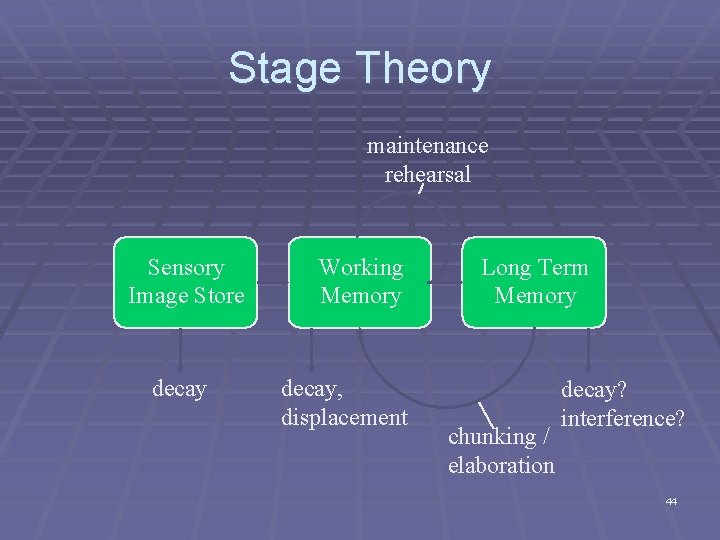
Stage Theory maintenance rehearsal Sensory Image Store decay Working Memory decay, displacement Long Term Memory chunking / elaboration decay? interference? 44
Elaboration § Relate new material to already learned material § Recodes information § Attach meaning (make a story) § e. g. , sentences § Visual imagery § Organize (chunking) § Link to existing knowledge, categories 45
LTM Forgetting § Causes for not remembering an item? § 1) never stored: encoding failure § 2) gone from storage: storage failure § 3) can’t get out of storage: retrieval failure § Interference model of forgetting § one item reduces ability to retrieve another § proactive interference (3) § earlier learning reduces ability to retrieve later info. § retroactive interference (3 & 2) § later learning reduces the ability to retrieve earlier info. 46
Recognition over Recall § info reproduced from memory § Recognition § presentation of info provides knowledge that info has been seen before § easier because of cues to retrieval § We want to design UIs that rely on recognition! 47
Facilitating Retrieval: Cues § Any stimulus that improves retrieval § example: giving hints § other examples in software? § icons, labels, menu names, etc. § Anything related to § item or situation where it was learned § Can facilitate memory in any system § What are we taking advantage of? § recognition over recall! 48
Summary § Color can be very helpful, but § Pay attention to § how colors combine § human perception § people with color deficiency § Coding information w/ color is a further topic 49
Summary § MHP § three interacting subsystems? § perceptual, motor, cognitive § sometimes serial, sometimes parallel § parameters? § processors have cycle time (T = ~100 ms) § memories have capacity, decay time, and type § ten principles of operation (we showed 6) § Perceive distinct events in same cycle as one 50
Summary (cont. ) § Memory § three types? § sensor, WM, & LTM § use cues in ? to get to ? § WM -> LTM § interference can make hard to access? § LTM § Cues can make it easier to access LTM 51