
Human Factors in Runway Incursion Incidents Patrick Hudson





- Slides: 47
Human Factors in Runway Incursion Incidents Patrick Hudson Centre for Safety Studies Leiden University The Netherlands
Structure • • • The major factor in runway incursion - Human Error Case studies Superficial causes - How incidents happen Underlying causes - Why incidents happen Where to look, what to do Conclusion
The Human Factor • Runway incursions are usually failures to understand – Where the plane is – Where the runway is – Where a vehicle is • Classically failures of Situation Awareness • Failures involve three different organisations – Airlines - Pilots – ATC providers -Air traffic controllers (arrivals, departures and ground) – Airports - Airside vehicle staff etc. • The individual pilots/ATCOs are seen as the problem • The real causes are at the organisational level
Why do Accidents Happen? • Equipment – Breaks – Doesn’t work – Not fit for purpose • People – Incompetence – Distracted – Careless – Reckless • Organisation – Organisations allow (known) failure to propagate – Accidents waiting to happen have been accepted
Latent Conditions = Underlying Causes • Latent Conditions represent accidents waiting to happen • Many problems are to be found. E. g. : – – – Poor procedures (Incorrect, unknown, out of date) Bad design accepted Commercial pressures not well balanced Organisation incapable of supporting operation Maintenance poorly scheduled • Latent conditions make errors more likely or the consequences worse • Individuals are the recipients of somebody else’s problems
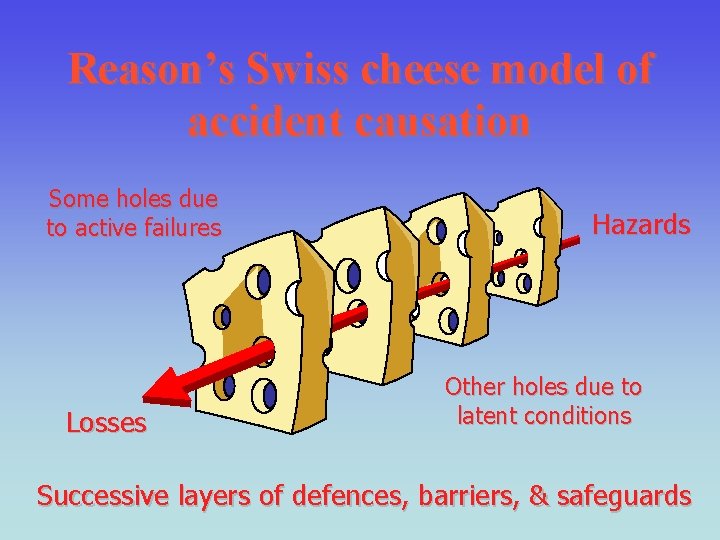
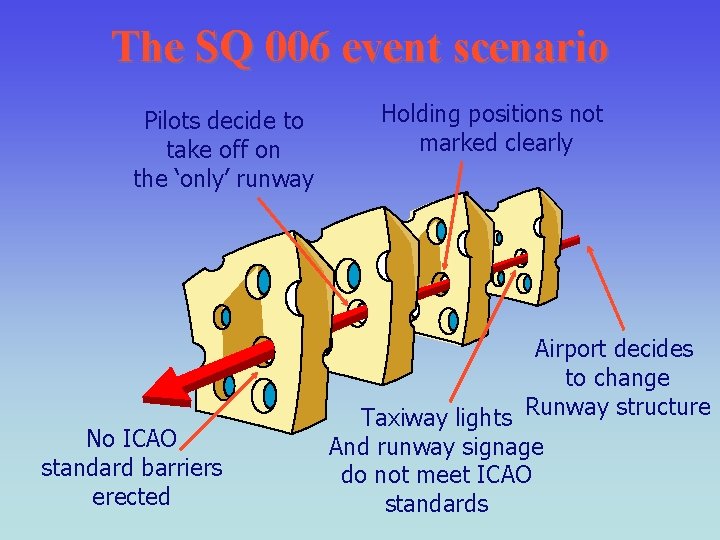
Reason’s Swiss cheese model of accident causation Some holes due to active failures Losses Hazards Other holes due to latent conditions Successive layers of defences, barriers, & safeguards
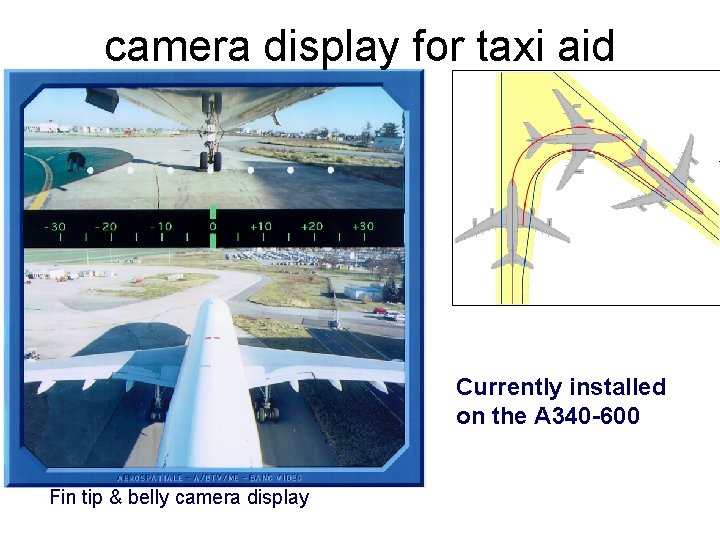
Classic solutions • Technical solutions to ensure nothing goes wrong – Better ground radars, especially for poor visibility – Extra aircraft systems • Cameras to prevent excursions • GPS-based navigation aids • More attention to those causing the problems – More rigid procedures • In the cockpit • In the tower – More training and supervision of ATCo’s • More data collection • More analysis of existing incidents
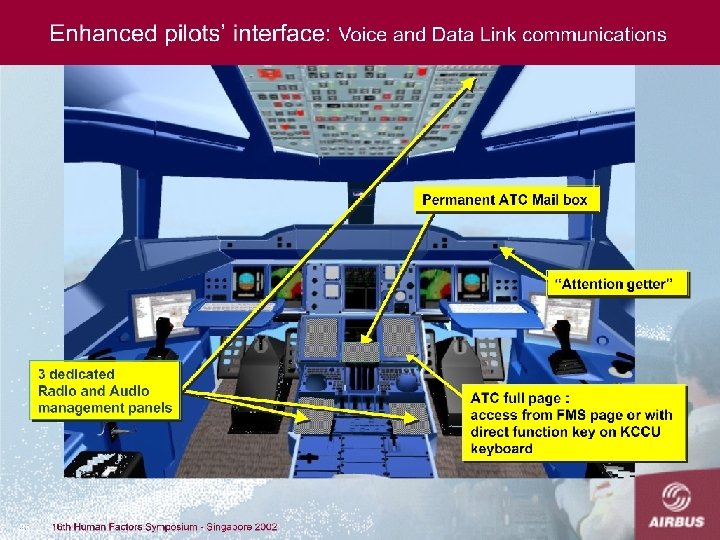
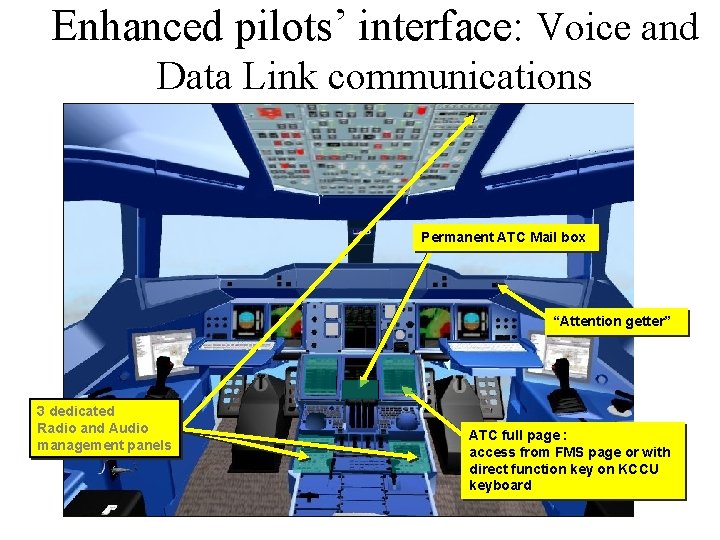
Enhanced pilots’ interface: Voice and Data Link communications Permanent ATC Mail box “Attention getter” 3 dedicated Radio and Audio management panels ATC full page : access from FMS page or with direct function key on KCCU keyboard
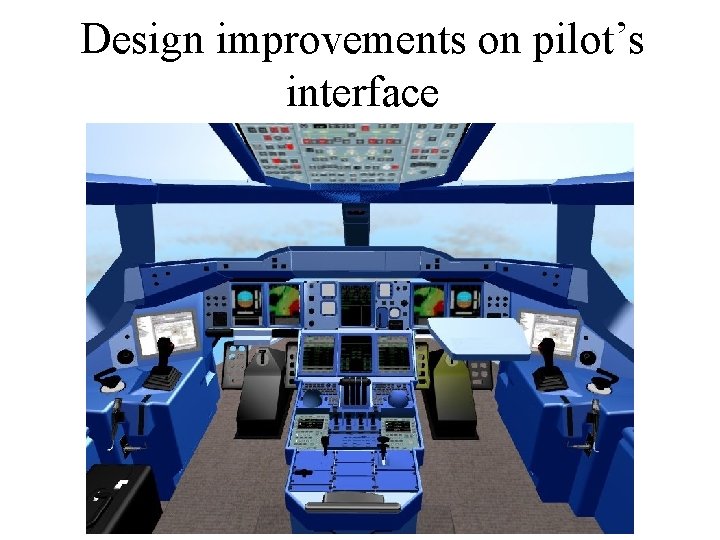
Design improvements on pilot’s interface
camera display for taxi aid Currently installed on the A 340 -600 Fin tip & belly camera display
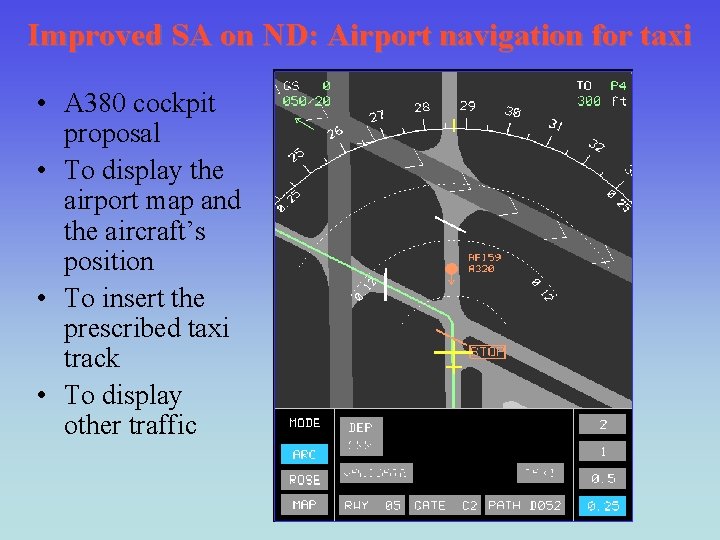
Improved SA on ND: Airport navigation for taxi • A 380 cockpit proposal • To display the airport map and the aircraft’s position • To insert the prescribed taxi track • To display other traffic
Problems with this approach • Analysis implies having a framework to understand what is happening • Analysis and investigation lead to paralysis – Paralysis by analysis – Action can be delayed until effectiveness is proven • The solutions are still aimed primarily at the ‘sharp end’ • Understanding major incidents highlights where the real problems may be found • Major incidents can help us understand the causes – SQ 006 at CKS, Taipei – DAL 39 at Schiphol, Amsterdam – SAS at Linate, Milan
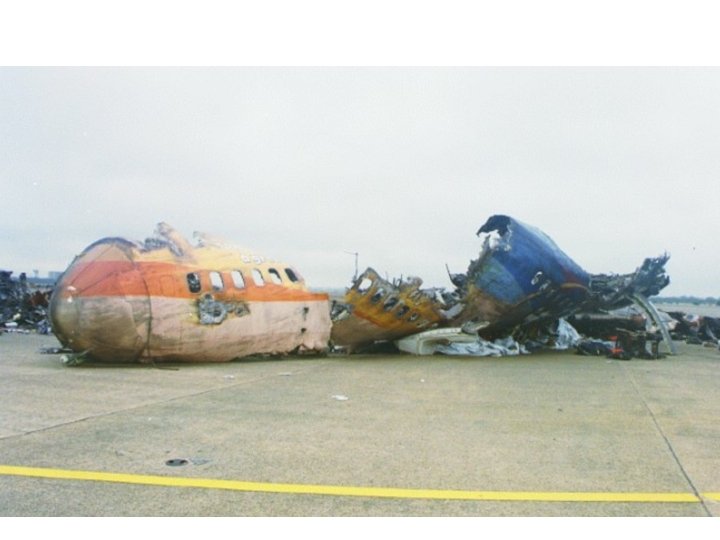
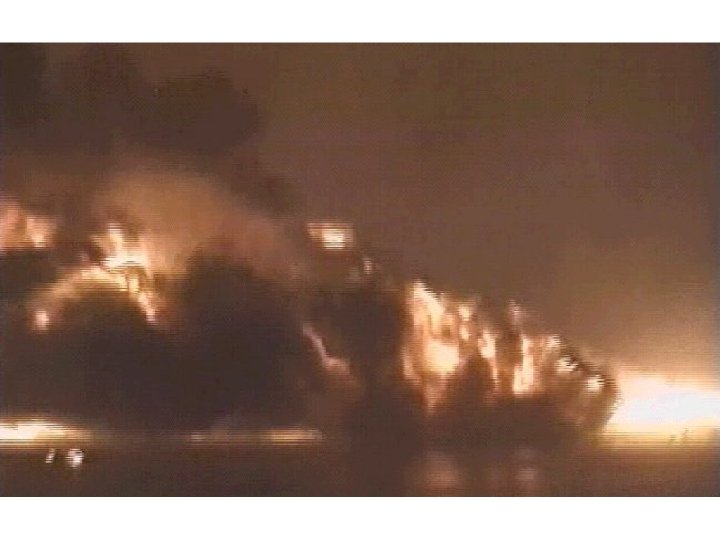
SQ 006 • Departure 747 -400 TPE -LAX – 31 October 2000 at 22. 55 local time • Fresh crew (had flown previous sector the day before) – 3 pilots, 17 cabin crew 159 passengers • Imminent arrival Typhoon Xangsane next morning • Captain requested 05 L because of weather conditions – 05 L is Cat II, longer runway with lower minima • Aircraft crashed into barriers and construction equipment while taking off from 05 R • 83 people died
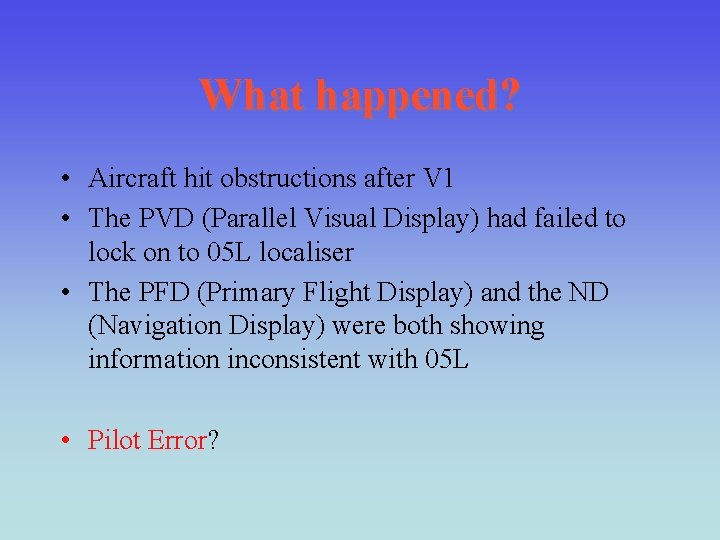
What happened? • Aircraft hit obstructions after V 1 • The PVD (Parallel Visual Display) had failed to lock on to 05 L localiser • The PFD (Primary Flight Display) and the ND (Navigation Display) were both showing information inconsistent with 05 L • Pilot Error?
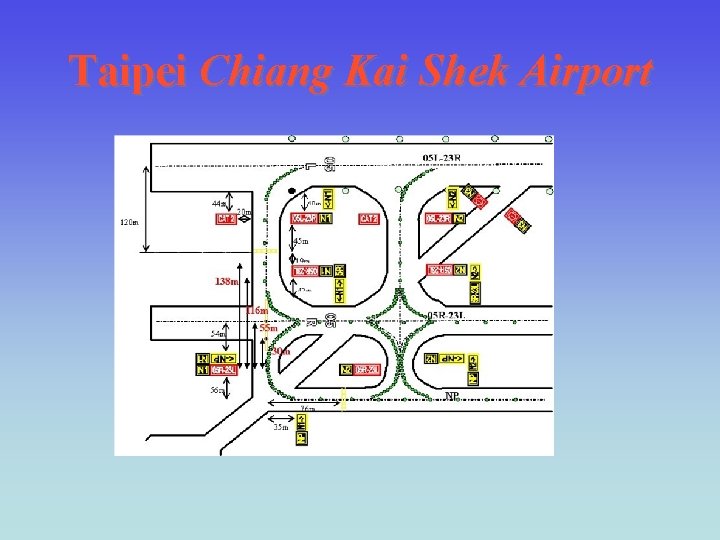
Taipei Chiang Kai Shek Airport
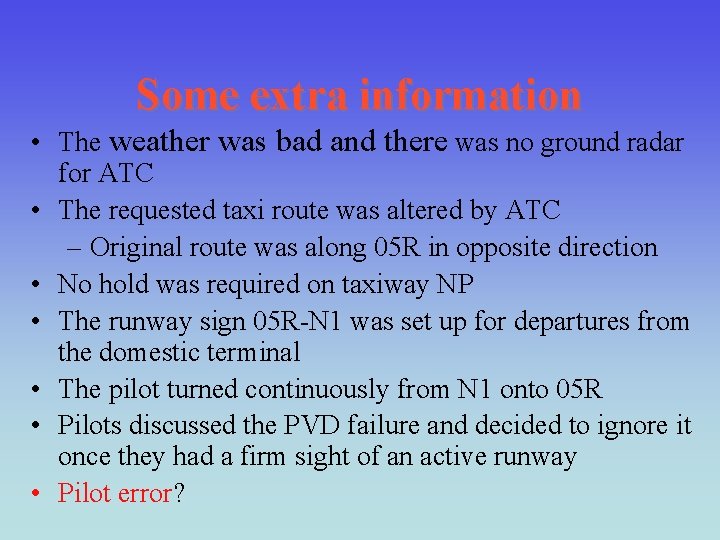
Some extra information • The weather was bad and there was no ground radar for ATC • The requested taxi route was altered by ATC – Original route was along 05 R in opposite direction • No hold was required on taxiway NP • The runway sign 05 R-N 1 was set up for departures from the domestic terminal • The pilot turned continuously from N 1 onto 05 R • Pilots discussed the PVD failure and decided to ignore it once they had a firm sight of an active runway • Pilot error?
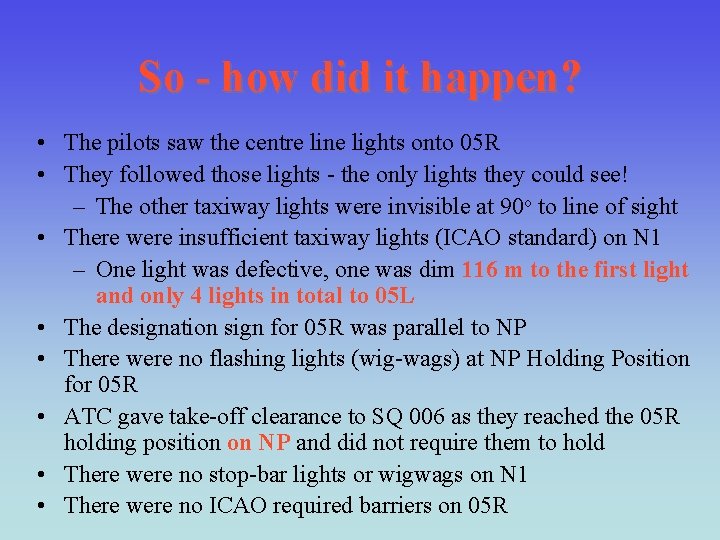
So - how did it happen? • The pilots saw the centre line lights onto 05 R • They followed those lights - the only lights they could see! – The other taxiway lights were invisible at 90 o to line of sight • There were insufficient taxiway lights (ICAO standard) on N 1 – One light was defective, one was dim 116 m to the first light and only 4 lights in total to 05 L • The designation sign for 05 R was parallel to NP • There were no flashing lights (wig-wags) at NP Holding Position for 05 R • ATC gave take-off clearance to SQ 006 as they reached the 05 R holding position on NP and did not require them to hold • There were no stop-bar lights or wigwags on N 1 • There were no ICAO required barriers on 05 R
2 nd light First visible taxiway light on N 1
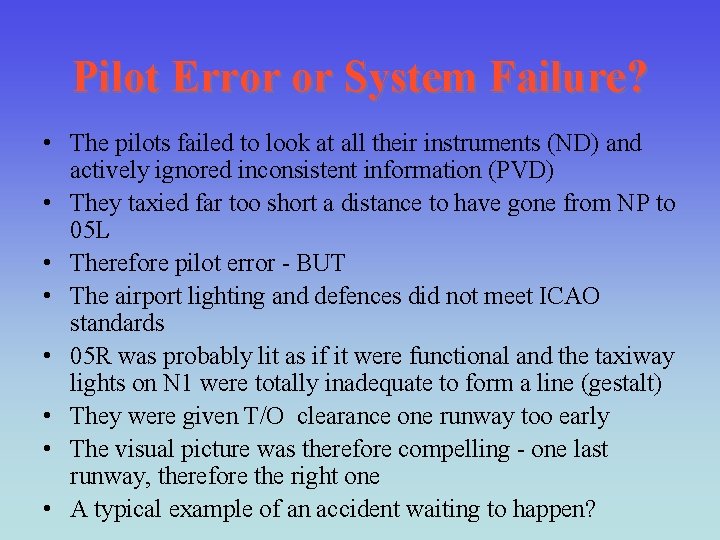
Pilot Error or System Failure? • The pilots failed to look at all their instruments (ND) and actively ignored inconsistent information (PVD) • They taxied far too short a distance to have gone from NP to 05 L • Therefore pilot error - BUT • The airport lighting and defences did not meet ICAO standards • 05 R was probably lit as if it were functional and the taxiway lights on N 1 were totally inadequate to form a line (gestalt) • They were given T/O clearance one runway too early • The visual picture was therefore compelling - one last runway, therefore the right one • A typical example of an accident waiting to happen?
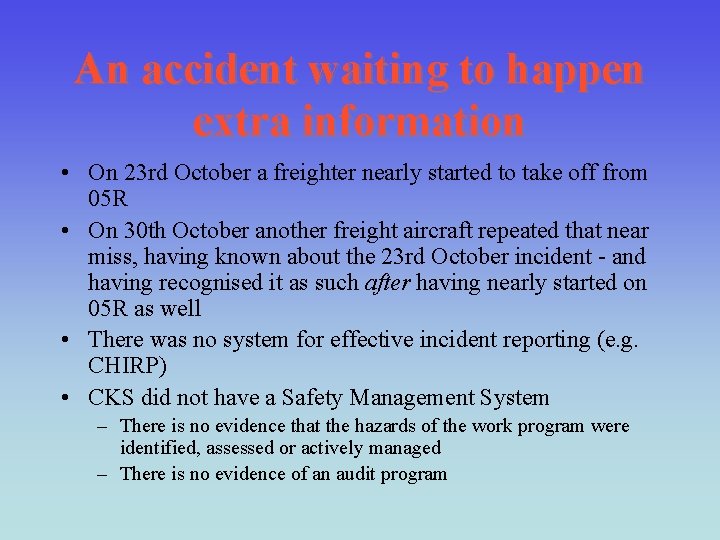
An accident waiting to happen extra information • On 23 rd October a freighter nearly started to take off from 05 R • On 30 th October another freight aircraft repeated that near miss, having known about the 23 rd October incident - and having recognised it as such after having nearly started on 05 R as well • There was no system for effective incident reporting (e. g. CHIRP) • CKS did not have a Safety Management System – There is no evidence that the hazards of the work program were identified, assessed or actively managed – There is no evidence of an audit program
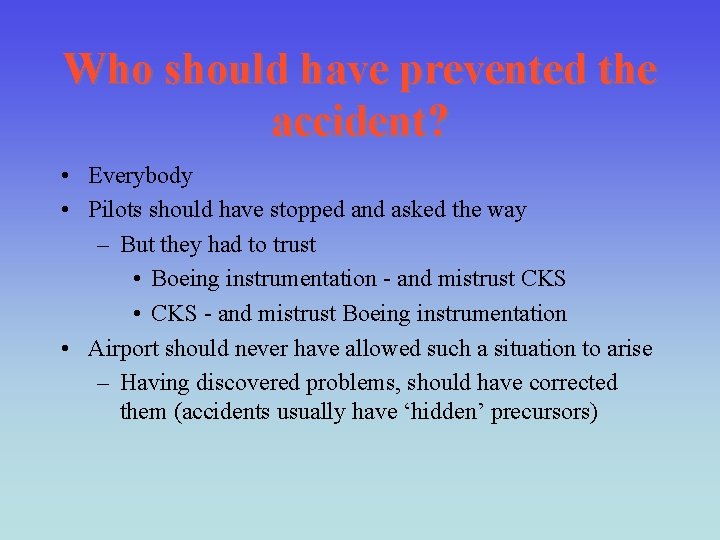
Who should have prevented the accident? • Everybody • Pilots should have stopped and asked the way – But they had to trust • Boeing instrumentation - and mistrust CKS • CKS - and mistrust Boeing instrumentation • Airport should never have allowed such a situation to arise – Having discovered problems, should have corrected them (accidents usually have ‘hidden’ precursors)
The SQ 006 event scenario Pilots decide to take off on the ‘only’ runway No ICAO standard barriers erected Holding positions not marked clearly Airport decides to change Taxiway lights Runway structure And runway signage do not meet ICAO standards
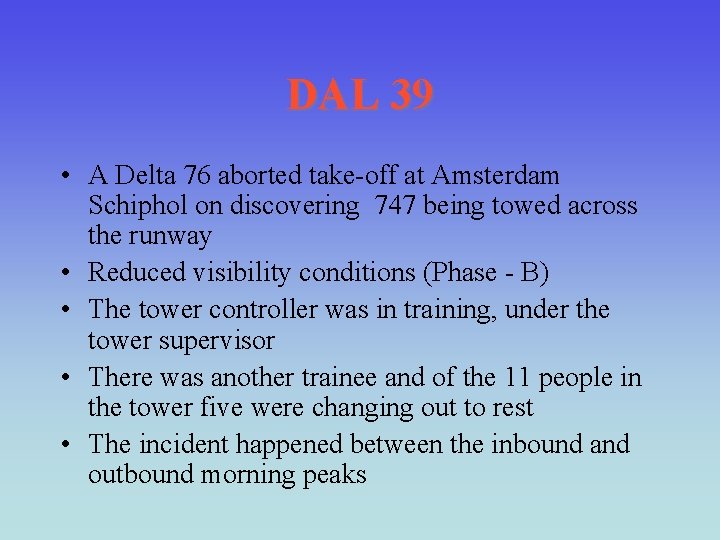
DAL 39 • A Delta 76 aborted take-off at Amsterdam Schiphol on discovering 747 being towed across the runway • Reduced visibility conditions (Phase - B) • The tower controller was in training, under the tower supervisor • There was another trainee and of the 11 people in the tower five were changing out to rest • The incident happened between the inbound and outbound morning peaks
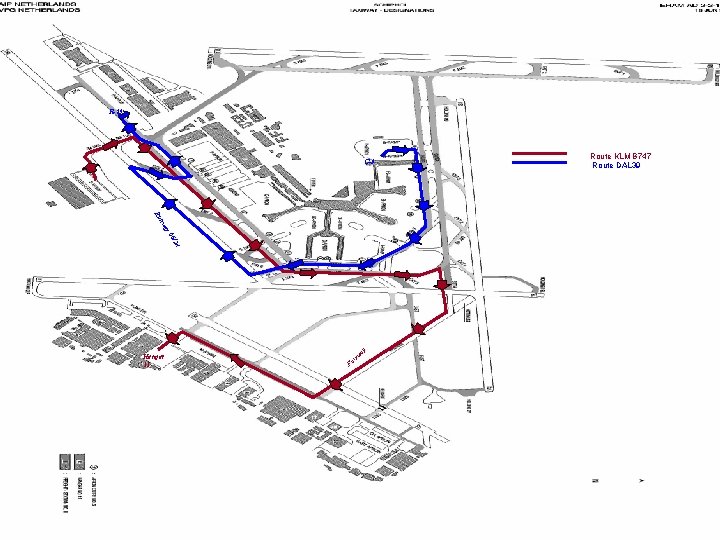
R-83 G-3 Fa irw ay 4 6/2 y 0 a nw Ru Hangar 11 Route KLM B 747 Route DAL 39
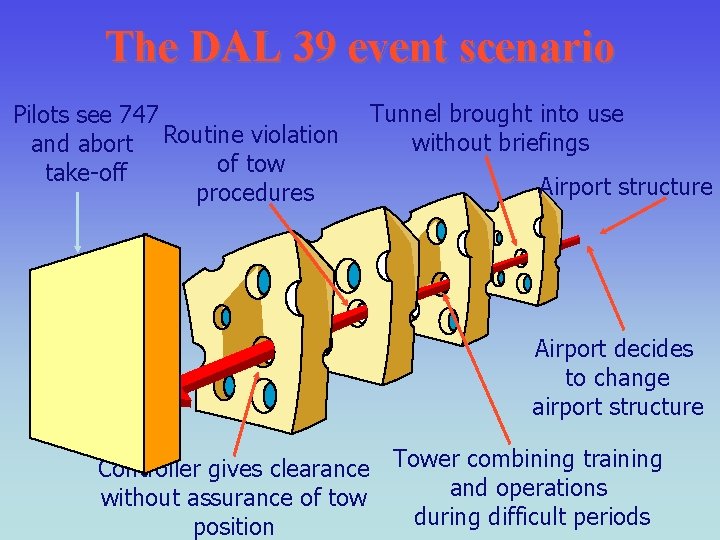
DAL 39 continued • The marshalling vehicle called in unexpectedly as Charlie-8 with a towed KLM 747 from a parking apron • Radio communications were unclear and C-8 did not state exactly where he was • C-8 was given clearance • The stopbar light control box confused everyone in the tower (it was a new addition) • The controller, thinking that the tow had crossed successfully, gave DAL 39 clearance • The DAL pilots saw the 747 and stopped in time
DAL 39 Initial Analysis • Tow failed to report exact position or destination • Tow not announced in advance (as per procedures for phase B) • Assistant ATCo believed tow from right to left (did not know that a tunnel was in use) • Controllers completely unfamiliar with new control box • Ground radar pictures set up to cover different arrival and departure runways meant tow not visible on one screen • Controller was meshing the tow between both take-offs and landings • The tow, given clearance 1 m 40 sec earlier, started off once the stopbars went out
Why did all this happen - 1? • Tow was in violation, but this appears to be routine • No clear protocols for ground vehicles and no hazard analysis • Different language for aircraft (English) and ground vehicles (Dutch) • Poor quality of ground radio • Clearances appeared to be unlimited once given • Tower supervisor was also OTJ trainer in the middle of the rush hour • Altered control box not introduced to ATC staff
Why did all this happen - 2? • No briefings about alterations at Schiphol (It has been a building site for years) • Too many trainees in the tower in rush hour under low visibility conditions • Differences in definition of low visibility between aerodrome and ATC • No management apparent of the change in use of the S-Apron • No operational audits by LVNL or Schiphol, of practice as opposed to paper • Schiphol designed requiring crossing and the use of multiple runways for noise abatement reasons
The DAL 39 event scenario Pilots see 747 and abort Routine violation of tow take-off procedures Tunnel brought into use without briefings Airport structure Airport decides to change airport structure Controller gives clearance Tower combining training and operations without assurance of tow during difficult periods position
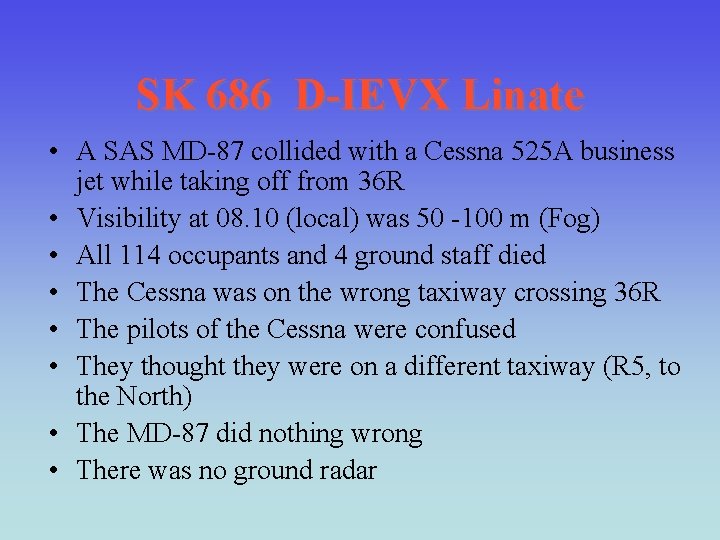
SK 686 D-IEVX Linate • A SAS MD-87 collided with a Cessna 525 A business jet while taking off from 36 R • Visibility at 08. 10 (local) was 50 -100 m (Fog) • All 114 occupants and 4 ground staff died • The Cessna was on the wrong taxiway crossing 36 R • The pilots of the Cessna were confused • They thought they were on a different taxiway (R 5, to the North) • The MD-87 did nothing wrong • There was no ground radar
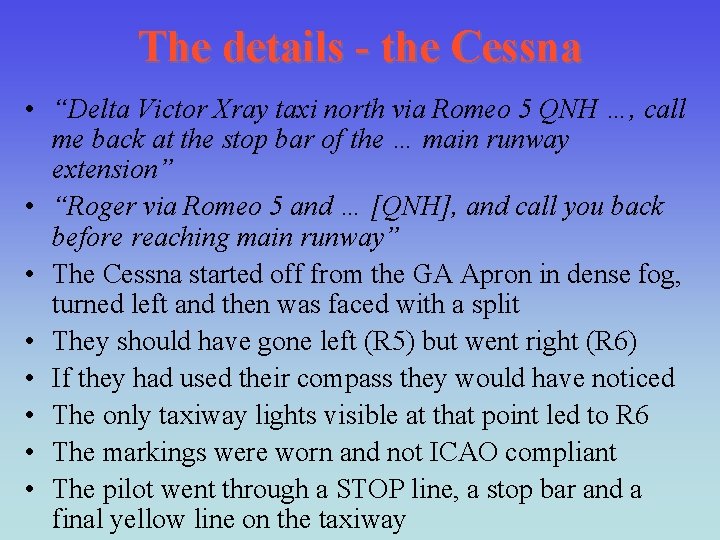
The details - the Cessna • “Delta Victor Xray taxi north via Romeo 5 QNH …, call me back at the stop bar of the … main runway extension” • “Roger via Romeo 5 and … [QNH], and call you back before reaching main runway” • The Cessna started off from the GA Apron in dense fog, turned left and then was faced with a split • They should have gone left (R 5) but went right (R 6) • If they had used their compass they would have noticed • The only taxiway lights visible at that point led to R 6 • The markings were worn and not ICAO compliant • The pilot went through a STOP line, a stop bar and a final yellow line on the taxiway
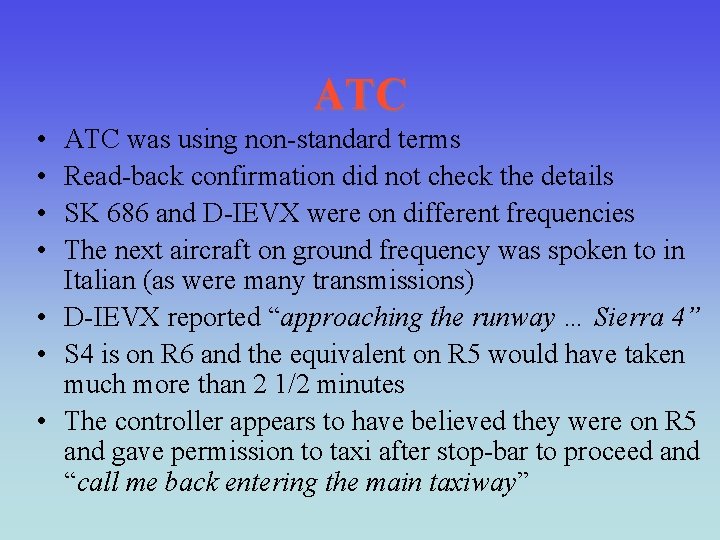
ATC • • ATC was using non-standard terms Read-back confirmation did not check the details SK 686 and D-IEVX were on different frequencies The next aircraft on ground frequency was spoken to in Italian (as were many transmissions) • D-IEVX reported “approaching the runway … Sierra 4” • S 4 is on R 6 and the equivalent on R 5 would have taken much more than 2 1/2 minutes • The controller appears to have believed they were on R 5 and gave permission to taxi after stop-bar to proceed and “call me back entering the main taxiway”
Problems with T/O Clearances • Both Taipei and Amsterdam had long-standing clearances • D-IEVX had an apparent clearance to continue taxi-ing • A 747 at Anchorage was given immediate clearance with 6 minutes taxi time and one runway crossing • Should clearances be valid for more than 15 seconds?
ICAO SARPs • ICAO sets standards for runway signage – Runway signs – Stopbars and Holding Points – Taxiway lighting • Problems with ICAO compliance at all airfields – Taipei - lights, barriers, stopbars – Amsterdam - traffic lights instead of stopbars – Linate - markings on taxiways, lighting • If these had been complied with fully would there have been any problems?
Visibility and Taxiway lighting • All these incidents occurred under poor visibility conditions • Pilots were forced to look out at where they were going • Taxiways were visually compelling and there was no visible alternative at CKS or Linate • Are airfields sufficiently well marked to be unambiguous under conditions of poor visibility?
ATC Language • Two incidents involve the use of more than one Language - not best practice • Many incidents are associated with failures to use aviation English • ATC usage is nearly, but not quite, accurate enough to prevent most incidents • Calls and read-backs are prone to confirmation bias • Would strict adherence to established protocols have prevented these incidents?
Considerations for runway safety • Initial analyses show both pilots and controllers to have been at fault - situation awareness failures • The problem was that the situation was the problem, expecting awareness is expecting too much • Deeper investigation begins to show that all cases were accidents waiting to happen • The individuals were victims of systemic failures • In no case was there any effective safety management as expected in other high hazard industries • Few (if any) extra technical solutions would have been necessary if what should have been done was done
Conclusion • • Runway incursions appear to be due to individual errors Those individual errors are caused by system weaknesses Most major incidents have minor precursors Technical improvements may reduce low potential incidents - but these incidents would have been easily prevented by doing what already should have been done • Most problems can be avoided by application of safety management principles (c. f. ICAO Annexes 11 & 14) – – Risk assessment Audit programs Reporting systems Continuous improvement learning from errors