
HUMAN EVOLUTION GENUS HOMO TimeLine of Hominid Evolution
- Slides: 53
HUMAN EVOLUTION: GENUS HOMO
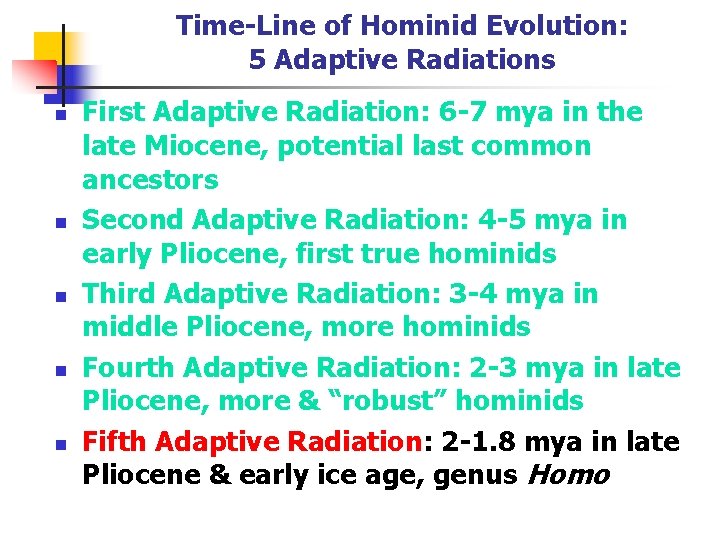
Time-Line of Hominid Evolution: 5 Adaptive Radiations n n n First Adaptive Radiation: 6 -7 mya in the late Miocene, potential last common ancestors Second Adaptive Radiation: 4 -5 mya in early Pliocene, first true hominids Third Adaptive Radiation: 3 -4 mya in middle Pliocene, more hominids Fourth Adaptive Radiation: 2 -3 mya in late Pliocene, more & “robust” hominids Fifth Adaptive Radiation: 2 -1. 8 mya in late Pliocene & early ice age, genus Homo
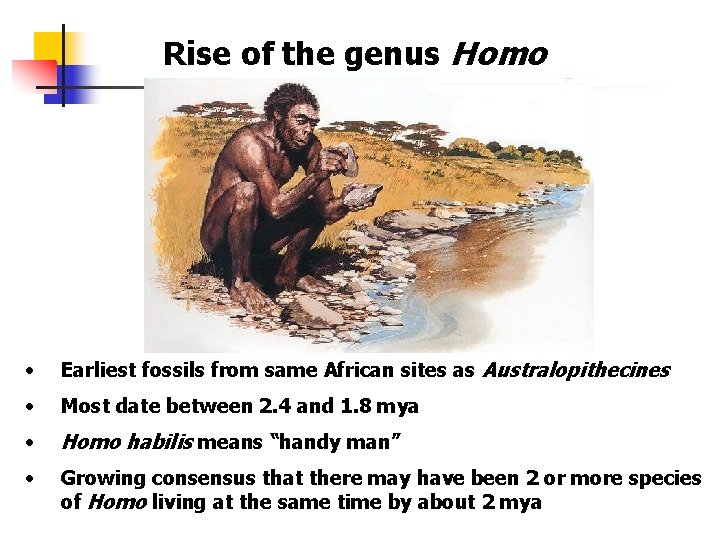
Rise of the genus Homo • Earliest fossils from same African sites as Australopithecines • Most date between 2. 4 and 1. 8 mya • Homo habilis means “handy man” • Growing consensus that there may have been 2 or more species of Homo living at the same time by about 2 mya
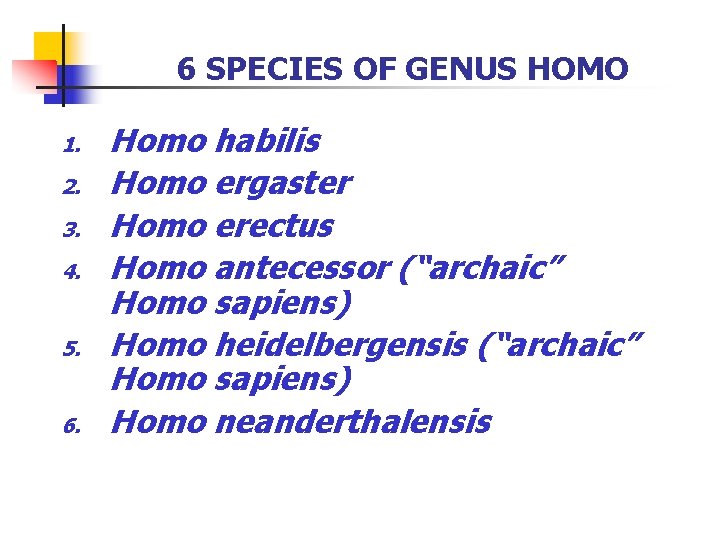
6 SPECIES OF GENUS HOMO 1. 2. 3. 4. 5. 6. Homo habilis Homo ergaster Homo erectus Homo antecessor (“archaic” Homo sapiens) Homo heidelbergensis (“archaic” Homo sapiens) Homo neanderthalensis
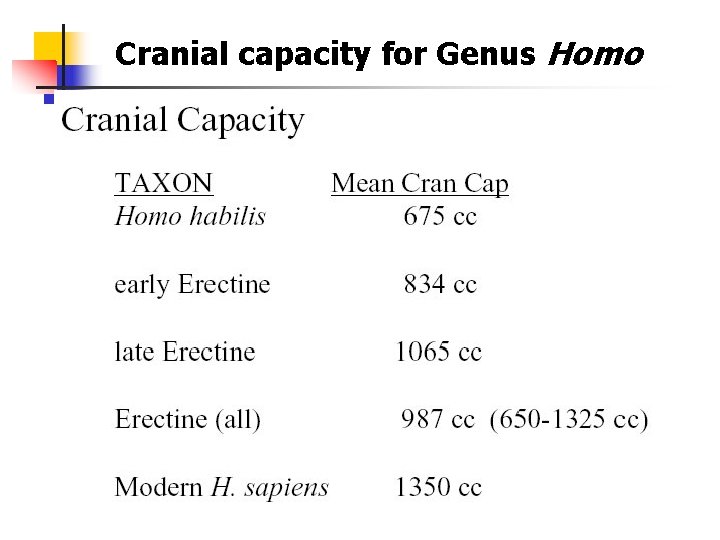
Cranial capacity for Genus Homo
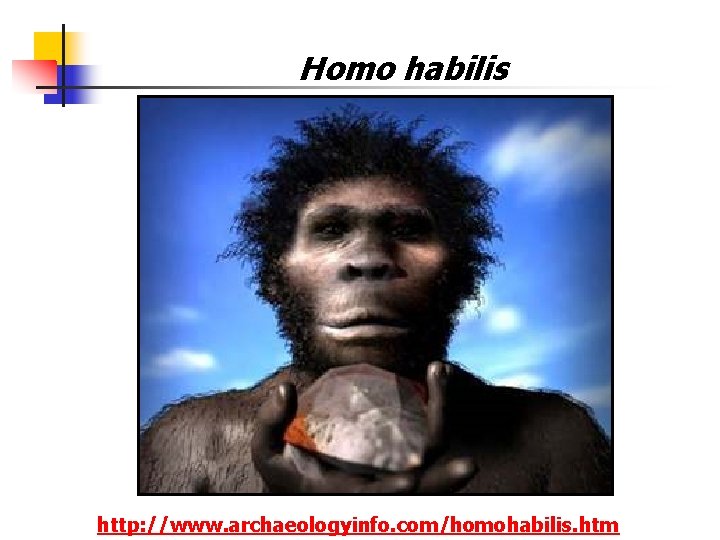
Homo habilis http: //www. archaeologyinfo. com/homohabilis. htm
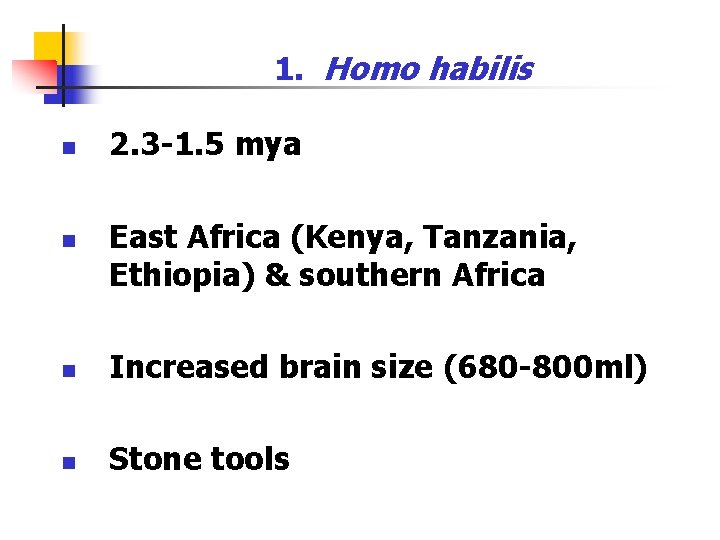
1. Homo habilis n n 2. 3 -1. 5 mya East Africa (Kenya, Tanzania, Ethiopia) & southern Africa n Increased brain size (680 -800 ml) n Stone tools
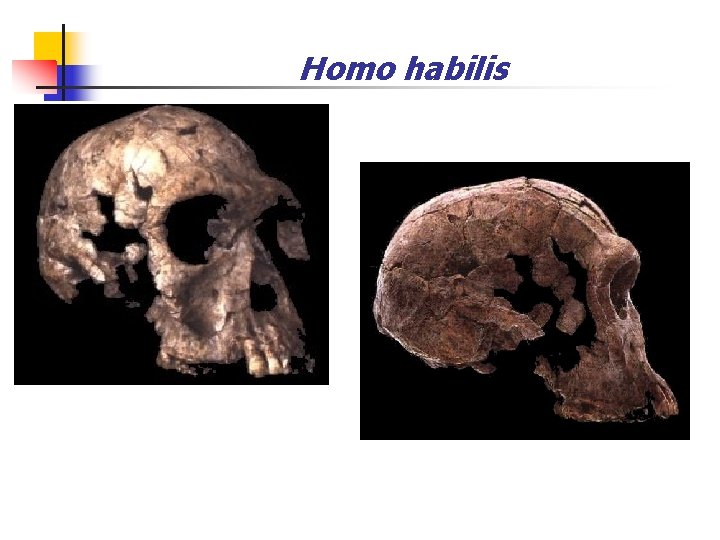
Homo habilis
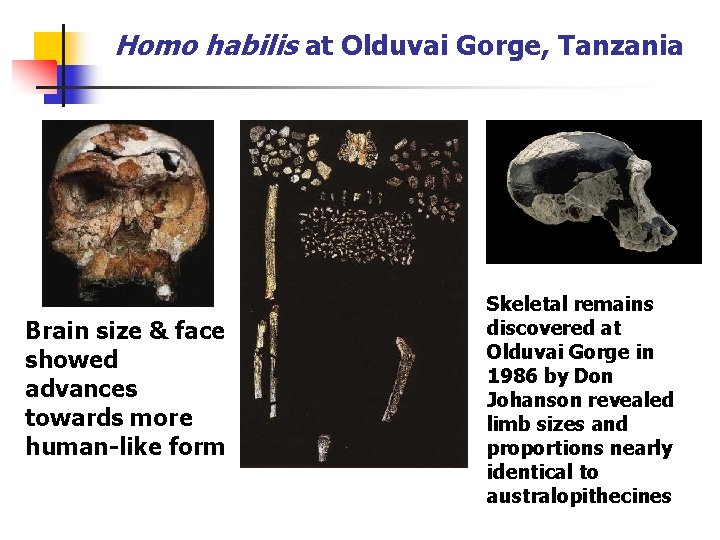
Homo habilis at Olduvai Gorge, Tanzania Brain size & face showed advances towards more human-like form Skeletal remains discovered at Olduvai Gorge in 1986 by Don Johanson revealed limb sizes and proportions nearly identical to australopithecines
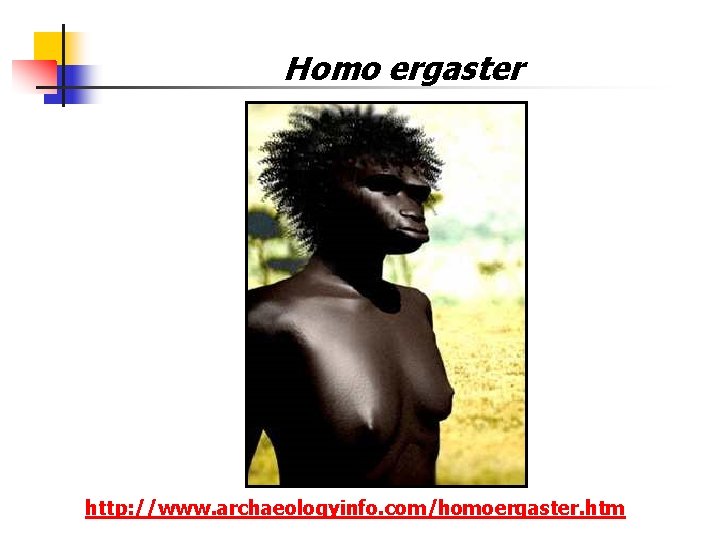
Homo ergaster http: //www. archaeologyinfo. com/homoergaster. htm
2. Homo ergaster n 1. 8 -1. 6 mya n Lake Turkana, Kenya n Increased Brain Size (800 -880 ml) n Thinner Skull with smaller facial bones (than Homo erectus)
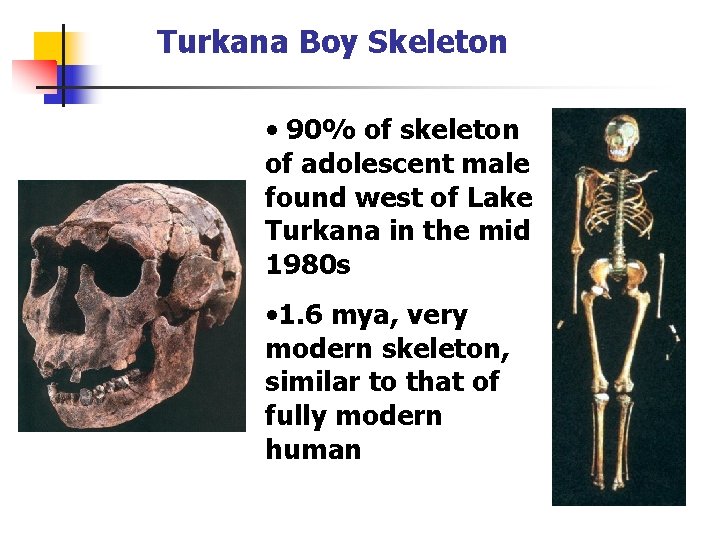
Turkana Boy Skeleton • 90% of skeleton of adolescent male found west of Lake Turkana in the mid 1980 s • 1. 6 mya, very modern skeleton, similar to that of fully modern human
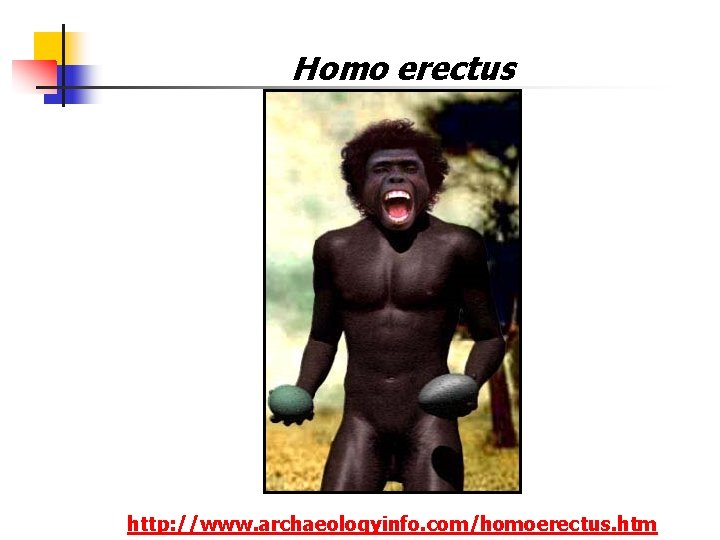
Homo erectus http: //www. archaeologyinfo. com/homoerectus. htm
3. Homo erectus n n 1. 8 mya – 33, 000 ya First hominid to migrate out of Africa! Africa, then Russia, China, Java, Italy, etc. (p. 270 -71) 50% increased brain size (900 -1600 ml) Fire, clothing, shelters, cooking
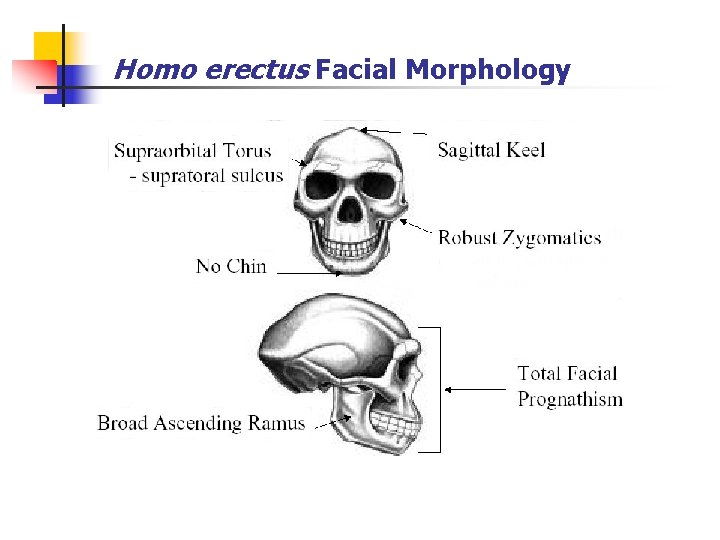
Homo erectus Facial Morphology
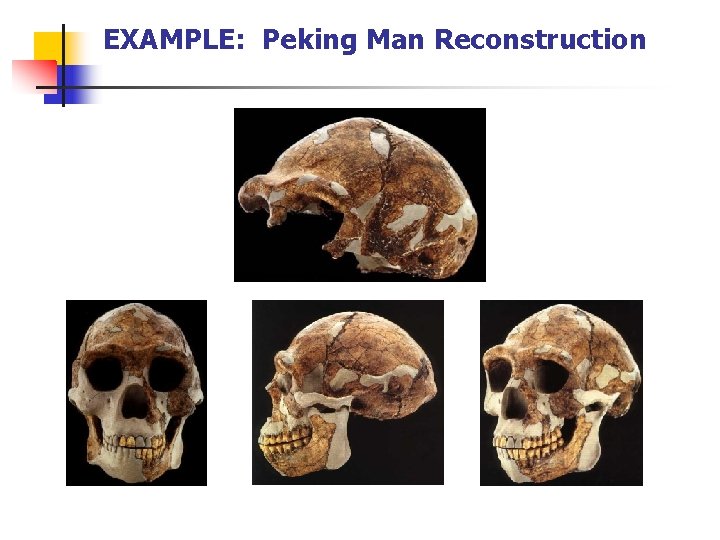
EXAMPLE: Peking Man Reconstruction
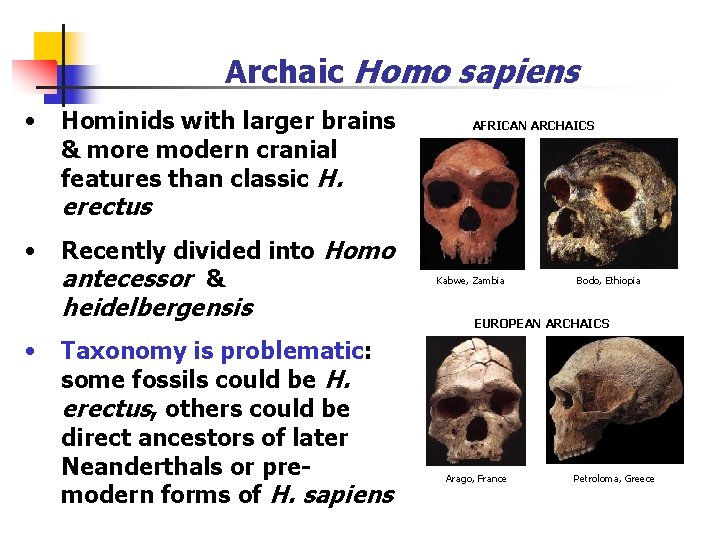
Archaic Homo sapiens • Hominids with larger brains & more modern cranial features than classic H. AFRICAN ARCHAICS erectus • Recently divided into Homo antecessor & heidelbergensis • Taxonomy is problematic: some fossils could be H. erectus, others could be direct ancestors of later Neanderthals or premodern forms of H. sapiens Kabwe, Zambia Bodo, Ethiopia EUROPEAN ARCHAICS Arago, France Petroloma, Greece
4. Homo antecessor n n 780, 000 ya Gran Dolina, Spain (oldest fossil humans in EU!) Increased Brain Size (1000 ml) Direct ancestor of H. heidelbergensis & H. neanderthalensis (? )
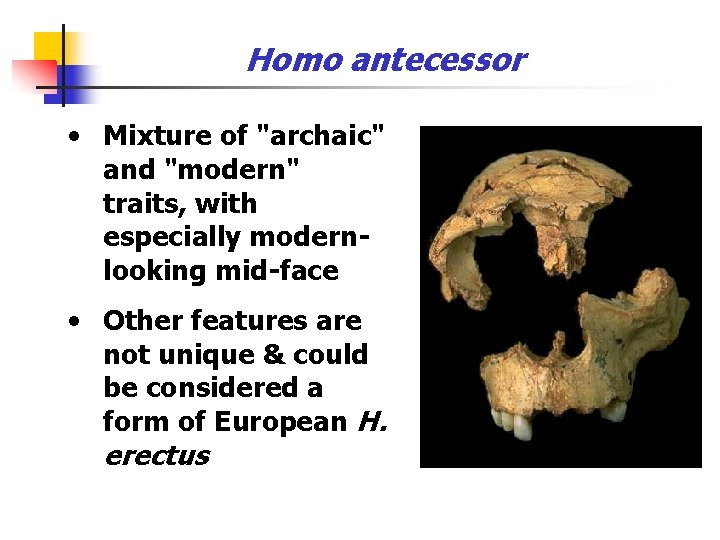
Homo antecessor • Mixture of "archaic" and "modern" traits, with especially modernlooking mid-face • Other features are not unique & could be considered a form of European H. erectus
5. Homo heidelbergensis n n 130, 000 ya – 700, 000 ya Germany, China, Ethiopia, Greece, Hungary, Zambia, etc. (p. 289) Increased Brain Size (1000 -1400 ml) “Prepared Core” tools, wooden spears, dealt with changing environments
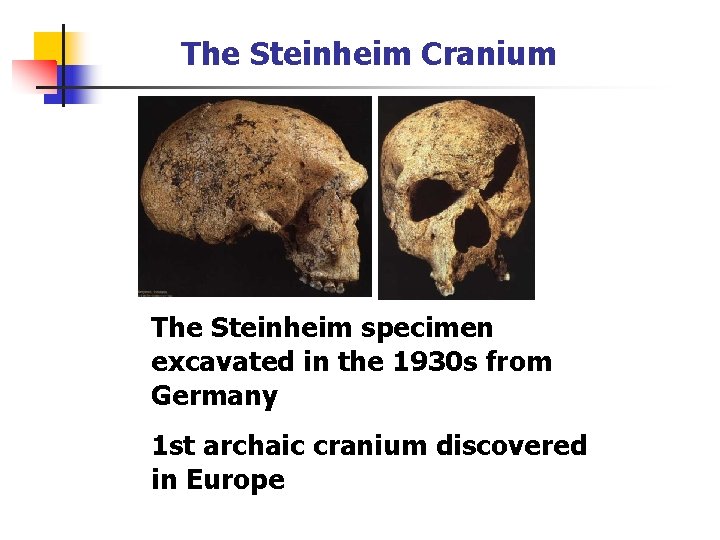
The Steinheim Cranium The Steinheim specimen excavated in the 1930 s from Germany 1 st archaic cranium discovered in Europe
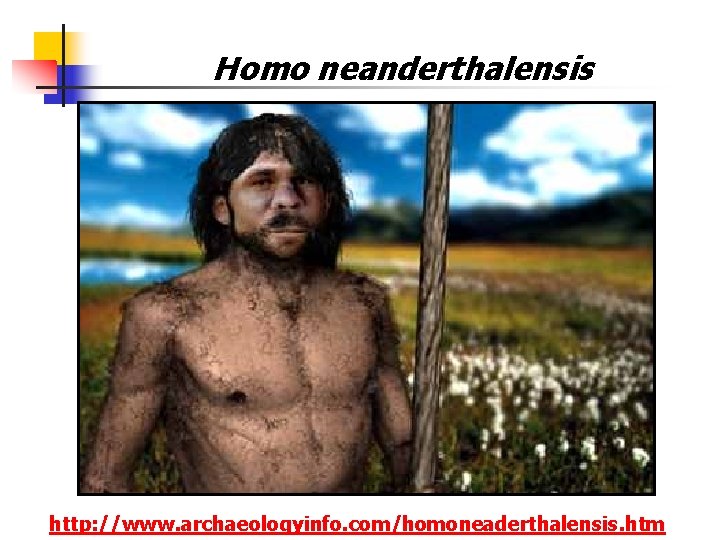
Homo neanderthalensis http: //www. archaeologyinfo. com/homoneaderthalensis. htm
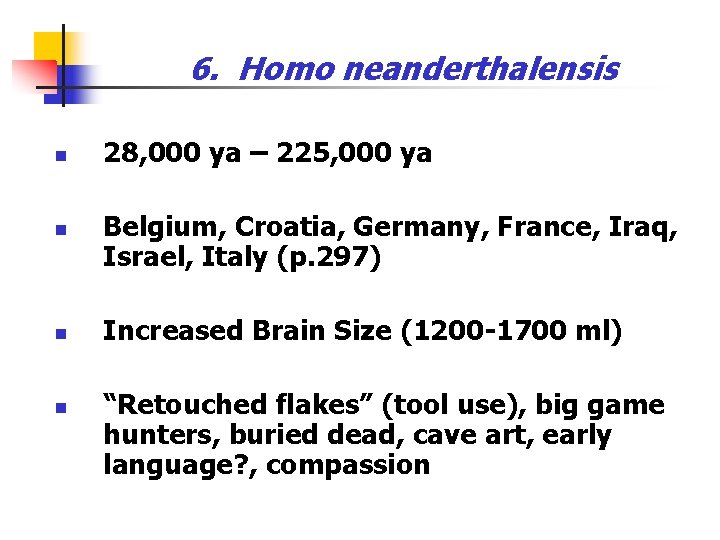
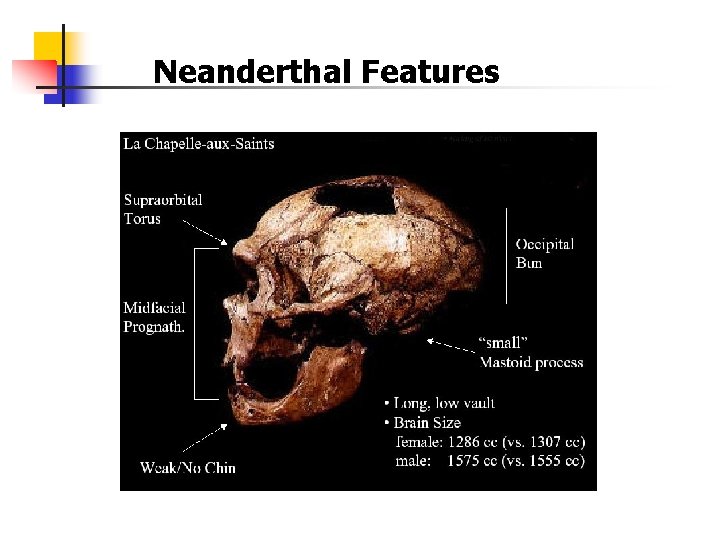
6. Homo neanderthalensis n n 28, 000 ya – 225, 000 ya Belgium, Croatia, Germany, France, Iraq, Israel, Italy (p. 297) Increased Brain Size (1200 -1700 ml) “Retouched flakes” (tool use), big game hunters, buried dead, cave art, early language? , compassion
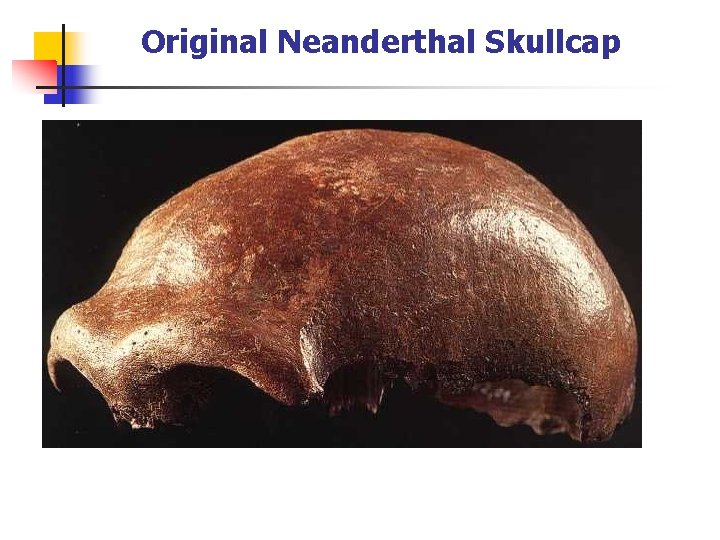
Original Neanderthal Skullcap
Neanderthal Features
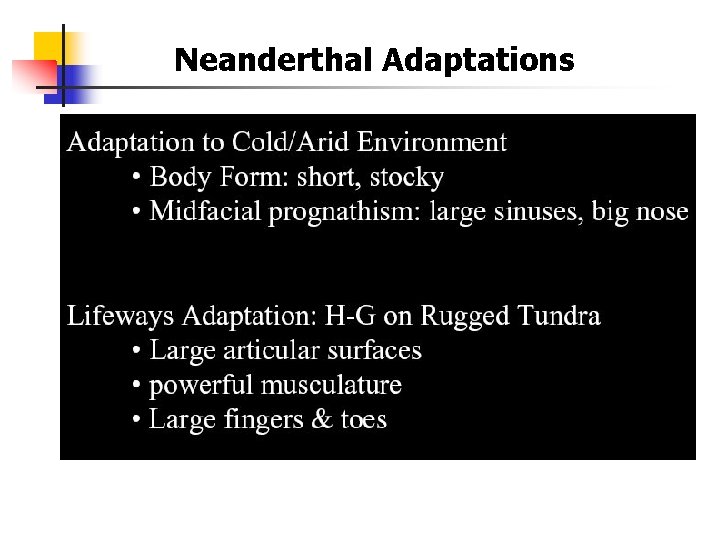
Neanderthal Adaptations
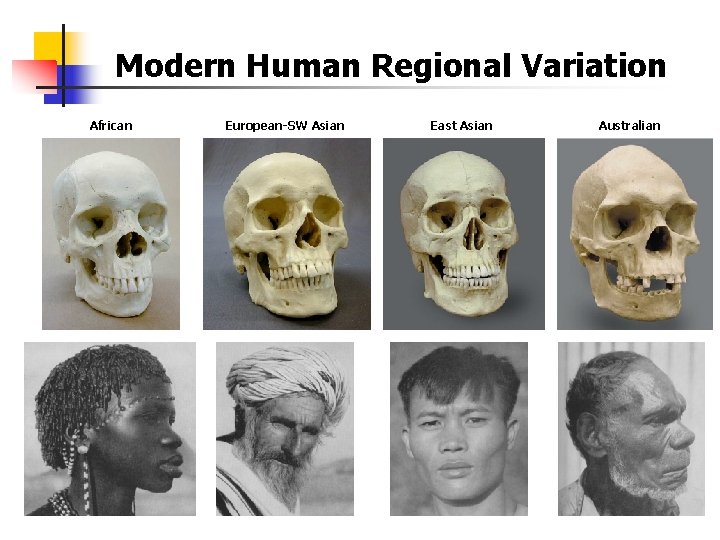
Modern Human Regional Variation African European-SW Asian East Asian Australian
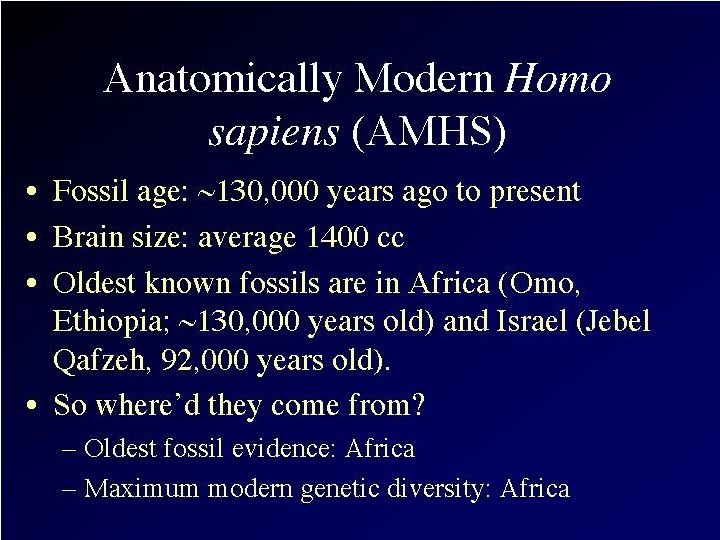
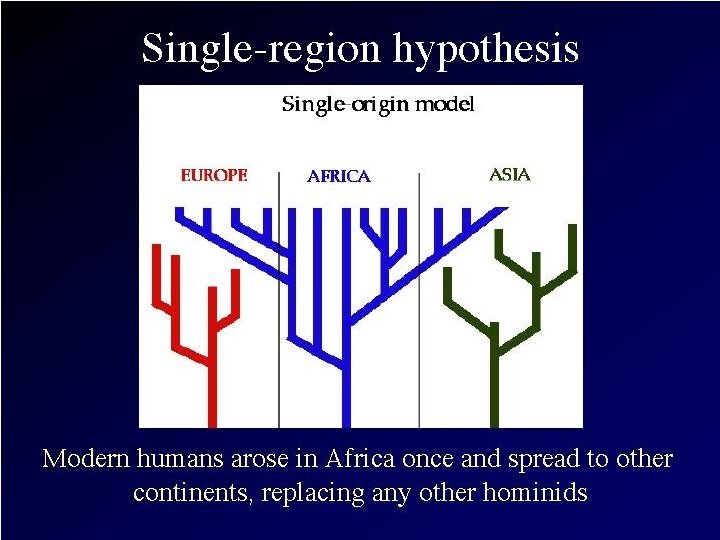
n n n Out of Africa (Single Region) About 130, 000 years ago, the first anatomically modern Homo sapiens evolved in East Africa (probably from H. erectus) then migrated out of Africa to Europe, Asia, and the rest of the world. At this point, H. sapiens may have interbred with or out-competed other existing species, such as H. erectus and H. neanderthalensis.
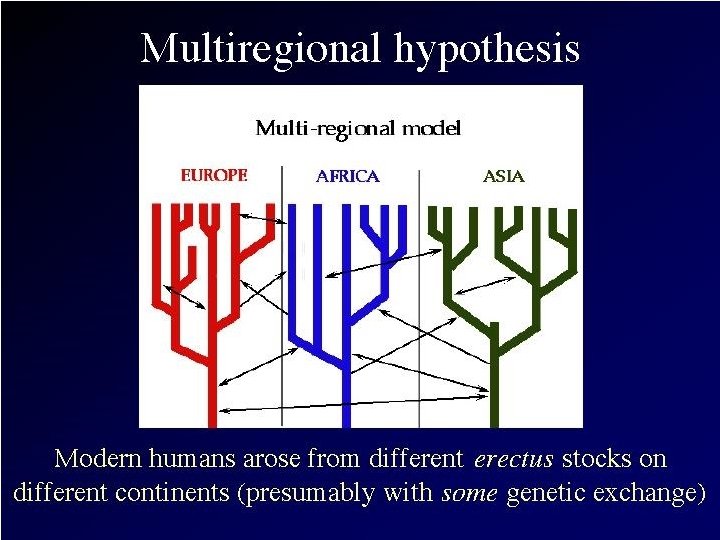
Multiregional Hypothesis n n n 1. 8 mya, Homo erectus evolved in East Africa and then began to migrate to Europe and Asia (due to lack of water and shelter) A very successful species, H. erectus survived until 33, 000 years ago! So…the Multiregional hypothesis argues that modern H. sapiens evolved from the different H. erectus stocks in different regions (continents) at the same time. After H. sapiens evolved in these different regions, may have been interbreeding, thus sharing of genes.
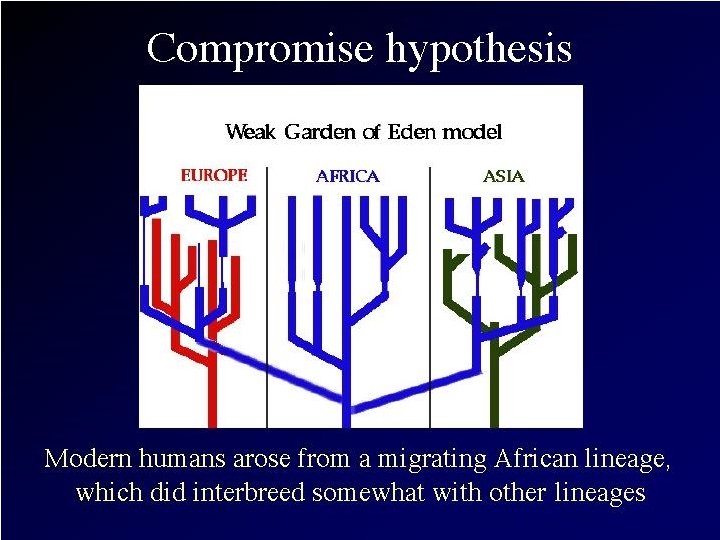
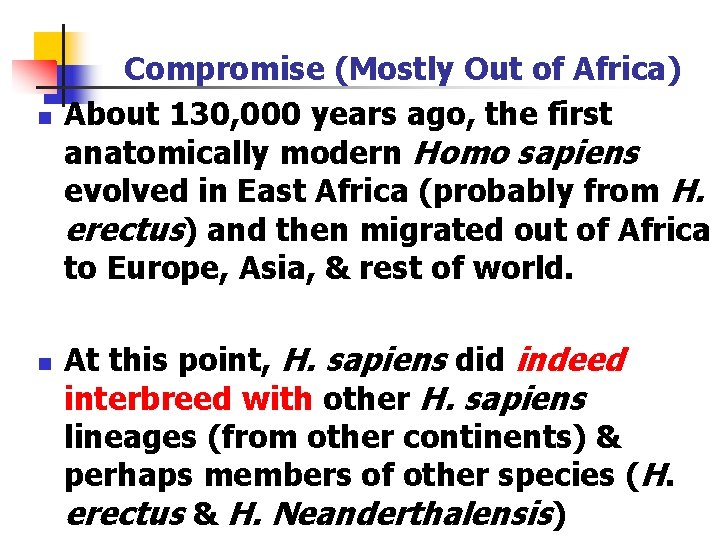
n n Compromise (Mostly Out of Africa) About 130, 000 years ago, the first anatomically modern Homo sapiens evolved in East Africa (probably from H. erectus) and then migrated out of Africa to Europe, Asia, & rest of world. At this point, H. sapiens did indeed interbreed with other H. sapiens lineages (from other continents) & perhaps members of other species (H. erectus & H. Neanderthalensis)
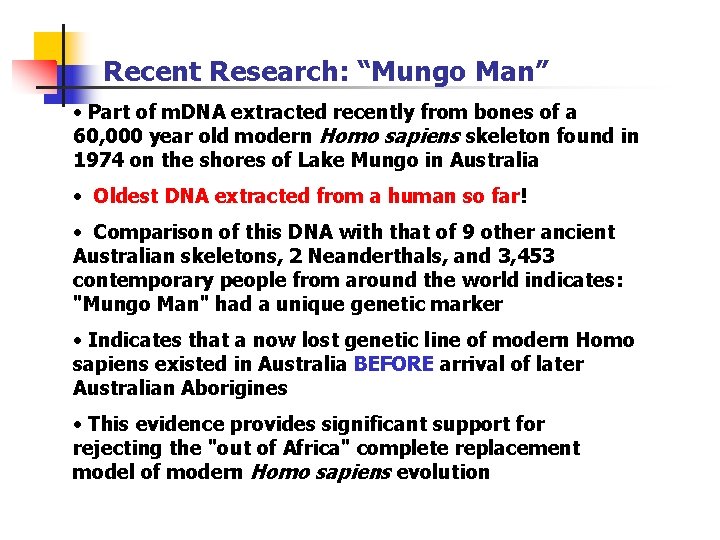
Recent Research: “Mungo Man” • Part of m. DNA extracted recently from bones of a 60, 000 year old modern Homo sapiens skeleton found in 1974 on the shores of Lake Mungo in Australia • Oldest DNA extracted from a human so far! • Comparison of this DNA with that of 9 other ancient Australian skeletons, 2 Neanderthals, and 3, 453 contemporary people from around the world indicates: "Mungo Man" had a unique genetic marker • Indicates that a now lost genetic line of modern Homo sapiens existed in Australia BEFORE arrival of later Australian Aborigines • This evidence provides significant support for rejecting the "out of Africa" complete replacement model of modern Homo sapiens evolution