
Human Disruption of the Global Nitrogen Cycle Alan
Human Disruption of the Global Nitrogen Cycle Alan Townsend 7 December 2007 Guest Lecture – Soils Geography University of Colorado, Boulder
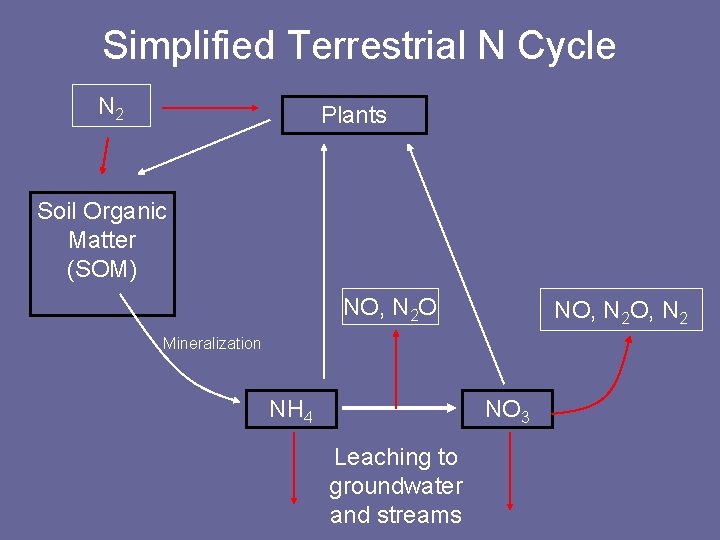
Simplified Terrestrial N Cycle N 2 Plants Soil Organic Matter (SOM) NO, N 2 O, N 2 Mineralization NH 4 NO 3 Leaching to groundwater and streams

Simplified Global N Cycle
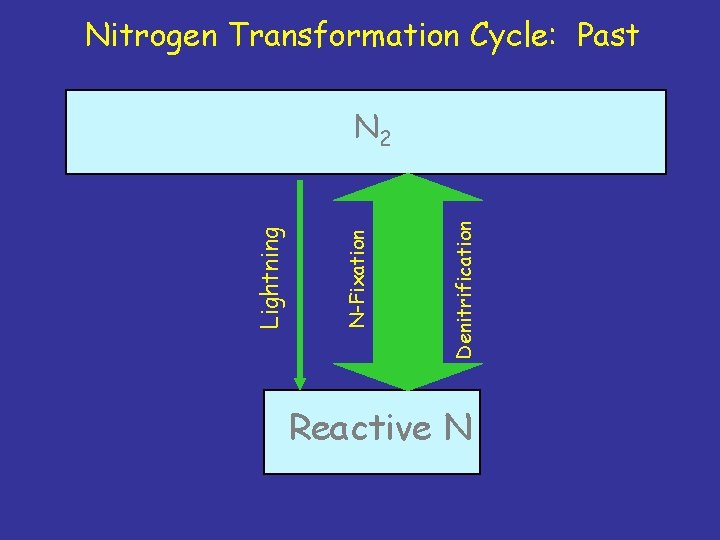
Nitrogen Transformation Cycle: Past Denitrification N-Fixation Lightning N 2 Reactive N
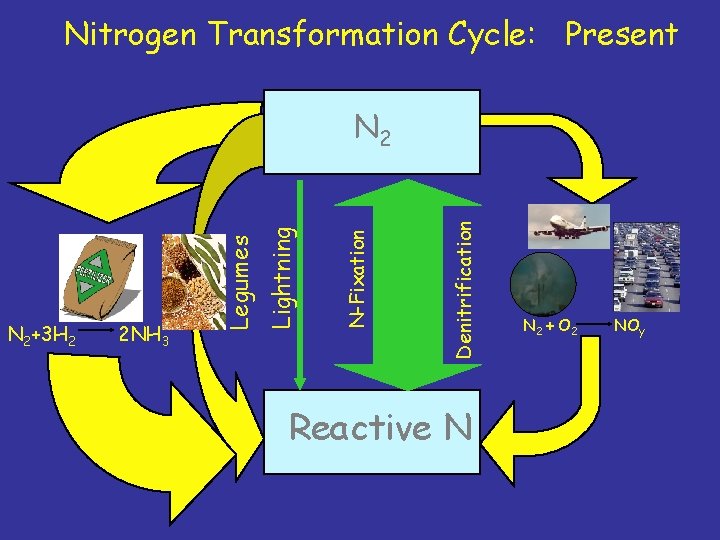
Nitrogen Transformation Cycle: Present Denitrification N-Fixation 2 NH 3 Lightning N 2+3 H 2 Legumes N 2 Reactive N N 2 + O 2 NOy
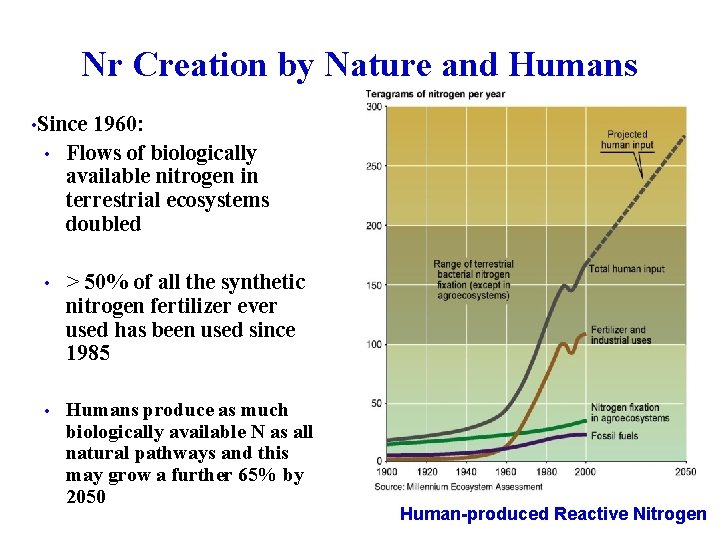
Nr Creation by Nature and Humans • Since 1960: • Flows of biologically available nitrogen in terrestrial ecosystems doubled • > 50% of all the synthetic nitrogen fertilizer ever used has been used since 1985 • Humans produce as much biologically available N as all natural pathways and this may grow a further 65% by 2050 Human-produced Reactive Nitrogen
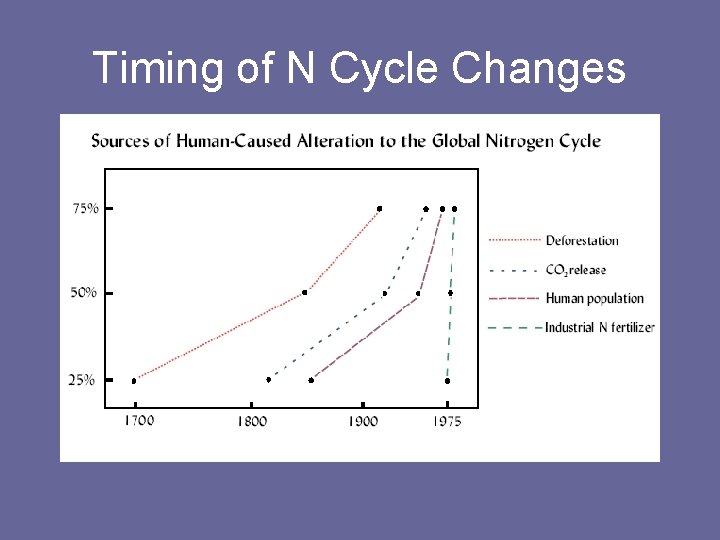
Timing of N Cycle Changes
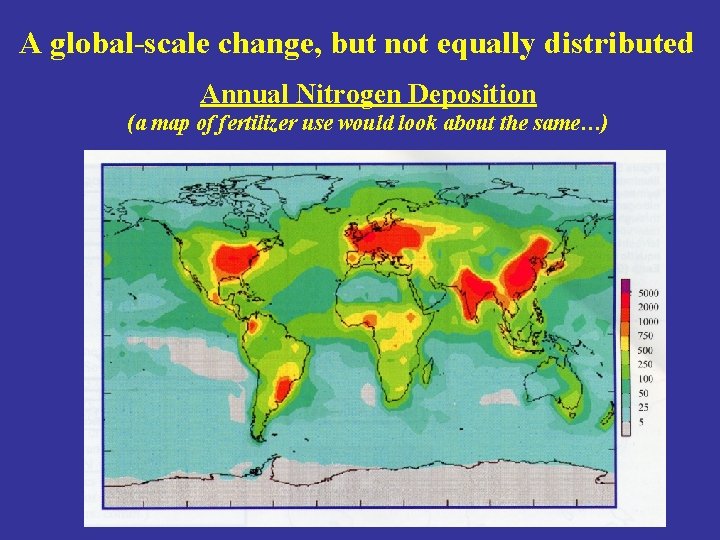
A global-scale change, but not equally distributed Annual Nitrogen Deposition (a map of fertilizer use would look about the same…)
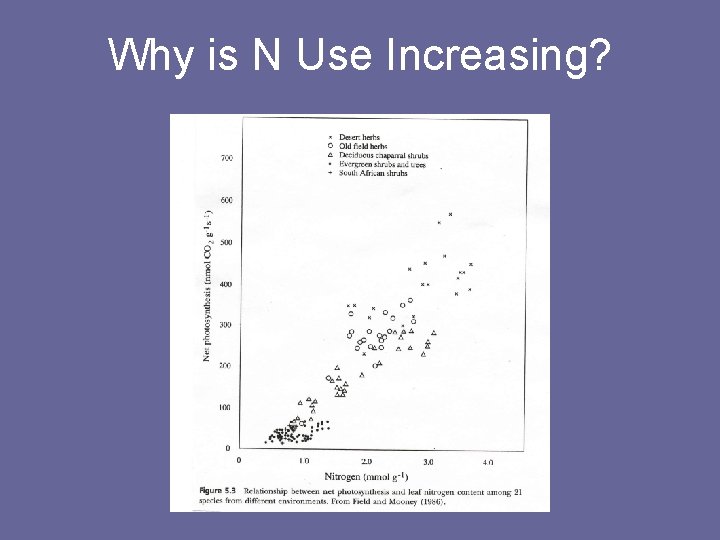
Why is N Use Increasing?
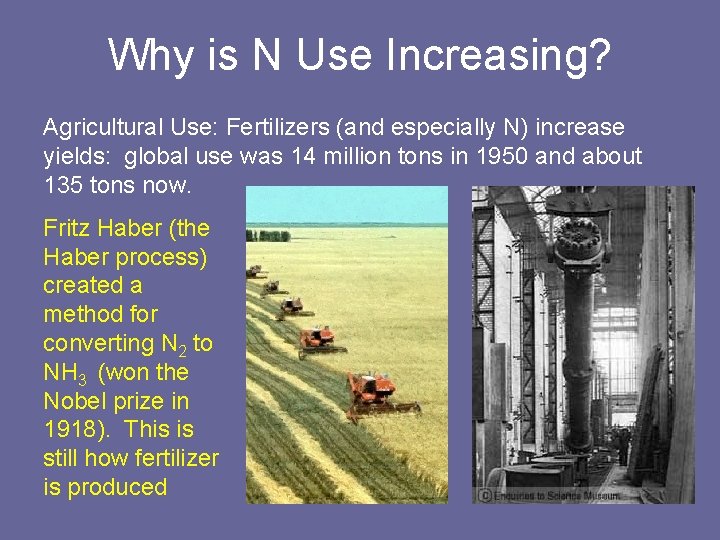
Why is N Use Increasing? Agricultural Use: Fertilizers (and especially N) increase yields: global use was 14 million tons in 1950 and about 135 tons now. Fritz Haber (the Haber process) created a method for converting N 2 to NH 3 (won the Nobel prize in 1918). This is still how fertilizer is produced
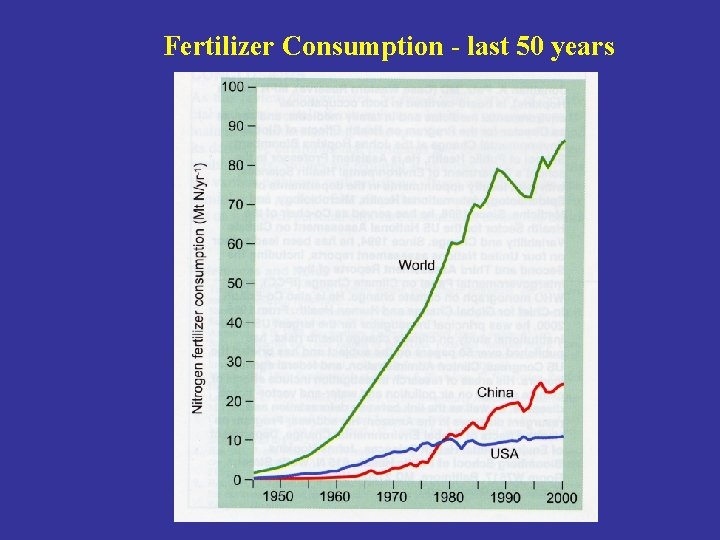
Fertilizer Consumption - last 50 years
N and Agricultural Ecosystems • Haber-Bosch has facilitated agricultural intensification • 40% of world’s population is alive because of it • An additional 3 billion people by 2050 will be sustained by it • Most N that enters agroecosystems is released to the environment
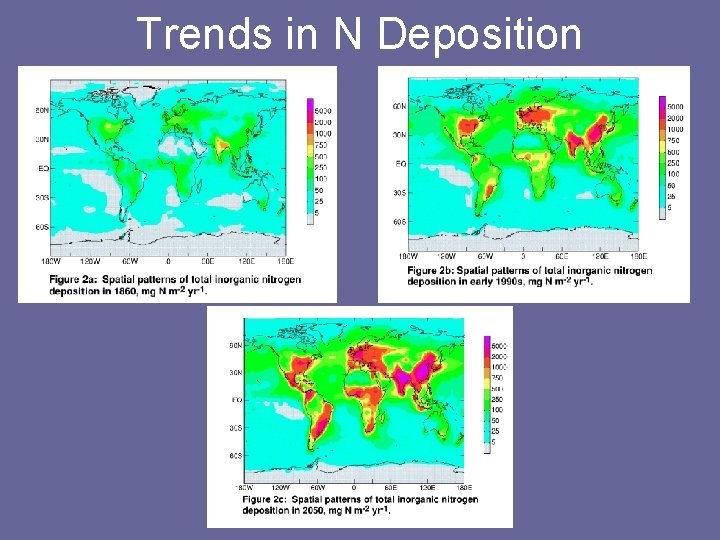
Trends in N Deposition
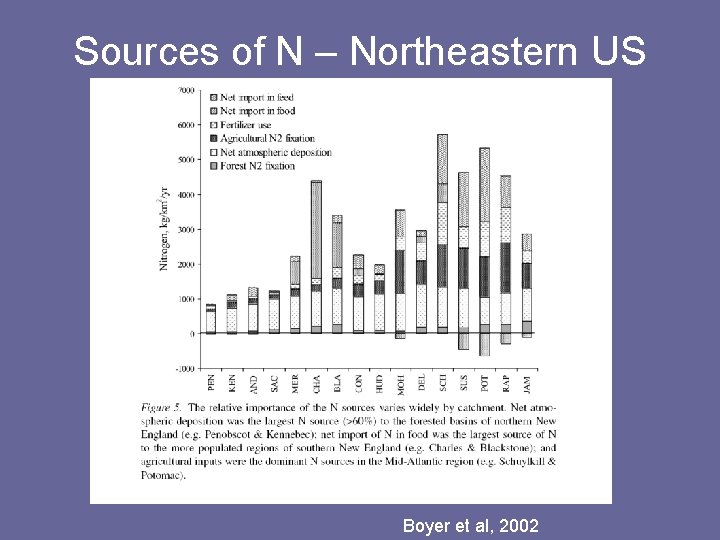
Sources of N – Northeastern US Boyer et al, 2002
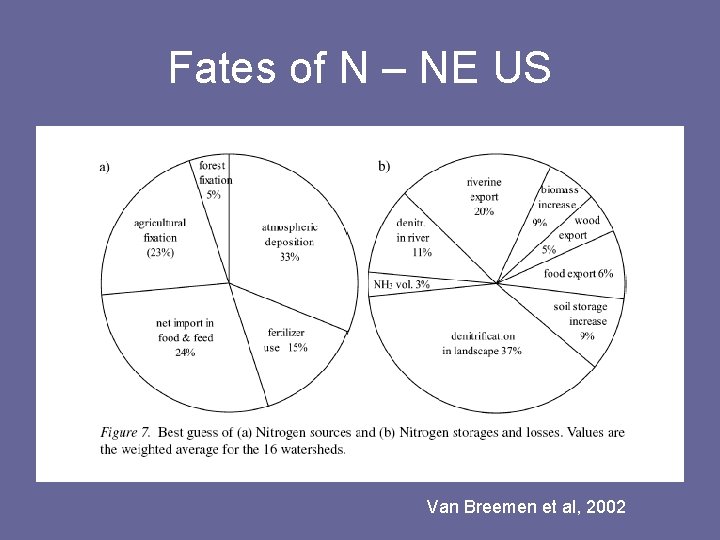
Fates of N – NE US Van Breemen et al, 2002
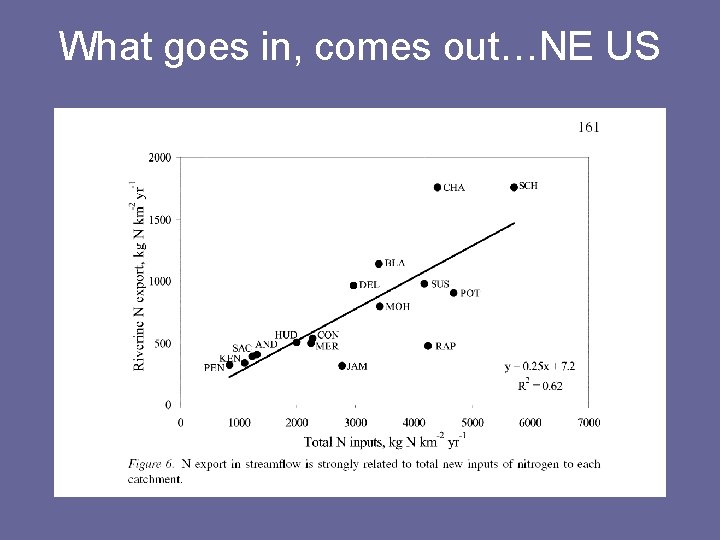
What goes in, comes out…NE US
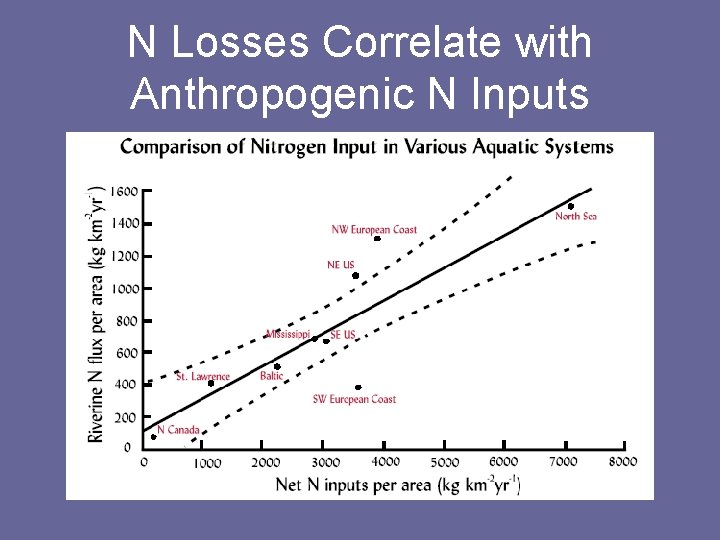
N Losses Correlate with Anthropogenic N Inputs
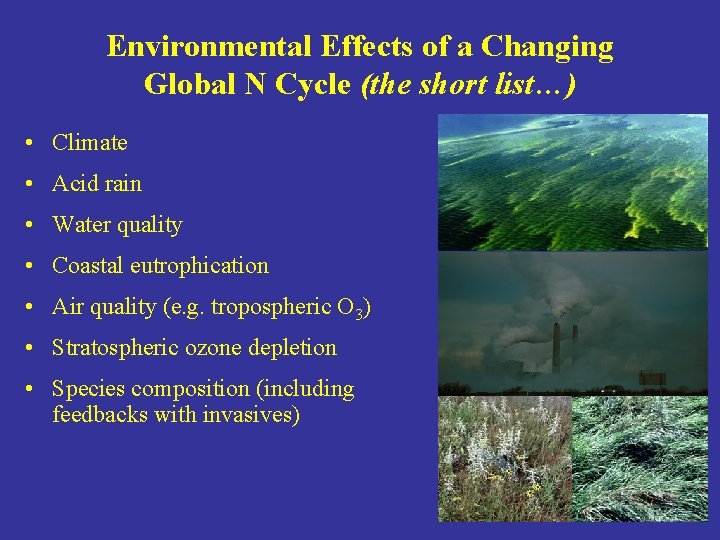
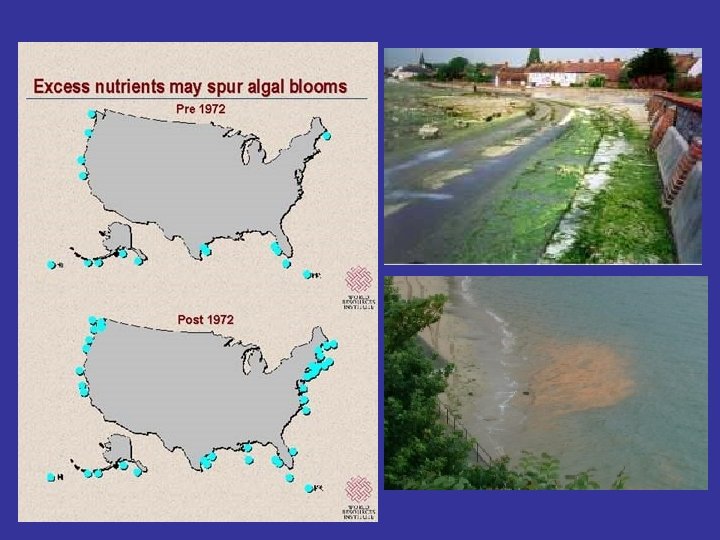
Environmental Effects of a Changing Global N Cycle (the short list…) • Climate • Acid rain • Water quality • Coastal eutrophication • Air quality (e. g. tropospheric O 3) • Stratospheric ozone depletion • Species composition (including feedbacks with invasives)
Stevens et al, Science 2004
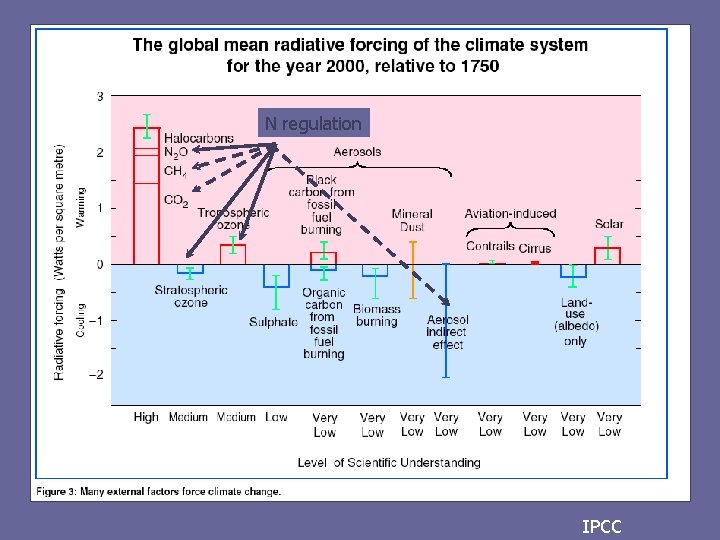
N regulation IPCC
- Slides: 21