
Human Dimensions of Organizations FLOURISHING IN THE WORKPLACE















- Slides: 73
Human Dimensions of Organizations FLOURISHING IN THE WORKPLACE Caryn L. Carlson, Ph. D. Department of Psychology Mathematics hdo. utexas. edu Michael Starbird, Ph. D. Department of March 27, 2015
Your challenges This seminar aims to help you meet challenges in your work life. To help make the material more relevant to you, think of one or two problems or challenges you are facing. You will hear about strategies that may help you to address them effectively.
“What makes you so special? ”
Outline A Positive Psychology perspective Happiness is Good Happiness Can Be Increased �Identifying and using character strengths �Encouraging flow �Increasing positive emotion �Developing strengths of effective thinking
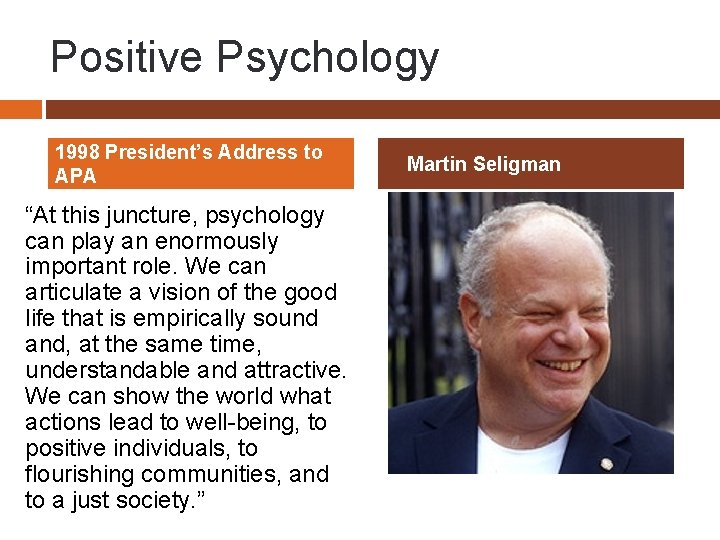
Positive Psychology 1998 President’s Address to APA “At this juncture, psychology can play an enormously important role. We can articulate a vision of the good life that is empirically sound and, at the same time, understandable and attractive. We can show the world what actions lead to well-being, to positive individuals, to flourishing communities, and to a just society. ” Martin Seligman
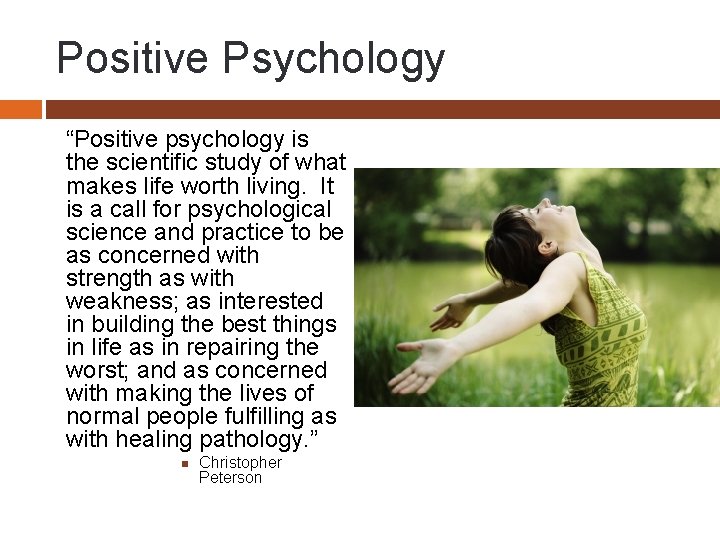
Positive Psychology “Positive psychology is the scientific study of what makes life worth living. It is a call for psychological science and practice to be as concerned with strength as with weakness; as interested in building the best things in life as in repairing the worst; and as concerned with making the lives of normal people fulfilling as with healing pathology. ” Christopher Peterson
Is Happiness Good?
Is Happiness Good? Studies show that happiness is related to: � Better social relationships � Better health/aging � Higher likeability and cooperation � More prosocial behavior (e. g. , volunteering) � Enhanced creativity and problem-solving � Better work performance
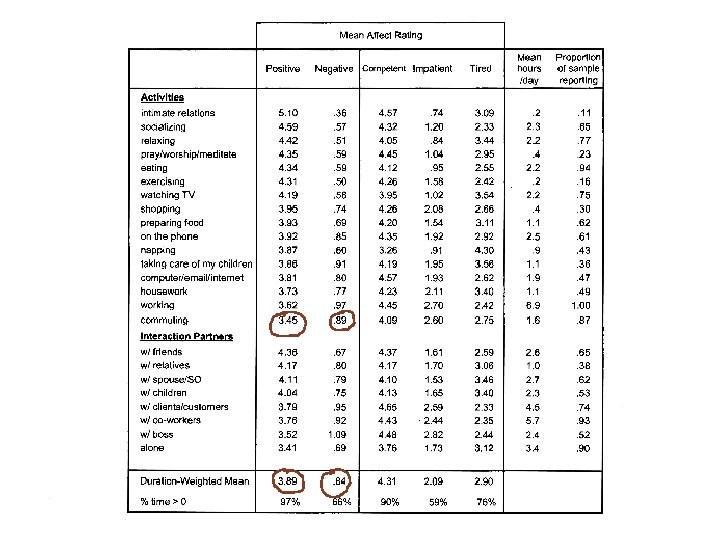
Happiness in the Workplace Quality of work affects general well-being and daily moods Perception of the work situation affects important health outcomes including coronary heart disease (after controlling for multiple other factors, i. e. , prior medical history, etc. ) See Harter et al. , (2010)
Happiness in the workplace Perceptions of work explain important organizational outcomes (e. g. , Warr, 1999) � Withdrawal behaviors (turnover, absenteeism, accidents) � Proactive behaviors (productivity, customer service, work quality) � “Bottom line” measures (customer loyalty, financial performance) (e. g. , Harter et al. , 2010). Managers play an important role in creating an environment that facilitates engaging conditions
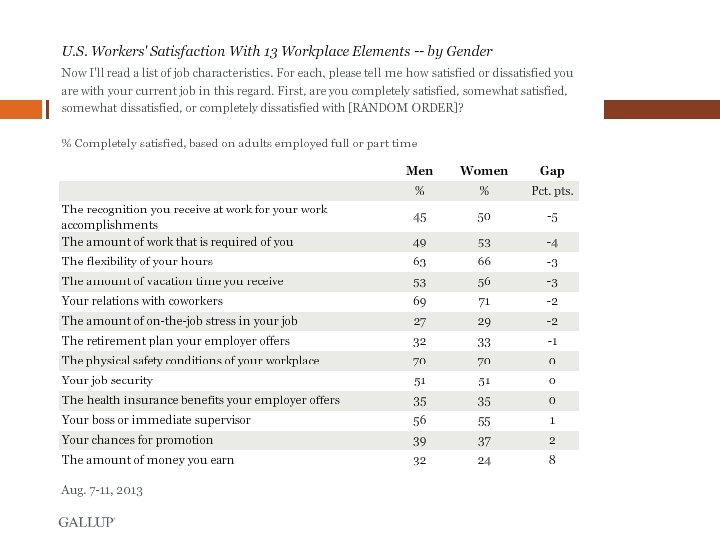
How happy are Americans at work?
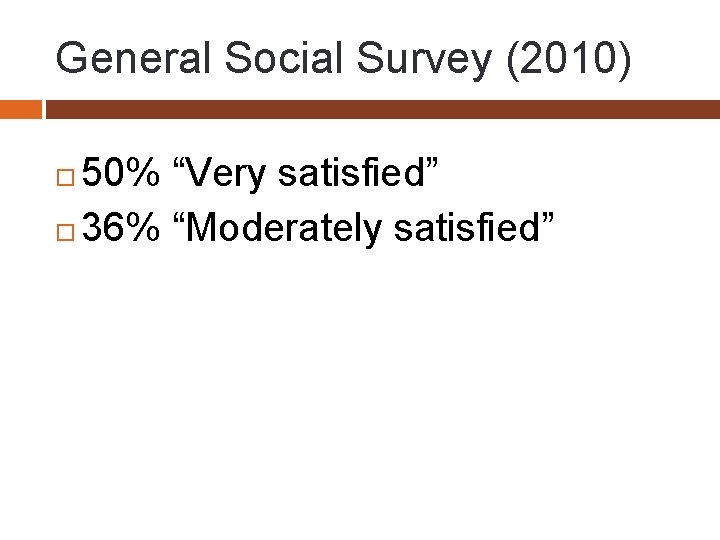
General Social Survey (2010) 50% “Very satisfied” 36% “Moderately satisfied”
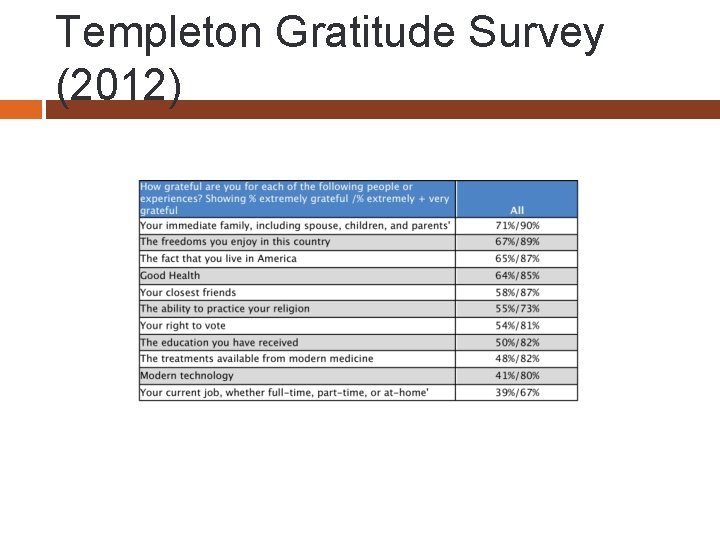
Templeton Gratitude Survey (2012)
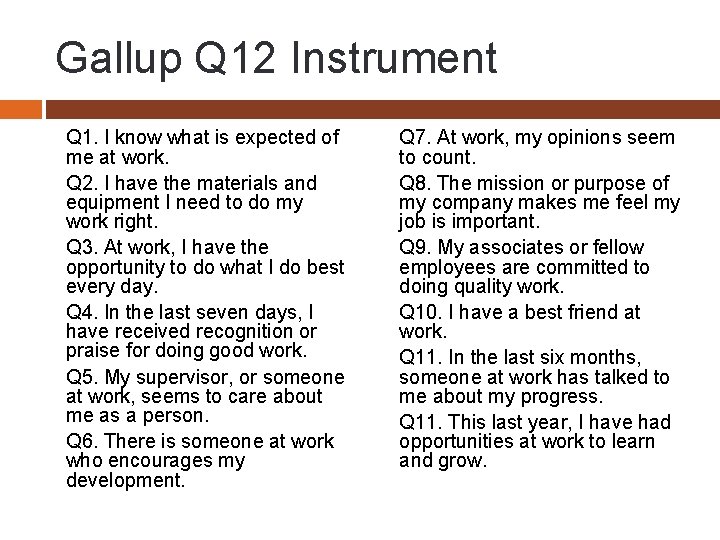
Gallup Q 12 Instrument Q 1. I know what is expected of me at work. Q 2. I have the materials and equipment I need to do my work right. Q 3. At work, I have the opportunity to do what I do best every day. Q 4. In the last seven days, I have received recognition or praise for doing good work. Q 5. My supervisor, or someone at work, seems to care about me as a person. Q 6. There is someone at work who encourages my development. Q 7. At work, my opinions seem to count. Q 8. The mission or purpose of my company makes me feel my job is important. Q 9. My associates or fellow employees are committed to doing quality work. Q 10. I have a best friend at work. Q 11. In the last six months, someone at work has talked to me about my progress. Q 11. This last year, I have had opportunities at work to learn and grow.
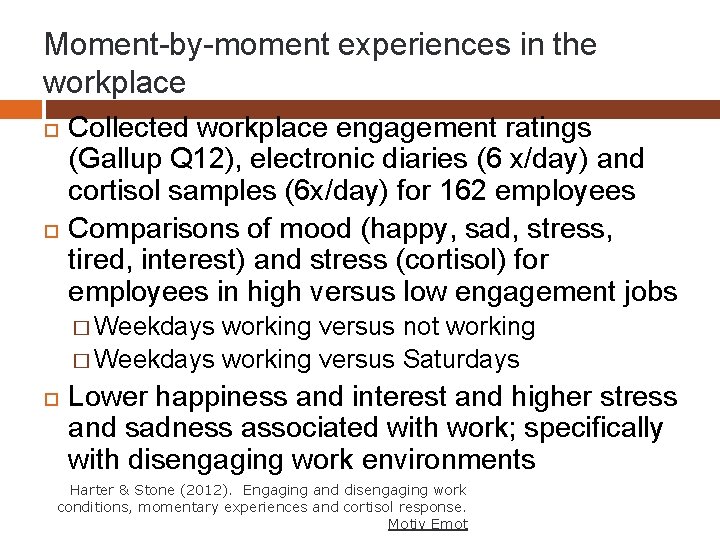
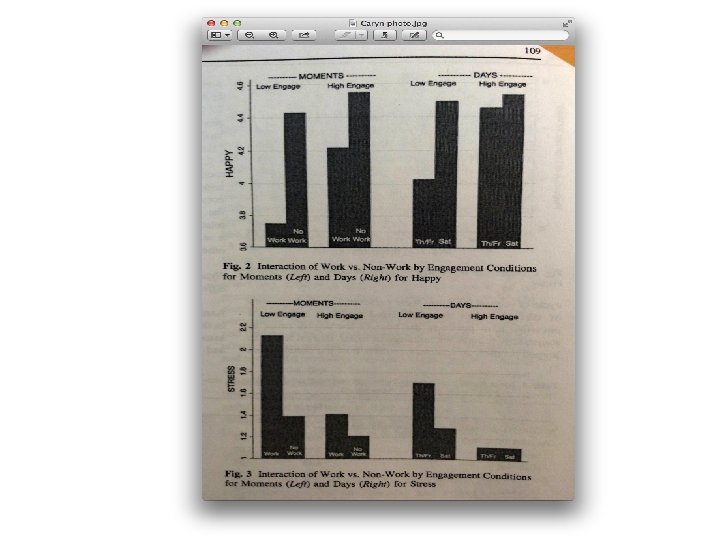
Moment-by-moment experiences in the workplace Collected workplace engagement ratings (Gallup Q 12), electronic diaries (6 x/day) and cortisol samples (6 x/day) for 162 employees Comparisons of mood (happy, sad, stress, tired, interest) and stress (cortisol) for employees in high versus low engagement jobs � Weekdays working versus not working � Weekdays working versus Saturdays Lower happiness and interest and higher stress and sadness associated with work; specifically with disengaging work environments Harter & Stone (2012). Engaging and disengaging work conditions, momentary experiences and cortisol response. Motiv Emot
Employee Engagement Engaged (29%) � Engaged employees work with passion and feel a profound connection to their company. They drive innovation and move the organization forward. Not-engaged (56%) � Non-engaged employees are essentially “checked out. ” They’re sleepwalking through their workday, butting time- but not energy or passion- into their work. Actively Disengaged (15%) � Actively disengaged employees aren’t just unhappy at work; they’re busy acting out their unhappiness. Every day, these workers undermine what their engaged coworkers accomplish. Percentages based on 2000 -2002 Gallup survey of U. S. workers
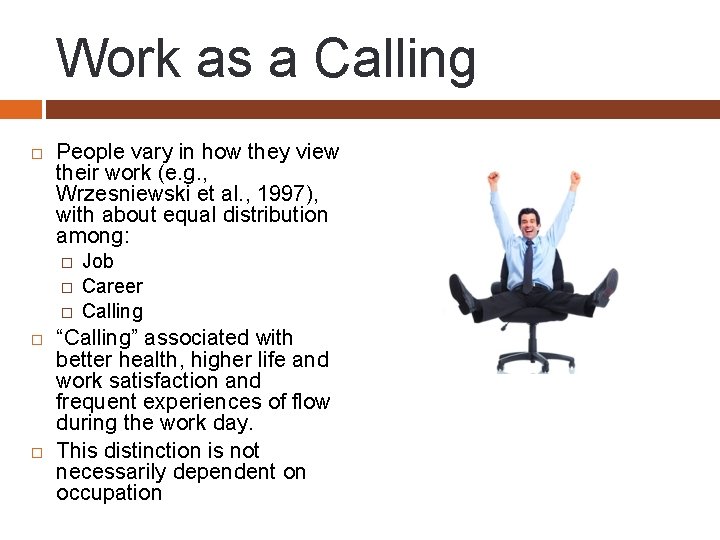
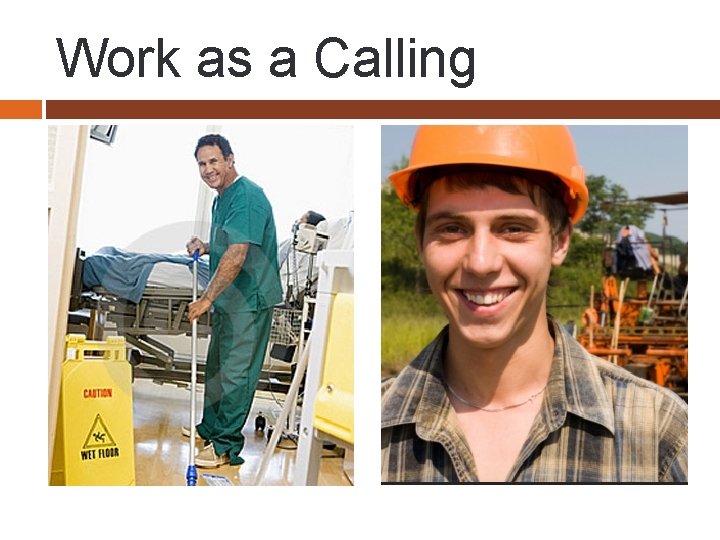
Work as a Calling People vary in how they view their work (e. g. , Wrzesniewski et al. , 1997), with about equal distribution among: � � � Job Career Calling “Calling” associated with better health, higher life and work satisfaction and frequent experiences of flow during the work day. This distinction is not necessarily dependent on occupation 22
Work as a Calling
Group Exercise Consider your job (or another job in your company) and write the job description as a “calling description” that would entice others to apply for the job.
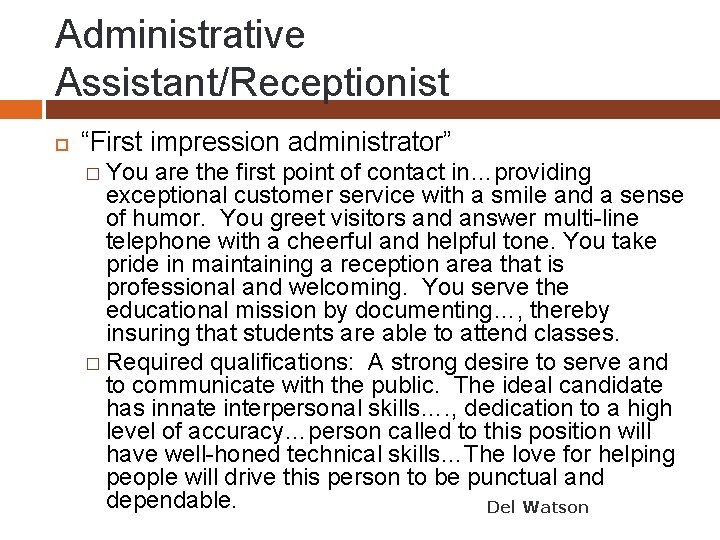
Administrative Assistant/Receptionist “First impression administrator” � You are the first point of contact in…providing exceptional customer service with a smile and a sense of humor. You greet visitors and answer multi-line telephone with a cheerful and helpful tone. You take pride in maintaining a reception area that is professional and welcoming. You serve the educational mission by documenting…, thereby insuring that students are able to attend classes. � Required qualifications: A strong desire to serve and to communicate with the public. The ideal candidate has innate interpersonal skills…. , dedication to a high level of accuracy…person called to this position will have well-honed technical skills…The love for helping people will drive this person to be punctual and dependable. Del Watson
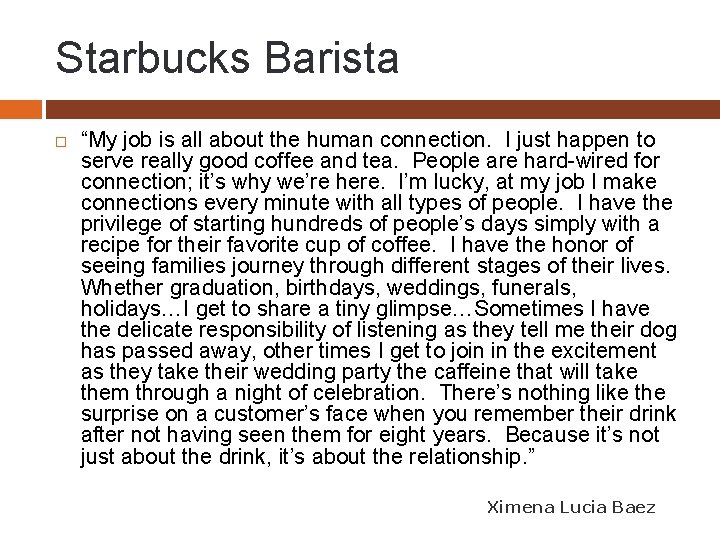
Starbucks Barista “My job is all about the human connection. I just happen to serve really good coffee and tea. People are hard-wired for connection; it’s why we’re here. I’m lucky, at my job I make connections every minute with all types of people. I have the privilege of starting hundreds of people’s days simply with a recipe for their favorite cup of coffee. I have the honor of seeing families journey through different stages of their lives. Whether graduation, birthdays, weddings, funerals, holidays…I get to share a tiny glimpse…Sometimes I have the delicate responsibility of listening as they tell me their dog has passed away, other times I get to join in the excitement as they take their wedding party the caffeine that will take them through a night of celebration. There’s nothing like the surprise on a customer’s face when you remember their drink after not having seen them for eight years. Because it’s not just about the drink, it’s about the relationship. ” Ximena Lucia Baez
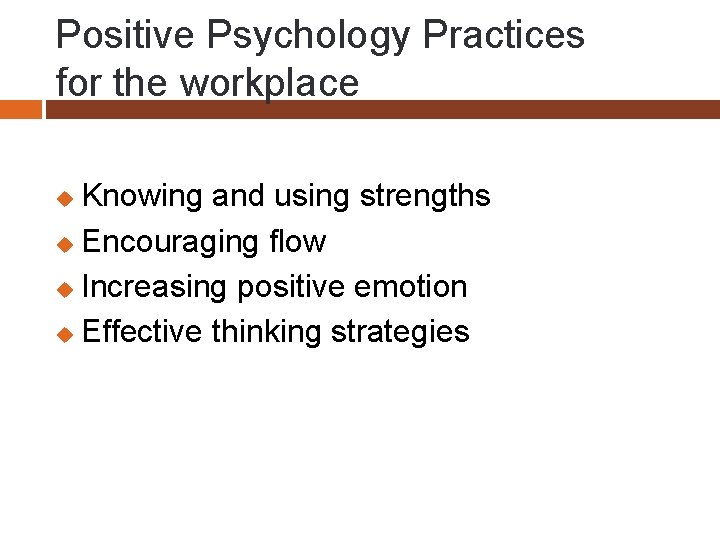
Positive Psychology Practices for the workplace Knowing and using strengths u Encouraging flow u Increasing positive emotion u Effective thinking strategies u
Strengths A strength is “a capacity for feeling, thinking, and behaving in a way that allows optimal functioning in the pursuit of valued outcomes” (Snyder & Lopez, 2007).
Deficit vs. strength-focused approaches Deficit-focused Fixing problems Identifying deficits Studying what’s wrong with people Strength-focused Building capacity Enhancing competencies Studying what’s right with people
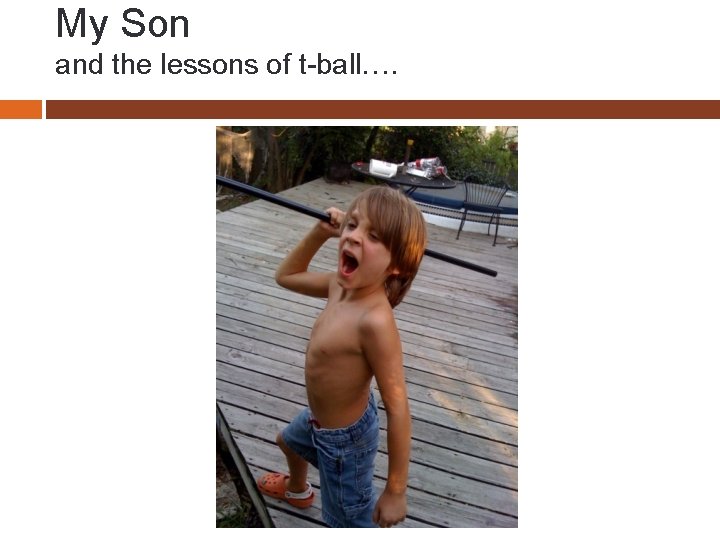
My Son and the lessons of t-ball….
Knowing and using strengths Several methods for classifying strengths VIA Survey of Character Strengths (Peterson & Seligman, 2004) � www. authentichappiness. c om � 240 questions measure 24 strengths within 6 virtue categories
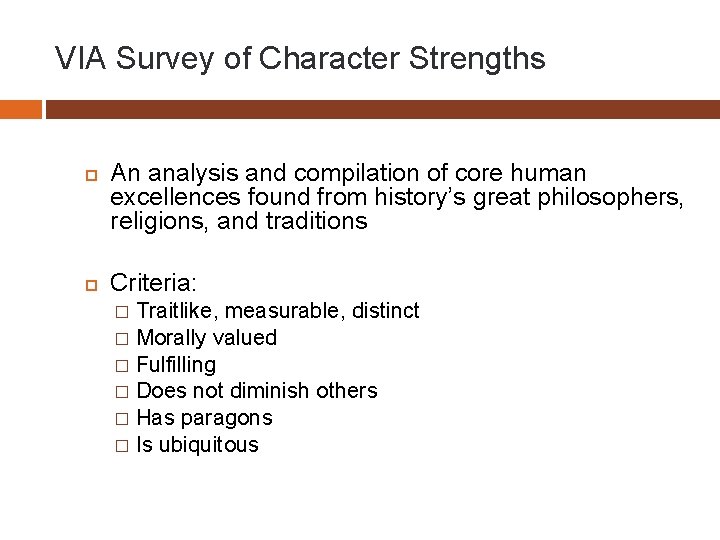
VIA Survey of Character Strengths An analysis and compilation of core human excellences found from history’s great philosophers, religions, and traditions Criteria: Traitlike, measurable, distinct � Morally valued � Fulfilling � Does not diminish others � Has paragons � Is ubiquitous �
Classification of 6 Virtues and 24 Character Strengths Wisdom and Knowledge: Creativity, Curiosity, Open-mindedness, Love of learning, Perspective Courage: Authenticity, Bravery, Persistence, Zest Humanity: Kindness, Love, Social intelligence Justice: Fairness, Leadership, Teamwork Temperance: Forgiveness, Modesty, Prudence, Self- regulation Transcendence: Appreciation of beauty and excellence, Gratitude, Hope, Humor,
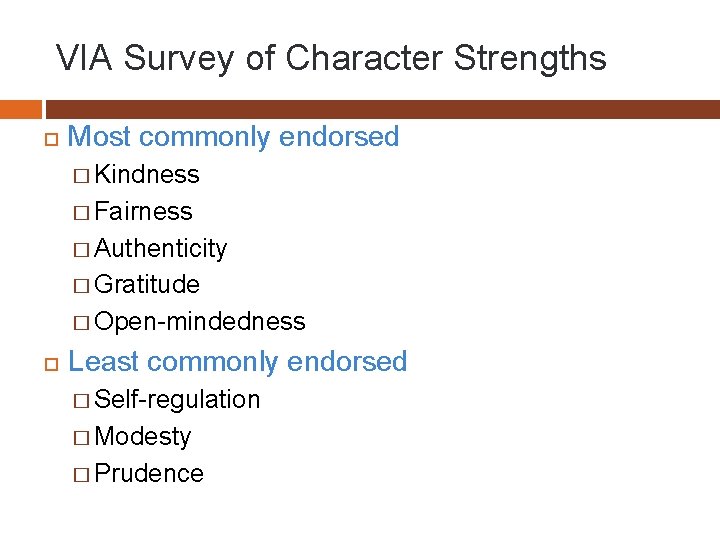
VIA Survey of Character Strengths Most commonly endorsed � Kindness � Fairness � Authenticity � Gratitude � Open-mindedness Least commonly endorsed � Self-regulation � Modesty � Prudence
VIA Survey of Character Strengths � There is a strong connection between well-being and the use of signature strengths because strengths help us make progress on our goals and meet our basic needs for independence, competence, and connecting with others (Linley et al. , 2010).
VIA Survey of Character Strengths � Employees who used four or more of their signature strengths had more positive work experiences and were more likely to experience work-as-acalling than those who expressed fewer than four (Harzer & Ruch, 2012).
Knowing, developing, and using strengths “Introduce yourself by telling a story about a time you used a character strength” A strength-based approach for connecting to one’s self and to others
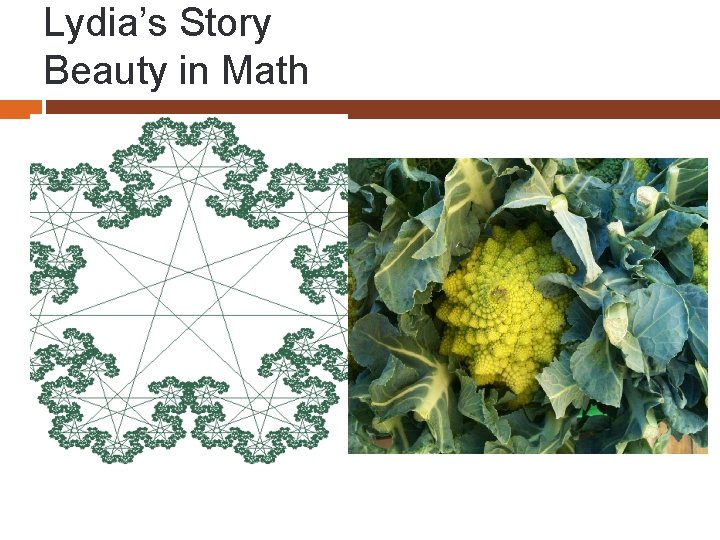
Lydia’s Story Beauty in Math
Jonathan’s Story Using character strengths in Iraq
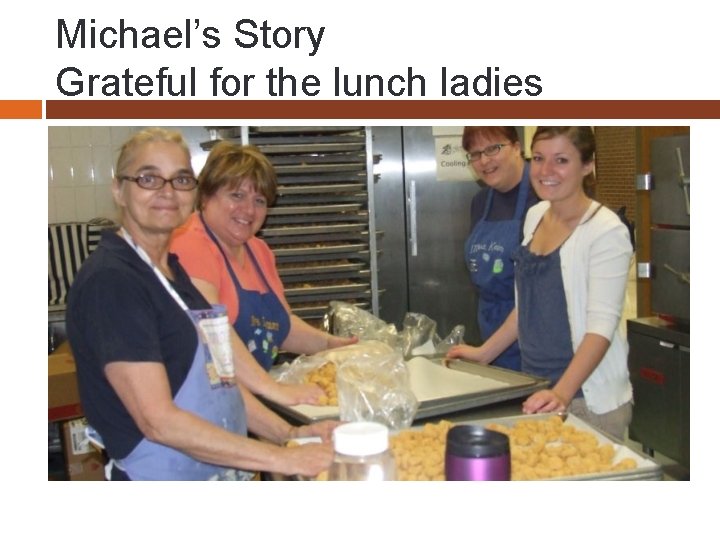
Michael’s Story Grateful for the lunch ladies
Strengths and leadership � Successful companies with CEOs that had a ‘unique mix of drive and humility’ Good to Great: Why Some Companies Make the Leap…and Others Don’t by Jim Collins � Sonia Sotomayor
Exercise- Using Strengths Please give some thought to a time when you feel you were at your best: handling a difficult situation, helping another person, meeting a challenge, solving a problem, coming up with a good idea- something you’d be proud to have others know about you. Present your story to the group; we will discuss and identify character strengths reflected in the story.
Outside exercise For outside exercises, take the VIA survey at: www. authentichappiness. com
Outside Exercise- Using Strengths in New/Unique Ways Use one of your top strengths in a new and different way every day for five days. Multiple studies have shown this exercise results in increased happiness and decreased depression for 3 to 6 months
Outside Exercise- Connecting with others through strengths assessment Ask a relative (or coworker/supervisee) to take the VIA Character strengths survey. Interview them based on the results. Stories from students
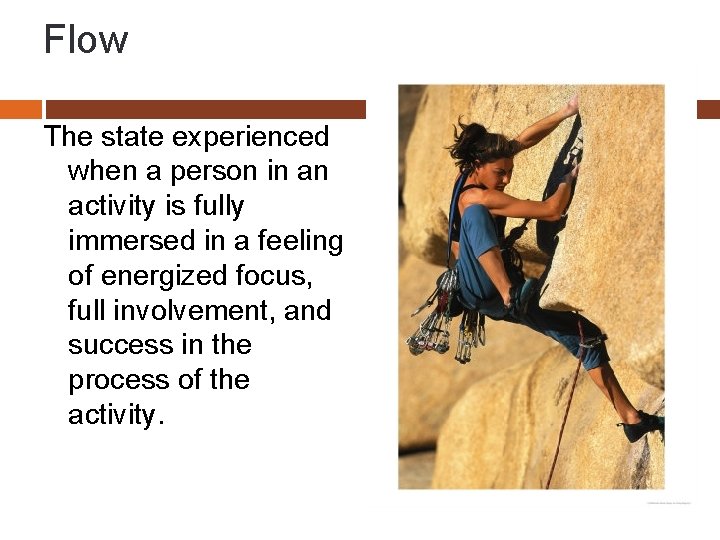
Flow The state experienced when a person in an activity is fully immersed in a feeling of energized focus, full involvement, and success in the process of the activity. 47
Flow Mihalyi Csikszentmihalyi
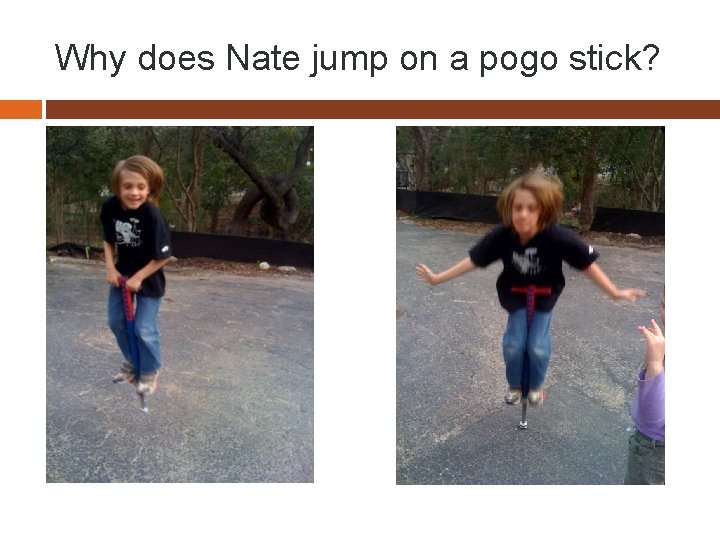
Why does Nate jump on a pogo stick?
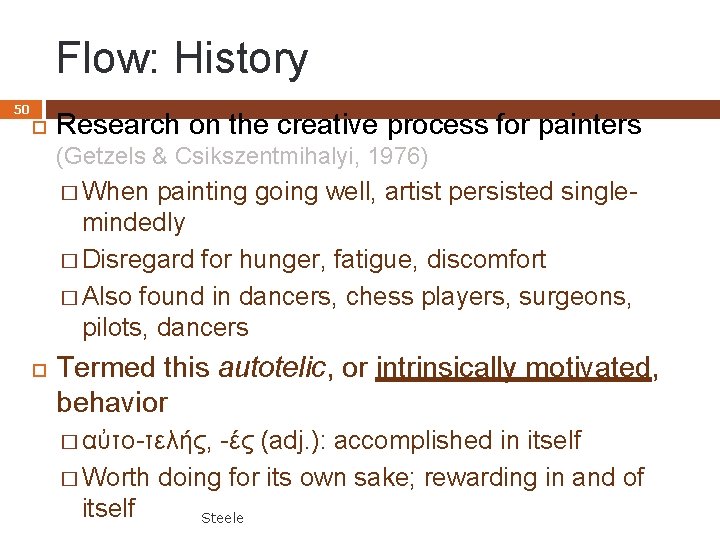
Flow: History 50 Research on the creative process for painters (Getzels & Csikszentmihalyi, 1976) � When painting going well, artist persisted singlemindedly � Disregard for hunger, fatigue, discomfort � Also found in dancers, chess players, surgeons, pilots, dancers Termed this autotelic, or intrinsically motivated, behavior � αὐτο-τελής, -ές (adj. ): accomplished in itself � Worth doing for its own sake; rewarding in and of itself Steele
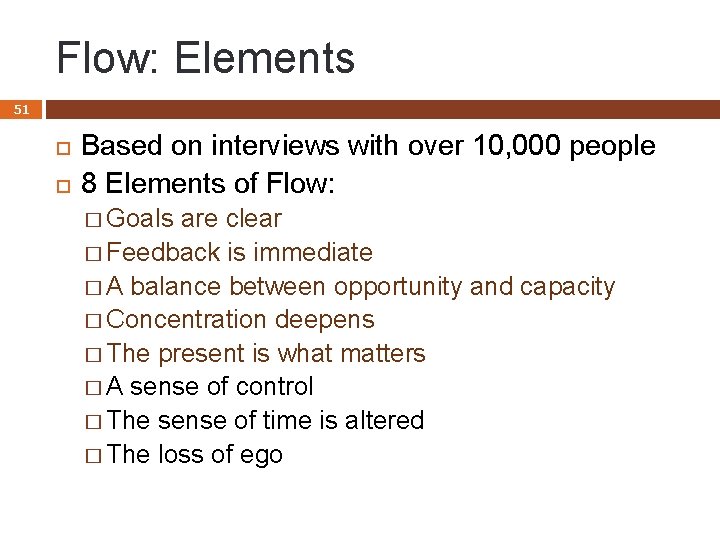
Flow: Elements 51 Based on interviews with over 10, 000 people 8 Elements of Flow: � Goals are clear � Feedback is immediate � A balance between opportunity and capacity � Concentration deepens � The present is what matters � A sense of control � The sense of time is altered � The loss of ego
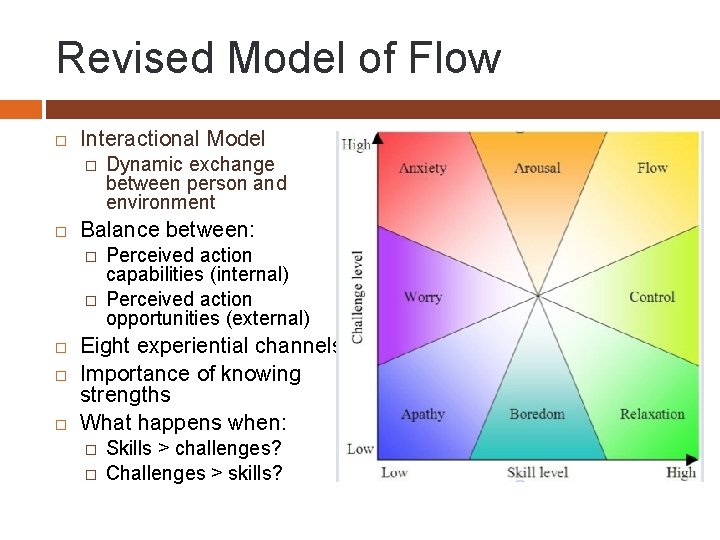
Revised Model of Flow Interactional Model � Balance between: � � Dynamic exchange between person and environment Perceived action capabilities (internal) Perceived action opportunities (external) Eight experiential channels Importance of knowing strengths What happens when: � � Skills > challenges? Challenges > skills?
Flow 53 Viewed through the lens of flow, living a full life is living “without waste of time and potential, and expressing one’s uniqueness, while participating intimately in the complexity of the cosmos. ” Mihalyi Csikszentmihalyi Finding Flow?
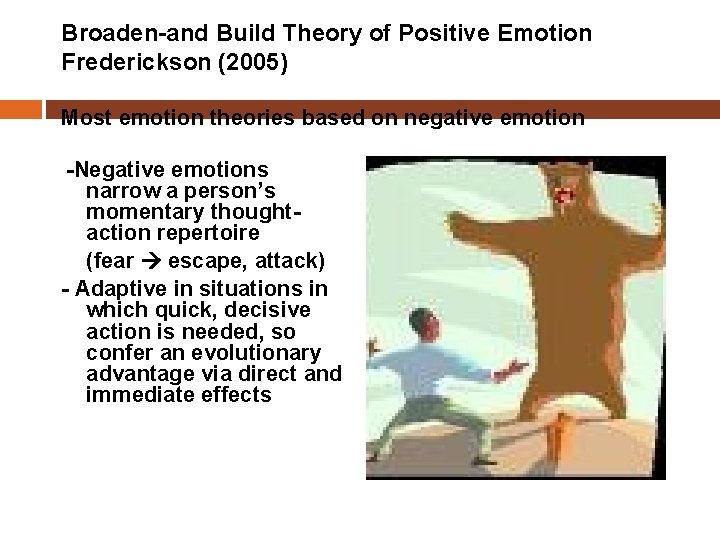
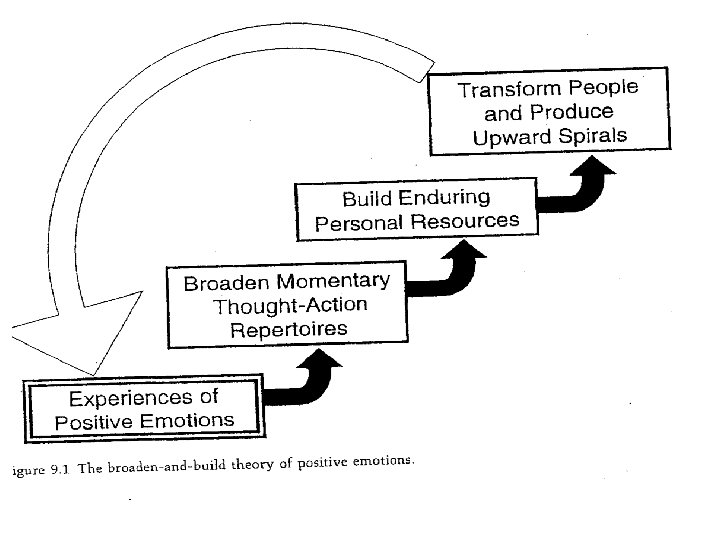
Broaden-and Build Theory of Positive Emotion Frederickson (2005) Most emotion theories based on negative emotion -Negative emotions narrow a person’s momentary thoughtaction repertoire (fear escape, attack) - Adaptive in situations in which quick, decisive action is needed, so confer an evolutionary advantage via direct and immediate effects
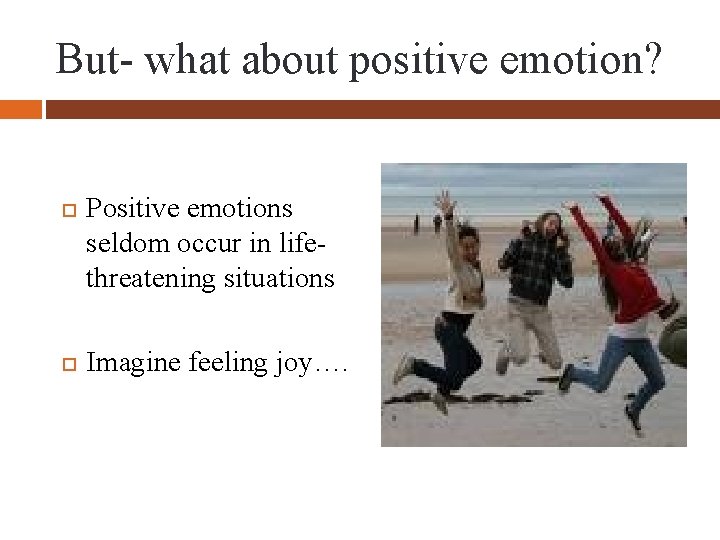
But- what about positive emotion? Positive emotions seldom occur in lifethreatening situations Imagine feeling joy….
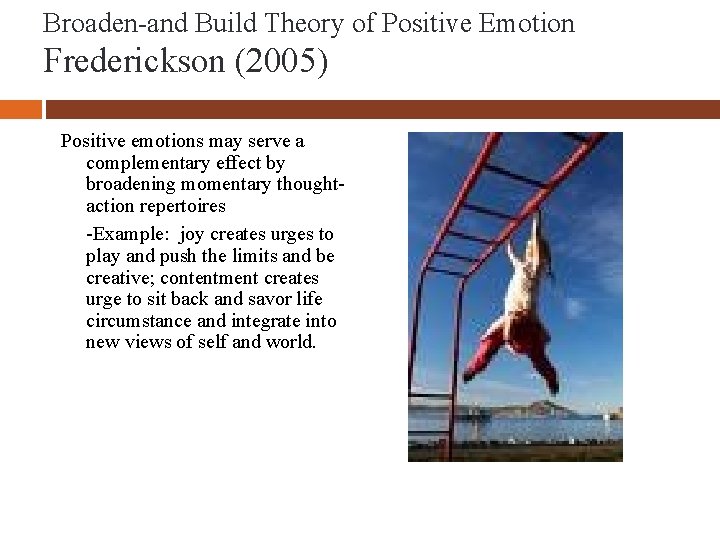
Broaden-and Build Theory of Positive Emotion Frederickson (2005) Positive emotions may serve a complementary effect by broadening momentary thoughtaction repertoires -Example: joy creates urges to play and push the limits and be creative; contentment creates urge to sit back and savor life circumstance and integrate into new views of self and world.
Broaden and Build Theory Emotional regulation implications: the “undoing” hypothesis � Positive emotions might serve as antidotes for the lingering effects of negative emotions � In studies inducing high arousal negative emotions, subjects who then underwent positive mood induction showed faster cardiovascular recovery than those who experienced neutral or negative mood induction
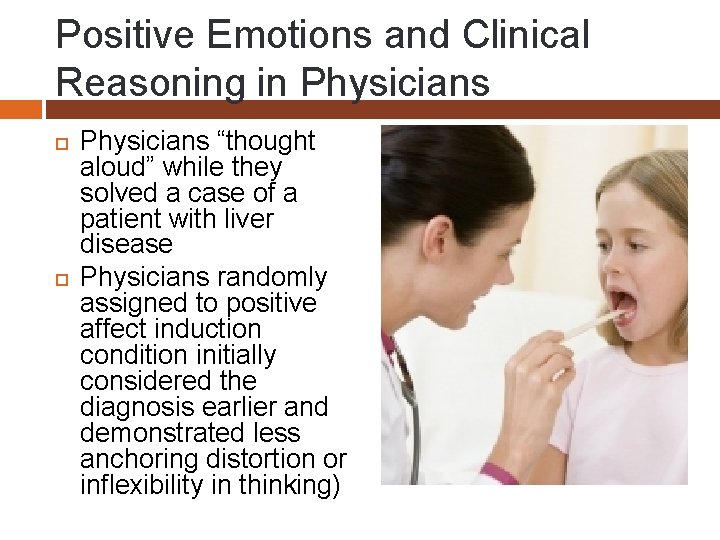
Positive Emotions and Clinical Reasoning in Physicians “thought aloud” while they solved a case of a patient with liver disease Physicians randomly assigned to positive affect induction condition initially considered the diagnosis earlier and demonstrated less anchoring distortion or inflexibility in thinking)
How positive? Positivity ratio (ratio of positive to negative emotions) represents the “affective texture” of an individual, relationship, or group. Positivity ratio has been examined in several contexts, with “optimal functioning” related to high ratios (3 -6: 1).
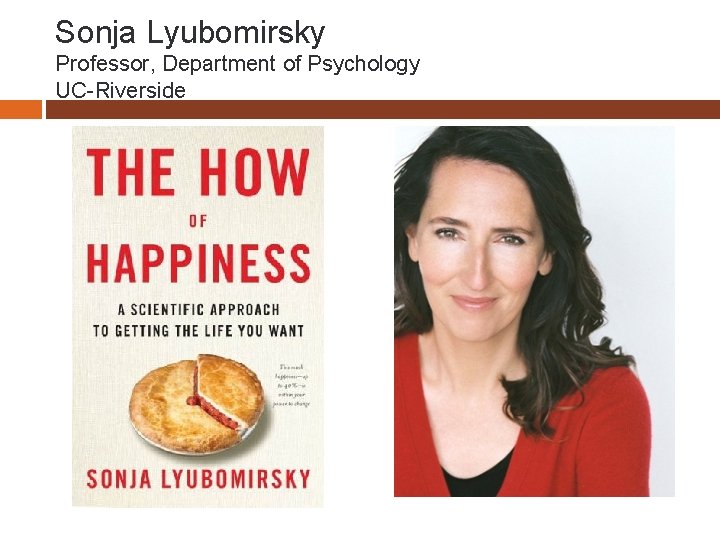
Sonja Lyubomirsky Professor, Department of Psychology UC-Riverside
The 5 Elements of Effective Thinking 1. Earth: Grounding Your Thinking: Understand Deeply 2. Fire: Igniting Your Imagination: Failing to Succeed 3. Air: Creating Questions Out of Thin Air: Become Your Own Socrates 4. Water: Flow of Ideas: Look, Back, Look Forward 5. The Quintessential Element: Change
EARTH-Grounding Your Thinking: Understanding Deeply 1. Understand simple things deeply 2. Clear the clutter----seek the essential 3. See what’s there 4. See what’s missing 5. Final thoughts: Deeper is better
FIRE-Igniting Your Imagination: Failing to Succeed 1. Welcome accidental missteps—let your errors be your guide 2. Finding the right question to the wrong answer 3. Failing by intent 4. Final thoughts: A modified mindset
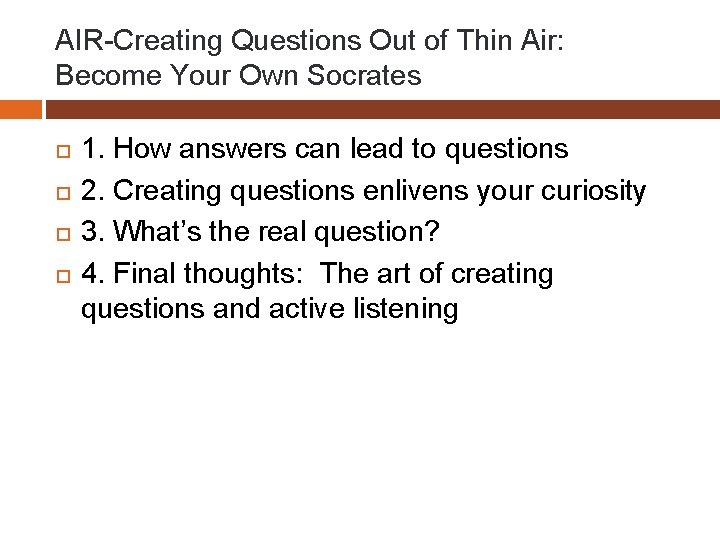
AIR-Creating Questions Out of Thin Air: Become Your Own Socrates 1. How answers can lead to questions 2. Creating questions enlivens your curiosity 3. What’s the real question? 4. Final thoughts: The art of creating questions and active listening
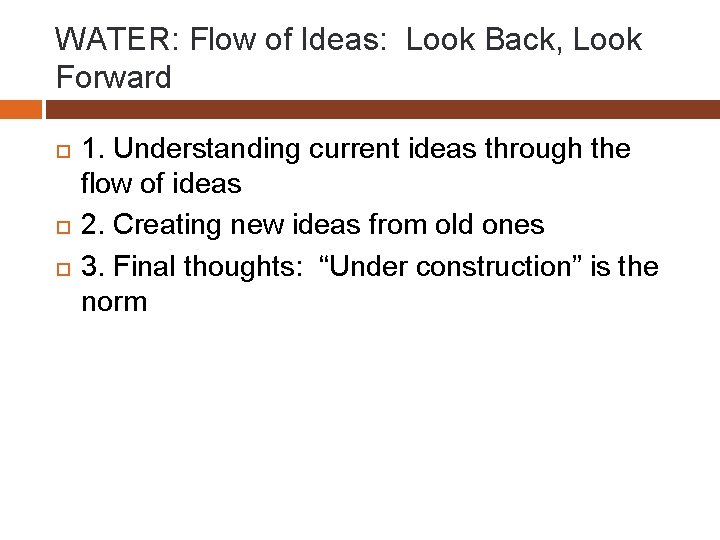
WATER: Flow of Ideas: Look Back, Look Forward 1. Understanding current ideas through the flow of ideas 2. Creating new ideas from old ones 3. Final thoughts: “Under construction” is the norm
The Quintessential Element 5. Engaging Change: Transform Yourself
Exercise: Using Strengths Identify a problem/challenge you are facing at work. Review the list of character strengths and identify 3 -5 that seem to best describe your most positive qualities. Consider ways that you might use an area of strength to address the issue. Discuss with group members.
Exercise: Flow Identify one or two tasks that you or a coworker perform on the job. Analyze them relative to the elements of flow. Describe their current status, and generate ideas to enhance the flow experience. Discuss with group members.
Exercise: Increasing Positive Emotion What specific behaviors/situations might be used to increase positive emotion in your workplace?
Exercise: Effective Thinking Identify a problem/challenge you are facing at work. Apply the elements of effective thinking to address the issue. Discuss with group members.
Human Dimensions of Organizations FLOURISHING IN THE WORKPLACE Caryn L. Carlson, Ph. D. Department of Psychology Mathematics hdo. utexas. edu Michael Starbird, Ph. D. Department of Leading. Age Texas Leadership Conference February 21, 2013