
Human Development Structure Fall 2019 Blood Vessels 1

Human Development & Structure Fall 2019
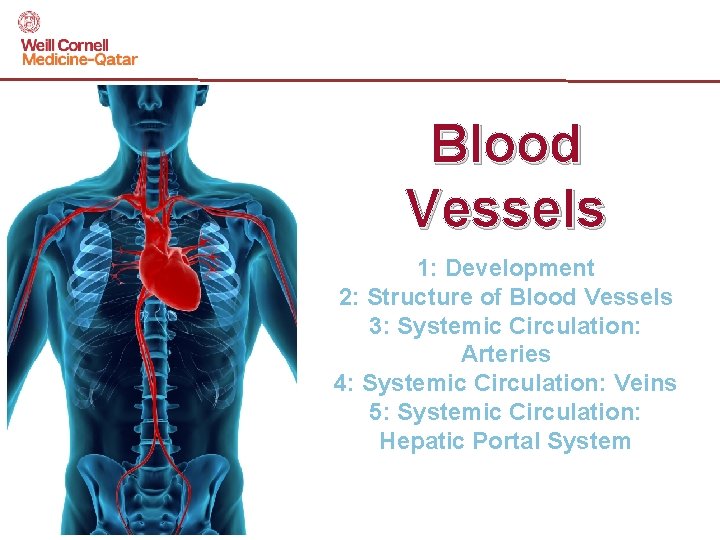
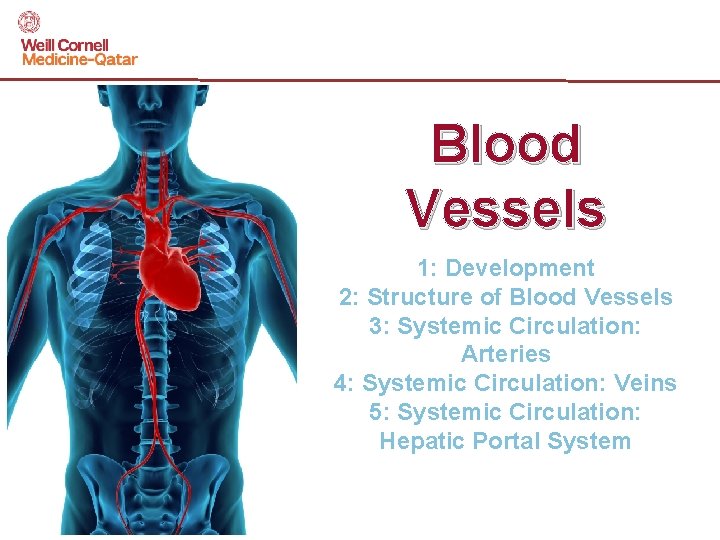
Blood Vessels 1: Development 2: Structure of Blood Vessels 3: Systemic Circulation: Arteries 4: Systemic Circulation: Veins 5: Systemic Circulation: Hepatic Portal System
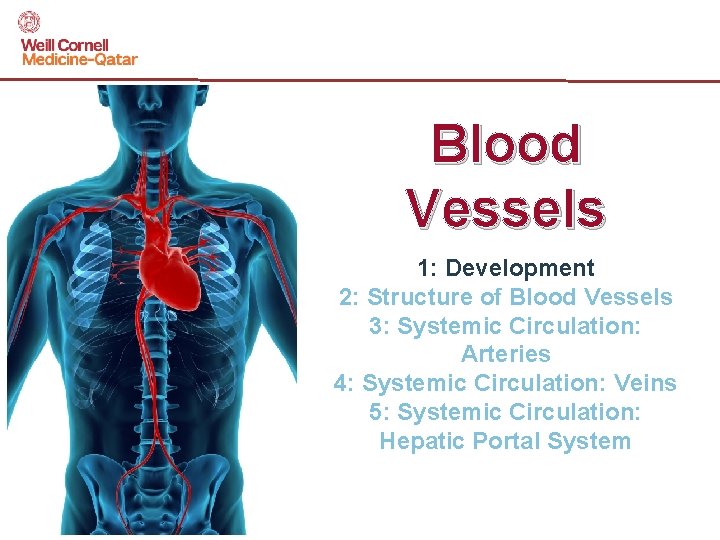
Blood Vessels 1: Development 2: Structure of Blood Vessels 3: Systemic Circulation: Arteries 4: Systemic Circulation: Veins 5: Systemic Circulation: Hepatic Portal System
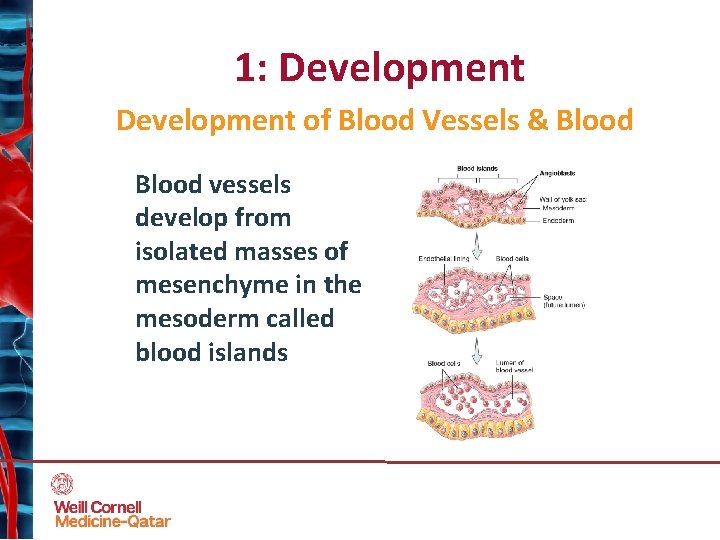
1: Development of Blood Vessels & Blood vessels develop from isolated masses of mesenchyme in the mesoderm called blood islands
1: Development
Blood Vessels 1: Development 2: Structure of Blood Vessels 3: Systemic Circulation: Arteries 4: Systemic Circulation: Veins 5: Systemic Circulation: Hepatic Portal System
Blood Vessels 1: Development 2: Structure of Blood Vessels 3: Systemic Circulation: Arteries 4: Systemic Circulation: Veins 5: Systemic Circulation: Hepatic Portal System
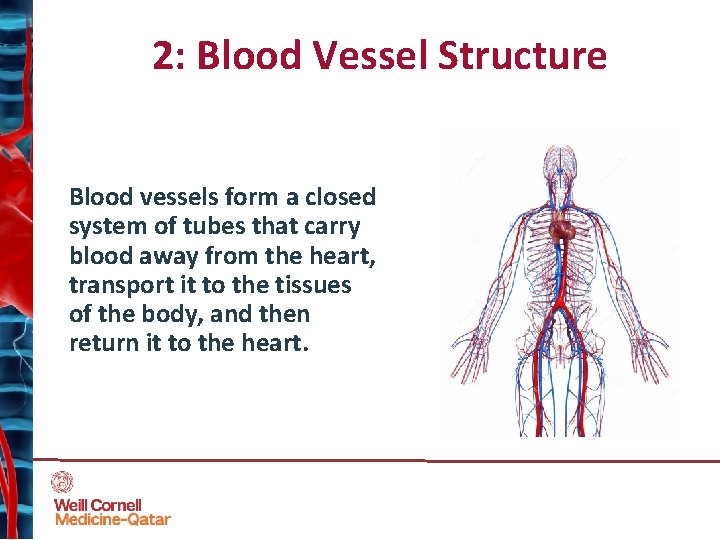
2: Blood Vessel Structure Blood vessels form a closed system of tubes that carry blood away from the heart, transport it to the tissues of the body, and then return it to the heart.
2: Blood Vessel Structure Arteries carry blood from the heart to the tissues. Arterioles are small arteries that connect to capillaries. Capillaries are the site of substance exchange between the blood and body tissues. Venules connect capillaries to larger veins. Veins convey blood from the tissues back to the heart. Vaso vasorum are small blood vessels that supply blood to the cells of the walls of the arteries and veins.
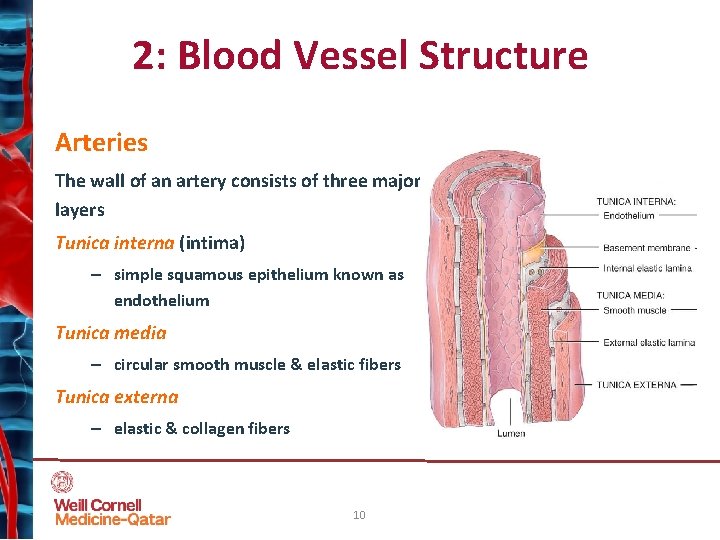
2: Blood Vessel Structure Arteries The wall of an artery consists of three major layers Tunica interna (intima) – simple squamous epithelium known as endothelium Tunica media – circular smooth muscle & elastic fibers Tunica externa – elastic & collagen fibers 10
2: Blood Vessel Structure Arteries • Carry blood away from the heart to the tissues. • The functional properties of arteries are: – Elasticity allows arteries to accept blood under great pressure from the contraction of the ventricles and to send it on through the system. – Contractility due to the smooth muscle in the tunica media 11
2: Blood Vessel Structure Arteries • Vascular smooth muscle is innervated by autonomic nervous system 12
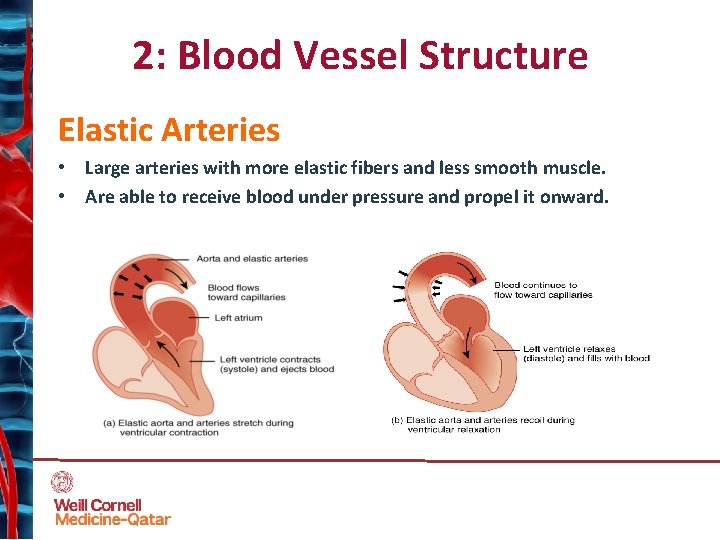
2: Blood Vessel Structure Elastic Arteries • Large arteries with more elastic fibers and less smooth muscle. • Are able to receive blood under pressure and propel it onward.
2: Blood Vessel Structure Muscular Arteries • Medium-sized arteries with more muscle than elastic fibers in tunica media. • Capable of greater vasoconstriction and vasodilation to adjust rate of flow.
2: Blood Vessel Structure Arterioles • Very small, almost microscopic, arteries. • Through vasoconstriction (decrease in the size of the lumen of a blood vessel) and vasodilation (increase in the size of the lumen of a blood vessel), arterioles assume a key role in regulating blood flow from arteries into capillaries and in altering arterial blood pressure.
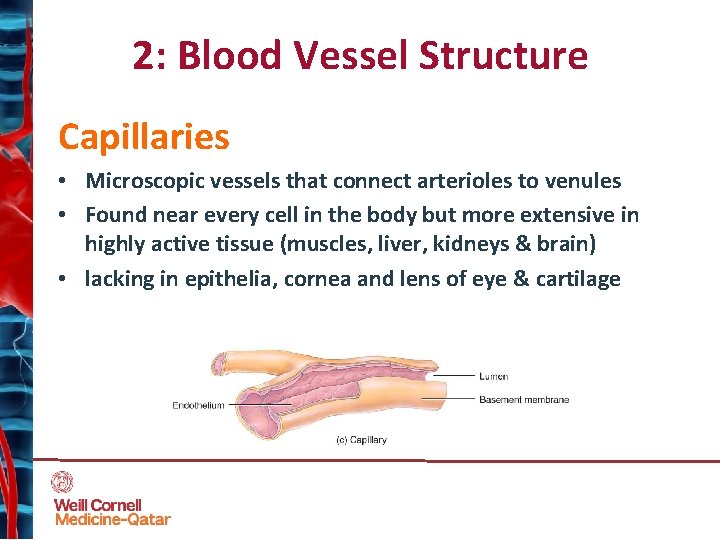
2: Blood Vessel Structure Capillaries • Microscopic vessels that connect arterioles to venules • Found near every cell in the body but more extensive in highly active tissue (muscles, liver, kidneys & brain) • lacking in epithelia, cornea and lens of eye & cartilage

2: Blood Vessel Structure Capillaries • Function is exchange of nutrients & wastes between blood and tissue fluid • Capillary walls are composed of only a single layer of cells (endothelium) and a basement membrane
2: Blood Vessel Structure Venules • Small veins collecting blood from capillaries • Tunica media contains only a few smooth muscle cells • Venules that approach size of veins more closely resemble structure of vein
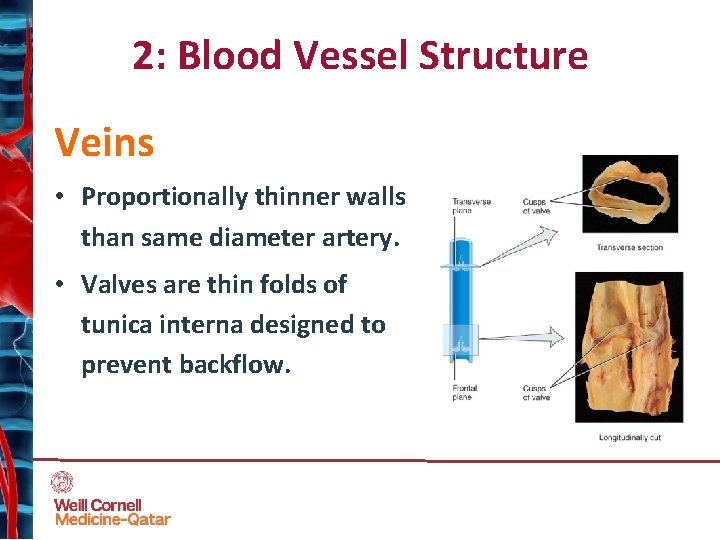
2: Blood Vessel Structure Veins • Proportionally thinner walls than same diameter artery. • Valves are thin folds of tunica interna designed to prevent backflow.
2: Blood Vessel Structure Vaso vasorum Small blood vessels that supply blood to the cells of the walls of the arteries and veins.
Blood Vessels 1: Development 2: Structure of Blood Vessels 3: Systemic Circulation: Arteries 4: Systemic Circulation: Veins 5: Systemic Circulation: Hepatic Portal System
Blood Vessels 1: Development 2: Structure of Blood Vessels 3: Systemic Circulation: Arteries 4: Systemic Circulation: Veins 5: Systemic Circulation: Hepatic Portal System

3: Systemic Circulation: Arteries
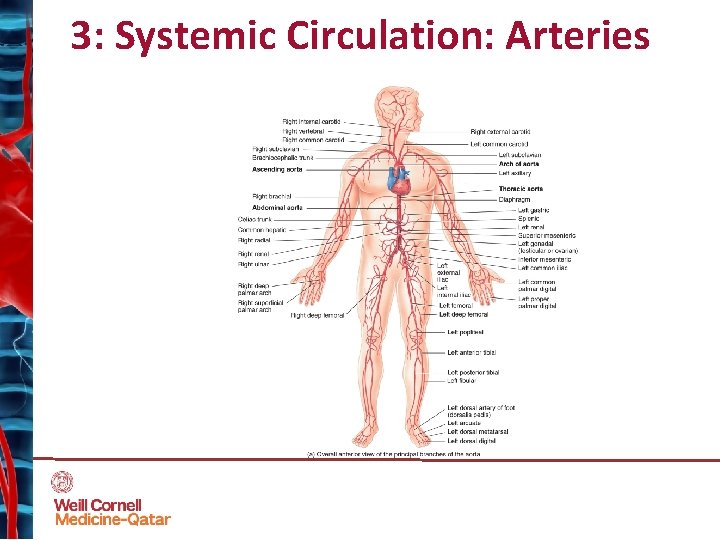
3: Systemic Circulation: Arteries
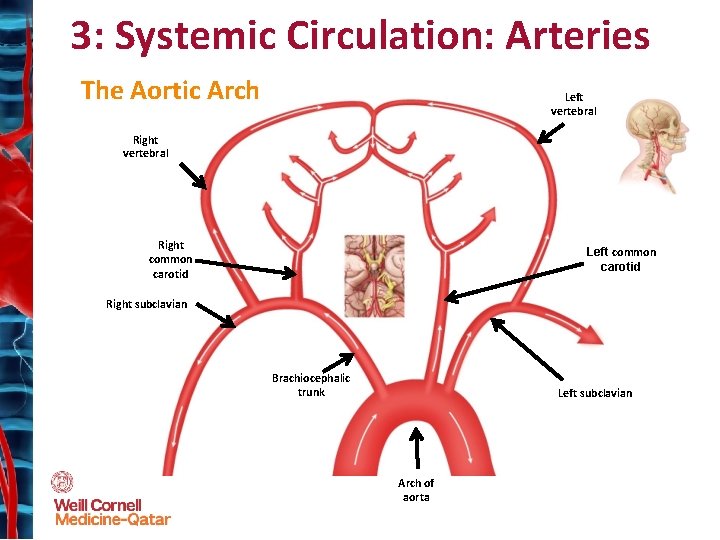
3: Systemic Circulation: Arteries The Aortic Arch Left vertebral Right common carotid Left common carotid Right subclavian Brachiocephalic trunk Left subclavian Arch of aorta
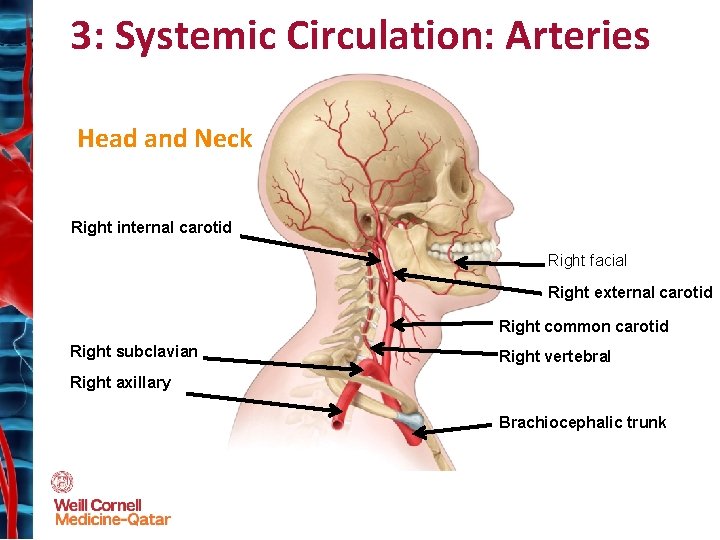
3: Systemic Circulation: Arteries Head and Neck Right internal carotid Right facial Right external carotid Right common carotid Right subclavian Right vertebral Right axillary Brachiocephalic trunk
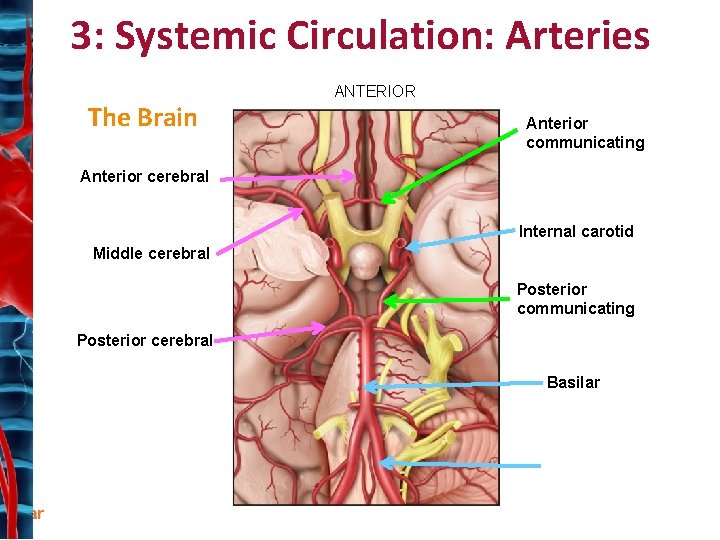
3: Systemic Circulation: Arteries The Brain ANTERIOR Anterior communicating Anterior cerebral Internal carotid Middle cerebral Posterior communicating Posterior cerebral Basilar
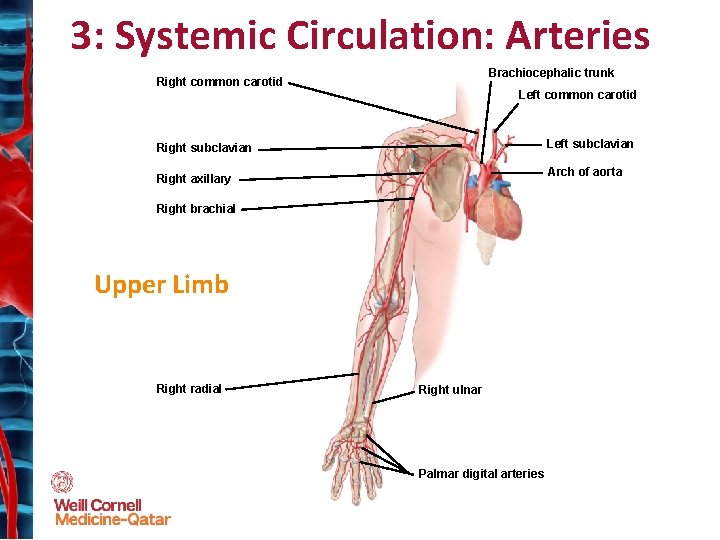
3: Systemic Circulation: Arteries Brachiocephalic trunk Right common carotid Left subclavian Right subclavian Arch of aorta Right axillary Right brachial Upper Limb Right radial Right ulnar Palmar digital arteries
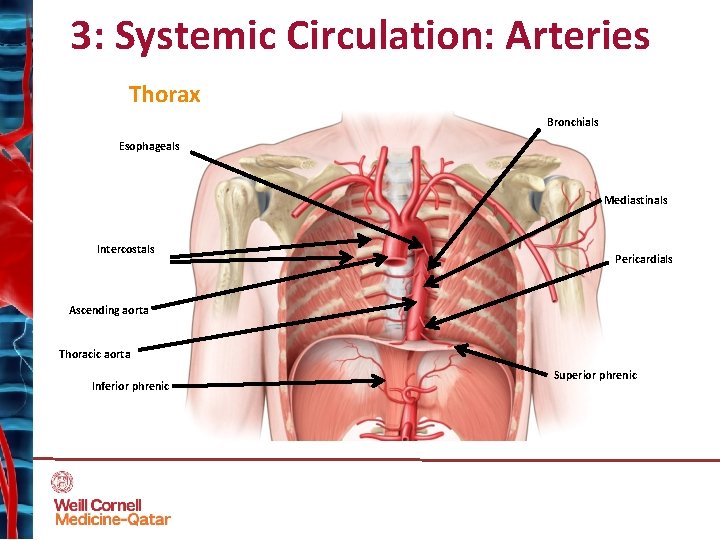
3: Systemic Circulation: Arteries Thorax Bronchials Esophageals Mediastinals Intercostals Pericardials Ascending aorta Thoracic aorta Inferior phrenic Superior phrenic
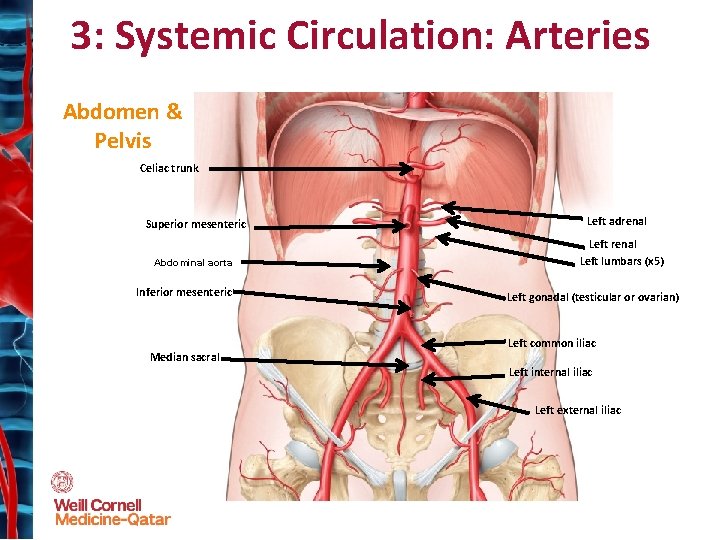
3: Systemic Circulation: Arteries Abdomen & Pelvis Celiac trunk Superior mesenteric Abdominal aorta Inferior mesenteric Median sacral Left adrenal Left lumbars (x 5) Left gonadal (testicular or ovarian) Left common iliac Left internal iliac Left external iliac
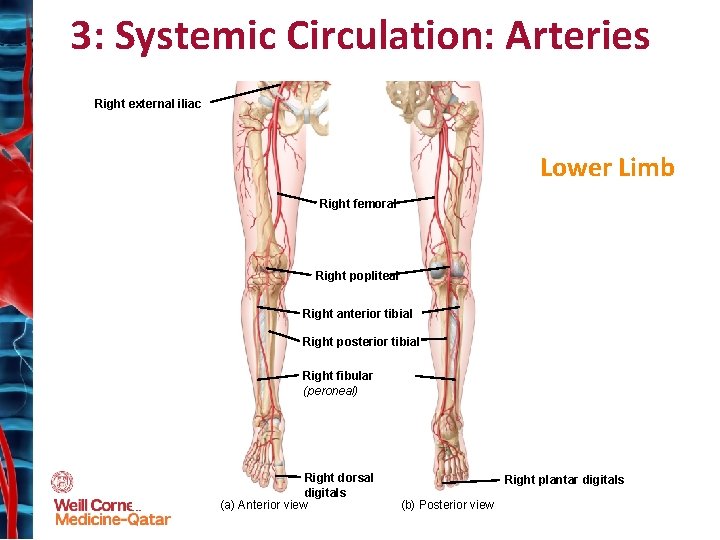
3: Systemic Circulation: Arteries Right external iliac Lower Limb Right femoral Right popliteal Right anterior tibial Right posterior tibial Right fibular (peroneal) Right dorsal digitals (a) Anterior view Right plantar digitals (b) Posterior view
Blood Vessels 1: Development 2: Structure of Blood Vessels 3: Systemic Circulation: Arteries 4: Systemic Circulation: Veins 5: Systemic Circulation: Hepatic Portal System
Blood Vessels 1: Development 2: Structure of Blood Vessels 3: Systemic Circulation: Arteries 4: Systemic Circulation: Veins 5: Systemic Circulation: Hepatic Portal System
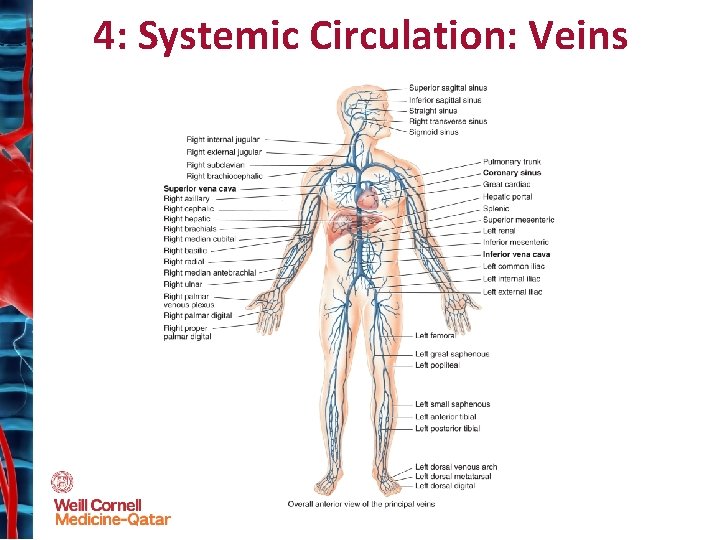
4: Systemic Circulation: Veins
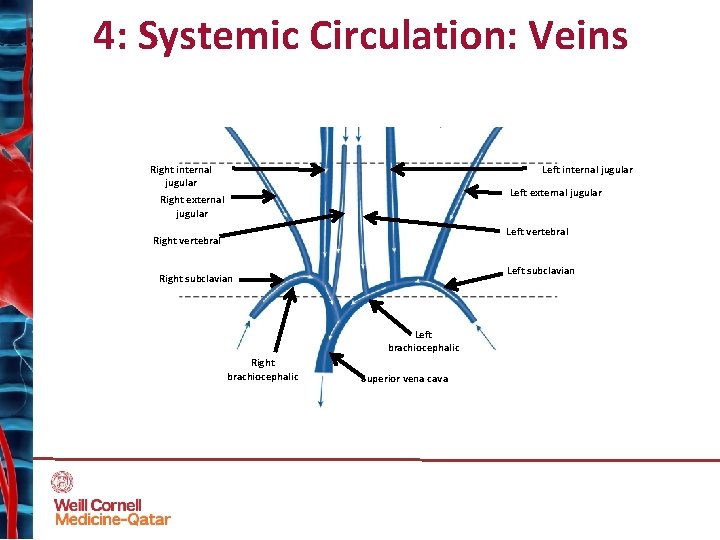
4: Systemic Circulation: Veins Right internal jugular Left external jugular Right external jugular Left vertebral Right vertebral Left subclavian Right subclavian Left brachiocephalic Right brachiocephalic Superior vena cava
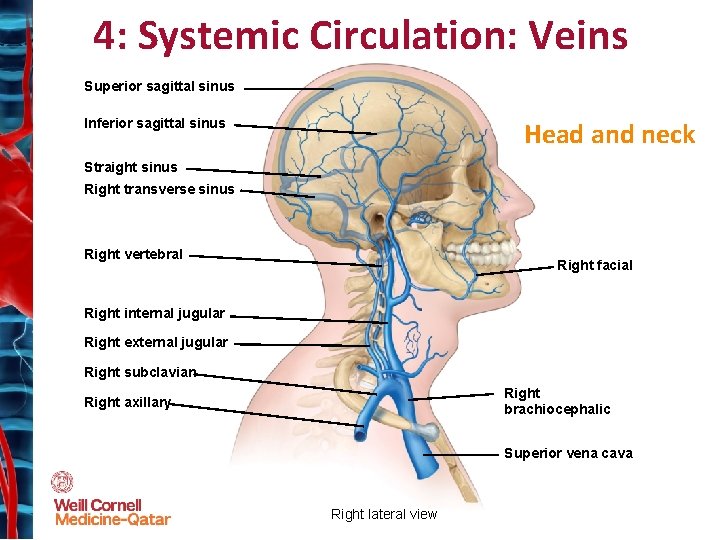
4: Systemic Circulation: Veins Superior sagittal sinus Inferior sagittal sinus Head and neck Straight sinus Right transverse sinus Right vertebral Right facial Right internal jugular Right external jugular Right subclavian Right brachiocephalic Right axillary Superior vena cava Right lateral view
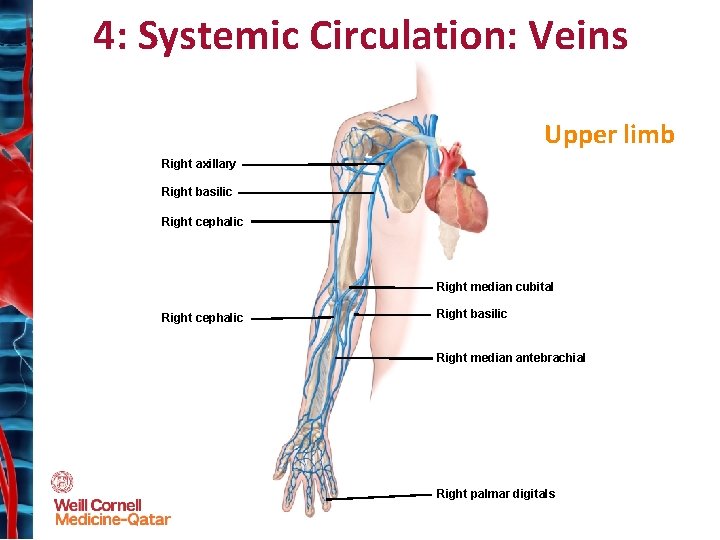
4: Systemic Circulation: Veins Upper limb Right axillary Right basilic Right cephalic Right median cubital Right cephalic Right basilic Right median antebrachial Right palmar digitals
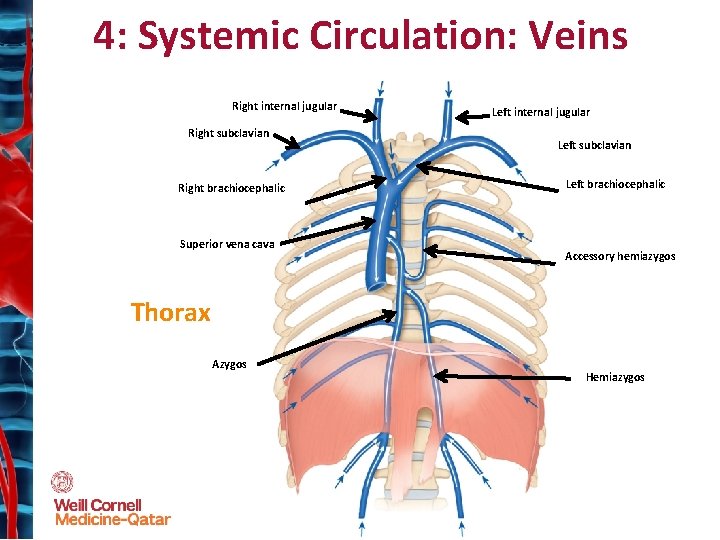
4: Systemic Circulation: Veins Right internal jugular Right subclavian Right brachiocephalic Superior vena cava Left internal jugular Left subclavian Left brachiocephalic Accessory hemiazygos Thorax Azygos Hemiazygos
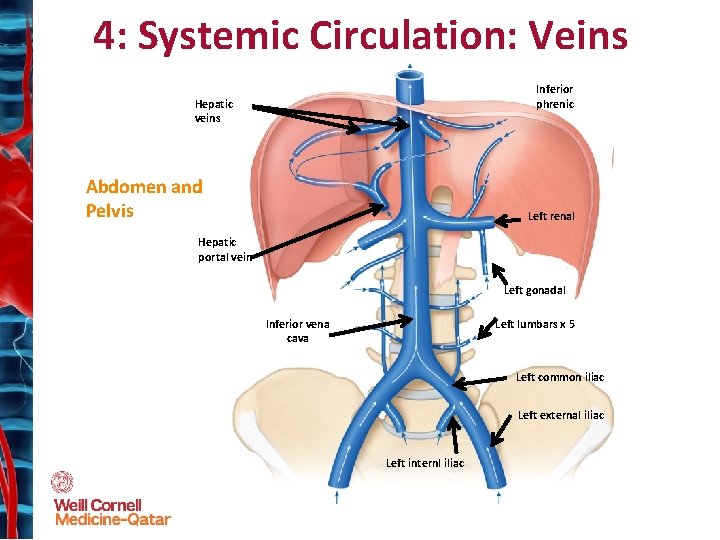
4: Systemic Circulation: Veins Inferior phrenic Hepatic veins Abdomen and Pelvis Left renal Hepatic portal vein Left gonadal Inferior vena cava Left lumbars x 5 Left common iliac Left external iliac Left internl iliac
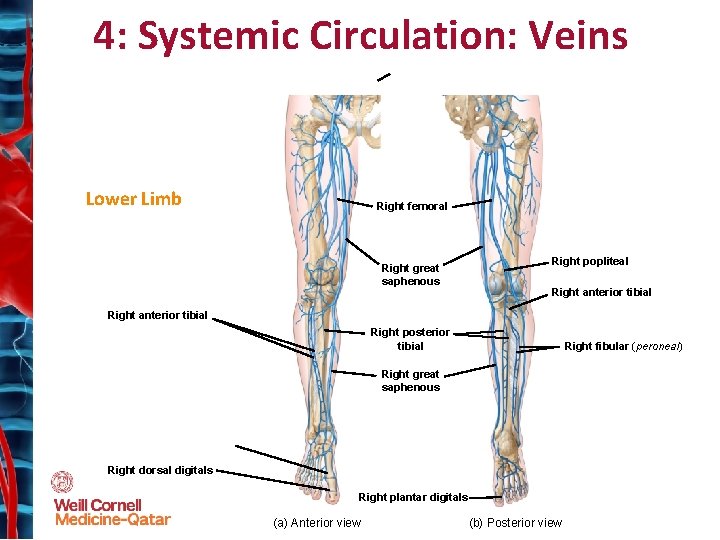
4: Systemic Circulation: Veins Lower Limb Right femoral Right great saphenous Right popliteal Right anterior tibial Right posterior tibial Right fibular (peroneal) Right great saphenous Right dorsal digitals Right plantar digitals (a) Anterior view (b) Posterior view
Blood Vessels 1: Development 2: Structure of Blood Vessels 3: Systemic Circulation: Arteries 4: Systemic Circulation: Veins 5: Systemic Circulation: Hepatic Portal System
Blood Vessels 1: Development 2: Structure of Blood Vessels 3: Systemic Circulation: Arteries 4: Systemic Circulation: Veins 5: Systemic Circulation: Hepatic Portal System
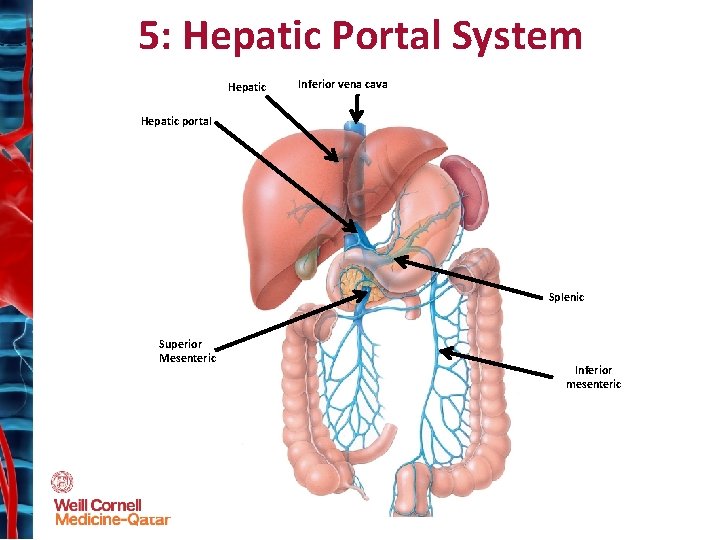
5: Hepatic Portal System Hepatic Inferior vena cava Hepatic portal Splenic Superior Mesenteric Inferior mesenteric
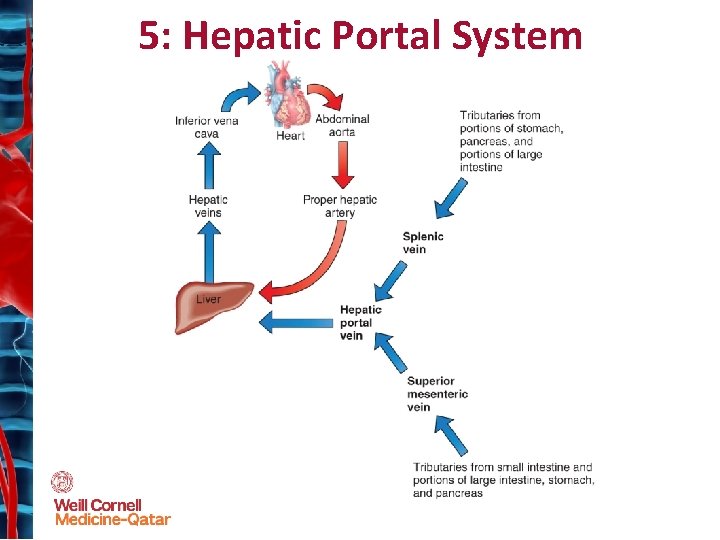
5: Hepatic Portal System
- Slides: 45