
Human Development Fertilization 40 weeks of gestation Major


- Slides: 23
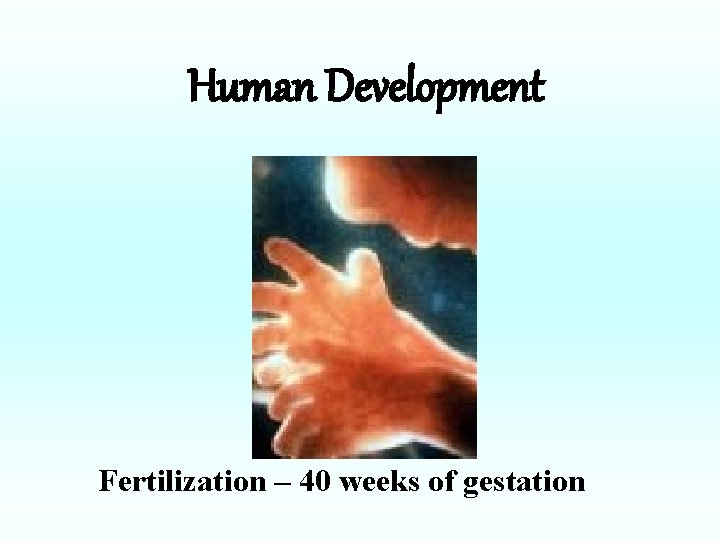
Human Development Fertilization – 40 weeks of gestation
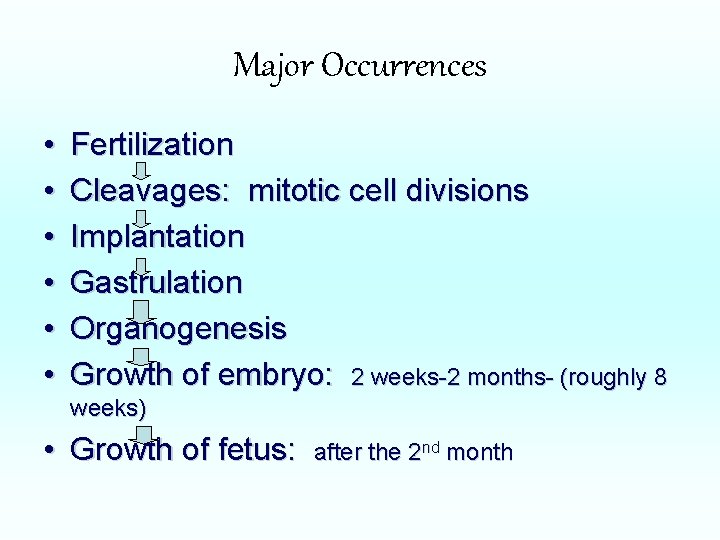
Major Occurrences • • • Fertilization Cleavages: mitotic cell divisions Implantation Gastrulation Organogenesis Growth of embryo: 2 weeks-2 months- (roughly 8 weeks) • Growth of fetus: after the 2 nd month
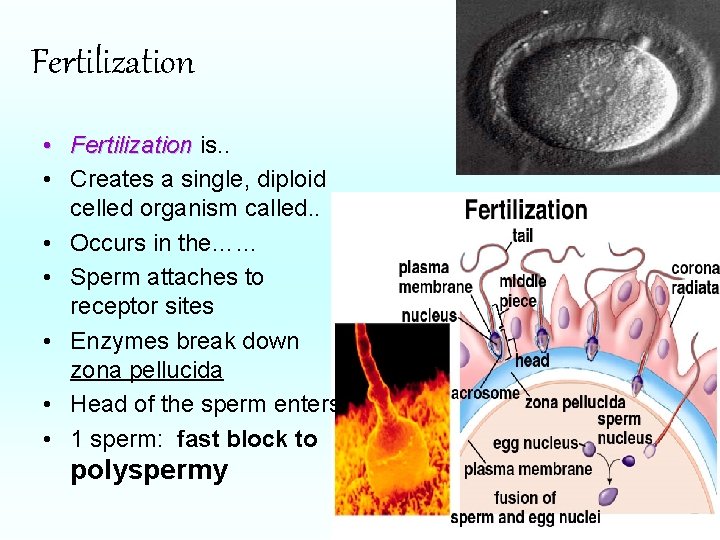
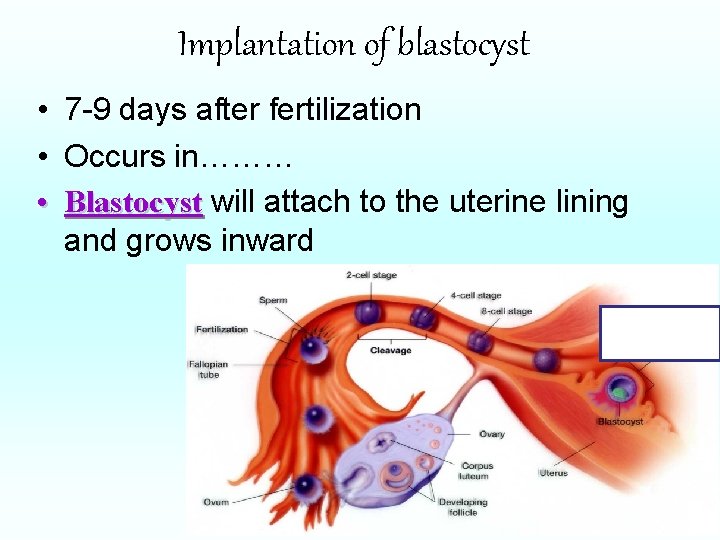
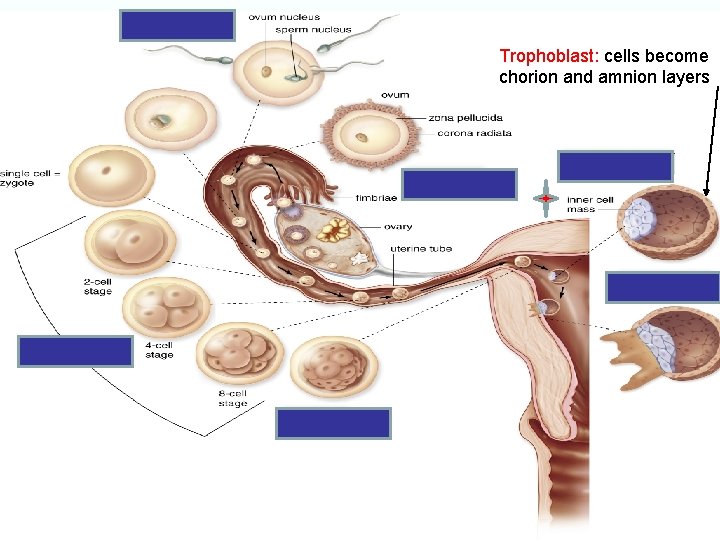
Fertilization • Fertilization is. . • Creates a single, diploid celled organism called. . • Occurs in the…… • Sperm attaches to receptor sites • Enzymes break down zona pellucida • Head of the sperm enters • 1 sperm: fast block to polyspermy
Warm-up: Summarize the process of fertilization
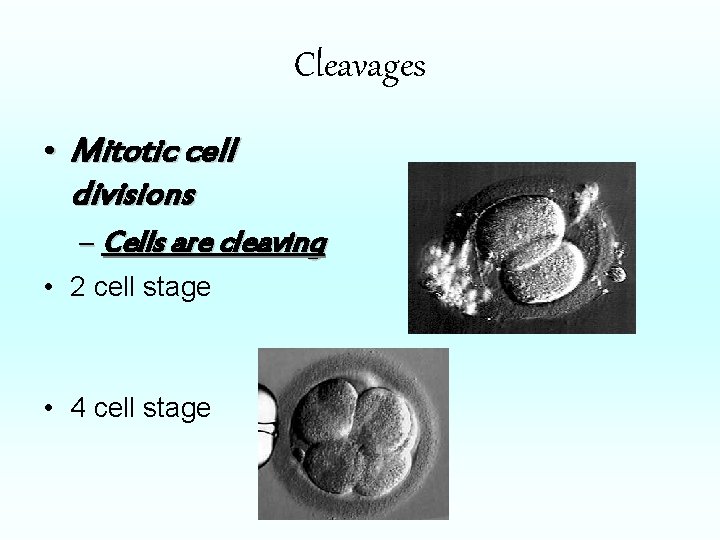
Cleavages • Mitotic cell divisions – Cells are cleaving • 2 cell stage • 4 cell stage
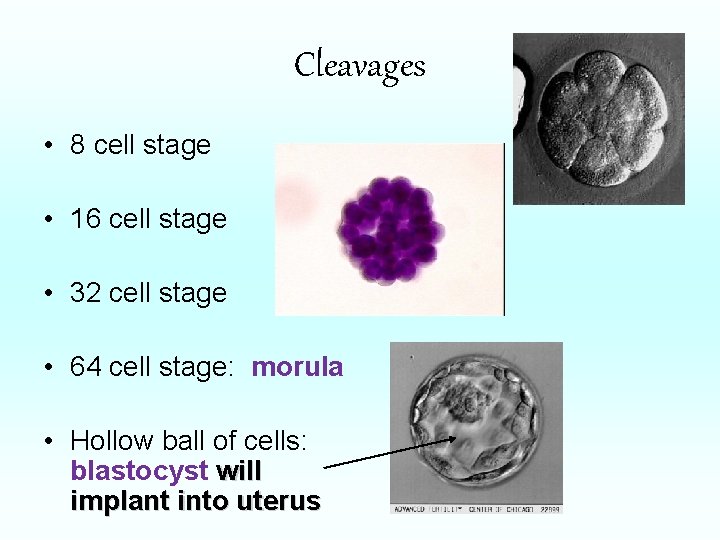
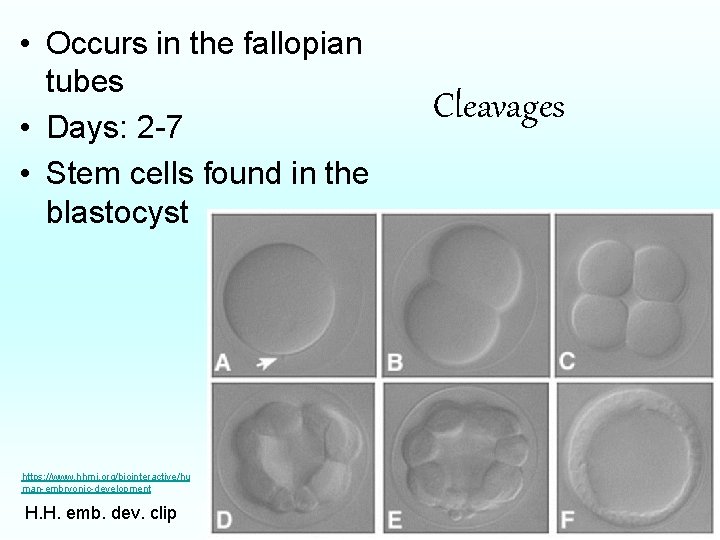
Cleavages • 8 cell stage • 16 cell stage • 32 cell stage • 64 cell stage: morula • Hollow ball of cells: blastocyst will implant into uterus
• Occurs in the fallopian tubes • Days: 2 -7 • Stem cells found in the blastocyst https: //www. hhmi. org/biointeractive/hu man-embryonic-development H. H. emb. dev. clip Cleavages
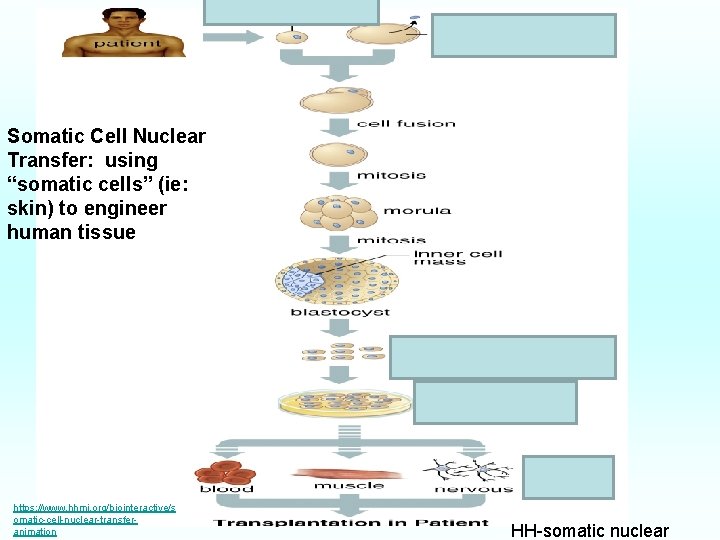
Somatic Cell Nuclear Transfer: using “somatic cells” (ie: skin) to engineer human tissue https: //www. hhmi. org/biointeractive/s omatic-cell-nuclear-transferanimation HH-somatic nuclear
Warm-up: In your own words summarize the process of fertilization and cleavages
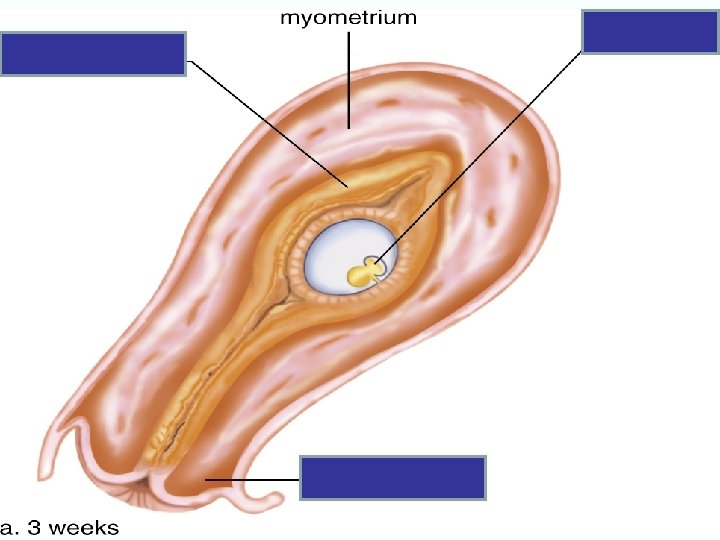
Implantation of blastocyst • 7 -9 days after fertilization • Occurs in……… • Blastocyst will attach to the uterine lining and grows inward
Trophoblast: cells become chorion and amnion layers
WATCH THIS embryonic development in action! https: //www. youtube. com/watch? v =7 Q 9 Vy. HJ 1 l 2 Q
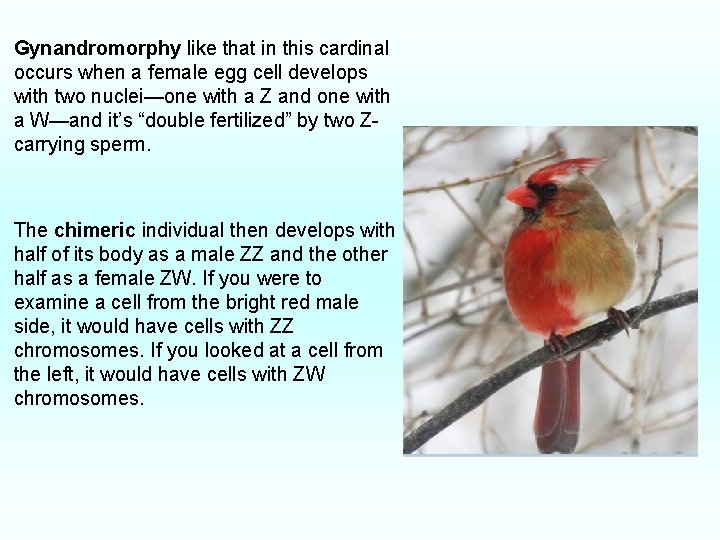
Gynandromorphy like that in this cardinal occurs when a female egg cell develops with two nuclei—one with a Z and one with a W—and it’s “double fertilized” by two Zcarrying sperm. The chimeric individual then develops with half of its body as a male ZZ and the other half as a female ZW. If you were to examine a cell from the bright red male side, it would have cells with ZZ chromosomes. If you looked at a cell from the left, it would have cells with ZW chromosomes.
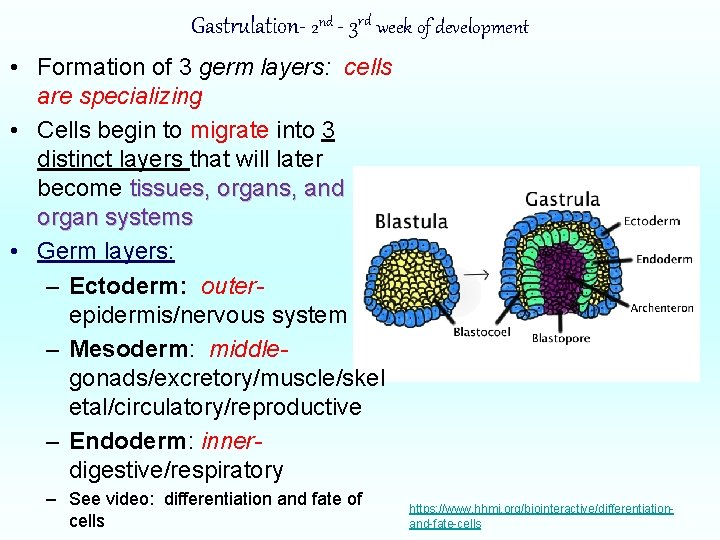
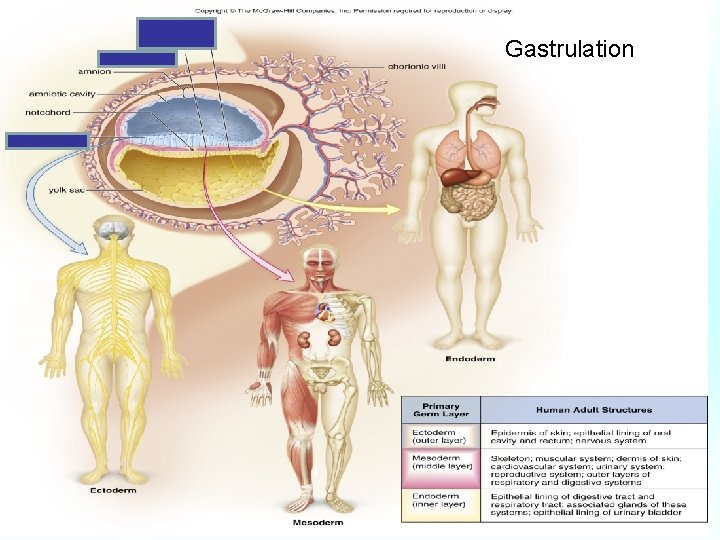
Gastrulation- 2 nd - 3 rd week of development • Formation of 3 germ layers: cells are specializing • Cells begin to migrate into 3 distinct layers that will later become tissues, organs, and organ systems • Germ layers: – Ectoderm: outerepidermis/nervous system – Mesoderm: middlegonads/excretory/muscle/skel etal/circulatory/reproductive – Endoderm: innerdigestive/respiratory – See video: differentiation and fate of cells https: //www. hhmi. org/biointeractive/differentiationand-fate-cells
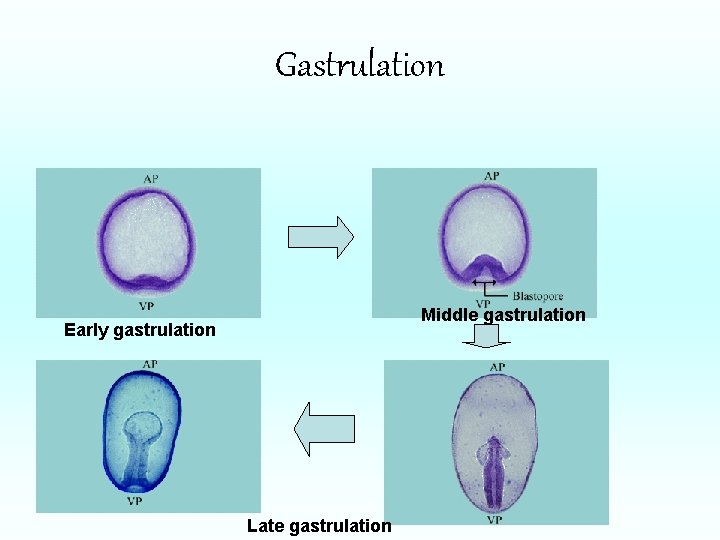
Gastrulation Middle gastrulation Early gastrulation Late gastrulation
Gastrulation
Warm-up Compare and contrast the processes of cleavages and gastrulation (2 for each)
New Microscope Offers 4 -D Look at Embryonic Development in Living Mice https: //www. hhmi. org/news/new-microscope-offers-4 -d-look-at-embryonic-development-in-living-mice? utm_source=HHMI+News&utm_campaign=30219769 a 6 Keller_4 D_Microscope_2018_10_11&utm_medium=email&utm_term=0_8 f 2808 e 1 d 6 -30219769 a 6 -69789445
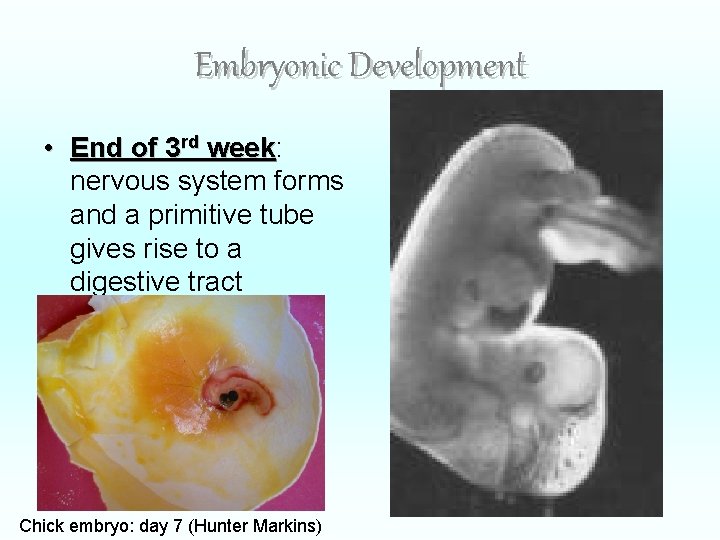
Embryonic Development • End of 3 rd week: week nervous system forms and a primitive tube gives rise to a digestive tract Chick embryo: day 7 (Hunter Markins)
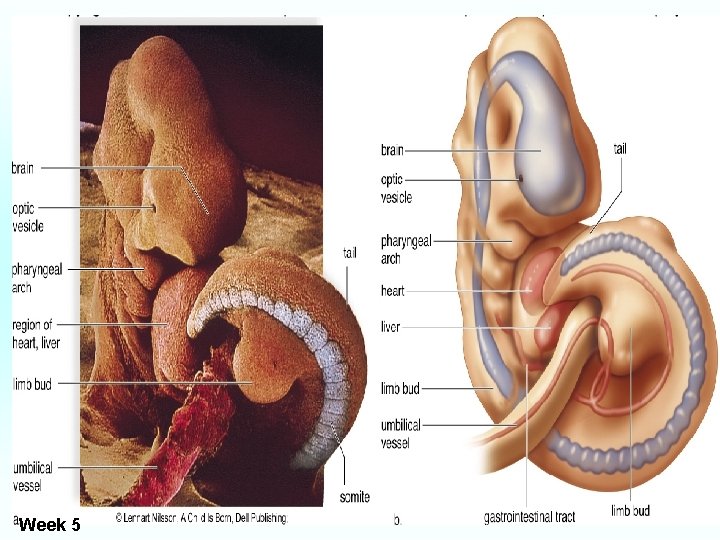
Week 5
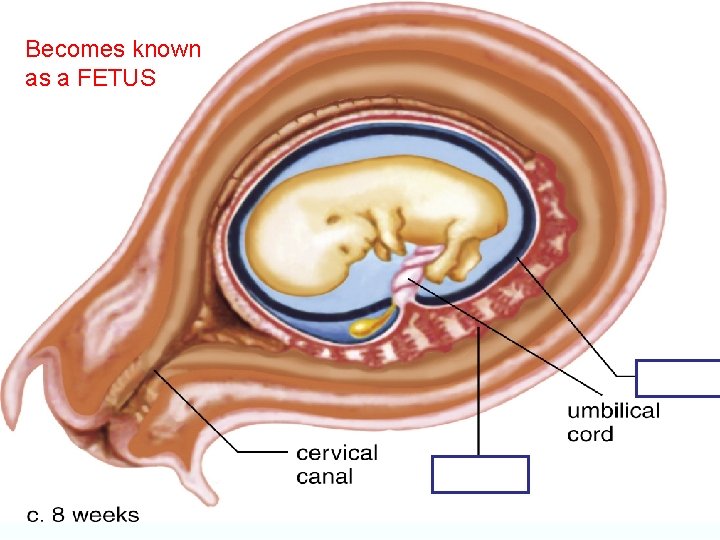
Becomes known as a FETUS