
Human Defence Responses 12012022 Key Words Antimicrobial lymphocyte
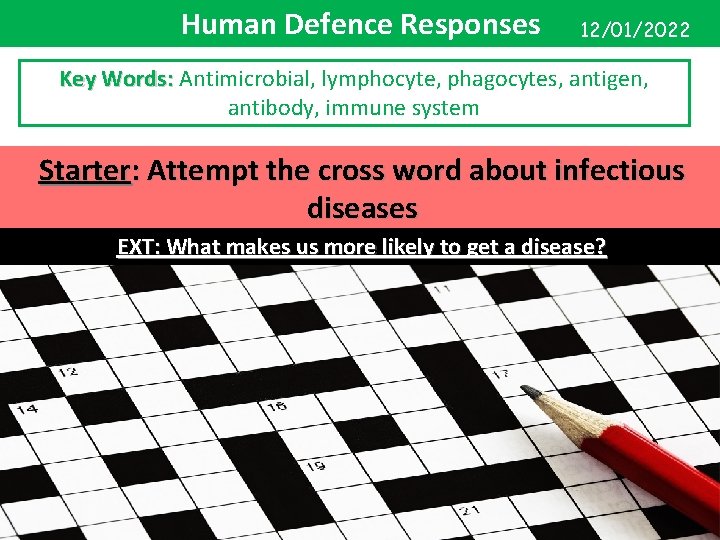
Human Defence Responses 12/01/2022 Key Words: Antimicrobial, lymphocyte, phagocytes, antigen, antibody, immune system Starter: Attempt the cross word about infectious diseases EXT: What makes us more likely to get a disease? Starter: How do viruses get into the body?
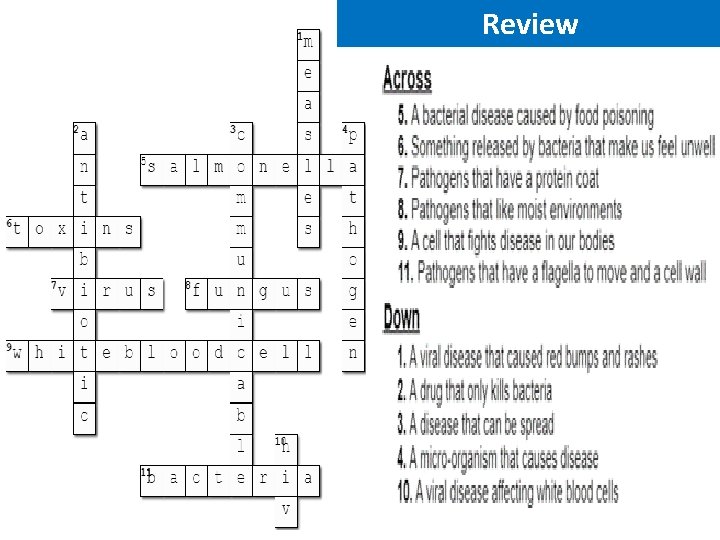
Review
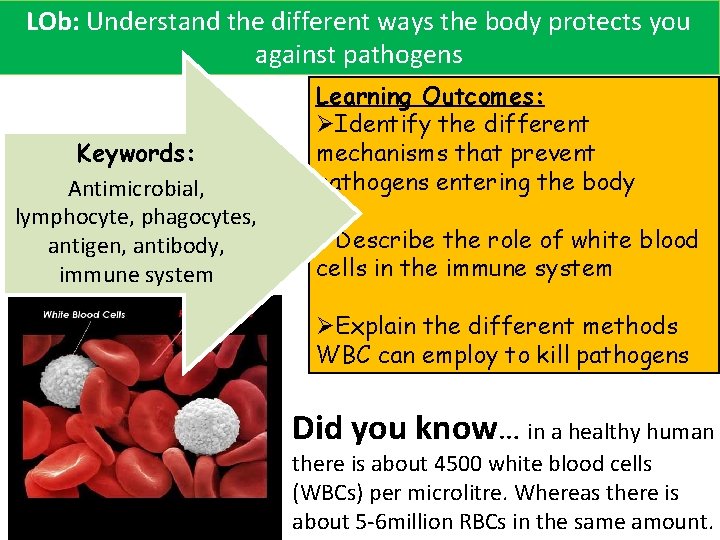
LOb: Understand the different ways the body protects you against pathogens Keywords: Antimicrobial, lymphocyte, phagocytes, antigen, antibody, immune system Learning Outcomes: ØIdentify the different mechanisms that prevent pathogens entering the body ØDescribe the role of white blood cells in the immune system ØExplain the different methods WBC can employ to kill pathogens Did you know… in a healthy human there is about 4500 white blood cells (WBCs) per microlitre. Whereas there is about 5 -6 million RBCs in the same amount.
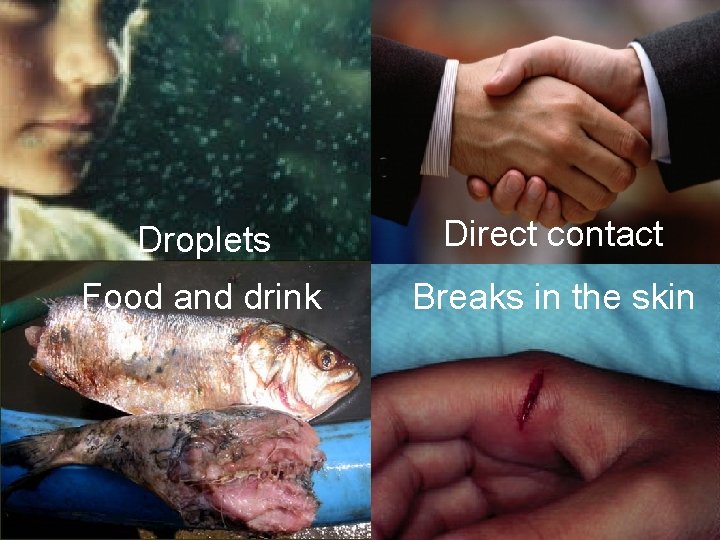
Droplets Direct contact Food and drink Breaks in the skin

The skin, digestive system and respiratory system provide a first line of defence to stop the pathogens entering the blood stream
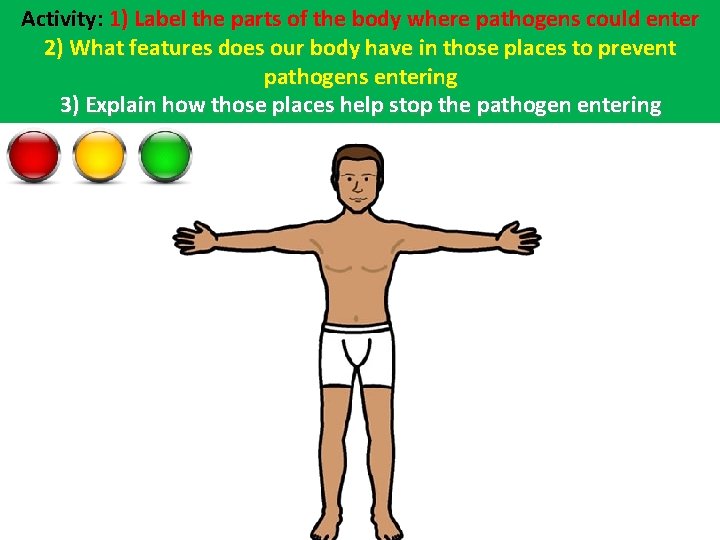
Activity: 1) Label the parts of the body where pathogens could enter 2) What features does our body have in those places to prevent pathogens entering 3) Explain how those places help stop the pathogen entering
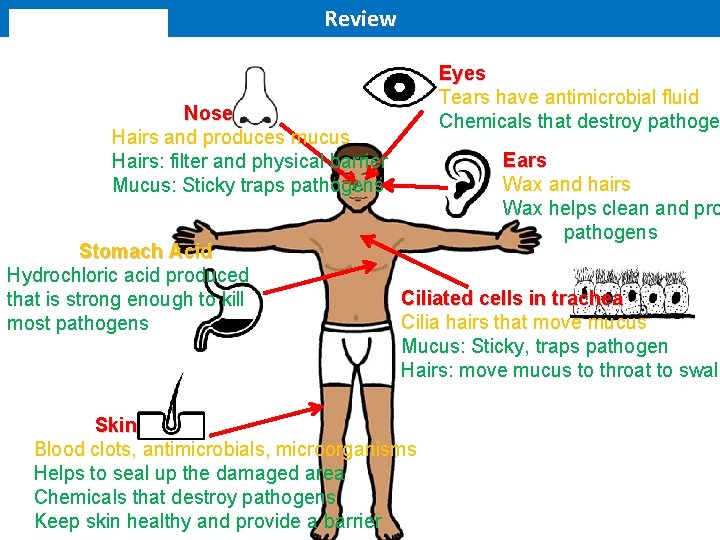
Review Eyes Tears have antimicrobial fluid Chemicals that destroy pathoge Nose Hairs and produces mucus Hairs: filter and physical barrier Mucus: Sticky traps pathogens Stomach Acid Hydrochloric acid produced that is strong enough to kill most pathogens Ears Wax and hairs Wax helps clean and pro pathogens Ciliated cells in trachea Cilia hairs that move mucus Mucus: Sticky, traps pathogen Hairs: move mucus to throat to swall Skin Blood clots, antimicrobials, microorganisms Helps to seal up the damaged area Chemicals that destroy pathogens Keep skin healthy and provide a barrier
LOb: Understand the different ways the body protects you against pathogens Keywords: Antimicrobial, lymphocyte, phagocytes, antigen, antibody, immune system Learning Outcomes: ü Identify the different mechanisms that prevent pathogens entering the body ØDescribe the role of white blood cells in the immune system ØExplain the different methods WBC can employ to kill pathogens Did you know… in a healthy human there is about 4500 white blood cells (WBCs) per microlitre. Whereas there is about 5 -6 million RBCs in the same amount.
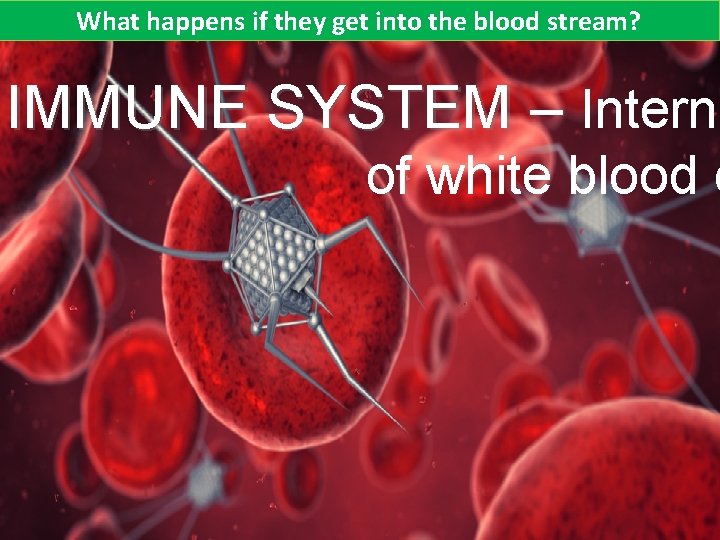
What happens if they get into the blood stream? IMMUNE SYSTEM – Interna of white blood c
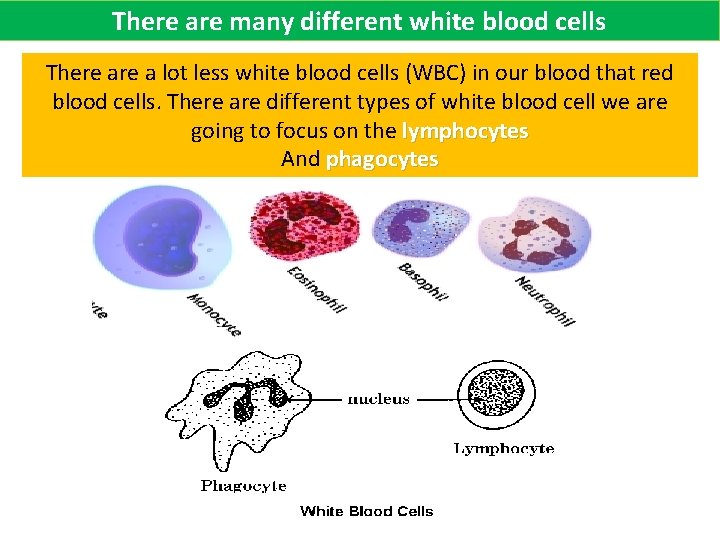
There are many different white blood cells There a lot less white blood cells (WBC) in our blood that red blood cells. There are different types of white blood cell we are going to focus on the lymphocytes And phagocytes
http: //www. youtube. com/watch? v=Rpj 0 em. EGSh. Q
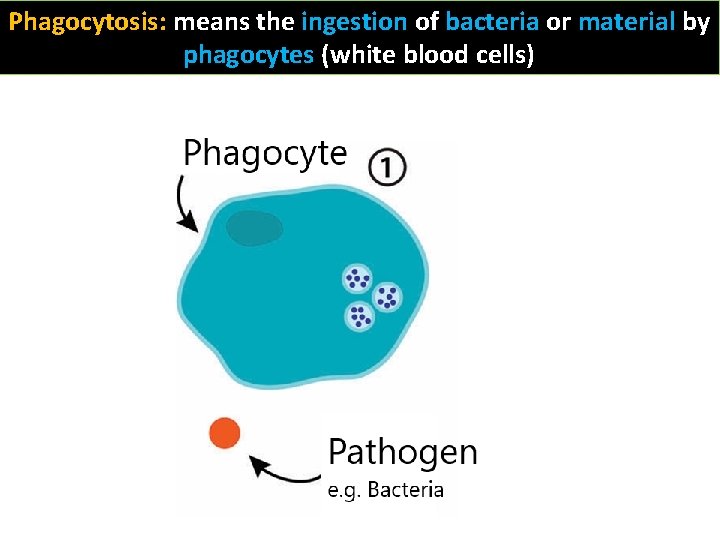
Phagocytosis: means the ingestion of bacteria or material by phagocytes (white blood cells)
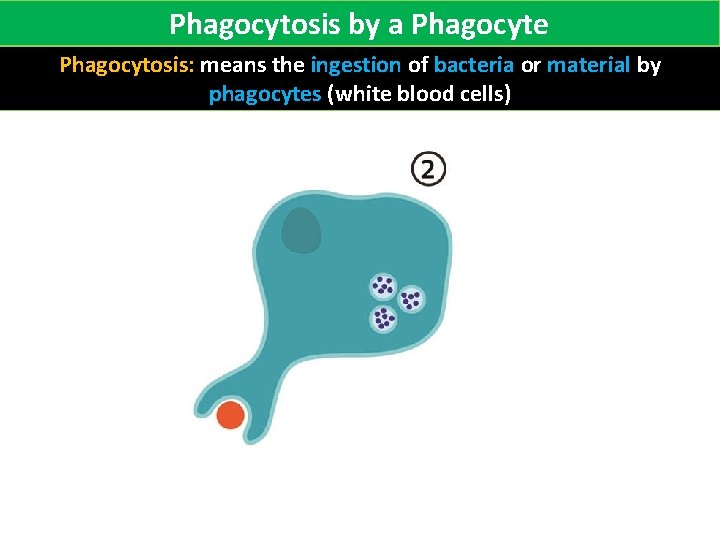
Phagocytosis by a Phagocyte Phagocytosis: means the ingestion of bacteria or material by phagocytes (white blood cells)
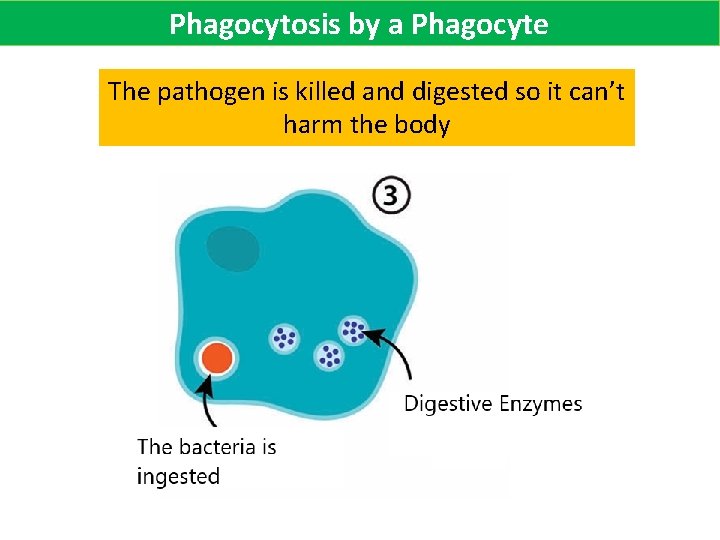
Phagocytosis by a Phagocyte The pathogen is killed and digested so it can’t harm the body
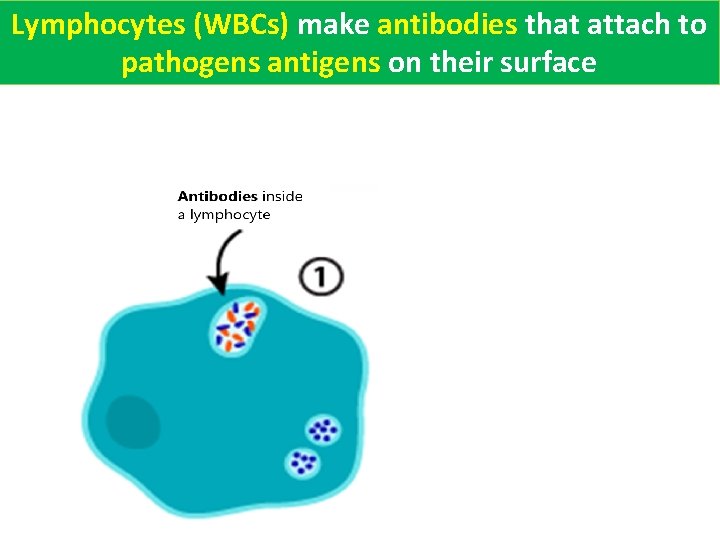
Lymphocytes (WBCs) make antibodies that attach to pathogens antigens on their surface
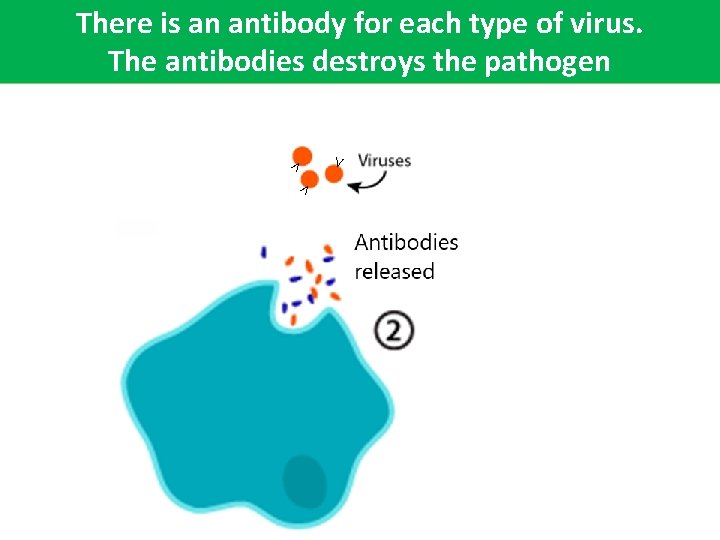
There is an antibody for each type of virus. The antibodies destroys the pathogen V V V
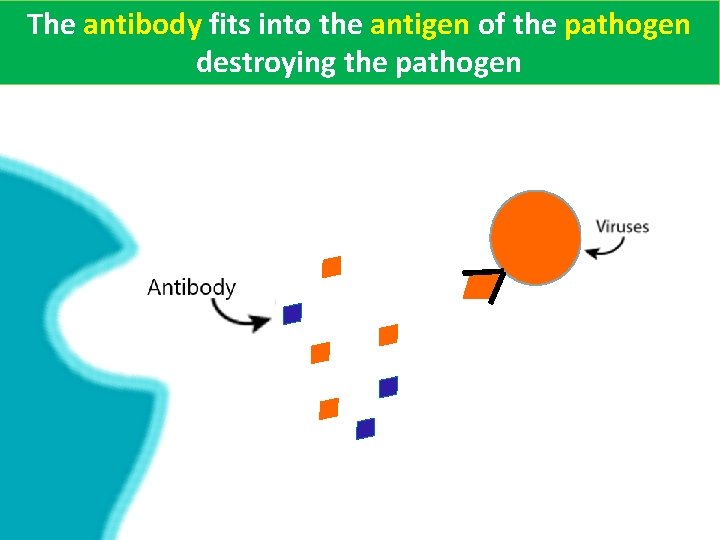
The antibody fits into the antigen of the pathogen destroying the pathogen
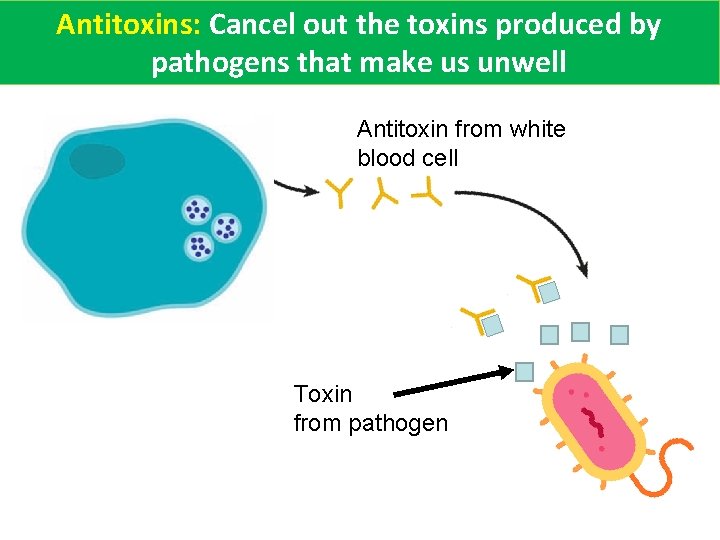
Antitoxins: Cancel out the toxins produced by pathogens that make us unwell Antitoxin from white blood cell Toxin from pathogen
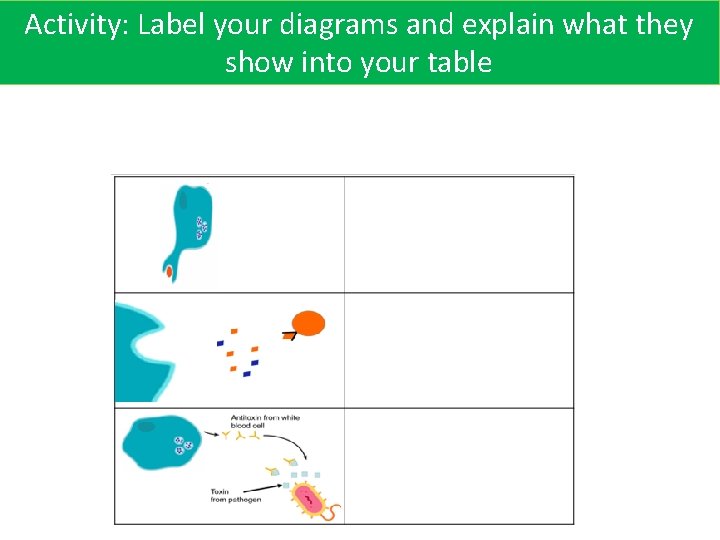
Activity: Label your diagrams and explain what they show into your table
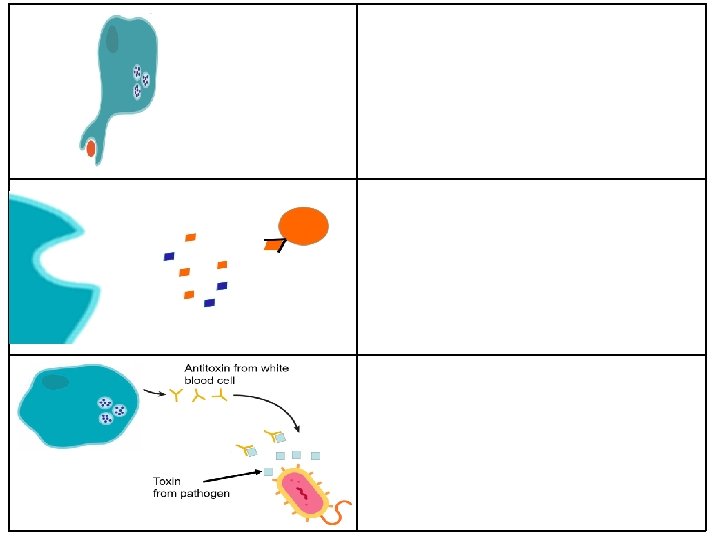
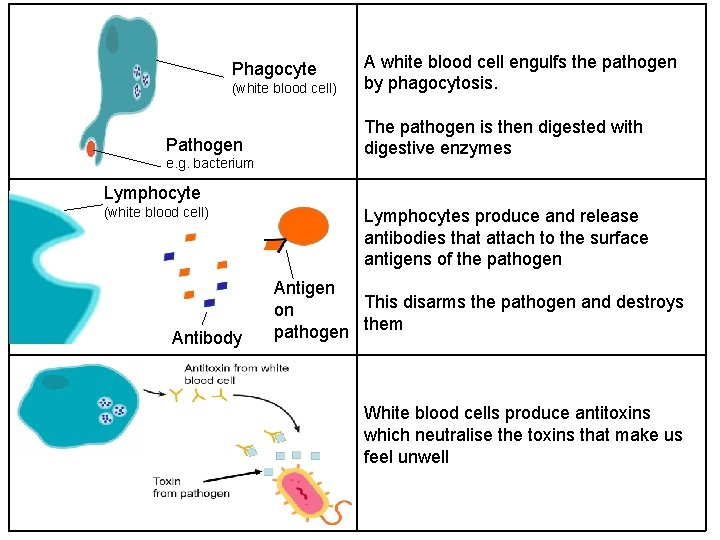
Phagocyte (white blood cell) Pathogen e. g. bacterium A white blood cell engulfs the pathogen by phagocytosis. The pathogen is then digested with digestive enzymes Lymphocyte (white blood cell) Antibody Lymphocytes produce and release antibodies that attach to the surface antigens of the pathogen Antigen This disarms the pathogen and destroys on pathogen them White blood cells produce antitoxins which neutralise the toxins that make us feel unwell
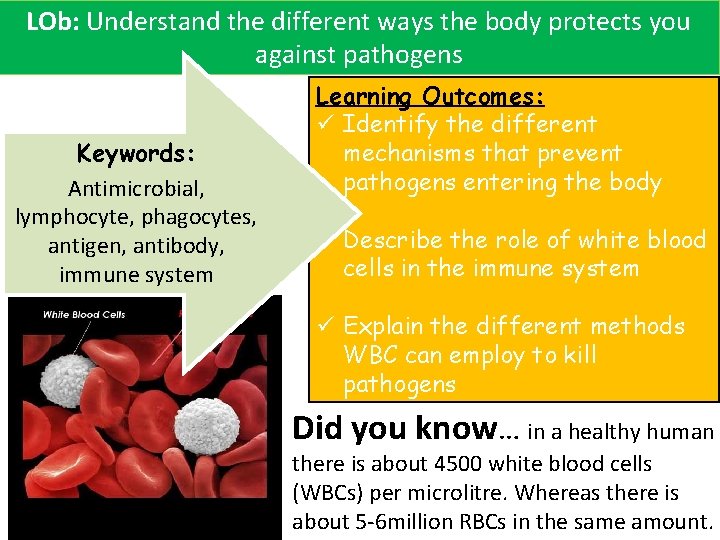
LOb: Understand the different ways the body protects you against pathogens Keywords: Antimicrobial, lymphocyte, phagocytes, antigen, antibody, immune system Learning Outcomes: ü Identify the different mechanisms that prevent pathogens entering the body ü Describe the role of white blood cells in the immune system ü Explain the different methods WBC can employ to kill pathogens Did you know… in a healthy human there is about 4500 white blood cells (WBCs) per microlitre. Whereas there is about 5 -6 million RBCs in the same amount.
The first line of defence includes, skin, hairs, mucus, wax, stomach acid antimicrobial secretions White blood cells are part of our internal defence; killing Pathogens Two type of white blood cell include phagocytes and Lymphocytes Phagocytes do phagocytosis and lymphocytes release Antibodies. WBCs also release anti toxins.
Plenary: Make a question Write two questions that you could ask someone else in the classroom related to what we have studied at the beginning of the lesson and the end. Be prepared to ask your question
- Slides: 24